
Sustainable building designs for Luxury Homes in SW London
- Harper Latter Architects

- Jan 31
- 16 min read
A sustainable home is designed to be more than just beautiful. It’s a home that is highly energy-efficient, genuinely healthy for the people living inside, and built with a light touch on the environment. This philosophy goes far beyond simple buzzwords, focusing instead on intelligent design choices, thoughtful material selection, and tangible long-term benefits for you, the homeowner.
What Are Sustainable Building Designs in Luxury Homes?
In sought-after areas like Wimbledon and Richmond, the very idea of luxury is changing. It's no longer just about grand aesthetics or premium finishes; it’s about creating a home that is intelligent, responsible, and ready for the future. Sustainable building designs are at the heart of this shift, blending high-end living with a deep respect for the environment and a focus on personal wellbeing.
At its core, this is a design approach that aims to reduce the negative impact of a building over its entire life. This thinking starts long before the first brick is laid and continues for decades after you’ve settled in. It’s about creating a home that works in harmony with its surroundings, not against them.
The Three Pillars of Sustainability
To really get to grips with sustainable design, it helps to think of it as having three fundamental pillars that work together:
Energy Efficiency: This is all about drastically reducing the energy your home consumes. Through clever design, superior insulation, and modern renewable technologies, the goal is to create a property that needs very little energy to heat, cool, and light.
Resource Conservation: This pillar focuses on the actual materials used to build your home. It involves choosing resources that are renewable, recycled, or sourced locally to minimise their environmental impact and embodied carbon—the total emissions generated to produce them.
Occupant Wellbeing: A truly sustainable home is a healthy home. This means ensuring excellent indoor air quality with non-toxic materials, maximising natural daylight, and creating living spaces that are comfortable, quiet, and genuinely uplifting.
A sustainable home isn’t just a collection of eco-friendly gadgets. It’s a fully integrated system where every element—from the way the windows are positioned to the type of insulation in the walls—is meticulously planned to improve performance, comfort, and longevity.
This forward-thinking approach delivers real, tangible benefits that go far beyond a clear conscience. For homeowners, it translates directly into significantly lower energy bills, a healthier living environment, and a property that holds its value far better over time. As regulations get stricter and energy costs continue to climb, a home built on sustainable principles is not just an ethical choice but an incredibly smart financial one.
You can learn more about the fundamentals by exploring what sustainable architecture means for a UK homeowner in our detailed guide. These principles are the foundation for the advanced strategies we will explore next.
Understanding the Core Principles of Eco-Architecture
To bring a sustainable luxury home to life, we need to move beyond buzzwords and focus on four foundational strategies. These are the real building blocks of any genuinely eco-conscious property: Fabric First, Passive Design, Renewable Energy, and Sustainable Materials. Each plays its own part, but they work best together, creating a home that’s not just efficient and comfortable, but truly responsible.
This diagram shows how these principles don’t exist in a vacuum but are deeply interconnected.
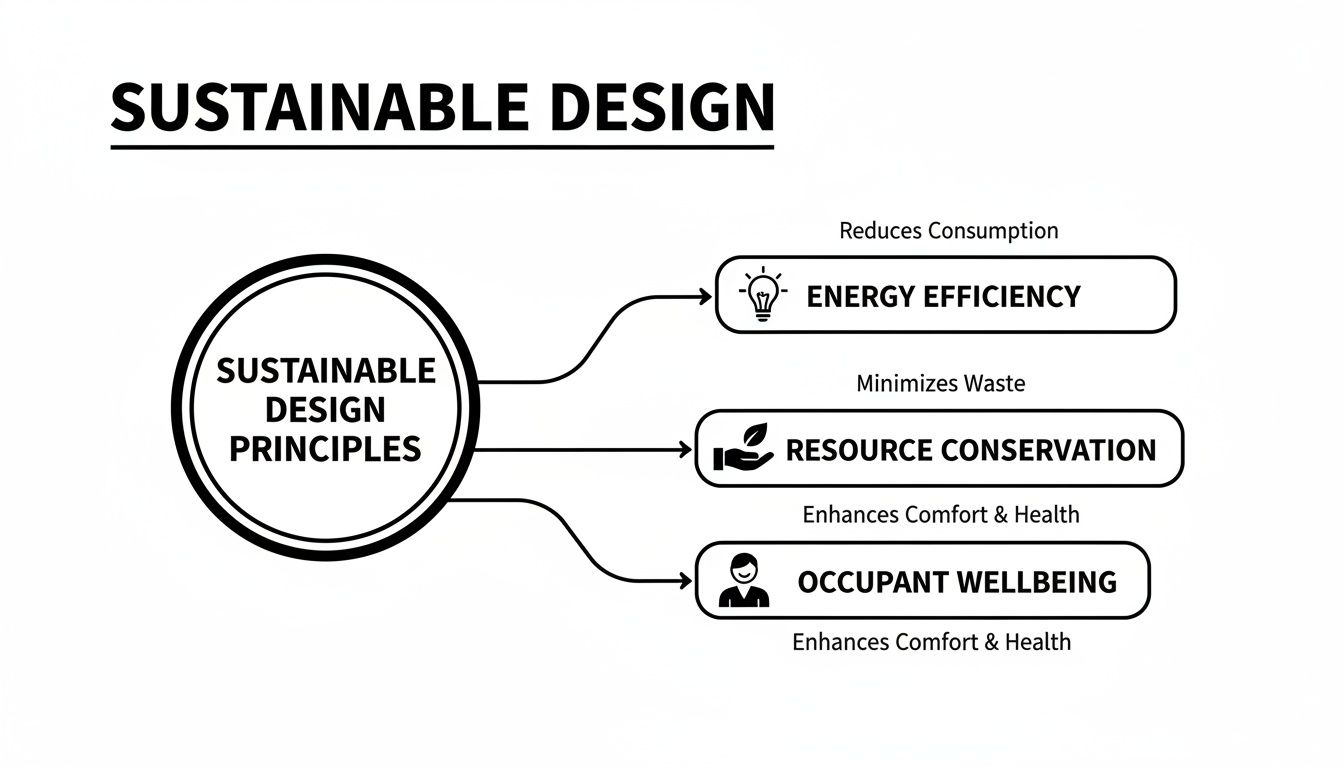
As you can see, focusing on the technical side of things—like energy efficiency and resource conservation—directly feeds into something far more personal: your wellbeing. A well-designed sustainable home is simply a healthier, more comfortable place to live.
To help clarify these concepts, here’s a quick overview of how these strategies come together in a high-end residential project.
Key Sustainable Design Strategies at a Glance
Strategy | Core Concept | Benefit for Homeowners |
|---|---|---|
Fabric First | Prioritising the performance of the building's outer shell (walls, roof, windows). | Dramatically lower energy bills, enhanced comfort, and reduced reliance on heating systems. |
Passive Design | Using the building's orientation, layout, and form to work with the natural environment. | Free heating from the winter sun, natural cooling in summer, and bright, light-filled interiors. |
Renewables | Generating clean energy on-site using modern, integrated technologies. | Energy independence, protection from rising energy prices, and a significantly smaller carbon footprint. |
Sustainable Materials | Specifying materials with low embodied carbon and minimal environmental impact. | A healthier indoor environment free from toxins and the assurance of a truly low-impact build. |
This table provides a snapshot, but it’s in the careful, considered application of these principles that a truly exceptional sustainable home is created. Let's explore each one in a bit more detail.
Adopting a Fabric First Approach
Think of your home's structure—its walls, roof, floors, and windows—as a perfectly tailored thermal jacket. The Fabric First approach is all about getting this outer shell to perform as well as it possibly can. Before we even think about bolting on fancy tech, the absolute priority is to create a building that naturally holds onto warmth in winter and stays comfortably cool in summer.
This comes down to a meticulous focus on the fundamentals:
Superior Insulation: Wrapping the entire building envelope in high-quality insulation to drastically cut heat loss.
Airtightness: Systematically sealing every tiny gap and crack to eliminate draughts, which are a huge, invisible source of energy waste.
High-Performance Glazing: Installing triple-glazed windows that act as a thermal barrier, keeping the internal temperature stable and comfortable all year round.
By getting the ‘fabric’ right from day one, we massively reduce the building's energy demand at its source. This is the single most robust thing we can do to lock in efficiency and savings for the entire life of the home.
Harnessing Passive Design Strategies
Building on that solid Fabric First foundation, Passive Design is the art of using a building's orientation and layout to work with the natural environment, not against it. It’s a beautifully simple, low-tech strategy that uses the sun's energy and natural airflow to maintain a comfortable indoor climate without relying on mechanical systems.
For a new build in South West London, this means carefully positioning the home on its plot to maximise solar gain during the colder months. Large, south-facing windows can capture free heat from the low winter sun, taking a huge load off the central heating. In summer, the opposite is true—cleverly designed shading, like roof overhangs or even strategically planted deciduous trees, can block the high summer sun to prevent overheating, reducing or eliminating the need for air conditioning.
Integrating Renewable Energy Systems
Once we've made the building as efficient as possible through its fabric and passive design, the next logical step is to generate our own clean energy on-site. Modern renewable technologies can be seamlessly and discreetly integrated into a luxury home’s design, cutting its carbon footprint and further reducing its reliance on the grid.
The most common solutions we specify include:
Solar Photovoltaic (PV) Panels: Converting sunlight directly into electricity to power your home.
Air Source Heat Pumps (ASHPs): Cleverly extracting latent heat from the outside air (even on chilly days) to provide incredibly efficient heating and hot water.
These systems are a major step towards creating a home that is both self-sufficient and completely future-proofed against rising energy costs.
Specifying Sustainable and Healthy Materials
Finally, the materials we choose are critical. A truly sustainable approach looks at the entire life story of a material—from how it’s sourced and manufactured to how it can be reused or disposed of. The main goal here is to minimise embodied carbon, which is the sum of all the greenhouse gas emissions produced in creating that material.
We prioritise materials that are locally sourced, recycled, or from renewable sources—things like reclaimed brick, sustainable timber, or sheep's wool insulation. This not only significantly lowers a home's overall environmental impact but also ensures a healthy indoor environment, free from the harmful chemicals found in many conventional building products.
This thoughtful selection process is more important than ever. The UK's green building market is projected to grow to an incredible £17.1 billion by 2033, spurred on by government net-zero targets. Yet a huge challenge remains; around 24% of homes in Great Britain still don't have proper cavity wall insulation, which shows just how much potential there is to improve the performance of our housing stock. You can read the full research about these UK green building market trends to get a sense of the scale of this shift.
How Sustainable Certifications Guarantee Excellence
In the world of high-end residential architecture, it’s easy to talk about sustainability. It’s much harder to prove it. So, how can you be sure your new home is genuinely performing to the highest environmental standards? This is where third-party certifications come in, offering an essential guarantee of quality, rigour, and long-term value.
Pursuing an official certification for a new build or major refurbishment isn't just about earning a badge. It’s a commitment to a meticulous, verified process that ensures every last detail of your home’s sustainable design is executed to an exacting standard. This independent verification is a powerful mark of quality that separates true performance from simple green-washing.
For anyone making a significant property investment, these certifications offer clear, tangible assurance. They confirm that your home's green credentials are real, the construction quality is superior, and its future value is protected against rising energy costs and ever-tightening regulations.
Passivhaus: The Gold Standard for Energy Efficiency
Originating in Germany, Passivhaus (or 'Passive House') isn’t a style of building but a rigorous performance standard with one primary goal: creating ultra-low-energy homes that offer exceptional comfort. It gets there by sticking to a strict set of principles, all rooted in the 'Fabric First' approach.
A certified Passivhaus is so well-insulated and airtight that it needs next to no energy for heating or cooling. Think of it like a perfectly sealed thermos flask—the internal temperature stays stable and comfortable all year round, no matter what the weather is doing outside. The result? Homes that can slash heating energy consumption by up to 90% compared to typical existing housing stock.
The core promise of Passivhaus is simple but profound: a building that delivers unparalleled thermal comfort and superb indoor air quality with minimal energy input. It is the global benchmark for energy-efficient construction.
Achieving this standard demands incredible precision during both design and construction. Key performance criteria include:
Exceptional Airtightness: The building envelope has to be so well sealed that air leakage is almost non-existent.
High-Performance Insulation: A continuous, unbroken layer of insulation wraps the entire building, getting rid of 'thermal bridges' that let heat escape.
Superior Glazing: Triple-glazed windows with thermally broken, insulated frames are essential to prevent heat loss.
Mechanical Ventilation with Heat Recovery (MVHR): This system provides a constant supply of fresh, filtered air while cleverly retaining over 80% of the heat from the outgoing stale air.
BREEAM: A Broader View of Sustainability
While Passivhaus is laser-focused on energy performance, the Building Research Establishment Environmental Assessment Method (BREEAM) takes a much broader view. Developed right here in the UK, BREEAM is one of the world's leading sustainability assessment methods for buildings.
It evaluates a property’s environmental performance across ten distinct categories, awarding credits that add up to an overall rating, from 'Pass' to 'Outstanding'. This holistic framework looks at everything from energy and water use to the health and wellbeing of occupants, pollution, waste management, and the ecological value of the site itself.
This comprehensive approach encourages a balanced strategy for sustainable building designs. A BREEAM-certified home is one that has been scrutinised from all angles, ensuring it performs brilliantly across the entire spectrum of sustainability. The need for such rigorous standards is clear. In England and Wales, the vast majority of homes have a 'D' rating on their Energy Performance Certificate. As of early 2025, only around 357,000 housing units achieved an 'A' rating, highlighting a significant gap in performance that certifications like BREEAM and Passivhaus aim to close. You can discover more insights about UK home energy ratings on Statista.com.
Evaluating the True Cost and Long-Term Value
Let’s tackle one of the most practical questions that comes up with sustainable design: the cost. It's true that the initial capital outlay can be higher than for a conventional build. This isn't surprising when you factor in the investment in specialised materials, advanced technologies like air source heat pumps, and the meticulous craftsmanship needed to hit standards like Passivhaus.
However, looking at this purely as an upfront 'cost' is missing the bigger picture entirely. A much better way to think about it is as a long-term investment in quality, comfort, and efficiency. That slightly higher initial spend is systematically offset by substantial, lifelong savings that start the moment you move in.
The Return on Investment Breakdown
When we shift the conversation from cost to value, the financial case for sustainable design becomes incredibly compelling. The return isn't just measured in pounds and pence; it’s also found in the enhanced quality of life and the future-proofing of your most significant asset.
The most immediate financial return comes from drastically lower running costs. A home built to rigorous sustainable standards, especially one following a Fabric First approach, can slash heating energy needs by up to 90%. This translates into minimal energy bills year after year, giving you a powerful buffer against volatile energy markets and inevitable price rises.
Sustainable design reframes the conversation from short-term expenditure to long-term value. It’s an investment in drastically lower running costs, superior comfort, and a healthier living environment that pays dividends for decades.
But the financial upside doesn't stop with energy savings. Other factors contribute to the return on your investment:
Reduced Maintenance: High-quality, durable materials and superior construction methods mean less wear and tear over time. A well-designed sustainable home simply requires fewer repairs and replacements, lowering its lifetime maintenance bill.
Increased Property Value: As environmental awareness grows and building regulations rightly become stricter, properties with proven green credentials are in higher demand. Homes with certifications like Passivhaus or high EPC ratings often command a premium on the market, protecting and even enhancing your investment.
Valuing the Intangible Benefits
While the financial returns are clear, some of the most profound benefits of a sustainable home aren't things you'll see on a bank statement. These are the day-to-day advantages that transform a house into a truly exceptional home.
A key benefit is superior thermal comfort. Thanks to exceptional insulation and airtightness, the indoor temperature remains stable and pleasant all year round, completely free from irritating draughts and cold spots. This is complemented by excellent indoor air quality, as mechanical ventilation systems provide a constant supply of fresh, filtered air, quietly removing pollutants, allergens, and stale air.
This focus on wellbeing creates a quiet, peaceful, and restorative living environment. Ultimately, investing in a sustainable home is an investment in your family's health and comfort. It's about creating a resilient, future-proof asset that delivers tangible financial value and an unmatched quality of life, making it a wise and forward-thinking decision.
Applying Sustainable Design to Heritage Properties
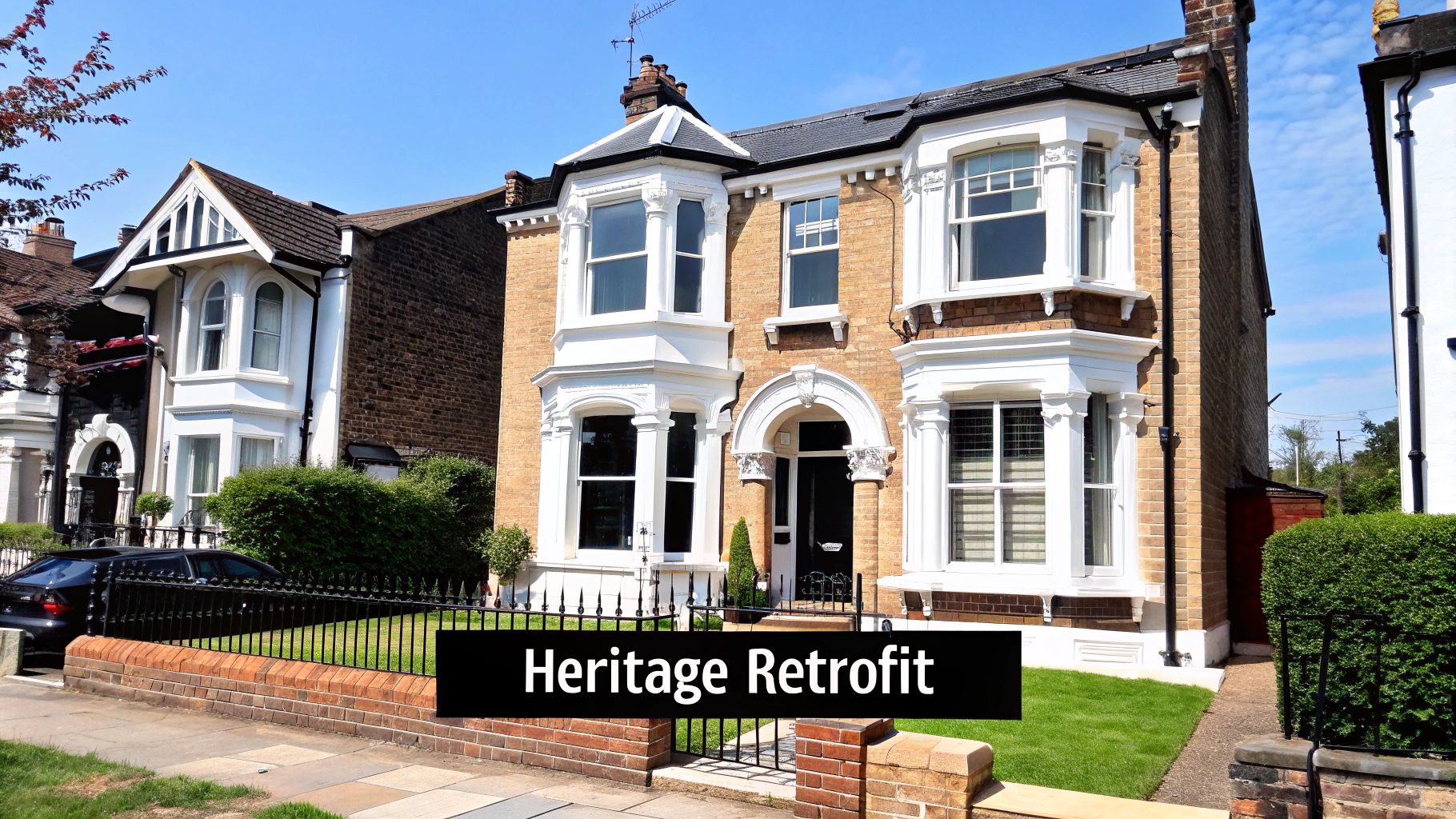
Weaving modern sustainability into the historic fabric of a listed building or a home in a conservation area is a unique and delicate challenge. In cherished London postcodes like Wimbledon and Richmond, the goal isn't just to improve performance but to do so while meticulously preserving the building's character.
It’s a balancing act that demands a deep respect for conservation principles alongside expertise in modern sustainable design. The aim is not to impose a contemporary aesthetic but to make sensitive, often invisible, upgrades that boost comfort and drastically cut energy use.
This process respects the soul of the building, ensuring its historical integrity remains the top priority. A conservation architect who understands this nuanced landscape is essential to navigate the complexities and deliver meaningful improvements that planning authorities will actually approve.
Navigating Planning and Conservation Constraints
Working with heritage properties means playing by a strict set of rules designed to protect their architectural and historical significance. Every proposed change, no matter how small, comes under intense scrutiny. This is where a deep understanding of local planning policies and a good working relationship with conservation officers become invaluable.
The key is to propose interventions that are both effective and, crucially, reversible. This means they could be removed in the future without causing permanent damage to the building's original fabric. Success hinges on presenting a clear, well-researched case for why an upgrade is necessary and how it will be executed with the utmost care.
A successful heritage retrofit is one you can feel but not necessarily see. It honours the past by making the building viable for the future, blending improved efficiency seamlessly with the original character.
Approved Retrofitting Methods for Historic Homes
Rather than wholesale changes, the focus is on a series of targeted, high-impact improvements. These methods are carefully chosen for their minimal visual impact and their compatibility with traditional construction materials.
Commonly approved strategies include:
Breathable Insulation: Historic buildings need to 'breathe' to manage moisture effectively. We use materials like sheep's wool, cork, or wood fibre insulation because they work in harmony with solid brick walls, preventing the damp issues that modern, non-breathable insulators can cause.
Discreet Secondary Glazing: Replacing original single-glazed sash windows is almost always out of the question. Instead, installing slimline secondary glazing on the interior provides a significant thermal boost while leaving the historic exterior completely untouched.
Sensitive Building Services Modernisation: Upgrading old, inefficient boilers or integrating renewable technologies must be done with great care. This often involves finding creative ways to conceal pipework and units to maintain the period aesthetic. For instance, our complete guide explores the specific challenges and solutions for installing solar panels on listed buildings.
This careful, considered approach is becoming increasingly vital. While new project starts have recently dipped, a rise in detailed planning approvals shows a strong long-term demand for eco-friendly developments—particularly the sensitive retrofitting of our existing housing stock.
Bringing Your Sustainable Vision to Life
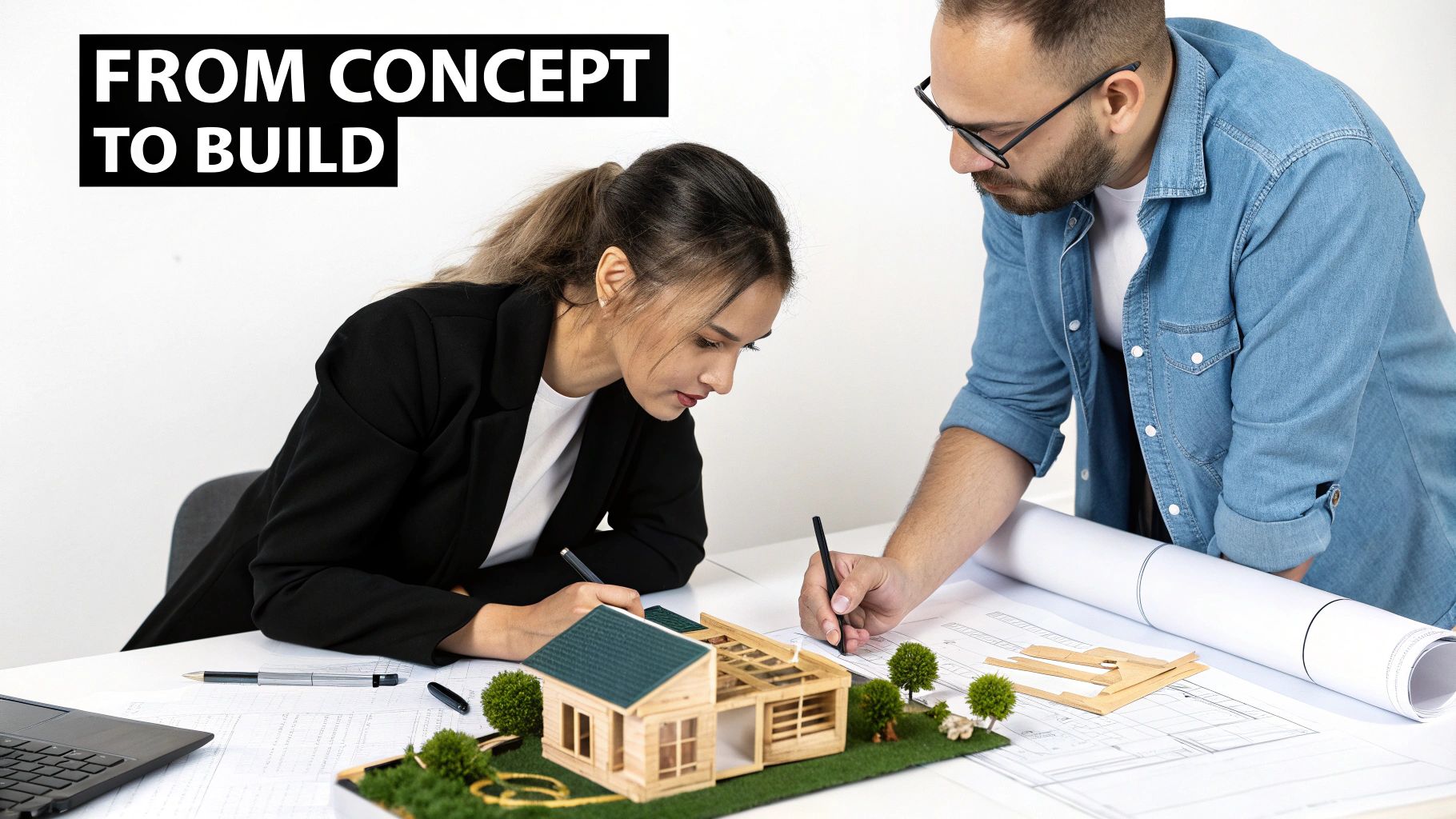
Turning an ambitious idea for a sustainable home into a beautifully crafted reality is all about the partnership between you and your architect. It’s a collaborative journey, one where your vision for a healthier, more efficient home is translated into a detailed architectural blueprint. This process goes far beyond just drawing plans; it’s about weaving sustainability into every single decision, from the very first chat to the final build.
To create a truly high-performance home, sustainable building designs have to be integrated right from the project’s inception. Trying to bolt on eco-friendly features later is not only less effective but almost always more expensive. A structured, reliable process ensures your environmental and lifestyle goals are met—and exceeded—without compromise.
The Importance of Early-Stage Integration
The success of any sustainable project is really decided in its earliest stages. This is where we make the foundational decisions: the building’s orientation on the site, its overall form, and the core energy strategy. Getting these fundamentals right from day one is what creates a home that is inherently efficient and comfortable.
This initial phase is where the client-architect relationship is most critical. It’s a period of discovery where we explore your aspirations, look at the unique potential of your site, and agree on the most suitable sustainable strategies. This early planning makes sure that principles like passive design and a fabric-first approach are built into the very DNA of your home, not just layered on top as an afterthought.
A successful sustainable project doesn't happen by accident. It is the result of meticulous early-stage planning where a shared vision is established and sustainability is treated as a non-negotiable principle from day one.
A Structured Path to a Sustainable Home
To make sure every detail is considered, a clear, step-by-step process is essential. This methodical approach de-risks the project and brings clarity at every turn, guaranteeing the final outcome aligns perfectly with your original vision.
Our process is designed to integrate sustainability seamlessly:
Initial Consultation & Feasibility: We start by listening. This stage is all about understanding your lifestyle, aesthetic tastes, and sustainability goals to figure out what is realistically achievable on your site.
Concept Design & Strategy: We develop initial design concepts that explore how to best use passive strategies and decide which sustainable technologies are the right fit for your project and budget.
Detailed Design & Specification: This is where we lock in the technical details. We specify high-performance insulation, airtightness membranes, triple-glazed windows, and sustainable materials with low embodied carbon.
Planning & Approvals: We prepare and submit all the necessary documents for planning permission. We make a robust case for the sustainable merits of the design, which is often viewed favourably by local authorities. To better understand this part of the journey, you might want to learn how to choose the right sustainable designer who can guide you effectively.
Construction Oversight: We stay actively involved during the build, working closely with contractors to ensure the design is executed with the required precision. This oversight is critical for hitting targets like Passivhaus-level airtightness.
For homeowners in South West London, this structured collaboration is the key to creating a beautiful, future-proof home. It’s an invitation to begin a rewarding journey towards a bespoke property that perfectly reflects your values and delivers exceptional performance for years to come.
Frequently Asked Questions About Sustainable Design
Embarking on a sustainable building project is an exciting prospect, but it naturally comes with a lot of questions. We’ve put together some of the most common queries we hear from clients in South West London who are considering a more thoughtful, high-performance approach to their home.
What Is the Fabric First Approach in Sustainable Building?
Think of the ‘Fabric First’ approach as getting the fundamentals absolutely right before you even think about the fancy tech. It’s a design philosophy that prioritises the performance of the building's core structure—its walls, roof, floors, and windows—above all else.
The goal is to create an incredibly well-insulated and airtight 'envelope' around your home. By perfecting this fabric, you drastically reduce the amount of heat escaping in the first place, meaning the building needs very little energy to stay warm. It’s about building in efficiency from day one.
In practice, this means investing in superior insulation, being meticulous about eliminating any cold spots (known as thermal bridges), and fitting high-performance triple-glazed windows. It’s a permanent, passive solution that locks in comfort and energy savings for the lifetime of the home.
Can My Listed Building Be Made More Sustainable?
Absolutely. While working with listed buildings requires a careful and sensitive hand, a skilled conservation architect can introduce huge improvements in sustainability without compromising historical character. It’s all about appropriate, intelligent interventions.
Our approach often involves:
Introducing breathable, natural insulation like cork or sheep's wool.
Painstakingly restoring and draught-proofing original windows.
Discreetly installing secondary glazing for an extra layer of protection.
Thoughtfully upgrading heating systems to more efficient models.
The secret is a deep respect for traditional building materials and a strong grasp of local planning authority guidelines. This allows us to boost performance in a way that protects the building’s unique heritage.
A truly successful heritage retrofit enhances comfort and efficiency in ways you can feel, but not necessarily see. It honours the past by making a historic building viable and comfortable for the future.
Does a Sustainable Home Cost Significantly More to Build?
It’s true that a genuinely sustainable home can have a higher initial build cost, typically around 5-15% more than a standard project. This is down to the higher specification of materials, specialist skills needed on-site, and technologies like air-source heat pumps.
However, it’s crucial to see this as a long-term investment, not just an upfront cost. The dramatically lower running costs—think tiny energy bills—mean this initial 'sustainability premium' is often paid back over a number of years.
On top of that, these homes offer superior comfort, healthier indoor air quality, and are properly future-proofed against volatile energy prices and tightening regulations. All of this adds significant financial and lifestyle value that you’ll appreciate for years to come.
What Is the Difference Between Passivhaus and BREEAM?
This is a great question, as they are both gold standards in sustainability but measure very different things.
Passivhaus is an incredibly rigorous international standard that focuses almost entirely on one thing: achieving exceptional energy efficiency and occupant comfort. It uses the 'fabric first' approach to hit extremely demanding, measurable targets for airtightness and heating demand.
BREEAM, on the other hand, is a much broader, holistic environmental assessment. It looks at the bigger picture, evaluating a building across a wide range of categories like water use, pollution, waste management, materials, and health and wellbeing, alongside energy.
To put it simply:
Passivhaus is a deep-dive certification for world-class energy performance.
BREEAM is a comprehensive review of a building’s total environmental impact.
Both are marks of exceptional quality. The right choice really depends on the specific ambitions you have for your project.
At Harper Latter Architects, we specialise in creating beautiful, high-performance homes that integrate sustainable building designs from the very beginning. If you are ready to start a conversation about your project in South West London, please get in touch with our team. Explore our process and book your initial consultation at https://harperlatterarchitects.co.uk.
Comments