
What Is Sustainable Architecture? A UK Homeowner's Guide

Let's cut through the jargon. At its heart, sustainable architecture is about creating homes that work in harmony with the environment, not against it. This design philosophy seeks to minimise the negative environmental impact of buildings by being smart and considered in how we use materials, energy, and even the space itself.
A Balanced Approach to Modern Home Design
Sustainable architecture is far more than just adding a few solar panels to a roof and calling it a day. It’s better to think of it not as a static structure, but as a living, breathing ecosystem—one that intelligently manages its own energy, water, and resources to lighten its footprint on the planet.
This approach goes well beyond just environmental box-ticking. True sustainability rests on three interconnected pillars. Get these right, and you create a building that isn’t just eco-friendly but is also a healthy, practical, and financially sound place to live. The goal is to design beautiful, high-performance homes that are genuinely future-proofed for generations to come.
The infographic below illustrates the three core pillars that form the foundation of this architectural philosophy.
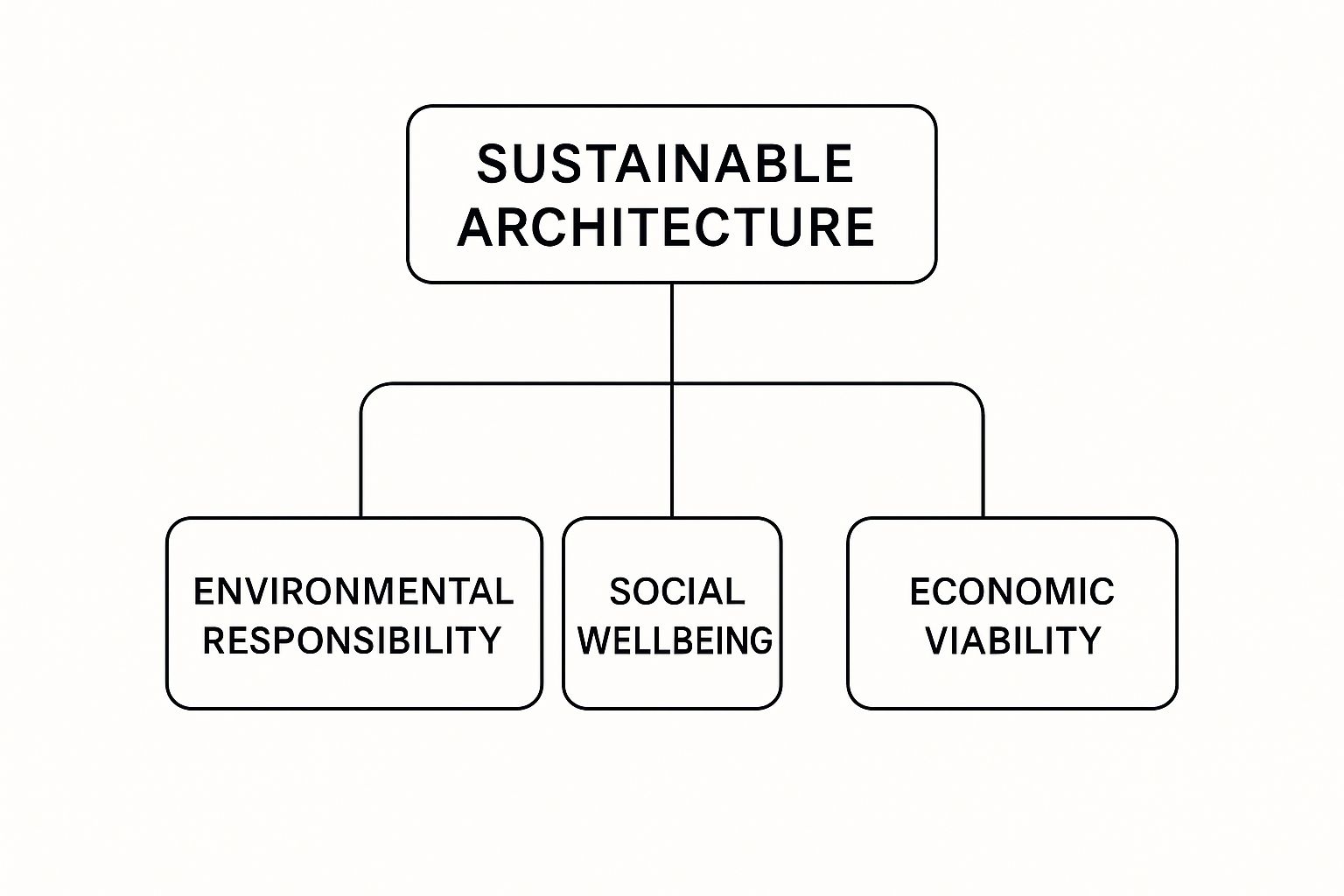
As the diagram shows, a truly sustainable home succeeds by striking a careful balance between environmental, social, and economic factors.
The Three Pillars Explained
To really get to grips with what sustainable architecture is all about, it helps to break down these core components.
At a glance, here’s how each pillar contributes to a truly sustainable home.
The Three Pillars of Sustainable Architecture
Pillar | Core Principle | Example in a UK Home |
|---|---|---|
Environmental Responsibility | To design and build with minimal negative impact on the natural world, focusing on resource efficiency and a low carbon footprint. | Installing an air source heat pump instead of a traditional gas boiler, paired with high-performance insulation to reduce heat loss. |
Social Wellbeing | To create spaces that actively improve the health, comfort, and quality of life for the people living in them. | Designing the home’s layout to maximise natural daylight and including a whole-house ventilation system for superior indoor air quality. |
Economic Viability | To ensure the home is financially sensible over its entire lifecycle, from construction costs to long-term running expenses. | Specifying durable, low-maintenance materials and highly efficient windows that lower energy bills for decades to come. |
Let's unpack these ideas a little further.
Environmental Responsibility: This is the pillar most people think of first. It’s all about reducing a home’s carbon footprint by using renewable energy, conserving water, choosing materials with low embodied carbon, and minimising waste during construction.
Social Wellbeing: This pillar centres on the people who will actually live in the home. It prioritises things like excellent indoor air quality, abundant natural light, and creating a strong connection to nature and the garden, crafting spaces that actively enhance quality of life.
Economic Viability: A sustainable home has to make financial sense. This means designing for long-term durability and lower running costs through brilliant energy efficiency, which ultimately creates a property with enhanced market value.
A sustainable home is an asset that delivers returns not just on your investment, but on your wellbeing and the health of the planet. It’s about building smarter, not just bigger, for a more resilient future.
The Core Principles of Green Building Design

Understanding the philosophy of sustainable architecture is one thing; seeing how it translates into a tangible, high-performance home is another. Architects bring these ideas to life through a set of core principles that form the practical blueprint for any green building.
These aren’t abstract ideals. They are proven, real-world strategies that make UK homes more comfortable, efficient, and kinder to the environment. At its heart, green building is about working intelligently with nature, not against it. This means considering every element—from a home’s position on the plot to the nuts and bolts holding it together—through the lens of sustainability.
Working with Nature Through Passive Design
One of the most powerful strategies in an architect's toolkit is passive design. Think of it as using the free, natural resources of the sun and air to heat, cool, and light your home, dramatically reducing the need for mechanical systems. It’s smart, front-loaded thinking that pays dividends for decades.
For example, in the UK climate, a key passive technique is orienting a house to maximise sun exposure during the winter. Large, south-facing windows can capture the low-hanging winter sun to warm the interior naturally. Conversely, carefully designed overhangs or shades can block the high summer sun, preventing the house from overheating without reaching for the air conditioning remote.
By simply positioning a building correctly and choosing the right window placements, an architect can significantly cut its lifetime energy consumption before a single radiator is even installed.
These passive strategies are fundamental. They create a building that works in harmony with its surroundings. Our comprehensive [UK energy-efficient home design guide](https://www.harperlatterarchitects.co.uk/post/uk-energy-efficient-home-design-guide) offers a much deeper dive into these powerful techniques.
Creating a High-Performance Thermal Envelope
Another cornerstone principle is creating a highly insulated and airtight thermal envelope. Imagine wrapping your home in a perfectly sealed, high-performance coat. This ‘coat’ isn’t one single thing but several key components working together:
High-Performance Insulation: This means using materials with excellent thermal resistance in the walls, roof, and floor to stop heat from escaping in winter and keep it out in summer.
Triple-Glazed Windows: These windows feature three panes of glass, creating two insulating air gaps that significantly reduce heat transfer compared to standard double glazing.
Airtight Construction: We pay meticulous attention to sealing every joint and gap in the building’s structure. This eliminates draughts and uncontrolled air leakage, which are huge sources of energy loss.
When these elements are combined, you get a home that requires substantially less energy to heat and cool. The result is drastically lower energy bills and a far more comfortable, consistent indoor temperature all year round.
Smart Resource Management
Finally, a truly sustainable home is resource-efficient, and that goes beyond just energy. It extends to water and the very materials used to build it.
Effective water conservation is a key goal. This can be achieved through systems like rainwater harvesting, where roof runoff is collected, filtered, and stored for non-potable uses like watering the garden or flushing toilets. Inside, water-efficient fixtures and appliances add another layer of savings.
Material selection is also vital. This means choosing materials that are sustainably sourced, have low embodied carbon, and are locally produced where possible to slash transport emissions. Reclaimed timber, recycled steel, and natural insulation like sheep's wool or cork are all brilliant examples of how thoughtful material choices can minimise a project's environmental footprint.
Why Sustainable Design Is the Future for UK Homes
Sustainable architecture is quickly shifting from a 'nice-to-have' feature to a fundamental part of UK home design. This isn't just about a growing environmental conscience; it's a practical response to major regulatory changes that are reshaping the British construction industry.
Getting to grips with these changes now is the key to creating a home that’s not only compliant but also valuable and comfortable for decades to come.
The real driver behind this shift is a series of ambitious government targets designed to tackle climate change head-on. These new standards aren't distant concepts—they're fast-approaching realities that will fundamentally change how every new home in the UK is designed, built, and powered.
For homeowners, this means that today's best practices will very soon become the legal minimum. Getting ahead of the curve and embracing these principles is simply the smartest way to future-proof your investment.
The Impact of the Future Homes Standard
One of the biggest game-changers is the Future Homes Standard. From 2025, net-zero carbon buildings will become the mandatory norm for all new projects in the UK. This government standard requires new homes to produce 75–80% fewer carbon emissions compared to those built under current regulations.
It’s a strict target that pushes architects and builders to adopt green technologies like air source heat pumps, solar panels, and high-performance triple-glazed windows. It represents a complete rethink of residential design, demanding a ‘fabric first’ approach that prioritises exceptional insulation and airtightness to minimise energy demand from the get-go.
By integrating sustainable principles from the very beginning of a project, you are not just meeting new regulations—you are building a more resilient, efficient, and valuable asset that stays ahead of rising energy costs and evolving market expectations.
Staying Ahead of Market Expectations
Beyond the legal requirements, the market itself is changing. With energy prices remaining a major household concern, properties with demonstrably low running costs are becoming far more attractive to buyers. A great Energy Performance Certificate (EPC) rating is no longer a footnote; it's a headline feature.
Homes designed with sustainability in mind often command higher resale values because they offer tangible, long-term benefits to their owners, including lower utility bills, superior year-round comfort, and better indoor air quality.
Whether you are planning a brand-new home or renovating an older one, the approach to sustainability will differ. You can learn more by exploring the latest [sustainable design trends for new builds versus home renovations](https://www.harperlatterarchitects.co.uk/post/sustainable-design-trends-for-new-build-family-homes-vs-home-renovations) in our detailed guide.
Ultimately, choosing sustainable architecture is a strategic decision. It aligns your property with the future of UK housing, ensuring it remains desirable, cost-effective, and legally compliant for years to come.
The Tangible Benefits of Eco-Friendly Architecture

While the principles behind sustainable architecture are impressive, its real value is in the direct, everyday benefits it brings to homeowners. This isn't just about making an ethical choice; it's a smart, practical investment in your financial future, your property's market appeal, and your family's quality of life.
The advantages aren't abstract—they show up in concrete numbers, from dramatically lower energy bills to a healthier home environment. Let's dig into the real-world value that thoughtful, eco-friendly design adds to your home.
A Sound Financial Investment
One of the first things our clients notice is the sharp drop in running costs. When a home is designed with a 'fabric first' approach—prioritising exceptional insulation, triple-glazed windows, and airtight construction—it simply needs far less energy to heat and cool. This translates directly to lower utility bills, month after month.
These savings are also happening against a backdrop of strong government support. Sustainable architecture is seeing deep investment in the UK, which highlights its importance in national strategy. The government has pledged a £100 billion capital investment over five years for housing and infrastructure, with a further £500 million allocated to affordable housing programmes that use sustainable principles.
This level of commitment helps secure the long-term value of green properties. You can explore the full scope of this investment and the [UK architecture sector's benchmarking report here](https://mooreks.co.uk/wp-content/uploads/2025/04/UK-architecture-sector-benchmarking-report.pdf).
Adopting sustainable design is a powerful financial strategy. It reduces your outgoings, increases your property’s market appeal, and aligns your home with the future of the UK property market.
Enhancing Health and Personal Wellbeing
Beyond the financial wins, sustainable architecture has a profound effect on the health and comfort of the people living inside the home. The focus isn't just on energy efficiency; it’s about creating genuinely superior indoor environments.
This commitment to wellbeing comes to life in several key ways:
Improved Indoor Air Quality: Sustainable homes are built using non-toxic, natural materials with low or zero volatile organic compounds (VOCs). When you pair this with advanced mechanical ventilation systems, the air you breathe is kept clean, fresh, and free from common pollutants.
Abundant Natural Light: A core principle of passive design is to maximise daylight. Large, intelligently placed windows don't just look good—they flood interiors with natural light, which is proven to boost mood, improve focus, and even help regulate sleep cycles.
Greater Thermal Comfort: The combination of high-performance insulation and an airtight building envelope gets rid of chilly draughts and cold spots. This creates a stable, comfortable indoor temperature all year round, so you're not constantly fiddling with the thermostat.
Ultimately, a sustainably designed home is much more than just a structure; it's a sanctuary. It’s a space engineered to improve your quality of life, delivering a healthier, more comfortable, and more enjoyable living experience every single day.
Choosing Sustainable Materials and Reducing Waste

A home is only as sustainable as the stuff it’s made from. We often focus on the obvious things like efficient heating systems and solar panels, but the physical components of a building—from its foundations to its roof tiles—carry a hefty environmental price tag long before the first utility bill ever lands on the doormat.
This hidden impact is known as embodied carbon. Think of it as the total carbon footprint of a material, tallying up everything from its extraction and manufacturing to its journey to the building site and, eventually, its disposal. Getting to grips with embodied carbon and choosing materials with a lighter footprint is a cornerstone of smart, sustainable architecture.
The construction industry has a serious waste problem. In fact, construction, demolition, and excavation activities are currently responsible for around 60% of the UK's total material use and waste output. This is a staggering figure, and it highlights just how urgently we need a smarter, more circular approach to building. You can discover more about how the industry is tackling this by exploring insights on the future of ESG in architecture.
Embracing a New Generation of Materials
Fortunately, there’s a new generation of high-performance materials that can drastically shrink a project's environmental footprint. These choices prioritise recycled content, natural sources, and minimal processing, which directly lowers the embodied carbon of your home.
This means looking beyond conventional options and embracing innovative solutions that are kinder to the planet without ever compromising on quality or aesthetics.
Some of the most popular sustainable materials include:
Reclaimed Timber: Using salvaged wood from old structures not only saves it from landfill but also introduces unique character and history into a new design.
Recycled Steel: Steel can be recycled infinitely without losing its strength. Using recycled steel demands far less energy than producing it from raw iron ore.
Cork Flooring: Harvested from the bark of cork oak trees without harming them, cork is renewable, biodegradable, and a brilliant natural insulator.
Low-VOC Paints: Standard paints release Volatile Organic Compounds (VOCs), which are harmful chemicals. Low-VOC alternatives improve indoor air quality, making for a much healthier home.
The core idea is to shift from a linear 'take-make-waste' model to a circular economy. In this approach, materials are chosen for their longevity, reusability, and ability to be recycled at the end of their life.
Designing for Deconstruction, Not Demolition
This circular thinking completely changes how we design buildings. Instead of planning for eventual demolition, sustainable architecture plans for deconstruction. It’s a simple but profound shift: designing structures so their components can be easily taken apart and reused in the future.
This forward-thinking strategy ensures that today’s buildings become the material banks for tomorrow's projects. By making conscious material choices now, homeowners can directly reduce waste, lower their home’s carbon footprint, and contribute to a more resilient and responsible way of building.
Bringing Sustainable Design to Your Home
The idea of making your home truly sustainable can feel like a monumental task, but it’s far more achievable than most people imagine. Whether you own a classic Victorian terrace in Wimbledon or you're planning a contemporary new-build in Richmond, the path forward starts with a clear, practical roadmap.
It’s not about doing everything at once. Far from it. The best approach is to phase in changes, starting with simple, high-impact fixes and building towards more ambitious goals over time. The key is to begin with a solid understanding of your property's current performance and a clear vision of what you want to achieve.
Your Starting Checklist
Embarking on any sustainable home project needs careful planning. A structured approach ensures you’re making smart decisions that deliver real environmental and financial benefits. A fantastic first step is to arrange a professional energy audit to pinpoint exactly where your home is losing the most heat and energy.
This audit gives you a data-driven foundation to build upon. Once you have that insight, you can start to prioritise improvements in a logical order.
Simple Retrofits: You can begin with quick wins like boosting your loft insulation, sealing draughts around windows and doors, or fitting a smart thermostat to get your heating schedule just right. These small adjustments often deliver surprisingly noticeable savings.
Ambitious Projects: For those planning larger works, this is the time to think bigger. You could install an air source heat pump, upgrade to high-performance triple-glazed windows, or even add a green roof extension to enhance biodiversity and insulation.
The most effective strategy is nearly always a blend of immediate improvements and long-term planning. By tackling the basics first, you create a more efficient foundation for any future renovations or extensions, ensuring every investment builds upon the last.
Finding the right professional partners is also critical. Look for an architect with proven green credentials and genuine experience in navigating local planning policies for sustainable upgrades. They are the ones who can translate your vision into a feasible, compliant, and beautifully designed reality.
For a more detailed walkthrough, our comprehensive [guide to building your eco-house in the UK](https://www.harperlatterarchitects.co.uk/post/a-guide-to-building-your-eco-house-uk) offers an in-depth look at the entire process, from the first sketch to the final handover.
Frequently Asked Questions
Stepping into the world of sustainable architecture often brings up a few questions, especially when thinking about how it all applies to UK homes. Here are some of the most common queries we hear, answered simply to give you a bit of clarity.
Think of this as a quick guide to the real-world side of choosing a greener path for your renovation or new build.
Is Sustainable Architecture More Expensive Than Traditional Building?
It’s true that some high-performance materials and systems can have a higher initial price tag, but that’s only half the story. The real value emerges over time. Once you factor in the significant savings on energy and water bills, the total cost of ownership is often much lower.
Consider it an investment that pays you back, month after month. Plus, with eco-friendly homes becoming more desirable, their lower running costs make them a smart financial move that genuinely boosts property value.
Can I Make My Existing Period Home More Sustainable?
Absolutely. While turning a historic property into a zero-carbon powerhouse is a complex task, you don’t need a complete overhaul to make a huge impact. It’s all about smart, sensitive upgrades.
Upgrading to high-performance double or triple-glazed sash windows, adding internal wall insulation, and switching to an energy-efficient heat pump can dramatically reduce your home's carbon footprint without compromising its unique character. These targeted improvements make a substantial difference.
What Is The Difference Between Green and Sustainable Architecture?
The two terms are often used interchangeably, but there’s a subtle yet important distinction.
‘Green architecture’ tends to focus purely on the environmental side of things—think energy efficiency, renewable materials, and water conservation.
‘Sustainable architecture’, on the other hand, takes a much broader view. It includes all the 'green' elements but also weighs up the social and economic impacts. This means considering the wellbeing of the people living there, how the building fits into the community, and its long-term economic sense. It’s a complete, 360-degree approach to design.
At Harper Latter Architects, we specialise in creating beautiful, high-performance homes that blend sustainable principles with luxury design. If you're ready to explore what sustainable architecture could mean for your property in South West London, we’d love to start a conversation.
Discover our approach at https://harperlatterarchitects.co.uk.
Comments