
Hiring a New Build Architect in South West London
So, what does a new build architect actually do? It’s a question we hear a lot, and the answer goes far beyond simply drawing up plans. Think of them as the creative visionary, technical expert, and trusted guardian of your project, involved from the first sketch right through to the moment you get the keys. Their real job is to translate your lifestyle, dreams, and practical needs into a beautiful, functional home in London.
The Architect's Role in Your New London Home
Embarking on a new build, especially a high-end home in South West London, can feel like a huge undertaking. A specialist new build architect is your essential partner, turning what could be a stressful process into a rewarding and genuinely creative one. They act as the single point of responsibility, making sure every single part of the project aligns with your original vision.
We often compare them to the conductor of an orchestra. You provide the musical score—your ideas, aspirations, and day-to-day needs—and the architect brings all the individual musicians together. That includes planners, engineers, builders, and specialist craftspeople, all performing in perfect harmony to create your masterpiece.
More Than Just Drawings
An architect’s responsibilities stretch well beyond the drawing board. While bespoke design is certainly at the heart of what they do, their true value is proven across several critical stages. At every step, they are your advocate, ensuring your best interests are always protected.
A huge part of their job is navigating the notoriously complex planning regulations specific to London boroughs like Wimbledon, Richmond, or Wandsworth. This local knowledge is priceless, particularly when dealing with sites in Conservation Areas or other challenging locations. It’s what prevents costly delays and helps you make the most of your property’s potential.
A great architect does more than design a house; they design a home that enhances your daily life. They listen, interpret, and innovate to create spaces that are not only aesthetically pleasing but are deeply personal and practical.
Core Responsibilities of a New Build Architect
To really appreciate their contribution, it’s helpful to see their multifaceted role broken down. To make this clearer, here’s a quick overview of the core responsibilities an architect takes on during a new build project.
Responsibility | What This Means For You |
|---|---|
Vision & Concept Design | They spend time understanding your lifestyle and ambitions, turning conversations into an initial design that captures the soul of your future home. |
Planning & Approvals | They prepare and submit all the documents needed for planning permission, using their expertise to balance your desires with local authority rules. |
Technical Detailing | They create the highly detailed drawings and specifications that tell the builders exactly how to construct everything, from foundations to finishes. |
Construction Oversight | They regularly visit the site to check the quality of work, solve problems, and ensure the build stays true to the approved design. |
These are the key pillars that ensure your project is delivered smoothly and to the highest standard.
By managing these diverse elements, a new build architect ensures a cohesive and high-quality outcome. If you are considering a project, understanding how to select the right professional is the first critical step. For a detailed overview, check out our guide on finding an architect to ensure you find the perfect partner for your build.
The Architectural Journey: A Step-by-Step Process
Embarking on a new build project can feel like a huge undertaking, but a clearly defined process brings clarity and confidence. Think of the architectural journey as a transparent roadmap, guiding you from our very first conversation all the way to the moment we hand over the keys to your finished home. This structured approach is fundamental to managing risk, controlling the budget, and ensuring the final result is a perfect match for your original vision.
This journey is far more than a simple checklist; it’s a genuine partnership. Each phase is carefully designed to build on the last, transforming what could be a complex challenge into a seamless and rewarding project. It guarantees that every decision, from the grand architectural gestures to the finest details, is made thoughtfully and at exactly the right time.
The diagram below gives you a high-level view of this flow, showing how a new build architect organises a project from an initial idea into a tangible reality.
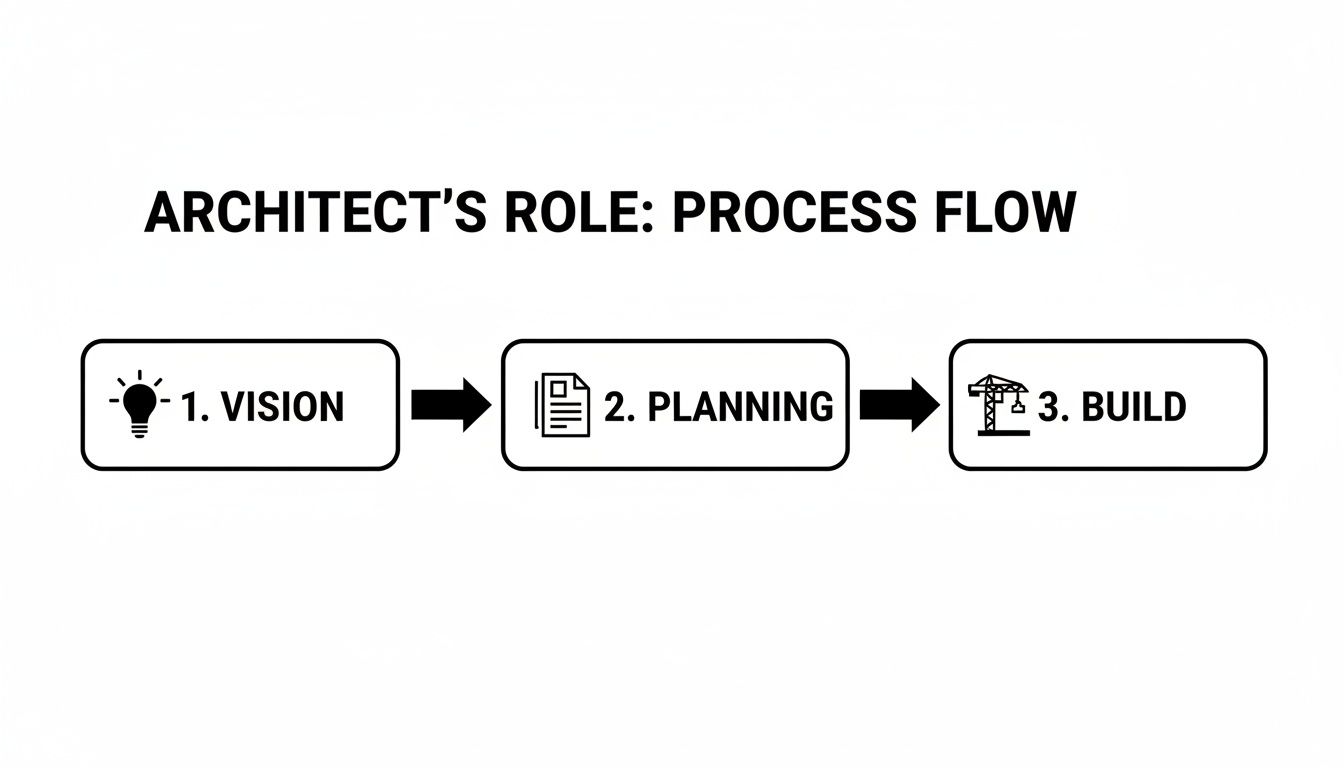
This visual captures the essence of how a creative vision is refined through rigorous planning before it can culminate in the physical build. Now, let’s explore what each of these stages involves in more detail.
Stage 1: The Brief and Concept Design
This is the foundational stage where your vision really begins to take form. It all starts with an in-depth conversation—our Initial Consultation. We take the time to listen and understand your lifestyle, your aspirations, your aesthetic tastes, and all the practical needs for your new home. It’s about much more than just the number of bedrooms; we want to get a feel for how you live, work, and relax.
From this detailed brief, we develop the Concept Design. This involves:
Feasibility Studies: We get to grips with the site’s potential and its constraints, taking into account local planning policies, the surrounding context, and any physical limitations of the plot.
Initial Sketches & Massing Models: We produce early drawings and simple 3D models. This helps us explore the layout, scale, and overall form of the building together.
Mood Boards & Precedent Imagery: We curate a visual palette to help define the architectural style and interior atmosphere you’re looking for.
This phase is highly collaborative. We hold regular reviews with you to ensure the emerging design is a true reflection of your goals before we move any further.
Stage 2: Design Development and Planning Submission
Once the concept is agreed, we start to refine it into a more detailed set of proposals. This Developed Design stage is where we add layers of detail, coordinating the work of other key consultants like structural engineers. We begin specifying materials, window systems, and key finishes, producing more sophisticated 3D visualisations and drawings to bring the design to life.
This is also the point where we prepare for the crucial planning milestone. Gaining planning permission in South West London requires a strategic and meticulously prepared application. Our role here includes:
Preparing a comprehensive set of planning drawings and all the necessary supporting documents.
Writing a clear Design and Access Statement that explains the thinking behind the design.
Submitting the application and acting as your agent, liaising directly with the local authority's planning officers on your behalf.
An experienced new build architect with local knowledge can expertly navigate this process, which significantly improves the chances of a successful outcome.
A well-managed architectural process is fundamentally about risk management. By following a structured sequence of stages, from concept design to construction oversight, you methodically de-risk the project, ensuring there are no costly surprises and that the final outcome meets both budgetary and quality expectations.
Stage 3: Technical Design and Tender
With planning permission secured, our focus shifts to the technical details needed for construction. The Technical Design phase is where we produce the construction information—a highly detailed package of drawings, schedules, and specifications. This package tells the building contractor exactly how the house must be built, covering every junction, material, and component.
This incredibly detailed information forms the basis of the Tender Process. We manage this for you by inviting a selection of trusted, vetted contractors to bid for the work. Running a competitive tender ensures you receive fair market value and allows us to appoint a builder with the right skills and experience for your specific project.
Stage 4: Construction and Handover
During the Construction Phase, your architect’s role evolves into contract administration and site inspection. We make regular visits to the site to monitor progress, check that the work is being carried out to the specified quality standards, and answer any questions from the building team.
This oversight is vital for maintaining quality control and keeping the project on track. When the build is complete, we conduct final inspections and manage the handover process, ensuring your new home is delivered exactly as we all envisioned, ready for you to move in and enjoy.
Navigating Planning and Regulations in South West London
Building a bespoke home in one of South West London’s most desirable postcodes, like Wimbledon, Richmond, or Wandsworth, is an incredible opportunity. But it also means stepping into the world of complex planning regulations, strict council policies, and sensitive conservation rules. For many of our clients, this stage is the biggest source of anxiety, but it really doesn’t have to be.
The planning system isn’t just a bureaucratic hurdle; it’s a framework designed to protect the unique character and quality of our local neighbourhoods. An experienced new build architect doesn’t just know these rules—they understand how to work creatively within them to deliver an outstanding design. Their expertise turns a potential minefield into a well-managed part of your journey.
This is especially relevant now, as the market shows real signs of renewed confidence. Recent data revealed that UK construction project starts rose by 7% towards the end of 2023. In London, the trend was even stronger, with new starts jumping 35% quarter-on-quarter, signalling major opportunities for residential projects across South West London and Surrey.
The Challenge of Gaining Planning Approval
Every London borough operates under its own Local Plan, a detailed document that governs everything from a building’s height and scale to its materials and architectural style. A planning officer’s job is to ensure any new home enhances, rather than detracts from, the local area. Without professional guidance, it’s all too easy to misread these guidelines, leading to a frustrating and costly refusal.
Think of your architect as both your translator and your negotiator. They build a robust, evidence-based case for your design, creating detailed documents that anticipate and answer the planners’ questions before they are even asked. They know how to show that your new home respects its surroundings while still delivering the modern, bespoke space you want.
Getting this right from the start is crucial. A planning refusal can set a project back by months and force a complete redesign. Working with an architect who has a proven track record in your specific borough significantly de-risks this entire phase, giving you invaluable peace of mind.
Designing in Conservation Areas and for Heritage Assets
South West London is filled with beautiful Conservation Areas and listed buildings, which adds another layer of complexity. These designations exist to preserve the special architectural or historic character of a place, and building here requires a delicate touch and a deep respect for heritage.
An architect's local knowledge is not just a 'nice-to-have'; it's a critical tool for success. It means they understand the unwritten rules and specific preferences of local planning authorities, which can make the difference between a swift approval and a lengthy battle.
For a new build in such a sensitive setting, the design must be exceptionally well-considered. It has to feel contemporary—of its time—but also be in complete harmony with its historic neighbours. A new build architect with conservation experience will know exactly how to strike this balance through:
Detailed Contextual Analysis: Deeply studying the architectural language of the surrounding streets—the shapes, materials, and details—to inform the new design.
Sympathetic Material Choices: Selecting high-quality materials, like traditional brickwork or natural slate, that harmonise with the existing local palette.
Appropriate Scale and Form: Carefully shaping the building’s size and massing so that it complements the rhythm and proportions of the streetscape.
Successfully securing permission for a new home in a Conservation Area is a true test of an architect’s skill. Our guide on navigating the planning application process offers more insight into this critical stage. By taking a strategic and informed approach, your architect unlocks the true potential of your site, paving the way for a beautiful home that will stand the test of time.
From Concept to Reality with Bespoke Design
This is where the magic really happens. It’s the creative core of the entire process, where your ideas, aspirations, and day-to-day needs start taking shape as a real, buildable home. A new build architect goes far beyond just aesthetics; their job is to design a space that is a genuine reflection of your lifestyle, weaving your unique requirements into the very fabric of the building.
Whether it’s a dedicated home cinema for family movie nights, a professional-grade gym, a climate-controlled wine room, or bespoke joinery for a library, the architect translates these personal wishes into a cohesive, functional design. This ensures the final home is yours and yours alone—not some off-the-shelf solution.

Translating Vision into Architectural Drawings
Those initial conversations and rough sketches soon evolve into a precise set of architectural drawings and immersive 3D models. This is an absolutely critical step, as it lets you see and feel the project long before a single spade hits the ground. It’s your chance to walk through the spaces virtually, understand the flow from one room to another, and see how sunlight will move through your home during the day.
This modelling process is all about collaboration and refinement. It gives you the opportunity to fine-tune details and make confident choices, ensuring there are no costly surprises during the build. Think of it as the bridge between imagination and reality, making the design tangible and allowing for adjustments with complete clarity.
The Technical Responsibilities of Your Architect
While creativity is the driving force, technical rigour is what ensures your home can be built safely, efficiently, and to an exceptionally high standard. A huge part of an architect’s role is managing the complex technical side of the project, acting as the lead coordinator between all the specialist consultants.
Here are some of the key technical duties they handle:
Structural Coordination: Working closely with structural engineers to guarantee the building is stable, robust, and sound, integrating the structural frame seamlessly into the design.
Building Services Integration: Collaborating with mechanical and electrical (M&E) engineers to plan out heating, ventilation, plumbing, and electrical systems so they are both highly efficient and discreetly hidden.
Material Specification: Researching and selecting every single material—from the bricks and roof tiles to the insulation and window glazing—to strike the perfect balance between performance, durability, cost, and appearance.
Regulatory Compliance: Ensuring every detail of the design adheres to the UK’s stringent Building Regulations, which cover everything from fire safety and accessibility to energy efficiency and ventilation.
This meticulous technical work is what transforms a beautiful concept into a functional, durable, and legally compliant home. It’s a sophisticated blend of art and science that underpins all high-quality residential architecture.
A truly bespoke design is not just about looks; it's about performance. It’s how an architect integrates advanced engineering, sustainable materials, and precise detailing to create a home that functions as beautifully as it appears.
The Hallmark of Excellence ARB and RIBA Accreditation
When you start looking for a new build architect, you’ll almost certainly come across the acronyms ARB and RIBA. They aren’t just letters after a name; they are your assurance of professionalism, skill, and ethical practice.
ARB (Architects Registration Board): This is the UK’s statutory regulator. It is illegal for anyone to call themselves an 'architect' in the UK unless they are on the ARB register. This protects you by confirming the individual has met demanding standards of education, training, and experience.
RIBA (Royal Institute of British Architects): This is a professional body for architects. Chartered membership (RIBA) signals a firm commitment to the highest standards of design excellence and professional integrity.
Choosing an ARB-registered and RIBA-chartered architect gives you peace of mind that you’re partnering with a qualified professional who is accountable for their work. This is more important than ever given the growing complexity of modern construction, which demands new skills in digital design and sustainable technology.
The UK's architecture industry is growing to meet these needs, with the workforce projected to reach an estimated 54,100 architects by mid-2026. At the same time, the sector faces a huge challenge to recruit nearly a million new workers over the next decade to address skills gaps, particularly in tech-focused roles. You can review the full UK construction industry outlook to understand these trends better. This challenge only highlights the value of selecting an accredited, forward-thinking practice for your project.
Understanding the Costs of a New Build Project
For any significant home project, having a frank and honest conversation about the budget is one of the very first steps. This section offers a clear-eyed look at the finances involved in a luxury new build in South West London, helping you approach your investment with total confidence.
When you bring a new build architect on board, the budget will be a central topic from day one. It’s crucial to understand not just the construction costs themselves, but also how architects’ fees are structured and, just as importantly, the immense value they bring to the table.
How Architect's Fees Are Structured
A good architect will be completely transparent about their fees from the outset. The structure often depends on the scale and complexity of your project, but typically falls into one of these common models.
Percentage of Construction Cost: This is a very common method for full-service projects. The fee is simply a set percentage of the final, agreed-upon construction cost, which keeps the architect's goals aligned with managing your budget effectively.
Fixed Lump Sum: If your project has a very clear and well-defined scope, a fixed fee can be agreed upon upfront. This gives you complete certainty on the architectural costs right from the beginning.
Time-Based Charges: For smaller consultancy tasks or early-stage feasibility work where the scope isn't yet fixed, an hourly or daily rate might make more sense.
These fees cover your architect’s comprehensive service, from those first concept sketches and navigating the planning process, right through to producing highly detailed technical drawings and providing oversight on-site. For a more detailed breakdown, you can read our homeowner's guide to understanding architect's fees.
A skilled architect doesn't cost you money; they save you money. Their expertise in design optimisation, contractor selection, and on-site problem-solving prevents costly mistakes and ensures you get the maximum value from your construction budget.
Maximising Your Return on Investment
Hiring a high-quality new build architect isn't an expense; it’s an investment that pays for itself throughout the project and for years to come. Their primary role is to protect your interests and add tangible value at every single stage.
This value comes from:
Optimising the Design: Crafting clever, efficient layouts that maximise usable space and natural light. This can sometimes even reduce the overall building footprint without sacrificing an ounce of liveability.
Improving Energy Efficiency: Specifying high-performance insulation, glazing, and heating systems that will dramatically cut your home’s running costs for decades.
Preventing Costly Errors: Producing meticulous, unambiguous technical drawings that prevent on-site mistakes and the expensive rework that follows.
Securing Reliable Contractors: Running a competitive tender process to ensure you get fair market value from a reputable, properly vetted builder.
This focus on delivering quality is a hallmark of the best firms. Even as the wider industry faces challenges, profit margins for UK architectural practices are projected to climb to 15.2% by 2026-27. This growth is being driven by specialised firms that deliver superior quality on bespoke homes—exactly where our focus lies. You can find more insights on the state of the UK architectural industry on Ibisworld.com.
Budgeting for a High-End New Build
So, what should you really expect to spend? For a high-end new build in South West London with premium finishes and fittings, construction costs typically start from £4,000 per square metre (£/m²). This figure can, of course, increase depending on the exact specification and architectural complexity.
From the very beginning of our process, we establish a detailed cost plan. This isn't a static document; it's a living one that your architect diligently manages and updates at key project milestones. This gives you full visibility and complete control over the budget, ensuring there are no surprises and allowing you to move forward with total clarity.
Your Essential Architect Selection Checklist
Choosing the right architect for your new build is probably the most important decision you'll make in the entire process. This isn't just about hiring a designer; it's about forming a long-term partnership built on trust, a shared vision, and honest communication. This checklist will help you ask the right questions and find a professional who will be a true advocate for your project.

Before you even start talking to architects, it’s worth taking some time to get your own thoughts in order. The clearer you are on what you want to achieve, the easier it will be to spot the right practice for you. Once you have a shortlist, use these points to guide your initial conversations.
Experience and Local Knowledge
An architect's portfolio is the best proof of what they can do. But don't just flick through the glossy final photos—try to dig into the story behind each home.
Relevant Project Experience: Have they actually designed and delivered new homes similar to yours in scale and style? Ask to see examples that weren't straightforward, ones that show how they solved problems on tricky sites.
South West London Expertise: How well do they know your patch? An architect with a solid track record of getting planning permission in boroughs like Merton, Wandsworth, or Richmond will have a real-world understanding of what the local council wants to see.
Portfolio Review: Do their finished homes genuinely excite you? While they'll be designing a home for you, not themselves, their past work is the best clue to their design taste and how much they care about the details.
Design Philosophy and Process
Every practice has its own way of working. It’s crucial that their design philosophy and process feel right for you and how you want to experience the journey of creating your home.
Choosing an architect is as much about personal chemistry as it is about professional credentials. You will be working closely together for a significant period, so a strong, trusting rapport is non-negotiable for a successful outcome.
Ask them to walk you through their design process. How do they take a client's brief and turn it into the first sketches? How much do they involve clients along the way? You’re looking for a partner who listens carefully and is brilliant at translating your ideas, not just stamping their own style onto your project.
Budget, Timeline, and Management
A beautiful design is only a success if it can be built on time and on budget. You need total clarity on the financial and project management side of things from your very first meeting.
Here are a few key questions to get you started:
Keeping to Budget: How do you set up and manage the project budget? Ask them how they keep costs under control as the design develops and during construction.
Planning the Timeline: Can they map out a realistic schedule for the project, from the first drawings all the way to handing you the keys?
Understanding the Fees: Ask for a clear, transparent breakdown of their fees and exactly what’s included. There shouldn’t be any grey areas.
Dealing with Problems: How do they plan for things that could go wrong, either on-site or during the planning stage?
Finally, never be afraid to ask for references. A quick chat with a couple of past clients gives you an honest, real-world insight into what it’s really like to work with them. With that complete picture, you can feel confident in appointing the right new build architect to bring your vision to life.
Frequently Asked Questions
Embarking on a bespoke new home project naturally brings up a lot of questions. Building a home is a huge undertaking, after all. Here, we’ve put together some clear, straightforward answers to the most common queries we hear from clients thinking about working with a new build architect in South West London.
How Long Does It Take to Design and Build a New House in London?
There’s no single answer to this, as every project’s timeline depends on its scale, complexity, and the local planning process. As a general guide, you should expect the initial design and planning permission stage to take somewhere between 6 to 12 months.
Once you have approval, the construction of a high-end home typically requires another 12 to 24 months. This is where a skilled architect really proves their worth—they’ll map out a realistic schedule from day one and manage the process to keep things moving, helping you avoid frustrating and costly delays.
What Is the Difference Between an Architect and a Building Designer?
In the UK, the title ‘Architect’ is legally protected for a reason. To call yourself an architect, you must be registered with the Architects Registration Board (ARB), a process that requires years of university education, extensive practical training, and proven professional competence.
Many, like us, are also chartered members of the Royal Institute of British Architects (RIBA), which signals a deeper commitment to design excellence and professional integrity. While a building designer might offer drawing services, the title 'Architect' is your assurance of a certain standard of quality, training, and accountability.
Can a New Build Be Sustainable and Energy Efficient?
Absolutely, and it’s something we’re passionate about. A core part of a modern new build architect’s job is to weave sustainable principles into the design from the very first sketch. This isn't about just adding a few solar panels as an afterthought.
Sustainable design isn’t an add-on; it’s an integrated approach that shapes everything from how the building is positioned on the site to the specification of every material. The result is a healthier home and significant long-term savings on running costs.
We look at everything from high-performance insulation and triple-glazed windows to renewable energy systems like ground source heat pumps. We also prioritise locally sourced or recycled materials where possible. This focus leads to incredibly energy-efficient, future-proofed homes that are cheaper to run and kinder to the environment.
Why Should I Hire a Local South West London Architect?
Hiring a local architect offers huge practical advantages. We bring a nuanced, first-hand understanding of the planning policies in boroughs like Merton, Richmond, and Wandsworth. We know what planners in these areas look for and the specific challenges of the local landscape.
Just as importantly, we have an established network of trusted local consultants, specialist contractors, and high-quality suppliers. This ensures a smoother process and gives you access to proven local craftsmanship, which is absolutely vital when designing in a Conservation Area or navigating a tricky urban site.
Ready to discuss your vision for a bespoke new home in South West London? Contact Harper Latter Architects today for a no-obligation consultation and discover how we can bring your project to life. https://harperlatterarchitects.co.uk