
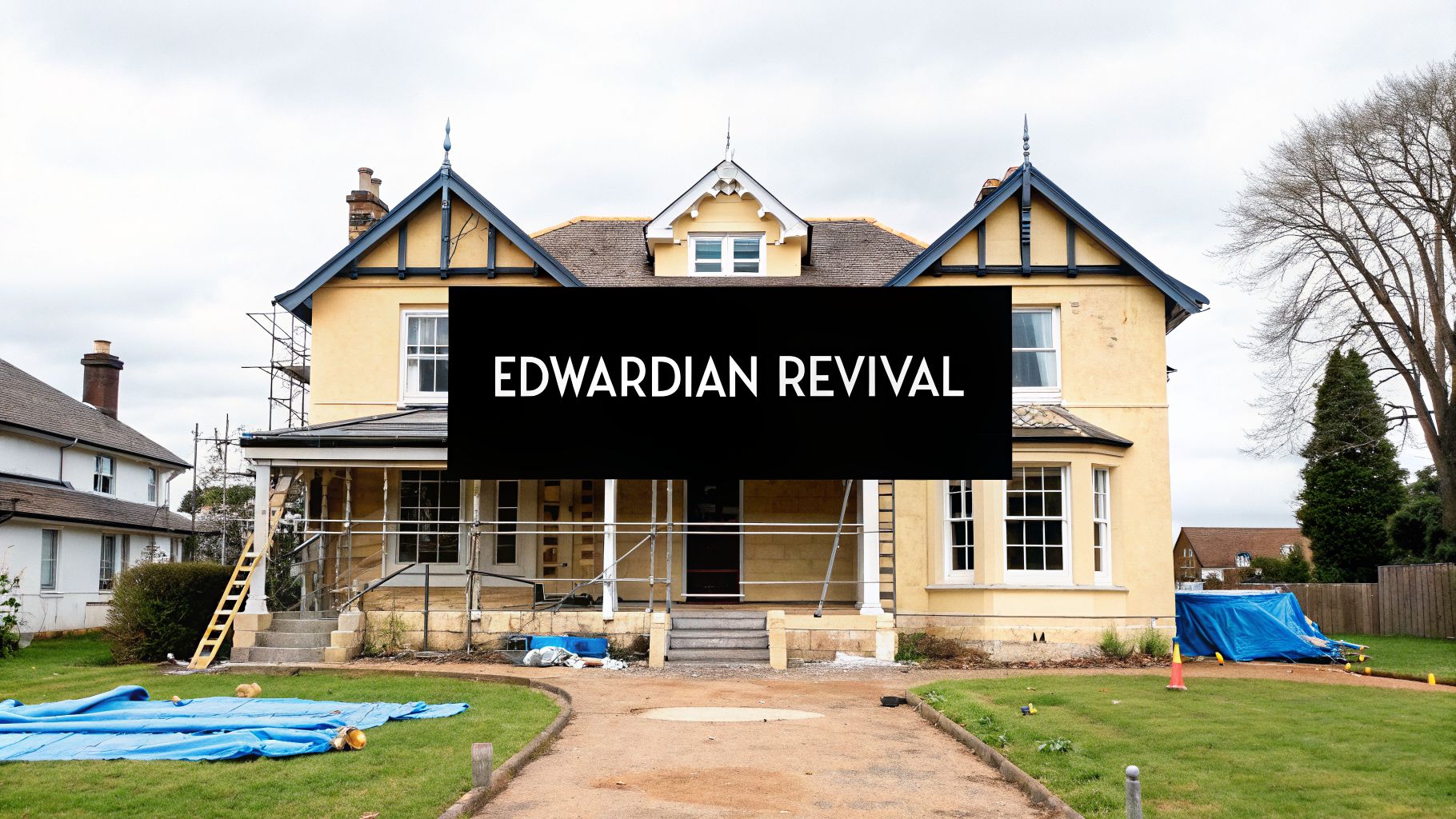
A Guide to Renovating Edwardian Houses in London
Bringing an Edwardian house back to life is about more than just renovation; it’s about blending history with modern living. It’s a delicate process of honouring original craftsmanship while introducing the comforts and style of today, turning these spacious, light-filled properties into truly exceptional homes. A great project is one that respects the building’s soul while perfectly capturing your own vision.
The Timeless Charm of an Edwardian Home Renovation
Edwardian properties, mostly built between 1901 and 1910, come from a golden age of British domestic architecture. You'll find them in desirable suburbs across the country, from Wimbledon to Richmond, celebrated for their generous scale, bigger windows, and a move towards a simpler elegance than their Victorian counterparts. It’s this built-in quality that makes them such fantastic candidates for high-end refurbishment.
Their solid construction and spacious interiors provide a brilliant canvas for ambitious ideas. Many of our clients are drawn to the potential for creating breathtaking open-plan living areas, often achieved with carefully considered side-return or rear extensions that bathe the home in natural light. The generous plots also lend themselves beautifully to basement conversions, carving out new spaces for a home cinema, gym, or a bespoke wine cellar.
Why These Homes Are So Well-Suited for Refurbishment
The quality of building during the Edwardian era was remarkably high, which is why so many of these homes have stood the test of time so gracefully. Their architectural character and robust construction make them worthy of significant investment, and it’s not unusual to find a wealth of original features still intact, waiting to be restored.
A few key characteristics make Edwardian homes perfect for a renovation project:
Generous Proportions: Taller ceilings and wider hallways create a wonderful sense of space and light that is so sought-after today.
Large Bay Windows: Those distinctive square or splayed bay windows are a classic feature, designed specifically to welcome in as much natural light as possible.
Detailed Craftsmanship: Many properties still have their original timber joinery, elegant fireplaces, and decorative plasterwork, all of which can be beautifully brought back to life.
Ample Garden Space: Larger gardens offer huge potential for extensions and landscape design, helping to create a seamless flow between inside and out.
Renovating an Edwardian house isn’t just an investment in bricks and mortar; it’s an investment in your lifestyle. The real goal is to shape a home that feels historically authentic yet perfectly suited to the rhythms of modern family life.
The Importance of a Conservation-Led Approach
Starting any project with a conservation-first mindset is absolutely key. This means we always prioritise the repair and restoration of original features over wholesale replacement. It’s an approach that not only preserves the character and soul of the property but also adds significant long-term value.
Edwardian houses make up a huge part of Britain's housing stock, especially in areas developed at the turn of the 20th century. They're a common and much-loved feature of our towns and cities. In fact, studies show that up to 90% of these properties retain their original period features, like distinctive fireplaces and flooring, making a sympathetic renovation both achievable and incredibly rewarding. You can learn more about the age of UK properties by exploring this official government report.
Starting with a Thorough Property Assessment
It's easy to get swept up in the excitement of a renovation, dreaming of paint colours and kitchen layouts. But with an Edwardian house, the most crucial first step is far more practical: a deep and honest property assessment. Before you pick up a single sledgehammer, commissioning a comprehensive building survey is the single best investment you can make.
Think of it as getting a full health check for your home. This isn't just about ticking a box for the mortgage lender; it's about uncovering the hidden truths that lie beneath the floorboards and behind the plaster. A specialist surveyor, especially one who knows period properties, will give you a clear-eyed view of the building's real condition, protecting you from nasty, expensive surprises down the line.
This initial deep dive sets the foundation for your entire project. Every decision, from structural work to the final finishes, will be guided by what you learn at this stage.
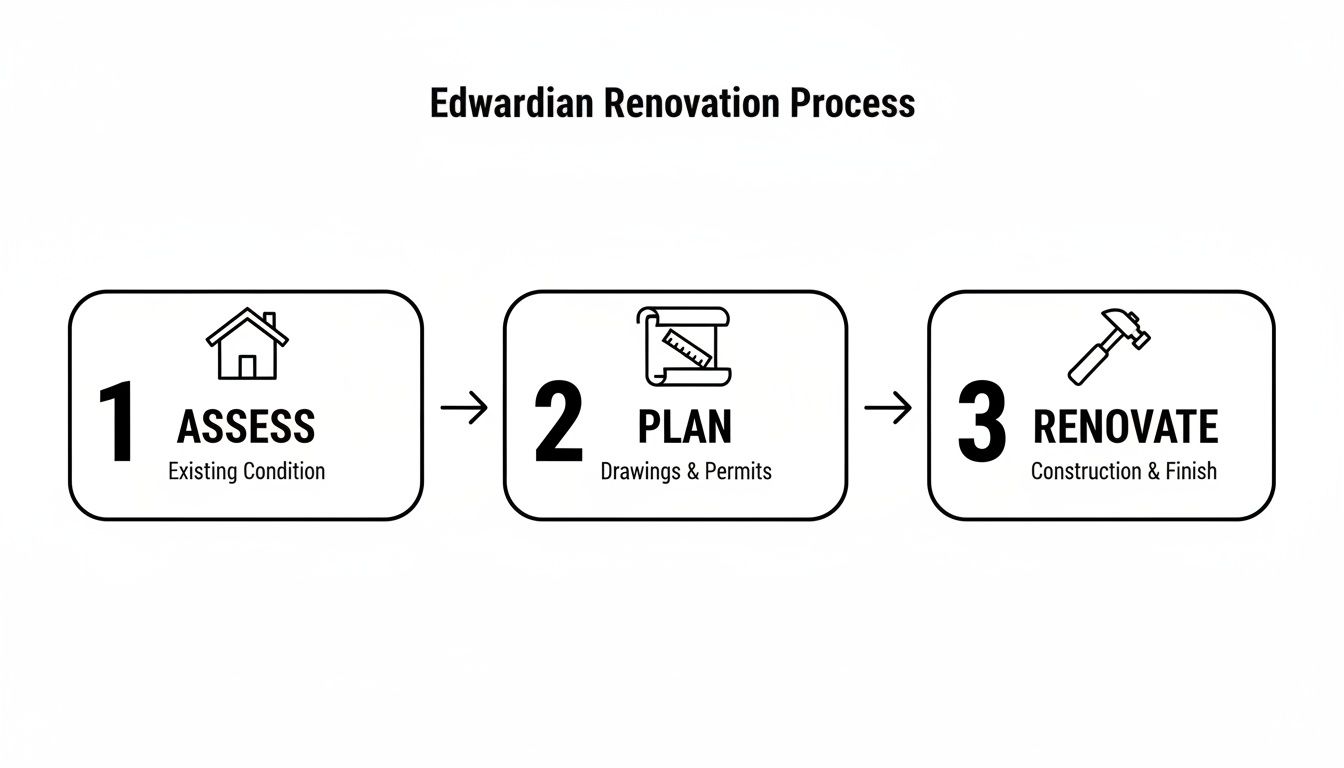
Getting this sequence right—Assess, Plan, then Renovate—is the key to a smoother project and helps you avoid costly missteps from the very beginning.
What a Building Survey Uncovers
When you’re dealing with a property over a century old, a standard homebuyer's report just doesn't cut it. You need a full building survey, often called a structural survey, which gets into the nitty-gritty of older construction methods. You can learn more in our detailed guide on why you need a structural survey.
A proper survey will give you a clear picture of several key areas:
Structural Integrity: This is about more than just a few cracks. The surveyor will check for signs of subsidence, assess the state of the roof structure, and examine the brickwork and lintels over those beautiful, large bay windows.
Damp and Water Ingress: Rising damp, penetrating damp from leaky roofs or gutters, and condensation are common culprits in houses of this era. A surveyor will identify the source and recommend a breathable solution that works with the building, not against it.
Timber Condition: Original floor joists, roof timbers, and sash windows will be inspected for woodworm or rot, which can compromise the building's structure and fabric.
Services: The survey will assess the state of the existing plumbing, wiring, and drainage. It's almost a given that Edwardian-era services won't be up to the demands of modern life and will likely need a complete overhaul.
It’s worth remembering that many Edwardian homes have a complex history. After a major housing boom, the market took a sharp downturn between 1900 and 1913, with nominal house prices falling by as much as 35%. This slump led to periods of disrepair for many properties. Thankfully, their solid construction meant they were often snapped up as desirable rentals, a testament to their enduring quality.
The Conservation and Repair Philosophy
Running in parallel with the technical building survey is a conservation audit. This is where you, ideally with a conservation-accredited architect, shift your focus to the home’s historic fabric. It's about adopting a "conserve and repair" mindset, which is the cornerstone of any sensitive, and ultimately more valuable, renovation.
This audit involves cataloguing all the original features—from cornicing and fireplaces to tiles and door handles—and assessing their condition. The aim is to hold onto as much of the building's authentic character as you possibly can.
A successful renovation respects the past while building for the future. Every decision, from repairing a sash window to restoring plasterwork, contributes to the home's unique story and enduring value.
When you find a feature that's damaged, there’s a clear hierarchy to follow. First, always try to repair it. If it’s beyond repair, the next best thing is a like-for-like replacement, crafted using traditional materials and methods. A modern equivalent should only ever be a last resort. This thoughtful approach, applied to everything from floorboards and joinery to stained glass, is what will ensure your home retains its soul.
Navigating Planning Permission and Conservation Rules
When you're thinking about renovating an Edwardian house, especially in London, the planning system is something you'll need to get to grips with pretty early on. For many homeowners, this is the most intimidating part of the whole process, a world of jargon and complex rules. But getting your head around the framework from the start is the secret to a smooth, successful project.
The planning system isn't there to stop you. Its purpose is to manage development in a way that respects the character of an area—and that’s especially true in places with a rich architectural history like Wimbledon, Richmond, or Wandsworth. The rules are really a guide towards a high-quality, sensitive design that enhances both your home and the local streetscape. Get it right, and your project adds value in every sense of the word.
Permitted Development Versus a Full Planning Application
The good news is that not every change to your home needs a full planning application. Many properties come with Permitted Development (PD) rights, which allow for certain types of extensions and alterations without needing formal permission from the council. These rights are a fantastic way to add space efficiently, often covering things like modest single-storey rear extensions or loft conversions.
However, these rights aren't a free-for-all; they come with strict limits on size, height, and materials. A typical rear extension under PD, for example, might be capped at a depth of three or four metres. For the more ambitious architectural changes that truly transform an Edwardian property—like a large open-plan extension, significant remodelling, or a new basement—a full planning application is almost always necessary.
Understanding the difference between your property's automatic rights and the need for formal approval is the very first step. An experienced architect can quickly tell you what’s feasible under PD and advise when a more detailed application is the right route for your vision.
Things get trickier if your home is in a conservation area. These designated zones often have what’s known as an 'Article 4 Direction' in place, which removes many standard Permitted Development rights. This means that even seemingly minor work, like replacing your windows or painting the brickwork, could require a planning application.
The Special Case of Listed Building Consent
If your Edwardian property is a listed building, you’re in a different league of control altogether. A listing flags a property as having special architectural or historic interest, and any work that might affect its character—inside or out—will require Listed Building Consent. This is a completely separate process from planning permission, and it is a criminal offence to carry out work without it.
The process for getting Listed Building Consent is demanding. It requires a deep appreciation of the property's history, its fabric, and what makes it significant. Your application will need to be thorough and will typically include:
A Detailed Justification: You must provide a compelling argument for every single change you want to make, explaining why it's necessary and how it will be done with care and sensitivity.
Method Statements: For any work touching the historic fabric, you'll need to detail the exact materials and techniques you'll use. This could be anything from how you plan to repair a stone window frame to the specific type of lime mortar you'll use for repointing.
Heritage Impact Assessment: This is a formal document that analyses the effect your proposals will have on the building's special character.
Working closely with the local authority's conservation officer is vital. Their job is to protect the heritage asset, so a collaborative and respectful approach always works best. A conservation architect will be an expert at handling these negotiations, presenting your case professionally and persuasively. If you're looking at a project in a protected area, you may find it helpful to read our detailed guide on planning permission within a conservation area. This kind of expertise is invaluable for navigating the complexities and avoiding the common pitfalls that can lead to costly delays or even an outright refusal.
Here’s where the real architectural creativity comes into play: blending the needs of a modern lifestyle with the undeniable charm of your Edwardian home. This isn’t about slavishly copying the past. It’s about creating a thoughtful, respectful dialogue between the old and the new, so your home works for you today while honouring its history.
The secret is to understand what makes your property special and then design additions that complement, rather than compete with, its character. Whether you’re dreaming of a light-filled kitchen or a sophisticated basement conversion, success lies in balancing scale, materials, and flow.
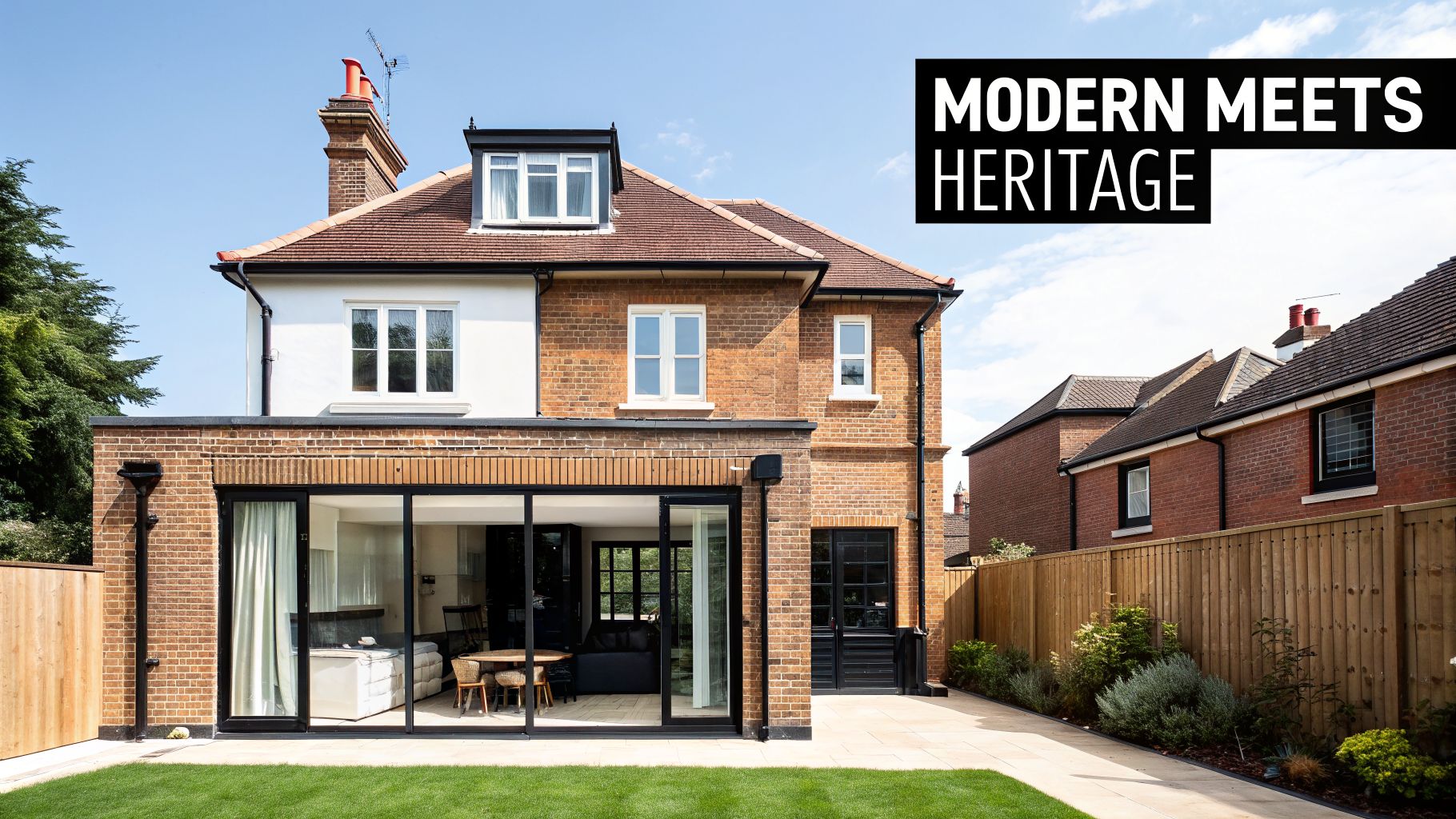
Designing Complementary Extensions
Thanks to their generous proportions and often sizeable gardens, Edwardian properties are perfect candidates for extensions. In our experience, the two most popular projects—the side-return and rear extension—can completely transform a home, turning a dark, poky kitchen into the bright, open-plan family hub everyone wants.
A side-return extension claims that often-neglected alleyway, squaring off the back of the property. It sounds simple, but this one change can revolutionise your ground floor, adding the width needed for a modern kitchen-diner with a seamless connection to the garden.
If you have more garden space to work with, a full rear extension can create a truly show-stopping living area. The challenge here is to avoid just adding a big box onto the back. A good architect will use setbacks, varied rooflines, and carefully chosen materials to break up the new structure, ensuring it feels subordinate to the original house.
Choosing the Right Materials
This is where the conversation between old and new becomes most visible. Your choice of materials will define whether the extension feels like a sensitive, high-quality addition or an awkward afterthought. The goal is to create a clear visual relationship between the original brickwork and the new structure.
We generally see two successful approaches:
Harmonious Blending: This involves sourcing materials that speak the same architectural language as the original house. For a red-brick Edwardian terrace in Wimbledon, this might mean using reclaimed London stock brick. The aim isn’t a perfect, invisible match—that’s almost impossible—but a harmonious blend of tone and texture.
Confident Contrast: Alternatively, a bold, high-quality contrast can look fantastic. A contemporary extension clad in zinc, timber, or framed with slim black steel and huge panes of glass creates a beautiful juxtaposition against the ornate historic brickwork. This approach clearly distinguishes old from new, a principle often favoured by conservation officers.
A successful extension on a period property makes its own architectural statement while respecting its host. The choice of materials should feel intentional, whether you are aiming for a seamless blend or a striking, high-quality contrast.
To help you weigh the options, we've outlined some common interventions for Edwardian homes. This table compares their benefits, key design factors, and what to expect from a planning perspective, particularly in South West London boroughs like Richmond or Wandsworth.
Comparing Edwardian Renovation Interventions
Intervention Type | Primary Benefit | Key Design Consideration | Likely Planning Requirement |
|---|---|---|---|
Side-Return Extension | Widens the ground floor, creating space for an open-plan kitchen-diner. | Maximising natural light with skylights; seamless interior flooring. | Often achievable under Permitted Development, but may need Planning Permission in Conservation Areas. |
Rear Extension | Creates a large, multi-functional living space with a strong garden connection. | Breaking up the mass; material choice (blend vs. contrast); avoiding overshadowing neighbours. | Almost always requires a Full Planning Application, especially for larger designs. |
Basement Conversion | Adds significant floor space without altering the exterior footprint. | Lightwells, ceiling height, and waterproofing are critical for a high-quality feel. | Requires a Full Planning Application, often with a Construction Management Plan. |
Loft Conversion | Adds a bedroom and bathroom, making use of existing volume. | Head height (especially with dormers); staircase placement; respecting roofline character. | Often Permitted Development, but dormers facing the street or in Conservation Areas will need planning. |
Each of these interventions offers a unique way to enhance your Edwardian home. The right choice depends entirely on your property, your budget, and how you want to live in the space.
Integrating Modern Services Thoughtfully
A huge part of any Edwardian renovation is bringing the building's services into the 21st century. This is your opportunity to introduce the comforts and efficiencies we now take for granted, from excellent heating to integrated smart home technology.
Underfloor heating is a brilliant choice for new extensions and basements. It provides a lovely, ambient warmth and, crucially, frees up wall space by getting rid of radiators. This allows for cleaner architectural lines and total flexibility with furniture layouts.
Likewise, now is the time to plan for smart home systems. By wiring for lighting, security, and audio-visuals during the build, you can achieve a completely seamless finish. Imagine controlling the mood in your open-plan living space from a single panel, with all the messy cabling hidden away for good.
Creating High-Impact Interior Spaces
Beyond the external shell, it’s the internal architecture that will define how you experience your home every day. Modern interventions can solve the classic functional issues of Edwardian layouts, improving flow and creating spaces that truly work for a contemporary family.
The classic example is creating that large, open-plan kitchen-diner that flows directly into the garden through full-width sliding or bifold doors. This has become the undisputed heart of modern family life—a multi-purpose space for cooking, eating, socialising, and relaxing.
Basement conversions open up another world of possibilities. What was once a dark, damp cellar can be excavated and transformed into a bright, luxurious space. With smart lighting design and strategically placed lightwells, these subterranean rooms can become anything from a home cinema and gym to a climate-controlled wine room or a self-contained guest suite. These are the bespoke spaces that add immense value and functionality, making your home ready for the future.
Creating a Sustainable and Future-Proof Home
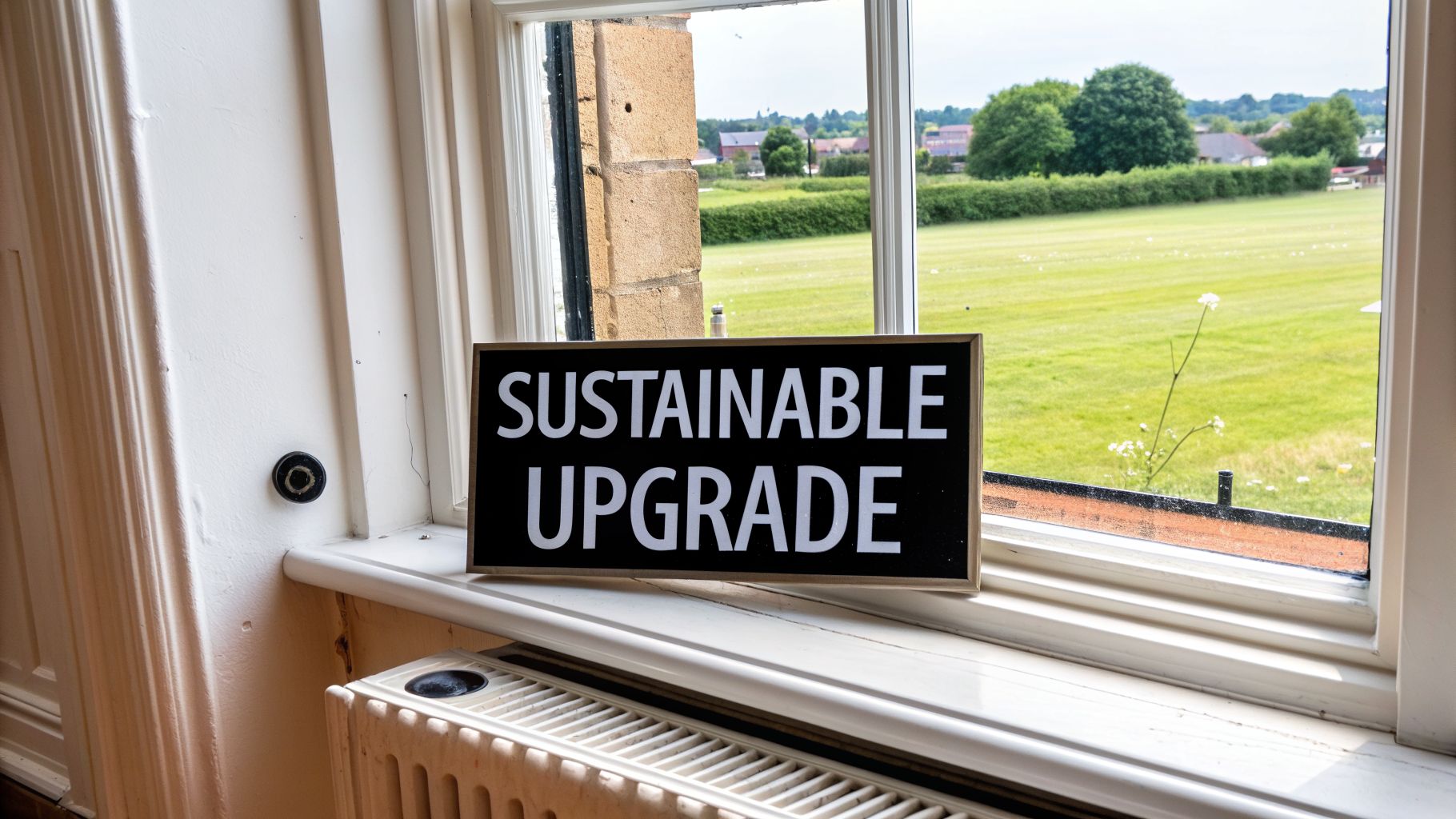
When we talk about renovating an Edwardian house, it's about so much more than just restoring its original beauty. The real goal is to make it fit for the future. Bringing a home built over a century ago up to modern energy efficiency standards is a delicate art, requiring a thoughtful approach that balances thermal performance with the unique architectural needs of a period property.
The main challenge is upgrading the building’s fabric without compromising its character or, crucially, its health. Older homes were designed to breathe. Sealing them up with modern, non-breathable materials is a recipe for disaster, often trapping moisture and leading to damp and timber decay. The only way forward is a ‘whole-house’ strategy, where every upgrade works in harmony.
The Fabric-First Approach to Insulation
Before you even think about fancy tech, your first priority should always be the building's fabric. This means focusing on insulation and draught-proofing, which is where you’ll find the most significant and cost-effective energy savings. It's a simple fact: poorly insulated homes can lose as much as 25% of their heat right through the roof.
For a typical Edwardian property, these are the key areas to tackle:
Roof and Loft Insulation: This is often the easiest win and delivers a huge impact. Insulating at the joist level in a cold loft is simple, but if you're converting the loft, you'll need to insulate between and under the rafters. We always recommend using natural, breathable materials like sheep’s wool or wood fibre for period properties.
Floor Insulation: Those beautiful suspended timber floors in Edwardian homes can be a major source of cold draughts. If you have cellar access, insulating from below is ideal. If not, quilts or nets can be fitted between the joists when the floorboards are inevitably lifted during the renovation.
Wall Insulation: Solid brick walls, a hallmark of Edwardian construction, are trickier to insulate. Internal wall insulation is usually the most practical route, but it’s vital to use breathable materials to prevent interstitial condensation from building up within the wall structure.
Upgrading Windows with Care
Original timber sash windows are a defining feature of Edwardian architecture. Please don’t rip them out—it should always be the absolute last resort. A far, far better approach is to restore and upgrade them.
This process involves a specialist overhauling the original frames, installing high-performance draught-proofing, and swapping the single glazing for slim-profile double-glazing units. These modern units are designed to fit within the original, delicate timber bars, preserving the authentic look.
Restoring and upgrading original sash windows is one of the most important investments you can make. It preserves the home's authentic character while delivering a huge improvement in thermal comfort and noise reduction, striking the perfect balance between heritage and performance.
This method retains the beautiful craftsmanship and aesthetic of the originals while bringing their performance much closer to modern standards. It’s a specialist job, but one that pays dividends in both the look of your home and your energy bills.
Installing Modern Heating and Renewable Technologies
Once the building fabric is as efficient as you can make it, then you can turn your attention to the heating system. An old, inefficient boiler will completely undo all your hard work on insulation.
A modern condensing boiler is the minimum you should consider, but we’re seeing more and more clients look towards renewable technologies. Air source heat pumps (ASHPs) are becoming a popular choice, even for period properties. They work by extracting heat from the outside air and are most efficient in well-insulated homes running at lower temperatures. This makes them a perfect partner for underfloor heating, which is often installed during a major renovation anyway.
Solar panels are another great option. While you might worry about their visual impact, modern solar slates or integrated panels can be fitted quite discreetly onto rear-facing or less prominent roof slopes. In our experience, this is often enough to satisfy planning officers, even in conservation areas.
For a deeper dive into these options, our guide to green sustainable architecture in the UK provides much more detailed insight. By combining these upgrades, you create a comfortable, cost-effective, and truly sustainable home that honours its historic soul.
Common Questions About Renovating Edwardian Houses
Taking on an Edwardian renovation is an exciting prospect, but it naturally brings up a lot of questions. From pinning down the budget to understanding timelines and sidestepping common pitfalls, having a clear picture from the start is absolutely essential.
Drawing on our experience as conservation architects in South West London, we’ve gathered the queries we hear most often from clients. These answers are designed to give you clarity and confidence as you begin to shape your project, helping you balance modern living with the unique character of a historic home.
How Much Does an Edwardian Renovation Cost?
This is always the first question, and the honest answer is: it varies enormously. The final figure for renovating an Edwardian house hinges on the property’s size, its condition when you start, the scale of your plans, and the quality of finish you’re aiming for.
For a comprehensive, high-end refurbishment in South West London that includes major structural work like an extension, you should be prepared for a significant investment. As a rough guide, you might budget anywhere from £2,500 to £4,000+ per square metre for the new build elements alone.
The overall project cost will be shaped by a few key variables:
Structural Condition: A property that needs major repairs, such as underpinning or a completely new roof, will have a much higher starting cost than one that’s in good structural shape.
Scope of Works: There’s a world of difference between a simple cosmetic refresh and a project involving a new basement, a two-storey extension, and a full internal reconfiguration.
Specification Level: The quality of the finishes you choose has a huge impact. Bespoke joinery, high-end kitchen appliances, natural stone bathrooms, and advanced smart home systems will all push the budget upwards compared to off-the-shelf options.
It’s a classic mistake to only focus on the main construction cost. Don't forget to factor in professional fees (architect, structural engineer, party wall surveyor), VAT, planning application fees, and a healthy contingency of 15-20% for those inevitable surprises.
How Long Does a Renovation Take?
When it comes to renovating an Edwardian property, patience is key. A full-scale project is a marathon, not a sprint, and the timeline is driven by far more than just the on-site construction. The design and planning stages that come first are just as critical.
Here’s a realistic breakdown of the phases:
Design & Planning (4-9 months): This is where you and your architect develop the design, prepare technical drawings, and handle any necessary planning applications. Navigating the planning process, especially in conservation areas or for listed buildings, can easily take several months.
Tender & Contractor Selection (1-2 months): Once planning is approved, the detailed drawings are sent out to a shortlist of suitable contractors. Taking the time to properly review their quotes and finalise contracts is a crucial step.
Construction (9-18+ months): The on-site build phase can vary dramatically. A major renovation with a basement and extension will likely take well over a year. Things like bad weather, supply chain issues, or discovering unexpected structural problems can all add delays.
From your first design meeting to finally moving in, a comprehensive Edwardian renovation can easily take 18 to 24 months, and sometimes longer.
What Are the Biggest Mistakes to Avoid?
Over the years, we've seen a few common missteps that can jeopardise a project, cause budgets to spiral, and create a lot of stress. Knowing what they are from the outset can save you a world of trouble.
Rushing the Design Phase One of the most frequent errors we see is an eagerness to get builders on-site before the design is fully resolved. A rushed design phase almost always leads to changes and decisions being made mid-build, which is invariably more expensive and disruptive. Invest the time upfront to get every detail right on paper first.
Choosing the Wrong Team Your project will only ever be as good as the team you assemble. Don’t just pick an architect or builder based on the lowest quote. You need professionals with specific, proven experience in renovating Edwardian houses, especially in your local area. Always check references and, if you can, visit their previous projects.
Ignoring the Building's Character A huge mistake is to force a generic modern design that pays no attention to the property’s soul. Edwardian homes have a distinct architectural language—their generous proportions, elegant bay windows, and beautiful period details. A successful renovation works with these features, not against them. This creates a respectful and beautiful dialogue between old and new, which not only looks better but also protects and enhances your home’s long-term value.
At Harper Latter Architects, we specialise in transforming Edwardian properties into exceptional, future-proof homes. If you're considering a renovation in South West London, we'd be delighted to discuss your vision. Explore our work and process at https://harperlatterarchitects.co.uk.