
What Is a Structural Survey and Why You Need One

A structural survey, known officially in the UK as a RICS Level 3 Home Survey, is the most exhaustive health check you can give a property. Think of it less as a check-up and more as a deep forensic investigation into a building's very bones. It goes far beyond a simple mortgage valuation to uncover the hidden issues that could turn your dream home into a financial nightmare.
Understanding the True Condition of Your Property
When you're looking to buy a property, especially in historic postcodes across South West London, you aren’t just buying bricks and mortar. You’re investing in a complex structure, complete with its own unique history and, very often, its own set of potential problems. A basic mortgage valuation just confirms the property's worth to the lender—it does absolutely nothing to protect you from underlying defects.
A full structural survey, on the other hand, is your first and most critical line of defence. It gives you impartial, expert insight into a building’s real condition, identifying everything from potential subsidence and damp to rotten floor joists and wall tie failure long before you commit to the purchase.
Why It’s Such an Essential First Step
For anyone buying an older, unconventional, or significantly altered property, this survey is simply non-negotiable. It’s the foundational step for any major refurbishment or purchase, ensuring you can plan your architectural project on solid ground. A surveyor’s detailed inspection assesses the property's structural integrity, pinpointing defects and repair needs—which is absolutely vital for buyers of older or luxury homes in areas like South West London, where we at Harper Latter Architects specialise in high-end refurbishments and heritage properties. You can discover more about the UK construction outlook from official government reports.
This detailed examination gives you the power to:
Negotiate Effectively: Armed with a surveyor’s list of required repairs, you’re in a much stronger position to renegotiate the asking price to cover future costs.
Plan with Confidence: The report provides your architect with the essential data needed to design a safe, compliant, and ultimately successful renovation.
Budget Accurately: By uncovering issues early, you can avoid the kind of unexpected expenses that could completely derail your project down the line.
Make an Informed Decision: In some cases, the survey might reveal problems so severe that walking away is the wisest and most financially prudent choice.
Ultimately, understanding what a structural survey involves is about empowering yourself with knowledge. It transforms a potentially risky investment into a well-understood asset, providing the solid foundation upon which you can build your architectural vision. Without it, you’re essentially buying blind, hoping that no expensive surprises are lurking just out of sight.
What a Structural Surveyor Actually Inspects
Think of a structural surveyor as a building detective. Their job is to look past the fresh paint and styled interiors to understand what’s really going on with the bones of a property. It’s a methodical, forensic investigation designed to uncover the true health of the building, from its highest chimney pot right down to the foundations.
This isn’t just a quick once-over. It's a deep dive that reveals not only existing issues but also flags potential problems that could cause headaches down the line. For anyone in South West London planning a major project—like digging out a new basement or sensitively refurbishing a period home—this insight is invaluable. It gives you and your architect a clear, honest blueprint of the building’s condition, preventing costly surprises once work begins.
From the Roof Down to the Ground
A surveyor’s inspection is systematic. They typically start outside, working their way around and down the building to assess every element that contributes to its stability.
Here’s a glimpse of what they’re looking for:
The Roof and Chimneys: The check begins at the very top. Is the roof structure showing any signs of sagging or spreading? Are tiles missing or damaged? Chimney stacks are carefully inspected for any lean, crumbling brickwork, or failed flashing—all common culprits for water getting in.
Walls and Foundations: The surveyor will examine the external walls for cracks, bulging, or damp patches. They’re trained to spot the tell-tale signs of structural movement, like distinctive stepped cracks in the brickwork. They’ll also look for clues around the property that might point to foundation issues, such as large, thirsty trees too close to the house or signs of historic drainage failures.
Drains and Guttering: It’s an area many people overlook, but a property’s drainage is absolutely critical. Blocked drains can saturate the ground and compromise foundations, while leaky gutters are a primary cause of penetrating damp. A visual inspection will quickly reveal if these systems are failing.
A Look Inside the Property
Once the exterior has been fully assessed, the investigation moves indoors. Here, the surveyor’s trained eye is looking for subtle clues that most people would easily miss.
Inside, the focus shifts to:
Floors and Joists: Do the floors feel overly bouncy or sloped? This could point to failing or rotten joists below. If they can get access, a surveyor will lift floorboards or inspect from a cellar to get a direct look at the sub-floor structure.
Internal Walls and Timbers: The surveyor will tap internal walls to understand their construction and listen for hollow sounds that could signal a problem. In the loft, they’ll inspect accessible timbers for wood-boring insects (woodworm) or fungal decay like the dreaded dry rot.
Damp and Ventilation: Armed with a damp meter and years of experience, a surveyor will hunt for evidence of rising damp, penetrating damp from outside, and condensation. They’ll also assess the building’s overall ventilation, as poor airflow is often the root cause of damp and mould.
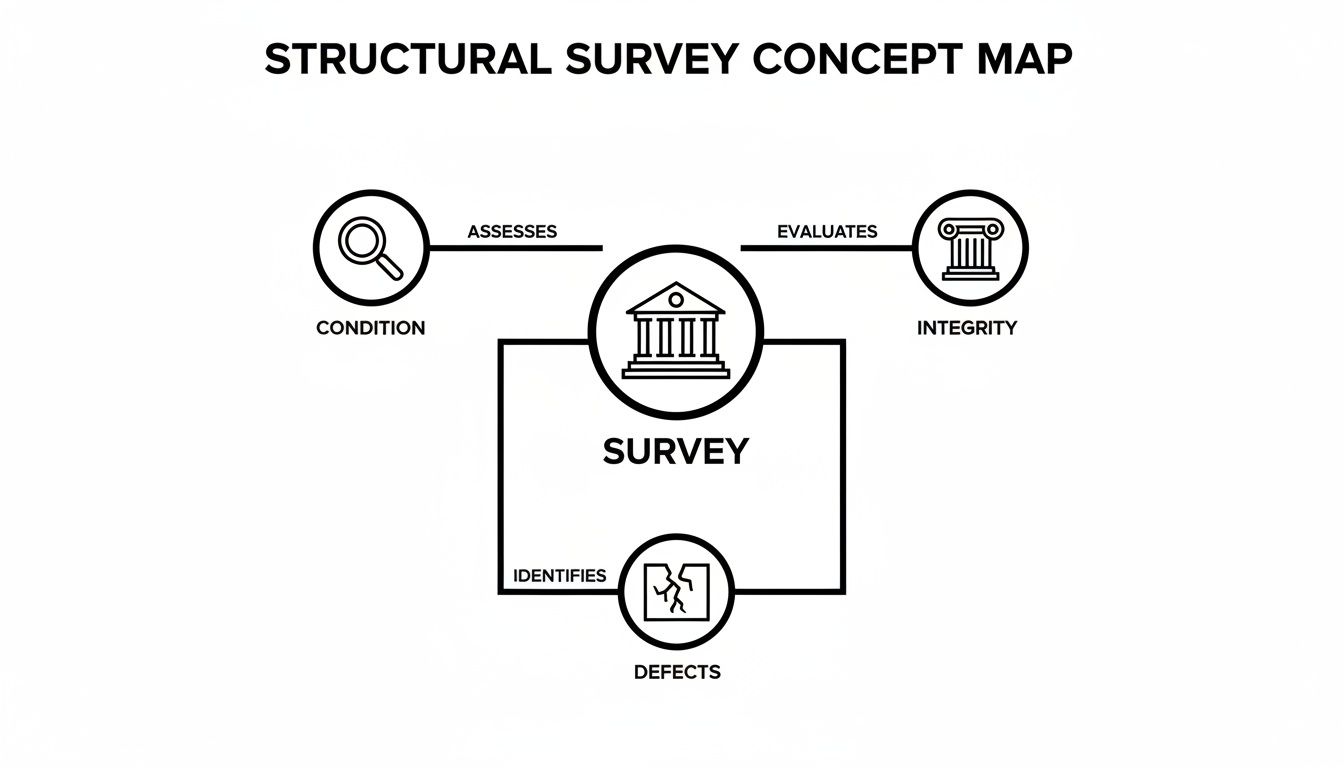
A structural survey is fundamentally about risk reduction. It systematically identifies and evaluates the physical condition of a property, translating complex observations into clear, actionable advice for the prospective owner.
This process is so important in a market where hidden defects are all too common. Across the UK, the repair and maintenance sector has recently seen a 1.0% fall, while new build work has edged up by 0.1%. As these home renovation statistics show, the condition of existing housing stock can be unpredictable, making pre-purchase checks vital before you commit to a major refurbishment.
Ultimately, every observation is connected back to what it means for you. The surveyor’s job is to demystify the building’s condition, giving you the clarity and confidence you need to plan your next steps.
When a Full Structural Survey Is Non-Negotiable
While a detailed survey offers peace of mind for any property purchase, some situations turn it from a sensible precaution into an absolute necessity. For ambitious homeowners in South West London, especially those planning significant work, skipping this step can be a costly—and sometimes catastrophic—mistake.
It’s not just about uncovering hidden problems. It's about gathering the foundational data your architect needs to design a successful project. In these high-stakes scenarios, the question isn’t whether you can afford a full structural survey, but whether you can afford not to have one.
Properties with Age and Character
The charm of a period property is undeniable, but age brings a unique set of potential issues. Materials degrade, and building techniques from past eras don’t always meet modern standards.
A full structural survey is non-negotiable for:
Older Buildings: Any property built before 1930 should automatically be on your list for a Level 3 survey. Victorian and Edwardian homes, common in areas like Richmond and Wimbledon, often hide issues with damp, timber decay, historic subsidence, and outdated structural elements that a basic report would almost certainly miss.
Listed or Heritage Properties: If you’re buying a listed building, a comprehensive survey is your most important tool. These properties are protected by strict regulations. A surveyor with conservation experience can spot problems that will demand specialist—and often expensive—repair methods approved by local planning authorities.
Unconventional Construction: Is the property built with a timber frame, concrete, or another non-standard method? These require specialist knowledge to assess correctly, making a detailed structural investigation essential.
When Ambition Meets Reality
Perhaps the most critical time to insist on a full structural survey is before you embark on a major renovation. It provides the essential engineering data your architect needs to design a safe, compliant, and successful project.
The survey transforms from a pre-purchase checklist into a fundamental piece of your project's technical plan. It’s the blueprint of the existing structure that informs every design decision, preventing budget blowouts and unforeseen delays down the line.
This is especially true for complex projects. If your plans involve significant structural changes, a survey is the first step. For example, before even thinking about a basement extension, you must understand the existing foundations and ground conditions. Similarly, as our guide to the Party Wall Act explains, having clear, factual information about your property's structure is vital before starting work that could affect your neighbours.
Significant or Poorly Documented Alterations
A property that has been heavily extended or altered over the years is a bit of a mystery box. Without a full survey, you have no way of knowing if the work was carried out to a professional standard or if it has compromised the original structure.
A surveyor will hunt for signs of poorly executed work, such as inadequate steel supports for a wall removal or an extension that is pulling away from the main building. This is your only chance to identify and address these liabilities before they legally become your problem.
Matching Your Project to the Right Survey Level
Choosing the right survey can feel confusing, but it often comes down to the nature of the property and the scale of your ambition. This table provides a quick guide to help you decide.
Your Project or Property Type | Recommended Survey | Why It's Recommended |
|---|---|---|
Standard modern property purchase (built post-1980, no major works planned) | RICS Level 2 Survey (HomeBuyer Report) | Offers a good overview of condition for a conventional, well-maintained home without significant defects. |
Purchasing an older home (pre-1930) or a listed building | RICS Level 3 Survey (Full Structural Survey) | Essential for identifying age-related defects, unauthorised alterations, and specialist repair needs. |
Planning a major renovation (extension, loft conversion, internal reconfiguration) | RICS Level 3 Survey (Full Structural Survey) | Provides the critical structural data your architect and engineer need for design and planning. |
Considering a basement extension or significant below-ground work | RICS Level 3 Survey (often with specialist geotechnical input) | Non-negotiable for assessing foundations, soil conditions, and the water table. |
Buying a property with visible defects (large cracks, damp, uneven floors) | RICS Level 3 Survey (Full Structural Survey) | A basic report won't provide the depth of analysis needed to diagnose the cause and cost of repair. |
Ultimately, for the kind of complex conservation and basement extension projects we handle in heritage-heavy South West London, a Level 3 survey is the gold standard.
According to HomeOwners Alliance 2025 figures, you can expect average costs to be around £500–£1,500, though this can increase in premium markets like London. For more detail on material costs affecting repairs, the government's construction materials commentary offers further insight.
How to Decode Your Structural Survey Report
When your structural survey report arrives, it can feel like you've been handed a dense, technical manuscript written in another language. It’s often packed with specialist terms, detailed observations, and recommendations that might seem a bit overwhelming at first glance. But learning to read this document is the key to unlocking its immense value, whether you're negotiating a property purchase or briefing your architect for a major renovation.
The good news is that reports from the Royal Institution of Chartered Surveyors (RICS) are designed with a clear, logical structure. The most helpful feature is the simple ‘traffic light’ system they use to categorise the condition of every part of the property. It gives you an immediate visual guide to the urgency of any issues found.

Understanding the RICS Traffic Light System
This system uses Condition Ratings to classify defects, making it easy to see what needs your attention first. Think of it as the surveyor’s way of sorting their findings, from minor notes to major red flags that you can't ignore.
Here’s a simple breakdown of what each rating means for you:
Condition Rating 1 (Green): This is the best you can hope for. It means no repair is currently needed and the element in question is in good shape. Seeing a CR1 for major structural components like the roof or foundations is a great sign.
Condition Rating 2 (Amber): This highlights defects that need repairing or replacing but aren’t considered urgent. Things like a few slipped roof tiles, ageing guttering, or minor non-structural cracks that just need monitoring fall into this category. These are issues to factor into your future maintenance budget.
Condition Rating 3 (Red): This is the most critical rating. A CR3 flags serious defects that demand urgent repair, replacement, or further investigation. Issues like active structural movement, significant damp, or timber decay will get this rating. These are the findings that could seriously impact your decision to purchase or become major points in price renegotiations.
A structural survey report is not just a list of problems; it is a strategic tool. The Condition Ratings empower you to move from simply knowing what a structural survey is to understanding exactly what the findings mean for your financial and architectural plans.
Reading Between the Lines and Next Steps
Beyond the traffic light colours, the report will give you detailed commentary on each finding. The surveyor will explain the likely cause of the problem, what could happen if it's left unaddressed, and what they recommend you do next. This is where you’ll gain invaluable insight into the property's overall health.
Sometimes, the surveyor will recommend a follow-up report from a specialist. Don't panic; this is quite normal. It just means the issue requires a deeper level of expert diagnosis than a visual inspection can provide.
Common specialist reports include:
Damp and Timber Survey: If the surveyor finds signs of significant damp or potential wood rot, a specialist can conduct more invasive tests to pinpoint the cause and recommend a specific treatment plan.
Structural Engineer’s Report: For complex issues like subsidence or significant cracking, a chartered structural engineer will be needed to design a specific remediation scheme.
Drainage Survey: A CCTV survey can be sent down into underground drains to check their condition, which is crucial if blockages or leaks are suspected of causing damp or ground movement.
Understanding these findings is also vital for any future work. For instance, any required structural repairs will need to comply with UK building regulations. To get a feel for what's involved, our quick guide to building control inspections offers a helpful overview.
Ultimately, the report gives you the critical information needed to make informed decisions, brief your architect accurately, and proceed with your project on a solid, well-understood foundation.
Choosing the Right Chartered Surveyor in London
Picking the right professional to carry out your structural survey is just as important as the survey itself. In a competitive market like London, not all surveyors bring the same level of expertise to the table. Your goal should be to find a qualified, experienced individual who can deliver the detailed insights you need—especially for a high-value or period property in South West London.
The first tick-box is accreditation. It’s absolutely essential to choose a surveyor who is a member of the Royal Institution of Chartered Surveyors (RICS). This isn't just a fancy title; it's a guarantee of professionalism, high ethical standards, and proven competence. RICS accreditation ensures your surveyor is held to the industry's toughest benchmarks and carries the right professional indemnity insurance.
Here is a look at the official RICS website, the governing body for chartered surveyors in the UK.
This homepage represents the gold standard in property professionalism, ensuring that any member you hire adheres to strict codes of conduct and technical expertise.
Key Questions to Ask a Potential Surveyor
Before you instruct a surveyor, it’s worth doing a little due diligence of your own. A quick conversation can tell you a lot about their experience and whether they’re the right fit for your specific property. Going in with the right questions will help you sort the true experts from the generalists.
Here are a few critical questions to ask:
What’s your specific experience with properties like mine? Don’t be afraid to get specific. Ask if they have recently surveyed Victorian terraces in Richmond or Edwardian homes in Wimbledon. Local expertise is invaluable.
Can you provide a sample report? This is a great way to see the level of detail you can expect and make sure their reporting style is clear and easy to understand.
What exactly is included and excluded in the survey? It's vital to clarify the scope of the inspection. For instance, most surveyors will only carry out a visual check of services like electrics and plumbing.
What are your timelines? Find out how soon they can conduct the survey and when you can expect to receive the final report.
The Value of Local Expertise
While RICS accreditation is the baseline, deep local knowledge is what really sets an excellent surveyor apart. A professional who works regularly in South West London will have a built-in understanding of the area’s unique challenges. They’ll be familiar with the prevalent soil conditions, like London Clay, which can be a major contributor to subsidence.
They will also recognise the common building quirks and historic defects that are specific to the local housing stock. This kind of localised insight can be the difference between a standard, box-ticking report and a genuinely useful document that gives you actionable advice. It’s this level of detail that informs not just your purchase but also the architectural and engineering decisions that follow. Speaking of which, it's often useful to understand the differences between professionals, and you can learn more by reading our guide comparing a structural engineer vs an architect.
From Survey Findings to Architectural Vision
Think of your structural survey report not as the final word, but as the first chapter in your home's next story. This detailed document is where the real work begins, bridging the gap between the property as it stands today and the home you’ve always imagined.
For our architectural team, the survey is the foundational blueprint for exceptional design. The data it contains informs every single decision we make, whether we're planning a sensitive restoration of a listed building in Richmond or designing a complex basement extension for a Victorian terrace in Wimbledon. It provides the essential technical constraints that, paradoxically, give us the freedom to innovate safely.
Translating Data into Design
A surveyor’s findings are a roadmap to the property’s strengths and weaknesses. Understanding these allows us to push creative boundaries without ever compromising the building’s integrity.
For Extensions: A survey revealing robust foundations might give us the green light for a more ambitious, glass-heavy extension. On the other hand, poor ground conditions would steer us towards designing a lighter-weight timber-frame structure instead.
For Refurbishments: Knowing the specific wall constructions or the condition of the floor joists helps us plan internal reconfigurations that are not only beautiful but structurally sound. No guesswork involved.
For Heritage Properties: The report is invaluable for highlighting original features that must be preserved. It also details which modern intervention methods are appropriate for the historic fabric, ensuring a sympathetic and approved approach.
A structural survey provides the essential data we need to innovate with confidence, ensuring your creative vision is built on a solid and secure foundation. It removes the guesswork, transforming potential risks into calculated design opportunities.
This philosophy is central to how we work, turning the hard data from a survey into architectural reality. Our structured process, as you can see below, shows exactly how this early-stage analysis feeds directly into the creative and technical stages that follow.

This process shows that technical due diligence, like a survey, is the bedrock upon which successful concept design, planning, and construction are built. By integrating this knowledge from day one, we can navigate challenges proactively and deliver a home that is both inspiring and enduring.
Your survey is the first, crucial step in this collaborative journey. It provides the clarity needed to turn your vision into a precisely executed, beautifully realised home.
Your Questions Answered: A Practical Guide to Structural Surveys
Even when you've got a good grasp of the basics, it’s completely normal to have a few more questions rattling around. This is where we get into the practical, on-the-ground details that homeowners in South West London really want to know. Think of this as the final piece of the puzzle, clarifying the timeline, the costs, and the crucial differences that will help you move forward with confidence.
How Long Does a Structural Survey Take?
This is probably the number one question we hear, and the answer comes in two parts: the time on-site and the time it takes to get the report in your hands.
The physical inspection itself can last anywhere from a few hours to an entire day. It really depends on the property. A sprawling, Grade II listed house in Richmond, for instance, is a very different beast to a standard 1980s build and will demand a far more detailed investigation. After the surveyor has meticulously gone through the property, you can expect to receive their comprehensive written report within five to ten working days. This gives them the time needed to properly compile their findings, analyse photos, and write up clear, actionable recommendations.
Can I Renegotiate the Property Price with the Survey Findings?
Absolutely. In fact, this is one of the most compelling reasons to get a full structural survey in the first place. If the report unearths serious defects that come with a hefty repair bill—anything flagged with a RICS Condition Rating 3—you’re in a strong position to talk numbers.
For example, if the survey reveals the roof needs replacing at a cost of £15,000, or it identifies subsidence that requires underpinning for an estimated £25,000, it's entirely reasonable to go back to the seller. You can ask for a reduction in the asking price to cover these unexpected costs, or you could request that they handle the repairs themselves, to an agreed standard, before the sale completes.
What Is the Difference Between a Structural Survey and a Mortgage Valuation?
This is a critical distinction, and one that trips up a lot of buyers. A mortgage valuation is not a survey. It’s a brief check carried out purely for your mortgage lender’s benefit, not yours. Its only job is to confirm the property is worth the money you’re borrowing against it.
A mortgage valuation protects the lender’s money. A structural survey protects your investment, your home, and your future financial security.
The valuer might only be at the property for 20 minutes and won't be looking for defects. A structural survey, on the other hand, is a deep dive into the building’s health, designed to arm you, the buyer, with all the knowledge you need to avoid any nasty surprises down the line.
Does the Survey Cover Electrics and Plumbing?
A structural surveyor is an expert in the bones of a building—its stability and fabric—not a specialist in its circulatory system. While they will give the services a visual once-over, their assessment is naturally limited.
Here’s what a surveyor will typically do:
Visual Check: They’ll note the apparent age and condition of the wiring, the boiler, and any visible pipework.
Flag Obvious Issues: They will highlight any clear red flags, like an old-fashioned fuse box, exposed wiring, or tell-tale signs of leaks.
Recommend Further Checks: If they spot anything concerning, they will strongly advise you to bring in a qualified electrician or a Gas Safe registered heating engineer for a specialist report.
So, while the survey won't give you a definitive all-clear on the services, it acts as an essential early warning system, letting you know if you need to call in the experts before you commit.
Your survey findings are the bedrock of any successful architectural project. At Harper Latter Architects, we use this crucial data to inform our designs, ensuring your vision for a new build, luxury refurbishment, or heritage restoration in South West London is built on solid ground.
Ready to take the next step? Explore how we can turn your plans into reality by visiting Harper Latter Architects.

Comments