
Building Control Inspection: Quick Guide to UK Compliance

A building control inspection is a series of official checks that happen during your construction project to make sure the work complies with UK Building Regulations. Think of it as a crucial health check for your home, verifying that everything from the foundations to the fire safety measures is up to scratch.
It’s all about meeting national standards for safety, structural integrity, and energy efficiency.
What Is Building Control and Why It Matters for Your Home
Starting a major home project can feel like a huge undertaking, but getting your head around building control is the first step towards a successful, legally sound build. It’s a mandatory process for most types of construction work, including new builds, extensions, and significant alterations.
Imagine building control as the official rulebook that ensures every structure is safe to live in. It’s a bit like a car's MOT—it provides official proof that your home has been built correctly and safely. This process is completely separate from planning permission, which is concerned with the look of a project and its impact on the local area. Building control, on the other hand, dives deep into the technical side of the construction itself.
The Core Purpose of an Inspection
The main goal here is simple: to protect the health and safety of people in and around buildings. A building control surveyor—either from your Local Authority or a private Approved Inspector—will visit your site at key stages. They aren't there to manage your builders day-to-day, but to provide an impartial check that the critical work meets minimum legal standards.
These inspections ensure your project is ticking all the right boxes. Below is a quick summary of the core areas a surveyor will be looking at.
Compliance Area | What It Covers | Why It's Important |
|---|---|---|
Part A: Structure | Foundations, beams, walls, and roof structure. | Ensures the building is stable and can safely carry all loads without risk of collapse. |
Part B: Fire Safety | Escape routes, fire alarms, and fire-resistant materials. | Provides early warnings and safe exit routes in the event of a fire, protecting occupants. |
Part L: Conservation of Fuel and Power | Insulation, airtightness, and efficient heating systems. | Reduces energy consumption, lowers utility bills, and minimises environmental impact. |
Part H: Drainage and Waste Disposal | Installation of sanitary pipework and drainage systems. | Prevents foul water leaks, blockages, and health hazards from improper waste management. |
Part P: Electrical Safety | Safe installation of electrical circuits and components. | Protects against electric shocks and fire risks from faulty wiring. |
Part F: Ventilation | Adequate airflow to prevent condensation and mould. | Maintains good indoor air quality and protects the building's fabric from moisture damage. |
As you can see, these regulations are fundamental to creating a home that is not just beautiful, but also safe, healthy, and built to last.
A building control inspection isn't about passing or failing in a traditional sense. It's a collaborative process aimed at ensuring the final build is safe, compliant, and durable, protecting your investment and your family for years to come.
Why Compliance Is Non-Negotiable
Successfully navigating the inspection process ends with one crucial piece of paper: a completion certificate. This document is absolutely vital.
Without it, you will run into major problems when you try to sell or remortgage your property. Solicitors will always demand it as proof that the work was completed correctly and legally.
Worse still, failing to follow Building Regulations can lead to enforcement action from the local council. They have the power to force you to alter or even demolish any non-compliant work, all at your own expense. Understanding this process from day one is non-negotiable.
To learn more, you can explore our detailed guide to Building Regulations compliance for a deeper insight into the requirements.
The Key Stages of a Building Control Inspection
A building control inspection isn't a single, one-off event. It’s actually a carefully choreographed series of site visits that line up with the major milestones of your construction project, making sure that critical work is checked before it gets covered up. For any residential build, but especially for high-end projects, understanding this sequence is vital for keeping everything on track.
Think of it as a relay race. Each stage must be successfully completed before the baton is passed to the next. From the moment the first spade hits the ground to the final coat of paint, a building control surveyor is a key figure, verifying the quality and compliance of the work. Each visit is a checkpoint designed to catch potential issues early, stopping them from snowballing into major, costly problems down the line.
This systematic approach is the bedrock of the entire building control process. The diagram below visualises this simple, three-part journey from initial project plans to that all-important final certificate.

As you can see, the inspection phase is the essential bridge between design and certified completion. It’s the official confirmation that what was designed on paper has been built correctly and safely on site.
Commencement and Foundations
The very first site visit is often the Commencement Inspection. This typically happens once your builder has marked out the building’s footprint and excavated the trenches for the foundations. It’s arguably one of the most important checks of the entire build.
Here, the surveyor will assess the ground conditions to ensure they match what the structural engineer specified in their drawings. They’ll check the depth and width of the trenches and look for any potential issues like tree roots, soft spots, or evidence of previous structures that could compromise stability. Getting the foundations right is non-negotiable; they are the literal bedrock of your home.
A common point of failure here is proceeding with a concrete pour before the trenches have been inspected and approved. This is a critical error that can lead to an order to dig everything up, causing serious delays and expense.
Drainage and Ground Floor
Once the foundations are signed off and the concrete is poured, the next key stage is the Drainage Inspection. Before the ground floor slab is constructed, the inspector will return to check all the below-ground drainage pipework.
This inspection verifies that:
Pipes are laid to the correct falls to ensure waste flows away efficiently.
The materials used are appropriate and correctly jointed to prevent leaks.
Adequate access points (known as rodding eyes) are included for future maintenance.
The system is correctly connected to the public sewer or an off-mains treatment plant.
At this point, the inspector will also check the damp-proof course and any insulation being installed at the ground floor level. This is the last chance to see these crucial elements before they are permanently encased in concrete.
Superstructure and Roof
As your home begins to take shape and grow upwards, the Superstructure Inspection becomes the focus. This stage can sometimes involve multiple visits, depending on the complexity of the project. The surveyor will check all the load-bearing elements that form the building's skeleton.
This includes verifying the size and placement of structural steel beams (RSJs), floor joists, and roof timbers against the approved architectural and engineering drawings. For a traditional masonry build, they will examine the blockwork and brickwork, checking wall ties and cavity insulation. For a timber-frame construction, they will inspect the frame itself for structural integrity and correct assembly.
Pre-Plaster and First Fix
Just before the internal walls are boarded and plastered, a crucial "first fix" inspection takes place. Often called the Pre-Plaster Inspection, it’s the last opportunity for the surveyor to see all the hidden workings of your home.
They will check a variety of elements, including structural timbers, steel beams, and any concealed pipework or ventilation ducts. They pay close attention to the installation of insulation in walls and ceilings to ensure it meets the thermal efficiency requirements under Part L of the Building Regulations. It’s a final, vital check that everything behind the walls is safe and compliant before it’s sealed away for good.
Completion and Final Certificate
The final hurdle is the Completion Inspection. Once all the work is finished, the surveyor will conduct a thorough walk-through of the entire property. They will check everything from fire safety measures like smoke alarms and escape windows to staircase handrails, ventilation systems, and final drainage tests.
If the surveyor is satisfied that all work complies with the Building Regulations, they will issue the all-important Completion Certificate. This document is your official proof that the project was built to the required standards. It's absolutely essential for selling or remortgaging the property in the future.
Choosing Your Inspector: Local Authority vs. Private
Once you’ve mapped out your project and understand the inspection stages, you face one of the most significant early decisions: who will carry out your building control inspections? This choice doesn't just tick a box; it fundamentally shapes the compliance journey of your build.
In the UK, you have two main routes. The first is your Local Authority Building Control (LABC), the traditional, council-run service. The second is a government-approved private firm, known as an Approved Inspector. Both are authorised to ensure your project meets the standards of the Building Regulations, but their approach, structure, and service style can differ greatly.
This decision is about finding the right partner for the complexity and pace of your project.
The Case for Local Authority Building Control (LABC)
Choosing your local council's building control department is often seen as the default, safe-pair-of-hands option. LABC surveyors are deeply embedded in the local area, armed with an unparalleled knowledge of specific ground conditions, regional planning quirks, and historical building contexts. This can be invaluable, especially for projects in conservation areas.
As a non-profit body, their primary focus is purely on public safety and compliance, free from commercial pressures. This can be reassuring for homeowners undertaking more straightforward projects, like a simple extension. They have a statutory duty to provide a service—meaning they can’t turn a project down—and their fees are often standardised and publicly available.
Why Choose a Private Approved Inspector?
For high-end, complex residential projects—think basement conversions, extensive renovations of listed buildings, or builds using advanced sustainable technology—an Approved Inspector is often the preferred choice. These are private companies competing for business, which usually results in a more client-focused, flexible, and commercially aware service.
An Approved Inspector can offer a single point of contact throughout your project, providing consistent advice from start to finish. They often specialise in particular types of construction, bringing a level of expertise that a local authority might lack. Crucially, they’re known for a proactive approach, working collaboratively with architects and builders to find compliant solutions rather than just flagging problems.
For bespoke architectural projects, an Approved Inspector often brings a partnership mentality. They are more accustomed to assessing innovative designs and complex structural solutions, offering practical, commercially-minded guidance to help realise a unique vision while ensuring full compliance.
The regulatory landscape is also a factor. Delays can derail any project, and recent trends show significant backlogs in some areas. When the Building Safety Regulator (BSR) began accepting applications in October 2023, initial approval timelines of 8 to 12 weeks were promised. By 2025, these had stretched to an average of 36 weeks, with the BSR processing only around half of the applications it received in the first quarter of the year.
While this primarily affects high-rise developments, it highlights the capacity pressures that can trickle down, making the responsiveness of a private inspector particularly appealing. You can discover more insights about building control timelines and challenges on wilkinsoncc.co.uk.
Comparing Building Control Bodies
Choosing the right path depends entirely on your project's specific needs. To help you weigh up the options, here’s a head-to-head comparison between your Local Authority and a private Approved Inspector.
Feature | Local Authority Building Control (LABC) | Approved Inspector (Private) |
|---|---|---|
Local Knowledge | Excellent; deep understanding of local ground conditions and planning history. | Varies by firm, but may lack the granular historical context of LABC. |
Service Approach | Impartial and enforcement-focused; a regulatory body. | Proactive and solution-oriented; often seen as part of the project team. |
Flexibility | Can be more rigid in interpreting regulations; processes can be bureaucratic. | Generally more flexible and pragmatic in finding compliant design solutions. |
Cost | Fees are typically fixed and published online. | Fees are bespoke and may be higher but can offer better value through efficiency. |
Specialist Projects | May have limited experience with highly complex or innovative designs. | Often have specialist expertise in areas like basements, heritage, or sustainable tech. |
Responsiveness | Response times can vary significantly depending on council resources and workload. | Usually more responsive, with a single point of contact dedicated to your project. |
Ultimately, the choice comes down to balancing the specific demands of your build against the service style that best suits your team. For simpler projects, the straightforward, cost-effective nature of LABC is often a perfect fit. For ambitious, bespoke homes, the proactive, specialist partnership offered by an Approved Inspector can be the key to a smoother, more successful outcome.
Common Pitfalls in High-End Residential Projects
Luxury residential projects are all about pushing the boundaries of design. They often involve bespoke features, complex new structures, and cutting-edge materials. While this ambition results in truly stunning homes, it also brings a unique set of challenges when it comes to building regulations. A standard building control inspection can quickly become far more intense when dealing with non-standard construction, where every single detail is under the microscope.
Getting your head around these potential stumbling blocks from the start is absolutely key. High-end builds aren't just about aesthetics; they have to meet the same fundamental safety and performance standards as any other home, often in much more complicated ways. Anticipating these issues allows your architect and build team to design solutions that are both breathtaking and fully compliant from day one, helping you avoid costly delays and redesigns down the line.
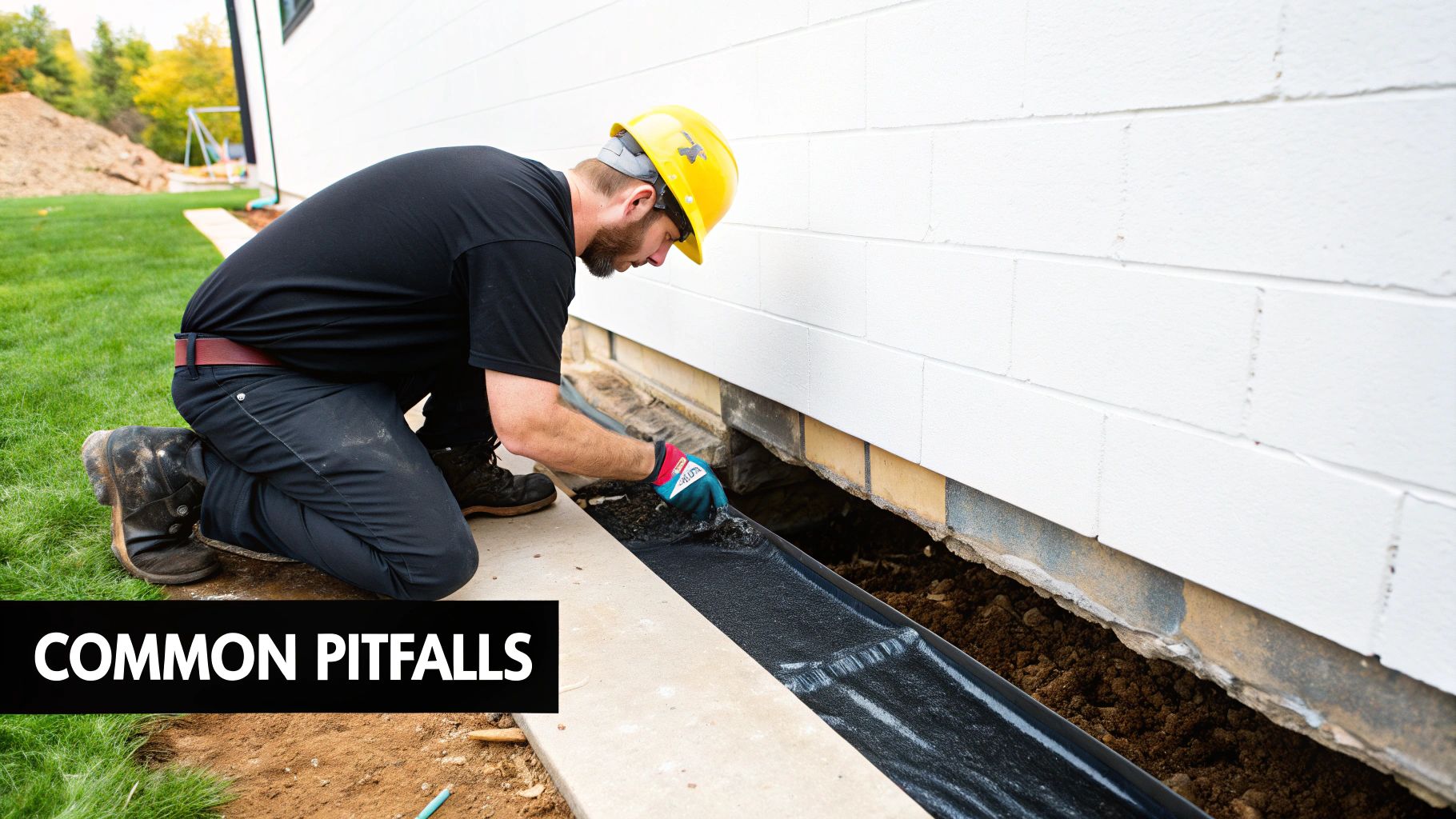
Subterranean Structures and Waterproofing
Basement extensions are a hallmark of high-end London homes, adding incredible space for cinemas, home gyms, or wine cellars. But they are also a major focus for building control inspectors, mainly because of the risks that come with groundwater and structural stability.
The most common failure we see is inadequate tanking or waterproofing. A surveyor will meticulously check the specification and the on-site installation of the waterproof membrane system. Any shortcuts, poor jointing, or use of the wrong materials can lead to a failed inspection. The consequences of water getting in are severe, affecting not just the structure but also the health of anyone living in the home.
Fire escape strategies are another critical point. Any basement needs a clear, protected route all the way to a final exit. Inspectors will pore over the design of lightwells, protected staircases, and escape windows to make sure they meet the stringent requirements of Part B (Fire Safety) of the Building Regulations.
Heritage Properties and Modernisation
Working on period or listed properties is a delicate balancing act. The real challenge is upgrading the building to meet modern standards for things like thermal efficiency and safety, all without compromising its historic character. This is a very common point of friction during a building control inspection.
For instance, improving insulation to meet Part L (Conservation of Fuel and Power) is mandatory, but simply slapping standard insulation onto old walls can trap moisture and cause long-term damage to the historic fabric.
A building control inspector will expect to see a carefully considered strategy that balances conservation with compliance. This often involves using specialist breathable insulation materials and providing detailed reports that justify the chosen approach, demonstrating that modern requirements have been met without harming the building's heritage value.
The installation of new services like plumbing and wiring must also be handled with immense care to minimise disruption to original features, another area an inspector will review closely.
Advanced Sustainable Systems
High-end projects frequently feature advanced sustainable technologies, like Mechanical Ventilation with Heat Recovery (MVHR) systems, air source heat pumps, and extensive solar arrays. While these are fantastic for energy efficiency, getting the installation right is complex and often scrutinised.
A common pitfall with MVHR systems is poor ducting installation. If the ducts are crushed, poorly sealed, or routed incorrectly, the system simply won't perform as designed. This means it fails to meet ventilation and efficiency standards under Parts F and L. A building control surveyor will demand evidence that the system has been properly commissioned and that the airflow rates match the original design specification.
Large-Scale Structural Glazing
Vast glass walls and expansive rooflights are defining features of modern luxury architecture, but they come with significant structural and thermal hurdles. An inspector will typically focus on two key areas.
First, the structural integrity of the frames and how they connect to the main building structure must be proven through detailed engineering calculations. Any deviation from these drawings on-site will be flagged immediately.
Second, thermal performance is vital. Huge glazed areas can be a major source of heat loss. The inspector will verify that the glass meets the required U-values (a measure of insulation) and that the detailing around the frames prevents thermal bridging—those cold spots that cause condensation and fail energy efficiency rules. Proving compliance often requires sophisticated thermal modelling, which must be submitted and approved as part of the building control process.
How to Prepare for a Smooth Inspection Process
A successful building control inspection isn't about luck; it’s the direct result of meticulous preparation and clear communication. Taking a proactive approach transforms each site visit from a potentially stressful hurdle into a seamless checkpoint, preventing the kind of delays that can derail project timelines and budgets.
Ultimately, getting this right is all about organisation and foresight. The key is to treat every inspection as a planned event rather than an interruption. This means having everything in order well before the building control surveyor arrives on site. A disorganised site with missing paperwork is one of the quickest ways to fail an inspection and cause unnecessary friction.
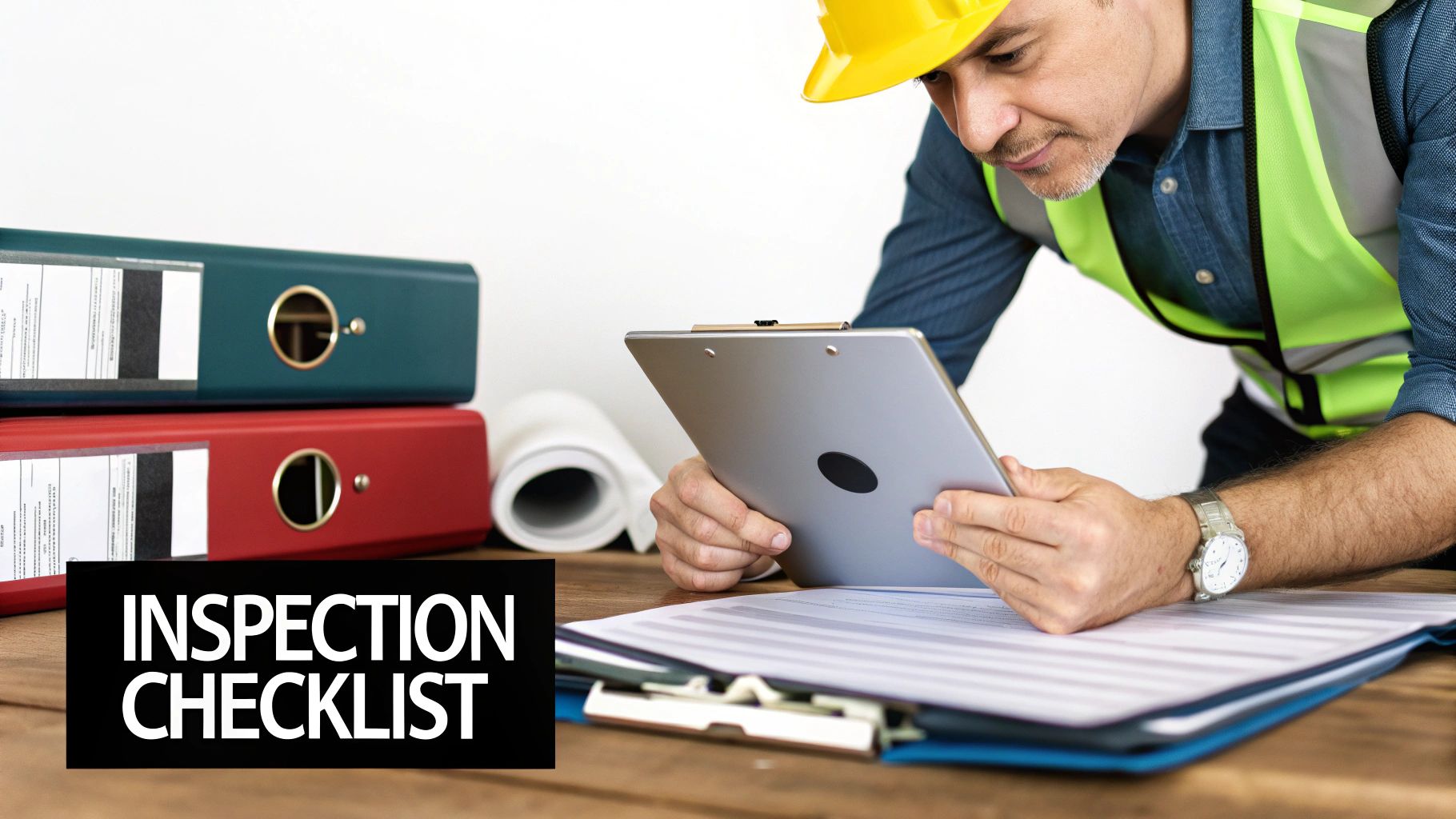
Organise Your Documentation
The foundation of a smooth inspection is having all the relevant documents organised, accessible, and ready for review. The surveyor needs to verify that the work being done matches the approved plans exactly, so there’s no room for ambiguity.
Before any scheduled visit, make sure the following are readily available on site:
Approved Drawings: A full, up-to-date set of architectural and engineering drawings that have been approved by building control.
Structural Calculations: The complete package of calculations from your structural engineer, confirming the integrity of beams, foundations, and other key structural elements.
Product Specifications: Technical data sheets for critical materials like insulation, damp-proof membranes, or specialist glazing, proving they meet the required performance standards.
Keeping these in a dedicated, protected folder on-site means no time is wasted searching for crucial information when the inspector asks for it.
A well-prepared site immediately signals professionalism and competence to a building control surveyor. When documentation is in order and access is clear, it builds confidence that the construction work itself is being carried out to the same high standard.
Ensure Safe and Clear Site Access
An inspector's ability to do their job properly depends entirely on being able to safely access and view the relevant work. This isn't just a courtesy; it's a non-negotiable health and safety requirement that must be prioritised.
Your main contractor is responsible for ensuring the site is ready for the visit. This means providing safe passage to the inspection area, free from hazards like trailing cables, loose materials, or unstable ground. If an inspector deems the site unsafe to enter, they will abandon the visit, and a re-inspection will have to be booked—causing an immediate and entirely avoidable delay.
Communication and Scheduling Are Key
Effective communication between your architect, your main contractor, and the building control body is absolutely essential. Inspections shouldn’t be left to chance; they should be planned events in your project schedule.
Your build team needs to establish a clear line of communication with the inspector and provide the correct notice for each required visit—usually at least 48 hours, but this can vary. It's also vital that your main contractor or site manager is present during the inspection. They are the best people to answer any technical questions, explain the work undertaken, and immediately understand any issues that are raised.
If an inspector does identify a non-compliant issue, having a plan to rectify it quickly is vital. A proactive approach means discussing the solution with your architect and builder straight away, getting the remedial work done, and booking a re-inspection promptly to keep the project moving forward.
Navigating Building Regulations With an Architect
An experienced architect does far more than just design your dream home; they’re your expert guide through the maze of regulations that stand between the blueprint and the finished build. The building control process can seem intimidating, but a skilled architect will manage it proactively from day one, turning a complex legal requirement into just another structured stage of your project.
Our job is to foresee compliance issues long before they have a chance to appear on site. We do this by preparing and submitting a comprehensive Building Regulations drawing package. Think of this not just as a set of drawings, but as a detailed technical manual for your home, addressing everything from structural integrity and fire safety to thermal performance. Every detail is checked for compliance from the outset.
Proactive Management and Liaison
A crucial part of our service is advising on who should handle your inspections. Will it be the Local Authority, with its deep-rooted local knowledge, or a private Approved Inspector, who might offer a more specialist and flexible approach? We help you make an informed choice right at the start, when these decisions matter most.
Once the choice is made, we don’t just hand over the drawings and walk away. We act as the central point of contact, liaising directly with the building control surveyor and your main contractor throughout the entire build. This collaborative relationship means any questions that pop up on-site are answered quickly and accurately, keeping the project moving and preventing costly misunderstandings.
Our primary goal is to ‘design out’ potential problems. By baking compliance into the core of the architectural design, the building control inspections become a simple validation of good practice, rather than a source of stress and unexpected costs.
This proactive management is what gives our clients genuine peace of mind. It shifts the process from a reactive, problem-solving headache into an efficient and predictable workflow. You can be confident that your project is being delivered not only to your vision but also safely and legally. The value of this expert oversight can't be overstated, as choosing the right professional is foundational to your project’s success. For more on this, our guide on how to choose an architect in the UK offers some valuable insights.
Frequently Asked Questions About Building Control
We get asked about the building control process all the time. To clear things up, we’ve put together answers to some of the most common questions homeowners have when they’re about to kick off a major project.
What Is the Difference Between Planning Permission and Building Regulations?
This is a classic point of confusion, but it's crucial to understand they are two completely separate hurdles. Planning permission is all about the look of your project – its visual impact, how it affects your neighbours, and whether it fits in with the character of the area.
Building regulations, on the other hand, couldn’t care less about aesthetics. Their job is purely technical. A building control inspection is there to make sure the work is structurally sound, safe, energy-efficient, and built correctly according to national standards. For any significant extension or new build, you'll almost certainly need approval for both.
How Much Does Building Control Inspection Cost?
The cost really depends on the size, complexity, and value of your project. Local Authority fees are usually set out on their websites, often based on a fixed scale of charges.
Private Approved Inspectors will give you a bespoke quote tailored to the specifics of your build. For a simple alteration, you might be looking at a few hundred pounds. For something like a large new build or a complex basement extension, the costs can easily run into several thousand pounds. Your architect will help you get accurate quotes right at the start when you're sorting out the budget.
The completion certificate is the official legal document confirming your project meets all required Building Regulations. Without it, you will face significant difficulties when trying to sell or remortgage your property in the future.
What Happens If My Project Fails an Inspection?
First off, don't panic. It’s not really a one-shot "pass or fail" test; it’s more of an ongoing process of checking and correcting. If a building control surveyor spots something that isn’t compliant, they’ll tell your builder exactly what needs fixing.
The work has to be put right before they'll come back out for a re-inspection. It's vital to get these points sorted quickly to keep the project moving and to make sure you get that all-important completion certificate at the end. Ignoring their instructions is a bad idea and can lead to formal enforcement action from the council.
Why Is a Completion Certificate So Important?
Honestly, this certificate is the single most important piece of paper you’ll receive when the work is done. It’s the official, legally recognised proof that everything was inspected and found to comply with the Building Regulations in England and Wales.
When you eventually come to sell your home, the buyer’s solicitor will absolutely demand to see it during the conveyancing process. You can learn more in our detailed guide to the building control certificate and why it's so essential for providing lasting peace of mind.
At Harper Latter Architects, we navigate the complexities of building regulations on your behalf, ensuring your project is designed for compliance from day one. Contact us to discuss your vision for a high-end home in South West London.

Comments