
Your Guide to Designer Loft Conversions in South West London
Imagine unlocking the hidden potential right at the top of your house. That dusty, forgotten attic could become the most spectacular space in your home—a sun-drenched, beautifully designed sanctuary that feels like it was always meant to be there. This is the real promise of a designer loft conversion.
This isn't your standard attic extension. A designer project is a bespoke creation, thoughtfully planned around your lifestyle and the unique character of your home to create a truly aspirational space that adds significant value.
What Is a Designer Loft Conversion
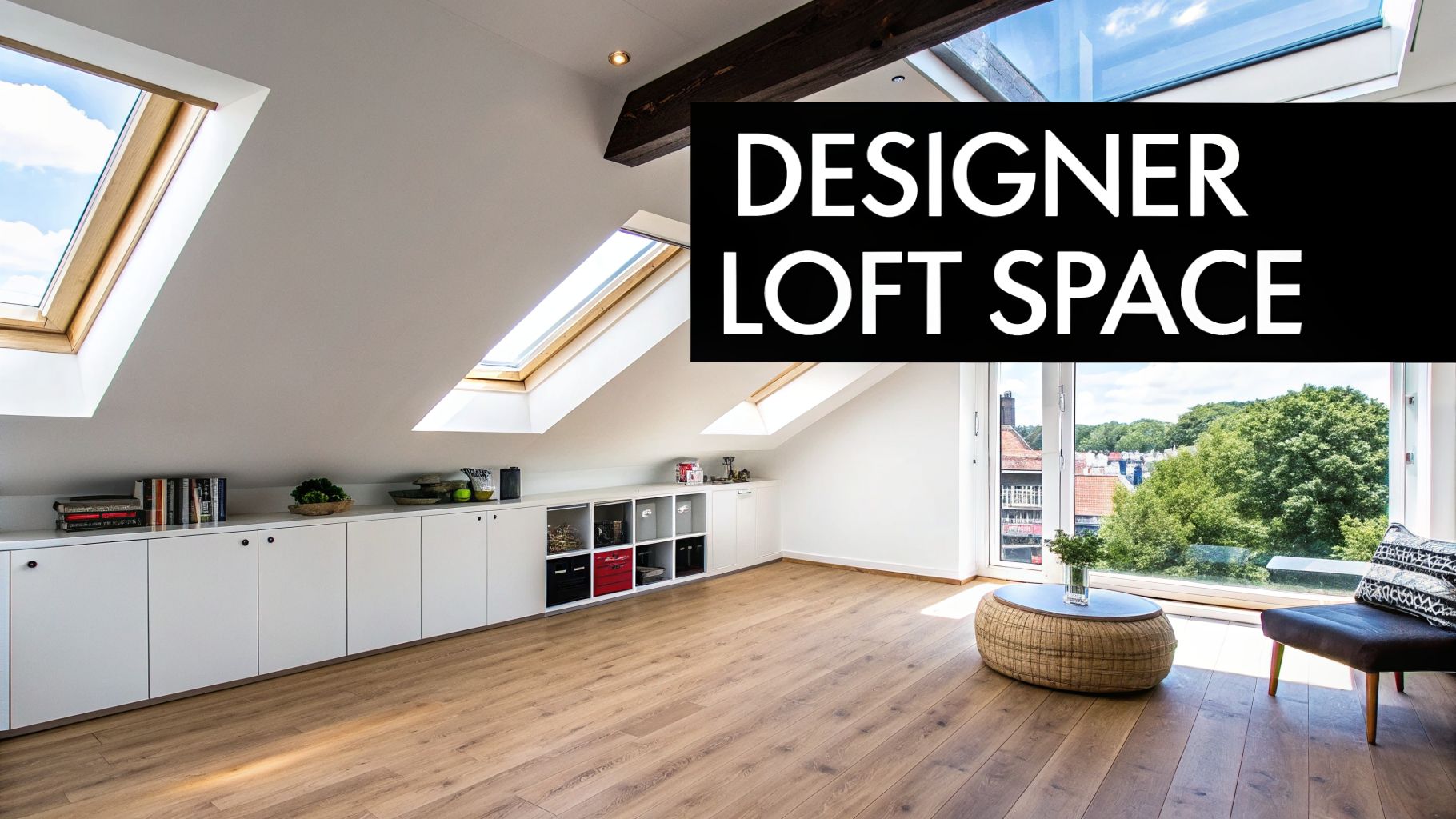
For many homeowners in South West London, the attic is little more than a place for old boxes and luggage. We see it differently. A designer loft conversion completely reimagines this neglected square footage, transforming it from a purely functional storage area into a valuable and seamless part of your home.
Think of it as the difference between buying a suit off the peg and having one made on Savile Row. A standard conversion gets you the extra room, sure. But a designer approach considers every single detail, from the way natural light will fill the space throughout the day to how your family will actually live in it.
More Than Just an Extra Room
The key distinction lies in the absolute focus on bespoke design and uncompromising quality. It’s not simply about adding another bedroom; it’s about creating an exceptional environment that reflects your personal style and genuinely enhances your daily life.
This involves a close, collaborative process with an architect. Our goal is to ensure this new level feels a natural, integral part of your property, not a tacked-on addition.
This bespoke quality comes through in several key areas:
Intelligent Space Planning: An architect analyses your home's unique structure to make the most of every inch. We love finding clever, elegant solutions for tricky sloped ceilings or awkward corners.
Premium Materials and Finishes: From beautiful, sustainably sourced timbers to high-performance glazing and custom-milled joinery, the focus is always on quality, durability, and a flawless aesthetic.
Seamless Integration: The design of the new staircase, the perfect alignment of windows, and the continuation of architectural details all work together to ensure the new loft feels integral to your home’s soul.
A true designer loft conversion is an investment in your property's financial value and your quality of life. It’s a space planned with purpose, built with precision, and finished with personality.
A Sound Financial Investment
Beyond the obvious lifestyle upgrade, a designer loft conversion offers a substantial return on investment. For homeowners in sought-after areas like South West London, it's one of the most financially rewarding home improvements you can make.
A 2026 Nationwide report found that a well-designed loft—especially one adding a double bedroom and en-suite—can increase a property's value by up to 24%. On a typical UK house valued at £271,995, that works out to an impressive £65,279 uplift in market worth. You can find more insights from the latest home improvement statistics.
Ultimately, choosing a designer loft conversion means opting for a holistic, considered approach. It’s a commitment to creating a space that is not only beautiful and functional but also a lasting asset that enriches your home for many years to come.
Navigating Planning Rules for Your Loft Project
Embarking on a designer loft conversion in South West London means getting to grips with the local rules that dictate what you can and can't build. The thought of planning paperwork, especially in boroughs with notoriously strict guidelines like Richmond or Wandsworth, can feel a little daunting. But in reality, the regulations are often far more straightforward than they first appear.
It helps to think of the planning system as having two main paths for your project. One is like following a 'pre-approved recipe', while the other is more like creating a 'custom dish'. Each serves a different purpose, and knowing which one best fits your vision is the very first step toward a successful build.
Permitted Development: The Pre-Approved Route
A great many loft conversions fall under what’s known as Permitted Development (PD) rights. Essentially, these are pre-approved guidelines from the central government that allow homeowners to extend their properties without navigating the full planning permission process. So long as your design sticks rigidly to these rules, you’re good to go.
The 'pre-approved recipe' analogy really works here. The ingredients and measurements are already set out for you, and as long as you follow them to the letter, you know the result will be approved.
Key criteria for a Permitted Development loft conversion include:
Volume Limits: The new structure can't add more than 40 cubic metres of volume to a terraced house, or 50 cubic metres to a detached or semi-detached one.
Height Restrictions: Your extension cannot be higher than the highest part of the existing roof.
Materials: Any new materials used on the outside of the building must look similar to those on the existing house.
Location Constraints: Verandas, balconies, and raised platforms are not allowed under PD rights.
For a lot of straightforward designer lofts, Permitted Development is a faster and more certain path to getting approval. The key, however, is making absolutely certain that every last detail of your plan fits neatly within these strict parameters.
Full Planning Application: The Custom Design
If your vision for a designer loft is a bit more ambitious, or if your property has specific constraints, you will almost certainly need to submit a full Planning Application. This is your 'custom dish' route, where you present a unique design to the local council and ask for their specific approval.
This path is necessary if your project goes beyond the size limits of Permitted Development, involves major changes to the roofline, or if your home is in a designated area. For homeowners in a Conservation Area, for instance, a Planning Application is pretty much always required. The council needs to be sure that your design preserves or even enhances the character of the neighbourhood. This process gives you far greater design freedom, but it also comes with more scrutiny from the local planning authority. You can find a detailed breakdown of what this involves by exploring the UK planning application stages in more detail.
This is where an experienced architect becomes your most valuable guide. We create the detailed drawings and a persuasive Design and Access Statement to make the case for your proposal to the council. Our expertise in local policy is what makes the journey through the paperwork smoother, helping to secure a positive outcome for your unique project.
Key Architectural and Structural Choices
Once the planning side is clear, we get to the creative heart of the project: the architecture itself. This is the stage where we start translating your ideas into a real, three-dimensional space. It's all about striking that perfect balance between your aesthetic goals and what’s structurally possible for your home.
The architectural form you choose will fundamentally shape the character of your new loft. It dictates everything from the amount of natural light to the overall sense of volume and how you can actually use the space. For homeowners across South West London, the choice usually narrows down to a few trusted approaches that work beautifully with the local architecture, whether it's a Victorian terrace or a more contemporary detached home.
Finding the Right Architectural Style
Every type of loft conversion works with your existing roof in a unique way, and each comes with its own set of advantages. Our role as architects is to walk you through the options and find the one that not only fulfils your vision but also respects the character of your home.
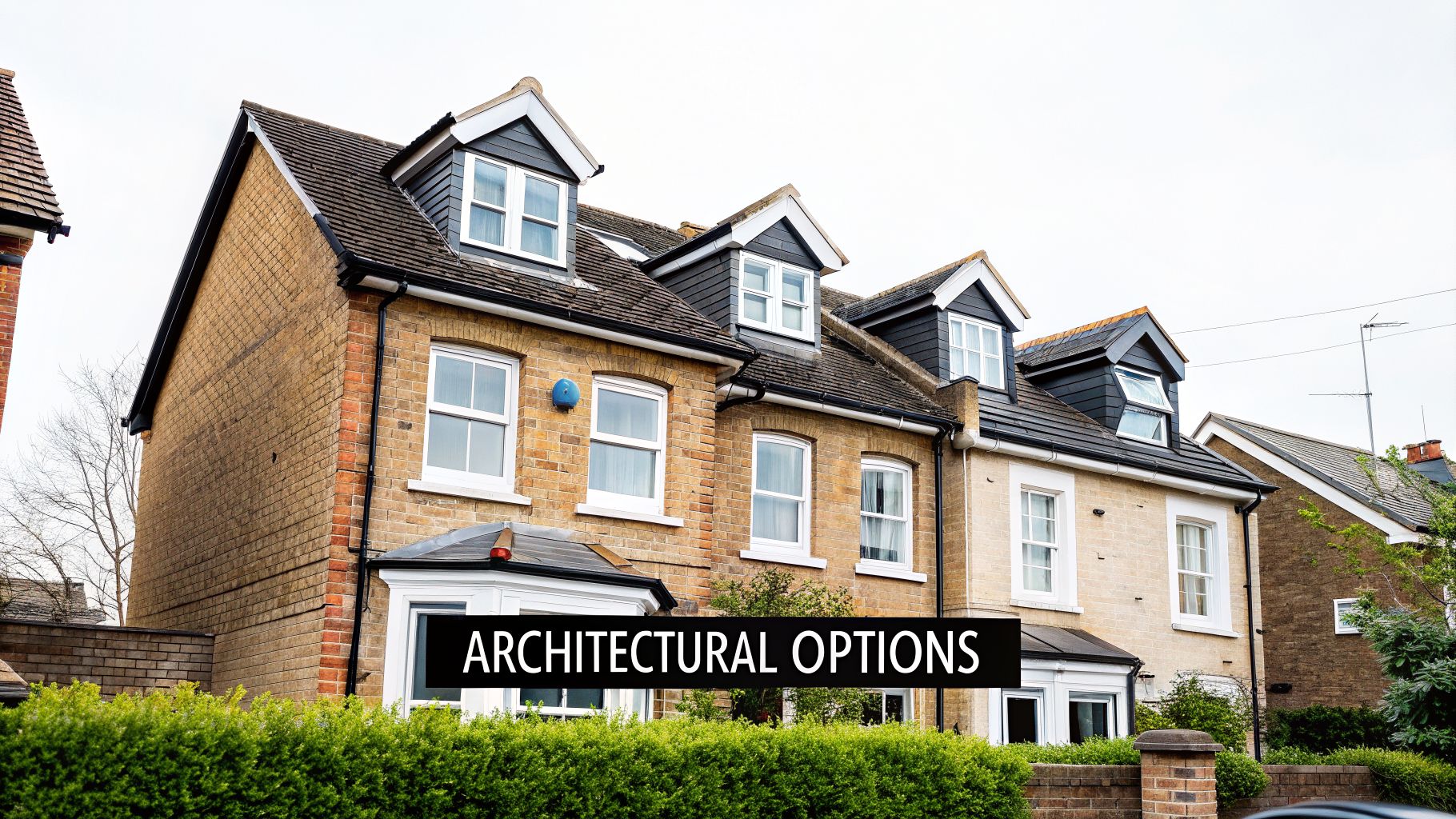
Dormer Conversions: This is arguably the most popular choice, and for good reason. We design a box-like structure that extends out from the slope of your roof, creating vertical walls and a flat ceiling inside. This one move massively increases the usable floor area and headroom, turning what was once a cramped attic into a bright, generous room.
Hip-to-Gable Conversions: These are a fantastic solution for detached or semi-detached homes with a ‘hipped’ roof, where the roof slopes down on all four sides. We extend the hipped side out to form a vertical gable wall, instantly creating a huge amount of internal volume. It’s perfect for accommodating a new staircase and a spacious master suite.
Velux (Rooflight) Conversions: This is the most straightforward and discreet approach. We simply add skylight windows that sit flush with your existing roofline, so the shape of the roof doesn't change. While it won’t add headroom, it’s a brilliant, cost-effective way to flood your attic with light, making it ideal for a home office, studio, or snug.
The boom in designer loft conversions is a direct response to how our homes need to work for us now. It’s not just about adding value; it’s about creating those much-needed multi-functional spaces—dedicated home offices, private gyms, or self-contained guest suites.
Recent analysis backs this up, highlighting vertical expansion as a critical solution to England’s housing demands. With 25.8 million dwellings recorded in 2026 against only 208,600 net additions, getting the most out of our existing homes is more important than ever. You can delve into more of the data by exploring these UK loft conversion trends for 2026.
The Unseen Strength: Structural Integrity
While the architecture defines how your new loft looks and feels, the structural work is what makes it all possible. This is the non-negotiable bedrock of a safe, sound, and durable conversion, where a structural engineer works hand-in-hand with your architect to specify every detail.
These are the hidden heroes holding your new space together:
Steel Beams (RSJs): Think of these as the workhorses of your loft. We install them to support the new floor and spread the extra weight safely across the building’s load-bearing walls. This ensures there’s no strain on your existing home.
Floor Joists: Your original ceiling joists were only designed to hold up plasterboard, not an entire living space. We install new, much stronger floor joists to create a solid, stable floor that comfortably exceeds all building regulations.
Insulation: High-performance insulation is absolutely essential for creating a comfortable space you can use all year round. It’s carefully fitted between the rafters and within the walls to keep your loft warm in the winter and cool in the summer, making your whole home more energy-efficient.
Navigating Party Wall Agreements
If your home is terraced or semi-detached, you will almost certainly need to arrange a Party Wall Agreement. This is a formal legal process designed to protect both you and your neighbours when you’re carrying out work on or near a shared wall.
This isn’t about asking for permission, but about managing the process professionally. You must serve a formal notice to your neighbours before any work begins. They can then either give their consent or appoint a surveyor to ensure their property is protected. Getting this right from the start is vital for keeping good relations and making sure the build runs smoothly.
Designing Your Luxury Interior Space
Once the architectural form is agreed upon and the structural plans are in place, we get to the most personal and exciting part of the project. This is where a new space starts to feel like your home—a luxurious retreat that truly reflects who you are and how you live. A designer loft conversion is really defined by these interior details. It’s the carefully chosen materials, the smart integration of storage, and the creation of an atmosphere that makes your daily life better.
We move beyond the blueprint and start crafting a space that’s not just beautiful, but perfectly suited to its purpose. Whether you’re dreaming of a peaceful master suite with a spa-like en-suite, a quiet and productive home office, or a versatile family room, the interior design is what brings that vision to life.
From Blueprint to Bespoke Living
Every designer loft conversion is a blank canvas, giving us a rare opportunity to create something tailored exactly to you. This bespoke approach means we think deeply about how you’ll use the room, ensuring every single element has a purpose and a place.
Some popular directions for a luxury loft include:
A Serene Master Suite: Imagine a private sanctuary at the very top of your house. This could be a generous bedroom with a walk-in wardrobe cleverly built into the eaves and a stunning en-suite, flooded with natural light from a skylight.
A High-Performance Home Office: For anyone working from home, a dedicated loft office gives you peace, quiet, and separation. We can design bespoke joinery for storage, integrate hidden power and data points, and even add acoustic treatments for a truly productive environment.
A Versatile Family or Cinema Room: A loft can easily become the ultimate leisure space. We can integrate state-of-the-art audio-visual equipment for a home cinema or create a flexible playroom with durable finishes and smart storage for toys.
Maximising Space with Intelligent Design
The unique architecture of a loft, especially the sloped ceilings and changing head heights, presents some fantastic design opportunities. These aren't limitations; they’re features we can use to create real character and efficiency. This is where clever interior architecture makes all the difference, turning potentially awkward corners into standout features.
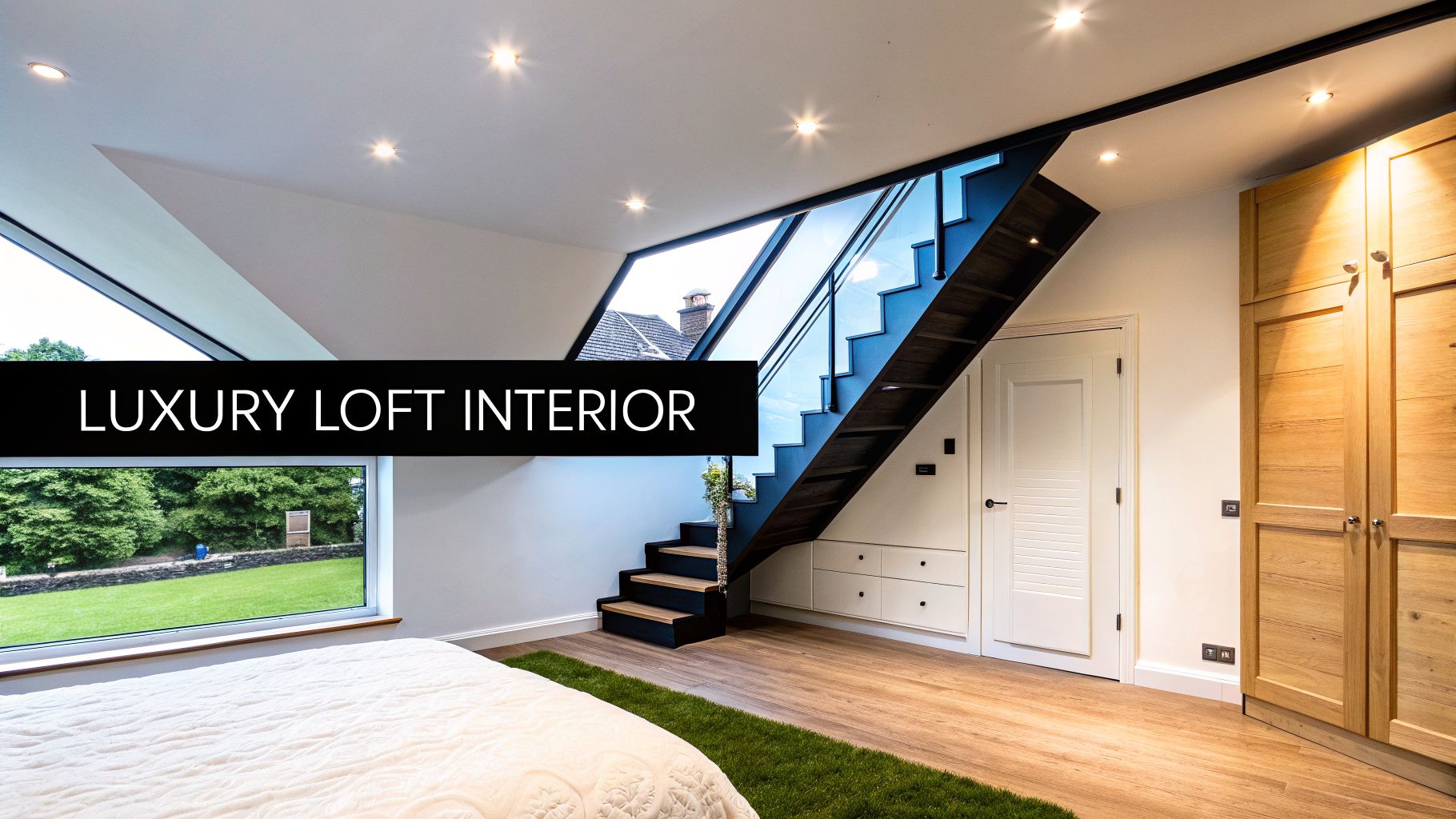
A beautifully designed staircase, for example, is so much more than a way to get upstairs. It can be a stunning sculptural piece, crafted from glass and timber, that becomes a focal point connecting the new level with the rest of your home.
Thoughtful joinery is another game-changer. Custom-fitted wardrobes built into the eaves don't just provide storage—they make the most of every square metre. This creates a seamless, uncluttered look that’s simply impossible to get with freestanding furniture. For a truly cohesive feel, getting professional advice is invaluable; you can learn more about this in our guide to luxury home interior design done right.
Lighting is also critical. A sophisticated lighting scheme will layer different types of light—ambient, task, and accent—to create mood and highlight architectural details. Low-level lighting can make a space feel cosy and intimate, while strategically placed spotlights can draw the eye to artwork or a beautifully textured wall. Ultimately, it’s this meticulous attention to detail that elevates a simple conversion into a truly exceptional living space.
Budgeting Your South West London Loft Conversion
Moving from creative vision to practical planning is one of the most crucial steps in any project. Getting a firm grip on the budget from day one is what keeps a loft conversion an exciting journey, rather than a stressful one. Here, we'll demystify the costs and timelines involved in creating a high-end loft space in South West London.
It’s important to understand what separates a standard loft build from a true designer conversion. The final investment comes down to a blend of architectural complexity, the quality of your chosen materials, and the level of bespoke craftsmanship. A basic conversion gets you the shell, but a designer project elevates every detail with premium finishes and features tailored exactly to you.
Estimated Costs for Designer Loft Conversions in South West London (2026)
The costs for high-end loft conversions have been steadily rising, a reflection of both material prices and the high demand for skilled trades in sought-after London postcodes. The table below offers a realistic look at what you might expect to invest for different types of conversions, from the base build to a full luxury fit-out.
Conversion Type | Estimated Base Cost (GBP) | Potential Cost with High-End Finish (GBP) |
|---|---|---|
Velux Conversion | £55,000 – £65,000 | £80,000+ |
Dormer Conversion | £70,000 – £85,000 | £110,000+ |
Hip-to-Gable Conversion | £85,000 – £100,000 | £130,000+ |
Mansard Conversion | £90,000 – £120,000 | £150,000+ |
These figures serve as a solid starting point, covering labour, high-quality materials, and essential structural work, which itself can cost between £1,600–£2,500 per square metre. You can find more detail on this topic by reading about the latest loft conversion price trends.
So, what pushes a project into that higher investment bracket? It’s all in the bespoke details that make a space feel truly luxurious.
Bespoke Joinery: Think custom-fitted wardrobes that perfectly fit sloped ceilings, integrated shelving, or a unique media unit.
Premium Materials: This could be natural stone tiles in the en-suite, solid hardwood flooring, or high-performance acoustic glazing for total peace and quiet.
Complex Structural Work: Ambitious designs, like cantilevered balconies or large expanses of structural glass, require more intensive engineering and construction.
Mapping Out Your Project Timeline
While the budget is a primary focus, knowing the project timeline is just as vital for managing your expectations. A well-planned designer loft conversion isn’t something that happens overnight; it’s a carefully choreographed process from start to finish.
A typical project in South West London, from our first chat to the day we hand over the keys, follows a clear, structured timeline.
Design & Planning (8–12 Weeks): This is where the magic begins. We’ll develop the concept, create detailed architectural drawings, and handle any necessary planning permissions or lawful development certificates on your behalf.
Tender & Mobilisation (4–6 Weeks): With the designs finalised, we tender the project to a select group of trusted contractors and appoint the best team for the job.
Construction (16–24 Weeks): This is the main build phase. The duration can vary depending on the complexity of your project, the amount of bespoke work, and any unpredictable factors like the British weather!
Investing in an experienced architect from day one is not just about achieving a superior aesthetic. It is a strategic decision that actively prevents costly mistakes, manages budgets effectively, and navigates the project through to a seamless and successful completion. This expert guidance is what turns a good loft conversion into a truly exceptional one.
Your Step-By-Step Project Delivery Guide
Embarking on a designer loft conversion is exciting, but let’s be honest, it can also feel a little daunting. Turning a grand vision into a finished, tangible space requires a clear roadmap. Without one, even the best ideas can get lost in the complexity of the project.
That’s where a proper, architect-led process comes in. It’s our way of breaking down the entire journey into a series of clear, manageable stages. This isn't just about ticking boxes; it's about giving you complete clarity and control from the first sketch to the final handover, ensuring the exceptional quality your home deserves.
The Architect's 8-Step Process
This structured approach is designed to build confidence at every stage. Each step logically follows the last, making sure nothing is ever left to chance. It’s a core reason why you choose an architect for your loft conversion, as it puts an expert guide right by your side.
Initial Consultation & Feasibility: It all begins with a conversation. We sit down to listen and truly understand your ambitions for the space—what you need, what you love, and how you want to live in it. We then conduct a feasibility study to assess your property’s potential and flag any initial planning hurdles.
Concept Design: This is where your ideas start to take shape on paper. We’ll produce initial sketches and concepts in a collaborative back-and-forth, exploring different layouts and architectural approaches to find the one that feels just right for your home.
Developed Design: Once we’ve settled on a concept you love, we begin to refine it. We’ll add layers of detail, considering materials, finishes, and key fittings. This is the stage where the character and atmosphere of your new loft really start to emerge.
Technical Design: Here, we get into the nuts and bolts. We create a full set of highly detailed construction drawings and technical specifications. Think of this as the master blueprint that builders will use to price and build the project, leaving absolutely no room for ambiguity.
Planning Application: We handle all the paperwork. Our team will prepare and submit all the necessary documentation to your local council, whether it’s for a Lawful Development Certificate under Permitted Development rights or a full Planning Application.
Tendering: We help you find the right builder for the job. We manage the process of obtaining competitive, like-for-like quotes from a shortlist of trusted, high-calibre contractors, ensuring you receive fair and transparent pricing.
Construction: During the build, we act as your representative on-site. We serve as the contract administrator, conducting regular site inspections, resolving any builder queries, and making sure every detail is being built exactly as specified in our drawings.
Handover & Completion: When construction is finished, we perform a final, meticulous inspection to identify and rectify any defects. Only when everything is perfect do we sign off on the project and you get the keys to your stunning new designer loft.
A well-managed process is the bedrock of a beautiful outcome. By following a rigorous, step-by-step plan, an architect removes uncertainty and ensures every decision is made with confidence and clarity, safeguarding your investment from start to finish.
The infographic below neatly shows how we balance the core budget, high-end features, and a practical timeline to keep your project on track.
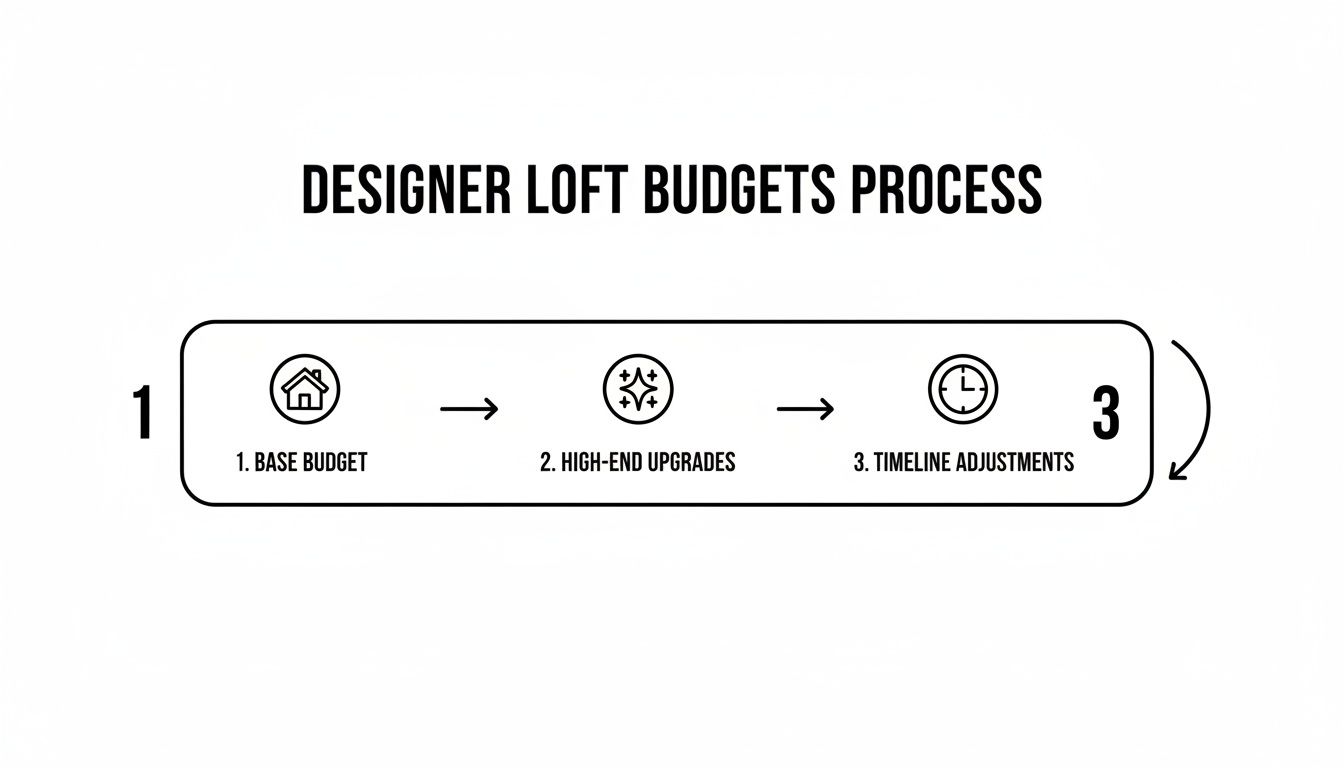
It’s a simple visual, but it captures how a structured process empowers you to make informed decisions, guaranteeing the final space perfectly aligns with your vision and your financial plan.
Common Questions About Loft Conversions
Turning your attic into a beautiful, functional space is a big decision, and it’s only natural to have a few questions before you start. We’ve guided countless South West London homeowners through this exact process, so we’ve heard just about every query there is.
Here are some clear, practical answers to the questions we get asked the most, designed to give you the confidence you need to take the next step.
How Long Does a Designer Loft Conversion Typically Take?
From our first conversation about your ideas to the final handover, a high-end, bespoke loft conversion in South West London generally takes between six to eight months. This gives us a realistic timeframe to handle all the design, approvals, and construction work without rushing.
The whole process naturally splits into two key stages:
Design & Approvals (2–3 Months): This is where we nail down the vision. We’ll be creating the detailed architectural drawings, finalising the interior design specifications, and handling all the paperwork with your local council, whether that’s for a full planning application or a lawful development certificate.
Construction (4–5 Months): The build itself. This can vary a little depending on how complex the design is, the amount of custom joinery involved, and any unexpected hold-ups like a spell of bad weather.
Can I Live in My House During the Construction?
Absolutely. For the vast majority of projects, you can stay comfortably in your home while we work. This is one of the biggest advantages of a loft conversion – most of the heavy-lifting is self-contained.
Our trusted construction partners are masters at keeping disruption to a minimum. For the first few months, almost all the structural work happens within the loft space itself, with access from the scaffolding outside. We only make the breakthrough for the new staircase late in the process, which keeps your home as clean and quiet as possible for as long as possible.
A key consideration for designer loft conversions is the quality of the team on-site. A well-managed project respects your home and your daily life. They keep the site tidy and ensure everything runs smoothly with the least possible impact on your family.
Does My Loft Need a Certain Ceiling Height to Be Converted?
Yes, head height is the make-or-break measurement for any loft conversion. To create a space that feels genuinely comfortable and meets building regulations, you’ll generally need a minimum clear height of 2.2 metres at the highest point of your attic.
We take this measurement from the top of the floor joists up to the underside of the main ridge timber at the apex. While 2.2m is a great rule of thumb, we will always take precise measurements during an initial site visit to confirm your loft is a good candidate and explore the best design solutions for the space you have.
Ready to unlock the potential hiding in your attic? The team at Harper Latter Architects specialises in creating bespoke, high-end residential designs across South West London. We can guide you through every step of your designer loft conversion, from initial concept to flawless completion. Learn more and book your consultation at https://harperlatterarchitects.co.uk.