It is one of the first questions most homeowners ask us, and the honest answer is: often, yes - but not always. Whether staying put is realistic depends on the scope of the work, how the project is phased and your tolerance for dust, noise and disruption. Here is how we think it through with clients.
The short answer
Most people can stay in their home for at least part of a renovation. Staying works when three things hold: only part of the house is being worked on at a time, a working kitchen and bathroom are kept throughout, and one clean, sealed-off room remains genuinely yours. If you can keep one kitchen, one bathroom and one clean room, staying is usually realistic. Lose any one of the three for more than a few days and daily life becomes very hard.
When staying put usually works
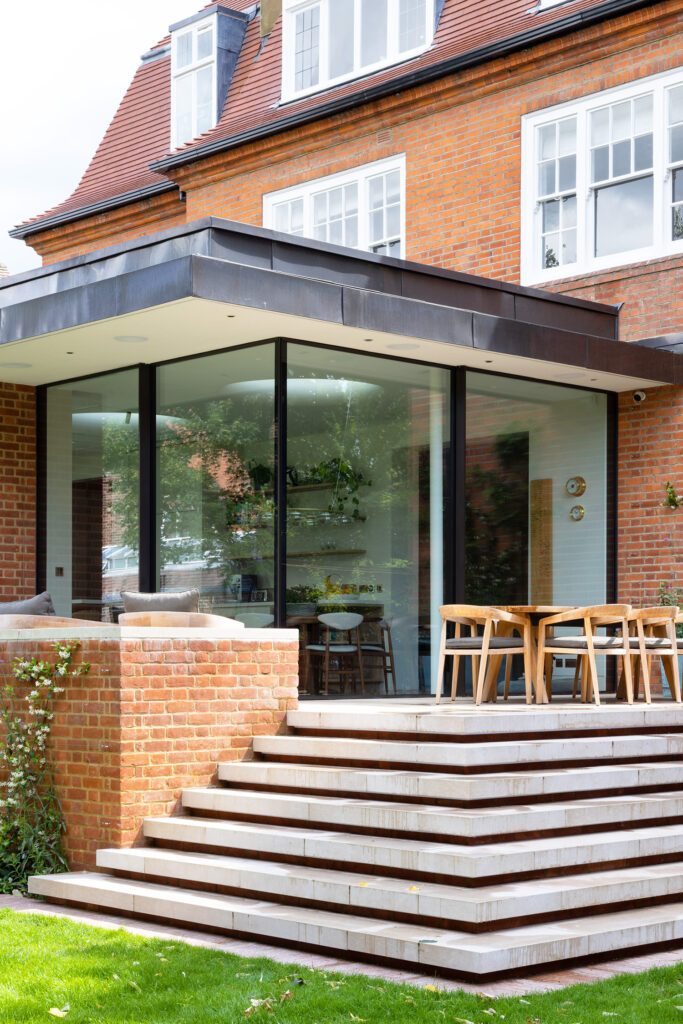
Staying tends to work well when the building work can be contained. A rear or side extension is the classic case: the new structure goes up outside the existing house, and the messy knock-through into your living space comes near the end, as a matter of weeks rather than months. Loft conversions are similar - most of the work happens above you, with the staircase break-through late in the programme.
The other condition is services. Heating, hot water and at least one working WC need to stay on, or be interrupted only briefly and by arrangement.
When moving out is the better call
A whole-house renovation is different in kind. If strip-out affects every room at once, if floors are coming up throughout for a rewire or new plumbing, or if the house will be without heating, hot water or a bathroom for more than a few days, staying stops being frugal and starts being miserable. Major structural work through the main living spaces, and anything that leaves the house hard to keep weathertight and secure, point the same way.
Households matter as much as floor plans. Babies and toddlers, anyone with asthma or a chest condition, and people working from home through the day all experience an occupied site very differently. Construction dust is a genuine health consideration, not just a nuisance - the Health and Safety Executive treats it as a risk to lungs. Pets too: open doors, gaps in hoarding and a stream of unfamiliar trades are a difficult mix.
Moving out can also change the arithmetic of the build itself. Builders work faster in an empty house: no daily clean-down, no protected routes to maintain, no sequencing around mealtimes and bedtimes. A shorter, simpler programme can offset a meaningful part of the rent - so the question is worth settling before the programme is fixed, not after.
How phasing makes staying possible
Where staying is the plan, phasing is what makes it work, and it is decided on the drawing board long before the builder arrives. A phased plan divides the house into zones: which rooms are worked on first, which remain habitable throughout, and how everyone - family and trades - moves through the house without crossing the work. It sequences the bathrooms so at least one is always in service, places a temporary kitchen near existing water and power, and builds in protection: sealed doorways, dust screens, covered floors and a clean route to your rooms.
None of this is exotic - it is the ordinary craft of a well-run domestic project - but it needs to be planned and agreed before the programme is set, not improvised once the builder is on site.
The honest trade-offs of staying
An occupied site runs more slowly than an empty one. The builder provides welfare facilities and protection they would not otherwise need, work stops for your evenings and weekends, and noisy work is constrained: councils typically restrict it to weekday daytime hours and Saturday mornings, with no noisy work on Sundays or bank holidays, under powers in the Control of Pollution Act 1974. Exact rules vary by council, so your builder should confirm them locally. None of this is a reason not to stay; it is simply the cost of staying, and it belongs in the budget conversation.
Storage is the other quiet cost: furniture migrates room to room as the zones move, and some of it belongs in storage for the duration. And there is decision fatigue: when you live above the shop, every question from site lands on you quickly, often at breakfast. Some clients enjoy that closeness to the work; others find it the most tiring part.
Practical ways to make staying liveable
If you do stay, a few ground rules make the difference:
- Agree the rules in writing before work starts: working hours, dust control, protection, where materials and skips go, and the state the house is left in each evening.
- Keep one clean room - sealed, dust-sheeted and off-limits to the work - so everyone has somewhere normal to retreat to.
- Tell your home insurer before work begins. Structural work usually needs to be declared, and your insurer will want to know whether you are staying or moving out; an unoccupied home can affect cover too.
- Set up a temporary kitchen with a kettle, microwave, air fryer and a camping table. Basic, but it keeps you sane.
- Plan a break for the worst fortnight. Strip-out, floor sanding and plastering are the peak-disruption stages - a holiday or a spell with family timed to them is money well spent.
- Photograph every room before work starts. It settles arguments later and gives you a satisfying before-and-after record.

How we approach it
On our projects the stay-or-move decision is part of the earliest design conversations, because it shapes phasing and programme. On a recent renovation of a Grade II listed house near Wimbledon Common, for example, the work was planned around the protection of original features - the fireplace, panelling and joinery restored room by room, each space completed and handed back before the next began. That kind of sequencing is second nature on occupied and listed projects, and it is what makes staying put a considered choice rather than an ordeal.
If you would like an honest view of what living through your renovation would involve - or whether moving out would serve you better - we are happy to talk it through. You can contact us to arrange a consultation, or start with our free site and cost report, which sets out likely scope and phasing options before you commit to anything.
By Harper Latter Architects
← Journal