
Glass Extensions House Guide: A Vision of Light and Space

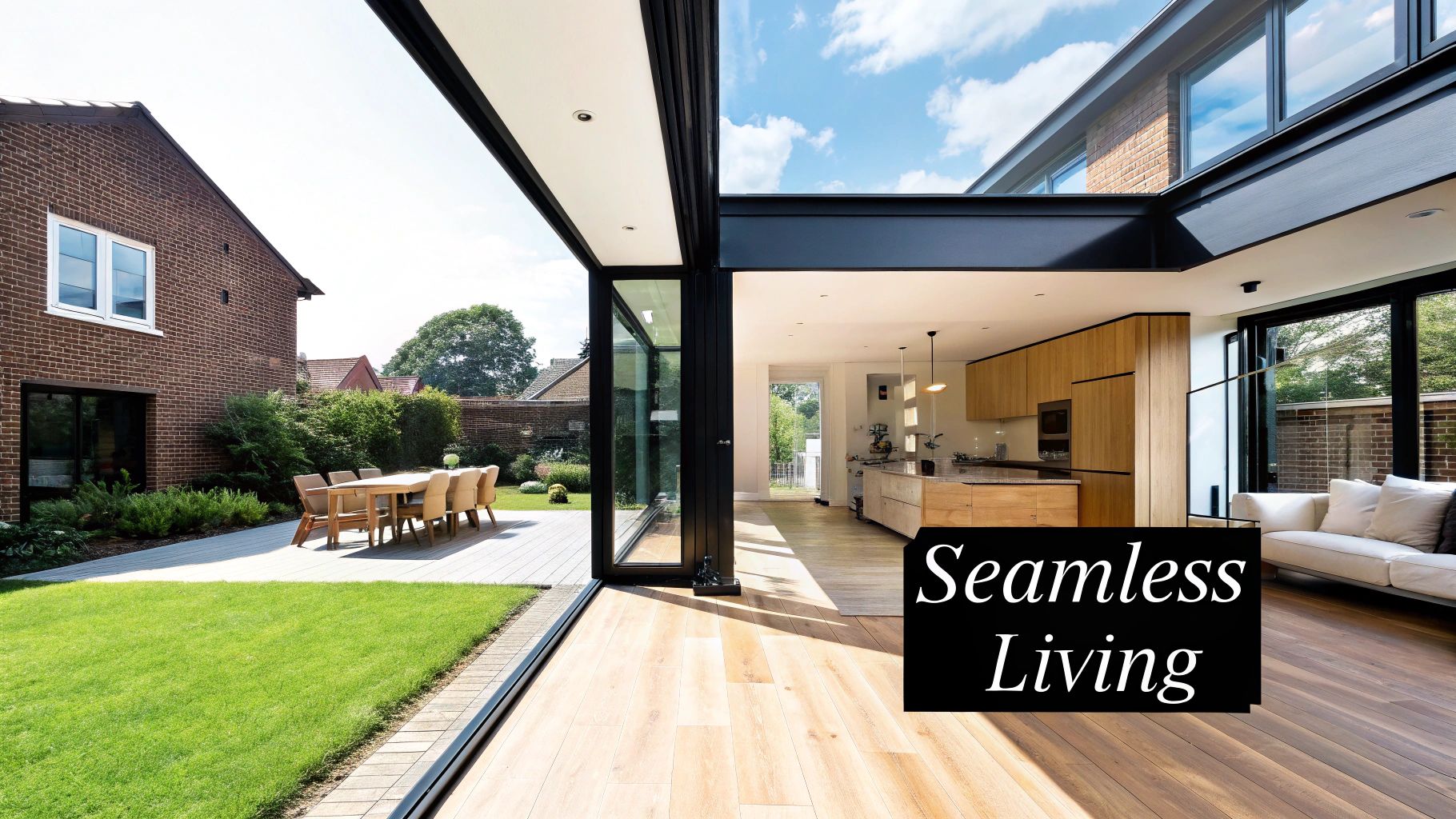
Picture a home where the walls seem to disappear, where daylight floods your living space, and the garden becomes a natural extension of your daily life. A bespoke glass extensions house is far more than just adding a room; it’s an architectural choice that completely changes how you live in and experience your home.
Why Choose A Glass Extension For Your Home
A glass extension is an investment in your lifestyle, property value, and general well-being. Unlike a conventional brick-and-mortar extension that simply adds square footage, a glass structure redesigns your home’s entire atmosphere. It connects the interior with the rhythm of nature and the shifting seasons.
For homeowners in places like Wimbledon, Richmond, or Cobham, this kind of addition is a sophisticated way to modernise a property while respecting its original character. It moves beyond purely functional space to create a striking focal point for living, relaxing, and entertaining. A huge part of the appeal lies in its ability to deliver major architectural impact, often with a much shorter build time compared to traditional extensions.
Blending Aesthetics With Practical Value
The beauty of a modern glass extension goes well beyond its clean lines and minimalist look. These structures are properly engineered for year-round comfort and energy efficiency, finally putting to rest those outdated ideas of conservatories being too hot in summer or freezing in winter.
This practicality, combined with a significant uplift in property value, makes it an incredibly popular choice. In fact, a well-designed extension can increase a home's market price by up to 7%.
Key benefits include:
Maximised Natural Light: Flooding your home with daylight has proven benefits for well-being, cutting down the need for artificial lighting and creating a brighter, more welcoming feel.
Seamless Indoor-Outdoor Living: Glass walls create an unbroken visual link to your garden, making your outdoor space feel like a natural continuation of the home.
Architectural Versatility: From ultra-modern frameless designs on contemporary new builds to sensitively designed glazed links on listed buildings, the options can be tailored to suit any style of property.
A thoughtfully designed glass extension doesn’t just add space; it adds light, value, and a completely new dimension to daily life. It’s about creating an environment that adapts to the seasons and enhances your connection with the world just outside your walls.
Ultimately, choosing a glass extensions house is a decision to prioritise your quality of life, creating a home that feels more open, spacious, and in tune with its surroundings.
Exploring The Types Of Glass House Extensions
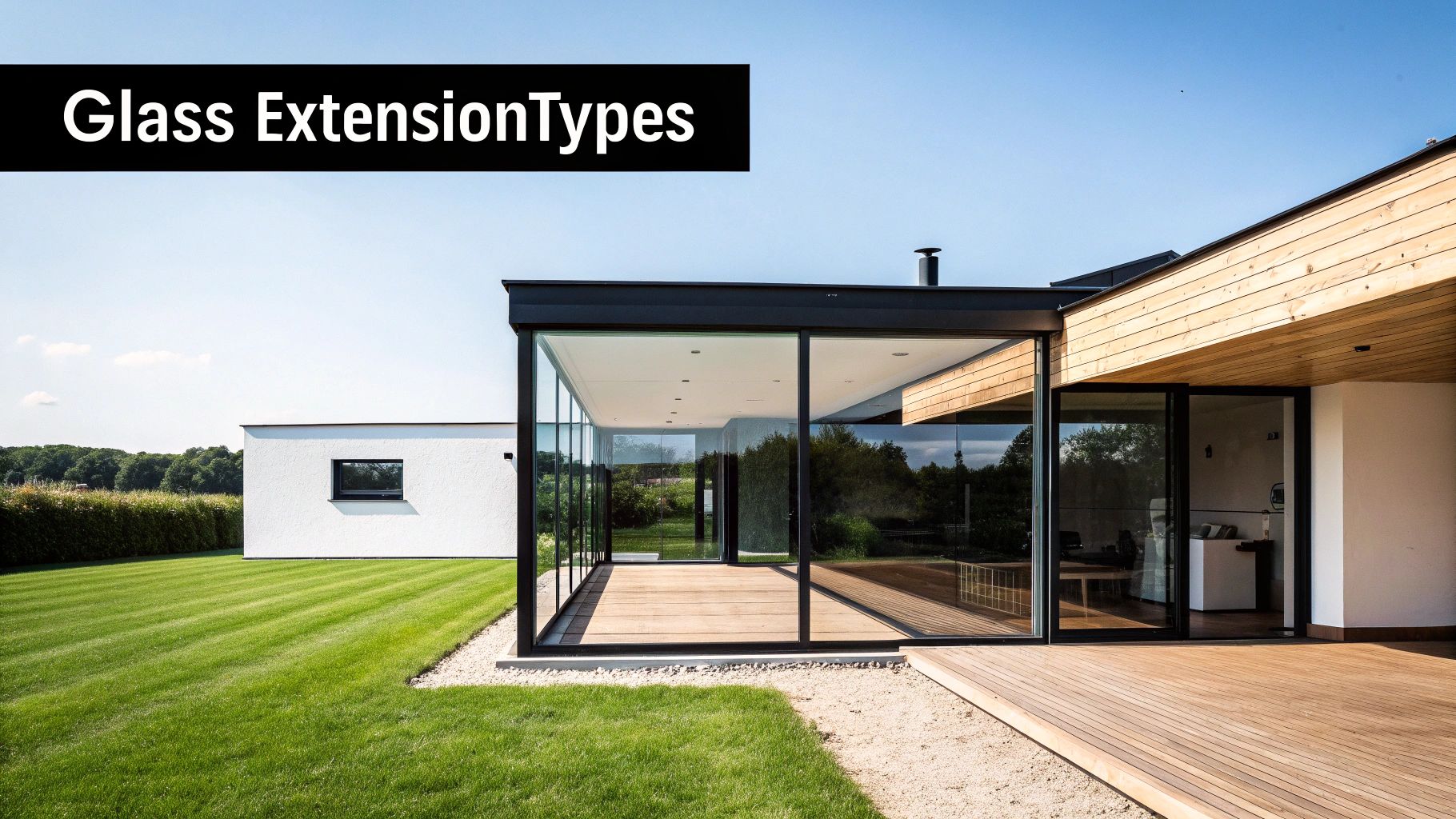
Choosing the right design is the first, and most important, decision you'll make when planning a glass extensions house. The style you select defines not just the look of your new space but also how it connects with your home and garden. Each approach offers a completely different feel, suited to different properties and lifestyles.
So, let's explore the three main avenues to help you find the perfect fit for your property, whether it’s a period terrace in Richmond or a contemporary family home in Cobham. We'll look at the key features of framed extensions, the pure minimalism of structural glazing, and the refined blend of a modern orangery.
Framed Glass Extensions
Framed glass extensions are probably the most versatile and familiar style. As the name suggests, the structure is built around a visible frame, which can be made from different materials to create entirely different aesthetics. This approach gives you huge design flexibility and a high degree of customisation.
The material choice is everything here. Slimline aluminium frames, typically in anthracite grey or black, create a sharp, contemporary look that works beautifully with modern and mid-century homes. For a softer, more organic feel, timber frames bring a natural warmth that’s particularly well-suited to traditional or rustic properties. These extensions are perfect for incorporating large sliding or bifold doors, dissolving the boundary between your home and the garden.
Frameless Structural Glazing
If you want to make the ultimate minimalist statement, nothing comes close to frameless structural glazing. This is where the glass is the structure, held together with specialist bonding agents and supported by discreet glass beams or slender steel fins. The result is a breathtaking, uninterrupted panoramic view with almost invisible joins.
This style is often called a "glass box" extension, and it creates a stunning architectural feature that seems to almost float against the original building. It's the perfect choice for anyone wanting to maximise natural light and feel completely immersed in their garden or the view beyond.
Frameless glazing is especially powerful when used to create a crisp, modern contrast against a historic property, like a Victorian or Edwardian house. The clear separation between old and new celebrates the character of both, creating a design that’s both respectful and incredibly bold.
This technique demands precision engineering and expert installation, but the pay-off is a truly spectacular living space. For those looking to maximise every inch of their property, our guide on how small glass extensions can transform London homes offers more ideas.
The Modern Orangery
A modern orangery offers a sophisticated middle ground between a fully glazed extension and a traditional solid-roofed one. It elegantly blends the light-filled atmosphere of a conservatory with the substance and thermal performance of a conventional extension. Historically, orangeries were grand structures for growing citrus trees, and today's versions still carry that sense of timeless elegance.
Key features of a modern orangery usually include:
A Solid Perimeter Roof: A flat roof with a large, inset glazed lantern draws light right into the centre of the room while giving a sense of enclosure.
Pillars or Piers: Solid brick or stone pillars between large panes of glass give the structure a feeling of permanence and solidity.
Seamless Integration: This style often feels less like an addition and more like a natural, integral part of the main house.
This approach is ideal for creating a formal dining area, a bright and inviting kitchen-diner, or a tranquil living room. The solid elements also make it easy to integrate downlights, speakers, and other services, creating a highly functional and comfortable space you can use all year round.
Comparing Glass Extension Styles For Your London Home
Deciding between these styles can be tough, as each brings a unique character to a home. This table offers a quick comparison to help clarify which approach might best suit your property and vision.
Extension Type | Key Feature | Best For | Aesthetic |
|---|---|---|---|
Framed Glass Extension | Visible frame (aluminium, timber) | Versatile projects, integrating bifold/sliding doors, cost-effectiveness | Contemporary, traditional, or industrial |
Frameless Structural Glazing | Glass acts as the structure, minimal framework | Maximising views, creating a modern contrast on period properties | Ultra-minimalist, sleek, "glass box" |
The Modern Orangery | Solid pillars and a roof lantern | Creating a formal, room-like feel that's well-integrated with the home | Classic, sophisticated, substantial, elegant |
Ultimately, the best choice depends on your home's architecture, your budget, and how you want to live in the new space. Each option provides a beautiful way to bring more light and life into your home.
Navigating Planning Permission And Listed Buildings
The journey to getting a glass extensions house approved can feel a bit like wading through red tape, particularly in historic London boroughs like Richmond, Wandsworth, and Merton. Understanding the local planning landscape from the outset is the key to a successful build, ensuring your vision becomes a reality without hitting frustrating delays.
Essentially, your project will follow one of two paths: either it falls under Permitted Development Rights, or it requires a full Planning Application. Which route you’ll take comes down to the scale, design, and location of your proposed extension.
Permitted Development vs Full Planning Application
Permitted Development (PD) Rights are a kind of pre-approved planning permission granted by the government. For certain types of extensions, they allow you to build without submitting a full, detailed application, making it a much faster and more direct route.
However, PD rights aren't a free-for-all; they come with a strict set of rules. For a glass extension, these typically govern:
Size: The extension can only project a certain distance from the back of the original house (this distance changes depending on whether your home is detached or terraced).
Height: There are firm limits on both the eaves height and the total height of the structure.
Location: PD rights are often restricted in designated areas. If you live in a Conservation Area, National Park, or an Area of Outstanding Natural Beauty, your rights will be different.
If your design ambitions for your glass extension go beyond any of these limits, you'll need to submit a full Planning Application. This is a more involved process where the local council carefully assesses your project’s impact on neighbours, the street scene, and the wider local environment.
The Unique Challenges Of Conservation Areas And Listed Buildings
Adding a contemporary glass extension to a property in a Conservation Area or to a Listed Building is where things get really interesting. The challenge here is to design something that is unapologetically modern yet deeply respectful of the building’s history and character. Crucially, you cannot use Permitted Development Rights for any extension to a Listed Building.
A successful design in a historic context isn't about mimicking the past. It’s about creating a sensitive, high-quality addition that complements the original architecture, often through a clear and honest contrast between old and new.
Local authorities will, quite rightly, take a very close look at any proposal that affects a heritage asset. Success hinges on a sympathetic design and a robust application that clearly justifies why the changes are being made. This means preparing detailed supporting documents, like a Design and Access Statement and a Heritage Impact Assessment, to explain the thinking behind your design. We explain more about the specific requirements in our complete guide to what Listed Building Consent is and how to get it.
Modern materials like slimline aluminium frames and structural glazing can sit beautifully alongside historic brick or stonework. A frameless glass link, for instance, can connect two parts of a period property with an incredibly "light touch," preserving the integrity of the original facades while creating a functional and beautiful new space. This is where expert architectural guidance is vital, turning what seems like a regulatory hurdle into a smooth and successful journey toward creating a stunning glass extensions house that truly honours its history.
Achieving Superior Thermal Performance
One of the first questions we’re always asked about a glass house extension is, "Will it be comfortable all year round?" It’s a completely fair question, often rooted in memories of old-school conservatories that were either freezing cold in winter or sweltering in summer. Thankfully, modern glazing technology has made that a problem of the past.
A high-performance glass extension isn't just about the view; it's an engineered environment designed for consistent comfort. The key is getting to grips with a few technical details that make all the difference, ensuring your beautiful new space is a joy to live in, whatever the weather is doing outside.
Decoding Glazing Jargon: U-Values and Coatings
When we talk about thermal efficiency, the single most important number is the U-value. Think of it as a score for heat loss—the lower the U-value, the better the glass is at keeping precious warmth inside your home. While Building Regulations set a minimum standard, for a truly high-end extension, we always aim to go far beyond it.
To hit those impressive low U-values, today’s glazing units are packed with advanced features:
Double vs Triple Glazing: While high-quality double glazing is excellent, triple glazing is the gold standard. It introduces a third pane of glass and an extra insulating gas-filled cavity, which dramatically cuts down heat transfer and provides superior acoustic insulation.
Low-Emissivity (Low-E) Coatings: This is a virtually invisible metallic layer applied to one of the glass surfaces. In winter, it acts like a mirror to your home's internal heat, reflecting it back into the room rather than letting it escape through the window.
Solar Control Glazing: To stop things from getting too warm in summer, a solar control coating can be added. This clever layer reflects a huge portion of the sun's infrared heat away from the extension while still letting all the visible light flood in, keeping the space bright but not stuffy.
These technologies all work together to create a stable and comfortable internal climate, which means you’ll be far less reliant on your heating and cooling systems.
A Commitment to Sustainable Design
Choosing high-performance glazing is more than just a practical decision; it’s a commitment to sustainability that pays you back for years to come. An energy-efficient glass extension shrinks your home's carbon footprint and leads to noticeably lower energy bills. This focus on future-proofing is something we see becoming more and more important for discerning homeowners.
It’s a shift that’s reflected across the industry. The UK glazing market, valued at £3.5-£4 billion, is moving away from basic conservatories and towards these premium, energy-efficient glass structures. For eco-conscious families in areas like Richmond or Cobham, demand for triple glazing is spiking as they look to meet future net-zero targets and build lasting value into their homes.
A well-insulated glass structure is a core component of a thermally efficient home. By specifying the right combination of double or triple glazing, Low-E coatings, and solar control, you create a space that’s not just beautiful but also responsible and economical to run.
The Bigger Picture of Energy Efficiency
Of course, achieving exceptional thermal performance in your glass house extension isn’t just about the glass itself. The frame material, the quality of the seals, and how the new structure connects to the main house are all critical pieces of the puzzle. We take a holistic approach to ensure there are no weak points or "thermal bridges" where heat can find a way to escape.
By integrating these advanced technologies right from the initial design stage, we ensure your extension is a warm, inviting retreat in winter and a cool, light-filled haven in summer. You can explore more strategies in our complete UK energy-efficient home design guide. This commitment not only delivers immediate comfort but also secures your investment for the long term.
Understanding The Cost Of A Glass Extension
Budgeting for a high-end glass house extension in South West London is one of the first things clients want to pin down. While every project is unique, getting a clear idea of the main cost drivers helps you make informed decisions and see this not as an expense, but as a genuine investment in your home and how you live in it.
The final price is usually worked out on a per-square-metre basis, but this rate can swing quite a bit. For a high-quality glass extension, you should expect costs to fall somewhere between £2,400 to over £3,600 per square metre. What causes this variation? It all comes down to a few key factors.
Key Factors Influencing The Price
The biggest influence on cost is the complexity of the design itself. A simple, framed structure with standard bifold doors will naturally sit at the more accessible end of the scale. On the other hand, a completely frameless, structural glass box—which demands specialist engineering and millimetre-perfect manufacturing—will command a higher budget.
Beyond the main structure, several other elements play a big part:
Glazing Specification: Choosing triple glazing over high-performance double glazing, or adding specialist coatings for solar control and self-cleaning, will increase the initial outlay. However, these choices pay you back over the long term in comfort and lower energy bills.
Site Constraints: Tricky access to your property, the need for major groundworks, or complex connections to the existing house can all push up labour and material costs.
Level of Finish: Your choice of flooring, lighting, heating systems, and any bespoke interior joinery will also form a significant slice of the overall budget.
For homeowners in prime South West London, these variables are especially important. In areas like Wimbledon Village, where every square metre is precious, the average cost for a glass room extension lands around £3,000 per square metre. A typical 14m² project would therefore be in the region of £40,000. This figure reflects the use of superior materials like high-performance glazing, which can cost £300 to £500 per m² on its own. You can explore more detailed cost breakdowns to see how these figures reflect modern extension prices.
Shifting Focus From Cost To Long-Term Value
While the initial investment is obviously a key consideration, the real story of a glass extension is the lasting value it brings. This isn't just about the immediate upgrade to your quality of life—the light, the space, the seamless link to your garden—it's also a smart financial move that adds to your home’s equity.
A well-designed, high-quality glass extension is recognised by estate agents and buyers as a premium feature. It elevates a property’s appeal, often increasing its market price by as much as 7%.
This reframes the entire project. Instead of seeing it purely as a cost, you can see it as an investment that pays dividends in both daily enjoyment and future resale value. A thoughtfully designed glass house extension becomes a standout feature, making your home more desirable and ensuring it remains a valuable asset for years to come. By balancing the initial costs with this long-term return, you can approach your budget with confidence.
Our 8-Step Process: From First Ideas to Final Handover
Bringing a bespoke glass extension to life is a journey. It’s a carefully managed process that takes a spark of an idea and turns it into a beautifully finished, functional space. To give you total clarity and confidence, we've honed a clear, eight-step process that ensures every detail is considered, every decision is informed, and your project runs smoothly from start to finish.
This isn’t about mystifying the architectural process; it's about making it transparent. It’s how we put you in control while our team manages the complexities, ensuring the vision you start with is the reality you end up with.
From Initial Ideas To Concept Design
Every great project begins with a conversation. This first phase is all about creative exploration, collaboration, and understanding exactly what you want to achieve with your home.
Initial Consultation & Brief: We start with a complimentary visit to your home. This is our chance to listen to your ideas, understand how you live, and discuss your initial thoughts on budget. It’s where we get to the heart of what your new space needs to do.
Concept Design: Armed with your brief, we get to work developing a range of concept designs. We’ll present sketches and initial plans that explore different layouts, aesthetics, and connections to your garden, allowing us to refine the direction together and land on the perfect solution.
Securing Approvals And Technical Precision
With a design direction you love, we shift gears to the technical side of things. This stage is all about getting the necessary permissions and creating the detailed drawings needed for a high-quality build.
Our methodical approach turns potential regulatory hurdles into a managed, straightforward part of the process. We handle the complexities of planning so you can focus on the exciting aspects of your project.
We take the lead on all of it, from preparing and submitting planning applications to developing the incredibly detailed drawings that your builder will rely on.
Developed Design & Planning: The chosen concept is refined into a detailed set of drawings ready for a Planning Application. We then manage the entire submission process with your local council, acting as your agent and handling all correspondence.
Technical Design: Once planning permission is in the bag, we produce the comprehensive construction drawings and specifications. This technical package is the project's blueprint, detailing everything from structural connections to the exact glazing specification, leaving nothing to chance.
The infographic below shows how this early investment in design and planning translates directly into a valuable, well-built asset.
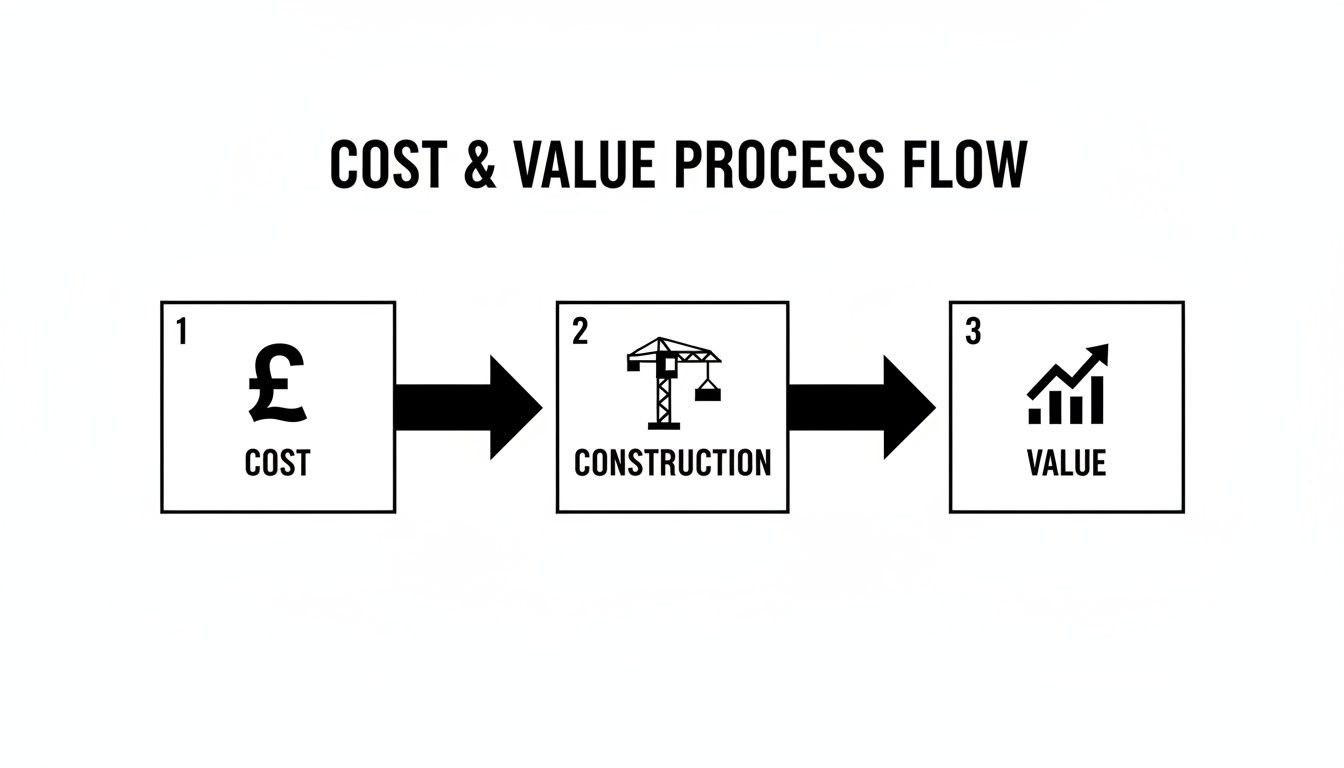
It’s a simple but powerful idea: strategic investment at the start leads to a higher quality build and, ultimately, adds significant long-term value to your property.
Construction And Completion
This is where the vision starts to become a physical reality. With all the technical plans approved and finalised, we move into the construction phase. Our role is to ensure the build is executed flawlessly, on time, and on budget.
Tender & Contractor Selection: We run a competitive tender process with a shortlist of trusted, high-quality builders. This ensures you get fair and accurate pricing for the project from contractors we know can deliver.
Construction Oversight: We act as your expert eyes and ears on-site. This involves regular inspections, managing the contract with the builder, and proactively resolving any issues that might arise to keep things moving.
Handover & Aftercare: As construction wraps up, we carry out a meticulous final inspection. We make sure every last detail is perfect before we officially hand over your beautiful new space.
Project Completion: The final step is to settle the last accounts and provide you with a full package of project documentation, including warranties and certificates, for your records.
Your Questions Answered
To round things off, we've put together some of the most common questions we hear from homeowners thinking about a glass extension. Our aim is to give you clear, straightforward answers to help you move forward with confidence.
Just How Durable Is A Modern Glass Extension?
This is understandably a top concern for many, but the reality is that modern glass extensions are exceptionally tough. They’re built using toughened or laminated safety glass, which is incredibly strong and engineered to handle significant impacts. The frames, whether sleek aluminium or robust steel, are built to last for decades with very little upkeep.
Every single element is designed to stand up to the unpredictable British weather, from driving rain to high winds. The precision engineering ensures that all seals remain completely watertight and the structure stays secure, giving you a safe and lasting addition to your home.
Will A Glass Extension Be Secure?
Absolutely. Security isn't an afterthought; it’s a fundamental part of the design. A modern glass extensions house is far from a weak point in your home’s security.
Key features that provide peace of mind include:
Laminated Safety Glass: This type of glass is extremely difficult for an intruder to break through. If it’s struck, a tough interlayer holds the glass together, preventing easy access.
High-Security Locking Systems: Doors and any opening windows are fitted with multi-point locking mechanisms. These secure the frame in several places at once, making them highly resistant to being forced.
Robust Framing: The inherent strength of materials like aluminium adds another solid layer of protection to the entire structure.
Peace of mind is paramount. We design our glass extensions with security as a core principle, integrating advanced locking systems and resilient materials to create a space that is as safe as it is beautiful.
How Do You Clean The Glass Roof And Walls?
Keeping your new space looking its best is simpler than you might imagine. Many of our clients opt for specialist self-cleaning glass. This has a unique coating that uses the sun's UV rays to break down organic dirt, and when it rains, the water simply sheets off, washing the loosened dirt away.
If you prefer to clean it manually, a telescopic soft brush with a purified water system—the kind professional window cleaners use—is perfect for the roof and higher sections. For the walls, a simple mix of water and a mild detergent is usually all you need. A good clean two to four times a year is typically enough to keep the glass pristine.
Can I Have A Glass Extension On A Period Property?
Yes, and the results can be truly spectacular. Adding a contemporary glass extension to a period or listed building creates a beautiful dialogue between old and new. The key is a sensitive, thoughtful design that respects the character and history of the original house.
Rather than trying to mimic the old style, a modern glass structure provides a clean, honest contrast that highlights the beauty of both the historic architecture and the new addition. This approach is often favoured by planning officers, particularly in conservation areas, as long as the design is of exceptional quality and doesn't detract from the building's heritage. It’s a sophisticated way to bring light and modern living to a traditional home.
Ready to transform your home with a bespoke glass extension that blends light, luxury, and your lifestyle? The team at Harper Latter Architects is here to guide you through every step of our proven process. Contact us today to arrange your initial consultation and start bringing your vision to life.
Comments