
Small Glass Extensions That Transform London Homes

At its heart, a small glass extension is an architectural solution designed to bring functional, light-filled space to a home. It's about more than just adding square footage; it's a way to completely transform how you live, connect with your garden, and dramatically increase natural light. This is especially true for the compact Victorian and Edwardian homes common across South West London.
Unlike a traditional conservatory, these are fully integrated, thermally efficient spaces built for year-round living. They aren't just tacked on; they become a seamless part of the home.
Why Small Glass Extensions Are Redefining London Living
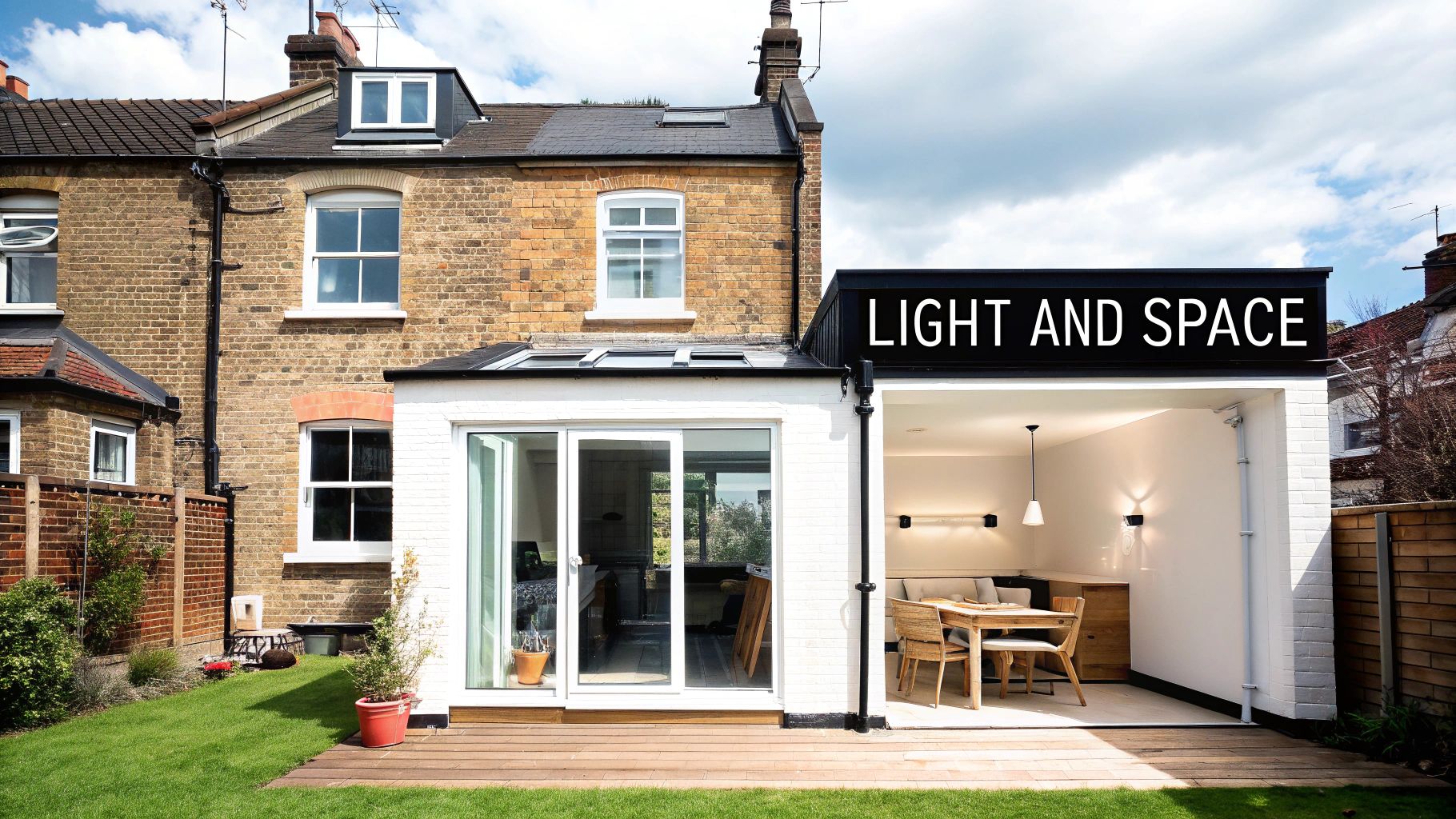
In a city where space is the ultimate luxury, London homeowners are constantly looking for clever ways to improve their properties. From the Victorian terraces of Wimbledon to the period homes in Richmond, the challenge is often the same: how to create more functional, beautiful living space without a massive, disruptive build.
This is exactly where small glass extensions have become a favoured architectural response.
These elegant structures offer far more than just extra room. They fundamentally change the character of a home by flooding interiors with daylight, which makes even the most compact rooms feel larger and more welcoming. A well-designed glass box or side-return extension can turn a dark, underused part of a property into the vibrant heart of the home.
Marrying Modern Design with Period Charm
One of the greatest strengths of a small glass extension is its versatility. It can create a stunning, minimalist contrast against the brickwork of a period property or seamlessly complement a more contemporary build.
This ability to bridge different architectural styles is particularly valuable in South West London, an area celebrated for its rich variety of housing stock. The key is a design that respects the original building while introducing a clean, modern aesthetic.
An architect-led approach ensures this balance is achieved thoughtfully, addressing key considerations right from the start:
Maximising Light: Strategic placement of structural glazing and rooflights can channel sunlight deep into the existing floor plan.
Indoor-Outdoor Connection: Features like bifold or sliding doors dissolve the boundary between the home and garden, creating a fluid living area perfect for summer evenings.
Year-Round Comfort: Modern glazing technology provides exceptional thermal performance, ensuring the space is warm in winter and cool in summer—a far cry from the conservatories of old.
By focusing on bespoke design, even a modest extension can have a major impact. It's about crafting a space that not only looks beautiful but also perfectly supports the way you want to live, whether that’s creating a peaceful home office or an open-plan kitchen diner.
Navigating Local Nuances
Building in areas with a strong heritage character, such as designated conservation areas, requires a sensitive and knowledgeable approach. A client-focused architect provides the expertise to navigate these planning complexities, ensuring any proposal enhances the property while respecting its context.
This guide will walk you through the entire journey, from the initial concept to a beautifully finished space that redefines your London home.
Navigating Planning Permission and Building Regulations
Bringing a small glass extension to life in South West London involves more than just a great design. Before any foundations are dug, you need to get to grips with the local rules. There are two key hurdles every project must clear: Planning Permission and Building Regulations. It's a common point of confusion, but they are completely separate processes serving very different functions. You have to satisfy both.
Simply put, Planning Permission deals with what your extension looks like, how big it is, and the impact it has on your neighbours and the street scene. Building Regulations, on the other hand, are all about the technical stuff—ensuring the new structure is safe, warm, and built correctly. Gaining approval for one doesn't mean you have the other.
This is where having an experienced architect on your team becomes invaluable. They can map out the right path for your project from the very first conversation, saving you from making a costly and time-consuming wrong turn.
Permitted Development vs Full Planning Application
For many homeowners looking to build a small glass extension, the simplest route forward is using your Permitted Development (PD) rights. Think of these as a pre-approved set of rules from the government that allows certain types of home improvements without the need for a full planning application.
This path is typically faster and far less subjective, making it a great option for straightforward projects in areas like Wimbledon. However, the rules are strict, and there's no room for negotiation.
For a single-storey rear extension, the main PD restrictions are:
Projection: It can’t stick out from the back of the original house by more than three metres if you're in a terraced or semi-detached house, or four metres if your home is detached.
Height: The extension can't be taller than the highest part of your existing roof. Crucially, the eaves (the point where the wall meets the roof) can't be over three metres high if your extension is within two metres of a boundary.
Coverage: Your new extension, combined with any other sheds or outbuildings, cannot take up more than 50% of your total garden area.
If your dream extension pushes past these limits, or if your property is in a conservation area or is a listed building, you will almost certainly have to submit a Full Planning Application to the local council. For a more detailed breakdown, have a look at our comprehensive UK house extension planning permission guide.
It's a huge misconception that Permitted Development is a free pass for everyone. If you live in a conservation area or a listed building, your PD rights are likely to be heavily restricted or removed entirely. Getting professional advice early on is absolutely critical to avoid an immediate rejection from the planners.
The Non-Negotiables of Building Regulations
Here’s the important bit: whether you need planning permission or not, your small glass extension must comply with Building Regulations. This is a legal requirement, pure and simple. It’s all about guaranteeing the quality and safety of the finished build.
Your architect will produce a set of detailed technical drawings showing how the design meets these standards. These are then submitted to and checked by either a building control officer from the local council or a private approved inspector.
Building Regulations cover several key areas, including:
Part A Structural Safety: This makes sure the foundations, walls, and roof are all structurally sound. A structural engineer will need to provide calculations to prove the design is safe and robust.
Part L Conservation of Fuel and Power: This is a big one for a glass extension. It sets the minimum standards for thermal performance, dictating how well the glazing (its U-value), insulation, and airtightness work to stop heat from escaping.
Part B Fire Safety: This covers everything from ensuring you have safe escape routes in case of a fire to specifying fire-resistant materials and providing access for the fire brigade.
By bringing an architect on board from the start, you ensure these technical details are baked into the design from day one. This practical foresight prevents stressful and expensive changes down the line and guarantees your beautiful new space is also safe, comfortable, and fully legal—giving you complete peace of mind.
Designing Your Ideal Glass Extension
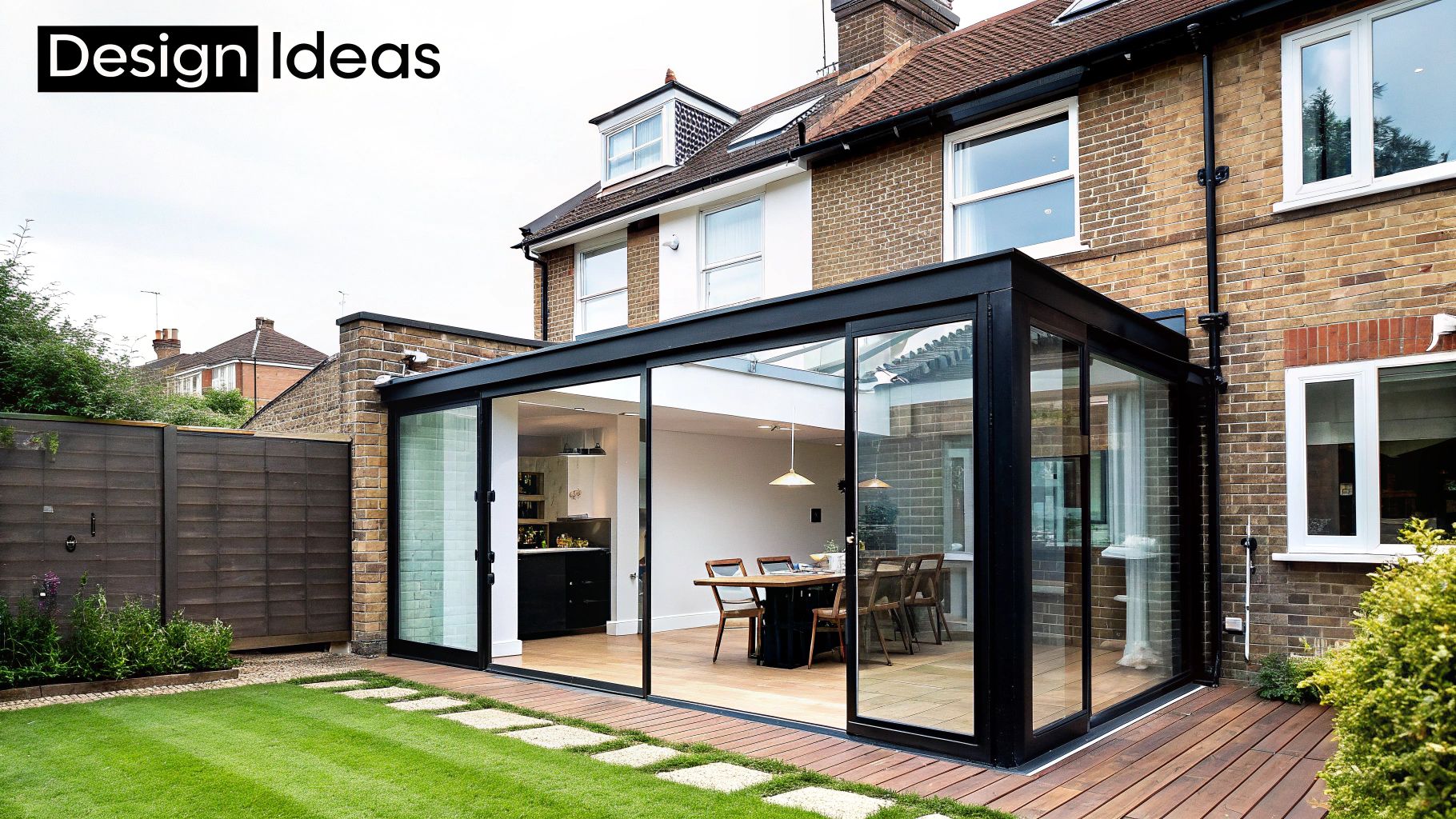
With the essential regulations understood, we can move on to the most exciting part of the journey: shaping the design of your new space. A small glass extension is a blank canvas, a brilliant opportunity to create a room that’s perfectly aligned with your lifestyle and the unique character of your home. It’s about more than just adding square footage; it's about crafting an experience.
The versatility of these structures is their greatest strength. Whether you own a Victorian terrace with an underused side-return or a contemporary home that could benefit from a stronger garden connection, the right design can unlock its full potential. Forget the idea of a one-size-fits-all solution. A bespoke approach is essential.
Your primary goal might be to create a bright, tranquil home office, a peaceful garden room for morning coffee, or a seamless kitchen-diner that becomes the social heart of your home. Each function demands a different architectural response, influencing everything from the layout and glazing specification to the choice of materials.
Exploring Popular Design Concepts
When it comes to small glass extensions, a few key concepts have proven particularly effective in South West London properties. These designs are brilliant at solving common spatial problems while adding significant architectural value.
The Side-Return Extension: This is a classic for a reason, especially in period terraces. It involves infilling that narrow alleyway running alongside the back of the house, transforming what is often wasted space into a bright, functional area. When designed with a glass roof and glazed doors, it can flood both the new and existing parts of the home with natural light.
The Frameless Glass Box: For a truly minimalist statement, the frameless glass box is unparalleled. Using structural glazing with minimal visible supports creates the illusion of a room almost entirely open to the elements. This approach is perfect for maximising views and creating a dramatic architectural feature that contrasts beautifully with traditional brickwork.
The Glazed Link: Sometimes, an extension serves to connect two parts of a property or link the main house to a garden room. A glazed corridor or link can do this with elegance, creating a light-filled passage that feels both practical and special.
An architect’s role is to interpret your needs and translate them into a buildable, beautiful form. We might suggest a wraparound extension that combines a side-return and rear extension for maximum impact, or a simple lean-to design that prioritises cost-effectiveness without sacrificing style.
Choosing Materials That Complement Your Home
The materials you choose for the structural frame will define the character of your small glass extension. The decision should be a thoughtful one, balancing aesthetics, performance, and the style of your existing property.
The most popular options each have distinct advantages:
Material | Key Characteristics | Best Suited For |
|---|---|---|
Aluminium | Sleek, strong, and low-maintenance. Allows for very slim sightlines, maximising the glass area. | Modern, minimalist designs and achieving a sharp, contemporary look. |
Timber | Offers a natural warmth and traditional aesthetic. Can be painted any colour to suit your home. | Period properties, conservation areas, or for homeowners seeking a softer, more organic feel. |
Composite | Combines an aluminium exterior for durability with a timber interior for warmth and character. | The best of both worlds, offering high performance with a classic internal appearance. |
Your choice of material isn't just a visual one. It impacts the structural possibilities and the overall thermal performance of the extension. For example, the inherent strength of aluminium allows for larger panes of glass and thinner frames—a key consideration for any minimalist design.
Integrating the New with the Old
The final piece of the design puzzle is ensuring the new extension feels like a natural part of your home, not an afterthought. This seamless integration involves considering floor levels, wall finishes, and the flow between the existing rooms and the new space.
Creating a flush threshold with matching flooring, for example, helps to visually and physically connect your kitchen to a new dining area. Similarly, continuing a colour scheme or material palette from the main house into the extension creates a sense of cohesion. The goal is to make the transition so smooth that it feels as though the house was always designed this way. For further inspiration on blending styles, you can find a wealth of stylish small home extension ideas for UK homes in our detailed guide.
Demand for these light-filled spaces is surging across the UK. Residential projects now account for 70% of the glazing industry's £1.6 billion revenue, with renovations leading new builds three to one. In South West London, searches for single-storey extensions are consistently high, reflecting a desire to add functional, beautiful spaces—like home gyms or tranquil reading rooms—without compromising a property’s original character.
Choosing the Right Glazing for Performance and Comfort
The single most critical element of a successful small glass extension is, unsurprisingly, the glass itself. It’s the component that dictates whether your new space is a year-round joy or a room that’s too hot in summer and freezing in winter.
Modern glazing is a sophisticated piece of engineering. Getting the specification right from the outset is one of the most important decisions you’ll make.
First, let's cut through the jargon. The key metric you’ll hear architects talk about is the U-value. This simply measures how well glazing stops heat from escaping. The rule is easy to remember: the lower the U-value, the better the insulation. Building Regulations demand certain minimum standards here, pushing for more energy-efficient and sustainable homes.
Double vs Triple Glazing
This is a question we get asked on almost every project. While high-quality double glazing has been the go-to for years, triple glazing is now a serious contender, especially for homeowners looking for the best possible performance.
Double Glazing: Made of two panes of glass with a pocket of inert gas (usually argon) trapped between them. It offers solid thermal performance and is often the more budget-friendly choice for many extensions.
Triple Glazing: This steps things up with three panes of glass and two gas-filled cavities. The result is a dramatic reduction in heat loss, a much lower U-value, and superior comfort. It's particularly effective for north-facing extensions or homes in more exposed spots.
Yes, triple glazing comes with a higher upfront cost. But think of it as an investment. Over time, it can make a real difference to your energy bills, which is a huge consideration as more people aim to create a truly UK energy-efficient home design.
Specialist Glazing for Enhanced Living
Beyond just the number of panes, it’s the specialist coatings that truly tailor a glass extension to your home and lifestyle. These invisible layers can solve common problems before they even start.
For a south-facing extension that gets blasted by the sun, solar control glass is non-negotiable. It has a micro-thin, transparent coating that reflects a huge amount of solar heat, stopping your new room from turning into an unusable greenhouse every July.
This is where an architect’s input becomes crucial—we can specify the right combination of treatments to make the space work perfectly for you.
Other specialist options include:
Low-Emissivity (Low-E) Glass: This is now almost standard on any quality unit. A Low-E coating works by reflecting heat back into the room, preventing it from escaping during the colder months. It’s the technology that keeps your extension cosy in winter.
Acoustic Glass: If you’re in a busy part of London, this is a game-changer. It uses a laminated interlayer to absorb sound vibrations, significantly hushing noise from traffic, planes, or neighbours.
Safety Glass: This isn't optional—it's a legal requirement under Building Regulations for doors, full-height windows, and any low-level glazing. It comes in two main forms: toughened or laminated, both designed to break safely without creating dangerous shards.
Self-Cleaning Coatings: A brilliant, practical choice, especially for glass roofs that are a pain to get to. A special coating uses UV light and rain to break down dirt and wash it away, meaning far less maintenance.
To help you navigate the options, here’s a quick comparison of the most common glazing types we specify for residential projects.
Comparison of Glazing Options for Your Extension
This table breaks down the key features of different glazing types, helping you understand which might be the best fit for your specific needs, from thermal performance to cost.
Glazing Type | Typical U-Value (W/m²K) | Key Benefit | Best For | Relative Cost |
|---|---|---|---|---|
Standard Double Glazing | 1.2 - 1.4 | Good all-round thermal performance | General use, extensions with a balanced orientation | ££ |
High-Performance Triple Glazing | 0.6 - 0.8 | Exceptional thermal insulation & comfort | North-facing extensions, exposed sites, achieving Passivhaus standards | ££££ |
Solar Control Glass | 1.0 - 1.2 | Prevents overheating in summer | South or west-facing extensions with high sun exposure | £££ |
Acoustic Laminated Glass | 1.2 - 1.4 | Significant noise reduction | Homes near busy roads, flight paths, or noisy urban areas | £££ |
Choosing the right combination is a balancing act between performance, aesthetics, and budget. For instance, on a single project, we might specify triple-glazing for a large north-facing window but use double-glazed units with a solar control coating for the south-facing doors.
The UK’s residential glazing industry, now worth an estimated £1.6 billion, is constantly innovating. In areas we work in like Richmond and Chiswick, homeowners are increasingly well-informed and looking for these high-performance features. A thoughtful architectural approach ensures these elements are integrated from day one, turning a simple extension into a comfortable, valuable, and future-proof part of your home.
Understanding Project Costs and Timelines
Two questions always come up right at the start of any new project: how much will it cost, and how long is it going to take? Getting a clear roadmap for both money and time is fundamental. It cuts through the uncertainty and lets you make properly informed decisions at every stage, from the first sketch to the final coat of paint.
With small glass extensions, the investment can vary quite a bit depending on the complexity of the design, the quality of the materials you choose, and any unique challenges your property presents. Being transparent about these factors from day one helps you plan properly and means no nasty surprises down the line.
Breaking Down the Budget
It’s much more helpful to think of the total project cost as a collection of different parts, not just one big number. A common pitfall is focusing only on the builder's quote while forgetting about the professional fees and finishing touches that are absolutely vital for a high-quality, properly executed result.
Typically, your total budget for a small glass extension will be split across a few key areas:
Professional Fees: This covers all the expertise needed to design and manage your project. It includes our fees as architects for the creative design and technical drawings, the structural engineer’s calculations to ensure everything is safe, and any council fees for planning or Building Regulations submissions.
Main Build Cost: This is the largest chunk of the budget. It pays for the labour and materials to construct the extension itself—think foundations, structural frame, roofing, and getting the shell watertight.
Glazing Costs: This is a big one. The high-performance glass, frames (whether aluminium, timber, or a composite), and doors are a significant and highly specialised part of the investment. Your choices here, like opting for triple glazing over double or adding special solar-control coatings, will directly impact this figure.
Interior Fit-Out: This is the final stage that turns the structure into a usable, beautiful space. It covers everything from flooring and plastering to electrics, lighting, heating (like underfloor heating), and decoration.
A word to the wise: always set aside a contingency fund of around 10-15% of the total build cost. This isn’t a slush fund for splurging; it’s a sensible safety net for genuine unknowns, like discovering tricky ground conditions once the digging starts.
Realistic Cost Estimates for a Small Glass Extension
While every single project is bespoke, we can give you some realistic ballpark figures to work with. In the UK, a beautifully designed glass extension is now a premium investment, which reflects the sophisticated engineering and high-performance materials involved. We often calculate costs on a per-square-metre (£/m²) basis.
Most research shows that high-end glazed extensions typically range from £2,200 to £3,300 per square metre, including VAT, depending on your location and the level of quality you're after. For top-tier designs with advanced triple glazing, you'll be looking towards the upper end of that scale. It's an interesting quirk that smaller extensions often have a higher cost per square metre, but they deliver incredible value by completely changing how a home works and can boost its market value by up to 7%. You can dive into more detailed breakdowns on sites that explore glass extension costs like solarluxbyreveal.co.uk.
Mapping Out the Project Timeline
Just as critical as the budget is getting your head around the timeline. A well-structured process, guided by an architect, keeps things moving forward logically and stops unnecessary delays.
The timeline below gives you a clear picture of the typical phases of a small glass extension project, from our initial creative chats right through to the final build.
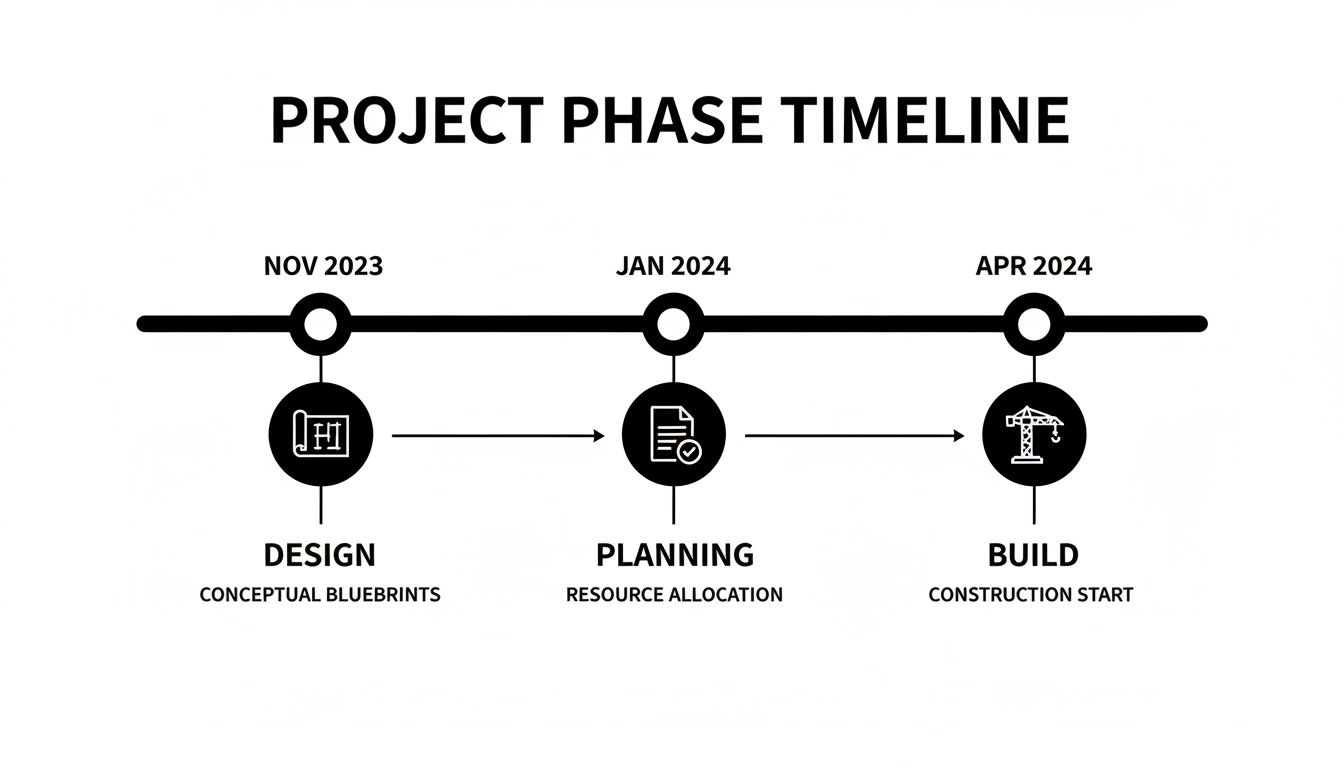
As you can see, a huge amount of work happens before a spade even hits the ground. This detailed preparation is what makes for a smooth and well-managed build.
Here’s what you can expect at each stage:
Design and Concept Development (4-8 weeks): This is where the collaboration really begins. We’ll work closely with you to nail down your vision, explore different design options, and create initial sketches and 3D models so you can see the ideas come to life.
The Planning Phase (8-12 weeks): Once you've signed off on a design, we get all the paperwork ready and submit the applications. If your project is covered by Permitted Development, we'll apply for a Lawful Development Certificate for your records. If it needs a full planning application, this is the official timeframe councils have to make their decision.
Technical Design and Tender (4-6 weeks): We don’t just sit around waiting for planning approval. This time is used to develop the highly detailed technical drawings and structural calculations required for Building Regulations. We then package all this up and send it out to trusted builders to get accurate, like-for-like quotes.
Construction (12-20 weeks): This is when it all happens on site. The exact duration depends on the project's complexity, but for a small, well-planned glass extension, this is a very realistic timeframe from breaking ground to practical completion.
By understanding these frameworks for both cost and time, you can step into your project with real confidence, knowing exactly what to expect at every turn.
Common Questions About Small Glass Extensions
Even with a clear vision, starting a home extension project always brings up a few questions. As architects, we've guided countless South West London homeowners through this process, and we find many of the same queries pop up time and again.
Here, we tackle the most common ones with practical, experience-based answers to give you complete clarity before you begin.
Will My Glass Extension Be Too Hot Or Too Cold?
This is easily the most frequent—and most valid—concern we hear. It’s a worry rooted in the reputation of old-fashioned, leaky conservatories that were either freezing in winter or sweltering in summer.
Thankfully, modern design and materials have completely solved this problem. A contemporary small glass extension is engineered from the ground up for comfortable, year-round living.
The solution is all in the glazing. We specify high-performance glass with specialised coatings that actively manage the climate:
Solar Control Coatings: These are essential for south or west-facing extensions. An invisible, micro-thin layer reflects a huge portion of the sun's heat, stopping the space from overheating on a summer's day.
Low-Emissivity (Low-E) Coatings: This technology is a game-changer in winter. It works by reflecting the heat generated inside your home back into the room, preventing it from escaping through the glass. This keeps the space warm and cosy while reducing your heating bills.
When you combine that with smart ventilation—like opening rooflights or bifold doors—and an efficient heat source like underfloor heating, your glass extension will be a comfortable, usable part of your home, no matter the season.
How Much Value Could a Small Glass Extension Add?
A thoughtfully designed small glass extension is a fantastic financial investment, especially in a competitive property market like London. While the exact figure depends on your postcode and the quality of the finished build, a high-quality extension is widely recognised to increase a property's value by 5-8%.
In sought-after areas like Wimbledon or Richmond, this uplift can be even more significant.
The key to maximising your return on investment is quality. A generic, poorly integrated extension simply won't have the same impact as a bespoke design.
The real value comes from creating a bespoke, functional, and beautiful space that solves a problem for your home. It might be creating that dream open-plan kitchen-diner or adding a light-filled home office. An architect-led design ensures the new space enhances the property's overall flow and appeal, making it a highly desirable asset for future buyers.
Do I Really Need an Architect For a Small Extension?
It’s tempting to view skipping professional fees as a quick cost-saving measure, but this is almost always a false economy. An architect’s role goes far beyond just drawing up a few plans, even for what might seem like a straightforward small glass extension.
Our value really shines in a few critical areas:
Navigating Regulations: We expertly handle the complexities of local planning permissions and Building Regulations, especially in conservation areas or for listed buildings. We make sure everything is fully compliant.
Creative Design Solutions: We bring creativity and spatial awareness to the table, finding clever ways to maximise light and space and ensuring the extension is perfectly tailored to your lifestyle and home.
Quality Control: We manage the tender process to get you competitive quotes from trusted builders and then oversee the construction itself to ensure high standards of workmanship are maintained from start to finish.
Ultimately, our expertise helps you avoid expensive mistakes, navigate the project with far less stress, and achieve a superior result that adds lasting value to your home.
What Is the Difference Between a Conservatory and a Glass Extension?
Although people sometimes use the terms interchangeably, they describe fundamentally different structures. A traditional conservatory is typically a glazed frame attached to the house, often separated by external-grade doors, and historically was exempt from the most stringent thermal regulations.
A modern glass extension, on the other hand, is designed as a fully integrated part of the home. It’s built to the same high standards as the main house, featuring:
A properly insulated roof (often with large skylights).
High-performance, energy-efficient glazing.
Solid structural elements and foundations.
Because it’s designed as a genuine, year-round living space—usually open-plan to the rest of the house—it must meet the same demanding Building Regulations for thermal efficiency as any other room in your property. It’s a true extension, not just an add-on.
Ready to explore the potential of a beautifully designed small glass extension for your London home? At Harper Latter Architects, we combine creative vision with technical expertise to deliver exceptional living spaces.
Comments