
What is the RIBA Plan of Work: A Guide for UK Homeowners

Updated: Dec 11, 2025
So, what exactly is the RIBA Plan of Work? In short, it’s the master blueprint for any UK construction project, whether you're planning a small home extension in Wandsworth or a completely new build in Wimbledon.
Developed by the Royal Institute of British Architects (RIBA), this framework breaks down the entire building process into eight clear, manageable stages (numbered 0 to 7). It acts as a detailed guide to keep everyone—from you, the client, to the architect and builder—perfectly aligned.
A Blueprint for Your Home Project
Think of the RIBA Plan of Work as the definitive roadmap for your architectural journey. It provides a structured, logical sequence for every task, decision, and deliverable, ensuring everyone is working from the same script. This organisation is vital for preventing the common pitfalls of construction projects, such as budget overruns, unexpected delays, and stressful miscommunications.
For homeowners in South West London embarking on a high-end refurbishment or a complex new build, this clarity is invaluable.
The framework isn't some new-fangled idea; it has been the backbone of the British construction industry for decades. The RIBA Plan of Work was originally created way back in 1963 and has since become the definitive model for managing projects from the first spark of an idea to the building's ongoing use.
By its 50th anniversary in 2013, it was significantly updated to reflect modern industry needs, bringing in new stages for strategic definition (Stage 0) and post-occupancy evaluation (Stage 7) to better capture the full lifecycle of a building.
Visualising the Project Journey
To help you get a sense of how the stages connect, RIBA provides a simple overview diagram.
This visual guide neatly lays out the entire project lifecycle, showing the core tasks and key sustainability checkpoints at each step. It also demonstrates how the plan is a continuous loop, not just a linear process—feedback from later stages often informs how new projects begin.
To give you a clearer snapshot, here’s a quick summary of what each stage sets out to achieve.
The RIBA Plan of Work at a Glance
Stage Number | Stage Name | Primary Goal |
|---|---|---|
0 | Strategic Definition | Define the core business case and strategic brief for the project. |
1 | Preparation and Briefing | Develop the project objectives, outcomes, and initial project brief. |
2 | Concept Design | Prepare concept design options and agree on the architectural direction. |
3 | Spatial Coordination | Develop a coordinated design and update proposals for planning submission. |
4 | Technical Design | Prepare all technical information needed to manufacture and construct. |
5 | Manufacturing and Construction | Build the project according to the technical design and specifications. |
6 | Handover | Conclude the building contract and hand the completed project over to the client. |
7 | Use | Evaluate the building in use and learn lessons for future projects. |
This table provides a high-level overview, but the real value is in how the stages build on one another, ensuring nothing is missed.
At its core, the Plan of Work transforms a complex, often intimidating process into a series of achievable milestones. Each stage builds upon the last, ensuring that critical decisions are made at the right time and with the right information.
By following this proven structure, you gain control and confidence, knowing that your project is progressing logically towards a successful outcome. This structured approach is fundamental to how our architectural process works, ensuring every detail is considered from the outset.
Throughout this guide, we’ll break down each of these stages in much more detail.
A Stage-by-Stage Guide to the RIBA Plan of Work
Understanding the RIBA Plan of Work in theory is one thing, but seeing how it unfolds in practice is where its real value shines. Let's walk through the entire journey, stage by stage, to see exactly how your architectural project moves from a simple idea to a finished home.
For a homeowner, this structured process can feel complex, but it boils down to three core phases: aligning on the vision, designing the specifics, and finally, building it.
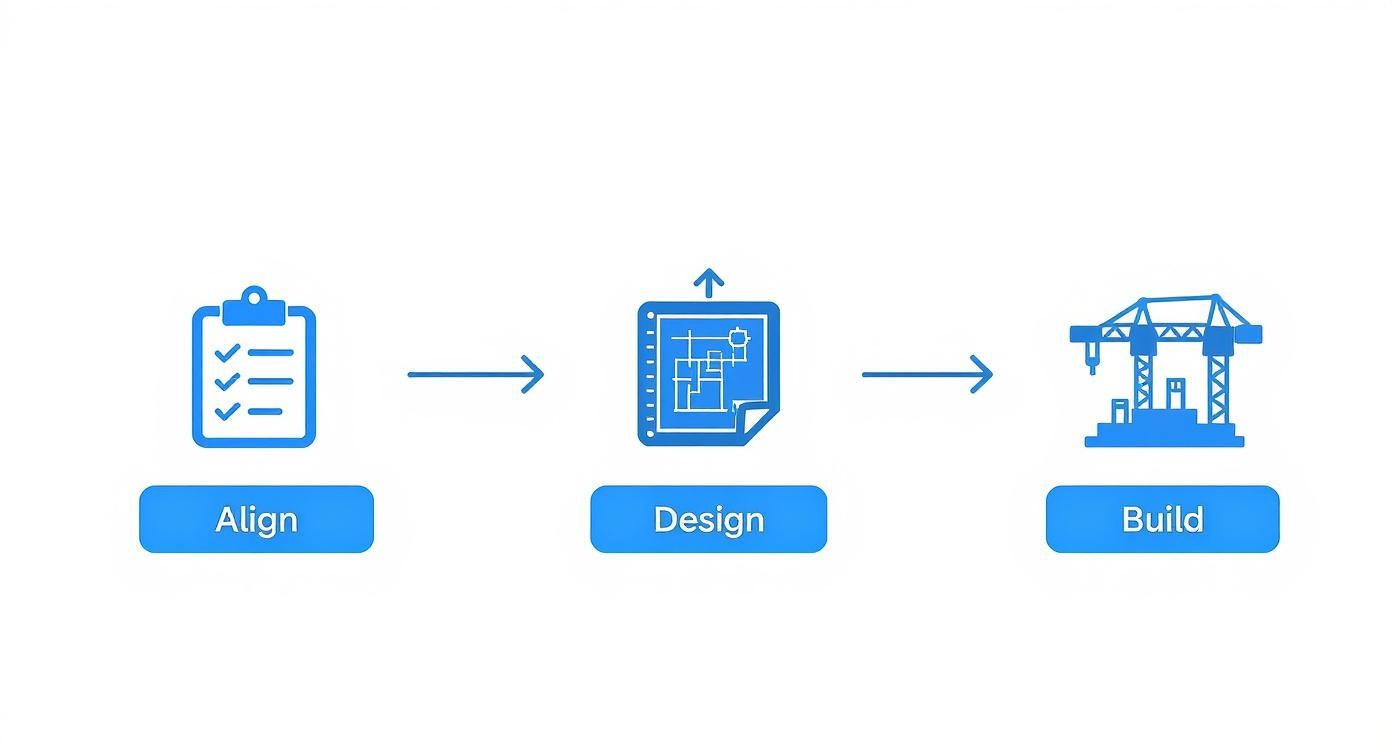
This simple breakdown shows how the RIBA stages group together, moving logically from initial strategy and agreement, through detailed design, and finally into the physical construction. Each of the eight stages represents a critical milestone within this overarching process.
Stage 0: Strategic Definition
This is the very first step, taking place before any drawing begins. The central question here is simple but crucial: is this project the right thing to do? At this point, you and your architect will have an open conversation about your core needs, your aspirations, and whether the project makes sense for you financially and practically.
Key activities include:
Defining Your Core Goals: What are you really trying to achieve? Is it about gaining more space, creating a better family layout, improving energy efficiency, or adding value to your property?
Assessing Feasibility: We'll look at whether your ambitions are realistic for your property and budget. This stage establishes the project's viability from the outset, before you commit significant resources.
Considering Alternatives: Your architect might explore whether a clever refurbishment is better than a full-blown extension, or if a different approach could meet your needs more effectively.
The primary output is a Strategic Brief, a document that clarifies the project's foundational purpose and justifies the investment.
Stage 1: Preparation and Briefing
With the strategic direction confirmed, Stage 1 is all about building the foundations for a successful project. This is where we formalise your requirements and start assembling the project team.
We’ll develop the Initial Project Brief, which is a more detailed version of your requirements. It will outline room functions, spatial needs, and your aspirations for quality and finish. At the same time, your architect will carry out initial site appraisals and feasibility studies to really understand the constraints and opportunities of your property.
A crucial part of this stage is appointing the core project team. This might include bringing a structural engineer or a quantity surveyor on board to provide early cost advice.
Stage 2: Concept Design
Now for the exciting part. This is where the creative vision truly begins to take shape. Using the brief from Stage 1, your architect will prepare initial design concepts. Think sketches, diagrams, and 3D models that explore different architectural approaches, not detailed technical drawings.
You can expect to see various options for layouts, massing, and the overall look and feel of your home. It’s a highly collaborative phase where your feedback is absolutely essential to guide the design toward your preferred direction. The goal is to agree on a single, coherent concept that meets your brief and budget.
This stage is arguably one of the most exciting for a homeowner. It's the moment your abstract ideas are translated into tangible visual concepts, providing the first real glimpse of what your future home could look like.
Stage 3: Spatial Coordination
Formerly known as Developed Design, Stage 3 is all about refining the approved concept from Stage 2. The design is fleshed out with a greater level of detail, ensuring all the architectural and engineering aspects work together seamlessly.
The main focus here is preparing all the necessary information for a Planning Application. Your architect will produce detailed drawings, elevations, and reports required by the local authority. This often includes coordinating with other consultants for things like heritage statements for listed buildings or tree surveys.
Submitting the planning application is the big event of this stage. Understanding the ins and outs of this process is vital, and you can learn more by reading our simple guide to UK planning application stages. A successful outcome here is a huge milestone, giving you the official green light to proceed.
Stage 4: Technical Design
Once you have planning permission in the bag, the project moves into the highly detailed technical phase. Stage 4 involves preparing all the technical information required to actually build the project. The focus shifts from what the building will look like to precisely how it will be built.
Your architect will create a comprehensive set of drawings and specifications detailing every single component, from the type of insulation and window frames to the exact placement of electrical sockets. This information serves two key purposes:
Building Regulations Approval: Submitting the detailed plans to ensure the design complies with all UK building standards for safety, accessibility, and energy efficiency.
Tendering: Sending the detailed information package to a shortlist of trusted contractors, who will use it to provide an accurate price (a tender) for construction.
This stage is absolutely critical for cost control and quality assurance. A thorough, well-coordinated technical design minimises the risk of unforeseen issues and costly changes down the line.
Stage 5: Manufacturing and Construction
Finally, this is the stage where your vision becomes a physical reality. With a contractor appointed and all technical details finalised, the building work begins on site.
The architect’s role shifts from designer to contract administrator and quality monitor. They will regularly visit the site to inspect the work, ensure it aligns with the design specifications, and answer any queries from the building team. They also manage the contract between you and the builder, which includes certifying payments and formally instructing any changes.
Clear and consistent communication between you, the architect, and the contractor is essential to keep the project on track and resolve any on-site challenges efficiently.
Stage 6: Handover
As construction nears completion, the project enters the Handover stage. This is where the building contract is formally concluded, and the finished home is handed over to you.
This process involves several key steps:
Practical Completion: The architect inspects the works and certifies that they are complete, officially triggering the handover.
Snagging: A detailed list of any minor defects or incomplete items (a "snagging list") is put together for the contractor to fix.
Building Manual: You'll receive a package of information containing all relevant warranties, certificates, and instructions for operating and maintaining your new home.
Once you are completely satisfied, the final payments are made, and you can officially move in.
Stage 7: Use
The RIBA Plan of Work doesn’t just stop when the builders leave. Stage 7 focuses on the building in use and involves a process of post-occupancy evaluation. Your architect may check in with you after a period—typically 6-12 months—to see how the building is performing in the real world.
This feedback is invaluable. It helps you get the very best out of your new home and provides the design team with crucial insights that can inform future projects. It answers questions like: Is the home as energy-efficient as designed? Does the layout work as intended in daily life? This final step closes the loop, ensuring lessons are learned and continuous improvement is embedded in the architectural process.
Understanding Who Does What on Your Project
A successful building project is like a well-rehearsed orchestra, and the RIBA Plan of Work is the score everyone follows. To bring your vision to life, a team of skilled professionals must work together in perfect harmony. Knowing who does what is critical for ensuring a smooth collaboration and avoiding costly misunderstandings down the line.
Ultimately, this framework clarifies who is responsible for what, and when.

The Client: Your Role in the Process
As the client, you are the single most important person on the project. It’s your vision, decisions, and engagement that drive everything forward. While you hire experts to handle the technical details, your input is absolutely essential.
Your key duties include:
Providing a Clear Brief: The more detail you can give on your goals, budget, and lifestyle needs during Stages 0 and 1, the better the final home will be.
Making Timely Decisions: The project moves through clear gateways. To avoid delays, your architect will need you to approve designs and make choices at the end of each stage.
Appointing the Team: You are responsible for formally appointing the architect and other consultants, and for signing the building contract with your chosen contractor.
The Architect: Your Creative Lead and Guide
Think of your architect as your primary guide and creative lead for the entire RIBA journey. They aren’t just designers; they are expert coordinators who translate your brief into a buildable reality and manage the process from the very first conversation to the final handover.
An architect's role is to act as your trusted advisor, safeguarding your interests, managing complexity, and ensuring the design intent is realised with precision and quality. They are the central point of communication, orchestrating the input of all other specialists.
They lead the initial design stages (Stages 2-4), secure vital permissions like planning and building regulations, and then administer the building contract during construction (Stage 5).
The Wider Consultant Team
For most bespoke home projects, a wider team of specialists is needed to get the job done right. Your architect will advise on who to bring on board and at which stage.
Structural Engineer: Essential for any project involving structural changes. They design and sign off on the safety and integrity of foundations, beams, and any load-bearing walls. To learn more about their specific duties, you might find our guide on the differences between a structural engineer vs an architect helpful.
Quantity Surveyor: A cost expert who can provide detailed cost estimates and help manage the project budget, which is particularly useful on larger or more complex builds.
Other Specialists: Depending on the specifics of your project, you might also need experts in areas like mechanical and electrical (M&E) services, heritage conservation, or landscape design.
The Contractor: Bringing the Vision to Life
The contractor and their building team are brought into the project later on, typically at the end of Stage 4. Their crucial role is to take the detailed technical drawings and specifications and turn them into a physical reality during Stage 5 (Manufacturing and Construction).
They manage the day-to-day running of the site, source materials, and carry out all the physical building work. Throughout this stage, your architect oversees their work to ensure it meets the quality standards set out in the building contract.
Fine-Tuning the Plan for Your Bespoke Home
You might hear about the RIBA Plan of Work and picture a rigid, one-size-fits-all checklist. But in reality, its greatest strength is its flexibility. Think of it less as a strict set of rules and more as a sophisticated framework, designed to be shaped around the unique character of any project—especially the kind of bespoke homes we specialise in across South West London.
This adaptability is what makes it so indispensable. Whether we’re bringing a high-end refurbishment in Wimbledon to life or navigating a complex basement extension in Richmond, the core stages are our guide. However, the focus, the level of detail, and the specialists we bring in are tailored to the specific challenges and dreams of your project. This way, we get all the benefits of a structured process without it ever getting in the way of creativity.
Application for Luxury Residential Homes
When you're creating a luxury home, the vision is often about exceptional craftsmanship, beautiful materials, and bespoke features – from custom joinery to smart home technology. The RIBA Plan of Work gives us the perfect structure to manage this level of complexity with absolute precision.
During the early design stages (Stages 2-3), the framework gives us the space for extended consultations and detailed mood boards to really nail the aesthetic. Later, when we get to the Technical Design (Stage 4), the plan ensures that every single finish, fixture, and tap is meticulously specified.
This obsession with detail is vital for a few key reasons:
Cost Certainty: It allows us to get highly accurate costs from contractors, which dramatically reduces the risk of surprise expenses once the build is underway.
Quality Control: These detailed specifications become a core part of the building contract. This gives us a clear standard to enforce on-site during Stage 5, making sure you get exactly what was promised.
Supplier Coordination: It helps us seamlessly bring in specialist suppliers, from artisan stonemasons to home cinema installers, ensuring everyone is working from the same playbook.
Navigating Listed Buildings and Conservation
Working with listed buildings or properties in conservation areas adds a whole other layer of complexity, mostly centred around regulations. Here, the RIBA framework is an essential tool, giving us dedicated checkpoints to address heritage and planning requirements.
Right from the very beginning, the early stages are adapted to bring in specialist advice. In Stage 1 (Preparation and Briefing), we might appoint a heritage consultant to analyse the building’s historical significance. This expert report then directly informs the Concept Design (Stage 2), making sure our proposals are sensitive, appropriate, and have the best possible chance of success.
The structured approach of the RIBA Plan of Work is vital for heritage projects. It forces a methodical process of research, justification, and negotiation with conservation officers, which is essential for securing the necessary Listed Building Consent.
The Spatial Coordination (Stage 3) then becomes about preparing a really robust application. It’s not just about architectural drawings; it includes detailed heritage statements and design justifications that build a compelling case. This organised, proactive approach significantly increases the likelihood of a positive planning outcome.
Managing Technically Demanding Projects
Projects like basement conversions or major structural alterations are technically challenging and come with their own set of risks. In these scenarios, the RIBA Plan of Work acts as a crucial risk management tool, making sure all the structural, waterproofing, and logistical hurdles are addressed in a systematic way.
For a basement extension, for example, the early stages involve intense collaboration with structural engineers and geotechnical experts. The framework makes sure these critical technical studies are done before we get deep into the design work, which prevents the kind of costly redesigns that can derail a project.
The Technical Design (Stage 4) becomes incredibly detailed, specifying everything from the type of concrete and waterproofing systems to party wall agreements with your neighbours. Getting this level of detail locked down before Stage 5 (Construction) begins is non-negotiable. It de-risks the project for everyone involved, gives the contractor total clarity, and gives you complete confidence that even the most ambitious transformation is being managed with professional rigour.
Embedding Sustainability and Safety in Your Project
Modern construction is about so much more than what a building looks like. It’s about building with a sense of responsibility and foresight. The RIBA Plan of Work has evolved to put sustainability and safety right at the heart of the design process, making sure your home is not only beautiful but also efficient, healthy, and secure.
This isn't just a box-ticking exercise tacked on at the end. The framework weaves these priorities into the conversation from the very beginning, long before a single brick is laid.

A Proactive Approach to Sustainable Design
The latest version of the RIBA Plan of Work features a dedicated 'Sustainability Strategy' that acts as a continuous thread running through every single stage. This encourages eco-friendly and energy-efficient decisions from day one, rather than trying to shoehorn them in later when it’s often disruptive and far more expensive.
This forward-thinking approach is critical. The 2020 update was heavily shaped by pressing UK policy, especially the government’s commitment to achieving net-zero carbon emissions by 2050. When you consider that the construction industry is responsible for around 40% of the UK's entire carbon footprint, you can see why embedding environmental goals early on is now a fundamental part of responsible architecture. You can discover more about how the RIBA Plan of Work integrates these critical UK policy priorities on Delib.net.
For your project, this means your architect will be talking to you about options like:
High-performance insulation to slash your heating bills.
Sustainably sourced materials that have a much lower environmental impact.
Energy-efficient systems like solar panels or air source heat pumps.
Thinking about these things from the start ensures your home is future-proofed, comfortable to live in, and cheaper to run for years to come.
Integrating Health and Safety from the Start
Just as important is the systematic way health and safety is handled. The RIBA Plan of Work provides a clear, logical structure for meeting crucial UK regulations, most notably the Construction (Design and Management) Regulations, or CDM for short.
The CDM regulations place specific duties on the client, designer (the architect), and contractor to manage health and safety risks throughout the entire project lifecycle. The Plan of Work provides the perfect framework for ensuring these duties are met at the appropriate times.
This structured approach to managing risk is about more than just compliance; it’s about creating a genuinely safe environment for everyone involved. From the first design ideas in Stage 2 to managing the build on-site in Stage 5, potential hazards are spotted and dealt with early.
This methodical process protects the construction team during the build and ensures the finished home is a safe place for you and your family to enjoy. By following the RIBA Plan of Work, you can feel confident that your project is being delivered not just to the highest design standards, but to the highest standards of safety and professional responsibility too.
Frequently Asked Questions
Stepping into the world of architecture for the first time naturally brings up a lot of questions. We’ve put together some straightforward answers to the queries we hear most often from homeowners about the RIBA Plan of Work to help demystify the process.
Do I Have to Use the RIBA Plan of Work?
While it’s not a legal requirement for a homeowner, the RIBA Plan of Work is the recognised industry standard right across the UK. Think of it as a reliable roadmap for your project.
Most reputable architects, including our practice, work within this framework for a simple reason: it works. It minimises risk, clarifies who is responsible for what, and has a proven track record of helping deliver complex projects on time and on budget.
How Are Architect Fees Structured Across the RIBA Stages?
Typically, an architect's fees are calculated as a percentage of the total construction cost. These fees are then billed in stages as your project moves through the RIBA framework, so payments align with key project milestones.
You’ll find that the early design and planning stages (Stages 0-3) often account for a significant portion of the total fee. This reflects the intensive creative work, consultant coordination, and detailed applications that have to be sorted out right at the start. It’s a structure that helps you manage your budget effectively over the life of the project.
Can I Make Changes to My Design During the Process?
Yes, absolutely. One of the biggest strengths of the RIBA Plan of Work is that it’s designed to be flexible, especially during the early design stages (Stages 0-3). This is precisely the right time—and the most cost-effective one—to explore different ideas and refine your vision.
Making significant changes later on, particularly once you get to the Technical Design (Stage 4) or Construction (Stage 5), can become much more complex and costly. It can also lead to delays. Your architect will always talk you through the implications of any changes you’re considering so you can make a fully informed decision.
Is the RIBA Plan of Work Suitable for Renovations and Extensions?
Yes, it’s highly adaptable and works perfectly for all types of residential projects, not just new builds. We use it for everything from extensions and major renovations to specialist conservation work on listed buildings.
The core principles of defining a clear brief, developing a coordinated design, managing technical details, and overseeing construction are universal. The framework provides essential structure and clarity whatever the scale of your project, making it an invaluable tool for any ambitious home transformation.
Ready to bring your vision to life with a clear, structured, and collaborative approach? At Harper Latter Architects, we use the RIBA Plan of Work to guide our bespoke residential projects across South West London, ensuring clarity and excellence from start to finish. Explore our proven process and get in touch to discuss your project.
Comments