
Top Guide: glass extension on house for UK homes – design, costs, planning
A modern glass extension is far more than just an extra room; it’s a bespoke architectural statement that can completely redefine the way you live. These structures are designed to seamlessly merge your indoor and outdoor spaces, flood your home with natural light, and add significant financial and aesthetic value. In short, they've become a hallmark of contemporary design.
Why a Glass Extension Transforms Your Home
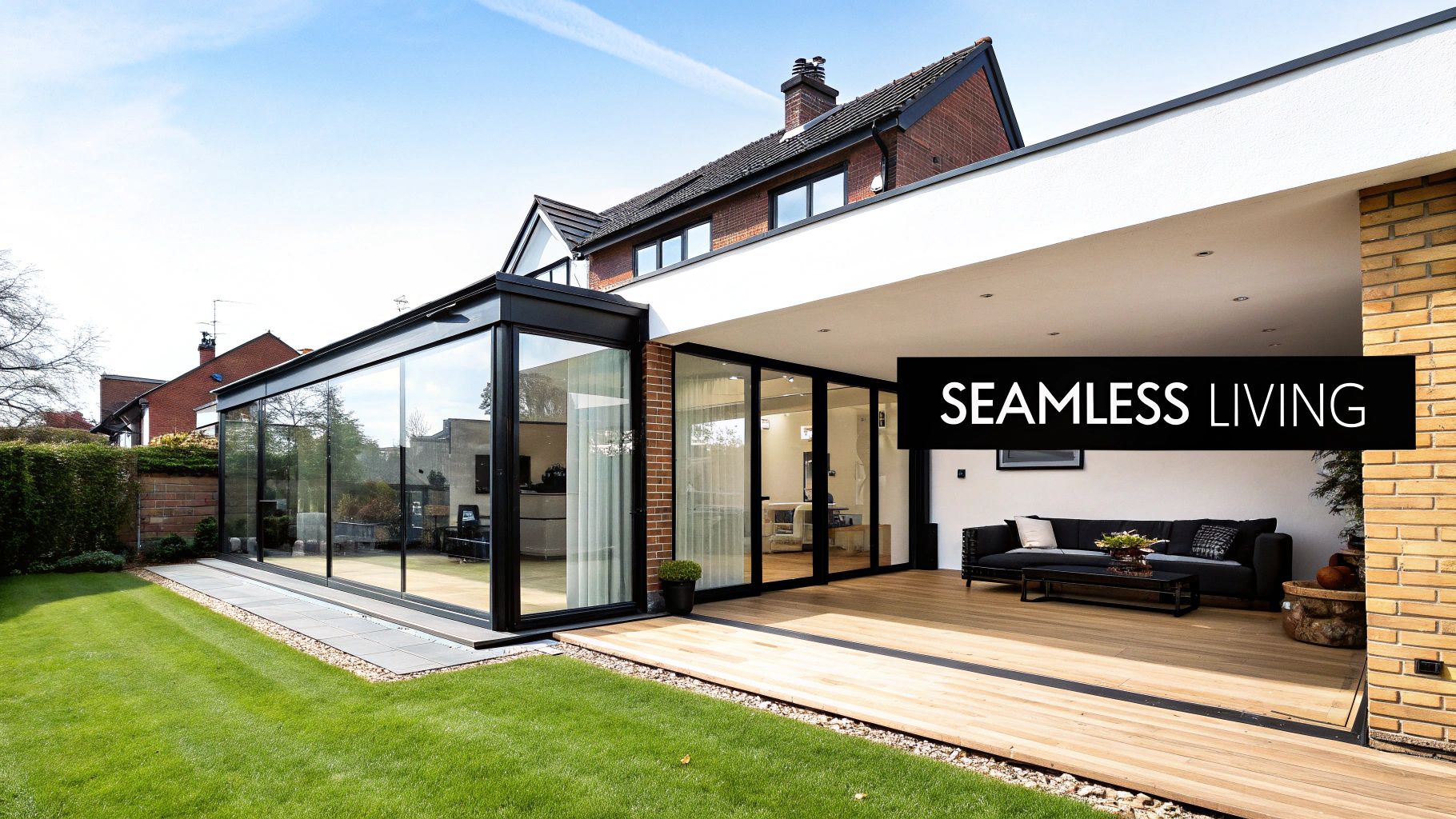
Once considered a niche luxury, a glass extension on a house has become a popular and genuinely aspirational addition for homeowners across the UK. Especially in areas like South West London, where period properties often have darker, more compartmentalised interiors, these light-filled spaces offer a striking contrast and a modern solution to an age-old problem. They aren't just functional add-ons; they are carefully considered lifestyle investments.
The real appeal, of course, lies in their ability to dissolve the boundaries between your home and garden. Imagine enjoying your morning coffee bathed in sunlight, whatever the season, or watching the evening sky from the comfort of your living area. This connection to nature and the changing light throughout the day genuinely enhances wellbeing and creates a dynamic, ever-changing atmosphere inside your home.
More Than Just an Aesthetic Upgrade
Beyond the immediate visual impact, a well-designed glass extension adds practical living space and can bring substantial value to your property. Their growing popularity reflects a wider trend in high-quality home improvements that are built to last. In fact, the UK market for conservatories and glazed extensions has shown considerable growth, highlighting the long-term confidence homeowners have in these kinds of investments. You can explore more data on the rise in demand for glazed extensions and see just how the market has evolved.
A modern glass extension offers:
An influx of natural light: This brightens not only the new space but also the adjoining rooms, making your entire home feel larger and more open.
Enhanced connection to the outdoors: Large glass panels create an immersive experience, allowing you to feel part of your garden landscape all year round.
Architectural distinction: A sleek glass structure can add a beautiful contemporary counterpoint to traditional architecture, creating a memorable design feature.
Increased property value: Buyers increasingly view high-quality glass extensions as a premium feature, making your home more desirable on the market.
A glass extension is a deliberate choice to live differently. It prioritises light, space, and a connection to the environment, fundamentally altering the character and feel of a home.
Ultimately, choosing a glass extension on a house is about creating a space that feels both expansive and intimate. It’s a commitment to bespoke design that blends form and function, delivering a beautiful, light-filled environment tailored precisely to how you want to live.
Understanding Key Design and Structural Choices
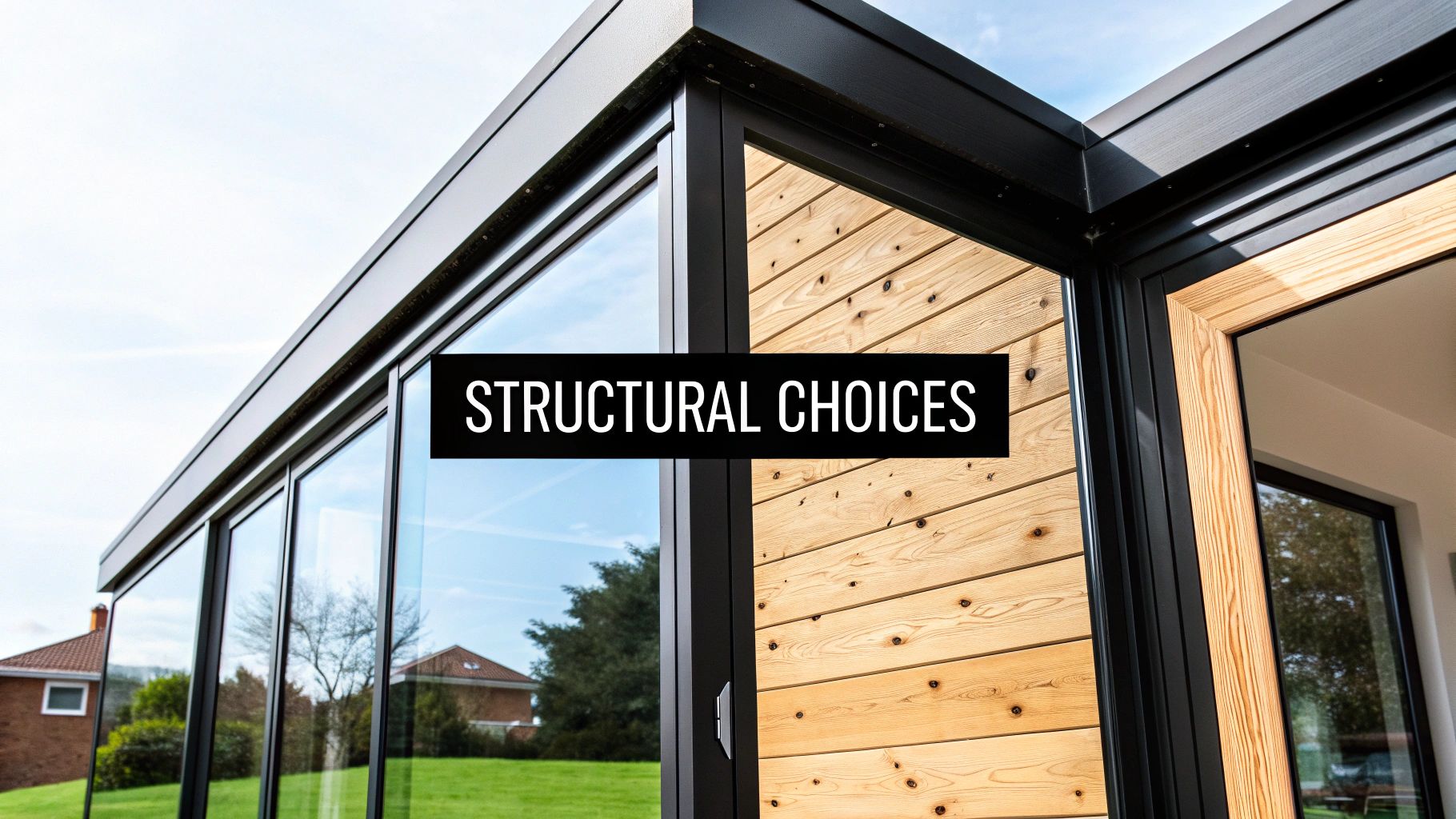
Designing a glass extension on a house is about so much more than picking out some big windows. It’s a process of crafting a bespoke structure that feels like a natural part of your home while delivering on light, space, and performance. The architectural choices made at this early stage will genuinely define how you experience your new space for decades.
At its heart, the decision comes down to two main avenues: a minimalist, barely-there frameless design or a more structured, framed system. Each route offers a completely different aesthetic and opens up its own set of structural possibilities, giving you a huge degree of control over the final feel.
A frameless glass box relies on structural glazing, a technique where the glass panels themselves do much of the heavy lifting, bearing a large part of the structural load. This clever engineering allows us to minimise visible frames and supports, creating an almost totally transparent link to your garden. It's the ultimate choice for a clean, contemporary look where the view is the undisputed star of the show.
On the other hand, a framed system offers a more traditional yet equally breathtaking result. Here, the frame is the primary structure, outlining the glass and adding a clear architectural character. This approach also gives you far more choice in materials, with each one bringing its own texture, colour, and personality to the project.
Choosing Your Framing Materials
The material you choose for the frame is one of the most critical design decisions you’ll make. It doesn't just shape the visual style; it dictates structural capabilities, like how big your glass panels can be. For a high-end glass extension on a house, three materials really stand out.
Aluminium: Prized for its strength, durability, and beautifully slim profiles, aluminium is the natural choice for modern, minimalist designs. It can be powder-coated in any RAL colour you can imagine to either match or contrast with your existing home. Better still, it needs very little maintenance and is strong enough to support huge panes of glass.
Steel: For projects that need maximum strength and a sharp, industrial-chic look, steel is a fantastic option. It allows for even thinner sightlines than aluminium and is perfect for creating dramatic features like Crittall-style extensions. While it’s heavier and often more expensive, its sheer robustness is second to none.
Timber: Offering a natural warmth and traditional charm, timber frames can be a beautiful way to complement period properties. Modern engineered timbers like Accoya are now incredibly stable and resistant to rot, providing a sustainable and aesthetically pleasing alternative. Of course, timber frames can be painted or stained to suit any design scheme.
To help you weigh up the options, here’s a simple breakdown of how these materials compare.
Comparing Framing Materials for Your Glass Extension
Material | Aesthetics & Style | Strength & Span Capability | Maintenance | Typical Cost |
|---|---|---|---|---|
Aluminium | Modern, minimalist, and sleek. Offers slim sightlines. Can be powder-coated in any colour. | High strength-to-weight ratio allows for large glass panels and slim frames. | Very low. Requires occasional cleaning. Resistant to rust and corrosion. | Mid to High |
Steel | Industrial-chic, elegant, and heritage (e.g., Crittall style). The thinnest possible profiles. | Extremely high. Ideal for maximum spans and oversized doors without bulky frames. | Higher. Requires protective coatings to prevent rust, which may need periodic re-application. | High |
Timber | Warm, natural, and traditional. Complements period homes beautifully. Can be painted or stained. | Good, especially with engineered timbers. Spans are typically smaller than steel or aluminium. | Moderate. Requires periodic re-staining or painting to protect from the elements. | Mid to High |
Ultimately, the best material depends on the architectural vision for your home, your budget, and how you want the finished space to feel.
Pushing the Boundaries of Design
Beyond the core structure, there are advanced design features that can elevate your glass extension from a simple room into a remarkable piece of architecture. These are the bespoke elements where true customisation shines, creating a space that is utterly unique to you.
A well-designed glass extension isn’t just an addition; it’s an integration. The goal is to create a seamless transition between the old and new, light and solid, inside and out.
Think about incorporating features that truly blur the lines between your home and garden:
Frameless Corners: By bonding two panes of glass directly together at a right angle—with no corner post—you can create a breathtaking panoramic view that pulls the landscape right into the room. It’s a small detail that makes a huge impact.
Oversized Sliding Doors: Imagine entire walls that simply glide away, completely opening up your living space to a terrace or garden. Modern systems can be installed with flush thresholds, removing any physical or visual barrier between indoors and out for a truly seamless flow.
Structural Glass Roofs: For the ultimate light-filled experience, nothing beats a glass roof. Engineered to be incredibly strong, they can flood the space below with daylight, adding a real sense of drama and openness. These can be designed as fixed panels or with opening sections for ventilation.
These structural and design decisions are fundamental to your project's success. They need careful thought and expert guidance to ensure the final result isn't just beautiful and functional, but perfectly woven into the existing fabric of your home.
Navigating Planning Permission and Conservation Areas
Before the first piece of glass is even considered, every ambitious extension project in the UK has to work through the planning system. This stage can feel a bit intimidating, especially if your property is in a sensitive location, but with the right guidance, it’s a clear and manageable process.
Getting to grips with the rules is the first step to bringing your vision for a glass extension on a house to life.
For many homeowners, the journey starts with something called Permitted Development (PD) rights. Think of these as a kind of pre-approved permission from the government that allows for certain works—like smaller rear extensions—without needing a full planning application. They offer a more streamlined route, as long as your project fits neatly within specific size and design limits.
However, these rights don't apply everywhere. They can be restricted or even removed entirely in certain areas, which is where things get a bit more involved.
When a Full Planning Application Is Needed
If your dream glass extension is bigger than what Permitted Development allows, or if your home is in a designated spot like a Conservation Area, you will almost certainly need to submit a full Planning Application. The same goes for practically any work on Listed Buildings, where every single change is scrutinised to protect the building's historic character.
This isn’t a roadblock; it’s just a different kind of conversation with your local council. It’s your chance to present a compelling case for a high-quality, architecturally sensitive design that truly enhances your property and the surrounding area.
There's a common myth that modern additions are frowned upon in historic settings. In reality, planning authorities often prefer a clear, honest distinction between old and new. A beautifully designed glass extension can provide a stunning, lightweight contrast to traditional brick or stone.
A full application needs detailed architectural drawings, design statements, and a clear explanation of why the project should go ahead. The council will weigh your proposal against local and national planning policies, looking at its impact on:
Your neighbours’ properties, including their right to light and privacy.
The character and appearance of your home and the wider street scene.
Heritage assets, which is the top priority for Listed Buildings or homes in Conservation Areas.
Success in Sensitive Locations
Getting the green light for a glass extension on a house in a Conservation Area or on a Listed Building is absolutely achievable—it just requires a thoughtful and well-argued design. Success comes down to showing that the new structure respects and complements its historic context, rather than overpowering it. For a deeper dive, our guide on planning permission in a Conservation Area offers more detailed advice.
A few key principles can make all the difference in these applications:
High-Quality Materials: Using premium materials, like slim-profile aluminium or steel frames, demonstrates a commitment to quality that planners really value.
Subservient Design: The extension should feel like a graceful addition, not a dominant new feature. This might mean setting it back from the main rear wall or keeping its overall scale modest.
Visual Lightness: The natural transparency of glass is a huge plus. It allows the original architecture of the building to remain visible and dramatically reduces the perceived bulk of the extension.
Navigating this regulatory landscape takes experience and a strategic eye. An architect can manage the entire journey for you, from getting initial advice from the council to submitting a robust application that anticipates and addresses any potential concerns. This professional guidance is invaluable, turning what can seem like a complex challenge into a clear path towards your stunning new living space.
Creating a Sustainable and Thermally Efficient Space
One of the most persistent myths about glass extensions is that they’re a nightmare to keep comfortable – boiling in summer and freezing in winter. Thanks to incredible leaps in glazing technology, this simply isn’t true anymore. A modern, well-designed glass structure can be a benchmark for thermal efficiency and sustainability.
Forget everything you know about old-school conservatories. Today’s glass extensions are engineered from the ground up to create a stable, comfortable, and energy-efficient environment all year round. The secret is in the science of the glass itself.
This flowchart gives you a simplified look at the two main paths for getting your project approved: Permitted Development and a full Planning Application.
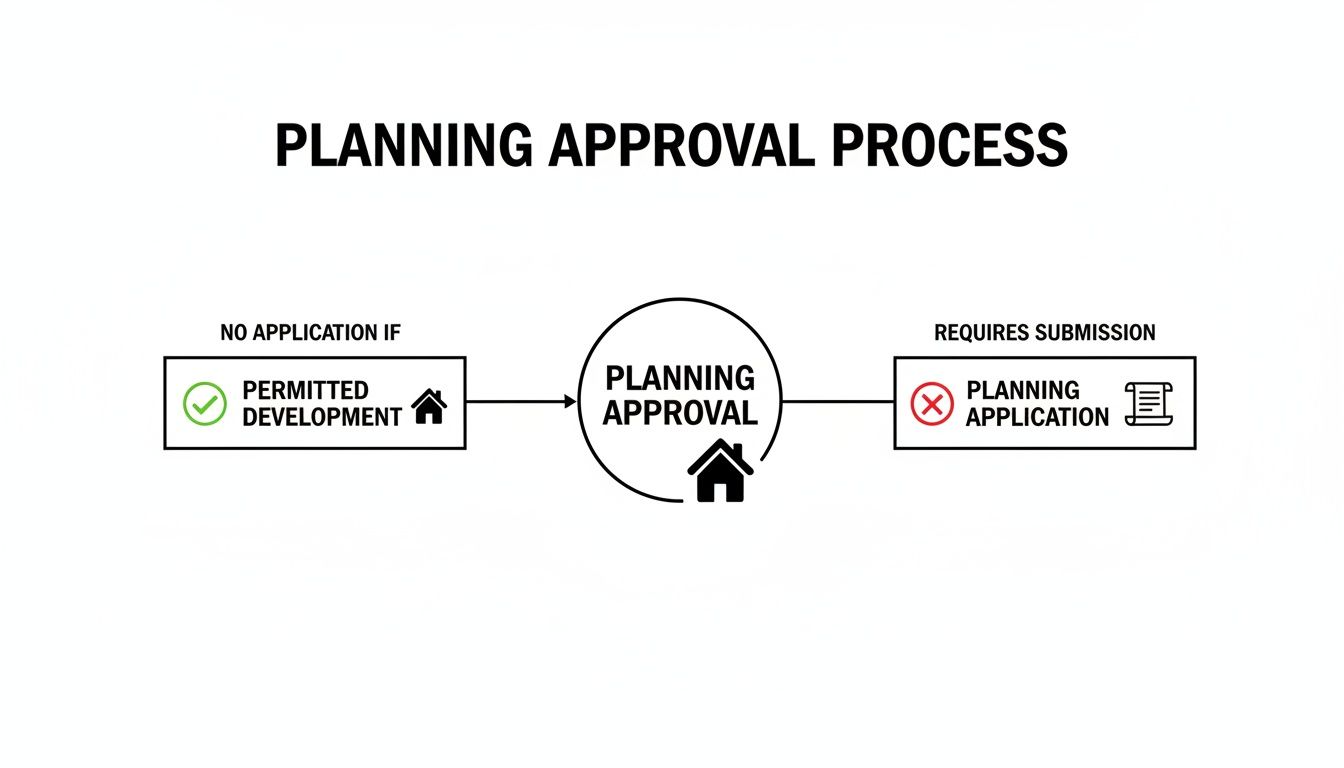
It highlights a key distinction: while some smaller projects might get a green light through a more streamlined process, most truly bespoke designs will need a more detailed application to gain approval.
Understanding Modern Glazing Performance
At the heart of any discussion about thermal performance is the U-value, which is just a technical way of measuring how easily heat passes through a material. The lower the U-value, the better the insulation. Modern glazing units achieve impressively low numbers, sometimes even rivalling a traditional solid wall.
But how do they do it? It’s not one single trick but a combination of several clever technologies working together:
Double and Triple Glazing: This is the foundation. By creating an air gap (or two, with triple glazing) between the panes, heat transfer slows down dramatically.
Inert Gas Fills: That gap between the glass isn't just empty space. It's filled with an inert gas, usually argon. Because argon is denser than air, it acts as a much better insulating blanket, further slowing the movement of heat.
Low-Emissivity (Low-E) Coatings: This is where the real magic happens. A microscopically thin, completely transparent metallic layer is applied to the glass. In winter, this coating reflects heat back into the room. In summer, it blocks excess solar heat from getting in. The result is a space that’s far more comfortable, whatever the season.
This push for efficiency is now a huge driver in the UK market. With around 35% of a home's heat lost through its windows, the demand for high-performance glass has rightly soared. This has helped improve the average U-value for new window installations from 1.6 W/m²K down to a much more respectable 1.3 W/m²K, reflecting tougher building regulations.
Beyond the Glass: Smart Design Choices
While the glazing is critical, a truly sustainable space is born from a holistic design approach. A good architect will look at the bigger picture, considering several other factors to boost the environmental performance of your glass extension.
A sustainable extension isn’t just about specifying efficient materials; it’s about a smart, site-specific design that works with nature, not against it. By thinking about light, shade, and airflow from day one, we create spaces that are inherently comfortable and need less energy to run.
One of the most important elements is orientation. The direction your extension faces has a massive impact on solar gain – the amount of heat it naturally absorbs from the sun. A south-facing extension will be flooded with intense light all day. That’s wonderful in the winter, but it could easily lead to overheating in summer without some careful planning.
This is where other smart design features come into play:
Strategic Ventilation: Cleverly placed opening windows, rooflights, or sliding doors can create natural cross-ventilation. This allows warm air to escape easily while drawing in cooler breezes, acting like a natural air conditioner.
Shading Solutions: An architectural overhang, an external brise soleil (a permanent structural sunshade), or even carefully positioned trees can provide essential shade during the hottest parts of the day in summer.
By combining high-performance glazing with these intelligent design strategies, your glass extension becomes a beautiful example of forward-thinking, sustainable architecture. For more ideas on this, have a look at our comprehensive guide to UK energy-efficient home design.
The final result is a stunning, light-filled space that not only feels comfortable but costs less to run and easily exceeds modern building regulations.
How to Budget for Your Glass Extension Project
Understanding the real costs of a high-end glass extension is the first step in any successful project. It’s easy to get caught up in ballpark per-square-metre figures, but a realistic budget needs to reflect the quality, performance, and bespoke nature of what you’re trying to achieve. Think of it as the foundation for a smooth and predictable construction journey.
The final figure isn't just one number; it’s a sum of several crucial parts. You're not just paying for the glass and frames. You’re investing in the professional expertise needed to design it, the engineering that makes it safe, and all the finishing touches that truly bring it to life.
Breaking Down the Key Budget Components
To budget properly for a glass extension on a house, you need to account for a few distinct cost categories. Each one is vital for ensuring the project is designed beautifully, built correctly, and finished to an exceptionally high standard. A well-managed budget gives each of these areas the attention it deserves.
Here are the primary costs you'll need to factor in:
Architectural & Design Fees: This covers everything from the initial concept designs and detailed technical drawings to handling the planning application and overseeing the project. Professional fees typically come in at around 10-15% of the total construction cost.
Structural Engineering: A structural engineer is non-negotiable. They calculate the necessary loads, specify the steelwork, and design the foundations, guaranteeing the safety and integrity of your new glass structure.
The Glazing System: This is often the single biggest expense. The cost can vary dramatically depending on the type of glazing (double or triple), the frame material (aluminium is common, but steel offers slimmer profiles), and any specialist features like frameless corners or huge sliding doors.
Main Building Works: This is the hands-on construction. It includes demolition, groundworks, pouring the foundations, installing steel supports, building the roof, and connecting the new space seamlessly to your existing home. Things like difficult site access can also affect this figure.
Interior Fit-Out: The final stage is all about bringing the new space to life. This covers plastering, electrics, plumbing (especially for underfloor heating), flooring, lighting, and decoration. The level of finish you opt for here will naturally have a direct impact on the budget.
It's a common mistake to focus only on the cost of the glazing itself. A truly successful budget is a comprehensive plan that balances architectural vision, structural integrity, and high-quality finishes to create a cohesive and valuable addition to your home.
Understanding Realistic Cost Ranges
Of course, giving an exact figure without seeing detailed plans is impossible, but it helps to have a realistic starting point in mind. For the glazing system alone, costs often begin from £3,500 plus VAT per square metre.
So, for a well-proportioned extension measuring, say, 4.8m by 3.5m (16.8 sqm), you could be looking at a starting cost from £50,000 plus VAT just for the glass elements. This figure can climb significantly with bespoke openings or complex structural work, which is common in high-end residential projects.
Naturally, the total project cost will be higher once you add the building works, professional fees, and interior finishes. A full, high-specification glass extension on a house is a major investment, often on par with other significant home extensions. For a more general overview, you can explore our complete guide to the cost of a house extension in the UK.
While the initial outlay is considerable, the return on investment isn't just measured in property value. It’s an investment in your daily quality of life—creating a light-filled, beautifully crafted space that you and your family will enjoy for decades to come.
Working with an Architect to Realise Your Vision
Bringing a glass extension on house project from an idea to a finished reality is a huge step. It’s a journey that balances ambitious design with some pretty complex technical hurdles. The dream of a light-filled, seamless space is one thing, but turning it into a structure that stands the test of time requires real expertise. This is exactly why bringing a RIBA-accredited architect on board from day one is the single best investment you can make.
An architect isn’t just there to draw up some plans; they’re your creative partner and project guardian. They have the skill to translate your lifestyle and how you want to feel in the space into a coherent design, all while navigating the maze of planning permission and tackling the technical side of construction. This structured process takes the risk out of the project, protecting your investment and ensuring the final result is even better than you imagined.
It’s this collaboration—blending creative flair with disciplined craftsmanship—that makes all the difference. The goal is to create a space that’s not only stunning to look at but functions perfectly for you and your family every single day.
A Holistic Approach to Design
A truly great glass extension never feels tacked on. It should feel like it was always meant to be there, a natural and cohesive part of your home and garden. That’s why a holistic design philosophy that brings together architecture, interiors, and the surrounding landscape is so critical. An experienced practice like Harper Latter Architects thinks about every single element right from the start.
This integrated process ensures that all parts of the design sing from the same hymn sheet:
Architecture: This is the core structure. We make sure the extension complements your existing property while flooding the space with light.
Interiors: Finishes, lighting, and even bespoke joinery are planned from the outset. This ensures the new space feels seamlessly connected to the rest of your home, not like a separate room.
Landscape: We design with views, privacy, and the flow to the garden in mind, creating an effortless transition between inside and out.
The right architectural partner doesn't just design a glass box; they craft a complete living experience. By weaving together the threads of architecture, interior design, and landscaping, they create a result that is cohesive, beautiful, and profoundly personal.
From Vision to Stunning Reality
Choosing the right architect is about finding a partner who genuinely gets your vision and has the track record to make it happen. Their job is to orchestrate every stage, from the very first sketch to the final build, all while keeping an eye on quality, managing budgets, and solving problems before you even know they exist. This professional oversight lets you enjoy the exciting, creative parts of the journey, confident that all the complexities are being handled by an expert.
Ultimately, our aim is to transform your initial ideas for a glass extension on house into a meticulously crafted space that genuinely enhances your home and your day-to-day life. With the right team beside you, that vision isn’t just a possibility—it's the blueprint for something truly remarkable.
Still Have Questions About Glass Extensions?
Even with all the benefits laid out, it’s completely natural to have a few questions when you’re considering a major addition like a glass extension on a house. To help you make a confident decision, we’ve gathered some of the most common queries we hear from our clients and answered them in a clear, straightforward way.
These are the practical, day-to-day concerns many homeowners have, from security and cleaning to long-term durability.
Will My Glass Extension Be Secure?
This is a perfectly valid concern, but one that modern engineering has solved. Structural glazing is exceptionally tough. It's made from toughened or laminated safety glass, specifically designed to withstand significant impact and meet stringent British Standards for security. Think of it less like a window and more like a transparent wall.
Furthermore, high-quality locking systems, concealed fixings, and PAS 24-rated security features are integrated into doors and any opening elements. A well-built glass extension is designed to be just as secure as any other part of your home.
How Do I Keep a Glass Extension Clean?
Keeping your glass extension looking pristine is less work than you might think. For the external glass, a professional window cleaner using a water-fed pole system every few months is usually all it takes. The internal glass can be cleaned as needed with standard products, just like any other window.
Many modern glazing systems can also be specified with self-cleaning coatings. This clever surface uses UV rays from the sun to break down organic dirt, which is then simply washed away by the rain. It’s a great feature that significantly cuts down on maintenance.
A common misconception is that a glass structure will be fragile or high-maintenance. In reality, the materials used are engineered for incredible strength and longevity, while modern coatings can make cleaning surprisingly easy.
Can I Have Privacy in a Glass Extension?
Absolutely. Privacy doesn't have to be sacrificed for light. There are several clever ways to control who sees in, without resorting to traditional curtains or blinds that might spoil the minimalist aesthetic.
Switchable Privacy Glass: This is a fantastic bit of tech. At the touch of a button, this smart glass can change from completely clear to opaque, offering instant privacy whenever you need it.
Frosted or Etched Glass: For areas requiring permanent screening, like a boundary wall, panels can be sandblasted or acid-etched. This obscures the view while still allowing all that lovely light to pass through.
Strategic Landscaping: Sometimes the best solution is outside. Carefully positioned trees, elegant hedges, or architectural screens can be used to block sightlines from neighbouring properties.
Will My Furniture Fade in the Sun?
Older conservatories were notorious for this, but modern glazing has come a long way. High-performance glass units now incorporate UV-blocking interlayers or special coatings that filter out over 99% of harmful ultraviolet rays.
This protects your floors, furniture, and artwork from fading, all without affecting the clarity or brightness of the light coming into your home. It’s pretty much a standard feature in high-quality architectural glazing today.
Ready to transform your vision for a glass extension into a stunning, light-filled reality? At Harper Latter Architects, we combine creativity, craftsmanship, and a deep understanding of residential design to create exceptional homes. Explore our architectural services to see how we can help.