
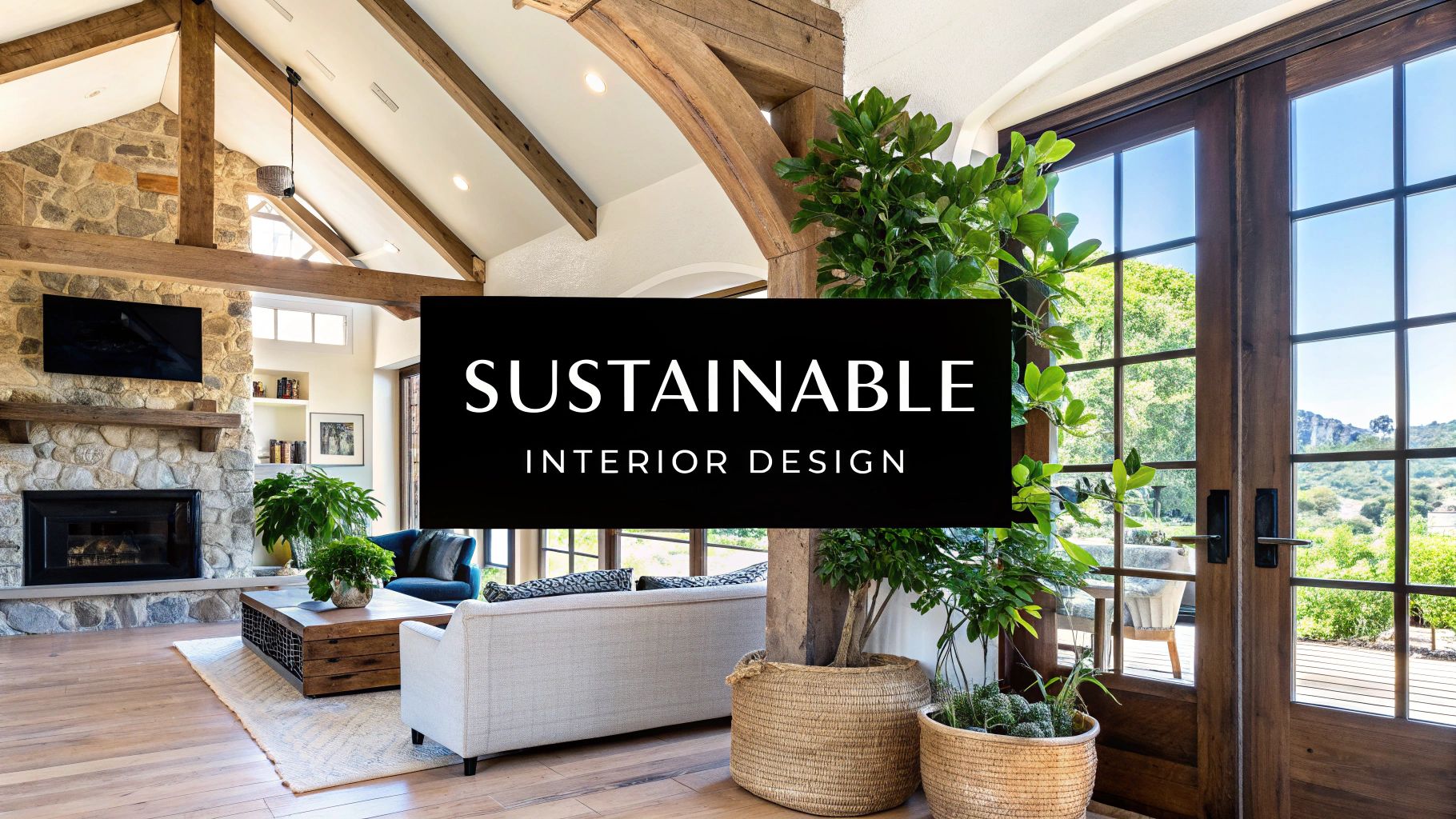
Interior Design Sustainability: Create Eco-Friendly, Beautiful Homes
Sustainable interior design is a philosophy that creates beautiful, healthy, and functional homes while consciously minimising their environmental footprint. It’s about looking beyond pure aesthetics to consider the entire lifecycle of the materials we use, focusing on energy efficiency, waste reduction, and the wellbeing of the people who live in the space.
This is where timeless style meets genuine responsibility.
What Sustainable Interior Design Really Means
When you hear "sustainable design," you might picture something rustic or overtly "eco"—think reclaimed wood everywhere and a very specific, earthy aesthetic. But in reality, true sustainable interior design is far more sophisticated.
It's a thoughtful, forward-thinking approach that weaves environmental responsibility into every decision, without ever asking you to compromise on luxury, comfort, or your personal style. It’s about creating spaces that are not only kinder to the planet but are fundamentally healthier for you and your family to live in.
At its core, this philosophy is built on making deliberate choices. Instead of chasing fleeting trends that lead to waste, it champions longevity, quality, and craftsmanship. It forces us to ask important questions: Where did this material come from? How was it made? And what happens to it when it’s no longer needed? For homeowners, especially in areas like South West London, this thinking aligns perfectly with the desire for bespoke, enduring quality that enhances personal wellbeing.
Beyond the Buzzwords: A Core Philosophy
Fundamentally, sustainable design is about creating a harmonious relationship between your home and the natural world. This isn't just one big idea; it's a collection of practical principles:
Prioritising Health: This means using non-toxic materials, natural finishes, and low-VOC (Volatile Organic Compound) paints to create clean indoor air. It's about designing a home that actively supports your family's health.
Embracing Longevity: We select durable, high-quality furniture and finishes that are built to last for generations. This isn’t just good sense; it’s a powerful way to reduce waste.
Working with Nature: We look for every opportunity to maximise natural light and ventilation. This simple act reduces your reliance on artificial lighting and mechanical systems, which in turn lowers energy consumption.
Thinking Cyclically: The goal is to choose materials that are either recycled, reclaimed, or can be responsibly repurposed or returned to the earth at the end of their life.
This approach is more than just a niche interest; it's gaining serious momentum. The UK’s interior design industry has seen steady growth, with sustainability becoming a major focus, reaching an estimated revenue of £1.9 billion.
What’s driving this? A huge surge in demand for eco-friendly materials and practices. For high-end homeowners in places like Richmond and Surrey, this translates into more exciting options than ever for bespoke interiors—from stunning reclaimed wood features and FSC-certified cabinetry to beautiful textiles made from recycled fibres. You can explore more on these evolving UK interior trends at Accio.
Ultimately, sustainable interior design is about crafting a home that feels good on every level. It’s a space that is not only visually stunning and deeply comfortable but is also built on a foundation of responsible, intelligent choices. This ethos is the perfect partner to sustainable architecture, creating a complete vision for a healthier, more considered home.
For a deeper dive, you can learn more about what sustainable architecture means for UK homeowners in our guide.
The Three Pillars of Eco-Conscious Design
To really get to grips with sustainable interior design, it helps to think of it as a structure built on three core pillars. This framework guides every decision we make, from the very first sketch to the final touches, ensuring we create spaces that aren't just beautiful, but are genuinely responsible and healthy to live in.
The diagram below shows how great sustainable design is a blend of aesthetics and thoughtful action. It's not a compromise; it's an integration.
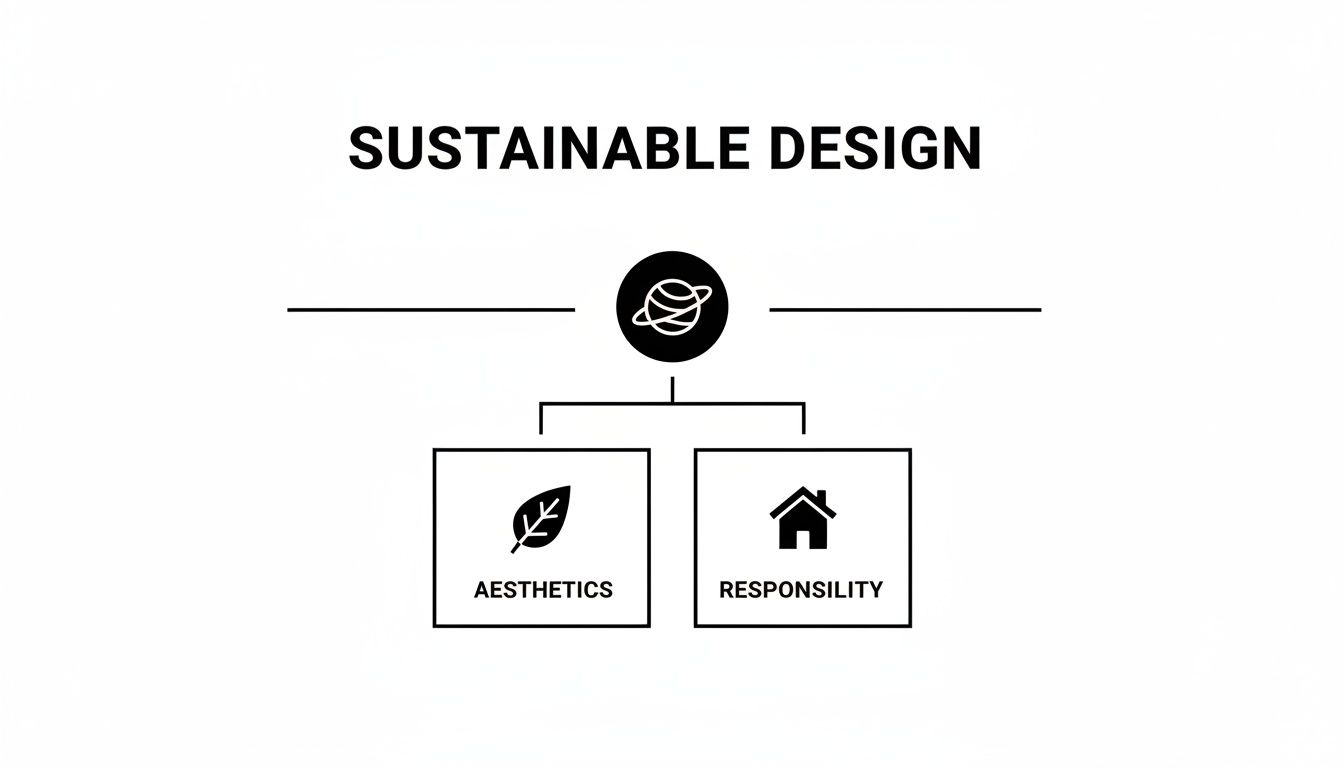
True sustainability is where exceptional design and environmental care meet.
To give you a clearer picture, let's break down these pillars and what they mean for your home.
Key Sustainable Design Principles at a Glance
This table summarises the core principles we build upon, showing how each one translates from a concept into a tangible part of your residential project.
Principle | Focus Area | Example in Practice |
|---|---|---|
Material Health | The safety and environmental impact of every material brought into the home. | Specifying zero-VOC paints from brands like Farrow & Ball to ensure excellent indoor air quality from day one. |
Lifecycle Thinking | Understanding the full journey of a product, from raw material to end-of-life. | Choosing a solid oak dining table from a local artisan over a mass-produced, flat-pack alternative to reduce its embodied carbon. |
Circular Design | Designing out waste by ensuring materials can be reused, repaired, or repurposed. | Creating bespoke joinery that can be disassembled, allowing its high-quality timber components to be used again in the future. |
These principles are not just abstract ideals; they are the practical foundations we use to deliver homes that are better for you and for the planet.
Pillar One: Material Health
The first pillar, Material Health, is all about the quality and impact of the materials we select for your home. It’s a bit like a chef choosing only the best, freshest ingredients. We are curating a palette of materials that actively support your wellbeing.
This means we prioritise substances that are non-toxic, renewable, and, wherever possible, sourced locally to cut down on transport emissions. A huge focus for us is avoiding Volatile Organic Compounds (VOCs)—harmful chemicals off-gassed from common products like paints, glues, and varnishes. Simply choosing low-VOC or zero-VOC alternatives is one of the most powerful steps toward improving indoor air quality.
To back this up, we look for trusted, independent certifications that provide real assurance.
FSC (Forest Stewardship Council): This is our guarantee that any timber specified comes from responsibly managed forests.
Cradle to Cradle: This assesses a product’s entire lifecycle, certifying its safety for both people and the planet.
By focusing on material health, we ensure the very fabric of your home contributes to a healthier living environment from the moment you move in.
Pillar Two: Lifecycle Thinking
Our second pillar, Lifecycle Thinking, asks us to zoom out and look at the bigger picture. Instead of judging a material solely on its looks, we consider its entire journey—from where it was sourced and how it was made, to its time in your home and what happens to it afterwards. This holistic view reveals its true environmental cost.
A key idea here is embodied carbon. This term refers to the total greenhouse gas emissions generated during the creation of a material. Think about it: a handcrafted oak table from a local workshop will have a tiny embodied carbon footprint compared to a mass-produced item shipped halfway across the world.
By prioritising longevity and classic design over disposable trends, we not only reduce waste but also create interiors with a story and a soul. It's a shift from a 'take-make-dispose' model to one of 'cherish-maintain-endure'.
This mindset encourages us to select materials and furnishings that are built to last for decades, not just a season. It’s an investment in quality that pays dividends for both you and the environment.
Pillar Three: Circular Design
Finally, our third pillar is Circular Design. This brings the classic idea of 'reduce, reuse, recycle' into the world of high-end interiors in a much more sophisticated way. It’s about designing with the end in mind and creating a closed-loop system where waste is eliminated from the very beginning.
In practice, this comes to life through a few key strategies:
Designing for Disassembly: We design bespoke joinery and select furniture that can be easily taken apart. This means its components can be repaired, reused, or recycled effectively down the line.
Upcycling with Purpose: We love transforming existing items into something new and beautiful. A vintage sideboard can be masterfully restored to become a centrepiece, or old floorboards can be re-milled to create a stunning feature wall.
Supplier Take-Back Schemes: We actively partner with forward-thinking suppliers who will take back their products—like carpets or light fittings—at the end of their useful life, ensuring they are properly repurposed.
Circular design closes the loop, turning the concept of waste into a resource. It ensures that the beautiful elements of your home can have many lives beyond their first purpose.
Designing for Wellbeing and Natural Comfort
Sustainable interior design is really about people. It’s a way of thinking that centres on creating homes that feel as good as they look, working with nature rather than against it. This approach leans on passive design strategies to boost comfort, improve wellbeing, and massively cut down your reliance on energy.
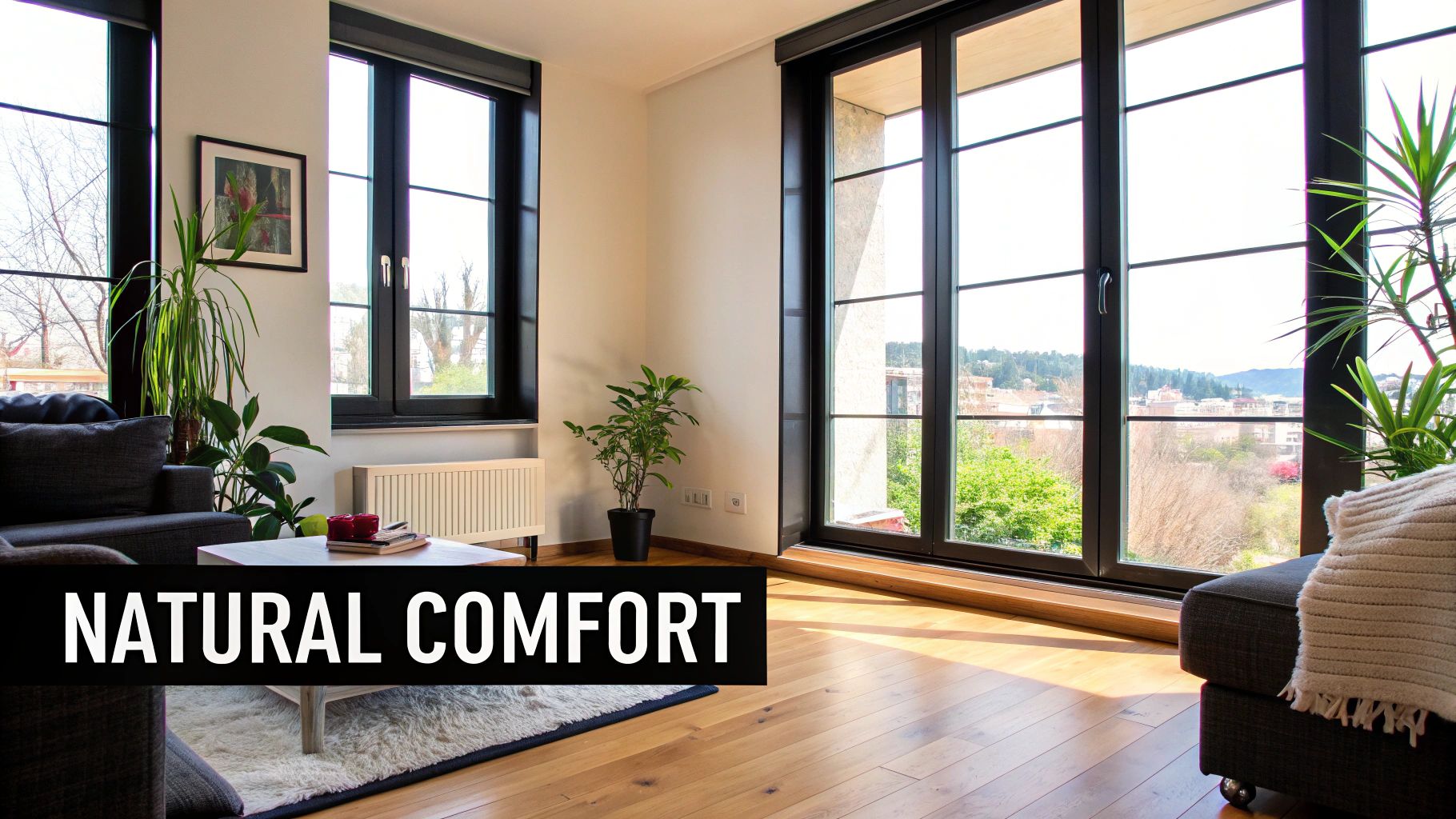
It's all about making your home a healthier, more comfortable, and cost-effective sanctuary. By cleverly using the natural resources of light, air, and warmth, we can shape spaces that are both beautiful and incredibly efficient.
Making the Most of Natural Light
Daylight is one of the most powerful tools in sustainable design. Maximising natural light isn’t just about making a room look good; it has a huge impact on our mood and reduces the need for artificial lighting, which can be a big chunk of a home's electricity bill.
We do this by carefully planning a home’s layout. This involves:
Strategic Window Placement: Orienting windows to catch the best of the day's light, like placing kitchen windows to capture the morning sun.
Open-Plan Layouts: Designing spaces that let light flow freely from one area to another, without being blocked by unnecessary walls.
Reflective Surfaces: Using lighter colour palettes and reflective materials on walls and floors to bounce light deeper into a room.
These simple, smart design choices create brighter, more uplifting environments that are cheaper to run.
Optimising Natural Ventilation
Long before air conditioning, buildings were designed to breathe. We can bring back that common-sense wisdom to keep homes cool, fresh, and healthy without leaning on energy-hungry mechanical systems. Getting natural ventilation right is a cornerstone of interior design sustainability.
A well-designed home uses the principles of airflow to create a self-regulating environment. It’s about creating a gentle, consistent breeze that purges stale air and maintains a comfortable temperature naturally.
We achieve this with cross-ventilation, where windows are placed on opposite sides of a room to encourage air to move right through the space. We also design with the "stack effect" in mind—where warmer, lighter air rises and escapes through high-level openings like skylights, pulling cooler air in from below. This creates a natural cooling cycle that not only saves energy but also improves indoor air quality by constantly refreshing the air.
Achieving Thermal Stability
A truly comfortable home is one that keeps a stable internal temperature all year round—warm in the winter and cool in the summer. Hitting this thermal stability is all about creating a highly efficient building envelope that shields you from the climate outside.
The best strategy here is a ‘fabric-first’ approach. This means we prioritise the performance of the building's core components: its walls, roof, floors, and windows. By investing in high-quality insulation and high-performance glazing, we dramatically reduce heat loss in winter and stop the house from overheating in summer.
Material choice plays a huge part, too. Materials with high thermal mass, such as concrete or stone, can absorb heat during the day and release it slowly at night, helping to even out internal temperatures. By combining brilliant insulation with smart material choices, we create a home that needs very little energy to heat or cool. For a deeper dive, you can explore our guide to energy-efficient home design in the UK. This approach forms the bedrock of a truly sustainable and comfortable living space.
Choosing Materials with Purpose and Style
This is where sustainable principles become tangible, beautiful design choices. Selecting the right materials is perhaps the most direct way to influence both the environmental credentials and the health of your home. It’s about curating a palette of finishes, fixtures, and fittings that are not only stylish but purposeful.
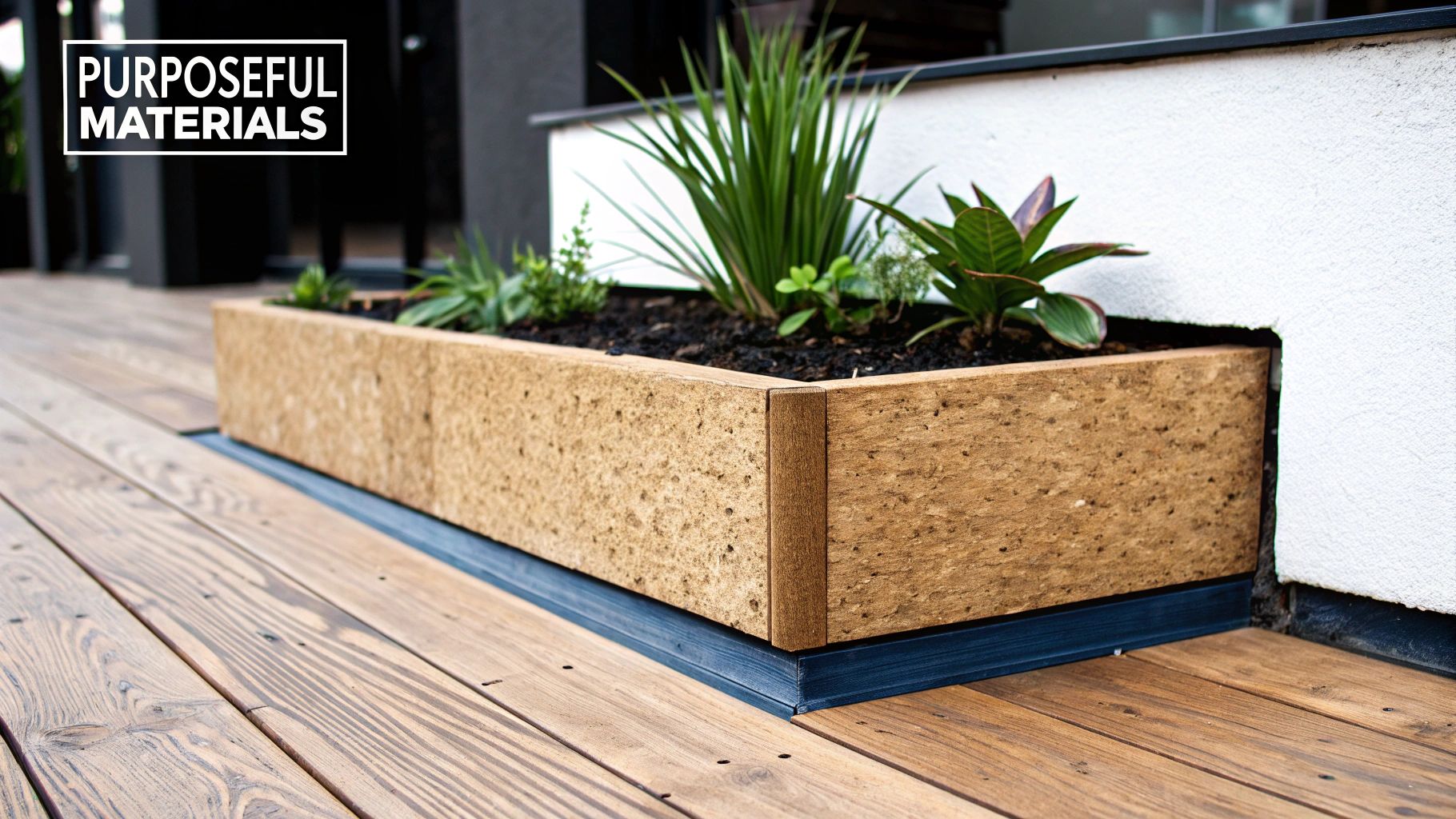
True luxury lies in materials that tell a story—of responsible sourcing, expert craftsmanship, and a lighter touch on the planet.
Flooring and Finishes: The Foundations of Style
The surfaces that surround you—your floors and walls—have a huge impact on both the aesthetic and the indoor air quality of your home. By moving away from conventional, often chemical-heavy options, we can create a healthier and more elegant foundation for your interior.
Consider the warmth and character of reclaimed timber flooring. Each plank has a history, adding a depth that new materials simply cannot replicate. For a different but equally sustainable choice, cork flooring offers remarkable durability and excellent insulation, and it’s harvested from the bark of cork oak trees without harming them.
When it comes to walls, the shift is just as significant. We specify low-VOC or zero-VOC paints as standard to eliminate harmful off-gassing. For a more tactile and breathable finish, natural plasters like clay or lime create soft, textured surfaces that help regulate humidity, contributing to a more comfortable living environment.
Bespoke Joinery: Crafted with Conscience
Custom joinery is the heart of a bespoke interior, providing both function and architectural interest. Sustainable interior design truly shines here, where thoughtful material choices combine with exceptional craftsmanship to create stunning, long-lasting pieces.
We design and commission everything from kitchens and wardrobes to bookcases and staircases using materials that align with our sustainable ethos. This includes:
FSC-Certified Timber: We ensure all new wood comes from forests that are managed responsibly, protecting biodiversity and local communities.
Bamboo: As a rapidly growing grass, bamboo is an incredibly strong and renewable resource, perfect for modern, clean-lined joinery.
Recycled Composites: Innovative materials made from recycled plastics or wood fibres offer a durable and unique alternative for countertops and cabinetry.
By designing bespoke joinery, we ensure not only that the materials are sustainable but that every piece is perfectly suited to your space and lifestyle—designed to be cherished for decades. This approach avoids the wastefulness of mass-produced, trend-driven furniture.
A beautifully crafted staircase from certified oak or a kitchen with cabinetry made from recycled materials is more than just a functional element; it is a statement of enduring quality and conscious choice. It proves that luxury and sustainability are not mutually exclusive but are, in fact, perfect partners.
Weaving Nature into Your Home with Biophilic Design
Beyond static materials, we can actively bring nature into your home through biophilic design. This approach is all about fostering a deeper connection to the natural world within our indoor environments, which has been shown to improve wellbeing and reduce stress.
This is more than just adding a few potted plants. We integrate nature into the architectural fabric of the home. This might involve designing a striking living wall in a double-height hallway, creating integrated planters within bespoke joinery, or orienting a layout to maximise views of the garden.
These elements do more than just look good; they actively improve indoor air quality by filtering pollutants and releasing oxygen. This focus is transforming UK interior design, with the sustainable home furniture industry set for robust growth. Biophilic design is a cornerstone of this movement, bringing elements like woven rattan, bamboo, reclaimed wood, and air-purifying plants into high-end interiors. You can read more about the growth of the UK sustainable home furniture industry on DataInsightsMarket.com.
By choosing materials with purpose, we create homes that are not only visually stunning but are also healthier, more resilient, and deeply connected to the natural world.
Retrofitting Heritage Homes for a Sustainable Future
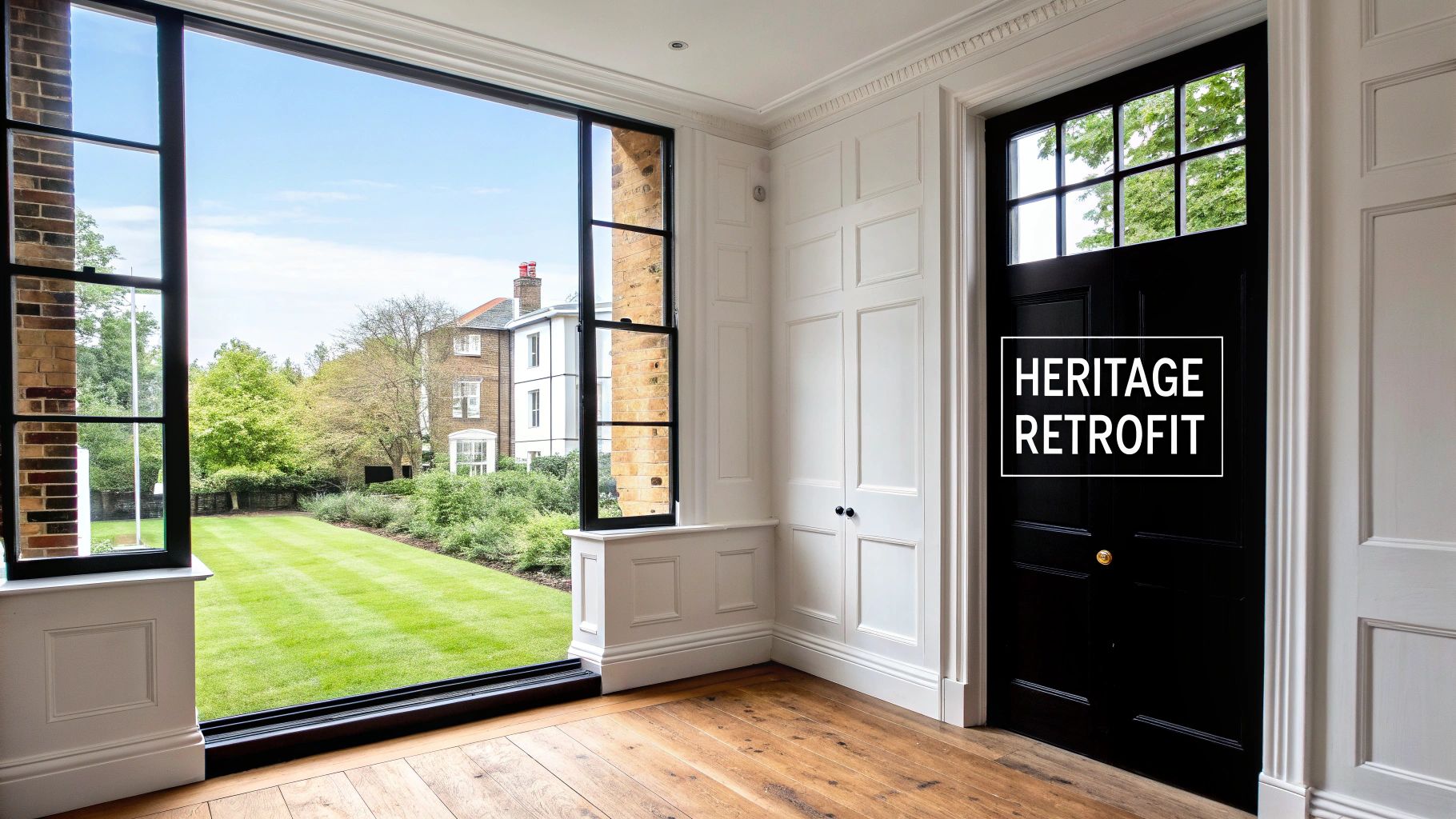
How do you bring modern sustainability to a home steeped in history without erasing its unique character? This is one of the most rewarding challenges we face in high-end residential design, particularly across South West London boroughs like Wimbledon and Richmond, where period properties are so cherished. Retrofitting a heritage or listed building demands a delicate, thoughtful balance of conservation and innovation.
The goal is to enhance the home's performance and comfort while respecting its original fabric and soul. It’s proof that interior design sustainability isn’t just for new builds; it can breathe new, efficient life into the most historic of homes.
A Fabric-First Philosophy
The most effective and sensitive approach is always ‘fabric-first’. Before we even think about adding new technologies, we prioritise improving the performance of the building’s envelope—its walls, roof, floors, and windows. It’s all about making the house inherently more efficient from the outside in.
For period properties, this requires specialist knowledge. Standard insulation methods, for example, can trap moisture in old walls, leading to damp and decay. Instead, we use breathable, natural insulation materials that work in harmony with traditional construction methods.
These materials include:
Wood Fibre: An excellent insulator that allows the building’s walls to ‘breathe’, preventing any moisture build-up.
Cork: Provides both thermal and acoustic insulation and is naturally resistant to mould.
Sheep’s Wool: A traditional material that’s brilliant at regulating both humidity and temperature.
By carefully upgrading the building’s fabric with the right materials, we can drastically reduce heat loss and create a far more comfortable home without ever compromising its structural integrity.
Balancing Conservation with Modern Comfort
Bringing a heritage property up to modern standards of comfort involves more than just insulation. It requires a considered approach to every detail, from the windows right through to the heating systems.
The original windows are often a key area of focus. Rather than replacing beautiful but draughty sash windows, our first step is always meticulous restoration. We repair the timber, service the mechanisms, and install effective draught-proofing. To boost thermal performance further, we can then add discreet secondary glazing—often the preferred solution for listed buildings as it preserves the original exterior appearance.
Retrofitting a heritage home is an act of stewardship. It’s about honouring the craftsmanship of the past while equipping the home for the next century, ensuring it performs efficiently for future generations.
Integrating modern heating systems also requires a sensitive touch. Underfloor heating can be installed with minimal disruption, while air source heat pumps can be seamlessly integrated with carefully positioned, traditional-style radiators. This ensures the home’s historic character is preserved while its energy performance is brought firmly into the 21st century.
The Rise of Refurbishment and Reuse
This ethos of preservation extends beyond the building’s structure to its contents. Refurbishment and reuse are becoming central to sustainable interior design, with industry leaders noting a clear shift towards refurbishing existing furniture over buying new to slash environmental impact. This is vital for clients upgrading listed properties, complementing our work with eco-paints, recycled textiles, and biophilic features. You can explore more on this in these 2025 forecasts from industry leaders on MaterialSource.co.uk.
By embracing a thoughtful retrofit strategy, we can prove that historic conservation and high-performance sustainable design are not just compatible—they are perfect partners.
Our Approach to Delivering Sustainable Luxury
Theory and principles are important, but translating them into a tangible, beautiful home is where our expertise truly comes to life. This is how we weave the threads of sustainable interior design into every stage of our process, from our very first conversation to the final handover of your completed home. It’s a dedicated, expert-led journey that transforms a vision into a living reality.
Our process is collaborative and transparent, ensuring that every decision is made with a clear understanding of its impact on style, function, and the environment. We move from broad concepts to the finest details, always guided by the core pillars of sustainable design.
A Tangible Process From Start to Finish
Our work begins with listening. We take the time to understand your lifestyle, aesthetic preferences, and what sustainability means to you personally. This initial brief becomes the foundation for a design that is not only bespoke but also deeply aligned with your values.
From there, we build the design layer by layer:
Concept Development: We explore layouts that maximise natural light and ventilation, and propose a palette of healthy, low-impact materials.
Detailed Design: We specify everything from FSC-certified timber for bespoke joinery to non-toxic paints and responsibly sourced stone, providing clear justifications for each choice.
On-Site Collaboration: We work closely with trusted builders and craftspeople who share our commitment to quality and waste reduction, ensuring meticulous execution.
This structured approach demystifies the process, making sustainable choices clear and achievable.
Real-World Examples in South West London
To show how these principles work in practice, let’s look at some anonymised project examples from our work across the local area. Each presented a unique challenge that we solved through a sustainable lens.
Project Example 1: The Energy-Efficient Basement Cinema In a large refurbishment project in Wimbledon, the client wanted a state-of-the-art basement cinema. Basements can be notoriously difficult to insulate and ventilate. Instead of relying solely on mechanical systems, we specified high-performance, breathable insulation (wood fibre) and integrated a subtle passive ventilation system, drastically reducing the ongoing energy demand of the space.
This ‘fabric-first’ approach ensures long-term efficiency is built-in. For homeowners considering a similar path, it's worth understanding how to find the right professionals for the job. You can learn more about how to choose the right eco-friendly architect in our detailed guide.
Bespoke Solutions for Unique Homes
Every project presents its own set of opportunities for thoughtful, sustainable design.
Case Study: The Locally Sourced Kitchen in Richmond For a kitchen extension on a period property, the client desired a design with strong local roots. We commissioned a local workshop to craft the cabinetry from London plane timber, a beautiful and often under-utilised local hardwood. This not only supported a local artisan but also significantly lowered the embodied carbon associated with transporting materials.
Case Study: The Upcycled Bathroom in a Listed Building In a Grade II listed house, we needed to create a luxurious new bathroom while respecting the building’s heritage. We sourced a stunning set of antique marble slabs from a salvage yard, which were then re-cut and polished to create a unique vanity unit and shower enclosure. This circular approach gave a beautiful material a second life and added a layer of history to the design.
Our approach proves that sustainable luxury is not about compromise. It is about making smarter, more considered choices that result in a home of superior quality, comfort, and character. We are ready to start a conversation about your own project and explore how we can bring these principles to your home.
Frequently Asked Questions About Sustainable Design
When you start looking into sustainable design, it's natural for questions to pop up. It’s a thoughtful way of creating a home, and it pays to understand the details. Here are some straightforward answers to the questions we hear most often from homeowners.
Is Sustainable Interior Design More Expensive?
This is the big one, but the answer isn't a simple yes or no. While some high-performance, natural materials or artisan-made pieces might have a higher initial price tag than their mass-produced counterparts, sustainable design is really an investment in the long run.
We see sustainable interior design as an investment in efficiency and longevity. By choosing durable materials that last and designing a home that consumes less energy, you’re actively reducing future costs on maintenance, replacements, and utility bills.
Think of it like this: investing more in excellent insulation and high-quality glazing might feel like a stretch at first, but it will pay for itself over the years through significantly lower heating and cooling costs.
Does a Sustainable Home Have a Certain “Look”?
Not at all. This is a common misconception. Sustainable design is a set of principles, not a particular aesthetic. It can be woven into any style you love, from sleek, ultra-modern minimalism to a classic, traditional interior.
The core ideas—healthy materials, energy efficiency, and thinking about a product's entire life—are incredibly adaptable. They serve to elevate your chosen look, not dictate it. So whether you’re dreaming of a sharp, contemporary space or a warm, rustic retreat, we use sustainable principles to bring it to life beautifully and responsibly.
Can My Existing Home Be Made More Sustainable?
Absolutely. In fact, retrofitting existing homes is a cornerstone of sustainable practice. You don't need to start from scratch with a new build to embrace a more eco-conscious way of living. We can make a huge impact by focusing on key areas:
Upgrading Insulation: Often, this means using breathable, natural materials to improve your home's thermal performance without trapping moisture.
Improving Windows: We can restore and draught-proof beautiful original windows or install discreet, high-performance secondary glazing.
Smarter Material Swaps: During a refurbishment, we can specify low-VOC paints, carpets made from natural fibres, or flooring from reclaimed timber.
Even small, well-planned changes can make a massive difference to your home’s comfort, health, and its overall environmental footprint.
How Do I Know if a Product Is Genuinely Sustainable?
It can be tough to navigate all the "green" claims out there. That’s why we rely on trusted, independent certifications to cut through the noise. When you're choosing products, look for established marks that properly verify their credentials, such as:
FSC (Forest Stewardship Council): This is your guarantee that any wood or paper products come from forests that are managed responsibly.
Cradle to Cradle: A brilliant certification that assesses products on their material health, recyclability, and ethical manufacturing processes.
Global Organic Textile Standard (GOTS): This ensures textiles are made with organic fibres and meet strict environmental and social standards from field to fabric.
These labels provide the assurance you need to know you're making a genuinely responsible choice for your home.
At Harper Latter Architects, we don't see sustainability as an add-on; it's woven into the fabric of every bespoke project we design. We create homes that are as good for you as they are for the planet. Start a conversation with us today to discuss your vision.