
A Homeowner's Guide to Subsidence Signs in Houses
- Harper Latter Architects

- 2 days ago
- 14 min read
Before you can spot the tell-tale signs of subsidence in houses, it helps to get your head around what the term actually means. Put simply, subsidence is when the ground underneath your home sinks, causing the foundations to shift with it. This isn't the same as 'settlement', which is the normal, uniform compression the ground goes through after a new house is built.
What Is Subsidence and Why Does It Happen?
Think of your home as a boat sitting on a lake. The water is the soil holding up your foundations. If the water level suddenly drops on one side, the boat starts to list – that's subsidence in a nutshell. The ground loses its strength and can no longer support the immense weight of the building above, leading to movement and, eventually, damage.
This ground movement doesn't just happen out of the blue; it has very specific triggers. A few key factors are usually at play, making some properties far more vulnerable than others, especially in certain areas of the UK.
The Main Causes of Subsidence in the UK
The usual suspects behind subsidence are almost always linked to the type of soil your house is built on and what's happening in the immediate environment. Knowing these can give you a pretty good idea of your home's risk level.
Shrink-Swell Clay Soils: A huge portion of London and the South East sits on a bed of clay. In a long, hot summer, this soil loses moisture and shrinks, literally pulling the ground away from your foundations. Then, when the heavy rains return, it swells back up. This constant cycle of shrinking and expanding creates serious instability.
Large Trees and Vegetation: Big, thirsty trees are a major contributor. Species like oak, willow, and poplar can drink up enormous amounts of water from the soil. If they're planted too close to your house, their roots can dry out the ground so much that the clay shrinks dramatically, triggering subsidence.
Leaking Drains and Water Mains: A slow, steady leak from a cracked drain or water pipe can cause havoc in a couple of ways. It can either wash away the finer particles of soil from under the foundations, creating hidden voids, or it can completely saturate the clay, turning it into a soft, weak sludge that can't support any weight.
Our changing climate is only making things worse. The British Geological Survey (BGS) has warned that by 2030, over three per cent of properties in Great Britain will likely be affected by climate-related subsidence. That figure is expected to jump to nearly 10 per cent by 2070. London and the surrounding areas are right in the firing line. You can learn more about how climate change impacts subsidence risk on the BGS website.
Spotting the Telltale Subsidence Warning Signs
Noticing the early signs of subsidence isn't about finding one massive, dramatic crack. It’s more like learning to read a series of subtle clues your home might be sending you. These signs often creep up so gradually that it's easy to write them off as normal wear and tear. But knowing what to look for means you can act before a small worry turns into a major structural headache.
The classic calling card of subsidence is the appearance of diagonal cracks, which are almost always wider at the top than the bottom. They have a nasty habit of showing up suddenly after a long dry spell, typically near the weakest points in the building’s structure, like the corners of door and window frames. This distinctive shape tells a story: one part of the foundation is sinking lower than the other, literally pulling the wall apart.
Cracks Are Just the Beginning
While cracks get all the attention, they rarely show up alone. Subsidence puts your home's entire frame under immense strain, triggering a domino effect of other related issues. If you’ve spotted a crack that looks suspicious, it's time to play detective and hunt for more corroborating evidence.
You might notice other, less obvious changes around the house:
Sticking Doors and Windows: When a door that always swung freely suddenly starts jamming in its frame, or a window becomes a struggle to open, it’s a sign the opening has been warped by movement.
Rippling Wallpaper: If you see wallpaper crinkling or tearing near the corners of a room, and you're certain it isn't damp, the walls themselves might be shifting.
Gaps Around Skirting Boards: Keep an eye out for new or widening gaps between your floor and skirting boards, or where the walls meet the ceiling. This can be a telltale sign that the floor is starting to slope.
This flowchart helps to visualise how the key risk factors—the age of your property, the soil it sits on, and any large, thirsty trees nearby—often come together to cause these problems.
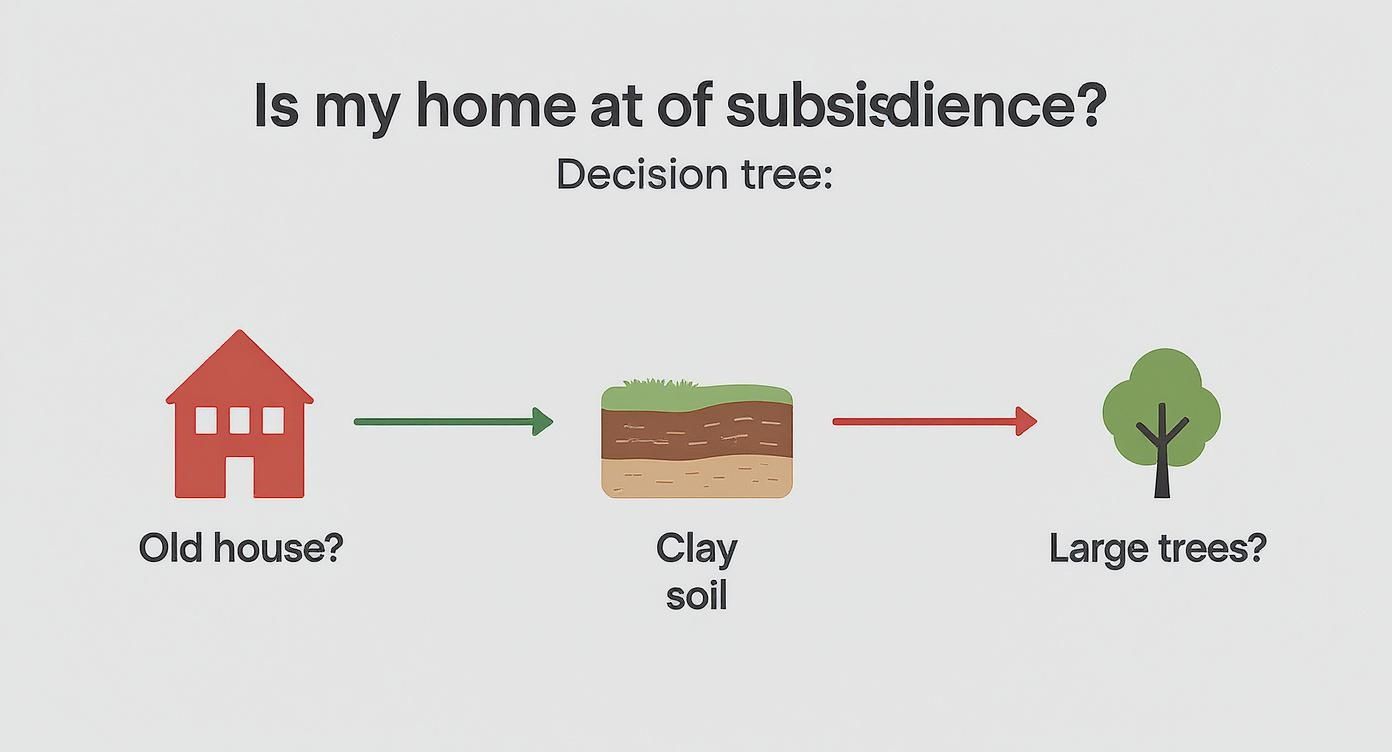
As the diagram shows, a combination of these elements—a situation incredibly common for period properties in South West London—ramps up the risk of subsidence significantly.
Understanding the Severity of Signs
It’s one thing to spot a crack, but another to know how seriously to take it. To help you gauge what you're seeing, this quick reference table breaks down the common signs by their potential severity.
Subsidence Sign Severity Indicator
Observed Sign | Low Concern (Monitor) | Medium Concern (Investigate) | High Concern (Seek Professional Advice) |
|---|---|---|---|
Cracks | Fine hairline cracks (<1mm) on internal plaster, often vertical. | Cracks wider than 3mm, visible both inside and out. | Diagonal cracks wider than 5mm that are actively growing. |
Doors/Windows | A single door or window is slightly stiff, especially in humid weather. | Multiple doors/windows on one side of the house begin to stick. | Doors jam completely, or you can see visible gaps around the frame. |
Floors | A very slight, localised 'bounce' in a timber floor. | A noticeable slope in the floor, objects may roll. Gaps appear under skirting boards. | Cracks appear in solid floors (concrete/screed). Floor feels uneven to walk on. |
Wallpaper | Minor crinkling in one corner. | Rippling or tearing along wall/ceiling joins in several areas. | Wallpaper tears away from the wall, revealing a crack underneath. |
Remember, this table is a guide. If you see multiple 'Medium' or any 'High' concern signs, it’s a strong signal to bring in an expert.
According to industry data, in a typical year, a staggering 60% of valid subsidence claims are a direct result of root-induced clay shrinkage. This happens when trees and large shrubs draw huge amounts of moisture from the ground, causing the clay supporting your foundations to shrink and compact. You can read more in this in-depth look at subsidence from Zurich UK.
It's vital to know the difference between subsidence and settlement. Settlement cracks are usually fine, vertical, and appear in the first few years of a new build as it 'settles' under its own weight. Subsidence cracks are a sign of active, ongoing ground movement beneath the foundations.
Context is everything. Look for patterns. Is that crack visible on both the inside and outside of the wall? Is it wider than 3mm (about the thickness of a 10p coin)? If you spot multiple signs happening together—say, a diagonal crack appearing right above a newly sticking door—that’s a much stronger indication that something needs investigating.
How to Monitor Your Home for Changes
So, you’ve spotted a crack or two. That first jolt of worry is completely normal, but it doesn't mean you need to immediately dial a structural engineer. The next step is a bit of detective work.
By carefully monitoring the situation yourself, you can gather the crucial evidence needed to figure out if you're looking at a harmless, old settlement crack or something more active. This DIY approach gives you a much clearer picture before you even think about picking up the phone.
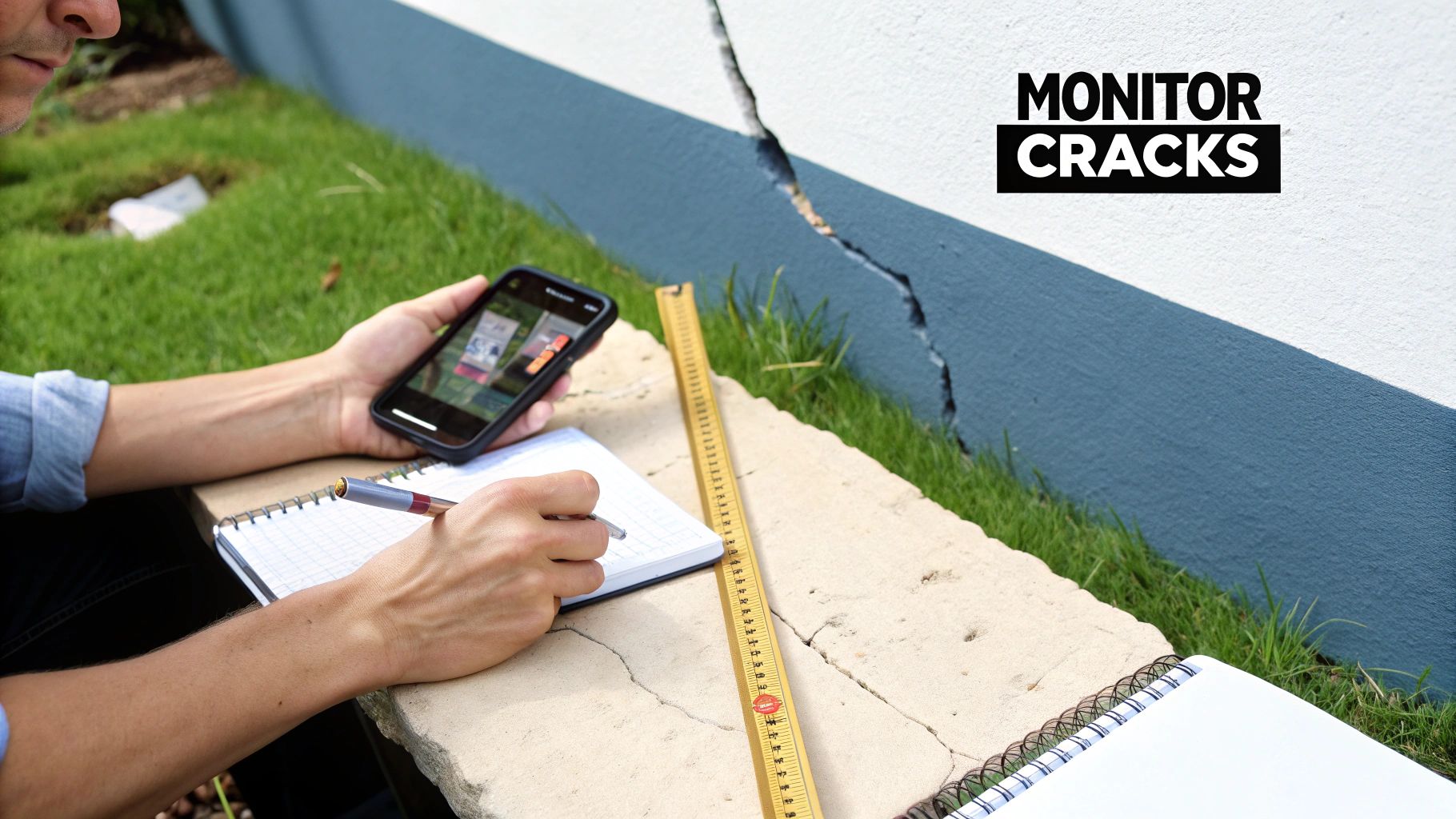
First things first, start a log. It doesn’t need to be fancy – a simple notebook or a document on your computer will do just fine. What’s vital is that you track everything accurately. Give each crack its own entry.
This organised record will be absolutely invaluable if you do end up needing an expert, as it gives them a clear, documented timeline of how the problem has developed.
Creating Your Monitoring Toolkit
You don’t need any specialist gear to keep an eye on things. A few simple tools are all it takes to measure and record changes with enough consistency to know for sure if a crack is on the move.
A Pencil and a Ruler: The classic method. Draw a few short, sharp pencil lines across the crack at different points. Measure the exact distance between the ends of your lines and write it down in your log.
A Camera or Smartphone: A picture is worth a thousand words. Take clear, well-lit photos of every crack you're tracking. Pop a coin or a ruler in the shot to give it a sense of scale, and always try to take the photo from the same spot and angle each time.
Crack Tell-Tales: If you want to get a bit more technical, you can buy simple plastic ‘tell-tale’ monitors online or from a DIY shop. You fix them across the crack, and they give a very clear, measurable reading of any movement – whether it’s getting wider or shifting sideways.
Once you’ve got your system in place, check it regularly. Once a month should be enough, unless you start to see things changing quickly.
A Step-by-Step Monitoring Process
Establish a Baseline: Your first monitoring session is all about setting the benchmark. On day one, measure and photograph every single crack that's worrying you. Note down the date, where the crack is (e.g., "Dining room, above patio doors"), and its current width and length.
Regularly Re-measure: Every month, go back to each spot and do it all again. Jot down any changes, no matter how small, in your log. If you're using tell-tales, record the new readings from the gauge.
Document with Photos: Take a fresh set of photos each month. Consistency is key, so make sure they’re comparable to your original pictures. This visual diary can be far more powerful than just a list of numbers.
Check Externally: Don't just focus on the inside. Take a walk around the outside of your property and look for any matching cracks in the brickwork or render. While you're out there, have a good look at your drains and gutters for leaks or blockages – dodgy drainage is a prime suspect in many subsidence cases.
Ultimately, you’re trying to answer one simple question: "Is this problem getting worse?" Static cracks are often just part of a building's history. But cracks that are actively growing are a clear signal that something is still shifting under your home. This documented evidence of change is what separates a minor cosmetic issue from a problem that needs urgent attention.
When to Call in a Structural Engineer
Knowing when to switch from just keeping an eye on things to actually picking up the phone is a huge part of protecting your home. It’s one thing to notice a few hairline cracks, but it’s another to know when they signal a deeper problem that needs an expert eye. Acting at the right moment can be the difference between a simple fix and a major structural headache.
So, what are the tell-tale signs? If your crack monitoring diary shows that a crack is actively getting bigger—even by just a few millimetres a month—that’s a clear red flag. It means something is still moving. Another big one is a cluster of problems appearing at the same time. A diagonal crack, a sticking door, and a sloping floor all in the same corner of the house? That’s not a coincidence; it's a strong signal that you need a professional opinion, and fast.
Understanding the Professional's Role
When you suspect subsidence, your first port of call will usually be a chartered surveyor or a structural engineer. These are the professionals trained to be detectives for your home’s structure. Their job isn’t just to say "yes, it's subsidence." It's to dig deeper, find out why it’s happening, and map out the right way to fix it. If you're wondering about the different roles professionals play, our guide on choosing between a structural engineer vs an architect can clear things up.
A structural engineer won’t just do a quick once-over. They’ll conduct a proper subsidence survey, which is much more thorough than the survey you had when you bought the house. Think of it as a full-body health check for your foundations. It’s a methodical process designed to get a complete picture of what’s going on underground.
What to Expect from a Subsidence Survey
The whole point of a professional survey is to take the guesswork out of the equation. It's a structured investigation, and while every house is different, you can generally expect a few key steps:
Initial Visual Inspection: The engineer will start with a walk-around, inside and out. They’ll look at the damage you’ve spotted, review your monitoring notes, and get a feel for the property.
Level Monitoring: They’ll likely install their own, more precise monitoring gear to track any movement with pinpoint accuracy. This often happens over several months to see how the building behaves through different seasons.
Drainage Survey: Since broken drains are a classic culprit, they may recommend a CCTV survey. A tiny camera is sent down your pipes to check for any leaks that could be washing away the soil.
Trial Pit and Soil Analysis: Sometimes, they need to see what’s happening with their own eyes. This involves carefully digging a small 'trial pit' next to your foundations to inspect them directly and take soil samples. These samples then go to a lab to understand what the ground is made of and how it behaves.
Once the investigation is complete, the engineer will pull all their findings together into a detailed report. This document is your roadmap—it will state whether subsidence is the issue, pinpoint the cause, and lay out a clear plan of recommended repairs. You’ll finally have a clear, expert-led path forward.
Navigating Insurance Claims and Repair Costs
That sinking feeling you get when you spot a potential sign of subsidence is completely understandable. It’s a stressful discovery, but getting a handle on the financial side of things can give you back a sense of control. The good news? Most UK buildings insurance policies do cover subsidence. The process, however, is a little different from your average claim.
Your first port of call should be your insurer. Let them know what you’ve found, and they’ll kickstart the process by appointing their own experts – usually a loss adjuster and a structural engineer – to investigate. Just be prepared for a hefty excess. While a standard home insurance claim might set you back a few hundred pounds, a subsidence claim typically starts at £1,000, and sometimes more.
It's crucial to remember what your insurance is for: to return your home to its previous state, not to fund an upgrade. Your policy will cover the cost of investigations and the necessary repairs to stabilise the property, but it won't pay for any unrelated improvements you decide to tackle at the same time.
Understanding the Repair Options and Costs
Once subsidence is confirmed, the focus shifts to fixing the root cause, and this is where costs can really vary. The solution might be a relatively minor job or it could involve significant structural work, all typically managed by the team your insurer appoints.
Here are the most common ways to tackle the problem:
Tree Management: If a thirsty tree is the culprit, the fix can be surprisingly simple. Professional pruning (a crown reduction) or, in more serious cases, complete removal is often the least invasive and most cost-effective solution.
Drain Repairs: Sometimes, the problem is underground. A CCTV drain survey might reveal leaky pipes are washing away the soil supporting your foundations. Simply repairing or replacing these damaged drains can be enough to stop the movement altogether.
Underpinning: This is the one everyone fears, and for good reason. Underpinning means strengthening your home's foundations by extending them deeper into more stable ground. It’s expensive, disruptive, and very much a last resort for severe cases. For a bit of perspective on how these major works fit into the bigger picture, our guide on UK whole-house renovation costs can be quite revealing.
The Financial Reality of a Subsidence Claim
The financial ripple effect of a subsidence claim can be significant for UK homeowners. Across the country, these claims can add up to hundreds of millions of pounds each year, with the average payout often climbing above £17,000. Beyond the immediate costs, a property with a history of subsidence will likely see its future insurance premiums rise, often requiring specialist cover. You can read more about the financial impact of subsidence on Insurtech World.
Patience is key here. A proper investigation can take months – it’s a slow process because getting the diagnosis right is absolutely critical. Throughout it all, keep meticulous records of every email, phone call, and report from your insurer and their team. This paper trail will be invaluable for a smooth claims process and for your property's records down the line.
Protecting Your Property with Proactive Measures
While it’s vital to know what subsidence signs to look for in your house, the best strategy is always prevention. By taking a few proactive steps to manage your property and its immediate surroundings, you can dramatically lower the risk of ground movement and protect your home for the long term.
It’s a fact many homeowners don’t realise: often, the biggest threats to a property's foundations are growing right there in the garden. It all comes down to managing the moisture levels in the soil, and that means being smart about trees and drainage.

Effective Tree and Water Management
Simple, routine maintenance is your strongest defence against subsidence. By just paying a bit of attention to what’s happening around your home, you can stop problems well before they even begin.
Mind Your Trees: Large, thirsty trees like oak, willow, and poplar are notorious for drawing huge amounts of water from clay soil, especially during dry spells. As a rule of thumb, a tree should be planted no closer to your home than its estimated mature height. For established trees, regular pruning by a qualified tree surgeon can help manage their water intake and keep their root systems in check.
Maintain Your Drains: Your gutters, downpipes, and underground drains are all designed to channel water safely away from your foundations. It pays to check them regularly for blockages from leaves and other debris, particularly after autumn. A small, persistent leak from a blocked or cracked pipe can completely saturate the ground, turning stable soil into a soft, unstable mud that can no longer support your home’s weight.
Proactive maintenance isn’t just about avoiding repairs; it’s about preserving the structural integrity and value of your home. A little effort now can prevent immense stress and expense down the line.
Making smart choices for new projects is also crucial. When you’re planning an extension or significant landscaping, the impact on your property's foundations must be a key consideration. Any new construction requires careful planning to ensure the ground remains stable. This is especially true for significant excavations, and homeowners considering major works can learn more about managing these risks by exploring options for basement extensions in London. By thinking ahead, you can be sure any new additions enhance your home without compromising its existing foundations.
Got Questions About Subsidence?
We’ve walked through the what, why, and how of subsidence, but I know from experience that there are always a few specific questions that pop up. Here are some of the most common ones we get from worried homeowners.
Are Hairline Cracks a Sign of Subsidence?
Not on their own, usually. Most homes have fine, hairline cracks from the building settling over time or just the plaster drying out. It's all part of a house just being a house.
The time to pay attention is when a crack is wider than about 3mm. If you see one that’s diagonal, wider at the top than the bottom, and you can spot it on both the inside and outside walls, that's a red flag. Keep a close eye on it – if it starts getting bigger, it’s time to call in a professional.
Does My Buildings Insurance Cover Subsidence?
In most cases, yes. The vast majority of standard UK buildings insurance policies do cover subsidence, but you absolutely have to dig out your policy documents and check the fine print.
The key thing to know is that these claims almost always come with a hefty excess, typically around £1,000. Also, remember that your policy might not cover damage to things outside the main house, like garden walls, paths or patios, unless the house itself is also affected.
Can I Sell a House That Has Had Subsidence?
Yes, you certainly can, but you have to be completely upfront about it. A property with a history of subsidence can be sold without a problem, as long as it has been professionally repaired and you have all the official paperwork to prove it.
The most important document is a Certificate of Structural Adequacy. Any potential buyer will need this for their mortgage lender and their own insurer. My advice? Keep an immaculate, organised file of every report, survey, and piece of paperwork related to the work. It makes the whole process so much smoother.
If you’ve spotted some of the signs we’ve talked about in your South West London home, the next step is to get some expert advice. At Harper Latter Architects, we have years of hands-on experience assessing properties and designing the right fix, including for listed buildings and homes in conservation areas.
Get in touch with our team to arrange an initial chat about your concerns.
Comments