
12 Luxury Basement Conversion Ideas for London Homes (2025)

Updated: Dec 11, 2025
Beneath the floors of many South West London and Surrey homes lies a vast, untapped resource. A basement is far more than a space for storage; it's a blank canvas awaiting transformation into a functional, luxurious extension of your living area. Realising its potential can dramatically enhance your lifestyle and significantly increase your property's value.
However, a successful basement project requires more than just decorating. It demands expert architectural planning to manage light, damp-proofing, ventilation, and structural integrity, especially within the context of London's period properties. A well-executed conversion is a complex architectural endeavour, not a simple DIY task.
This guide explores twelve sophisticated basement conversion ideas, moving beyond the generic to offer practical insights tailored for discerning homeowners. We will detail what makes each conversion a success, providing actionable advice for turning underused square footage into a bespoke, valuable part of your home. For each concept, we'll delve into:
Suitability and Space: Who is it for and what footprint does it require?
Key Considerations: Critical technical and design elements, from lighting to acoustics.
Budget & Planning: Estimated cost bands and notes on planning permission or heritage constraints.
We will explore how a thoughtfully designed conversion, managed by specialists like Harper Latter Architects, can turn this subterranean space into your home's most coveted feature, unlocking hidden potential and delivering lasting returns.
1. The Immersive Home Cinema & Media Room
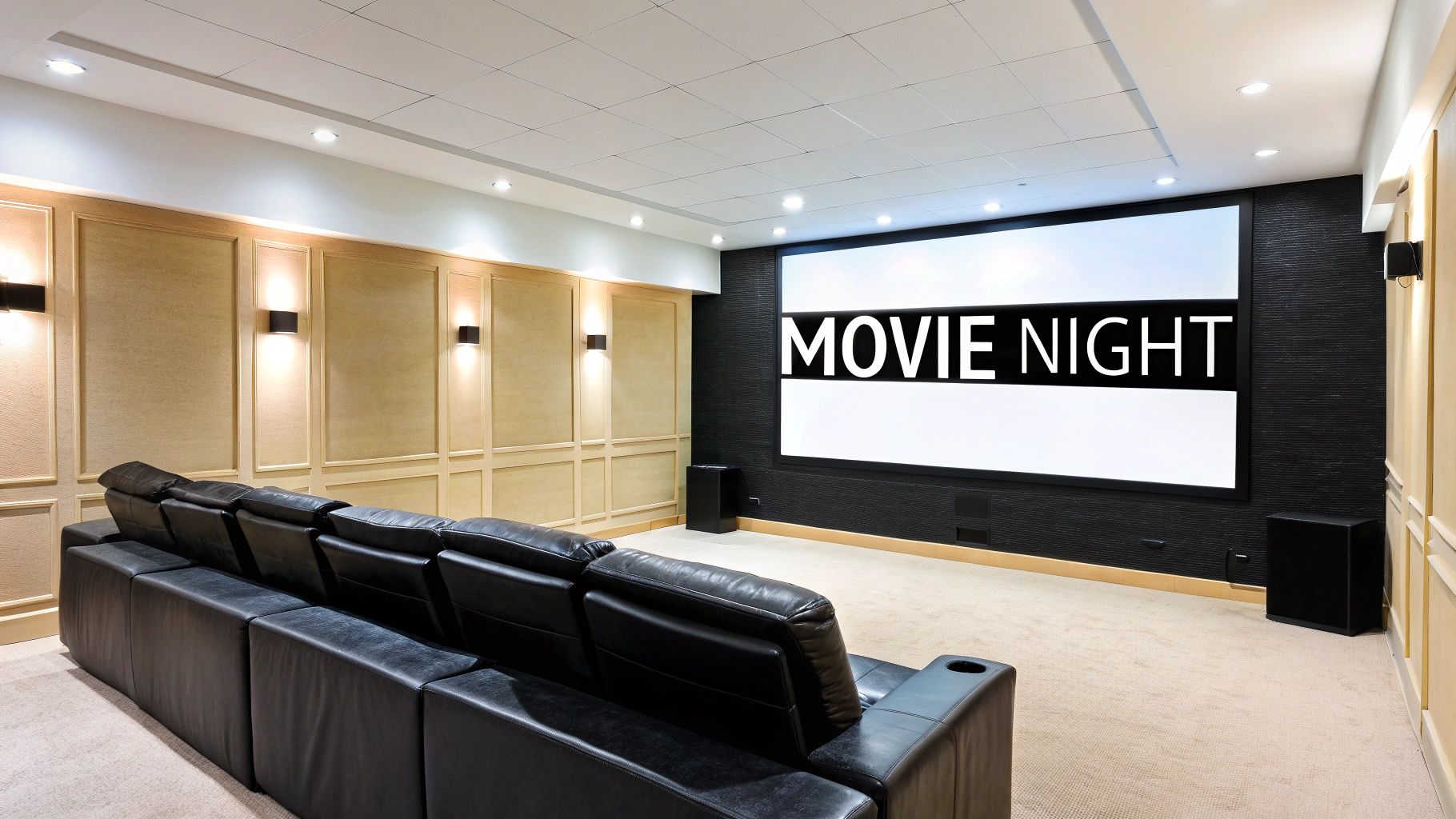
A basement offers the perfect environment for an immersive home cinema, providing a naturally dark, quiet space that can be fully optimised for an unparalleled audio-visual experience. This type of conversion transforms an underused cellar into a dedicated entertainment hub, ideal for family movie nights, watching major sporting events, or engaging in high-fidelity gaming. By its nature, a subterranean setting minimises light pollution and external noise, making it one of the most effective basement conversion ideas for pure entertainment.
Key Considerations
For a truly professional result, technical planning is paramount. Engaging an architect early allows for structural integration of acoustic design, ensuring sound is contained within the room and perfectly calibrated for the audience.
Acoustic & Technical Tips:
Soundproofing: Utilise high-density insulation, acoustic plasterboard, and resilient bars within the wall and ceiling structures to isolate sound and prevent vibrations from travelling through the property.
Ventilation: A dedicated Mechanical Ventilation with Heat Recovery (MVHR) system is crucial for maintaining air quality and managing heat generated by equipment without compromising the room's acoustic integrity.
Lighting & Finishes: Opt for coffered ceilings and recessed LED lighting controlled by a smart system like Crestron or Lutron. Dark, non-reflective wall finishes such as fabric panelling or deep matt paint will enhance on-screen picture quality by preventing light bleed.
Expert Insight: For homes in Conservation Areas or listed buildings, integrating ventilation outlets discreetly is a key planning consideration. Our team specialises in designing systems that respect and preserve the building's heritage facade.
Explore our portfolio of bespoke basement conversions to see how we’ve transformed London homes.
2. Home Gym/Fitness Studio
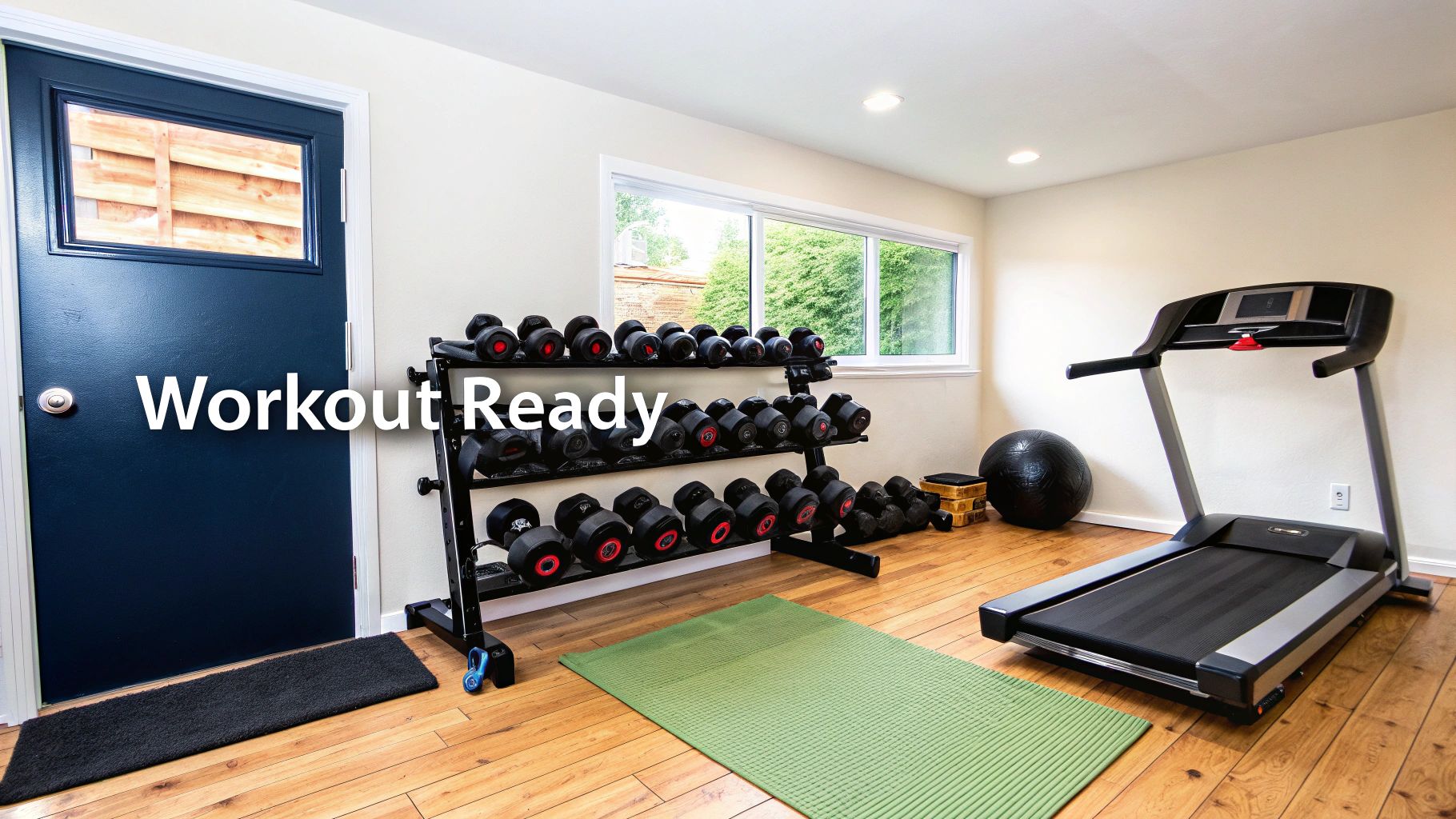
A basement provides an ideal, secluded environment for a bespoke home gym or fitness studio, removing the inconvenience of travel and membership fees while offering a completely personalised training space. This conversion transforms an underutilised area into a dedicated wellness hub, perfect for everything from high-intensity interval training and weightlifting to a serene yoga or Pilates retreat. The subterranean location naturally aids in temperature control and noise containment, making it one of the most practical and popular basement conversion ideas for health-conscious homeowners.
Key Considerations
Creating a successful home gym hinges on thoughtful planning around the physical demands of exercise. An architect can help integrate structural reinforcements for heavy equipment and design a space that is both safe and motivating.
Acoustic & Technical Tips:
Flooring & Impact Protection: Invest in high-quality, shock-absorbent rubber flooring. This not only protects the structural subfloor from dropped weights but also significantly dampens noise and vibration transfer to the rest of the house.
Ventilation & Climate Control: A robust, dedicated ventilation system or a separate HVAC zone is essential. This ensures optimal air quality, manages humidity, and allows for precise temperature control during intensive workouts.
Lighting & Finishes: Bright, uniform lighting is crucial for safety and energy. We recommend recessed LED panels for a clean, modern aesthetic. Full-height mirrors can create a sense of space and are vital for monitoring form and technique.
Expert Insight: When planning for heavy equipment like squat racks or multi-gyms, we often specify localised strengthening of the floor slab beneath. This foresight prevents any long-term structural issues and is a critical part of a high-end basement gym design.
Explore our portfolio of bespoke basement conversions to see how we’ve transformed London homes.
3. The Versatile Recreation & Games Room
A basement games room is one of the most dynamic basement conversion ideas, creating a dedicated, multi-purpose space for entertainment and socialising. This conversion turns an underutilised area into a vibrant hub for family and guests, accommodating everything from a classic billiards table and dartboard to modern arcade machines and gaming consoles. The naturally enclosed environment helps to contain noise, making it an ideal setting for lively activities without disturbing the rest of the household.
Key Considerations
Successful games room design hinges on clever spatial planning to support various activities. An architect can help create a flexible layout that feels spacious and accommodates both active games and relaxed social seating, ensuring the room is as functional as it is fun.
Acoustic & Technical Tips:
Sound Management: While full soundproofing may not be necessary, incorporating acoustic panels on walls or ceilings can effectively absorb ambient noise and prevent echo, improving the room’s atmosphere.
Lighting Scheme: A layered lighting plan is essential. Install bright, uniform overhead lighting for active games like table tennis, complemented by dimmable, low-level mood lighting for a more relaxed bar or lounge area.
Durable Finishes: Select hard-wearing materials that can withstand high traffic and potential impacts. Consider luxury vinyl tile (LVT) or engineered wood for flooring and use robust, easily cleanable surfaces for bars and cabinetry.
Expert Insight: For period properties in areas like Wandsworth or Richmond, maximising natural light can be a challenge. We often design with enlarged or new lightwells, which not only illuminate the space but also provide valuable secondary access or a small, sunken terrace area.
Explore our portfolio of bespoke basement conversions to see how we’ve transformed London homes.
4. The Dedicated Home Office & Creative Studio
The rise of flexible working has elevated the home office from a small desk in a spare room to an essential, dedicated space. A basement provides the ideal solution for a quiet, self-contained professional workspace, physically separating work life from home life. This conversion is one of the most practical and value-adding basement conversion ideas, creating a controlled environment perfect for deep focus, client calls, or creative pursuits without interruption from the main household.
Key Considerations
A successful basement office hinges on creating a space that is both functional and conducive to productivity. This requires careful thought about layout, lighting, and connectivity to ensure it feels like a professional environment rather than a repurposed cellar. Early architectural planning is key to integrating services and maximising natural light.
Ergonomic & Technical Tips:
Lighting & Electrics: Install full-spectrum LED lighting that mimics natural daylight to reduce eye strain. Ensure ample, well-placed power sockets and dedicated data cabling for robust internet connectivity.
Sound Control: Use acoustic insulation in the ceiling and solid-core doors with weatherstripping to create a truly private workspace, essential for confidential meetings and focused work.
Layout & Storage: Design a layout with a clear ergonomic flow. Position the desk to face the entrance for psychological comfort and integrate bespoke joinery for organised, accessible storage of documents and equipment.
Expert Insight: For an office to be classified as a habitable room, it often requires a safe means of escape, such as an egress window. This not only fulfils safety regulations but can also significantly increase natural light. Explore the ultimate guide to navigating basement extension planning permission to understand the requirements.
View our bespoke refurbishment projects to see how we craft functional and inspiring workspaces.
5. The Self-Contained Guest Suite
Transforming your basement into a self-contained guest suite is an excellent way to add value and functionality to your property. This basement conversion idea creates a private, comfortable retreat for visiting family, friends, or even an au pair, offering them a dedicated space with its own amenities. Unlike a simple spare room, a basement suite can be designed with an ensuite bathroom, a small kitchenette, and a separate seating area, providing a hotel-like experience that enhances your home’s hospitality. This is an increasingly popular choice for multi-generational living and accommodating long-term guests.
Key Considerations
Creating a habitable living space below ground requires meticulous attention to building regulations, particularly regarding natural light, ventilation, and emergency egress. An architect is essential to navigate these complexities and design a space that is both compliant and inviting.
Structural & Design Tips:
Egress & Light: A compliant egress window is a legal requirement for any basement bedroom. Consider enlarging existing window wells or creating new lightwells to maximise natural daylight and provide a safe fire escape route.
Moisture Control: A robust waterproofing system, including cavity drain membranes and a sump pump, is non-negotiable to prevent damp and ensure a healthy environment.
Finishes & Lighting: Use light paint colours and a layered lighting scheme with recessed, task, and ambient lights to make the space feel bright and spacious. Underfloor heating adds a touch of luxury and provides efficient, even warmth.
Expert Insight: Integrating an ensuite bathroom significantly increases the suite's appeal and functionality. We often design these with space-saving features like wall-hung fixtures and walk-in showers to maintain an open, uncluttered feel within the basement footprint.
Our essential guide to the cost of a UK basement conversion provides a detailed breakdown of potential project budgets.
6. The Sophisticated Wine Cellar & Tasting Bar
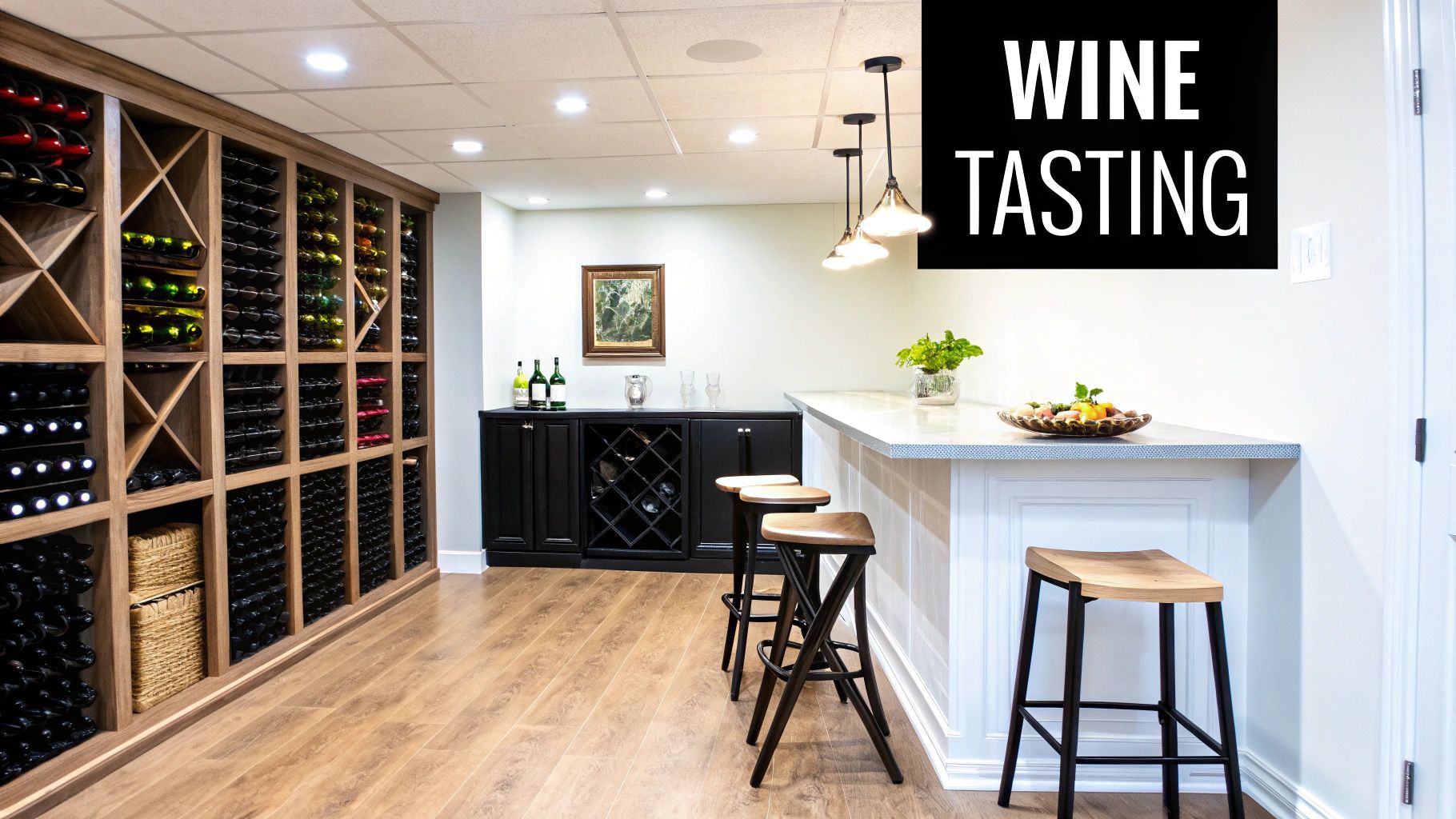
A basement provides the ideal subterranean conditions for creating a dedicated wine cellar and tasting bar. This conversion transforms an underutilised space into a sophisticated sanctuary for collectors and entertainers alike, combining climate-controlled storage with an elegant area for hosting guests. The naturally cool and dark environment of a basement is perfect for preserving valuable wine collections, making this one of the most functional and luxurious basement conversion ideas.
Key Considerations
Creating an effective wine cellar demands precision in environmental control to protect your investment. Collaborating with an architect and a wine storage specialist from the outset ensures that the space is not only beautiful but technically perfect, maintaining optimal temperature and humidity levels.
Acoustic & Technical Tips:
Climate Control: A dedicated, specialist cooling and humidification system is non-negotiable. This prevents temperature fluctuations that can spoil the wine. Ensure the system is specified to be low-vibration to avoid disturbing sediment.
Insulation & Vapour Barrier: High-performance insulation and a complete vapour barrier are crucial to isolate the cellar from the rest of the home's climate, ensuring stability and energy efficiency.
Lighting & Finishes: Use UV-filtered, low-heat LED lighting on a smart control system to prevent light damage. Bespoke racking made from woods like oak or redwood complements the traditional cellar aesthetic, while a well-lit tasting counter or bar area creates a welcoming focal point for socialising.
Expert Insight: For serious collectors, integrating bespoke racking systems designed for specific bottle sizes and case storage is essential. We work with artisans to design and install custom joinery that maximises capacity while creating a stunning visual display.
Explore our portfolio of bespoke basement conversions to see how we’ve transformed London homes.
7. The Tranquil Home Library & Study
A basement conversion offers a unique opportunity to create a serene and scholarly home library or study. This idea transforms an underutilised space into a dedicated sanctuary for reading, research, and quiet contemplation, completely insulated from the daily bustle of the household above. Its inherent seclusion provides the perfect atmosphere for housing a treasured book collection or establishing a focused, professional workspace.
Key Considerations
Creating a successful library requires careful environmental control to protect valuable books and create a comfortable ambience. An architect can integrate bespoke joinery and climate management systems from the outset, ensuring the space is both beautiful and functional for preserving a collection.
Preservation & Design Tips:
Climate Control: Effective damp proofing is paramount. A precisely controlled ventilation and dehumidification system is essential to maintain a stable environment and prevent moisture from damaging paper and bindings.
Bespoke Shelving: Books are exceptionally heavy. Specify custom-built, robust shelving from quality hardwoods that is structurally rated to bear the load. Incorporate adjustable LED lighting with dimmer controls to illuminate collections without causing light damage.
Atmosphere & Comfort: Use soft rugs, acoustic wall panelling, and comfortable seating in designated reading nooks to enhance sound absorption and create a quiet, inviting atmosphere conducive to deep focus.
Expert Insight: For period properties in areas like Kensington or Chelsea, a classic, Victorian-inspired library can be a stunning addition. We ensure that all ventilation and climate control systems are seamlessly and discreetly integrated, preserving the character of your home while providing modern functionality.
Explore our portfolio of bespoke basement conversions to see how we’ve transformed London homes.
8. The Home Spa, Sauna & Wellness Room
Transforming your basement into a private wellness sanctuary offers a luxurious escape from the demands of city life. This type of conversion creates a dedicated space for health, relaxation, and rejuvenation, featuring amenities like a steam room, sauna, or even a plunge pool. The inherent privacy and seclusion of a basement make it an ideal location for a tranquil retreat, providing a quiet, controlled environment perfect for unwinding and focusing on personal well-being, solidifying its place as one of the ultimate basement conversion ideas.
Key Considerations
Creating a successful wellness suite below ground level is a technically demanding project where moisture management is paramount. Early collaboration with an architect is essential to design a space that is not only beautiful but also structurally sound and protected from damp.
Acoustic & Technical Tips:
Waterproofing & Vapour Control: A robust tanking system is non-negotiable. This must be complemented by a continuous vapour barrier on the warm side of the insulation to manage high humidity levels from steam rooms and showers. Our guide offers a detailed look into how to waterproof a basement correctly.
Ventilation: A powerful, specialised mechanical ventilation system with a dehumidification function is crucial. This will manage moisture, prevent mould growth, and ensure fresh, clean air circulates throughout the space.
Finishes & Safety: Specify non-slip flooring materials such as textured porcelain tiles. All electrical installations must be appropriately IP-rated for wet areas, and luxury touches like heated floors and towel rails can be integrated for ultimate comfort.
Expert Insight: For a truly premium feel, consider integrating a smart control system. This allows you to pre-heat your sauna, adjust mood lighting, and control your audio system remotely, ensuring your wellness suite is always perfectly prepared for you.
Explore our portfolio of bespoke basement conversions to see how we’ve transformed London homes.
9. The Sophisticated Wet Bar & Tasting Room
A basement wet bar or tasting room creates a dedicated, atmospheric hub for sophisticated home entertaining. Unlike a more extensive wine cellar, this conversion focuses on the social aspect of enjoying fine spirits, wines, and craft cocktails. It transforms an underutilised space into a destination within the home, perfect for hosting intimate gatherings or serving as a refined 'man cave' or speakeasy-inspired lounge. This is one of the most popular basement conversion ideas for those who prioritise socialising and entertainment.
Key Considerations
A successful wet bar hinges on both aesthetic appeal and practical functionality. Early planning should focus on integrating plumbing, specialist ventilation, and bespoke joinery to create a seamless and efficient entertainment space that feels both luxurious and welcoming.
Design & Technical Tips:
Plumbing & Waterproofing: Ensure robust waterproofing is applied to all surfaces behind the bar. A professionally installed plumbing system with proper under-counter drainage and a glass rinser is essential for functionality.
Ventilation & Cooling: A dedicated extraction system is crucial to manage odours and maintain air quality. Consider integrated under-counter refrigeration for mixers, garnishes, and wine or beer to ensure everything is served perfectly.
Lighting & Materials: Use durable, high-end materials like quartz or sealed stone for countertops and stainless steel for fixtures. Integrated LED lighting within shelving and under the counter creates a dramatic, high-end ambiance.
Expert Insight: For period properties in areas like Kensington or Chelsea, we often design bespoke bars that conceal modern amenities within traditional-style cabinetry, ensuring the new space complements the home's original character while delivering modern performance.
Explore our portfolio of bespoke basement conversions to see how we’ve transformed London homes.
10. The Dedicated Craft Room & Artist's Studio
A basement provides the ideal sanctuary for a dedicated craft room or artist's studio, offering an isolated and customisable space for creative pursuits. Whether for painting, sewing, woodworking, or pottery, this conversion turns an underutilised area into a functional and inspiring workshop. The subterranean setting naturally contains noise and potential messes, making it one of the most practical and focused basement conversion ideas for hobbyists and professional artists alike, keeping creative projects neatly separated from the main living areas.
Key Considerations
Successful studio design hinges on creating a highly functional environment tailored to the specific craft. Engaging an architect early ensures that practical requirements like ventilation for kilns or dust extraction for woodworking can be seamlessly integrated into the structural design, alongside bespoke storage and robust electrical plans.
Acoustic & Technical Tips:
Lighting & Electrics: Install high-quality, colour-accurate task lighting (e.g., daylight LED strips) over work surfaces. A dedicated consumer unit and ample, strategically placed power sockets are essential for running specialised equipment safely.
Ventilation & Flooring: A powerful, localised extraction system is vital for activities that produce fumes, dust, or particles (e.g., pottery kilns, soldering, airbrushing). Opt for durable, easy-to-clean flooring such as sealed concrete, rubber, or luxury vinyl tile.
Storage & Organisation: Maximise space with bespoke joinery, including deep drawers, full-height cupboards, and modular shelving. Pegboard walls offer flexible, visible storage for frequently used tools and supplies.
Expert Insight: For period properties, planning must address how to run new, powerful extraction ducting to the exterior without compromising the building’s historic fabric. We design discreet solutions that meet both conservation and functional requirements.
Explore our portfolio of bespoke basement conversions to see how we’ve transformed London homes.
11. The Professional Podcast & Creator Studio
The rise of digital content creation has made a dedicated home studio one of the most forward-thinking basement conversion ideas. A basement provides the ideal acoustic environment for a professional podcasting suite, voice-over booth, or music production space, offering natural sound isolation far from the daily household bustle. This conversion transforms an underutilised area into a high-value asset, perfect for creative professionals, musicians, or discerning hobbyists seeking broadcast-quality audio.
Key Considerations
Creating a studio that delivers pristine audio requires meticulous planning around acoustics and technical infrastructure. Collaborating with an architect ensures that soundproofing, ventilation, and power are integrated seamlessly into the structural design from the outset, preventing costly retrofitting and acoustic compromises later. This foresight is key to achieving a truly professional standard.
Acoustic & Technical Tips:
Acoustic Treatment: Install strategically placed acoustic foam panels to absorb mid to high frequencies and bass traps in corners to control low-frequency resonance. Avoid covering every surface; targeted treatment is more effective.
Soundproofing: Construct a 'room within a room' using resilient bars and high-density acoustic plasterboard. Consider a second internal door or baffle walls to create a sound lock, fully isolating the studio from external noise.
Ventilation & Cabling: A silent mechanical ventilation system is essential to maintain air quality without introducing fan noise into recordings. Plan and label all cable runs meticulously to create a clean, organised, and technically sound workspace.
Expert Insight: For homes in conservation areas, ensuring ventilation outlets are discreetly positioned is a critical planning hurdle. We specialise in designing high-performance, acoustically isolated ventilation systems that comply with heritage guidelines while maintaining the integrity of your property's exterior.
Explore our portfolio of bespoke basement conversions to see how we’ve transformed London homes.
12. The Engaging Children's Playroom & Activity Area
Converting a basement into a dedicated children's playroom creates a safe, contained, and stimulating environment away from the main living areas of the home. This idea transforms an underused space into a vibrant hub for creativity, learning, and active play, keeping toys and noise neatly separated from upstairs. A well-designed basement playroom provides children with their own world to explore, while offering parents peace of mind and a clutter-free home. This is one of the most practical basement conversion ideas for growing families in London.
Key Considerations
Successful playroom design prioritises safety, durability, and adaptability as children's needs evolve. The primary architectural challenge is to maximise natural or artificial light to create an inviting atmosphere that feels anything but subterranean. Careful spatial planning is essential to define zones for different activities, from quiet reading nooks to areas for energetic play.
Design & Safety Tips:
Lighting & Finishes: Overcome the lack of natural light with a layered lighting scheme using bright, dimmable LEDs. Use light paint colours and large mirrors to create a sense of spaciousness. All materials, from paint to flooring, should be non-toxic, durable, and easily washable.
Zoning & Storage: Implement clever, integrated storage solutions like colour-coded bins and built-in cabinetry to keep the space organised. Clearly define zones for creative arts, quiet time, and physical activity to structure play and minimise chaos.
Safety & Compliance: Ensure the space is fully child-proofed with soft flooring, covered plug sockets, and secured furniture. An egress window is a crucial building regulations requirement, providing an essential emergency escape route and improving ventilation.
Expert Insight: We often design playrooms with future flexibility in mind. By planning the electrical layout and structural elements carefully, the space can easily be converted into a teenage den, study, or media room as the children grow, maximising your investment.
Explore our portfolio of bespoke basement conversions to see how we’ve transformed London homes.
12 Basement Conversion Ideas Comparison
Conversion Type | Implementation Complexity 🔄 | Resources & Cost ⚡ | Expected Outcomes ⭐ / 📊 | Ideal Use Cases 💡 | Key Advantages |
|---|---|---|---|---|---|
Home Cinema / Media Room | High — electrical, acoustic treatment, ventilation | High (£3,000–£15,000+); AV gear, seating, insulation | ⭐ Immersive viewing/listening; 📊 can increase resale ~5–10% | Movie nights, serious gamers, family gatherings | High-quality AV experience; noise containment |
Home Gym / Fitness Studio | Medium — flooring, ventilation, possible reinforcement | Medium–High (£3,000–£15,000); machines, flooring, HVAC | ⭐ Convenient access to fitness; 📊 saves membership costs | Regular exercisers, personal trainers, families | Privacy; flexible schedule; health benefits |
Recreation / Games Room | Medium — layout, lighting, storage needs | Low–Medium (£1,500–£8,000); tables, games, seating | ⭐ Social entertainment hub; 📊 modest value uplift | Entertaining guests, family play, student housing | Versatile entertainment; lower cost than speciality rooms |
Home Office / Creative Studio | Medium — soundproofing, lighting, connectivity | Low–Medium; ergonomic furniture, wiring, lighting | ⭐ Productive workspace; 📊 possible tax deduction | Remote workers, freelancers, small business owners | Saves commute; professional meeting setting |
Bedroom / Guest Suite | High — egress windows, plumbing, permits | Medium–High; bathroom, HVAC, permit fees | ⭐ Adds living/rental space; 📊 increases resale & rental potential | Guests, ADU rentals, multigenerational homes | Independent accommodation; rental income potential |
Wine Cellar / Bar | High — precise climate control & insulation | High (£5,000–£20,000+); cooling units, racks, finishes | ⭐ Proper wine preservation; 📊 luxury market appeal | Wine collectors, upscale entertaining, luxury homes | Preserves collection value; refined entertaining space |
Home Library / Study | Medium — shelving load, humidity control, lighting | Medium; shelves, lighting, dehumidifier | ⭐ Quiet study & preservation; 📊 timeless aesthetic value | Readers, researchers, collectors | Protects books; sophisticated atmosphere |
Home Spa / Sauna / Wellness Room | Very High — plumbing, waterproofing, HVAC, permits | Very High (£8,000–£30,000+); saunas, hot tubs, drainage | ⭐ Therapeutic & relaxation benefits; 📊 strong luxury value add | Wellness-focused homeowners, athletes, luxury buyers | Health benefits; multi-modal wellness space |
Wet Bar / Tasting Room | Medium — plumbing and drainage considerations | Low–Medium (£2,000–£8,000); sink, fridge, counters | ⭐ Casual entertaining; 📊 modest social value increase | Entertainers, games-room adjuncts, casual hosts | Lower cost than full wine cellar; versatile beverage service |
Craft Room / Artist Studio | Medium — ventilation, electrical, durable surfaces | Low–Medium (£1,500–£6,000); worktables, storage, ventilation | ⭐ Boosts productivity; 📊 contains mess & supplies | Hobbyists, makers, artists, small-scale production | Flexible layout; affordable creative workspace |
Podcast / Recording Studio | High — acoustic treatment, wiring, soundproofing | Medium–High (£2,000–£10,000+); mics, interface, panels | ⭐ Professional audio quality; 📊 monetisation potential | Podcasters, musicians, voice-over artists | Control over production; lower long-term studio costs |
Children's Playroom / Play Area | Medium — safety, egress, moisture & air quality | Medium; soft flooring, storage, lighting, safety features | ⭐ Safe play & development; 📊 reduces mess in living spaces | Families with young children, daycare-style uses | Scalable design; contained, child-safe area |
Your Next Step: Realising Your Ideal Basement Conversion with Harper Latter Architects
Transforming a dark, underutilised basement from a forgotten space into a luxurious and fully integrated part of your home is one of the most significant and rewarding investments you can make. As we have explored throughout this guide, the potential buried beneath your property is vast. The sheer variety of basement conversion ideas, from a state-of-the-art home cinema and a serene wellness spa to a professional-grade wine cellar or a vibrant children's playroom, demonstrates that the only real limitations are imagination and architectural expertise.
Each concept we've detailed presents a unique opportunity to enhance your lifestyle and add substantial value to your South West London property. Yet, they all share a common thread: the necessity for meticulous, architect-led design and execution. A successful basement conversion is far more than an interior design project; it is a complex architectural and engineering undertaking that must address structural integrity, waterproofing, ventilation, and innovative lighting design to create a space that feels seamless, bright, and inviting.
From Aspiration to Architectural Reality
The journey from an initial idea to a beautifully realised basement extension involves navigating a complex landscape. For homeowners in prestigious areas like Wimbledon, Wandsworth, or Richmond, this includes securing planning permissions, often within sensitive conservation areas, and adhering to strict building regulations. The technical challenges are equally demanding, requiring expert solutions for everything from managing high water tables to integrating smart home technology and bespoke joinery.
This is where a specialised, design-led approach becomes paramount. The key to unlocking your basement’s true potential lies in a process that balances creative vision with unwavering technical precision. It is about understanding how to maximise natural light, engineer effective ventilation systems, and create a space that is not just functional but also a genuine enhancement to your home's character and your family's daily life.
Consider the most important takeaways from our exploration of basement conversion ideas:
Bespoke Design is Crucial: A generic approach will not suffice. Your basement should be a reflection of your specific lifestyle needs, whether that is for entertainment, work, wellness, or family life.
Technical Expertise is Non-Negotiable: Issues like damp-proofing, structural support, and fire safety are foundational. Getting these wrong can lead to costly and disruptive problems down the line.
Light is the Defining Element: The most successful basement conversions are those that feel airy and connected to the rest of the home. This is achieved through clever design, such as light wells, glass floors, and carefully planned artificial lighting schemes.
Planning and Compliance are Key: Navigating the local planning authority's requirements, especially in conservation areas, requires specialist knowledge and experience to ensure a smooth and successful project.
Ultimately, the decision to convert your basement is a decision to invest in your home's future and your quality of life. By choosing the right team to guide you, you can transform a challenging project into a seamless and rewarding experience, resulting in a spectacular new space that serves your family for years to come.
Ready to explore how these basement conversion ideas could be realised in your own home? The team at Harper Latter Architects specialises in creating bespoke, high-end basement extensions across South West London and Surrey, guiding you from initial concept to final build with precision and creativity. Schedule an initial, no-obligation consultation with us today to begin your property's transformation.
Comments