
Renovating a Victorian Home: A Practical Guide
- Harper Latter Architects

- 3 days ago
- 16 min read
Renovating a Victorian home isn't just another building project. It’s a unique journey, a delicate dance between preserving the rich, historic character of the building and weaving in the functionality we all need for modern life. It demands a specialist touch to navigate potential surprises like crumbling electrics, hidden structural weaknesses, and strict heritage rules, turning the entire process into a conversation between the past and the present.
The Charm and Challenge of Renovating a Victorian Home
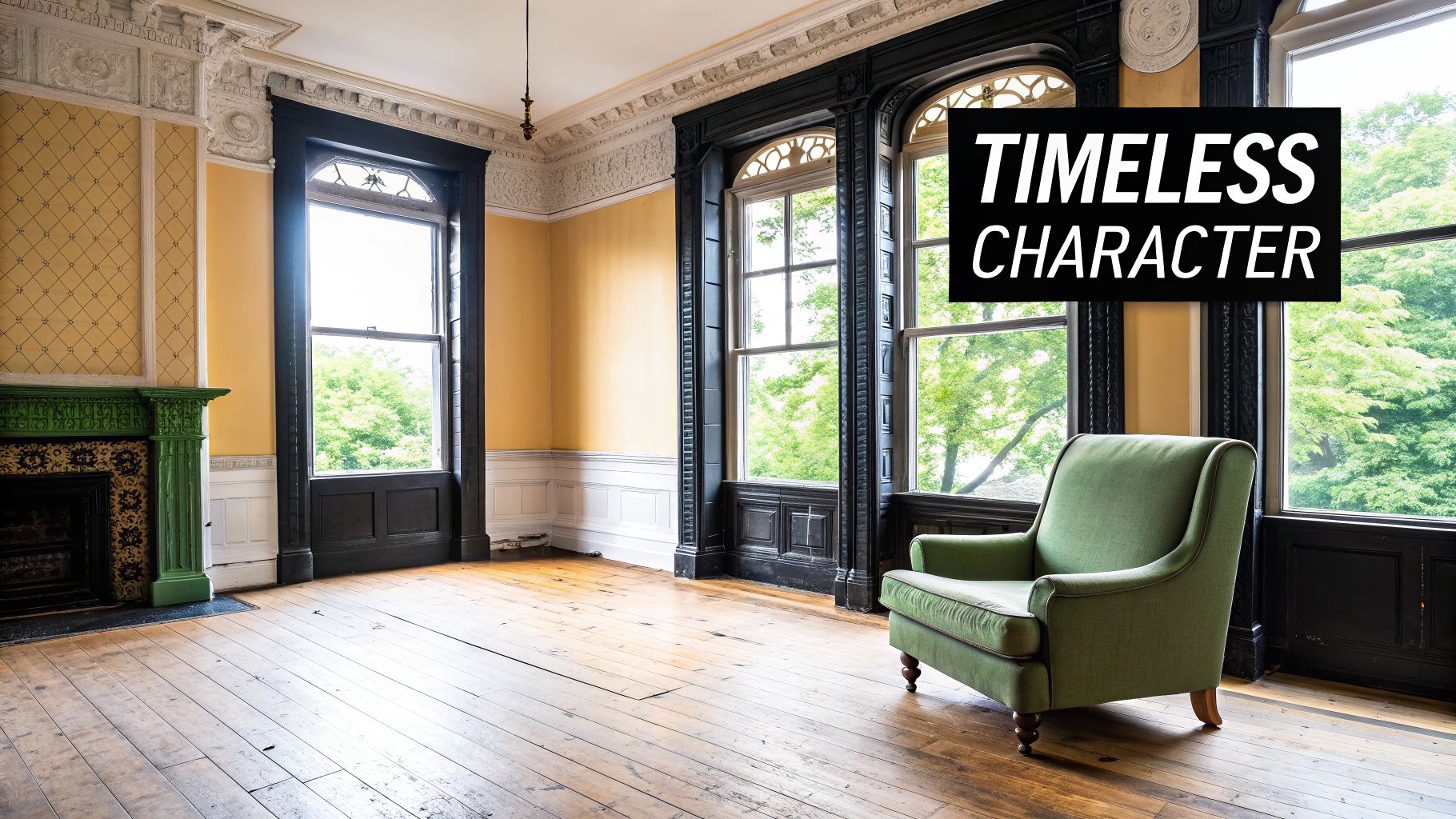
Victorian homes are an iconic part of Britain's architectural story, loved for their soaring ceilings, intricate cornicing, and beautifully generous proportions. Owning one means you become a custodian of a piece of history. But bringing these century-old properties into the 21st century is a project unlike any other.
This guide is here to help you navigate the beautiful complexities of renovating a Victorian home. This isn’t about a quick cosmetic update; it's about a sensitive modernisation that keeps the soul of the building intact while making it a perfect fit for contemporary living.
Understanding the Unique Demands
That irresistible period charm often comes with a set of inherited challenges that require a completely different mindset. Unlike a modern new-build where everything is predictable, a period home can hide decades of secrets behind every wall.
You'll likely be dealing with a few key considerations:
Outdated Systems: Original plumbing and wiring are rarely up to the task of powering a modern family home. A complete overhaul is often necessary for both safety and efficiency.
Hidden Structural Issues: Over 100+ years, problems like damp, timber decay, or subtle subsidence can take hold, requiring an expert eye to diagnose and repair properly.
Heritage and Conservation: Many Victorian properties are located in conservation areas or are listed buildings, which places legal limits on what you can change. Understanding these regulations is critical, and our work in conservation and heritage architecture shows just how to navigate them successfully.
Energy Inefficiency: Those beautiful single-glazed sash windows, uninsulated walls, and draughty floorboards all lead to high energy bills, making thermal upgrades a top priority for comfort and cost.
A successful Victorian renovation is a dialogue between the old and the new. The goal is not to erase the past but to enhance it, allowing modern comforts to sit harmoniously alongside timeless character.
A Collaboration Between Past and Present
It helps to think of the process less as a construction job and more as a careful restoration. The aim is to create a home that is functional, beautiful, and comfortable but still tells the story of its origins. This means preserving original fireplaces, restoring sash windows where possible, and celebrating the ornate details that make these homes so special in the first place.
Ultimately, a thoughtfully executed renovation enhances both your quality of life and your property's value. By respecting its history while skilfully integrating modern amenities, you create a home that is truly one-of-a-kind—a perfect blend of period elegance and contemporary living. This guide will set you on the right path for what is a rewarding, albeit complex, project.
Budgeting for Your Victorian Renovation
Getting a firm grip on the finances is probably the single most important step you can take when renovating a Victorian home. It’s about moving beyond vague ballpark figures and creating a realistic financial plan. This gives you a clear-eyed view of where your money is actually going, from the essential structural work right through to the final lick of paint.
The truth is, there’s no magic number for bringing a period property up to modern standards. Two seemingly identical houses on the same street could have wildly different renovation costs. Understanding what drives these differences early on is the key to planning a successful project.
Key Factors Influencing Your Budget
Your project's final cost will almost always come down to a combination of three things. The interplay between them will determine whether you’re looking at a modest refresh or a complete, top-to-bottom overhaul.
Property Condition: It sounds obvious, but a well-maintained house will always be cheaper to renovate than one that’s been neglected. If you’re facing issues like damp, a failing roof, or rotten timber windows, these problems have to be sorted—and paid for—before you can even think about the cosmetic stuff.
Location: Building costs are not the same everywhere in the UK. Unsurprisingly, labour and material prices in London and the South East are significantly higher than in other regions, and this has to be baked into every calculation you make.
Desired Level of Finish: This is a huge one. The quality of the materials, fittings, and craftsmanship you choose will have a massive impact on the bottom line. A bespoke, handcrafted kitchen from a specialist joiner is a world away from an off-the-shelf alternative, and that same principle applies to everything from flooring and lighting to tiles and taps.
Understanding Typical Renovation Costs
In recent years, we've seen a sharp rise in renovation costs, pushed up by supply chain disruption and inflation. To give you a rough idea, a full renovation of a typical three-bedroom Victorian terrace in London often lands somewhere between £48,000 and £110,350. However, for projects with major structural changes or a very high-end finish, it's not unusual for budgets to climb well over £150,000.
Breaking these costs down helps build a more realistic financial picture. While every single project has its own unique quirks, having a general idea of the investment needed is a crucial starting point. For a much more detailed breakdown, you might find our comprehensive guide to UK whole house renovation costs helpful.
To make this a bit more tangible, here’s a look at how those costs might break down for a standard Victorian terrace project.
Estimated Renovation Costs For a Typical 3-Bedroom Victorian Terrace
This table breaks down potential costs per square metre and for key areas, helping homeowners budget more effectively.
Renovation Scope | Cost per Square Metre (London) | Typical Project Example & Estimated Total |
|---|---|---|
Light Refurbishment | £900 - £1,800 | New kitchen, bathroom, redecoration, flooring. £25,000 - £50,000 |
Full Internal Renovation | £1,900 - £3,200 | Includes rewiring, new plumbing, plastering, structural repairs. £60,000 - £110,000 |
High-End Renovation & Extension | £3,300 - £5,000+ | All of the above, plus a rear extension and high-spec finishes. £150,000+ |
These figures are, of course, estimates. The final total will always depend on the specific condition of your property and the choices you make along the way.
The Essential Contingency Fund
If there's one thing that defines renovating a Victorian home, it's the element of surprise. No matter how many surveys you do, old houses have a habit of hiding secrets that only reveal themselves once the work is underway.
When budgeting for a period property renovation, a contingency fund is not an optional extra—it is an absolute necessity. This fund acts as your financial safety net for tackling the unexpected without derailing the entire project.
Some of the most common "hidden" costs we see are:
Discovering asbestos that needs specialist (and legally compliant) removal.
Finding rotten floor joists or roof timbers that need replacing.
Uncovering unsafe, outdated wiring hidden deep within walls and ceilings.
Dealing with complex damp issues that turn out to be more extensive than first thought.
As a rule of thumb, we always advise clients to set aside 15-20% of the total construction budget for this contingency. This buffer gives you peace of mind, ensuring that when an inevitable surprise pops up, you have the resources to deal with it properly without having to compromise on the work you’ve already planned. It’s arguably the most important part of a realistic Victorian renovation budget.
Navigating Planning Permission and Consent
The regulatory side of renovating a period property can often feel like a maze, but getting your head around the rules is absolutely vital for a smooth project. If you start work without the right approvals, you’re setting yourself up for stressful enforcement action and potentially expensive retrospective applications. Sorting out the bureaucracy from day one is the key.
When you’re working on a Victorian home, you’re not just up against standard building regulations. Your property’s specific status and location can add several layers of consent, each with its own rulebook. It's a common mistake to think only huge extensions need permission; sometimes, even what seem like minor changes will require a formal application.
Understanding the Different Types of Consent
The type of permission you need comes down to your home's official designation. Getting this right is the first, most important step.
Planning Permission: This is the one most people have heard of. It’s for significant alterations, extensions, or changes of use. That said, many smaller projects might fall under Permitted Development rights, which let you carry out certain works without needing to go through the full application process.
Conservation Area Consent: If your home is in a designated Conservation Area, the rules get a lot tighter. This consent is all about protecting the character of the neighbourhood. Any work that affects the exterior—like changing windows or altering the roofline—is going to face much closer scrutiny.
Listed Building Consent: This is the highest level of control. If your property is Grade I, II*, or II listed, you’ll need this for any work that alters its character as a building of special architectural or historic interest. That applies both inside and out. It could be anything from replacing a front door to moving an internal wall.
It's crucial to remember these consents aren't mutually exclusive. A project on a listed building inside a conservation area could easily require all three approvals. This is exactly where professional guidance becomes indispensable.
The Application Process in Practice
It’s always a good idea to engage with the local authority's conservation officer early on. They can give you initial feedback on your ideas and flag potential issues before you even think about submitting a formal application. This proactive chat can save you a huge amount of time and money down the line.
A key part of any application for a heritage property is the Heritage Statement. This is a document that explains the historical significance of your property and carefully details how your proposed changes will affect its special character. A well-researched, persuasive statement can be the difference between getting a green light and a refusal. To get a much deeper understanding of this, our detailed article offers a complete UK Listed Building planning permission guide to help you prepare.
Navigating all these requirements demands specialist knowledge. An architect with real experience in heritage projects can guide you through every single step. They’ll help you develop initial designs that respect the building’s history and manage the complex application process, ensuring your dream renovation becomes a compliant, stress-free reality.
Upgrading Your Home's Core Systems
While it’s the ornate cornices and original fireplaces that capture the imagination, the true health and comfort of a Victorian home lie hidden behind the plaster. What you can't see is often far more critical than what you can.
Upgrading the core systems—electrics, plumbing, and heating—is the foundational investment that turns a beautiful but antiquated property into a safe, efficient, and genuinely liveable modern home. This isn't just a "nice-to-have"; it's a non-negotiable part of any serious renovation. To neglect these essentials is a false economy and a risk to both your safety and the building’s long-term integrity.
Modernising Essential Services
Let's be honest: the original systems in a Victorian property were designed for a world without washing machines, high-speed internet, or powerful showers. They simply aren't fit for 21st-century life.
This is a common realisation for renovators. A recent UK Houzz & Home Study revealed that for the 53% of homeowners tackling properties built before 1940, system upgrades were a top priority. Over two in five renovators upgraded their heating (43%), plumbing (42%), and electrical systems (39%), which really underscores how fundamental these improvements are. You can dive deeper into the key findings from the 2025 UK Houzz & Home study to see the full picture.
Here’s a look at the most critical upgrades we see:
Complete Rewiring: Many Victorian homes still have outdated—and potentially dangerous—rubber-coated or fabric-insulated wiring. A full rewire is essential for safety, giving you the capacity for modern appliances and integrating smart home technology if that's part of your vision.
Plumbing Overhaul: Original lead pipes are a health hazard and must be replaced. This is also the perfect time to upgrade the entire system, ensuring you get strong water pressure and can accommodate new bathrooms or a modern kitchen.
Central Heating Installation: An efficient, modern central heating system is key to comfort. This usually involves installing a new boiler, radiators, and smart thermostats, all carefully planned to work with the property's layout and unique thermal needs.
Addressing Structural Fundamentals
Beyond the services running through the walls, the structural bones of the house need a thorough assessment. A century of British weather can take its toll, leading to common issues that have to be professionally rectified before any cosmetic work can even begin. Trying to skip this step is like building on sand.
These are some of the usual suspects:
Damp: Whether it’s rising, penetrating, or caused by condensation, damp is a frequent visitor in period homes. The key is to correctly identify the source and implement the right solution—perhaps repairing the roof, improving drainage, or installing a new damp-proof course.
Roof and Timbers: The roof is your home’s primary line of defence. A specialist needs to inspect it for slipped slates, failing leadwork, and rotten timbers. At the same time, floor joists and window frames should be checked for decay or woodworm.
Subsidence: While the word sounds alarming, minor historic movement is common. A structural engineer can determine if any cracking is old and stable, or if it’s a sign of ongoing subsidence that requires a more significant intervention like underpinning.
Integrating Systems with Sensitivity
The real craft in renovating a Victorian home is weaving these modern systems into the historic fabric without causing chaos. The goal is to make the upgrades feel completely invisible, preserving the clean lines and character of period rooms.
Integrating modern services requires a surgeon's precision, not a sledgehammer. The best work is often what you can't see, as new pipework and cabling are discreetly routed to preserve the architectural integrity of every room.
Specialist architects and builders use clever techniques to achieve this. For example, new pipework might be run within new stud walls or hidden beneath floorboards. Electrical cables can sometimes be channelled into existing plaster and then expertly repaired. It’s a meticulous process that respects the building’s heritage, ensuring your home is fit for the future without erasing its past.
Blending Period Details with Modern Design
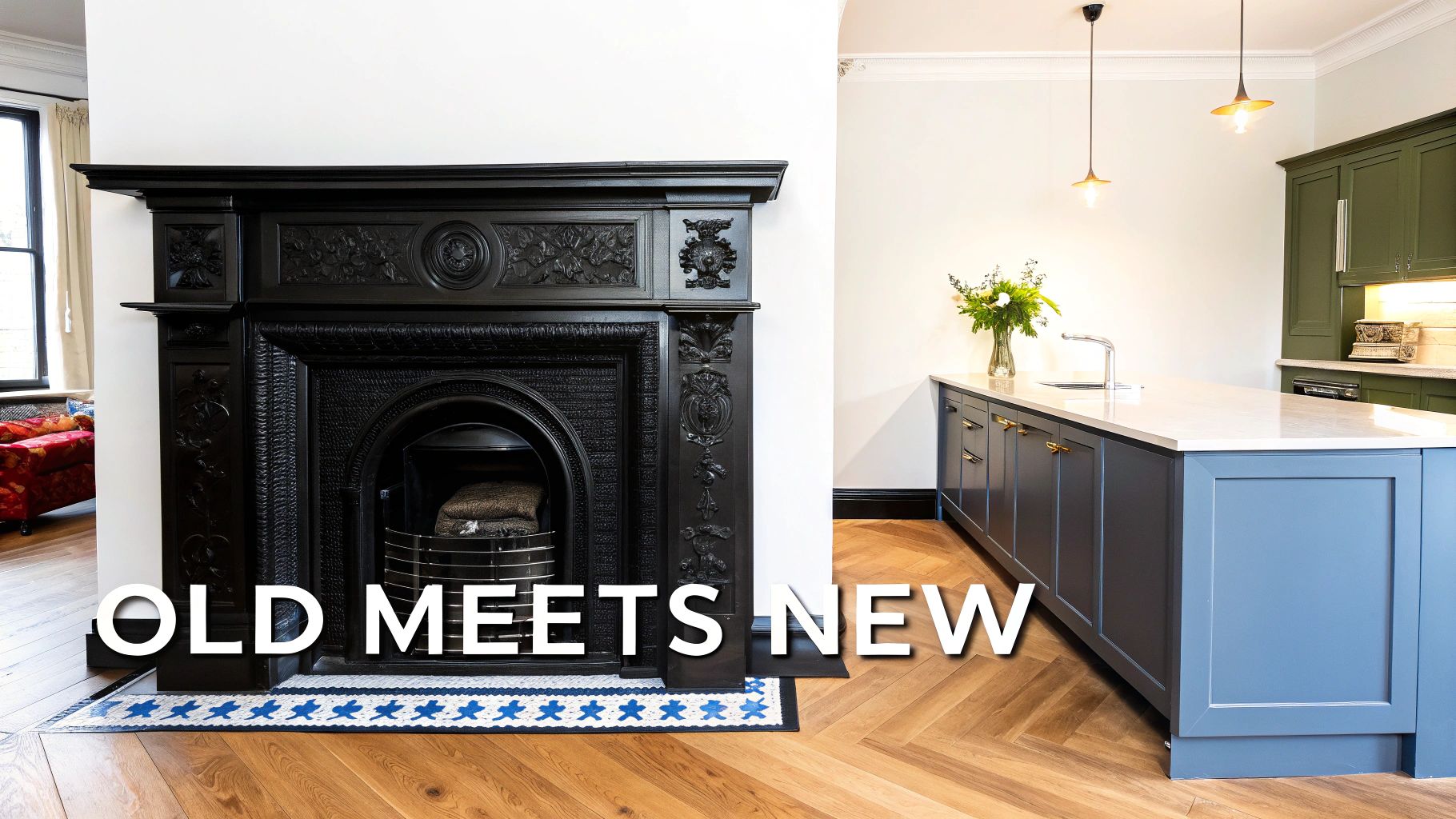
The real magic in a Victorian renovation lies in striking a delicate balance: how do you create a space that feels true to its history yet perfectly fits modern life? This is where thoughtful design turns a collection of old rooms into a cohesive, personal home. The goal isn't to erase the past but to celebrate it, making original features the heroes of your new interior.
This all starts with a deep respect for the building's character. Details like intricate cornices, ceiling roses, original fireplaces, and elegant sash windows are the very soul of the property. The best designs don’t see them as obstacles; they treat them as stunning focal points around which contemporary living can gracefully unfold.
Restoring Original Features with Care
Before you bring in anything new, the first step is to lovingly restore what’s already there. Decades of paint can easily obscure the crisp details of plasterwork, and old fireplaces might be boarded up or neglected. A sensitive restoration can bring these elements back to life, turning them into the centrepieces they were always meant to be.
Consider these key areas for restoration:
Cornices and Plasterwork: Carefully stripping back layers of paint can reveal astonishingly fine details. Specialist plasterers can also repair cracks or damaged sections, seamlessly matching the original profile.
Fireplaces: A cast-iron Victorian fireplace is a powerful anchor for any room. Professional restoration can make it a functional and beautiful feature once again. Even if it's non-working, it can be filled with decorative logs or candles to create a striking focal point.
Sash Windows and Shutters: Where possible, restoring original timber sash windows is always preferable to replacing them. This preserves the authentic look and feel, and modern techniques like draught-proofing can significantly boost their performance.
Weaving in Modern Kitchens and Bathrooms
Introducing functional, modern spaces like kitchens and bathrooms into a period property is often the biggest challenge. The secret is to design them as complementary elements, not jarring interruptions. A sleek, handleless kitchen can look absolutely spectacular against the backdrop of ornate Victorian architecture, creating a beautiful dialogue between old and new.
In the same way, a spa-like bathroom can be created by pairing contemporary sanitaryware with historically sympathetic materials. Imagine minimalist fittings alongside reclaimed timber, or geometric tiles that give a subtle nod to Victorian patterns. It's this juxtaposition of clean modern lines and rich period detail that creates such a dynamic and timeless interior.
The most successful interiors don't try to imitate the past. Instead, they create a clear and confident dialogue between period architecture and modern design, allowing each to enhance the other.
The Power of Colour and Light
Colour is one of your most powerful tools for unifying period and modern elements. While Victorians often favoured dark, rich tones, a contemporary approach can use a more nuanced palette to create a fresh yet sympathetic feel.
Heritage Palettes: Brands like Farrow & Ball and Little Greene offer stunning ranges of heritage colours. These shades are formulated to work beautifully in period homes, providing historical depth without feeling stuffy or dated.
Strategic Contrast: Using a bold, contemporary colour on a feature wall or on modern joinery makes a dramatic and personal statement that complements the neutral backdrop of restored period features.
Lighting is just as crucial. A well-designed lighting scheme can wash walls with light to highlight the elegant proportions of a room, or use focused spotlights to draw the eye to a beautiful fireplace or piece of art. Combining ambient, task, and accent lighting ensures the space is both functional and atmospheric, showcasing its architectural beauty to the fullest.
Creating More Space with Extensions
While we all love the elegant proportions of Victorian homes, their original layouts can often feel a bit compartmentalised. They were built for a different era, and that can feel at odds with the open, flowing spaces most families want today. This is where a thoughtfully designed extension can make all the difference, unlocking huge potential for more space, light, and modern living.
The real art of a successful extension isn't just about adding square metres; it’s about making the new feel like it belongs with the old. When renovating a Victorian home, any addition has to respect the building’s architectural soul. It’s about creating a seamless transition that feels both deliberate and deeply sympathetic to the original house.
The Classic Side-Return Extension
If you own a terraced or semi-detached Victorian property, the side-return extension is often the single most transformative move you can make. This approach makes clever use of that often-neglected strip of land down the side of the house, pushing the rear of the property outwards to create one stunning, full-width room.
This is the tried-and-tested route to achieving that dream kitchen-diner—a bright, expansive heart of the home perfect for cooking, eating, and gathering. By adding large rooflights or floor-to-ceiling glass doors, you can absolutely flood the new space with natural light, completely changing the atmosphere of the entire ground floor.
Unlocking New Floors with Conversions
Before you think about building outwards, it's always worth looking up and down. Victorian houses often have enormous potential hiding in their attics and cellars, giving you the chance to add entire new floors of living space without changing the footprint of the property.
Loft Conversions: The steep pitch of a Victorian roof is a gift. It often provides more than enough head height for a loft conversion, creating the perfect spot for a luxurious master bedroom suite, a quiet home office, or a playroom for the kids.
Basement Conversions: Digging down can unlock a huge amount of flexible space. A basement conversion is ideal for a home cinema, gym, wine cellar, or even a self-contained flat, adding serious value and functionality to your home.
A well-designed extension should feel like it was always meant to be there. It respects the rhythm and materiality of the original house while introducing the light and space required for modern life.
Budgeting for Your Extension
It’s important to be realistic: extending a Victorian home is a significant investment. Costs typically fall in the range of £1,500 to £2,300 per square metre. Of course, if you’re adding a kitchen or bathroom, that figure will climb because of all the extra plumbing, electrics, and fittings involved.
A detailed look at typical renovation costs reveals that kitchen-diners are often the single biggest expense, averaging around £31,522. For a more granular view, it’s worth exploring a complete cost breakdown for Victorian renovations to get a clearer picture for your budget.
Your Victorian Renovation Questions, Answered
Even the most meticulously planned Victorian renovation will throw up a few questions along the way. To help you get a clearer picture of what lies ahead, we’ve put together some straightforward answers to the queries we hear most often from our clients.
Think of this as a practical toolkit for managing your expectations. Knowing the answers to these common questions helps you prepare for the realities of the project and gives you that all-important peace of mind.
How Long Will It All Take?
This is usually the first question on everyone's mind, but there’s no simple answer—it all comes down to the scale of your ambition.
A simple cosmetic refresh, like redecorating a few rooms and updating a bathroom, might take 2-3 months. But if you’re planning a full back-to-brick renovation with structural changes, a new extension, and a complete overhaul of the electrics and plumbing, you should realistically set aside 9-12 months. For listed buildings, that timeline can stretch even further due to the more complex consent process.
It’s always a good idea to build a buffer into your schedule. Delays are part of the process with older homes, so a flexible timeline is a realistic one.
What Is the Most Common Surprise You Find?
Without a shadow of a doubt, damp is the most frequent and unwelcome guest in a Victorian renovation. It can pop up in all sorts of ways, from rising damp caused by a failed damp-proof course to penetrating damp sneaking in through a leaky roof or blocked gutters.
Other common discoveries include rotten timbers in floor joists and window frames, or decades-old wiring that’s dangerously outdated, hidden away behind plaster.
This is exactly why we insist on thorough initial surveys and a healthy contingency fund. It’s your financial safety net, ensuring these surprises can be dealt with properly without derailing the entire project.
Should I Bother Restoring My Original Sash Windows?
Absolutely, as long as they’re in a salvageable condition. Restoring original timber sash windows isn’t just an investment in your home’s character; it’s often more cost-effective than replacing them with modern uPVC and far better for your property’s long-term value.
Professional restoration can also bring their performance right up to modern standards. By combining draught-proofing with slimline double glazing, you get the best of both worlds: authentic period charm and impressive thermal efficiency.
Can We Live in the House While the Work Is Happening?
This really depends on the scope of the work. For smaller, contained projects like updating a single room or carrying out external repairs, you can often stay put by simply sectioning off the work area from the rest of the house.
However, for any large-scale project involving major structural work, a full rewire, or new plumbing systems, living on-site becomes impractical and often unsafe. The constant dust, noise, and disruption will also slow the build down considerably. Most of our clients find it far more efficient—and much less stressful—to move out during the most intensive phases of the work.
Bringing a period property into the 21st century is a complex but incredibly rewarding journey. If you are considering renovating a Victorian home in South West London or Surrey, our team at Harper Latter Architects has the specialist expertise to guide you.
Comments