
A Guide to Contemporary Architecture in London
Picture London's skyline. It's not a static museum of buildings, but a living, breathing conversation between centuries of history and a bold vision for the future. This is the heart of contemporary architecture in London. It’s so much more than just glass and steel; it's a way of thinking that respects the past while completely reimagining how we want to live, right now.
What Defines Contemporary Architecture in London Today
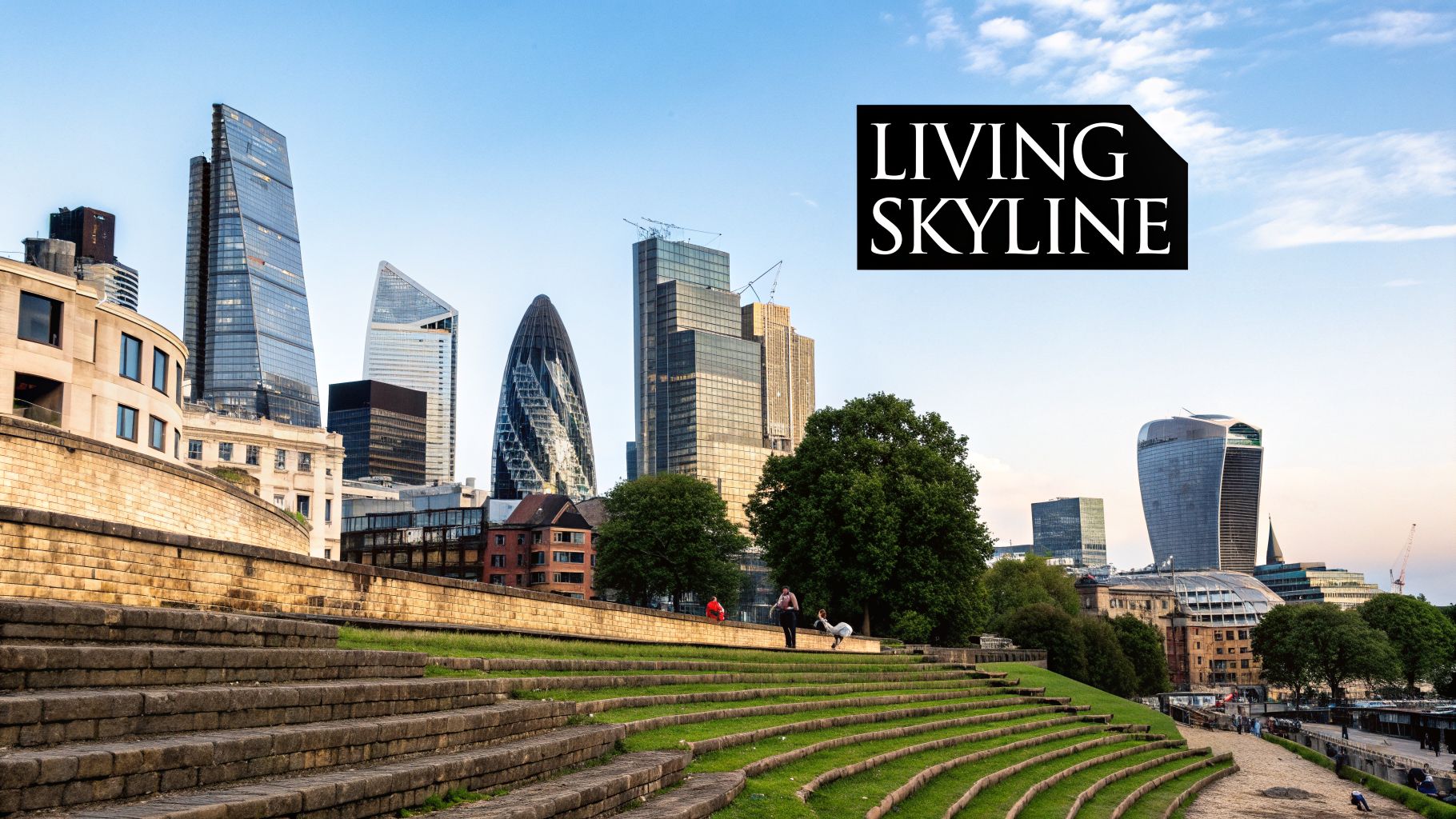
Contemporary architecture in London isn't one single, rigid style you can pin down. Instead, it’s a dynamic response to the city’s incredibly rich, layered history and its relentless push forward. Think of it like a master artist adding a vibrant new layer to a classic painting—the new work doesn’t erase the original, it enhances it, making you appreciate both in a new light.
Because of this, what we consider 'contemporary' is always shifting. It's architecture of the moment, reflecting the latest ideas, materials, and the changing needs of society. In a city as diverse and dense as London, this creates a fascinating architectural tapestry where historic preservation and daring innovation have to find a way to exist side-by-side.
A Dialogue Between Old and New
One of the most defining features of London's contemporary scene is this constant conversation between historic structures and new interventions. Architects rarely get a blank canvas here. More often, they are working within the tight constraints of a Conservation Area or carefully adapting a listed building, and this challenge is a catalyst for incredible creativity.
You see it everywhere. A striking glass extension might be fused onto the back of a Victorian terrace in Wimbledon, or a clean, minimalist interior can be slipped inside the grand shell of a Georgian townhouse in Richmond. The aim isn't to mimic the past. It’s to create a respectful, compelling contrast that brings out the beauty of both the old and the new.
This is often achieved through a few key principles:
Material Honesty: Using materials that are clearly from our time—like steel, vast panes of glass, and sustainable composites—right alongside traditional brick and stone.
Contextual Sensitivity: Designing new buildings that respond to the scale, massing, and rhythm of the surrounding streetscape, rather than shouting over it.
Functional Reimagination: Taking historic layouts, which were designed for a different era, and opening them up for modern family life, with better flow and a strong connection to the outdoors.
At its core, contemporary design in London celebrates this juxtaposition. It understands that the city’s character is built on centuries of architectural change and seeks to add the next thoughtful chapter to that ongoing story.
This dialogue is visible right across the city's skyline. You have iconic projects like the Barbican, a Grade II-listed Brutalist masterpiece completed in 1982, sitting in stark contrast to newer giants like the 2014 'Walkie Talkie' at 20 Fenchurch Street, with its famous Sky Garden.
This dynamic between old and new fuels a huge demand for specialist skills, especially in high-end residential projects where homeowners want sensitive conservation, bespoke interior joinery, and beautifully integrated sustainable extensions. You can explore further examples of top-tier architectural design across London at KK Studio. Ultimately, this approach ensures our homes are not just buildings, but thoughtful contributions to London’s lasting architectural legacy.
Key Trends Shaping London's Modern Homes
Step inside one of London’s most forward-thinking homes, and you’ll find it’s designed around far more than just looks. The way we design a luxury home today is shaped by a deep understanding of how we want to live, work, and unwind. These aren't just fleeting fashions; they're fundamental shifts toward creating living environments that are healthier, more intuitive, and incredibly adaptable.

It’s an evolution, really—a move towards creating homes that actively improve our well-being and respond seamlessly to the rhythms of our day. Let’s explore the key movements defining the next generation of residential design in the capital.
A Return to Nature with Biophilic Design
One of the most powerful ideas shaping contemporary architecture is biophilic design. This is a philosophy that’s all about reconnecting our indoor spaces with the natural world. It goes much deeper than just adding a few potted plants; it's a deliberate architectural approach that uses natural light, organic materials, and views of greenery to create a calming, restorative atmosphere.
Imagine a kitchen extension where a wall of floor-to-ceiling glass perfectly frames the garden, or a small internal courtyard that pulls light and fresh air right into the core of the home. These aren't just aesthetic flourishes. They're proven design strategies that help reduce stress and improve our focus. This approach typically involves:
Natural Materials: A clear preference for wood, stone, and other natural fibres that create tactile, visually warm interiors.
Maximised Daylight: Clever use of large windows, skylights, and light wells to ensure every space feels bright and airy.
Visual Connection to Nature: Thoughtful layouts that make sure key rooms have direct sightlines to gardens, trees, or water features.
The Rise of the Multifunctional Home
The modern London home has to be a bit of a chameleon. With the rise of flexible working, there's a huge demand for spaces that can shift effortlessly from a productive home office to a relaxing family hub or an elegant area for entertaining.
A contemporary home is no longer a rigid collection of single-purpose rooms. It is a fluid, adaptable environment designed around the dynamic patterns of modern life, offering both sanctuary and functionality.
This is where clever spatial planning and bespoke joinery come into their own. Think of concealed pocket doors that can screen off a workspace when the day is done, or custom-built media units that hide all the tech until it’s needed. This kind of flexibility ensures every square metre is working hard for you—a critical factor in a dense city like London.
Smart Integration for Personalised Living
Smart home technology is no longer a gimmick. In truly contemporary design, it's seamlessly woven into the fabric of the home to create a personalised and efficient living experience. This isn’t about collecting gadgets; it’s about creating a home that quietly anticipates your needs.
Examples include automated lighting that adjusts to the time of day, creating the right mood from morning to night, or climate control systems that learn your preferences to optimise energy use. When these systems are planned from the very first design phase, they become an invisible and intuitive part of the architecture itself. It's part of a wider shift where multifunctionality, well-being, and smart connectivity are now top priorities for clients. You can reading more on future design drivers at NFA to see how these trends are expected to evolve.
Innovative Materials and Sustainable Practices
In modern residential architecture, beautiful design is only half the story. The real mark of a contemporary London home is how it performs—for you and for the planet. It’s no longer enough for a house to simply look good; it must also be intelligent, efficient, and built with a clear conscience.
This means we, as architects, have become incredibly selective about the materials we use. Think of it like a chef sourcing ingredients for a Michelin-star meal; the quality of each component fundamentally shapes the final result. This careful approach ensures a home is not just comfortable and striking but also responsible and ready for the future.
Advancements in Building Materials
The palette of materials available to us has grown immensely, driven by a shared desire for better performance and a lighter environmental footprint. Architects are now looking far beyond the conventional, choosing materials that tell a story and offer tangible benefits.
Cross-Laminated Timber (CLT): This is a game-changer. An engineered wood product, CLT is incredibly strong, speeds up construction, and, most importantly, captures carbon. It effectively acts as a carbon sink, locking away CO2 for the life of the building and making it a powerful tool for creating low-impact homes.
Reclaimed and Recycled Materials: There's a certain soul that comes with using reclaimed bricks or locally sourced stone. It adds instant character and a sense of history to a new build or renovation. At the same time, it dramatically cuts down the embodied carbon that comes from manufacturing and transporting new materials.
These choices are not just about sustainability; they directly contribute to a building’s long-term performance and character.
Designing with Nature: Passive Principles
Beyond the materials themselves, the most intelligent sustainable design works with the natural environment, not against it. This is the simple but profound idea behind passive design—an approach that uses a building’s orientation, layout, and fabric to heat, cool, and light the space naturally.
Passive design is about making fundamental architectural choices—like the placement of a window or the depth of an eave—that dramatically lower a home's energy consumption over its lifetime, improving comfort while reducing running costs.
It’s about simple, effective strategies. We orient large windows to capture the low winter sun for warmth, while using architectural shading to block the high summer sun and prevent overheating. We plan for cross-ventilation to draw cool air through the home naturally. And we specify very high levels of insulation and airtightness to keep the internal temperature stable and comfortable all year round.
For homeowners, getting to grips with these basics is key. If you want to dive deeper, you can explore our dedicated article to learn more about what sustainable architecture means for your UK home.
Other integrated systems can take a home’s green credentials even further. Rainwater harvesting can collect water for irrigating the garden, while green roofs add another layer of insulation, absorb rainfall, and create a small habitat for wildlife—a welcome patch of nature in a dense urban setting. These features prove that high-end design and sustainability aren’t just compatible; they are perfect partners in creating a truly modern luxury home.
Spotlight On Contemporary Design in South West London
While contemporary architecture is making its mark across London, South West London presents a unique and fascinating stage. In well-established, affluent boroughs like Wimbledon, Richmond, and Wandsworth, the challenge isn’t just about building something new. It's about carefully weaving modern design into a much-loved and often historic community fabric.
Architects working here have become masters of sensitive integration. They are delivering bold new builds and inventive extensions that manage to feel both fresh and respectful, enhancing the character of these sought-after neighbourhoods rather than shouting over it. It’s a thoughtful, nuanced approach to contemporary design.
The Art of Integration in Historic Areas
In areas dense with beautiful Victorian and Edwardian homes, the goal is to create a graceful conversation between old and new. This often involves designing extensions that are clearly modern but don’t try to dominate the original house. A classic example is the glass-box extension; it creates a light-filled, contemporary living space without mimicking the period brickwork it adjoins, establishing a clear and honest architectural dialogue.
This careful approach is also vital for new-build projects on infill sites. Instead of imposing a generic modern box, the most successful designs respond to the rhythm, scale, and materials of the existing streetscape. The new addition feels like a natural, considered part of the area’s ongoing story.
For homeowners in South West London, the variety in local character from one borough to another has a direct impact on contemporary design approaches. The table below offers a snapshot of how these differences play out on the ground.
Contemporary Architectural Styles In Key South West London Boroughs
Borough | Dominant Contemporary Style | Common Project Types | Key Consideration |
|---|---|---|---|
Richmond upon Thames | Conservation-Led Modernism: Elegant, often minimalist extensions that use natural materials to complement historic brickwork and surrounding greenery. | Rear extensions, loft conversions, and sensitive new builds that respect strict Conservation Area guidelines. | Balancing modern living requirements with the borough's deeply ingrained historic character and planning policies. |
Wandsworth | Bold & Expansive: Larger-scale contemporary interventions, including significant extensions, full renovations, and ambitious basement digs. | Large rear and side-return extensions, multi-level basement conversions, and contemporary new-build family homes. | Maximising space and light on constrained urban plots, often requiring innovative structural solutions. |
Merton (Wimbledon) | Suburban Sophistication: High-end, bespoke new builds and extensions on larger plots, often featuring clean lines, large glazing, and luxury finishes. | Demolition and replacement with large contemporary homes, substantial garden rooms, and deep renovations of period properties. | Integrating grand contemporary designs with the leafy, suburban feel of areas like Wimbledon Village. |
As you can see, a 'one-size-fits-all' approach to contemporary design simply doesn't work. The most successful projects are those that are deeply responsive to their specific local context.
Going Underground: The Rise of Luxury Basements
A defining feature of modern London living, especially where extending outwards or upwards is tricky, is the inventive use of subterranean space. Basement extensions have evolved from simple cellars into luxurious, light-filled living areas that can effectively double a property's usable footprint.
These are a world away from the dark, damp basements of the past. Through clever architectural solutions like light wells, sunken courtyards, and generous ceiling heights, architects are creating incredible spaces for a luxury lifestyle.
Common features often include:
Private Wellness Suites: Home gyms, yoga studios, saunas, and even swimming pools.
Entertainment Hubs: State-of-the-art home cinemas, bars, and dedicated games rooms.
Connoisseur's Collections: Climate-controlled wine cellars and beautifully designed tasting rooms.
This trend of digging down is a creative response to the puzzle of space in South West London. It also reflects a wider push for density and new living solutions. The London Tall Buildings Survey, for instance, has noted sustained building activity in boroughs like Wandsworth, showing a continuous drive to maximise a home's potential within its existing plot. As London's architectural market continues to adapt, expertly designed extensions remain a critical part of the landscape.
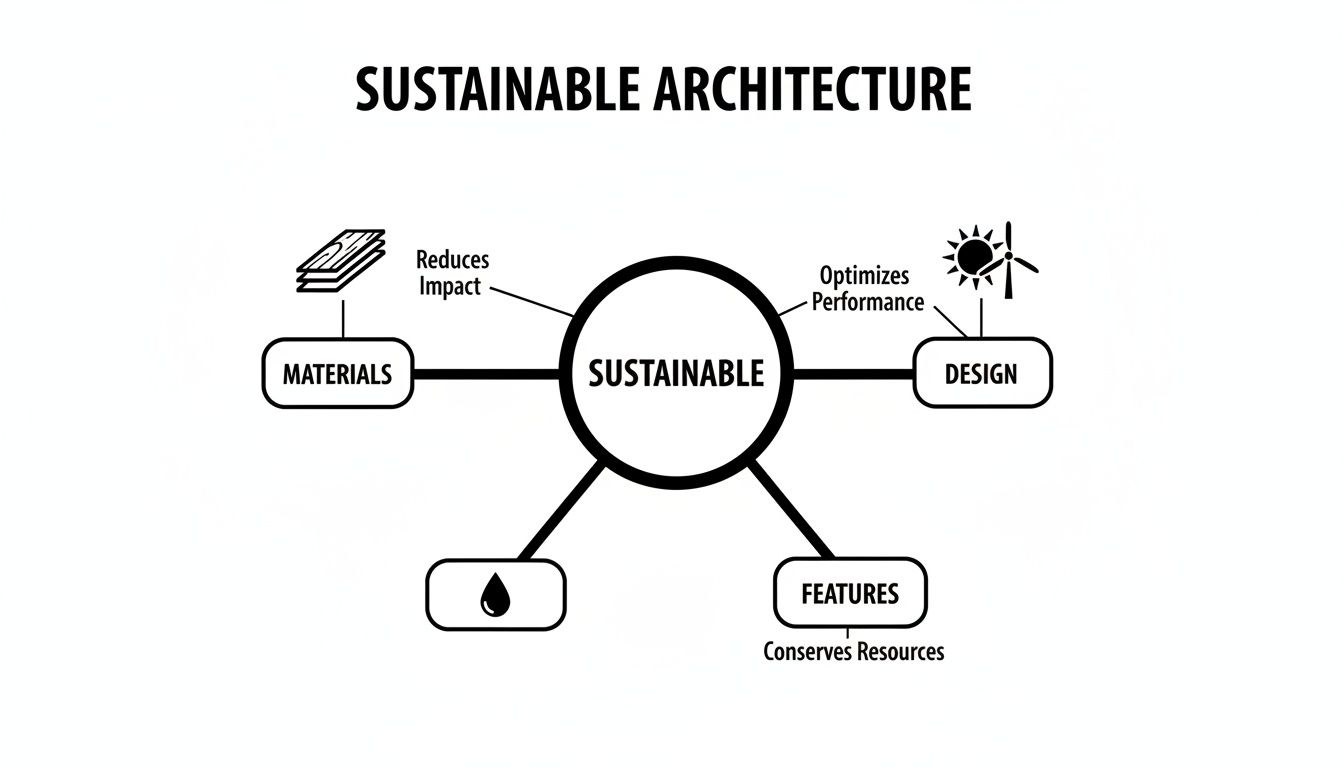
As this diagram shows, sustainability is no longer an add-on but a core principle. Thoughtful material choices, passive design strategies, and efficient home systems must all work together to create homes that are genuinely better for both their owners and the planet.
Extending Life into the Garden
Finally, great contemporary design doesn’t just stop at the back door. Landscape architecture is now seen as an essential part of any high-end residential project, with a focus on blurring the lines between inside and out. The goal is to create a holistic living experience where the garden becomes a true extension of the home.
Elegant garden rooms can provide flexible spaces for work or relaxation, while fully equipped outdoor kitchens and sophisticated lighting schemes create the perfect setting for year-round entertaining. These principles are fundamental to creating homes that feel complete, a topic we explore further in our guide to sustainable building designs for luxury homes in SW London.
Balancing Innovation with Conservation and Heritage
Introducing a truly 21st-century design into a London property with a centuries-old soul is perhaps the greatest challenge in our field—and also the most rewarding. It’s a delicate art, balancing forward-thinking innovation with a deep respect for heritage. How do you create a home that is perfect for modern life without erasing the very character that makes it special?
Think of it like restoring a vintage watch. The goal isn't to turn it into a smartwatch. It's about honouring the original spirit and beautiful craftsmanship while carefully upgrading its inner workings, making it both a joy to wear and fit for the future.
Honouring Character Through Thoughtful Contrast
One of the most powerful techniques we use as architects is to create a clear, honest distinction between old and new. Instead of attempting a pale imitation of period detailing, a modern intervention can act as a beautiful counterpoint that actually throws the quality of the original building into sharper relief.
This principle guides some of the most successful contemporary architecture in London. The aim is to add a new layer to the building's story, not to rewrite its past. It’s a design conversation across time.
A sensitive contemporary transformation doesn't just respect a building’s historic significance—it can actively enhance it. The contrast between old and new allows both elements to be appreciated more fully, creating a home rich in character and perfectly suited to modern living.
This approach demands real skill and a deep understanding of historic materials and construction methods. When done right, the result is a home that feels authentic, layered, and utterly unique.
Practical Techniques for Blending Old and New
So, how does this work in practice? Architects have a number of proven strategies for gracefully merging contemporary design with historic fabric.
A few common methods include:
Minimalist Glass Links: Creating lightweight, transparent connections between an original building and a new extension. This creates a ‘light touch’ join that clearly separates the two structures, allowing both to retain their individual integrity.
Complementary Extensions: Designing a new addition that complements, rather than mimics, the old. This might involve using a contrasting material like zinc or charred timber, which provides a modern aesthetic while tonally echoing the original brick or stone.
Framing Views: Using new architectural elements, like a large picture window or a clean-lined opening, to deliberately frame a view of a historic feature. This turns the original building into a piece of art when viewed from the new space.
Navigating the complexities of planning regulations, especially within a Conservation Area or for a listed building, is crucial. These rules are in place to protect a building's unique character, but they don't prevent thoughtful change. If you're considering such a project, our detailed guide provides valuable insights into navigating planning permission in a conservation area. It shows that with the right expertise, it is entirely possible to create an outstanding contemporary home that heritage officers will support.
Your Journey to a Bespoke Contemporary Home
Building a bespoke home from the ground up can feel like a monumental task, but it’s also one of the most rewarding creative endeavours you can undertake. Think of this as your roadmap, guiding you from the first spark of inspiration to the day you walk through your front door.
By breaking the journey down into clear, manageable stages, you can move forward with confidence, knowing exactly how your ideas will be transformed into an exceptional piece of contemporary architecture.
It’s a creative partnership. Your role is to bring the vision—your aspirations for how you want to live and your personal style. Our role as your architect is to interpret that vision, navigate the technical complexities, and guide the entire process with professional expertise, ensuring the final home is a perfect reflection of you.
Stage 1: Defining Your Vision and Budget
Every great project starts with a great brief. Before a single line is drawn, the most important step is to clarify what you want to achieve. This is a discovery phase, a time to think deeply about your lifestyle, your daily routines, and your long-term ambitions for your home.
We encourage clients to consider practical questions alongside their aesthetic preferences:
How do you live? Are you a family that thrives in open, communal spaces, or do you need quiet zones for work and relaxation?
What are your priorities? Is a state-of-the-art kitchen the heart of your home, or is a seamless connection to a tranquil garden more important?
What does your future look like? How might your needs change over the next five to ten years?
Establishing a realistic budget is just as critical at this stage. An experienced architect can offer early guidance on construction costs, professional fees, and other expenses based on similar projects in South West London. This ensures your aspirations and financial realities are aligned from day one.
Stage 2: Design Development and Planning
Once the brief is clear, the truly creative work can begin. This is where we translate your ideas into architectural drawings, starting with initial concept sketches and evolving into detailed plans and 3D models. It’s an iterative, collaborative process where your feedback is essential to refining the design until it’s just right.
An architect acts as both your creative partner and your project guide. Their expertise lies in translating your abstract vision into a tangible, buildable reality, ensuring every detail is considered and every challenge is met with a thoughtful solution.
A significant milestone during this phase is securing planning permission. This involves submitting a detailed application to the local council. For projects involving contemporary architecture in London, particularly within Conservation Areas or on listed buildings, an architect's experience is invaluable. We know how to prepare a robust application that gives you the best chance of success. This part of the journey requires patience, as decisions can take several months.
Stage 3: Selecting Your Build Team and Construction
With planning approval secured and the technical drawings finalised, the focus shifts to choosing the right builder for your project. Your architect will typically manage a tender process, inviting a shortlist of trusted contractors to provide a quote. This ensures you receive competitive, comparable pricing for the highest quality of craftsmanship.
Once a builder is appointed, the construction phase begins. Your architect's role evolves into one of project management and quality control. We make regular site visits, answer queries from the build team, and ensure the project is being built exactly as specified, on time, and within budget.
This continuous oversight is your assurance that the final home will be delivered to the exceptional standard you expect, realising your vision with precision and care.
FAQs About Contemporary Architecture in London
Thinking about a bespoke architectural project naturally brings up a lot of questions. To give you some clarity, we’ve put together answers to the queries we hear most often from homeowners considering a contemporary home in London. Here is some straightforward advice on the key things to think about.
How Much Does a Bespoke Contemporary Home Cost?
The cost of a new build or a major refurbishment can vary hugely, depending on the project’s scale, the complexity of the design, your choice of materials, and the exact London location. While it’s impossible to give a precise figure without a detailed brief, a general guide is helpful for early planning.
For high-end residential projects in desirable areas like Wimbledon or Richmond, you can expect a construction budget starting from around £3,500 per square metre, plus professional fees and VAT. We always provide a detailed fee proposal after our initial consultation, ensuring you have complete transparency from the very beginning.
Can I Build a Contemporary Extension on My Period Property?
Absolutely. In fact, it’s a brilliant way to blend the unique character of a historic building with the comforts and flow of modern living. The real key to getting it right is a sensitive design that respects and complements the original structure – a core principle of good contemporary architecture in London.
A successful contemporary extension on a historic property doesn't mimic the past. Instead, it creates a thoughtful and clear dialogue between old and new, allowing both architectural styles to be appreciated for their unique qualities.
This might mean creating a 'light touch' connection with extensive glazing, or designing a modern structure that contrasts with but also complements the original brickwork. As architects with deep experience in conservation, we specialise in navigating complex planning policies, even for listed buildings, to achieve a result that is both beautiful and fully compliant.
What Is the Difference Between Modern and Contemporary Architecture?
Although people often use these terms as if they mean the same thing, they actually refer to two distinct architectural concepts. 'Modern' architecture relates to a specific historic design movement (roughly 1900-1960) which had very defined principles, like clean, unadorned lines and a rejection of ornament.
'Contemporary' architecture, on the other hand, is simply the architecture of today. It’s far more fluid and eclectic. While it often borrows ideas from modernism, it also embraces a much wider set of principles, such as:
Sustainability: A strong focus on energy efficiency, low-impact materials, and long-term performance.
Organic Forms: Designs that are often inspired by the fluid shapes and patterns found in nature.
Advanced Technology: The seamless integration of smart home systems and new construction techniques.
Our work is contemporary because it reflects the design thinking, technologies, and possibilities of the present moment.
How Long Does a Project Take to Complete?
From the very first design sketch to handing over the keys, a typical timeline for a bespoke new-build home is around 18-24 months, and sometimes longer for particularly complex sites. This comprehensive process is in place to ensure every single detail is managed to the highest standard.
This schedule includes several months for developing the design, securing planning permission (which can take 3-6 months, or more), and the construction phase itself. While major refurbishments and extensions can be faster, a thorough and structured process is vital for guaranteeing quality and keeping you fully informed at every stage.
Are you ready to create a home that truly reflects your vision? At Harper Latter Architects, we combine creativity and expertise to design exceptional contemporary homes in South West London and beyond. Start your journey with us today.