
10 Luxury Outdoor Living Space Ideas For South West London Homes

For discerning homeowners in South West London, the garden is no longer merely a backdrop but a vital, living extension of the home itself. The modern desire is for a seamless transition between interior comfort and exterior freedom, a space that serves as a private sanctuary, an elegant entertaining venue, and a testament to sophisticated design. Achieving this requires more than just furniture and planting; it demands architectural vision and meticulous execution.
This curated guide explores ten ambitious and luxurious outdoor living space ideas, specifically tailored for the characterful properties found in areas like Wimbledon, Richmond, and Chiswick. We move beyond generic concepts to provide a detailed architectural perspective on transforming your exterior. This article will delve into practical, comprehensive solutions that merge innovative technology with timeless materials, addressing the unique challenges of listed buildings and conservation areas common to the region.
From fully climate-controlled garden rooms and bespoke outdoor kitchens to sustainable wellness zones and dramatic sunken seating areas, we offer actionable insights for creating truly exceptional, year-round outdoor environments. You will find detailed discussions on material choices, planting schemes, integrated lighting, and indicative budgets. Discover how a collaboration with specialist architects can unlock your property’s full potential, creating a sophisticated outdoor realm that is both functional and breathtakingly beautiful.
1. Garden & Outdoor Rooms with Climate Control
One of the most sophisticated outdoor living space ideas is the creation of a garden room with full climate control. This moves beyond a simple summerhouse, offering a genuine, year-round extension of your home that blurs the lines between interior comfort and garden scenery. These structures, whether freestanding pavilions or seamlessly integrated extensions, use advanced architectural elements to provide a versatile space for living, entertaining, or quiet retreat, regardless of the British weather.
The core concept involves combining high-performance structural glazing with climate regulation systems. Imagine a contemporary glass pavilion in a Wimbledon garden, featuring floor-to-ceiling triple-glazed walls that provide panoramic views while maintaining exceptional thermal efficiency. Integrated underfloor heating, discreet air conditioning, and a mechanical ventilation system ensure the space is warm in winter and cool in summer, preventing condensation and maintaining air quality.
Key Implementation Details:
To achieve a truly functional and luxurious garden room, meticulous planning is essential. Consider the following key elements:
Glazing & Structure: Specify triple-glazed, low-emissivity (low-e) glass to minimise heat loss. The structural frame, whether minimalist steel or warm timber, must be engineered to support large glass panels and retractable elements.
Climate Control Integration: Connect the room to the main house’s mechanical, electrical, and plumbing (MEP) systems where feasible for efficiency. Smart thermostats with zoning capabilities allow for precise temperature control.
Adaptable Design: Incorporate retractable glass walls or a sliding roof to open the space up completely on warm days. A well-designed shading strategy, using automated louvres or awnings, is crucial for managing solar gain.
Foundations & Services: The design must include robust drainage and waterproofing integrated into the foundations to protect against the elements and ensure long-term structural integrity.
This approach is perfect for homeowners who desire a dedicated space for activities like yoga, art, or hosting guests, fully immersed in the garden but without compromising on comfort. It is a significant architectural undertaking, often requiring planning permission. You can explore the specifics in this guide to UK garden room planning permission.
2. Outdoor Kitchens & Entertaining Zones
Purpose-designed outdoor kitchens and entertaining zones transform a garden into a high-functioning hub for alfresco dining and socialising. This concept goes far beyond a standalone barbecue, creating a fully equipped culinary space with integrated appliances, sophisticated storage, and permanent weather protection. It establishes a dedicated area that becomes the heart of garden entertainment, perfect for hosting everything from family meals to larger gatherings.
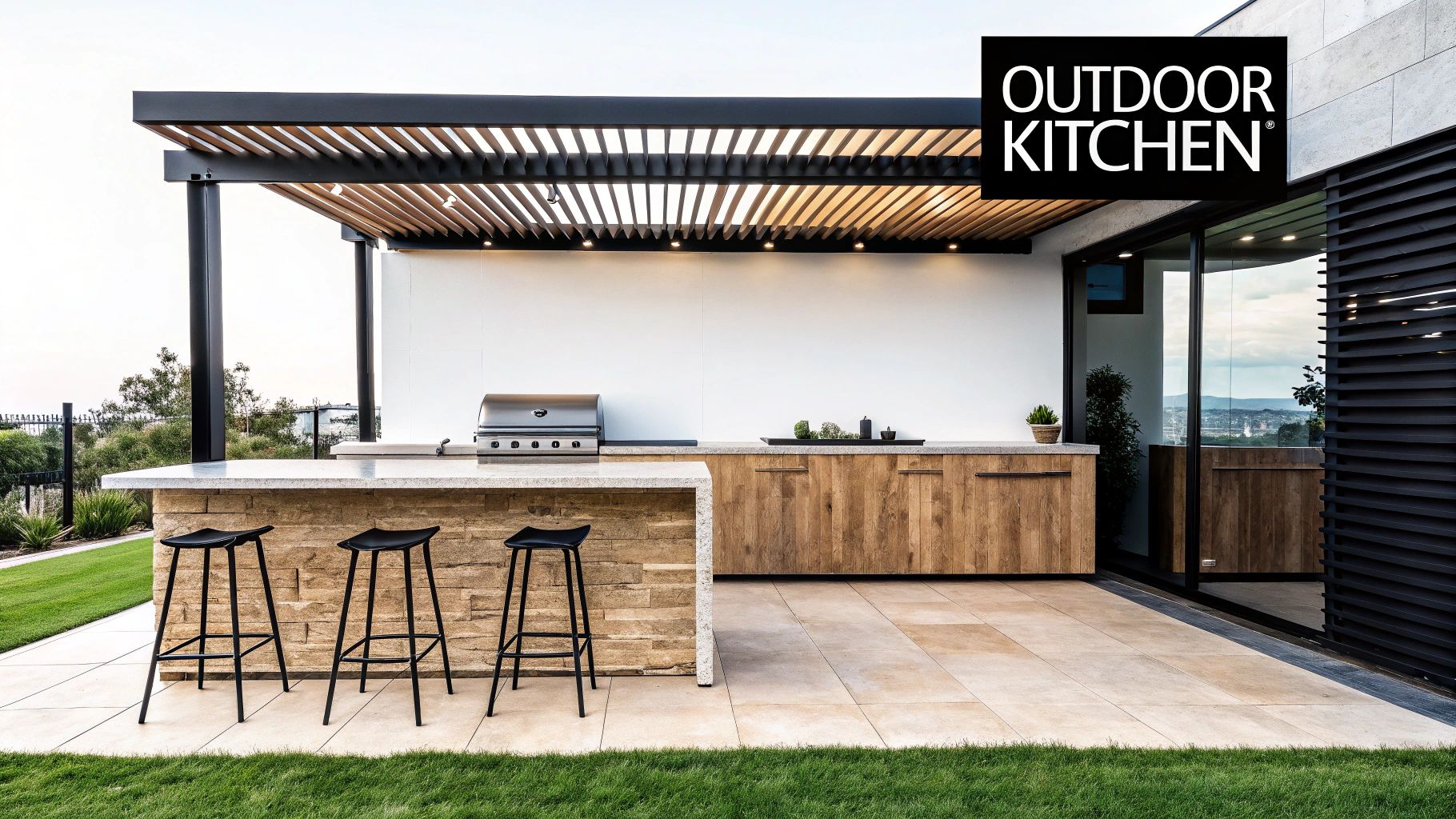
The design involves building a permanent structure featuring amenities like built-in gas grills, pizza ovens, beverage coolers, and sinks. Imagine a sleek, contemporary kitchen in a Richmond riverside property, finished in durable Kebony wood and stone worktops, complete with an ILVE gas hob and under-counter refrigeration. The layout is strategically planned to face the main seating area, allowing the host to interact with guests while cooking against a backdrop of beautiful garden views.
Key Implementation Details:
Creating a seamless and durable outdoor kitchen requires careful consideration of both aesthetics and practicalities. Pay close attention to these elements:
Materials & Durability: Select non-porous, weather-resistant materials like porcelain, natural stone, or stainless steel for worktops and splashbacks. Cabinetry made from marine-grade polymer or specially treated woods like Kebony will withstand moisture and temperature fluctuations.
Layout & Airflow: Position the kitchen so the prevailing winds carry smoke away from seating areas and neighbouring properties. Ensure the chef faces the entertaining zone to encourage social interaction.
Utilities & Services: The initial design phase must include a robust plan for running gas, water, and electrical services safely to the area. This is fundamental for integrated lighting, refrigeration, and plumbed-in sinks.
Weather Protection: Integrate a permanent structure such as a pergola with a retractable awning or a louvred roof to provide essential protection from both sun and rain, extending the usability of the space.
This outdoor living space idea is ideal for homeowners who love to entertain and want a functional, stylish, and fully integrated extension of their indoor kitchen. It adds significant value and utility, turning any garden into a premier destination for cooking and socialising. For inspiration on high-end, bespoke designs, explore the work of specialists like Tom Massey Landscape Design.
3. Terraced & Sunken Seating Areas
Creating multi-level garden spaces is a superb architectural outdoor living space idea, particularly effective in the varied topographies of South West London. By introducing terraced levels or sunken seating areas, a flat or sloped garden is transformed into a dynamic landscape with distinct zones for entertaining, dining, and relaxation. This technique uses subtle grade changes, engineered retaining walls, and tiered planting to add depth, improve drainage, and create intimate, sheltered micro-climates.
The core concept involves sculpting the land to establish different functional areas. Imagine a contemporary sunken lounge in a Richmond riverside garden, defined by crisp rendered walls and built-in hardwood seating, creating a sheltered 'room' protected from the wind. Alternatively, a terraced design in a Wimbledon conservation area can manage a steep slope gracefully, with stone-clad retaining walls creating level platforms for a dining patio on one tier and a secluded reading nook on another, all linked by elegantly lit steps.
Key Implementation Details:
To successfully execute a terraced or sunken design, detailed groundwork and engineering are paramount. Consider these critical elements:
Groundworks & Engineering: A professional topographical survey and drainage assessment are non-negotiable first steps. Retaining walls require specialist structural engineering and robust waterproofing to manage hydrostatic pressure and prevent long-term issues.
Drainage Systems: Integrate highly effective drainage behind all retaining structures. French drains or comprehensive land drainage systems are essential to channel away excess water and protect both the hard landscaping and planting.
Access & Flow: Design seamless and safe transitions between levels. This includes thoughtfully positioned steps with integrated, low-level ambient lighting for safety and wide, accessible pathways that guide movement through the garden.
Planting & Materials: Use the vertical surfaces created by retaining walls for dramatic planting, such as climbing hydrangeas or espaliered fruit trees. Select materials for walls and paving that complement the home’s architecture, like reclaimed London stock brick or sleek porcelain tiles.
This approach is ideal for homeowners looking to add architectural interest and functionality to their gardens, breaking up large expanses or making challenging slopes usable. It maximises views, improves garden utility, and creates a sophisticated, layered outdoor environment. You can see how these principles are applied by celebrated designers like Arabella Lennox-Boyd.
4. Sustainable Outdoor Living with Native Planting
A powerful approach among modern outdoor living space ideas is creating an ecologically-designed garden that prioritises native species and sustainable materials. This moves away from manicured, high-maintenance lawns, instead favouring a biodiverse and resilient landscape that supports local wildlife. These spaces, inspired by pioneers like Piet Oudolf and RHS Chelsea Flower Show sustainability initiatives, offer a natural aesthetic that reduces environmental impact while creating beautiful, low-maintenance areas for relaxation and entertaining.
The core principle involves designing a garden that works in harmony with the local South West London ecosystem. Imagine a garden in Richmond that replaces a traditional lawn with a wildflower meadow, attracting pollinators and requiring minimal watering. This is complemented by permeable gravel pathways and seating areas constructed from reclaimed timber, all irrigated by a discreet rainwater harvesting system. The result is a vibrant, living space that evolves through the seasons and connects the home to its natural surroundings.
Key Implementation Details:
To create a thriving and genuinely sustainable outdoor space, a thoughtful, site-specific strategy is crucial. Consider these key elements:
Site Analysis & Native Planting: Conduct a thorough soil and drainage analysis before planting. Select native species of trees, shrubs, and perennials that are perfectly adapted to the local microclimate, ensuring they thrive with minimal intervention.
Water Conservation: Implement a rainwater harvesting system, such as water butts connected to downpipes or a larger underground cistern, to provide irrigation. Use permeable paving materials like gravel or porous concrete to allow rainwater to replenish the groundwater table naturally.
Habitat Creation: Go beyond planting by incorporating habitat features. Log piles, insect hotels, and bird feeders attract a diverse range of wildlife, creating a balanced and healthy garden ecosystem.
Sustainable Materials: Specify reclaimed or locally sourced materials for patios, paths, and structures. Use organic soil amendments and create your own compost to enrich the soil without relying on chemical fertilisers.
This approach is ideal for homeowners who wish to create a visually stunning garden that is also an asset to the local environment. It fosters a deep connection with nature and aligns with a broader commitment to sustainable living. You can explore how these principles extend to the home itself in this guide to sustainable architecture in the UK.
5. Outdoor Swimming Pools & Water Features
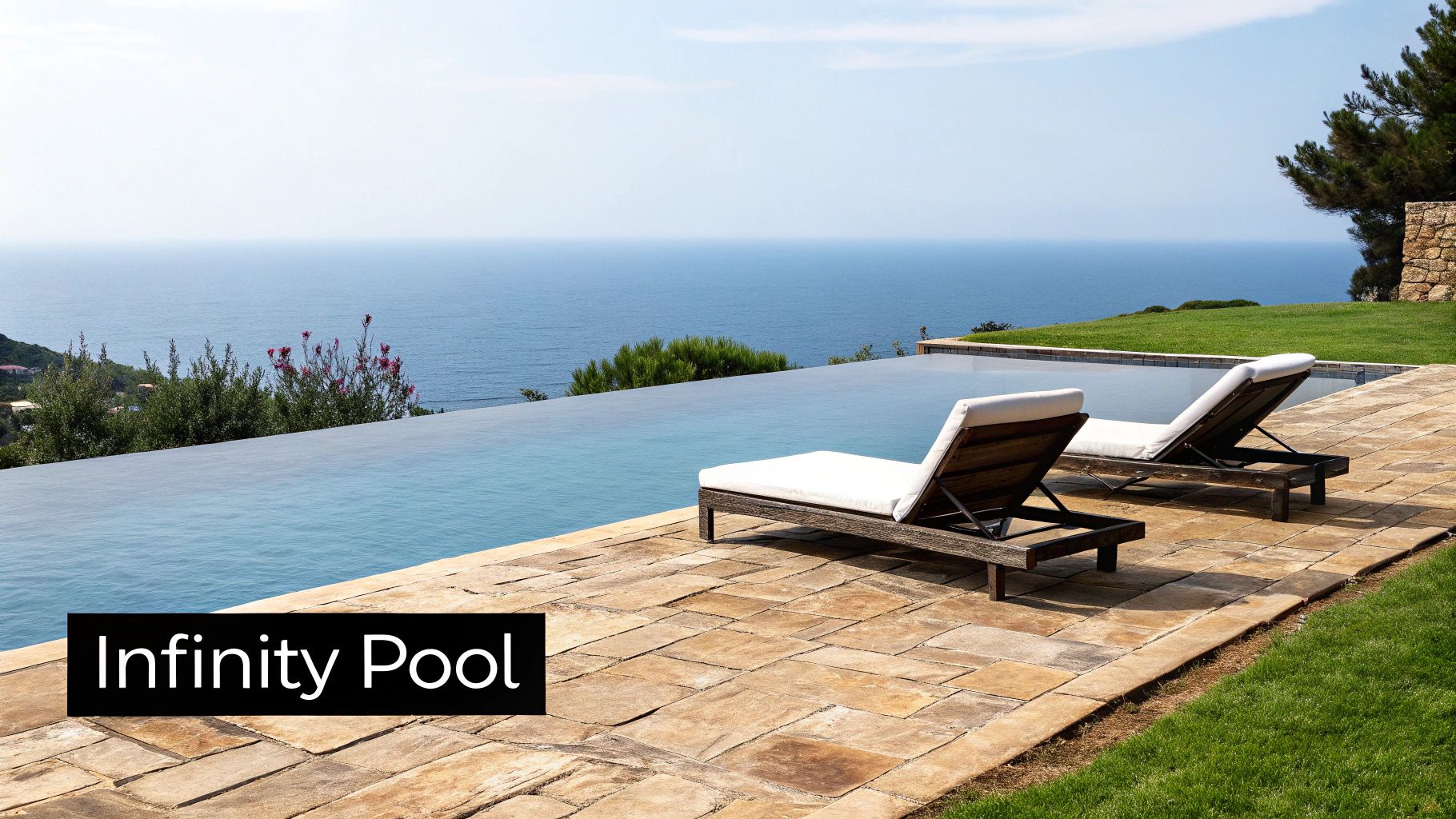
A bespoke swimming pool or water feature is one of the ultimate outdoor living space ideas, creating a stunning aesthetic and recreational focal point. This concept moves far beyond a standard pool, focusing on full integration into the landscape design. From sleek lap pools for exercise in Wimbledon gardens to natural swimming ponds on larger Surrey estates, these installations use advanced filtration, heating, and automation to deliver a luxurious, year-round asset.
The core principle is to design the water feature as an integral part of the garden's architecture, not just an addition. Imagine an infinity-edge pool that appears to merge seamlessly with the distant view, its water line acting as a sharp, modern horizon. Alternatively, a naturalistic swimming pond, popularised by designers like Andy Sturgeon, uses aquatic plants for biological filtration, creating a chemical-free swimming experience that supports local wildlife and blends beautifully into a softer, more organic landscape design.
Key Implementation Details:
Achieving a high-end pool or water feature that is both beautiful and functional requires careful technical and design consideration.
Site & Positioning: A full site survey, including soil testing and drainage assessment, is the critical first step. Position the pool to maximise southern sun exposure for natural heating and situate it away from mature trees to minimise debris.
Systems & Technology: Specify high-quality equipment for longevity and efficiency. This includes air source heat pumps or solar thermal systems for heating, advanced circulation pumps, and automated filtration and chemical dosing systems for low maintenance.
Integrated Landscaping: The design must soften the pool's hard edges. Use cohesive paving materials, multi-level planting, and carefully planned lighting to embed the pool within the garden. Privacy screening and elegant safety fencing are also essential design considerations.
Natural Alternatives: Consider a natural swimming pond that uses a regeneration zone of aquatic plants to filter water, eliminating the need for chemicals. This creates a unique, eco-friendly swimming experience.
This approach is ideal for homeowners who want to create a wellness-focused or entertainment-led outdoor space. It represents a significant investment and almost always requires planning permission. You can learn more by reading our guide to UK swimming pool planning permission.
6. Pergolas, Arbours & Shade Structures
Overhead architectural elements like pergolas and arbours are among the most versatile outdoor living space ideas, offering selective shade, weather protection, and vertical planting support. These structures create layered and sophisticated garden spaces, skilfully defining specific zones, controlling light, and adding a strong architectural presence that complements the home's design. They form a transitional link between the residence and the garden, crafting intimate, room-like areas without solid walls.
The core concept is to establish an overhead plane that provides a sense of enclosure and visual interest while remaining open to the elements. Imagine a contemporary timber pergola in a Wimbledon conservation garden, its clean lines casting dynamic shadows across a dining terrace. Alternatively, picture a classic wisteria-covered arbour in a traditional Richmond garden, creating a fragrant, shaded walkway. Modern designs often incorporate adjustable louvres, allowing for precise control over sunlight and ventilation, transforming the space from a sun-drenched lounge to a sheltered retreat with ease.
Key Implementation Details:
To create a structure that is both beautiful and enduring, careful consideration of materials and engineering is paramount. Key elements include:
Materials & Durability: Specify durable timbers such as oak, cedar, or Ipe for a natural aesthetic, or powder-coated steel and aluminium for a minimalist, contemporary look. Ensure all fixings are stainless steel to prevent corrosion.
Shade & Weather Control: For ultimate flexibility, design the structure with adjustable louvres. An angle of 30–45° is typically optimal for balancing shade and light. For a softer, more organic approach, select climbing plants like Wisteria, climbing roses, or Trachelospermum jasminoides suited to the microclimate.
Structural Integrity: The design must include proper foundation details and wind engineering calculations to ensure stability, especially for larger structures or those in exposed locations. This is a critical step that protects your investment and ensures safety.
Integrated Features: Elevate the structure by integrating discreet landscape lighting for evening ambience and a drip irrigation system for establishing and maintaining climbing plants. Consider sight lines carefully to enhance privacy and respect neighbouring properties.
This approach is perfect for defining outdoor dining areas, creating shaded walkways, or adding a vertical design element to the garden. It is an excellent way to add structure and year-round interest, as seen in many award-winning Chelsea Flower Show gardens by designers like Tom Massey.
7. Outdoor Lighting Design & Ambient Atmosphere
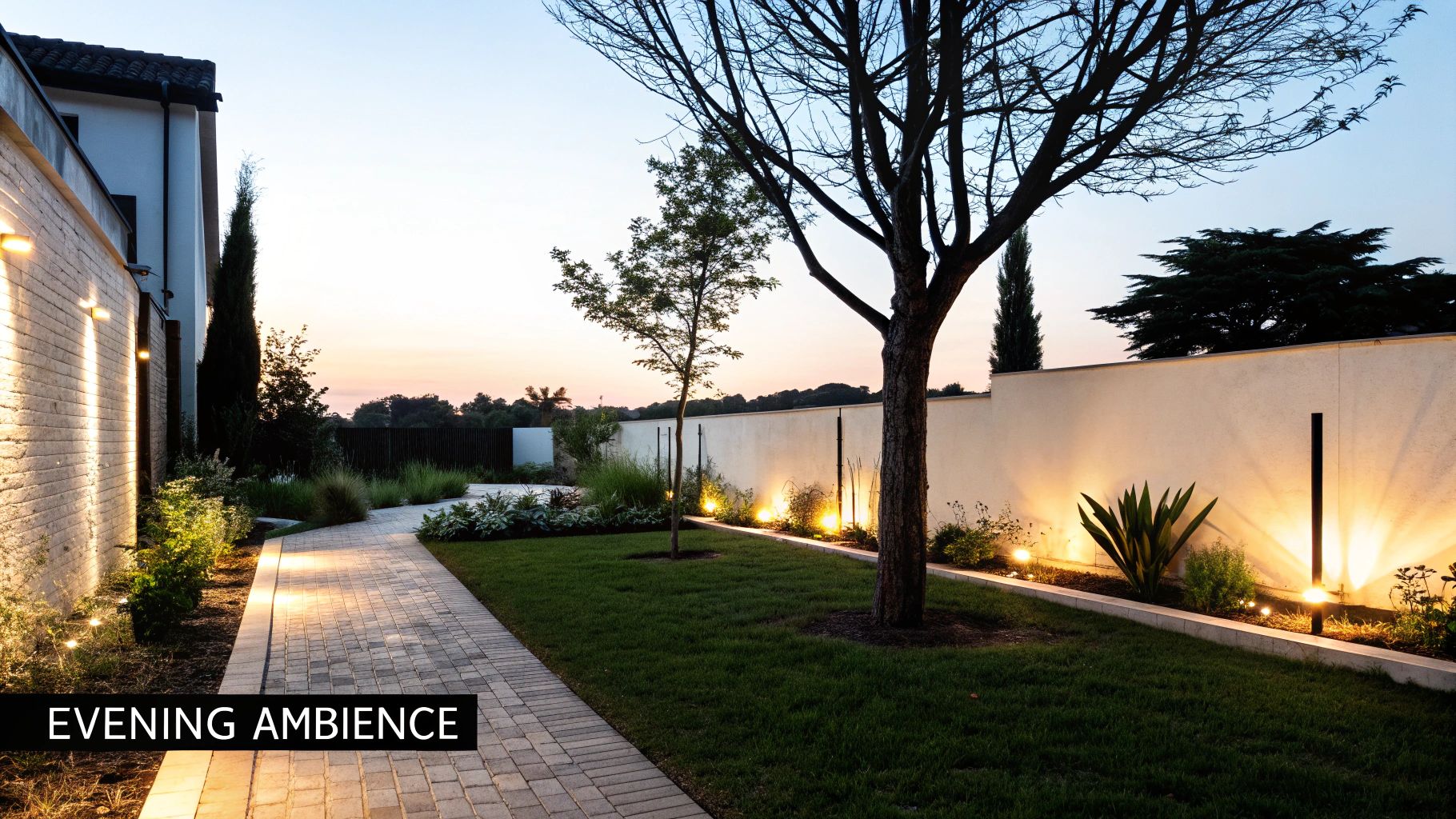
A sophisticated lighting scheme is one of the most transformative outdoor living space ideas, turning a garden into a usable and enchanting space long after sunset. This approach moves beyond simple security floodlights, employing a layered, architectural strategy to create mood, highlight features, and extend entertaining hours. A well-designed scheme uses energy-efficient technology and smart controls to sculpt the garden with light, creating a dynamic, programmable atmosphere that enhances the property’s architecture and landscape.
The core concept is to treat outdoor lighting as an integral part of the landscape design, not an afterthought. For a contemporary property in Wimbledon, this might involve subtle LED strips integrated into steps and retaining walls, combined with carefully aimed uplighters that accentuate the form of specimen trees. The goal is to create visual depth and a warm, welcoming ambience, using a combination of task, ambient, and accent lighting to guide movement, define spaces, and draw the eye to key focal points.
Key Implementation Details:
To achieve a professional and atmospheric lighting design, a strategic approach is essential. Consider the following key elements:
Layered Lighting Strategy: Employ a multi-layered approach. Use task lighting for paths and patios, ambient lighting for general illumination, and accent lighting to highlight trees, sculptures, or water features.
Colour Temperature & Controls: Specify a warm colour temperature (between 2700K–3000K) to create a soft, inviting atmosphere. Integrate smart controls and dimming systems to allow for adjustment of mood and intensity, programmable via a smartphone app.
Fixture Placement & Glare: Position fixtures carefully to avoid direct glare and light spill onto neighbouring properties, which is particularly important in densely populated areas like Richmond. Downlighting from pergolas or trees can create beautiful, dappled effects on patios below.
Professional Installation: Ensure all wiring is planned during the initial landscape construction phase for a seamless finish. A certified electrician must carry out the installation to guarantee safety, compliance with UK regulations, and long-term durability against the elements.
This approach is perfect for homeowners who wish to maximise the use of their garden for evening entertaining and appreciate the dramatic visual impact of a professionally lit landscape. It elevates the entire property, adding a layer of luxury and security while respecting the natural darkness of the night sky.
8. Fire Pits, Fireplaces & Outdoor Heating
Integrating a fire feature is one of the most effective outdoor living space ideas for creating a magnetic focal point and extending the use of a garden well into the cooler evenings. Beyond simple functionality, a well-designed fire pit or outdoor fireplace introduces a powerful sense of atmosphere, drawing people together for warmth and conversation. These elements transform a patio or terrace into an intimate, year-round entertaining space.
The concept ranges from traditional, rustic fire pits that encourage communal gathering to sleek, contemporary linear gas fireplaces built into retaining walls. Imagine a Wimbledon garden refurbishment where a minimalist, remote-controlled gas fire trough is set within a polished concrete seating area, providing instant, clean-burning warmth and a dramatic visual anchor. In a larger Surrey estate, a traditional stone-clad wood-burning fireplace can create a grand, pavilion-like setting for outdoor entertaining.
Key Implementation Details:
To ensure the fire feature is a safe, functional, and beautiful addition to your home, careful planning is paramount. Consider the following key elements:
Siting & Smoke Management: Position the feature to minimise smoke drift towards seating areas, the main house, and neighbouring properties. For wood-burning models, prevailing wind direction is a critical factor.
Material Durability: Specify materials that can withstand high temperatures and the British weather, such as corten steel, granite, or cast concrete. The interior firebox should be lined with fire-resistant brick.
Integrated Design: Seamlessly incorporate the fire feature into the garden’s overall design, linking it with seating, lighting, and shelter. A low retaining wall can double as both a safety barrier and informal seating.
Ventilation & Safety: For built-in fireplaces, ensure proper flue and ventilation design is professionally specified to guarantee safety and performance. Maintain a clear radius around any open flame, free from flammable materials and overhanging foliage.
This approach is ideal for homeowners who love to entertain and wish to maximise the time spent outdoors. It creates a cosy, inviting heart in the garden, perfect for social gatherings long after the sun has set.
9. Bespoke Garden Furniture & Built-In Seating
Elevating an outdoor living space beyond the ordinary involves moving away from mass-produced options towards custom, site-specific furniture and seating. This approach treats seating and furniture not as afterthoughts, but as integral architectural components of the landscape design. Custom-built solutions are designed and fabricated to integrate seamlessly with your garden's layout, materials, and overall aesthetic, optimising comfort, storage, and visual unity in a way off-the-shelf pieces cannot.
The core concept is to design seating that emerges organically from the garden’s structure. Imagine a sweeping curved timber bench built into a retaining wall in a sloped Wimbledon garden, creating a natural gathering spot. In a more contemporary Richmond entertaining area, this could manifest as a modular L-shaped sofa with integrated planters and hidden storage, clad in the same stone used for the patio paving. This creates a cohesive and highly functional outdoor living space.
Key Implementation Details:
To achieve a truly integrated and durable result, careful specification and craftsmanship are paramount. Consider these key elements:
Material Selection: Specify robust materials suited to the demanding UK weather. This includes hardwoods like Iroko or Teak, which are naturally resistant to decay, or powder-coated steel and architectural concrete for a modern aesthetic.
Ergonomic Design: Comfort is crucial. Collaborate with your designer to ensure backrest angles, seat depth, and height are ergonomically considered. Even small details like a subtle recline can make a significant difference to usability.
Integrated Functionality: Design seating and storage as a single entity. Lift-up bench seats can conceal cushions or garden tools, while built-in side tables or armrests can incorporate charging points or recessed lighting for ambience.
Finishing Touches: Specify high-performance, weatherproof fabrics from specialist suppliers for cushions and upholstery. Ensure the design incorporates effective drainage for both the structure and the soft furnishings to prevent water-logging and mould.
This method is ideal for homeowners who want to maximise every square metre of their garden, creating a unique and sophisticated outdoor environment. It requires close collaboration between landscape architects, specialist joiners, and craftsmen to execute successfully, resulting in a space that is both beautiful and perfectly tailored to your lifestyle.
10. Multi-Sensory Garden Design & Wellness Spaces
One of the more profound outdoor living space ideas is to create a multi-sensory garden, a space meticulously designed to engage all five senses. This approach moves beyond purely visual aesthetics, crafting an immersive environment that promotes wellbeing, mindfulness, and a deep connection to nature. By layering elements that appeal to sight, sound, smell, touch, and even taste, a garden can become a restorative sanctuary, perfect for quiet contemplation or gentle socialising.
The core concept is to orchestrate a landscape that offers a rich tapestry of experiences. Imagine a tranquil corner of a Richmond garden where the gentle sound of a basalt stone water feature masks urban noise, while the air is filled with the scent of lavender and climbing jasmine. Textural contrasts are provided by soft, mossy ground cover underfoot and the smooth, cool surface of a stone bench, creating a space that feels both grounding and stimulating. This thoughtful curation turns a simple garden into a therapeutic wellness space.
Key Implementation Details:
To design a truly effective multi-sensory garden, a layered and holistic approach is essential. Consider the following key elements:
Scent & Sound: Layer fragrant plants with different blooming seasons, such as daphne in winter, roses in summer, and witch hazel in autumn. Integrate subtle water features or wind chimes to provide soothing ambient sound.
Touch & Texture: Combine a variety of textures in both planting and hardscaping. Contrast the feathery foliage of ornamental grasses with the broad, waxy leaves of hostas, and set rough-hewn stone paving against smooth, polished pebbles.
Taste & Sight: Incorporate edible elements like a vertical herb wall, espaliered fruit trees, or clusters of berry bushes. Use a sophisticated planting palette that evolves through the seasons to provide continuous visual interest and delight.
Contemplative Zones: Position seating in secluded nooks that feel private and protected. Use soft, warm, and layered lighting to create a tranquil atmosphere in the evening, encouraging quiet reflection.
This approach is ideal for homeowners who wish to create a garden that is not just beautiful to look at but also serves as a genuine retreat from the pressures of modern life. It fosters a mindful experience, making it one of the most rewarding outdoor living space ideas for enhancing personal wellbeing.
Outdoor Living Space Ideas: 10-Point Comparison
Item | Implementation Complexity 🔄 | Resource Requirements ⚡ | Expected Outcomes 📊 | Ideal Use Cases 💡 | Key Advantages ⭐ |
|---|---|---|---|---|---|
Garden & Outdoor Rooms with Climate Control | Very high — complex engineering, building regs, automation | Very high — specialist glazing, MEP, foundations; £40k–£150k+ | Year‑round living/entertaining; high property value | Luxury homes seeking seamless indoor‑outdoor all‑season spaces | Premium flexible space; preserves landscape continuity; future‑proofing |
Outdoor Kitchens & Entertaining Zones | Medium — ventilation, utilities and weatherproofing | Medium–high — integrated appliances, durable finishes; £20k–£80k+ | Enhanced outdoor entertaining; strong focal point | Al fresco dining, entertaining gardens, hospitality clients | Functional cooking hub; increases entertaining capacity and value |
Terraced & Sunken Seating Areas | Medium–high — retaining walls, structural drainage | Medium — earthworks, stonework, engineering | Defined zones, improved drainage, maximised use of slopes | Sloping sites and conservation properties | Optimises space and vistas; creates intimate, theatre‑like areas |
Sustainable Outdoor Living with Native Planting | Low–medium — ecological planning and species selection | Low–medium — plants, soil works, rainwater/infiltration systems | Lower maintenance long‑term; biodiversity and resilience | Environmentally conscious clients and large gardens | Reduces water/use and chemicals; supports wildlife and long‑term cost savings |
Outdoor Swimming Pools & Water Features | Very high — structural, waterproofing, filtration and regs | Very high — excavation, mechanical systems; £30k–£200k+; space required | High luxury/recreational value; fitness and aesthetic focal point | High‑end properties with space for recreation or showpiece elements | Strong luxury asset; can be year‑round with heating; wellness benefits |
Pergolas, Arbours & Shade Structures | Low–medium — carpentry or metalwork plus wind engineering | Low–medium — timber/steel, louvres, planting supports | Layered spaces, selective shade, visual definition | Add structure without walls; both period and contemporary gardens | Cost‑effective way to define zones; supports vertical planting |
Outdoor Lighting Design & Ambient Atmosphere | Medium — lighting strategy, cabling and controls | Medium — quality fixtures, smart controls, professional install | Extended evening use; improved safety and drama | Any entertaining garden; complements rooms, pools, planting | Energy‑efficient LEDs; programmable scenes for mood and wayfinding |
Fire Pits, Fireplaces & Outdoor Heating | Medium — flue/venting, safety compliance and regs | Medium — masonry/steel, gas/wood systems, safety features | Extended season use; focal warmth and ambience | Social patios and seating hubs; cooler climates | High ambience; cost‑effective warmth focal point vs full heating |
Bespoke Garden Furniture & Built‑In Seating | Medium — bespoke design, joinery and site integration | Medium — skilled craftsmen, durable materials | Seamless integration, optimised comfort and storage | Tailored entertaining zones, conservation and compact spaces | Unified aesthetic; space efficiency and durable custom solutions |
Multi‑Sensory Garden Design & Wellness Spaces | Medium — specialist planting, water and sensory detailing | Medium — diverse plants, water features, lighting | Restorative, wellbeing‑focused outdoor experience | Wellness‑driven clients, therapeutic or contemplative gardens | Engages multiple senses; differentiates property as a wellness retreat |
Realising Your Vision with Architectural Expertise
The journey through these ten distinctive outdoor living space ideas reveals a clear and compelling narrative: the modern garden is no longer a mere accessory to the home, but a vital, integrated extension of our living environment. From the technologically advanced climate control of a bespoke garden room to the rustic charm of a sunken fire pit seating area, the potential to transform your South West London property is immense. We have explored how outdoor kitchens can become the heart of social gatherings, how sustainable planting can create a biodiverse sanctuary, and how carefully curated lighting can craft an enchanting atmosphere long after sunset.
Each concept, whether it's a sleek infinity pool or a multi-sensory wellness garden, underscores a fundamental principle: exceptional design is about more than aesthetics. It is about creating spaces that respond to your lifestyle, enhance your daily routines, and provide a genuine sense of escape and rejuvenation. These are not just add-ons; they are transformative investments in your home’s value and your family's quality of life.
Key Takeaways for Your Outdoor Project
To bring these ambitious outdoor living space ideas from a conceptual stage to a beautifully executed reality, it is crucial to focus on the foundational elements that ensure success and longevity.
Cohesive Integration: The most impactful designs are those that blur the lines between indoors and out. This requires a holistic architectural approach, considering sightlines, material palettes, and seamless transitions to create a unified living experience.
Site-Specific Solutions: Your garden's unique topography, orientation, and existing features are not limitations but opportunities. A bespoke design will harness these characteristics, turning a challenging slope into a stunning terraced garden or a sun-drenched corner into the perfect spot for an arbour.
Navigating Regulations: In areas like South West London, particularly with listed buildings or within conservation areas, planning permissions and building regulations are a critical hurdle. Expert guidance is indispensable for navigating this complex landscape, ensuring your project is both compliant and ambitious.
Future-Proofing Your Investment: The selection of durable, high-quality materials, sustainable planting schemes, and robust heating and lighting systems is paramount. A forward-thinking design anticipates changing needs and environmental conditions, guaranteeing your outdoor space remains a cherished asset for years to come.
Ultimately, the difference between a good outdoor space and an extraordinary one lies in the meticulous planning and creative vision that precedes any construction. It is about orchestrating a symphony of elements - hard landscaping, soft planting, light, and shadow - to create a space that feels both personal and profoundly connected to its surroundings.
Embarking on this journey is an opportunity to redefine how you interact with your home. By thoughtfully developing your outdoor living space ideas, you can craft a personal oasis that serves as a backdrop for cherished memories, a hub for entertaining, and a peaceful retreat from the demands of city life. This is the true value of investing in architectural expertise: transforming potential into a tangible, enduring, and inspiring reality.
Ready to translate your vision into a meticulously designed and expertly realised outdoor living space? As RIBA-accredited architects specialising in luxury residential projects across South West London, Harper Latter Architects can guide you through every stage, from initial concept to final construction. Contact us to schedule a consultation and begin your journey.
Comments