
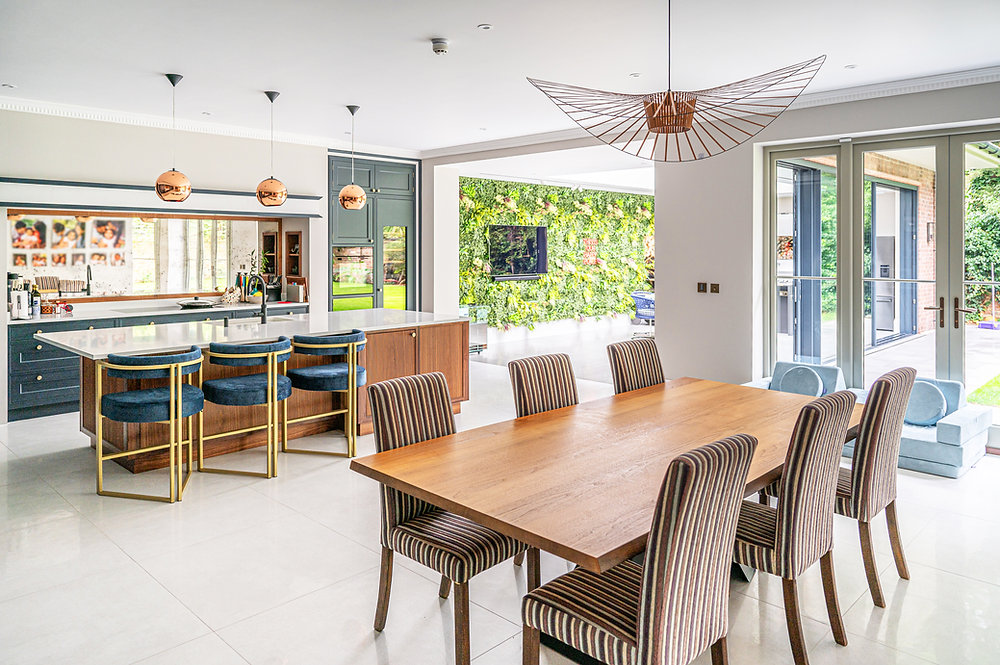
UK Open Plan Living Room Design Guide
Walk into almost any modern British home, and you’ll find a defining feature: a seamless, open-plan living space. It’s a design philosophy that has moved far beyond just knocking down walls. It's about fundamentally changing how we live in our homes, prioritising light, flow, and human connection.
Why Open-Plan Living Reshaped UK Homes
The move towards open-plan living isn't just an architectural trend; it reflects a deep shift in British culture. The days of formal, separate rooms for every single function are largely behind us. Modern family life demands flexibility, and this layout provides the perfect dynamic backdrop for cooking, dining, relaxing, and socialising all in one cohesive area.
This whole approach is driven by a collective desire for brighter, more spacious, and engaging homes. By removing partitions, natural light can flood deep into a property, making even smaller homes feel larger and more welcoming. It’s a powerful illusion, especially in urban areas where every square metre counts.
The Core Drivers of Popularity
The appeal of open-plan living is rooted in a few key benefits that just make sense for contemporary life:
Maximising Natural Light: Removing internal walls allows sunlight from the front and back of a house to travel right through, creating a brighter, more uplifting atmosphere.
Enhanced Sense of Space: With no visual barriers, the eye travels further. The entire floor feels significantly larger and less confined than a series of small, boxed-in rooms.
Fostering a Social Environment: It simply brings people together. Parents can cook while keeping an eye on their children, or hosts can chat with guests without being isolated in the kitchen.
The chart below shows exactly why UK homeowners are choosing to open up their living spaces.
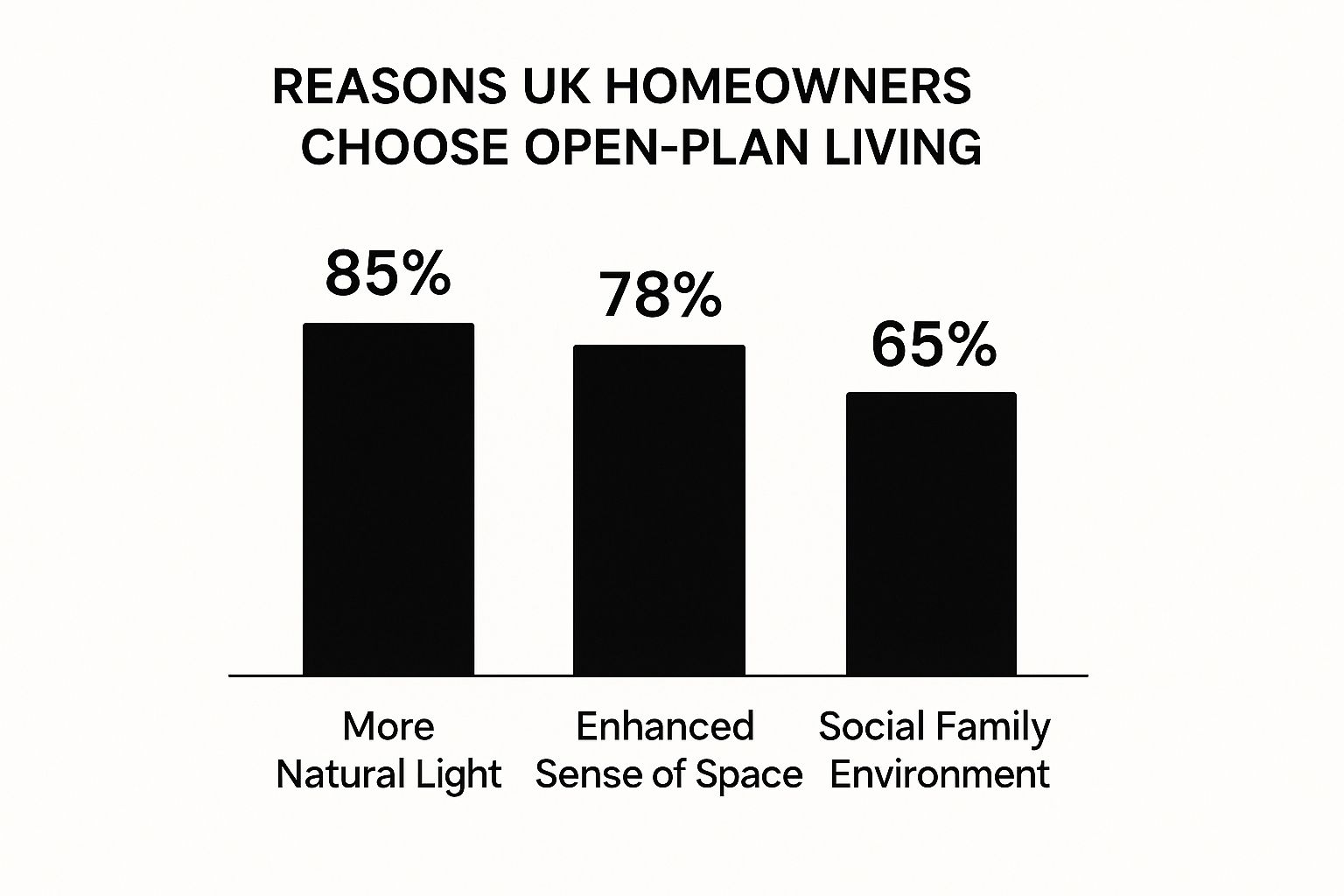
As the data makes clear, the quest for a brighter home is the overwhelming driver, followed closely by the desire for a more spacious feel.
A Lasting Impact on British Housing
The preference for open-plan has fundamentally reshaped the UK's housing stock. Census data from 2011 to 2021 reveals that the number of UK households with 4 or fewer rooms more than doubled—a staggering 101% increase. At the same time, homes with 5 or more rooms fell by 40%. This isn't just a coincidence; it highlights how popular this design is for both new builds and renovations.
Of course, the concept is always evolving. We're now seeing the rise of 'broken-plan' living, which introduces subtle divisions using glazed partitions or split-level flooring to offer a balance between openness and defined zones. This adaptability ensures the open-plan concept continues to meet modern needs, particularly as kitchen extensions become the true heart of the family home.
Mastering the Art of Spatial Zoning
A truly successful open plan living room is never just one vast, undefined area. Instead, it’s a carefully composed collection of distinct zones, each with a clear purpose, that flow together harmoniously. This is the art of spatial zoning—creating functional, semi-separate areas without building walls, ensuring your space feels organised and intentional, not chaotic.
Think of it like a theatre stage. The entire stage is one open space, but clever set design—a sofa here, a table there, a change in lighting—tells the audience exactly where each scene is taking place. Your open plan living room should work on the same principle, using subtle visual cues to define different activities.
This approach transforms a single large room into a multi-functional home where you can work, relax, cook, and entertain simultaneously, without feeling like you're doing everything in one jumbled space. It’s the key to making an open layout practical for modern life.
Using Furniture as Soft Dividers
Your largest pieces of furniture are the most powerful tools for creating these invisible boundaries. A common mistake is pushing everything against the walls, which can create a hollow, impersonal feeling. The trick is to use your furniture to anchor each zone and guide movement through the space.
For example, the back of a sofa is a natural and highly effective room divider. Placing a large L-shaped or corner sofa with its back to the dining area clearly separates the relaxation zone from the eating zone. This simple placement creates a psychological partition that defines the boundary of your living area.
To take this a step further, place a slim console table or a low bookshelf directly behind the sofa. This not only reinforces the division but also provides valuable surface space for a lamp or decorative items, creating a sophisticated and functional transition between zones.
Defining Zones with Flooring and Rugs
Flooring is another incredibly effective tool for zoning. While a continuous floor material promotes a sense of unity, a strategic change in flooring can signal a shift in function without disrupting the open feel. Think of a transition from warm wood flooring in the living area to durable, practical tiles in the kitchen.
But for a more flexible approach, nothing beats a large area rug.
A well-chosen rug does more than just add colour and texture; it acts as an 'island' that anchors the furniture within a specific zone. It visually groups the sofa, armchairs, and coffee table together, declaring, "This is the living area."
This technique is brilliant for creating a cosy, defined seating nook. Just make sure the rug is large enough for at least the front legs of all main seating to rest on it. This creates a cohesive look that feels deliberate and well-designed, preventing the furniture from looking like it’s floating adrift in a sea of empty floor space.
The Strategic Use of Partitions and Screens
For moments when you need a little more separation, physical dividers that don't entirely block light or sightlines are an excellent solution. These are key to the emerging 'broken-plan' concept, which offers the best of both open and closed layouts.
Consider these options for subtle separation:
Open Bookshelves: A tall, backless shelving unit is a fantastic choice. It creates a clear visual divide between, say, a home office area and the main living space, while still allowing light and conversation to pass through.
Slatted Wooden Screens: These architectural elements add warmth and texture, offering a sense of privacy and separation without fully enclosing an area. They are perfect for screening off a dining area from the main path of traffic.
Glazed Partitions: Metal-framed glass screens, often in the Crittall style, provide an elegant, contemporary way to contain noise and cooking smells from the kitchen without sacrificing that open, light-filled aesthetic.
These different zoning methods offer a toolkit for creating a space that feels both connected and distinctly functional.
Effective Zoning Techniques For Open Plan Living
Below is a quick comparison of the most effective zoning techniques, helping you decide which approach might work best for your home and lifestyle.
Zoning Technique | Primary Function | Impact on Light & Flow | Best For |
|---|---|---|---|
Furniture Arrangement | Creates psychological boundaries and anchors activity areas. | Minimal impact; maintains open feel. | Clearly separating lounging and dining areas without physical barriers. |
Area Rugs | Visually groups furniture to define a specific zone, like a seating 'island'. | No impact on light; helps guide foot traffic around the zone. | Creating cosy, intimate seating areas within a larger space. |
Flooring Changes | Signals a clear transition between functional areas (e.g., kitchen and living). | Can be subtle or bold; maintains an open floor plan. | Delineating high-traffic or wet areas like kitchens from living spaces. |
Open Shelving | Acts as a semi-transparent wall, offering storage and separation. | Allows light and views to pass through, maintaining connection. | Separating a home office or study nook from the main living area. |
Slatted Screens | Provides partial privacy and a strong architectural feature. | Filters light and creates a sense of separation without full enclosure. | Screening a dining area or entranceway from the primary living space. |
Glazed Partitions | Contains sound and smells while preserving visual openness. | Maximises light transfer; creates a sophisticated, modern divide. | Separating a kitchen from living and dining zones in a 'broken-plan' layout. |
Each of these techniques can be used alone or in combination to craft a dynamic and practical open plan layout.
By mastering these zoning strategies, you can ensure every square metre of your space is used effectively, creating a home that is both beautifully open and perfectly organised.
Using Light to Unify and Define Your Space
In an open plan living room, lighting is arguably your most powerful design tool. It goes far beyond simply illuminating a room; it’s the silent architect that sculpts the atmosphere, defines your carefully planned zones, and weaves a cohesive story throughout the entire space. A thoughtful lighting scheme is what transforms a large, open area from feeling like a cavernous hall into a dynamic and inviting home.
The secret is a layered lighting strategy, a technique we use to build depth, character, and flexibility. Instead of relying on a single, harsh overhead light, this approach combines three distinct types of lighting. Each layer has a specific job, and together, they create a versatile and beautifully lit environment that can adapt to your every need.

This method ensures your open plan space is not just functional but full of personality, able to shift from bright and practical for daytime activities to intimate and cosy for an evening in.
The Three Essential Layers of Light
Understanding the role of each lighting layer is the first step. Think of it like painting a picture: you start with a broad wash of colour for the background, then add the main subjects, and finally, pick out the highlights to add drama and focus.
Ambient Lighting: This is your foundational, general light. It provides the overall illumination that makes a room feel comfortable and safe to move through. This is often delivered by ceiling fixtures like downlights, recessed LEDs, or perhaps a large central pendant.
Task Lighting: Just as the name suggests, this is focused, direct light designed for specific activities. It’s all about eliminating shadows and reducing eye strain where you need it most. Think of under-cabinet LED strips in the kitchen, a floor lamp next to your favourite armchair for reading, or a desk lamp in a small home office nook.
Accent Lighting: This is the fun, decorative layer. Accent lighting is used to draw the eye to specific features—a piece of art, an interesting architectural detail like a textured wall, or a beautiful indoor plant. It’s what adds depth, contrast, and a real touch of personality.
Putting It All into Practice
So, how does this theory translate into your actual living space? The key is to assign specific lighting solutions to each of your zones, making sure they all work together harmoniously. This is where you can unify the entire room while still giving each area its own distinct identity.
Take the dining zone, for instance. A statement pendant light hung low over the table does more than just light up your meals. It acts as a visual anchor, clearly marking out the dining area from the adjacent kitchen or living space and creating an intimate atmosphere that’s perfect for entertaining.
In the kitchen, task lighting is absolutely paramount. A row of stylish pendants over an island provides brilliant light for food preparation, while discreet under-cabinet lighting illuminates your worktops, making chopping and cooking safer and much more pleasant.
For the living area, flexibility is everything. A combination of a central ambient light source on a dimmer, paired with task lighting from floor and table lamps, allows you to create completely different moods. You can have the space brightly lit for a family board game or dim everything down to create a warm, inviting cocoon for watching a film.
By selecting fixtures with a consistent finish—like all brushed brass or all matt black—you create a common thread that ties the entire open plan living room together, even as the function of the lighting changes from zone to zone. For a deeper dive, our guide to [expert lighting design for homes made simple](expert-lighting-design-for-homes-made-simple.html) offers even more detailed strategies.
And the final, essential touch? Install dimmer switches on as many circuits as possible. This simple addition gives you complete control, allowing you to fine-tune the brightness and mood of each zone with the flick of a switch. It's a small detail that makes a world of difference.
Creating a Cohesive Colour and Materials Palette
In a large open-plan living room, getting the different zones to feel connected without becoming bland is a real design challenge. The secret is to establish a unified palette of colours and materials that flows effortlessly from one area to the next. This visual thread is what pulls everything together, turning a collection of separate functions into a single, inviting home.
Think of your palette as a signature that runs through the entire space. It’s not about making everything match perfectly. Instead, it's about creating a consistent language of colour and texture that ensures the living, dining, and kitchen areas all feel like they belong together, even while serving their own distinct purposes.
Building a Foundation with Neutrals
The most effective way to start is by choosing a core neutral colour scheme. These are the colours you’ll use on your largest surfaces, like the walls and big pieces of furniture. Warm greys, soft beiges, muted greens, or classic off-whites create a calm, sophisticated backdrop that lets light travel freely.
Using a single, continuous neutral colour on all the walls is a powerful move. It erases the visual stops and starts you’d find in a traditional layout, which instantly makes the space feel bigger and more open. This neutral base then becomes the canvas for layering in more dynamic elements.
Choosing your foundational palette is perhaps the most important decision in designing an open-plan living room. It sets the tone for the entire space, influencing everything from the mood to the perceived size of the room. A well-chosen scheme feels intentional, calm, and effortlessly connected.
This considered approach is more than just an aesthetic choice; it’s a smart investment. Open-plan living’s influence on UK property values remains substantial, with good interior design adding as much as 11% to the value of a London home. Homeowners are also keen to get these key spaces right, undertaking an average of 2.7 interior room upgrades annually, with kitchens and living rooms ranking as top priorities. You can explore more about market preferences on HomeViews.com.
Weaving in Accents and Textures
With your neutral foundation in place, you can start to bring in accent colours and varied materials to add personality and help define the zones. The key here is repetition. Pick two or three accent colours and strategically weave them throughout the entire open-plan area.
For instance, a rich navy blue could appear in:
Cushions on the sofa in the living zone.
The upholstery on the dining chairs.
A piece of statement artwork hanging near the kitchen.
A collection of ceramic vases on a console table.
This repetition creates a visual rhythm that guides your eye through the space, tying everything together beautifully. It’s a subtle but highly effective way to achieve that cohesive, designer-led feel.
Texture plays a just as crucial role, adding depth and stopping the space from feeling flat. While you might keep the flooring consistent to create an uninterrupted flow, you can introduce a rich variety of textures to distinguish each area. Think about the tactile contrast between a plush wool rug in the seating area, the smooth leather of dining chairs, the cool marble on a kitchen island, and the warm grain of a wooden sideboard. This textural conversation adds layers of interest and sophistication, making each zone feel special yet part of a unified whole.
Smart Storage and Bespoke Joinery Solutions
In a successful open plan living room, clutter is the single greatest enemy. With every zone on display, keeping a sense of calm and order isn't just a nice-to-have – it’s essential. This is where intelligent, well-planned storage moves from being a simple necessity to the cornerstone of the entire design. While standalone furniture has its place, the unique challenges of an open layout are almost always best solved with bespoke joinery.
Custom-built solutions are designed to integrate perfectly with your home's architecture, turning storage from a bulky afterthought into a deliberate and stylish feature. They are crafted to solve specific problems, making sure everything from children's toys to unsightly electronics has a designated, concealed home. This meticulous approach is key to preserving the clean lines and spacious feel that make open plan living so desirable in the first place.

Maximising Vertical Space with Media Units
One of the most effective strategies is to think vertically. Full-height, wall-to-wall media units can become a stunning focal point while offering an incredible amount of storage. These pieces are far more than just a place to put the television; they are multi-functional powerhouses.
A thoughtfully designed unit can incorporate:
Concealed Cabinets: Ideal for hiding away games consoles, sound systems, and a web of cables, keeping the living area looking sleek and uncluttered.
Open Shelving: Perfect for displaying curated art, books, and decorative objects that add personality and warmth to the space.
Integrated Desks: A discreet, fold-down or built-in desk can create a compact home office that can be hidden away at the end of the working day.
By painting the joinery in the same colour as the walls, the entire structure can blend seamlessly into the room. This creates a sophisticated, built-in look that maximises storage without visually overpowering the space.
The Kitchen Island as a Storage Hub
In an open plan kitchen, the island is often the hero piece, acting as a natural boundary between the cooking and living zones. Its potential for storage, however, is frequently underestimated. A well-designed kitchen island can become a central hub of organisation, keeping essential items close at hand but out of sight.
Bespoke joinery transforms everyday functional elements into elegant design features. It’s about creating storage that not only works perfectly but also enhances the architectural character and flow of your open plan space, ensuring it remains both beautiful and liveable.
Consider integrating deep drawers for pots and pans on the kitchen-facing side, while the side facing the living area can feature shallower cupboards for glassware or even open shelving for cookbooks. This dual-function design makes the island a hard-working piece of furniture that serves both the kitchen and the wider living space. Extending the worktop can also create a casual breakfast bar, further enhancing its multi-purpose credentials.
Finding Hidden Opportunities for Storage
The beauty of bespoke solutions lies in their ability to utilise awkward or overlooked spaces. These hidden opportunities are where custom joinery truly shines, adding valuable storage in places you might not have considered.
For instance, a built-in window seat is a classic and charming addition to any home. Not only does it create a cosy reading nook, but the space underneath the bench can be fitted with deep drawers or a lift-up lid, providing the perfect hiding spot for blankets, cushions, or children's toys.
Similarly, the space under a staircase is often left empty. A custom joinery solution can transform this area into a series of pull-out drawers, cupboards, or even a small wine cellar, turning a forgotten corner into a highly functional and attractive feature. By commissioning custom pieces, you can ensure that every square metre of your open plan living room is working as hard as possible. You can explore a gallery of tailored solutions and see the impact of beautiful, functional [joinery in our portfolio](../joinery.html) to gather inspiration for your own project.
Exploring the Rise of Broken Plan Design
While the classic open plan living room remains a cornerstone of modern British design, its philosophy has been quietly evolving. A sophisticated alternative is now gaining real momentum: broken plan design. This approach cleverly strikes a middle ground, keeping the light, airy feel of an open layout while bringing back some of the privacy and definition that modern life demands.
It's best to think of broken plan not as a rejection of open living, but as its more refined successor. It’s an acknowledgement that while we love the sense of connection, we also crave dedicated spaces for focused work, quiet relaxation, or simply to contain the happy chaos of family life. It’s all about creating subtle, intelligent separations without putting up solid walls that kill the light and flow.
Achieving Separation Without Sacrificing Space
The real beauty of broken plan design is in its elegant solutions for creating these distinct zones. Instead of building walls, it uses smart architectural and design cues to hint at separation, maintaining that all-important visual link while setting clear functional boundaries.
Some of the most popular ways to strike this balance include:
Glazed Partitions: Crittall-style or minimalist metal-framed glass screens are a hallmark of this style. They can fully section off a kitchen to contain noise and cooking smells, but because light pours straight through, the space still feels completely open and connected.
Slatted Wooden Screens: These elements introduce natural warmth and texture while creating a semi-transparent visual barrier. They work beautifully for screening an entrance or creating an intimate backdrop for a dining area without full enclosure.
Split-Level Floors: Introducing just a step or two down into a living area or up into a kitchen is a powerful way to define a zone. This simple change in level creates a clear psychological boundary and adds a wonderful layer of architectural interest to the entire floor.
Responding to Modern Lifestyles
The rise of broken plan is a direct response to how our lives have changed. With the huge shift towards hybrid working, a dedicated, quiet home office has become essential for many. At the same time, a growing focus on wellness means creating peaceful nooks for reading or mindfulness is now a real priority.
Broken plan design is the thoughtful answer to the question: "How can we live together, but separately?" It offers the flexibility to adapt a single large space for work, socialising, and quiet retreat, all within one cohesive, light-filled environment.
This shift in preference is now clearly showing up in homeowner trends. A pivotal moment came in 2023, when “open plan” dropped out of the top 20 most-desired home updates, and was replaced by “broken plan” coming in at position 12. Further data shows that around 20% of UK households have reconfigured open plan spaces to better support working and hobbies from home. You can find more insights into how UK homes are adapting on Saga.co.uk.
This evolution ensures the open plan living room continues to be a practical and desirable layout for the future, just in a smarter, more flexible form.
Your Questions, Answered
Navigating the nuances of an open plan living room often brings up a few common questions. From managing acoustics to ensuring your space feels cosy and welcoming, here is some clear, practical advice on the key challenges.
How Can I Reduce Noise in My Open Plan Space?
Acoustics are a frequent concern in large, open areas. Without walls to contain sound, noise can travel and echo. The key is to introduce soft surfaces that absorb sound waves rather than letting them bounce off hard floors, ceilings, and walls.
Rugs and Runners: A large, thick rug in the living area is absolutely essential. It not only defines the space but also acts as a giant sound absorber.
Curtains and Blinds: Heavy, lined curtains or fabric blinds are far more effective at dampening sound than hard window treatments like wooden slats.
Soft Furnishings: Think generously sized sofas, upholstered armchairs, and plenty of cushions. These all help to soak up ambient noise.
Wall Decor: Even large canvases or fabric wall hangings can make a noticeable difference by breaking up flat, reflective surfaces.
Will My Open Plan Living Room Feel Cold and Impersonal?
Creating a warm, inviting atmosphere is all about strategic zoning and clever layering. Use large area rugs to anchor your seating areas, creating a defined, cosy 'room within a room' that feels distinct from the kitchen or dining zones.
A common mistake is pushing all your furniture against the walls. Instead, pull your sofa and chairs closer together to create an intimate conversational grouping. This makes the area feel sheltered and welcoming, independent of the room's larger footprint.
And don't forget lighting. Use a layered scheme with floor and table lamps to create warm pools of light. This is particularly effective in the evenings for creating a much more intimate, comfortable ambience.
Ready to transform your vision for an open plan living room into a beautifully realised space? The team at Harper Latter Architects blends creativity and craftsmanship to deliver exceptional homes across South West London. Start your journey with us today.