
10 Inspiring Kitchen Extension Design Ideas for 2025

Updated: Sep 1, 2025
The kitchen is no longer just a place for cooking; it has become the undeniable heart of the modern British home. A thoughtfully designed extension can revolutionise your living space, transforming it into a multifunctional hub for family life, social dining, and elegant entertaining. For discerning homeowners in South West London and Surrey, the challenge lies in creating a design that is both beautiful and practical, whether complementing the character of a period property or making a bold contemporary statement.
Navigating the world of extensions, from sleek glass boxes to classic orangeries and functional side returns, can be a daunting task. This definitive guide is crafted to simplify that journey. We will explore ten exceptional kitchen extension design ideas, each presenting a unique approach to expanding your home's footprint and significantly enhancing its value.
This curated list moves beyond generic advice, offering actionable insights and practical considerations tailored for high-end properties. We will delve into the distinct features, potential costs, and crucial planning permissions associated with each concept, empowering you with the knowledge needed to bring your architectural vision to life. From single-storey additions that seamlessly connect with the garden to innovative wrap-around designs that redefine your ground floor, you will discover the perfect solution to elevate your home.
1. Single-Storey Rear Extension
A single-storey rear extension is a highly effective and popular method for expanding your living space. By projecting from the back of your property into the garden, it creates a seamless transition between your home and the outdoors. This approach is one of the most transformative kitchen extension design ideas, perfect for creating a spacious, light-filled kitchen-diner that becomes the true heart of the home.

This type of extension is exceptionally versatile, suiting various property styles from Victorian terraces in London to modern suburban houses. The design often incorporates extensive glazing, such as bifold or sliding doors, which not only flood the new space with natural light but also blur the lines between inside and out, making the garden feel like a natural extension of your kitchen.
Key Implementation Details
To achieve a high-end finish, focus on materials and light. Using materials that either perfectly match or elegantly complement your existing home's brickwork or render ensures a cohesive aesthetic. For a more contemporary look, contrasting materials like zinc cladding or charred timber can create a striking architectural statement.
Consider these practical tips for a successful project:
Maximise Natural Light: Install large rooflights or a structural glass roof over the dining or seating area. This introduces daylight deep into the floor plan, preventing the original part of the house from feeling dark.
Year-Round Comfort: Incorporate wet or electric underfloor heating. This provides an efficient, invisible heating solution that keeps the large, open-plan space comfortable throughout the year.
Material Cohesion: Use continuous flooring from the kitchen into the garden patio. This design choice visually connects the two zones, making the entire area feel larger and more unified.
Understand Planning Rules: Many rear extensions fall under Permitted Development rights, but it's crucial to be aware of the limits, such as a 6-metre depth for detached homes and 4 metres for others. For a detailed breakdown of planning rules, you can explore this comprehensive guide on UK house extension planning permission.
2. Double-Storey Extension
A double-storey extension is a highly strategic approach to significantly increasing your home's living space and value. By building across two levels, you not only gain a spacious new kitchen area on the ground floor but also create valuable additional room(s) above, such as a master bedroom suite, a home office, or an enlarged family bathroom. This method is one of the most cost-effective kitchen extension design ideas per square metre, as it maximises the building footprint.
This type of extension offers a transformative solution for growing families or those needing multi-functional spaces without sacrificing precious garden area. It's particularly well-suited to London’s Victorian terraces, where it can add a ground-floor kitchen-diner and a luxurious master suite above, or to 1930s semi-detached homes seeking to expand both their kitchen and family bathroom facilities. The added height provides an opportunity for impressive architectural statements.
Key Implementation Details
A successful double-storey extension hinges on careful structural planning and a design that respects the original property's proportions. The goal is to create an addition that feels a natural and integral part of the home, rather than an afterthought. Integrating the new roofline and matching materials like brickwork and window styles are crucial for a seamless finish.
Consider these practical tips for a successful project:
Prioritise Structural Integrity: Engage a structural engineer early on to design the necessary support for the upper floor. This is non-negotiable for safety and to meet Building Regulations.
Consider Your Neighbours: The scale of a two-storey extension can impact neighbouring properties' light and privacy. Discussing plans early and having a sensitive design can help smooth the planning permission process.
Integrate Services Efficiently: Plan the routes for plumbing, heating, and electrical systems for both floors during the initial design phase. This avoids complex and costly retrospective work.
Design for Proportionality: Ensure the upper floor’s design complements the overall house proportions. A top-heavy or mismatched extension can detract from your property's kerb appeal and value.
Exceed Insulation Standards: Use high-quality insulation in the walls and roof to meet and, where possible, exceed current Building Regulations. This ensures the new spaces are energy-efficient and comfortable year-round.
3. Side Return Extension
A side return extension is an ingenious solution for unlocking valuable space, particularly in period properties like Victorian and Edwardian terraces. This design fills the often-underutilised narrow alleyway that runs alongside the rear part of your home, squaring off the back of the property. It’s one of the most effective kitchen extension design ideas for creating a wider, more functional kitchen without sacrificing significant garden space.

This type of extension is iconic in urban settings such as London, Manchester, and Brighton, where terraced houses are common. By claiming this narrow strip of land, you can transform a cramped, galley-style kitchen into a generous open-plan kitchen-diner. When combined with a rear extension, it creates a spectacular ‘wraparound’ effect, offering a dramatic increase in both footprint and natural light.
The infographic below summarises the key benefits you can expect from this type of project.
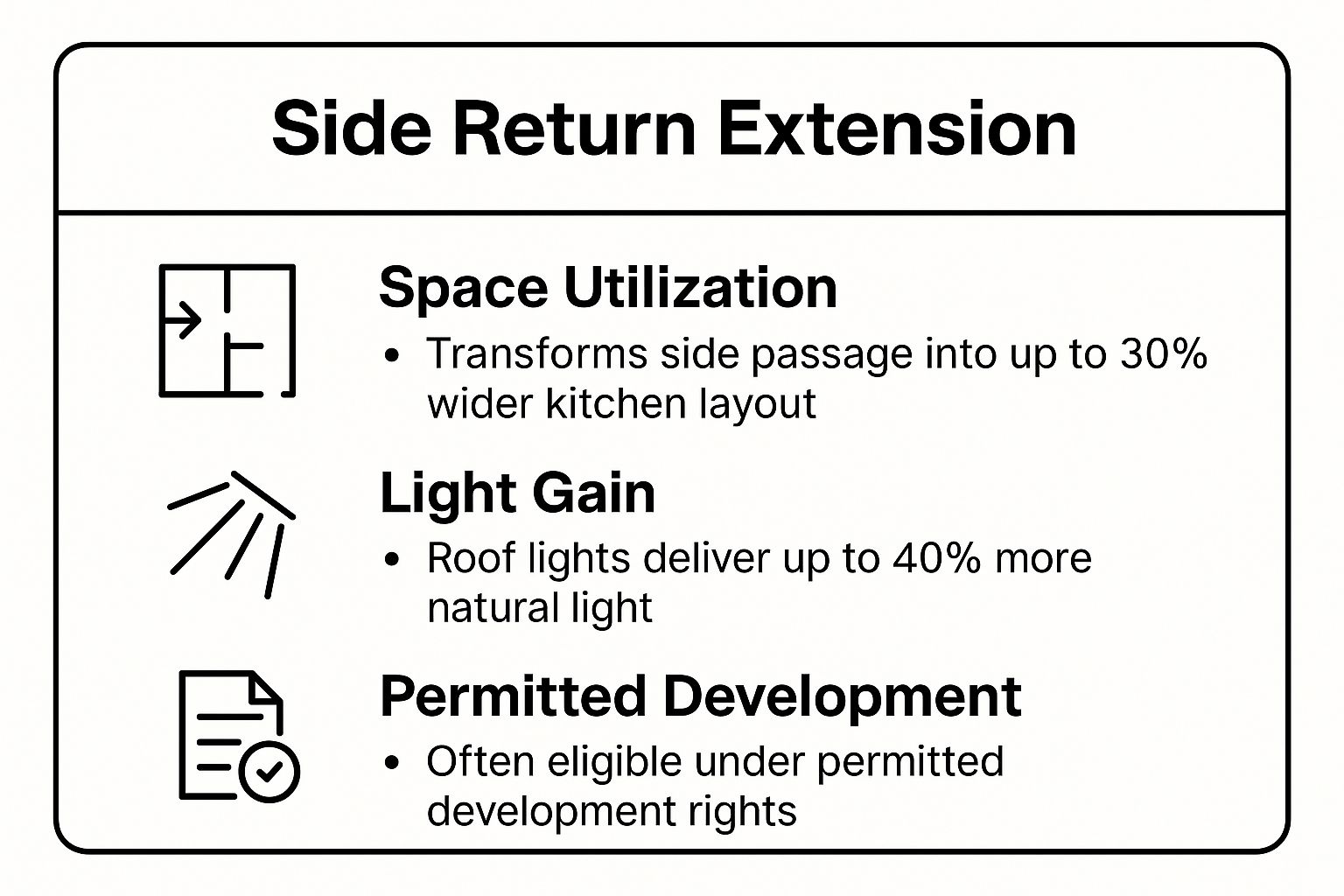
As the data highlights, even a modest side return can dramatically increase your kitchen's width and natural light, often qualifying under permitted development rights.
Key Implementation Details
The success of a side return extension hinges on intelligent structural design and maximising light. Because you are building up to a boundary wall and potentially losing side windows, introducing light from above is absolutely essential. This is where structural glazing, rooflights, and light wells become critical design elements, preventing the new and existing parts of the home from feeling dark.
Consider these practical tips for a successful project:
Embrace Glazing: Install a fully or partially glazed roof over the new side return section. This will flood the expanded kitchen with daylight, creating an airy and inviting atmosphere.
Plan Drainage Meticulously: Extending your property can alter rainwater runoff patterns. Ensure your architect and builder design a robust drainage solution to prevent water from pooling or causing issues for you or your neighbours.
Coordinate Utility Relocations: Side returns often house utility metres, pipes, and boiler flues. These will need to be professionally relocated, so plan this early with your utility companies to avoid delays.
Seamless Transitions: Use frameless structural glass or slim-profile bifold doors to connect to the garden. This enhances the sense of space and creates a strong visual link with the outdoors. House extension architects can unlock this hidden potential in your home by integrating these features seamlessly.
4. Wrap-Around Extension
A wrap-around extension is one of the most ambitious and transformative kitchen extension design ideas, combining a side return extension with a rear extension. This creates a substantial L-shaped or U-shaped addition that wraps around the corner of your property, completely reconfiguring and massively expanding the ground floor to create an exceptionally generous kitchen, dining, and living area.
This approach is particularly well-suited to period properties, such as Victorian or Edwardian semi-detached houses, which often have under-utilised side alleyways. The result is a dramatic, architecturally impressive space that can accommodate a high-specification kitchen, a large dining zone, and a comfortable family seating area, all seamlessly connected to the garden.
Key Implementation Details
Successfully executing a wrap-around extension requires meticulous architectural design and structural engineering to manage the complex junctions and support the upper floors. The investment is significant, but the reward is a truly bespoke living space that perfectly aligns with a modern family lifestyle.
Consider these practical tips for a successful project:
Invest in Professional Design: Due to its complexity, a wrap-around extension is not a project for amateurs. Engaging a skilled architect from the outset is crucial to navigate planning, structural challenges, and to maximise the potential of the new space.
Zone the Layout Carefully: With such a large, open-plan area, defining distinct zones for cooking, dining, and relaxing is essential. Use strategic lighting, varied flooring materials, or level changes to create visual separation without sacrificing the open feel.
Plan for Disruption: This is a major construction project. It's vital to plan for temporary kitchen facilities and manage expectations regarding noise and disruption, particularly if you plan to live on-site during the build.
Budget for High-Quality Finishes: A project of this scale and investment deserves premium finishes. Allocate a sufficient budget for high-end glazing, flooring, and bespoke joinery to ensure the final result reflects the quality of the architectural undertaking.
5. Kitchen Extension with Vaulted Ceiling
Introducing a vaulted ceiling is a powerful way to add architectural drama and a sense of grandeur to a kitchen extension. This design moves beyond a standard flat ceiling, creating an angled roofline that follows the pitch of the roof. The result is an expansive vertical space that feels airy, open, and luxurious, transforming the kitchen into a breathtaking focal point of the home.
This approach is one of the most aspirational kitchen extension design ideas, popularised by television programmes like Grand Designs and the modern farmhouse movement. It is particularly effective in side-return or rear extensions where it can create a 'cathedral-like' atmosphere, drawing the eye upwards and making the entire room feel significantly larger and brighter than its footprint might suggest.
Key Implementation Details
The success of a vaulted ceiling lies in balancing its impressive scale with a feeling of warmth and intimacy. This is achieved through careful material selection and strategic lighting. Exposed structural elements, such as oak or glulam beams, can add immense character and a rustic-yet-contemporary charm, grounding the lofty space.
Consider these practical tips for a successful project:
Embrace Structural Beauty: Use exposed timber trusses or steel tie rods as a design feature. These elements not only provide structural support but also add visual interest and texture, breaking up the large expanse of the ceiling.
Strategic Glazing: Maximise the height by installing high-level windows or a series of skylights along the roof pitch. This floods the space with natural light throughout the day, reducing the need for artificial lighting and highlighting the ceiling's volume.
Layered Lighting Scheme: Plan a multi-layered lighting strategy. A dramatic central pendant or chandelier can create a stunning focal point, while discreet spotlights and low-level task lighting ensure the kitchen remains functional and inviting in the evening.
Acoustic and Thermal Planning: Large, high-ceilinged spaces can pose challenges for acoustics and heating. Incorporate soft furnishings, rugs, and acoustic panels to absorb sound, and ensure high levels of insulation and efficient underfloor heating are specified to maintain a comfortable temperature.
6. Glass Box Extension
A glass box extension is a bold, contemporary design choice that maximises light and offers breathtaking, uninterrupted views of your garden. Characterised by its minimalist frame and extensive use of structural glazing, this modernist approach creates a seamless visual connection between your indoor and outdoor spaces. It is one of the most striking kitchen extension design ideas, perfect for adding a dramatic, light-filled architectural feature to both period and modern properties.

This style is especially effective for contrasting with the traditional materials of an older building, such as a Victorian or Edwardian home, creating a clear and elegant distinction between old and new. The transparent structure allows the original architecture of the property to remain visible, a feature often favoured by planning authorities in conservation areas. The result is a kitchen that feels spacious, open, and completely integrated with its natural surroundings.
Key Implementation Details
Achieving a successful glass box extension requires meticulous attention to technical specifications and material quality. The focus is on creating a 'frameless' effect, where the glass itself becomes the primary structure, demanding precision engineering and high-performance materials to ensure it is both beautiful and functional year-round.
Consider these practical tips for your project:
Invest in High-Performance Glazing: Use triple-glazed, low-emissivity (Low-E) glass to ensure excellent thermal performance. This will keep the space warm in winter and cool in summer, reducing energy bills and enhancing comfort.
Manage Solar Gain: To prevent overheating during warmer months, incorporate solar control coatings on the glass or plan for external shading solutions like a brise-soleil or an automated awning.
Ensure Adequate Ventilation: Integrate discreet trickle vents or opening rooflights into the design to maintain airflow and prevent stuffiness, particularly in a kitchen environment where heat and moisture are generated.
Prioritise Privacy: For sites that are overlooked, consider using sandblasted, reeded, or switchable smart glass in specific areas to maintain privacy without sacrificing natural light. You can find more details in this guide to a modern house glass extension.
7. Orangery-Style Kitchen Extension
An orangery-style extension offers a sophisticated and elegant way to enlarge your kitchen, blending the light-filled characteristics of a conservatory with the solid, reassuring structure of a traditional extension. Inspired by the grand orangeries of historic country estates, this design features a solid base of brick or stone, large vertical windows, and a signature glazed roof lantern, creating a space that is both bright and substantial. This is one of the most timeless kitchen extension design ideas, perfect for adding a touch of classic grandeur to your home.
This style is particularly well-suited to period properties, such as Georgian and Victorian houses, where its classical proportions complement the existing architecture. The combination of solid walls and extensive glazing provides an excellent balance of natural light, thermal efficiency, and a strong connection to the garden, making it an ideal setting for a luxurious kitchen and dining area that can be enjoyed throughout the year.
Key Implementation Details
To execute an orangery kitchen extension successfully, the focus should be on high-quality materials and thoughtful integration of the roof lantern. The brickwork or stone used for the base should be carefully chosen to match or complement the host building, ensuring a seamless and authentic look, which is especially important in conservation areas.
Consider these practical tips for a refined and functional orangery:
Invest in a Quality Roof Lantern: Opt for a high-performance roof lantern with excellent thermal properties and robust weather seals to prevent leaks and heat loss. Integrated ventilation is also crucial for maintaining a comfortable temperature during warmer months.
Plan for Comfort: Incorporate wet or electric underfloor heating to ensure the space remains warm and inviting, even on the coldest days. This is a far more effective and aesthetically pleasing solution than radiators in a heavily glazed room.
Integrate Lighting: Carefully plan the electrical installation to allow for elegant lighting within the roof lantern structure. This can create a stunning focal point and provide beautiful ambient light in the evenings.
Material Harmony: Ensure the window frames and doors are in keeping with the property's style. Traditional timber is a popular choice for period homes, while high-quality aluminium can offer a slim, contemporary profile that still feels classic.
8. Kitchen Extension with Bi-fold Doors
Integrating bi-fold or large sliding doors is one of the most impactful kitchen extension design ideas for homeowners looking to create a true indoor-outdoor lifestyle. This approach centres on installing expansive glazed doors that concertina or slide back, effectively removing an entire wall. This action merges the kitchen and garden into a single, fluid entertaining space, perfect for summer gatherings and daily family life.

Popularised by architectural television shows and advances in glazing technology, this design is no longer just for high-end new builds; it's a sought-after feature in extensions on properties of all eras. Whether part of a contemporary rear extension or a sensitive addition to a period home, bi-fold doors introduce vast amounts of light and a sense of boundless space, dramatically enhancing the functionality and enjoyment of your home.
Key Implementation Details
The success of this design lies in meticulous planning of the threshold and door system. A seamless transition is paramount for achieving the desired effect, requiring careful coordination between your architect, builder, and glazing supplier. High-performance glazing will also ensure the space remains comfortable and energy-efficient throughout the year.
Consider these practical tips for a flawless installation:
Achieve a Level Threshold: Work with your builder to engineer a flush threshold between your interior flooring and the exterior patio. This creates an uninterrupted visual and physical flow, removing any trip hazards and enhancing the feeling of a single, unified space.
Choose Durable Frame Materials: Aluminium frames are a popular choice for their strength, slim profiles, and low maintenance. For a more traditional or warmer aesthetic, consider engineered timber or a composite material, but be mindful of the maintenance requirements for the level of exposure.
Incorporate Integral Blinds: For privacy and essential solar control during bright days, opt for blinds sealed within the double or triple-glazed units. This is a sleek, low-maintenance solution that keeps the doors looking uncluttered.
Plan the Opening Configuration: Decide whether you want the doors to stack internally or externally and which direction they should open. This choice will affect furniture placement and how you use the adjacent patio space when the doors are fully open.
9. Lean-to Kitchen Extension
A lean-to extension, characterised by its single-pitched roof that 'leans' against the main wall of a house, is a classic and cost-effective way to gain valuable kitchen space. While simpler in form than other kitchen extension design ideas, it offers a pragmatic solution for adding square footage without the complexity or expense of a more elaborate structure. Its straightforward design makes it particularly suitable for period properties, cottages, and terraced houses where a modest, unassuming addition is often more appropriate.
The primary advantage of a lean-to is its efficiency. The simple roof construction requires less material and labour, making it one of the more budget-friendly extension options. However, this simplicity does not mean sacrificing style. With careful material selection and thoughtful design, a lean-to can be transformed from a basic addition into a chic, light-filled kitchen space that enhances both the functionality and character of your home.
Key Implementation Details
To elevate a lean-to from a purely functional addition to a high-end design feature, the focus must be on maximising light, space, and material quality. The inherent slope of the roof provides a perfect opportunity for incorporating large skylights or a glazed roof section, which can dramatically brighten the new kitchen and the adjoining rooms.
Consider these practical tips for a successful project:
Introduce Overhead Light: Compensate for limited light from the sides by installing a series of large Velux-style rooflights or a structural glass panel. This will flood the space with natural light and create a sense of openness.
Ensure Adequate Headroom: The pitch of the roof is critical. Plan for a generous ceiling height, aiming for at least 2.4 metres at the lowest point, to prevent the room from feeling cramped and enclosed.
Invest in Quality Materials: Avoid the "cheap addition" look by using high-quality materials. Matching brickwork, premium timber or aluminium-framed glazing, and a high-end roofing material like slate or zinc will ensure the extension feels like an integral part of your home.
Plan Drainage Carefully: The single-slope roof requires robust guttering and drainage solutions to manage rainwater effectively and prevent issues with damp or water ingress against the main house wall.
10. Kitchen Extension with Roof Terrace
For urban properties where garden space is at a premium, a kitchen extension with a roof terrace is an ingenious solution that adds value and functionality. This design involves constructing a single-storey kitchen extension with a flat roof engineered to serve as an accessible outdoor area. It effectively doubles the usable space gained from the extension’s footprint, providing a new kitchen below and a private, elevated garden or seating area above.
This is one of the most innovative kitchen extension design ideas for city homes, particularly in areas like London where every square metre counts. The roof terrace can be accessed from a first-floor bedroom, creating a luxurious private balcony, or via a dedicated internal or external staircase. This transforms an often-overlooked flat roof into a valuable asset for relaxing, entertaining, or even urban gardening.
Key Implementation Details
Successful execution hinges on robust structural and waterproofing considerations to ensure longevity and safety. The design must be meticulously planned, integrating drainage and access seamlessly while respecting the privacy of neighbouring properties. A structural engineer is non-negotiable for this type of project.
Consider these practical tips for a successful project:
Prioritise Waterproofing: Invest in a high-performance, multi-layered waterproofing system. Professional installation is crucial to prevent leaks and long-term structural damage to the kitchen space below.
Plan for Load and Drainage: The roof structure must be calculated by a structural engineer to support the weight of decking, furniture, planters, and people. Adequate drainage, including overflow provisions, must be integrated to manage rainwater effectively.
Consider Privacy and Access: Carefully plan the design to avoid overlooking neighbouring gardens. Strategic screening with planters or frosted glass can maintain privacy. Ensure access is safe, convenient, and well-lit, whether it’s via internal stairs or a stylish external spiral staircase.
Choose Durable Materials: Select hard-wearing, low-maintenance materials for the terrace surface, such as composite decking or porcelain paving. Ensure balustrades are secure and meet building regulations for height and safety.
Kitchen Extension Design Ideas Comparison
Extension Type | 🔄 Implementation Complexity | 🛠️ Resource Requirements | 📊 Expected Outcomes | 💡 Ideal Use Cases | ⭐ Key Advantages |
|---|---|---|---|---|---|
Single-Storey Rear Extension | Low to Moderate (Simple structure) | Moderate (materials, glazing) | Increased ground-level kitchen space | Cost-effective home improvements | ⭐ Cost-effective, fast build, garden flow |
Double-Storey Extension | High (Complex structure, 2 levels) | High (structural support, time) | Large multi-room space gain | Maximising footprint, multiple uses | ⭐ Maximum space, high ROI, architectural |
Side Return Extension | Moderate (narrow space integration) | Moderate (roof lights, structure) | Wider kitchen, better natural light | Victorian/Edwardian terraced homes | ⭐ Utilises wasted space, excellent light |
Wrap-Around Extension | Very High (Multiple linked builds) | Very High (time, cost, design) | Substantial space, open-plan living | Large projects, design-focused homes | ⭐ Maximum space, impressive design |
Kitchen Extension with Vaulted Ceiling | High (special roof design) | High (structure, glazing) | Dramatic vertical space, more light | Contemporary, architectural statements | ⭐ Impressive space, strong natural light |
Glass Box Extension | High (special glazing systems) | High (quality glass, tech) | Modern, light-filled seamless space | Contemporary homes, modern additions | ⭐ Maximum light, stylish, low maintenance |
Orangery-Style Extension | Moderate to High (complex roof) | Moderate to High (materials) | Elegant, bright kitchen with storage | Period properties, traditional aesthetics | ⭐ Timeless, good temp control, period fit |
Kitchen Extension with Bi-fold Doors | Moderate (door installation) | Moderate (doors and frames) | Excellent indoor-outdoor flow | All extension styles needing flow | ⭐ Flexible space, light, entertaining |
Lean-to Kitchen Extension | Low (simple sloped roof) | Low (basic materials) | Additional kitchen space, economical | Budget builds, simple property forms | ⭐ Economical, quick, easy installation |
Kitchen Extension with Roof Terrace | High (roof structure + terrace) | High (waterproofing, safety) | Indoor space + roof outdoor area | Urban builds with limited garden space | ⭐ Outdoor space use, elevated views |
Bringing Your Vision to Life with Expert Architectural Guidance
Embarking on a kitchen extension project is one of the most transformative and valuable investments you can make in your home. Throughout this exploration of kitchen extension design ideas, we have journeyed through a diverse landscape of architectural possibilities. From the elegant simplicity of a single-storey rear extension that seamlessly merges your home with the garden, to the ambitious scope of a double-storey addition that adds both living space and a new bedroom, the options are as varied as the properties they enhance.
We have seen how a clever side return extension can unlock the hidden potential of a Victorian terrace, and how a wrap-around extension can completely reorganise and redefine your home's ground-floor layout. Designs such as the glass box extension offer a bold, contemporary statement, flooding your interior with natural light, while an orangery-style extension provides a timeless, sophisticated link between your home and the outdoors. Each of these concepts offers a unique pathway to achieving a more spacious, functional, and beautiful living environment.
Synthesising Your Ideas into a Cohesive Plan
The key takeaway is that the most successful kitchen extensions are not just about adding square footage; they are about thoughtful, bespoke design. It’s about understanding how your family lives and creating a space that supports and enhances your daily routines. Whether it's the dramatic verticality of a vaulted ceiling creating an airy, cathedral-like atmosphere, or the seamless indoor-outdoor flow facilitated by expansive bi-fold doors, the details are what elevate a good extension into an extraordinary one.
Mastering these concepts means moving beyond generic solutions and towards a design that is a true reflection of your personal style and functional needs. It involves a careful consideration of:
Architectural Synergy: How will the new structure complement or contrast with the existing character of your property?
Light and Volume: How can you strategically use glazing, ceiling height, and orientation to create a space that feels bright and welcoming?
Materiality and Texture: What combination of materials - from exposed brick and reclaimed timber to polished concrete and sleek aluminium - will achieve the desired aesthetic and durability?
Practical Functionality: How will the layout optimise workflow, storage, and social interaction, creating the true heart of your home?
Realising this vision requires more than just inspiration; it demands technical expertise, a deep understanding of local planning policies, and meticulous project management. This is particularly true in areas like South West London and Surrey, where properties may be located within conservation areas or have specific building regulations.
Ultimately, the journey from an initial concept to a beautifully finished kitchen extension is a collaborative one. By synthesising the wealth of kitchen extension design ideas available with professional architectural guidance, you can ensure your project not only meets your aspirations but also adds significant, lasting value to your home. The right design partner will help you navigate the complexities of planning permission, building regulations, and contractor selection, turning a potentially overwhelming process into an exciting and rewarding creative endeavour. Your dream kitchen is not just a possibility; it is an achievable goal, waiting to be brought to life with precision, creativity, and expert care.
Ready to transform your home with a bespoke kitchen extension? The team at Harper Latter Architects specialises in creating stunning, functional, and sustainable extensions for discerning homeowners across London and Surrey. We guide you through every stage, from initial concept to final build, ensuring your vision becomes a beautifully crafted reality. Contact us today to schedule your initial architectural consultation.
Comments