
Top Home Cinema Design Ideas for a Luxurious London Setup
Updated: Oct 10
The allure of a dedicated home cinema has evolved beyond a simple screen and speakers; it is about crafting an immersive sanctuary tailored to your lifestyle. For discerning homeowners in South West London and beyond, a bespoke home cinema represents the pinnacle of luxury, blending sophisticated technology with exquisite interior architecture. These spaces are no longer just for viewing films; they are personalised entertainment hubs for family, social gatherings, and solitary escape. Designing a successful home cinema requires a delicate balance of acoustics, lighting, comfort, and aesthetics to create a truly captivating environment.
This comprehensive guide explores nine distinct home cinema design ideas, offering actionable insights for creating a space that is both technologically advanced and beautifully realised. We will delve into specific concepts, from dedicated tiered theatres in basement extensions to seamlessly integrated living room setups and even unique outdoor solutions. Whether you are planning a major refurbishment or a new build, these concepts provide a practical blueprint for achieving the ultimate private viewing experience. This article is organised to deliver clear, practical advice, ensuring you can identify the perfect approach for your property and transform a simple room into an extraordinary cinematic destination. You will discover how to optimise layout, select appropriate technology, and implement décor that elevates your home entertainment to a professional standard.
1. The Dedicated Theatre Room with Bespoke Tiered Seating
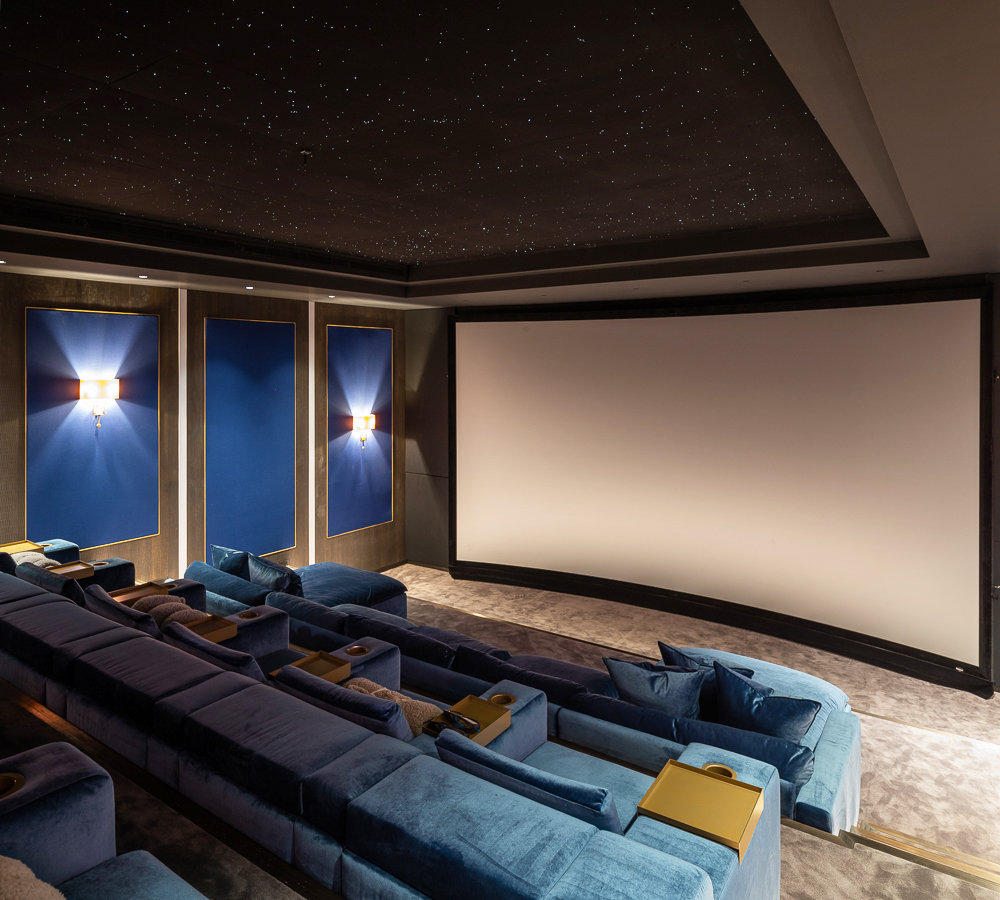
For the ultimate film purist, nothing surpasses the dedicated theatre room. This approach treats the home cinema not as a multi-purpose space but as a purpose-built environment, meticulously engineered for a single function: delivering an unparalleled audio-visual experience. Its defining feature is bespoke tiered seating, a stadium-style arrangement that elevates each subsequent row to ensure completely unobstructed sightlines for every viewer.
This design is the gold standard among home cinema design ideas because it eliminates the compromises inherent in mixed-use living spaces. By controlling every variable, from ambient light to room acoustics, you can recreate the immersive magic of a commercial cinema within your own home. Such projects are often realised in basement extensions or dedicated leisure floors, as seen in luxury new builds across Wimbledon and Richmond, where external light and sound intrusion can be completely neutralised.
Specialist installers like Cinema-ATS excel in these bespoke conversions, integrating sophisticated acoustic treatments and precisely calibrated technology to create a truly authentic cinematic sanctuary. The result is a room that feels separate from the rest of the home, a destination designed exclusively for escapism.
Key Considerations for Implementation
Successfully executing a tiered theatre requires meticulous planning. The geometry of the room, seating, and screen must work in perfect harmony.
Sightline Optimisation: Ensure a minimum vertical rise of 30cm between each seating tier. This is crucial for allowing viewers in back rows to see over the heads of those in front.
Comfort and Access: Plan for at least 90-100cm of legroom per row to allow for comfortable seating and easy movement. Subtle, floor-level LED lighting is essential for navigating the steps safely in a darkened room.
Acoustic Integrity: Tiered platforms can introduce unwanted sound reflections. Cladding the risers in high-pile carpet and using fabric-wrapped acoustic panels on the walls are vital steps to absorb stray sound waves and ensure audio clarity.
Integrated Amenities: Elevate the experience with custom seating that incorporates discreet amenities. Think motorised recliners with built-in cup holders, cooled storage compartments within armrests, and integrated charging points for devices.
This next infographic summarises the typical spatial and financial scope for a dedicated tiered cinema project.
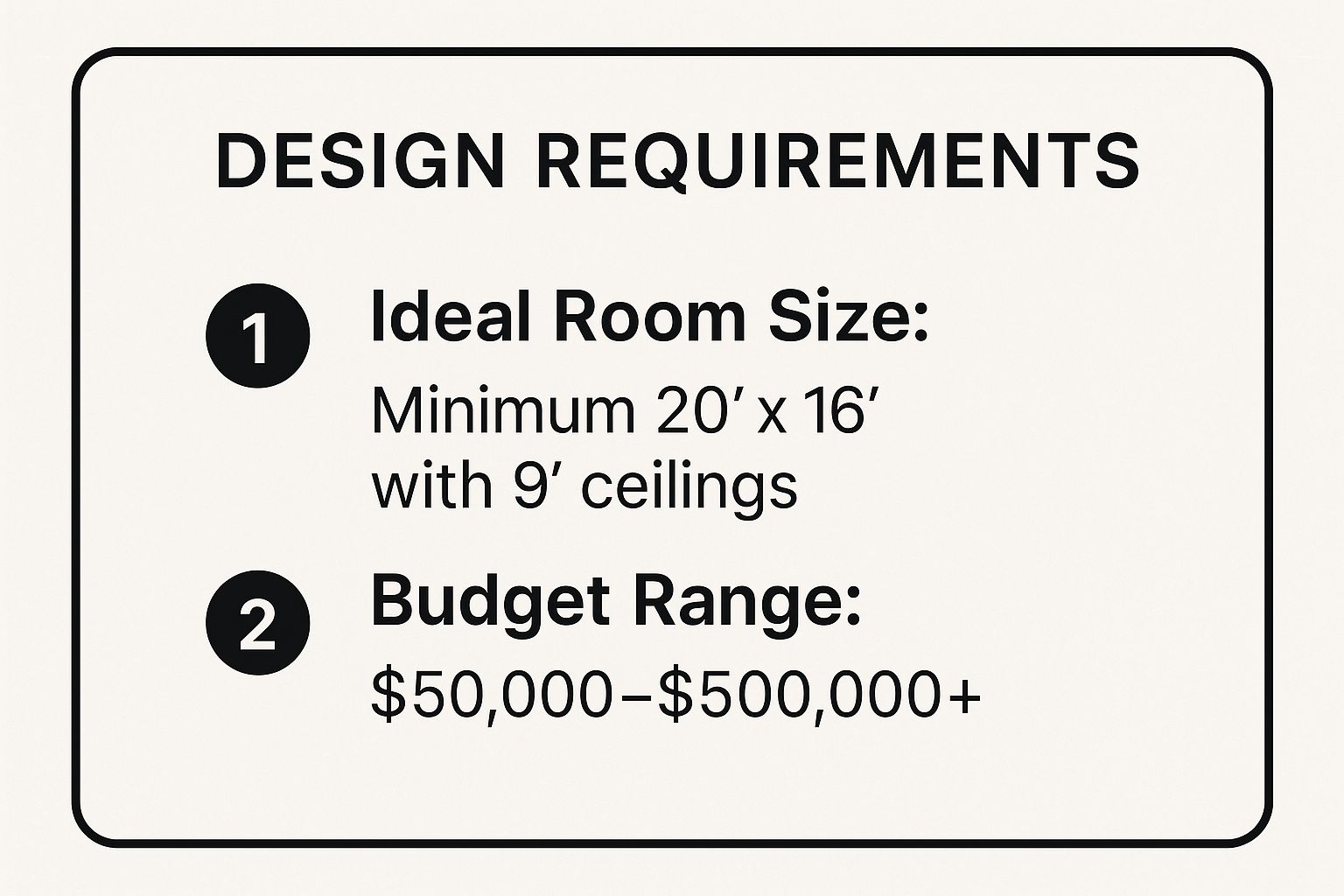
As the data shows, realising a dedicated cinema involves a significant commitment of both space and budget, reflecting the highly specialised nature of its design and construction.
Visual Inspiration
For a glimpse into the process and potential of a dedicated cinema room, this video showcases a high-end installation that embodies the principles of tiered seating and acoustic precision.
2. The Basement Home Theatre Conversion
Converting an existing basement into a home cinema is one of the most practical and effective home cinema design ideas. This approach leverages the inherent qualities of a subterranean space: its natural darkness, isolation from the main household, and structural separation, which provides excellent acoustic containment. The result is a purpose-built entertainment environment that feels both integrated and secluded.
This strategy is particularly popular in suburban homes across the UK, where under-utilised basement or cellar space can be transformed into a high-value leisure facility. The absence of windows eliminates external light pollution, a critical factor for achieving true cinematic black levels and vibrant colour saturation on screen. Furthermore, the surrounding earth provides a natural sound barrier, preventing noise from disturbing the rest of the home and vice versa.
By capitalising on these existing conditions, a basement conversion can become a highly efficient route to a dedicated theatre room. Specialist projects, such as those involving significant structural alterations, often require expert planning to maximise the potential of the space. To explore the possibilities of such conversions, you can learn more about our basement extension services and how they can be adapted for leisure facilities.
Key Considerations for Implementation
A successful basement conversion hinges on addressing the unique challenges of a below-ground environment before focusing on the cinematic technology.
Moisture and Climate Control: Basements are prone to dampness. It is essential to conduct a thorough damp-proofing assessment and install a robust moisture barrier and ventilation system. A dedicated climate control unit will maintain a stable temperature and humidity, protecting sensitive electronic equipment.
Wiring and Utilities: Plan all electrical, low-voltage (for speakers, projectors, and control systems), and network wiring early in the process. A drop ceiling is a practical choice, concealing cables and ductwork while providing easy access for future upgrades or maintenance.
Acoustic Management: While basements offer good sound isolation, their hard concrete surfaces can create harsh echoes and poor acoustics internally. Employing stud walls with acoustic insulation, fabric wall panels, and thick-pile carpeting is vital to absorb sound and create a balanced audio environment.
Strategic Lighting Design: With no natural light, a multi-layered lighting scheme is crucial. Combine general ambient lighting with focused task lighting and, most importantly, subtle, dimmable accent lights like step-level LEDs and wall sconces to create a true cinema atmosphere.
3. Living Room Cinema Integration
For homeowners who desire a cinematic experience without sacrificing the everyday functionality of their main living area, integrated design is the perfect solution. This approach cleverly embeds high-performance audio-visual technology within an existing or newly designed living room, creating a dual-purpose space that is both a comfortable family hub and a high-impact entertainment zone. It prioritises discretion and aesthetic harmony, with components that disappear when not in use.
This is one of the most versatile home cinema design ideas, ideal for open-plan properties or homes where a dedicated theatre room is not feasible. The focus is on seamless concealment: motorised screens retract into the ceiling, projectors are housed in custom joinery, and speakers are flush-mounted into walls, preserving the room's primary interior design. Systems from brands like Sonos offer powerful, wireless audio that eliminates cable clutter, while smart TVs like Samsung's 'The Frame' double as artwork, blending technology and décor.

The result is a sophisticated, uncluttered environment that can transform from a bright, social space into an immersive cinema at the touch of a button. It provides a premium viewing experience while respecting the architectural integrity and daily use of the most important room in the home, a common requirement in refurbishments across areas like Clapham and Fulham.
Key Considerations for Implementation
A successful living room cinema hinges on balancing high performance with minimal visual intrusion. Smart planning and technology selection are paramount.
Light Control is Crucial: Ambient light is the biggest challenge. Invest in motorised, floor-to-ceiling blackout blinds or curtains that can be integrated into a smart home system like Control4 for one-touch operation.
Discreet Audio Solutions: To maintain a clean aesthetic, opt for in-wall or in-ceiling speakers from brands like Monitor Audio or Bowers & Wilkins. These can be plastered over and painted to match the wall colour, becoming virtually invisible while delivering immersive sound.
Intelligent Equipment Storage: Conceal AV receivers, media players, and consoles within bespoke cabinetry that features adequate ventilation to prevent overheating. Infrared (IR) repeaters or radio frequency (RF) remotes allow you to control the equipment even when it's hidden from view.
Projection and Screen Technology: For a truly big-screen feel, an ultra-short-throw (UST) projector placed on a console just below the screen is an excellent choice. It minimises shadows from people walking past and works well with an Ambient Light Rejecting (ALR) screen, which enhances picture contrast in brighter rooms.
4. Luxury Home Theatre with Full Automation
For those seeking the ultimate in convenience and sophistication, a fully automated luxury home theatre represents the pinnacle of residential entertainment technology. This approach integrates every aspect of the cinema environment - lighting, audio, video, climate, and even seating - into a single, seamless control system. The experience begins with a single touch, transforming the room from a quiet space into a perfectly calibrated cinematic environment in moments.
This concept stands out among home cinema design ideas as it focuses on the user experience above all else. Instead of fumbling with multiple remotes and settings, automation allows presets to be programmed for any scenario, from "Film Night" to "Gaming" or "Concert". High-end residential projects, particularly those seen in areas like Malibu or Beverly Hills, frequently feature these systems, where companies like Crestron Electronics have set the standard for robust, intuitive control over complex technological ecosystems.
The goal is to create an environment that responds effortlessly to the user's desires, removing all technical barriers to immersion. Specialist installers, such as those at Electronic Concepts, engineer these systems to be both powerful and completely discreet, ensuring technology enhances the experience without dominating the aesthetic.
Key Considerations for Implementation
A successful automated cinema requires deep integration and professional expertise from the outset. The network and control system are the invisible backbone of the entire experience.
Robust Network Infrastructure: A high-speed, enterprise-grade wired and wireless network is non-negotiable. This ensures instantaneous response times and flawless streaming of high-bitrate 4K or 8K content without buffering or delays.
Certified System Integration: Work exclusively with certified integrators for platforms like Crestron or Control4. Their expertise is crucial for programming complex macros (e.g., dim lights, lower screen, activate projector, set audio mode) and ensuring all components communicate flawlessly.
Plan for Future Upgrades: Technology evolves rapidly. A well-designed system architecture will allow for future hardware upgrades, such as new projector technologies or audio formats, without requiring a complete system overhaul.
Professional Calibration and Training: Invest in professional audio and video calibration after installation to optimise performance for your specific room. Comprehensive user training is also vital to ensure you can use the system to its full potential and troubleshoot minor issues.
5. Outdoor Cinema Design
Blurring the lines between sophisticated home entertainment and the natural environment, the outdoor cinema transforms gardens, patios, and rooftops into enchanting alfresco viewing spaces. This approach moves beyond the confines of four walls, leveraging weather-resistant technology to deliver a high-quality audio-visual experience under the stars. It prioritises a unique blend of comfort, technology, and connection with nature, making it one of the most atmospheric home cinema design ideas available.
This concept has gained significant popularity in luxury properties across South West London, where maximising the use of premium outdoor space is a key design consideration. Instead of being an afterthought, the outdoor cinema is an integrated part of a home's leisure facilities, perfect for warm summer evenings, family gatherings, or hosting unique social events. Projects range from discreet, pop-up solutions to fully permanent installations with dedicated seating areas and architectural integration.
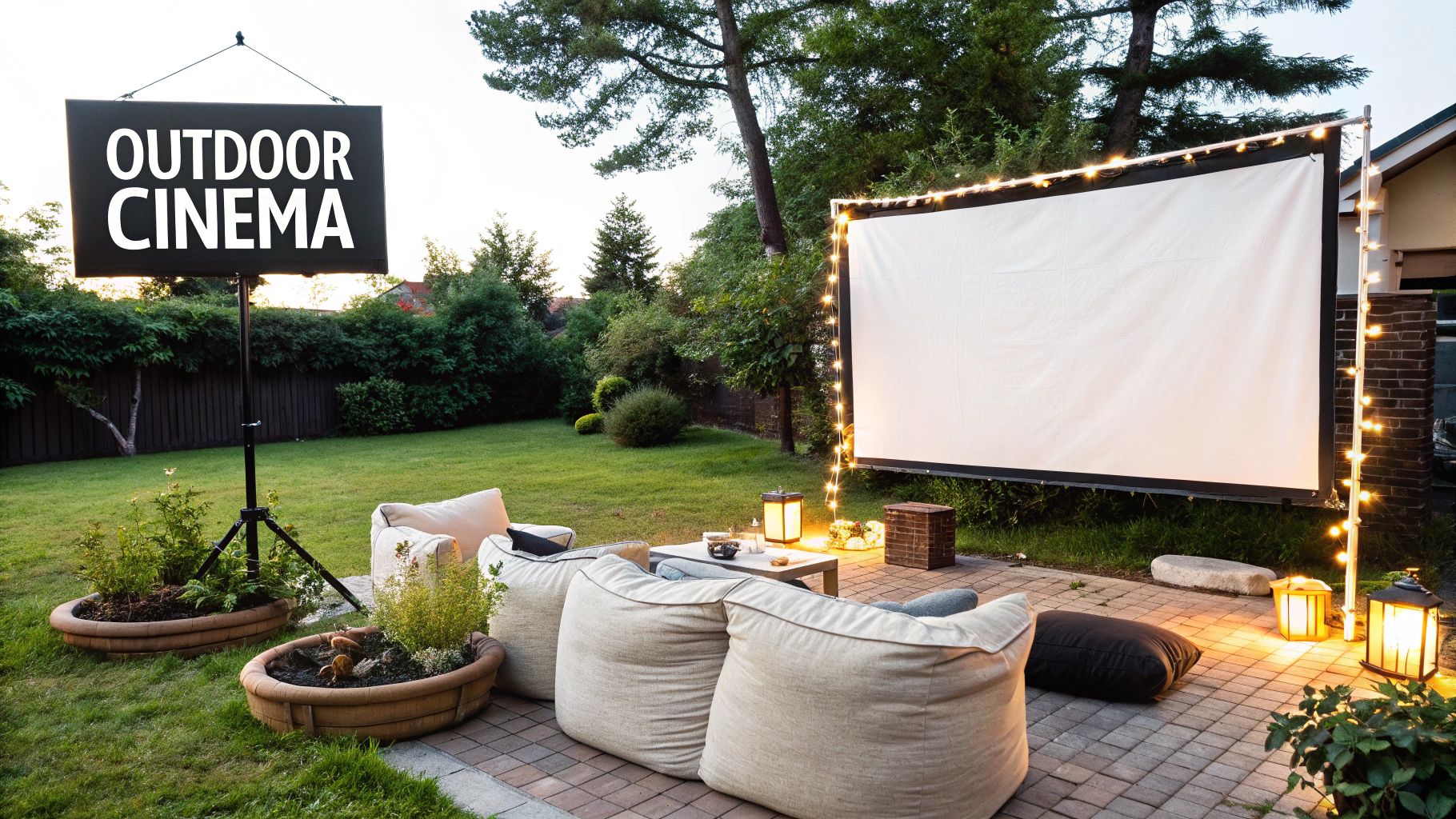
Unlike an indoor setup, an outdoor cinema embraces ambient conditions rather than fighting them. The focus is on creating a magical, multisensory experience where the film is enhanced by the surrounding environment. Find inspiration for creating your ideal alfresco entertainment area by exploring our guide to designing exceptional outdoor living spaces. The result is a memorable and highly social way to enjoy film, television, or even major sporting events.
Key Considerations for Implementation
A successful outdoor cinema requires careful selection of equipment that can withstand the elements and perform in less-than-ideal lighting conditions.
Projection and Screen Choice: A high-lumen projector (at least 3,000 lumens) is essential to produce a bright, clear image that can compete with ambient light at dusk. Pair this with a dedicated outdoor screen; options range from large, portable inflatable screens for flexibility to permanent, weatherproof fixed-frame models for a more polished installation.
Weather-Resistant Audio: Use specialised outdoor speakers designed to resist moisture, dust, and temperature fluctuations. These can be discreetly mounted on walls, disguised as rocks, or integrated into landscaping to deliver immersive sound without compromising garden aesthetics.
Power and Connectivity: Plan for strategically placed, weatherproof outdoor power outlets to avoid trailing extension leads across lawns. A robust outdoor Wi-Fi extender is also crucial to ensure seamless streaming from your chosen media source.
Comfort and Ambience: Enhance the experience with comfortable outdoor seating, such as deep-cushioned sofas or weatherproof beanbags. Incorporate elements like fire pits or patio heaters for warmth on cooler evenings and consider citronella candles or other subtle insect control measures for viewer comfort.
6. Minimalist Modern Theatre Design
For those who favour clean lines and uncluttered aesthetics, the minimalist modern theatre design offers a sophisticated alternative to traditional cinema rooms. This approach prioritises sleek, integrated technology and a refined, subtle décor. The core philosophy is to create a high-performance audio-visual environment where the technology enhances, rather than dominates, the space, often disappearing completely when not in use.
This design is one of the most versatile home cinema design ideas because it seamlessly integrates into contemporary living spaces, from open-plan layouts in converted warehouses to modern new builds. It rejects the ornate visual cues of classic cinemas, instead drawing inspiration from Scandinavian design principles and the work of minimalist architects. The result is a calm, visually cohesive room where the focus remains squarely on the viewing experience, free from distraction.
Brands like Bang & Olufsen have long championed this approach, creating audio-visual products that function as pieces of art. The goal is to achieve a perfect balance between form and function, ensuring that cutting-edge performance is delivered within a serene and elegant architectural shell. This philosophy is central to creating cohesive and refined living environments, a key aspect of contemporary interior architecture.
Key Considerations for Implementation
A successful minimalist cinema hinges on clever integration and a disciplined approach to material and technology selection.
Concealed Technology: The cornerstone of this design is hidden tech. Invest in high-quality in-wall and in-ceiling speakers that deliver immersive sound without any visual footprint. Motorised panels, custom joinery, or projection screens that retract into ceiling coffers can hide equipment and screens entirely.
Integrated Lighting Control: A sophisticated, programmable lighting system is essential. Use recessed LED strips, architectural downlights, and concealed light sources to create layered, ambient scenes that can be adjusted at the touch of a button, transforming the room’s atmosphere instantly.
Acoustic-Friendly Materials: Maintain a minimalist aesthetic without compromising on sound quality. Use large-format, fabric-wrapped acoustic panels in neutral tones that blend into the walls, or select high-pile, single-colour carpets and soft, textural furnishings to absorb sound effectively.
Multifunctional Furniture: Choose sleek, modern seating and cabinetry with integrated storage. Ottomans that open up, side tables with hidden compartments, and media units designed to conceal controllers and cables are vital for maintaining a clutter-free environment.
7. Vintage Cinema-Themed Design
For the cinephile with a deep appreciation for film history, the vintage-themed cinema offers a nostalgic escape into the golden age of movie-going. This approach moves beyond simple décor, aiming to meticulously recreate the period atmosphere of a classic picture palace or a beloved era of cinema. It’s an immersive design concept that transforms the room into a celebration of cinematic heritage.
This is one of the most characterful home cinema design ideas because it prioritises atmosphere and storytelling. Whether recreating the opulent Art Deco glamour of a 1930s theatre or the charming Americana of a 1950s drive-in, the goal is to create a transportive experience. Such designs are particularly effective in dedicated spaces where every detail, from the velvet rope to the popcorn machine, contributes to the period-specific illusion, offering a unique departure from modern, minimalist aesthetics.
The authenticity of this theme relies on a careful balance of genuine vintage finds and high-quality reproductions. Collectors and theme-based interior designers often lead these projects, sourcing period-appropriate fixtures and memorabilia to build an environment that feels both luxurious and historically faithful. The result is not just a room for watching films, but a living museum dedicated to the magic of cinema.
Key Considerations for Implementation
Executing a convincing vintage theme requires a deep commitment to detail and historical accuracy. The key is to blend period style with modern high-performance technology seamlessly.
Period-Specific Research: Choose a specific era, such as the Art Deco 1930s or the mid-century 1950s, and research its distinct architectural and design motifs. This will inform your choices for colour palettes, patterns, furniture, and lighting fixtures.
Authentic Décor Elements: Source genuine or high-quality reproduction items. Think classic film posters in period-correct frames, vintage-style marquee signage with custom lettering, and perhaps even a restored vintage concession stand as a functional or decorative piece.
Seating and Fabrics: Select seating that reflects the chosen era. Lush velvet or mohair fabrics in deep reds, blues, or golds evoke the classic cinema feel, while custom-built seating can replicate the distinctive styles of historic movie theatres.
Lighting and Atmosphere: Use era-appropriate lighting, such as ornate wall sconces or brass fixtures, controlled by a modern smart lighting system. This allows you to create an authentic ambient glow that transitions perfectly into a viewing environment at the touch of a button.
8. Multi-Purpose Media Room
For homes where a dedicated, single-purpose cinema is not feasible or desired, the multi-purpose media room offers a highly practical and versatile solution. This approach transforms a family room, bonus room, or basement into a flexible entertainment hub that seamlessly adapts to various activities. It’s a space designed for modern living, capable of hosting a film night, an immersive gaming session, or a lively gathering to watch a major sporting event with equal finesse.
This design is one of the most popular home cinema design ideas because it prioritises adaptability without heavily compromising on quality. Rather than dedicating a room solely to cinematic purism, it creates an environment that supports the diverse entertainment needs of a household. This is particularly effective in properties across areas like Clapham or Wandsworth, where family living and flexible spaces are paramount. The goal is to create a high-performance audio-visual setup that can be easily reconfigured or subtly integrated when the room is used for other social functions.

The success of a multi-purpose room hinges on smart design and technology choices that allow for quick transitions. For example, a motorised screen and projector can retract into the ceiling, making them invisible for casual gatherings, while a large-screen television offers a high-quality display for everyday viewing. The result is a sophisticated, functional space that enhances daily life rather than being reserved for special occasions.
Key Considerations for Implementation
A successful multi-purpose room balances high-performance AV with everyday usability. Planning focuses on versatility, discreet technology, and adaptable furnishings.
Adaptable Seating: Combine different seating types to suit various activities. A large, comfortable sofa is ideal for family film nights, while individual armchairs or beanbags can be moved around for gaming or socialising. Consider modular seating that can be easily rearranged.
Intelligent Lighting Control: A layered lighting scheme is essential. Use dimmable overhead lights, accent lighting, and task lighting that can be controlled via a smart system like Control4 or Lutron. This allows you to create the perfect ambiance for any activity, from bright and social to dark and cinematic.
Discreet Technology: Opt for solutions that blend into the décor. In-wall or in-ceiling speakers provide immersive sound without visual clutter. Projector screens that retract into the ceiling and equipment housed in custom-built cabinetry maintain a clean, uncluttered aesthetic when not in use.
Versatile Connectivity: Plan for multiple input sources to accommodate games consoles, streaming devices, and laptops. A well-organised AV receiver or matrix switcher is crucial for easily toggling between different devices without constantly swapping cables. Ensure ample, accessible power sockets and data points are integrated into the room's design.
9. Acoustic-Focused Theatre Design
For the dedicated audiophile, a home cinema is as much an auditory experience as it is a visual one. The acoustic-focused theatre design prioritises audio performance above all other considerations, creating a sonically pure environment where sound is reproduced with reference-quality clarity and precision. This approach transforms a room into a finely tuned instrument, engineered to eliminate distortion, unwanted reflections, and external noise.
This is one of the most technically demanding home cinema design ideas, often pursued by those who seek to replicate the sound quality of a professional recording studio or a THX-certified commercial cinema. The goal is to hear the film's soundtrack exactly as the sound designers intended, with every subtle nuance and explosive impact delivered with breathtaking realism. Projects in high-value London properties often incorporate this level of acoustic engineering in basement conversions, where the subterranean setting aids in natural sound isolation.
The design relies on scientific principles, employing specialist materials and construction techniques to control how sound behaves within the space. Firms renowned for high-end audio, such as McIntosh, often supply the heart of these systems, but the room itself is the most critical component. The result is an immersive soundscape that is incredibly dynamic, articulate, and completely enveloping.
Key Considerations for Implementation
Achieving acoustic perfection requires a design-led approach where audio integrity informs every decision, from room dimensions to final finishes.
Engage an Acoustic Consultant: Bring in a professional acoustician early in the design phase. They can analyse the room's dimensions and advise on ideal speaker placement, listener positioning, and the specific treatments required to manage bass and tame reflections.
Optimise Room Ratios: The dimensions of the room have a profound impact on low-frequency sound waves. Following established acoustic ratios helps prevent the build-up of standing waves, which can cause uneven and boomy bass responses.
Invest in Sound Isolation: True acoustic focus requires a two-pronged approach: isolating the room from external noise and preventing sound from escaping. This involves constructing a 'room-within-a-room' with decoupled walls, floating floors, and heavy-duty acoustic doors.
Implement Acoustic Treatments: Once the room is isolated, internal acoustics must be managed. This involves a strategic combination of absorption panels to reduce echo, diffusion panels to scatter sound waves for a more spacious feel, and bass traps to control low-frequency energy.
Professional Calibration: The final step is a professional calibration of the audio system using specialised microphones and software. This process fine-tunes the system's output to the room's unique acoustic signature, ensuring a perfectly balanced and accurate audio performance.
Home Cinema Design Ideas Comparison Matrix
Item | Implementation Complexity 🔄 | Resource Requirements ⚡ | Expected Outcomes 📊 | Ideal Use Cases 💡 | Key Advantages ⭐ |
|---|---|---|---|---|---|
Dedicated Theatre Room with Tiered Seating | Very high: structural mods & multi-level seating | High: custom construction, professional gear | Authentic cinema experience; max viewing angles | Large dedicated spaces; luxury homes | Unobstructed views; increases home value |
Basement Home Theatre Conversion | Moderate: waterproofing & HVAC adjustments | Moderate: use existing space, basic upgrades | Quiet, dark, private environment | Homes with available basement areas | Cost-effective; natural sound isolation |
Living Room Cinema Integration | Low to moderate: integrating tech in multifunctional space | Low to moderate: wireless & hidden equipment | Balanced entertainment with everyday use | Open living rooms needing multi-functionality | Budget-friendly; family accessible |
Luxury Home Theatre with Full Automation | Very high: advanced automation & professional setup | Very high: premium systems & integration costs | Seamless, high-end theatre experience | High-net-worth individuals; tech enthusiasts | Ultimate convenience; customisable |
Outdoor Cinema Design | Low to moderate: weatherproofing & portable setup | Moderate: durable equipment & seating | Unique, seasonal alfresco entertainment | Backyards, patios, resorts | Connection with nature; great for gatherings |
Minimalist Modern Theatre Design | Moderate: clean design & hidden tech installation | Moderate: high-quality materials & discreet gear | Sleek, timeless aesthetic with good performance | Modern homes valuing aesthetics | Easy maintenance; technology discreet |
Vintage Cinema-Themed Design | Moderate: themed decor and authentic/repro pieces | Moderate to high: vintage items can be pricey | Immersive nostalgic atmosphere | Movie enthusiasts; themed entertainment rooms | Strong character; unique expression |
Multi-Purpose Media Room | Moderate: flexible design and equipment setup | Moderate: versatile gear and seating | Versatile entertainment space | Families with diverse entertainment needs | Maximum utility; cost-effective |
Acoustic-Focused Theatre Design | High: specialised acoustic treatment & calibration | High: professional audio equipment & construction | Superior, professional-grade audio experience | Audiophiles & sound-critical users | Studio-quality sound; minimal leakage |
Partnering with Architects to Realise Your Vision
Embarking on the journey to create a dedicated home cinema is a significant investment in your property and lifestyle. Throughout this article, we have explored a diverse collection of home cinema design ideas, from the classic allure of a dedicated theatre room with tiered seating to the innovative integration of an outdoor cinema. We’ve delved into basement conversions perfect for London properties, the seamless fusion of technology within a multi-purpose living space, and the sheer indulgence of a fully automated luxury theatre.
The common thread weaving through these concepts is that a truly exceptional home cinema is not merely an assembly of high-end equipment. It is a meticulously designed architectural space where form and function converge. The most successful projects are those where acoustic performance, aesthetic appeal, and user experience are considered in unison from the very beginning.
From Concept to Immersive Reality
Mastering the art of home cinema design means moving beyond a simple checklist of components. It involves understanding the intricate relationship between room dimensions, surface materials, lighting schemes, and technology.
Key takeaways to carry forward include:
Acoustics are Paramount: As highlighted in our acoustic-focused design idea, treating the room itself is as crucial as selecting the right speakers. Professional acoustic analysis and tailored solutions like absorption panels, diffusers, and bass traps are non-negotiable for achieving crystal-clear, immersive audio.
Lighting Sets the Mood: The difference between a good and a great cinema is often the lighting. A multi-layered, fully controllable lighting scheme, incorporating everything from discreet step lights to feature ceiling installations, creates the authentic cinematic atmosphere.
Integration is Everything: Whether it's a dedicated room or a hidden system in your living area, seamless integration is the hallmark of luxury. This means concealing speakers, wiring, and projectors within the fabric of the building, often requiring bespoke joinery and clever architectural detailing.
Your Vision is Unique: From minimalist modern aesthetics to a nostalgic vintage theme, your personal style should define the space. The best home cinema design ideas are those that are personalised to reflect your tastes and enhance your home’s overall design narrative.
Ultimately, the goal is to craft an environment that transcends the ordinary, a private sanctuary where you can escape, be entertained, and create lasting memories with family and friends. This requires a holistic approach that balances technical requirements with sophisticated interior design, a task perfectly suited to an architect-led process. An architect acts as the central conductor, orchestrating the complex collaboration between AV specialists, interior designers, structural engineers, and builders. They ensure that your home cinema is not an afterthought but a core, harmonised element of your home's architectural identity, whether it's part of a major refurbishment in Richmond or a new basement extension in Wimbledon. This integrated approach guarantees that every detail, from sightlines and seating ergonomics to sound isolation and aesthetic finishes, is executed to the highest standard, realising a vision that is both technically flawless and beautiful to inhabit.
Transforming these ideas into a tangible, breathtaking reality requires expert guidance and a deep understanding of luxury residential architecture. At Harper Latter Architects, we specialise in integrating state-of-the-art home cinemas into bespoke new builds and major refurbishments across South West London. We collaborate with the industry’s leading specialists to ensure your home cinema is a seamless and spectacular addition to your home. Explore our portfolio and discover how we can help bring your vision to life by visiting us at Harper Latter Architects.