
New Home Planner: Build Your Dream SW London Property
You may be sitting with a Rightmove folder full of saved references, a plot appraisal on your desk, and a rough sketch of the house you've wanted for years. Perhaps it's a clean-lined new build in Wimbledon, a more classical home in Richmond, or a sensitive reworking of a site near a conservation area where every decision will be examined closely. At this stage, most clients aren't short of ideas. They're short of a framework.
That's where a new home planner becomes useful. Not as a mood board, and not as a generic checklist, but as a practical way to organise decisions that affect planning, budget, liveability and long-term value. In South West London, that matters more than many homeowners expect. A beautiful concept can still stall if the site constraints, authority expectations and technical implications weren't addressed early enough.
The most successful projects begin with a disciplined brief. They also begin with honesty. What do you want from the house, what will the site allow, and where should you spend money to improve daily life rather than enlarge the building. For high-end homes, those questions shape everything from massing and glazing to basement strategy, joinery, garden design and environmental performance.
From Dream to Blueprint Defining Your Vision
Many homeowners begin with rooms. A larger kitchen, a proper principal suite, a study that doesn't feel borrowed from the landing, perhaps a basement cinema or garden room. That's understandable, but rooms are only the surface layer of the brief.
The stronger starting point is lifestyle. How do you leave the house in the morning. Where do children drop bags and muddy shoes. Do you entertain formally, or does everyone gather around the island. Do you want visual drama, privacy, calm, or all three in different parts of the plan. Those answers produce better architecture than copying a floor plan from another property.

Start with how you want to live
A useful brief separates must-haves, high-value wants and nice extras. Clients often think they need more square footage than they do. In practice, better circulation, more disciplined storage and stronger connections between inside and outside usually improve daily life more than one additional reception room.
Consider these briefing prompts:
Morning routine: Where do you want natural light first. In the kitchen, bedroom, gym, or bathroom?
Hosting style: Do guests stay in one social space, or do you want a sequence of rooms with different moods?
Privacy: Should family bedrooms cluster together, or should older children and guest accommodation sit apart?
Working from home: Does the study need acoustic separation for calls, or a quiet visual backdrop?
Garden relationship: Is the outdoor space meant for entertaining, play, screening, or all-season use?
Clients who've explored how to design your own home before their first meeting usually arrive with sharper priorities and fewer assumptions carried over from unsuitable precedent projects.
Test the site before you fall in love with the scheme
In South West London, the site shapes the brief as much as the family does. Planning permission complexities are significant: conservation areas often require additional scrutiny, with typical approval timelines of 8-12 weeks for standard applications extending to 13 weeks or more. Understanding these local authority requirements from the outset is critical for realistic project planning.
That has practical consequences. A double-height glazed rear elevation may suit one plot and fail badly on another. A basement may look straightforward on paper but become more involved once neighbouring properties, trees, rights of light, excavation logistics and heritage context are considered. A listed or historically sensitive setting changes the discussion again.
Practical rule: Don't brief a house as if the plot were neutral. In Wimbledon, Richmond and Chiswick, local character, conservation policies and neighbour impact often decide what moves forward smoothly and what doesn't.
A realistic vision is never less ambitious. It's better informed. When the brief reflects both aspiration and constraint, the design process becomes faster, calmer and more commercially sensible.
Your Project Timeline and Key Milestones
Most bespoke homes don't go wrong because the design lacks ambition. They go wrong because decisions are made too late, in the wrong order, or without understanding which stage locks in cost and risk. A strong programme isn't a bureaucratic exercise. It protects the quality of the finished house.
A good new home planner should treat the project as a sequence of approvals, design tests and information packages, not as one long blur between first sketch and completion.
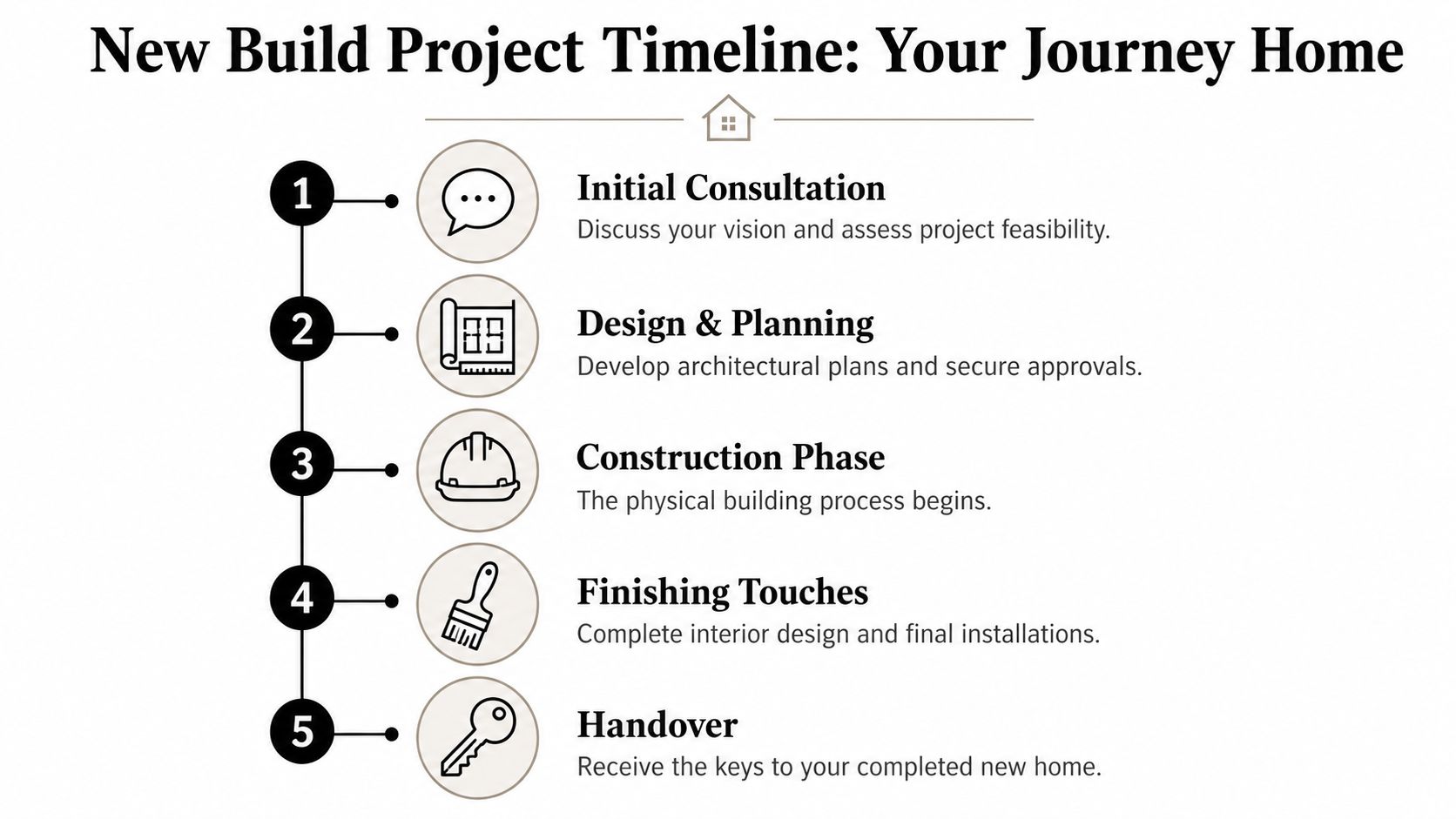
The journey in practical terms
Most high-end residential projects move through recognisable stages. The names vary slightly between practices, but the logic is consistent.
Initial consultation and feasibility The project is tested here against the site, your priorities, likely planning position and broad budget logic. Early warning signs also appear during this stage. If the plot has heritage sensitivities, awkward access, or a brief that's out of step with the site, it's far better to discover that now.
Concept design Several strategic choices are made here. Overall form, orientation, massing, principal room relationships, basement approach, and the core character of the house. This is also the point at which sustainability decisions have the greatest influence. Integrating sustainability early in the design process is key. Research shows that energy-efficient new builds in the UK can reduce operational carbon by 40-60%. Making decisions on fabric-first approaches and renewable technologies during the concept stage has the greatest impact on long-term performance and running costs.
Developed design Once the concept is agreed, the scheme is refined. Window proportions, stair design, joinery intent, material palette, bathroom layouts, kitchen logic and planning documentation all become more specific. Clients often underestimate how important this stage is. It's where many elegant ideas either gain discipline or start to unravel.
Planning and statutory submissions The application package needs to do more than describe the proposal. It has to justify it. In sensitive South West London settings, planning drawings, design rationale and heritage argument often carry as much weight as the design itself.
Technical design and procurement At this stage, the house becomes buildable. Construction details, coordination with structural and services consultants, specifications, and tender information all need to align. Many expensive site problems begin with incomplete technical decisions.
The client decisions that matter most
Clients don't need to micromanage every drawing package. They do need to make certain decisions at the right moment.
Stage | Decisions that should not drift |
|---|---|
Feasibility | Brief priorities, site appetite, planning risk tolerance |
Concept | Layout direction, scale, design language, sustainability strategy |
Developed design | Material character, room-by-room functionality, storage, joinery intent |
Technical design | Performance requirements, fixture standards, detailing expectations |
Construction | Quality control, finish approvals, variation discipline |
The earlier a decision affects structure, envelope, servicing or planning, the more expensive it becomes to reverse later.
Why sequence matters more than speed
Some decisions feel urgent and aren't. Pendant lights can wait longer than drainage strategy. Sofa selection matters less than stair geometry. Paint colours matter less than whether the glazing proportions work with overheating control, privacy and planning acceptability.
This is why the RIBA Plan of Work for UK homeowners remains useful. It gives shape to a process that clients often experience only once or twice in a lifetime. The point isn't to make the journey feel technical. It's to make it legible.
Where projects lose momentum
In my experience, there are three common slowdowns:
Changing the brief too often: Adding a pool, rethinking the roof form, or moving the principal suite after concept sign-off has wider consequences than most clients expect.
Making finishes too early: Choosing stone before room proportions and natural light are resolved often leads to decorative decisions carrying too much weight.
Treating planning as an administrative stage: On constrained sites, planning shapes design from the start. It isn't a form-filling exercise at the end.
The best projects feel measured from the outset. They still evolve, but they evolve in the right places.
Budgeting for a Bespoke South West London Home
A luxury home budget is rarely defeated by one dramatic mistake. More often, it gets diluted by a series of untested assumptions. A larger footprint than the site really supports. A basement whose complexity was understated. Materials chosen for appearance without understanding installation demands. Amenities added one by one until the house is carrying too much technical burden.
That's why a serious new home planner must address budget structure, not just budget ambition.
What your investment actually needs to cover
Clients often arrive with a build figure in mind and assume it represents the project total. It doesn't. For a bespoke house in South West London, the total financial picture usually includes:
Main construction cost: The shell and fit-out of the building itself, including any basement, structural interventions and external works within the building contract.
Professional fees: Architectural services, structural engineering, planning consultancy where needed, surveys, specialist consultants and other statutory input.
Interiors and joinery: Bespoke staircases, wardrobes, kitchens, media units and dressing rooms often sit above the baseline assumptions clients make early on.
Exterior works: Terraces, retaining walls, planting strategy, lighting, drainage, outdoor kitchens and garden structures can materially affect the final spend.
VAT and allowances: These must be understood early rather than absorbed as a surprise later.
Contingency: Especially important where site conditions, basement work or heritage constraints could introduce complexity.
A useful benchmark isn't a simplistic cost per square metre. It's a realistic understanding of which parts of the project are fixed, which are variable, and which are still undefined.
London-specific costs clients often miss
South West London introduces planning and regulatory costs that generic online planners usually ignore. Depending on the scheme, you may need to consider Community Infrastructure Levy, potential Section 106 obligations, specialist heritage documentation, transport or arboricultural input, and more involved planning negotiation where the site sits in a sensitive context.
Those items don't affect every project equally, but they can change viability and should be tested before the design hardens around assumptions that won't hold.
A disciplined budget isn't anti-design. It gives design room to be precise where it matters.
Spend where change is difficult
Some parts of the house are worth resolving properly during design and construction because changing them later is disruptive or wasteful.
Prioritise early thinking around:
Structure and geometry: Ceiling heights, stair placement, glazing proportions and room relationships.
Envelope performance: Insulation strategy, airtightness, window quality and shading logic.
Service preparation: Ventilation routes, plant space, drainage runs and power provision for specialist amenities.
Permanent craftsmanship: Joinery carcassing, stone interfaces, ironmongery quality and built-in lighting details.
Items such as loose furniture, decorative wall finishes and some light fittings can be adjusted with less pain later. That doesn't make them unimportant. It means they shouldn't hijack the budget before the architecture is settled.
For clients comparing fee structures and scopes, a practical starting point is this guide to UK architect fees for high-end homes. It helps frame what different professional inputs cover.
The commercial question to keep asking
At each design stage, ask one question: does this decision improve the way the house works, or only the way it appears in a rendering?
That question tends to bring clarity quickly. A cleaner structure often beats a more complicated one. Better natural light beats extra decorative layering. A slightly smaller but better resolved basement usually outperforms a larger one with compromised ceiling heights, servicing and circulation.
Affluent clients don't need to be cautious. They need to be selective.
Briefing Your Dream Amenities and Spaces
Luxury amenities work best when they're planned as part of the architecture rather than attached to it later. A cinema isn't just a dark room with a screen. A wine room isn't shelving behind glass. A high-performing social kitchen needs circulation, extraction, sightlines and storage that can cope with real life, not just a magazine shoot.

Ask better questions about each space
When clients brief amenities well, they tend to describe behaviour before appearance. That creates much stronger design outcomes.
For example:
Kitchen and family space Do you cook seriously, cater regularly, or mostly gather there because that's where everyone ends up? Should the room feel polished at all times, or can prep functions disappear behind a back kitchen or utility zone?
Basement leisure suite Is the basement for retreat, entertainment, exercise, or all three? If you want a cinema, how important are acoustics and visual isolation from the rest of the floor? If you want a gym, will it need rubber flooring, mirrored walls, fresh air and direct access to a shower?
Wine room Is it for storage, display, tasting, or collecting? A dramatic glazed enclosure can be striking, but it also introduces technical expectations around temperature stability, humidity and lighting control.
Guest accommodation Should guests feel tucked away like a boutique suite, or integrated into family life? The answer changes location, privacy and bathroom planning.
A house feels bespoke when the transitions work
Many expensive homes fail between rooms rather than within them. The kitchen may be excellent, but the route from the entrance is awkward. The cinema may impress, but it sits beside a plant room that hums. The garden terrace may be elegant, but it doesn't connect naturally to the house in winter.
That's why I encourage clients to brief transitions, not just destinations. Ask where coats go when ten guests arrive. Ask how children move from garden to shower. Ask whether a quiet study still works when the kitchen is full and the television is on below.
If an amenity needs specialist lighting, acoustic treatment, ventilation or drainage, it should be discussed before the floor plan is fixed.
This short visual reference is useful when thinking about how lifestyle spaces can be integrated into the wider home:
Brief the exterior with the same care as the interior
For high-value homes, the garden is rarely secondary. It's part of the lived architecture. A terrace should feel like an extension of the kitchen or sitting room, not a paving package added after planning. Outdoor kitchens need shelter, servicing and sensible proximity to the house. Garden rooms need a reason to exist beyond novelty.
A strong luxury brief often includes a few lines on atmosphere as well as function:
Morning use: coffee terrace, yoga deck, quiet seating.
Family use: open lawn, sturdy surfaces, visible play areas.
Evening use: dining, firepit, layered lighting, privacy from neighbours.
Year-round use: sheltered structures, planting for screening, durable materials.
A thoughtful new home planner turns vague aspirations into design instructions. That's how amenities stop being wishlist items and become spaces you'll use.
Navigating Heritage and Sustainability Regulations
In South West London, regulation isn't the enemy of design. It's part of the design brief. Clients who treat planning, heritage and sustainability as technical hurdles to clear at the end usually lose time, design quality and negotiating strength. Clients who address them early tend to produce calmer applications and better houses.
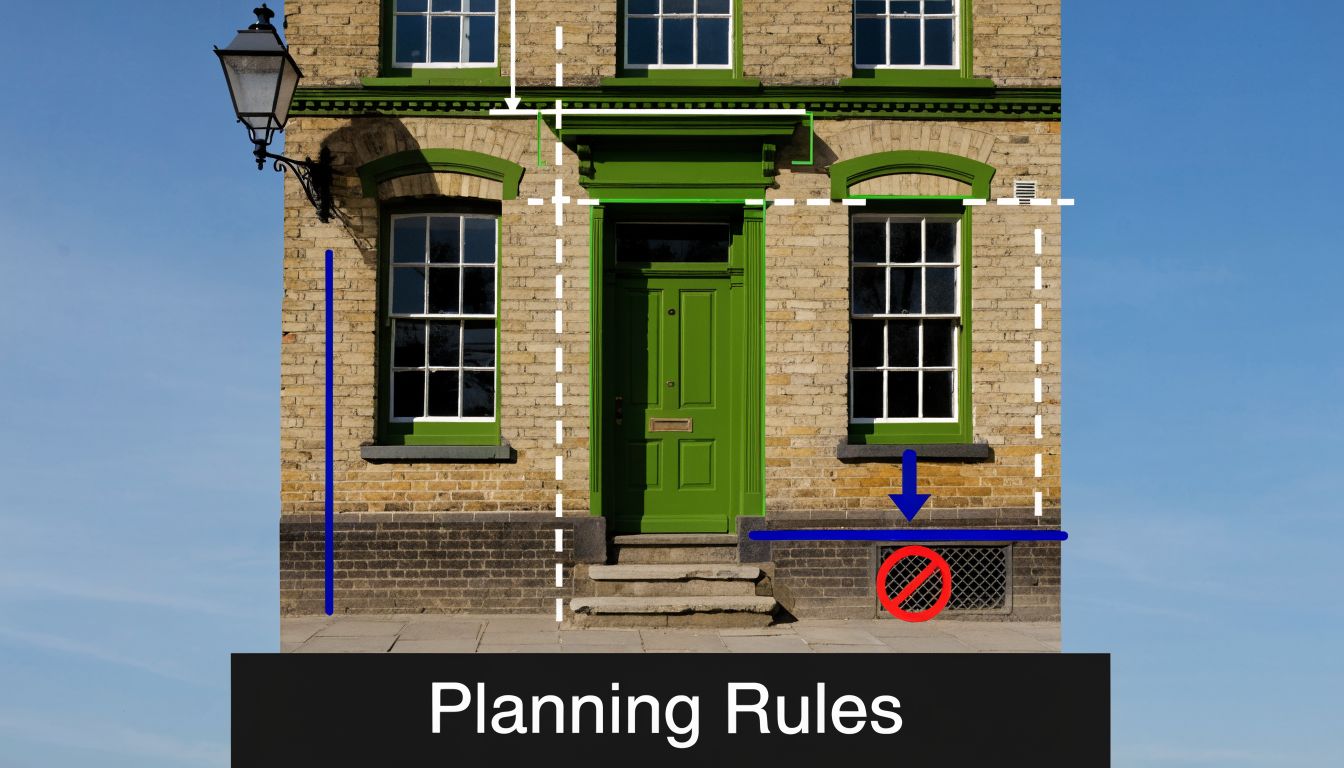
Heritage constraints need design intelligence, not nostalgia
Conservation areas and listed contexts demand more than visual politeness. Local authorities will look at massing, materials, roofscape, setting, neighbour impact and how the proposal responds to the character of the area. If the property is listed, the bar becomes higher still. The question is no longer solely whether the design looks attractive. It becomes whether it handles historic fabric and context with discipline.
That doesn't mean every heritage project must become a pastiche. In fact, forced imitation often looks less convincing than a well-judged contemporary intervention. The key is proportion, restraint and a clear understanding of what should be preserved, what may be adapted and what must be justified carefully.
Heritage approval usually depends as much on the quality of the argument as on the quality of the drawings.
Sustainability should shape the concept, not decorate it
Environmental performance works best when it's embedded in the architecture. A fabric-first approach, sensible orientation, passive solar thinking, shading, airtight construction and considered renewable integration are all far easier to deliver when they are part of the concept.
What doesn't work is adding isolated green features to a house that was designed without them in mind. A heat pump needs planning in plant space, acoustics and distribution. Large areas of glazing need discipline around overheating, privacy and energy performance. Basement amenities can be wonderful, but they also increase servicing demands and environmental complexity if handled carelessly.
Here's a simple comparison:
Reactive approach | Proactive approach |
|---|---|
Add sustainability measures late | Build performance into the concept |
Treat planning as an obstacle | Design with local policy in mind |
Separate heritage from modern living | Integrate old fabric and new use carefully |
Chase visual impact first | Balance beauty, comfort and resilience |
Why this matters commercially
A well-resolved sustainable and policy-aware house tends to age better. It is easier to occupy, easier to maintain and less vulnerable to future regulatory pressure. It also gives clients more confidence that design decisions made today won't feel shortsighted in a few years' time.
For one practical route through this process, Harper Latter Architects follows an eight-step residential design process that covers early feasibility, planning, technical design and completion, which is particularly useful on projects combining heritage sensitivity with complex lifestyle requirements.
The wider point is simple. If your plot has planning sensitivity, or your brief includes listed fabric, a basement, substantial glazing, or high-spec amenities, you need these issues in the room from the first sketch. They are not specialist side notes. They are core design drivers.
Your Next Step The Harper Latter Planner
By this point, the shape of the journey is clearer. A serious new home planner isn't a document you fill in once and forget. It becomes the decision-making spine of the project. It helps you define how you want to live, test what the site can support, sequence key choices, control cost pressure and brief the spaces that will make the house feel unmistakably yours.
That matters especially in South West London, where high-value homes often sit inside a more demanding planning and design context than generic online advice acknowledges. Conservation areas, listed settings, basement ambitions, outdoor integration and sustainability expectations all require sharper thinking at the start.
What to organise before your first design meeting
If you're preparing for a first conversation with an architect, gather practical material rather than only visual inspiration.
Bring together:
Site information: any estate agent particulars, title plan, surveys, planning history or photographs.
Lifestyle priorities: who lives there now, how that may change, how you work, host and relax.
Non-negotiables: bedroom count, parking needs, study requirements, garden priorities, accessibility concerns.
Aspirational elements: cinema, wine room, gym, pool, garden pavilion, formal entertaining space.
Commercial guardrails: a realistic investment range and where you're willing to be flexible.
That gives the discussion substance. It also makes early feasibility much more useful.
The most valuable mindset
Clients sometimes think they need to arrive with a finished solution. They don't. They need to arrive with clarity on priorities and openness about trade-offs.
A disciplined brief doesn't limit creativity. It creates the conditions for it. When the architect understands what you value most, the design can become more refined, not more generic. And when planning, technical and commercial realities are considered from day one, the finished house is usually more coherent.
The right starting point isn't a fixed floor plan. It's a brief that is ambitious, honest and organised.
If you want a practical way to consolidate your thinking, a planner aligned to the early design process is the most sensible next step. It helps separate instinct from priority, and preference from requirement, before major decisions begin.
If you're planning a bespoke home, refurbishment or heritage-led project in South West London, Harper Latter Architects can help you shape the brief, test the site and move from first ideas to a buildable, well-resolved home with confidence.