
Listed Building Renovations: A Practical Guide
Updated: Oct 13, 2025
Taking on a listed building renovation is a special kind of challenge. You're not just updating a house; you're balancing the dream of modern living with the very real responsibility of looking after a piece of British heritage. It's a role of custodianship, where every single decision has to honour the building's history and unique character.
Starting Your Listed Building Renovation

Right from the start, listed building renovations demand a different approach to your typical home improvement project. In South West London, where period properties give areas like Wimbledon and Richmond their charm, owners quickly realise they're guardians of local history.
This means that creating those much-needed modern spaces—like a sleek open-plan kitchen or a quiet home office—has to be done with incredible care. The real goal is to weave contemporary life into the historic fabric of the building without harming the very features that make it so special.
Understanding the Unique Context
Unlike any other property project, a listed building comes with a clear set of rules. The entire structure, both inside and out, is protected by law. This protection often extends to things you might not even think about, from original floorboards and internal walls to specific window frames and old chimney stacks.
Because of this legal status, your project team will need more than just an architect and builders. One of the most important people on your journey will be the local authority's conservation officer. Their job is to make sure all the work respects the building's heritage, so building a good, collaborative relationship with them from day one is absolutely key to a smooth process.
The core challenge is to make a historic building work for a 21st-century lifestyle without erasing its soul. Success lies in a design that is both respectful and imaginative, celebrating original features while introducing modern comforts sensitively.
Aligning Your Vision with Heritage Constraints
The desire to improve our homes is nothing new. Research from Aviva shows that nearly seven million UK homeowners are planning renovations in the next couple of years, with an average spend of around £14,000. A big driver, especially in London, is the shift to home working, which has led a quarter of renovators to plan extensions for more space.
For listed properties, hitting these modern goals calls for a far more considered approach. Your initial vision has to be filtered through the lens of conservation. It’s all about finding clever, sympathetic solutions that give you what you need while satisfying the strict rules of heritage protection.
This guide is here to give you that foundational knowledge, breaking down the process so you can move forward with your project confidently.
Securing Listed Building Consent
Taking on a listed building renovation throws you into a legal process that’s worlds away from a standard home improvement job. The success of your entire vision hangs on getting the right permissions, and that journey starts with understanding Listed Building Consent (LBC).
Unlike regular planning permission, which mostly cares about the outside look and use of a building, LBC governs all work that could touch a property's special architectural or historic character. This means the interior, the exterior, and even sheds or walls in the garden. The level of scrutiny is far higher because the law's number one goal is preservation.
Navigating the Application Process
First things first: you have to assume that even seemingly small changes will need formal consent. Thinking of replacing a tired 1980s kitchen? Repairing a patch of crumbling brickwork? The default position should always be to apply. Getting this wrong isn't just a planning hiccup; it's a criminal offence.
To get started, you'll need to pull together a detailed application for your local council. This is so much more than just form-filling; you're building a compelling, well-documented case for every change you want to make.
Your application pack will need to include:
Detailed architectural drawings showing the building as it is now and how you envision it after the renovation.
A Design and Access Statement that walks the council through the thinking behind your design choices.
A comprehensive Heritage Statement, which is arguably the most important document you’ll submit.
A strong Heritage Statement isn't just a history lesson. It evaluates the building's significance and shows you've deeply considered how your proposed changes will affect its special character, justifying why the work is either desirable or essential.
The quality of these documents really matters. They are the foundation of your conversation with the council's conservation officer, who will be assigned to review your case. This person is the key gatekeeper, and your job is to give them everything they need to say "yes".
Building a Relationship with Your Conservation Officer
Try to think of the conservation officer not as an obstacle, but as a specialist project advisor. Getting in touch with them early on—even before your designs are finalised—can save you a huge amount of time and money down the line. A pre-application chat is your chance to float initial ideas and get their informal feedback.
This proactive approach helps you understand their specific concerns right from the start. It shows you respect their expertise and want to work with them, which can turn them into an advocate for your project instead of an adversary. For a deeper dive into these nuances, you can explore our UK listed building planning permission guide.
The infographic below shows how the application process for listed buildings stacks up against non-listed properties, highlighting the key differences.
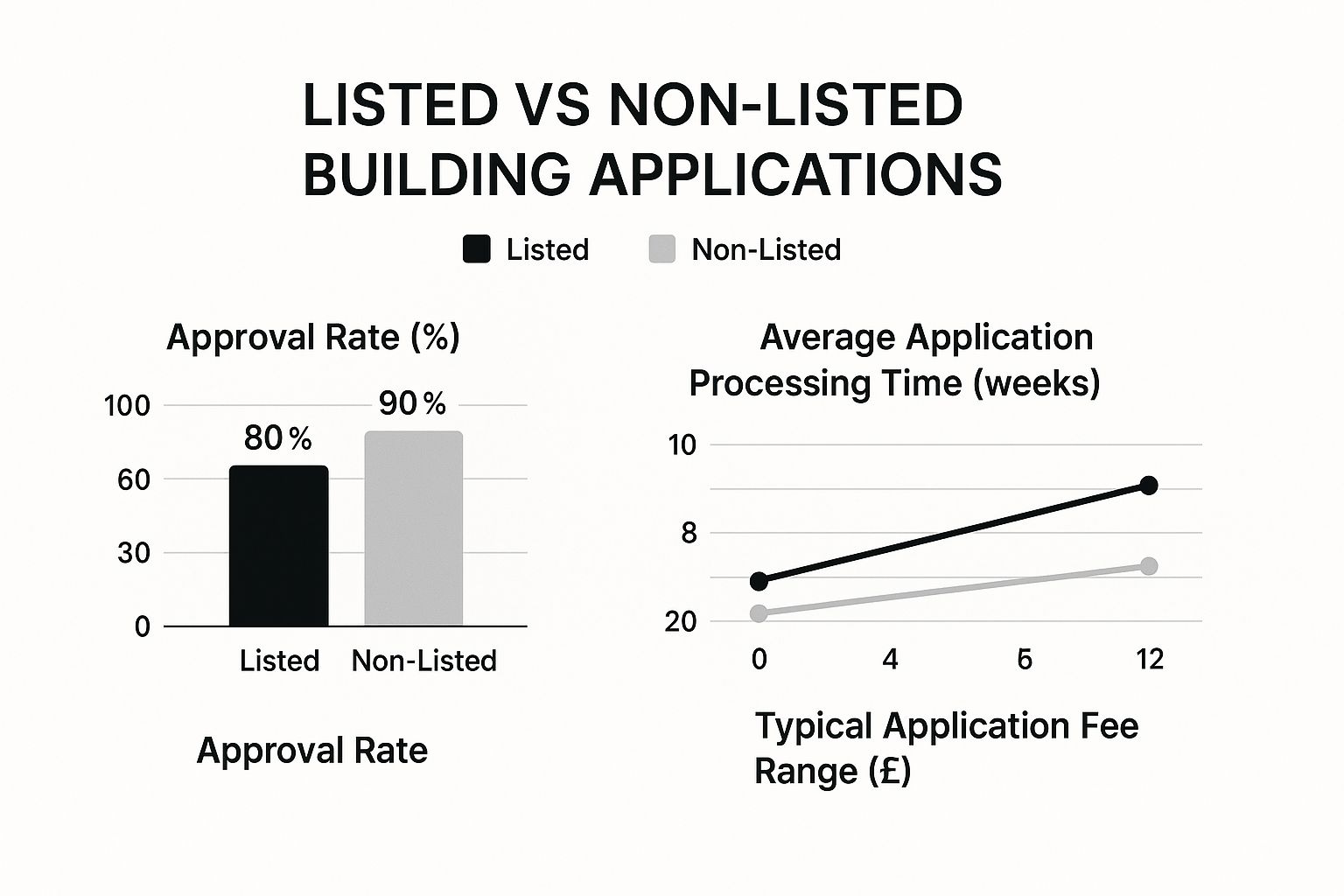
As the data shows, while approval rates are still high, the process is noticeably longer and more involved. It really hammers home the need for a thorough, well-prepared application.
Before we dive into the specifics of justification, it's helpful to understand the different types of consent you might encounter. Your project could require one or more of these, depending on the scope of your work.
Understanding Consent Types For Your Project
The table below breaks down the permissions you might need, helping you identify which applications are relevant for your specific renovation plans.
Type of Consent | When It Is Required | Key Considerations |
|---|---|---|
Listed Building Consent | For any work that alters the special character of a listed building, both inside and out. | Required for demolition, alteration, or extension. Covers everything from moving walls to changing windows. It is a criminal offence to proceed without it. |
Planning Permission | For most external alterations or extensions that materially affect the building's appearance or for a change of use. | This is separate from LBC. Often, for a listed building extension, you'll need both planning permission and LBC. |
Conservation Area Consent | Required for the demolition of unlisted buildings or structures within a designated conservation area. | Since 2013, this is largely covered by planning permission, but you must explicitly state your intent to demolish in your application. |
Building Regulations Approval | For ensuring the work meets health and safety standards, covering areas like structural stability, fire safety, and energy efficiency. | This is a technical approval and is separate from planning or LBC. Special considerations often apply to historic buildings to avoid harming their character. |
Navigating these different consent types is a core part of the early-stage planning. Getting the right advice ensures you don't miss a crucial step and risk delaying your project.
The Importance of Justification and Evidence
Every single change you propose must be robustly justified. Why does that internal wall need to move? Why is this specific extension design appropriate for the building? Your reasoning has to be clear, logical, and grounded in a genuine appreciation for the building's heritage.
This becomes especially critical when balancing modern living needs with preservation. The challenge is very real; in a recent year, Historic England’s Heritage at Risk Register included 4,891 entries for sites threatened by neglect or decay. While successful projects meant 124 entries were removed, 155 new ones were added, highlighting the ongoing struggle. To help, Historic England provided £8.14 million in grant aid in 2023/24 for urgent conservation work.
Understanding this national picture helps frame your own project. By presenting your renovation not just as a cosmetic upgrade but as a necessary step to secure the building’s future, you strengthen your case immensely. It shows you’re a responsible custodian, ready to play your part in protecting a piece of the UK’s architectural history.
Balancing Modern Design and Historic Fabric

This is often the most rewarding part of a listed building renovation: weaving contemporary life into a home that has stood for centuries. The goal isn't to create a museum piece. It’s to craft a living, breathing home that works for you while honouring its unique story. Think of it as a conversation between the old and the new.
Nowhere is this dialogue more apparent than in kitchens and bathrooms. How do you fit a sleek, functional kitchen into a Georgian townhouse without it feeling jarring? The secret is a design philosophy that draws a clear line between what is historic and what is modern.
For instance, rather than fixing modern cabinets directly onto fragile, original plaster, a far better approach is to use freestanding or self-contained joinery. This creates a clear visual separation. It’s a ‘reversible’ intervention that allows the historic fabric to remain the star of the show while giving you all the functionality you need.
Crafting a Sympathetic Design Brief
Before anyone picks up a pencil, the design brief acts as the project’s constitution. This document is absolutely critical for aligning your vision with the realities of heritage constraints. It’s where you spell out your lifestyle needs alongside a clear commitment to preserving the building's character.
A strong brief doesn’t just list rooms; it explains how you want to live in them. This gives your architect the insight needed to propose solutions that are both practical for you and palatable to a conservation officer.
Your brief should clearly cover:
Your functional needs: Get specific about what you need from your kitchen, bathrooms, and any home office space.
Aesthetic preferences: Outline the modern styles you like, but be prepared to be flexible on how they’re brought to life.
An acknowledgement of the constraints: Show you understand the building's significance and are committed to a sensitive approach.
Getting this right from day one creates a shared understanding between you, your architect, and the planners, preventing costly redesigns down the line.
The most successful listed building renovations feel like a collaboration across time. Your additions should be honest about their modernity, sitting respectfully alongside the original features without trying to poorly imitate them.
Specifying Materials That Respect History
Material selection is paramount. Get this wrong, and you risk the long-term health of the building. Modern, non-breathable materials like cement render or standard vinyl paints can trap moisture inside historic walls, leading to damp and decay. It’s a common and very damaging pitfall.
The focus must be on materials that work with the original construction. This isn’t just about keeping the conservation officer happy; it’s about ensuring the building’s longevity.
Key sympathetic materials include:
Lime Plaster and Mortar: Unlike cement, lime-based products are breathable. They let moisture escape naturally and have a flexibility that accommodates the tiny movements inherent in old structures.
Traditional Paints: Breathable paints, like limewash or clay-based emulsions, are essential. They decorate historic plasterwork without sealing in damp.
Bespoke Timber Joinery: When adding or replacing features like windows or doors, traditional joinery techniques are a must. Off-the-shelf uPVC is an absolute non-starter in listed building renovations.
Integrating Modern Services Discreetly
One of the less glamorous but utterly essential challenges is hiding modern services – plumbing, wiring, data cables. Chasing wires into historic plaster or running exposed plastic pipes will cause irreversible damage and will almost certainly be rejected by planners.
The key is clever concealment. This might mean running services through floor voids, within new bespoke cabinetry, or behind carefully designed new skirting boards. A good conservation architect will map all this out from the very beginning, ensuring your home has every modern convenience without compromising its historic soul.
Improving Energy Efficiency in Heritage Homes
One of the biggest hurdles in any listed building renovation is the delicate dance between preserving historic character and creating a home that’s actually comfortable and energy-efficient. Heritage properties are notorious for being draughty and hard to heat, but bringing them up to modern standards demands a much more thoughtful, sensitive touch than your average renovation.
The root of the problem? Listed buildings tend to leak heat like a sieve through single-glazed windows, uninsulated solid walls, and historic roof structures. Your go-to modern solutions, like uPVC double glazing or external cladding, are completely off the table. They’d cause irreversible harm to the building’s special character, and no conservation officer would ever approve them.
This isn't a niche issue. A huge chunk of England's listed building stock sits in the lower energy performance bands. Around 35.20% are rated 'E', a stark contrast to just 12.55% for unlisted homes. Worse still, a worrying 18.30% of listed buildings are rated 'F', and 6.80% languish in 'G', the lowest possible grade. As Electrical Times highlights in their findings, these poor ratings are a direct result of the restrictions on making the very alterations needed to improve them.
Heritage-Friendly Insulation Solutions
Beefing up the thermal performance of walls and roofs is absolutely possible, but it all comes down to using the right materials. If you were to use modern, non-breathable insulation like rigid foam boards, you’d be trapping moisture inside the historic fabric of the building. That’s a fast track to damp, decay, and serious long-term structural damage.
Instead, the conversation has to shift to breathable insulation materials that work with the original construction, not against it. These clever materials allow water vapour to pass through naturally, preventing that destructive condensation build-up inside the walls.
Here are a few options that conservation officers tend to look on favourably:
Sheep's Wool: A fantastic natural and sustainable material that's brilliant at regulating moisture. It’s perfect for fitting between timber studs in walls or the rafters in a roof.
Cork Boards: This option provides both thermal and acoustic insulation. As a natural product, it's fully breathable and can often be applied directly to historic walls.
Wood Fibre: A really versatile choice that comes in either flexible batts or rigid boards, offering solid thermal performance while letting the building breathe.
When you specify these types of materials in your Listed Building Consent application, it immediately shows you’ve done your homework and understand the unique technical needs of a heritage property.
The secret to getting approval is to prove that your proposed energy upgrades are both effective and, crucially, entirely reversible. Conservation officers need to see solutions that protect the original fabric for generations to come.
Upgrading Windows Without Replacement
The original windows are often one of the most significant architectural features of a listed building, which means replacing them is almost always forbidden. So, what can you do about all that heat escaping through the single glazing? The answer is secondary glazing.
This involves fitting a discreet, slimline second window on the inside of the original one. It creates a vital insulating air gap that dramatically cuts down on heat loss and kills draughts, all without touching the historic exterior. For a deeper dive into adapting modern building principles for older homes, you might find our [UK energy-efficient home design guide](uk-energy-efficient-home-design-guide.html) useful.
When you’re looking at secondary glazing, keep these points in mind:
Slimline Frames: Go for minimal aluminium or timber frames that won't obscure the view of the original window.
Discreet Installation: Make sure the units are fitted sympathetically within the existing window reveals, so they almost disappear.
Functionality: Choose designs that still allow you to open the original windows for ventilation.
This approach delivers a huge improvement in thermal comfort and is widely accepted by conservation authorities as a sensitive and effective upgrade. It strikes that perfect balance—preserving the past while making a home fit for the future.
Budgeting and Building Your Specialist Team

Let’s be frank: trying to tackle a listed building renovation with a standard project budget is a recipe for disaster. These remarkable properties demand specialist skills, traditional materials, and a completely different financial mindset. Getting pragmatic and deeply detailed with your budgeting from day one isn't just a good idea; it's absolutely essential.
Costs on heritage projects can spiral, often in the most unexpected ways. Structural surprises are common in older buildings, and the price of authentic materials—and the craftspeople who know how to work with them—is often significantly higher than their modern counterparts.
This is precisely why a robust contingency fund is non-negotiable. While a typical renovation might get away with a 10% buffer, for a listed building, you need to be thinking of at least 20%. This isn’t pessimism; it’s the realism that gives you the financial resilience to handle unforeseen issues without cutting corners on the final result.
Assembling Your Core Project Team
You simply cannot get a listed building project over the line without the right experts in your corner. This is a collaborative effort where specialist knowledge is your most valuable asset. The team you assemble will be responsible for navigating complex regulations, specifying the right materials, and executing work to a standard that satisfies both you and the conservation authorities.
Your essential team should include:
A Conservation Architect: This person is so much more than a designer. They are your primary strategic advisor with proven experience in heritage projects. They’ll lead the design, manage the consent applications, and act as that crucial go-between with the local authority's conservation officer.
A Structural Engineer: An engineer with experience in historic buildings is vital. They understand how to assess and specify repairs for traditional structures without falling back on inappropriate modern techniques that could cause long-term damage to the building's fabric.
A Specialist Contractor: Please, do not hire a general builder. You need a main contractor who can show you a portfolio of successful listed building renovations. They will already have relationships with the necessary artisans, from lime plasterers to bespoke joiners.
When you're vetting potential team members, always ask for specific examples of their work on listed properties similar in age and style to your own. Check their references thoroughly and, if you can, visit a completed project to see the quality of their craftsmanship for yourself.
Understanding and Managing Costs
Getting accurate quotes is one of the biggest hurdles. A detailed scope of works, meticulously prepared by your architect, is the key to getting comparable, itemised tenders from contractors. Vague briefs only lead to vague pricing, leaving you completely exposed to escalating costs down the line.
It's also worth looking into potential financial reliefs. Certain approved alterations to a listed building can qualify for VAT relief, which can make a significant difference to the overall budget. Your architect can guide you on which works might be eligible under current HMRC rules.
For a detailed breakdown of professional fees, our guide on the **cost of an architect in the UK** offers valuable insights into budgeting for this key role.
Ultimately, your budget is the engine that drives the entire project forward. By planning meticulously, building in a significant contingency, and assembling a team of genuine heritage specialists, you create the financial and practical framework needed to navigate the unique challenges of renovating a piece of history. This proactive approach protects both your investment and the future of your remarkable home.
Common Questions About Listed Building Renovations
Stepping into the world of listed building renovations can feel like navigating a maze. There are so many specific rules and potential pitfalls. This final section tackles some of the most common queries we hear from homeowners, giving you clear, straightforward answers to help you move forward with confidence.
What Is the Difference Between Grade I, Grade II*, and Grade II Listings?
Getting your head around the grading of your property is crucial. It directly influences the level of scrutiny your plans will face. In England, listed buildings are sorted into three tiers, each reflecting its historical or architectural significance.
While every grade offers legal protection, what this means in practice varies a great deal.
Grade II: This is by far the most common category, covering about 92% of all listed buildings. It includes a huge number of the period homes, cottages, and terraces you see across South West London. These properties are designated as being of ‘special interest’. Renovation is definitely achievable, but it demands careful and considered planning.
*Grade II*:* A much more exclusive group, making up just under 6% of listings. These are ‘particularly important buildings of more than special interest’. Any proposed changes will face greater resistance and need a much stronger justification.
Grade I: Reserved for buildings of ‘exceptional interest’, this grade applies to only 2.5% of all listed properties—think cathedrals, royal palaces, and other nationally significant landmarks. Any proposed change here faces the most rigorous scrutiny imaginable.
The key thing to remember is that the listing protects the entire building—inside and out—regardless of its grade. This protection often extends to later additions and even specific structures within the property's boundary, like garden walls or outbuildings.
Can I Make Emergency Repairs Without Listed Building Consent?
This is a critical question, particularly when you’re dealing with something sudden like storm damage or a structural failure. While Listed Building Consent is a legal must-have for almost any alteration, there is a very narrow exception for genuine emergency works needed to make the building safe or weathertight.
Don’t mistake this for a loophole, though. The correct approach is to contact your local council’s conservation officer immediately and tell them what’s happened. You need to document everything—take photos before, during, and after the repair.
Emergency action should be the absolute minimum needed to stop things from getting worse. You will almost certainly have to apply for retrospective Listed Building Consent for the work, so keeping your conservation officer in the loop is essential to avoid landing in legal trouble.
Are Grants Available for Listed Building Renovations?
Funding is out there, but it’s important to be realistic. Grants for listed building renovations are incredibly competitive and almost never cover the full cost of the work. They are certainly not intended for cosmetic updates or routine maintenance.
The main sources of funding include:
Historic England: Their grants are typically reserved for high-grade (I and II*) buildings, scheduled monuments, or properties on the Heritage at Risk Register. The focus is on urgent, large-scale structural repairs.
National Lottery Heritage Fund: This organisation supports a broad range of heritage projects, but the competition is fierce, and the application process is notoriously complex.
Local Authorities: Some councils offer small grants for very specific work, like repairing original sash windows or using traditional roofing materials, especially within Conservation Areas.
For most people renovating a Grade II home, securing a substantial grant is unlikely. It’s always much safer to budget for the full project cost yourself.
What Happens If I Carry Out Work Without Consent?
Ignoring the proper legal process is a very serious misstep. Carrying out unauthorised work on a listed building is a criminal offence, not just a civil one. This is a point that many homeowners don't fully grasp until it's too late.
If you’re found to have done work without the required consent, the local planning authority can and will take legal action. The penalties are severe:
Unlimited fines.
In the most serious cases, a prison sentence.
An enforcement notice that forces you to reverse all the changes at your own cost.
Trying to reinstate original features that have been unlawfully ripped out can be a technical and financial nightmare. It's a stressful, expensive mistake that really highlights why you must get professional advice before you even think about starting work. Always assume you need consent and partner with an expert who can guide you safely through the process.
At Harper Latter Architects, we specialise in guiding homeowners through the complexities of listed building renovations across Wimbledon and South West London. If you're considering a project and need expert advice, we invite you to start a conversation with our team.