
A London Homeowner's Guide to Building Indoor Pools

Building an indoor pool is a serious commitment, one that can transform your home into a private sanctuary for year-round wellness and relaxation. The journey from a simple idea to a finished, functioning oasis is a detailed one, demanding careful planning, specialist knowledge, and a firm grip on the costs and complexities involved.
Bringing Your Indoor Pool Vision to Life
Investing in an indoor pool isn't just about adding a new feature; it's about crafting a bespoke environment that genuinely enhances your lifestyle. Whether it's integrated into a high-end refurbishment, a new basement extension, or a purpose-built annexe, the project has to be approached thoughtfully to ensure it feels a natural part of your home’s architecture. This is particularly true in desirable areas of South West London like Wimbledon and Richmond, where these kinds of additions have become a hallmark of luxury living.
The process kicks off by turning your vision into a viable plan. This initial stage is absolutely critical—it sets the direction for the entire project and defines its scope. To get it right, you need to think through a few key things from the outset.
Defining Your Pool's Purpose
First up, what’s the pool actually for? Are you picturing it as a space for fitness, where you can swim daily laps? Or is it more of a leisure hub for family fun and unwinding?
Your answer shapes everything that follows, from the pool's size and depth to whether you include features like swim jets, an integrated spa, or adjacent changing facilities. A pool designed for athletic training will have very different requirements than one intended as a tranquil retreat.
Understanding the Key Stages
Building an indoor pool is a multi-phased project that relies on seamless coordination between your architect, engineers, and specialist contractors. Success comes down to navigating each stage with precision, from securing planning consents all the way through to selecting the final finishes. The ultimate goal is to create a space that is not only beautiful but also structurally sound, energy-efficient, and easy to maintain for years to come. This long-term thinking is vital for managing running costs and protecting your home's value.
A well-designed indoor pool is a long-term investment. Prioritising smart, sustainable architecture from day one ensures you can enjoy your pool without the burden of excessive utility bills, protecting both your finances and your home's integrity.
The appetite for sophisticated home amenities like these has grown massively. In the UK, the swimming pool contractors market has seen strong growth, with an average annual expansion of 9.1% in the last year. This boom is especially noticeable in affluent areas where homeowners are increasingly investing in luxury indoor pools. You can read more about this trend in Plimsoll's market analysis.
This guide is here to give you the foundational knowledge you need to make confident, informed decisions at every step of your project.
To help you get a clear overview, we've broken down the typical project journey into its core phases. Think of this as your roadmap from initial concept to your first swim.
Key Stages of an Indoor Pool Project
Phase | Key Activities | Primary Focus |
|---|---|---|
1. Site Assessment & Feasibility | Evaluating potential locations, analysing structural constraints, reviewing listed building status. | Determining if and where the pool can be built safely and legally. |
2. Planning & Consents | Preparing and submitting planning applications, managing building regulations approval. | Gaining the necessary legal permissions to proceed with construction. |
3. Schematic Design & Layout | Developing the pool's size, shape, and depth. Integrating wellness features. | Translating your vision into a functional and aesthetic design concept. |
4. Structural & MEP Coordination | Designing the pool shell, foundations, and integrating HVAC and water treatment systems. | Ensuring the technical and engineering aspects are robust and efficient. |
5. Construction & Waterproofing | Building the pool structure, applying specialised waterproofing, and constructing the building envelope. | Creating a durable, watertight, and well-insulated environment. |
6. Finishes & Integration | Selecting tiles, lighting, and surrounding materials. Connecting the pool hall to the main house. | Defining the look and feel of the space and ensuring seamless integration. |
7. Commissioning & Handover | Testing all systems (heating, filtration, dehumidification), and final project sign-off. | Ensuring the pool is fully operational, safe, and ready for use. |
Each of these stages involves a huge amount of detail and coordination. Having a clear understanding of the process from the start helps manage expectations and keeps the project on track.
Getting the Paperwork Right: Planning and Regulations
Successfully building an indoor pool is less about digging a hole and more about carefully navigating local authority requirements. Before a single spade hits the ground, you need to get the right approvals sorted. This process breaks down into two distinct but equally critical parts: Planning Permission and Building Regulations.
Think of Planning Permission as consent for the principle of what you want to build—its look, size, and impact on your property and neighbours. Building Regulations, on the other hand, are the technical rulebook, ensuring whatever you build is safe, structurally sound, and energy-efficient.
What's the Difference?
Many homeowners get these two confused, but they serve completely different purposes. It’s entirely possible for a project to gain planning approval but fail to meet the strict technical standards of Building Regulations, or the other way around.
Planning Permission: This is handled by your Local Planning Authority (LPA) and focuses on aesthetics and land use. For an indoor pool, they’ll look at things like the visual impact of a new pool house, its closeness to neighbouring properties, and its overall design—especially if you're in a Conservation Area or your home is a listed building.
Building Regulations: These are national standards, enforced by either local authority Building Control departments or private Approved Inspectors. They cover all the technical construction details, from the structural integrity of the pool shell and the building itself to ventilation, insulation, fire safety, and drainage.
Getting both isn't just a box-ticking exercise; it's a legal necessity that safeguards both your investment and your home.
Why Compliance is Non-Negotiable
The technical demands for modern indoor pools are stricter than ever, particularly when it comes to energy efficiency. This is where many projects fall short, often without the homeowner even knowing it.
It's a shocking statistic, but an estimated 90% of new indoor swimming pools in the UK are constructed illegally. This is mostly down to non-compliance with recent legislation that demands the pool's structure has insulation standards equivalent to the walls and ceilings of a modern, highly insulated house. We see this issue frequently in high-end residential projects across South West London, where basement pools are becoming more and more popular. You can read the report from Environment UK on pool construction compliance that backs up this figure.
Cutting corners on compliance is a false economy. The cost of putting a non-compliant pool hall right—which could involve enforcement action from the council, sky-high energy bills, or even structural damage from condensation—is always far greater than the initial investment in getting it right from the start.
An experienced architect will ensure every detail, from the U-values of the insulation to the specifics of the ventilation system, is specified correctly to meet and exceed these regulations. This not only keeps you on the right side of the law but has a massive impact on your long-term running costs. For a deeper look at the specifics, check out our detailed guide on UK swimming pool planning permission explained.
Special Cases: Listed Buildings and Conservation Areas
If your home is a listed building or sits within one of London’s many Conservation Areas, the planning process gets a lot more complex. The bar for approval is set much higher, and a sensitive, conservation-led approach is essential.
For listed buildings, any alteration requires Listed Building Consent. The main goal here is to preserve the building's historic character and significance. Integrating a modern feature like a swimming pool has to be done with immense care, often demanding creative design solutions that minimise any impact on the original fabric of the home. This might mean designing a 'building within a building' or using reversible construction techniques that could, in theory, be removed later.
In Conservation Areas, the focus is on preserving or enhancing the character of the neighbourhood. A new pool extension must be designed to be sympathetic to its surroundings in its scale, materials, and architectural style. Working with a conservation architect who really understands the local authority's design guides and has a proven track record in these sensitive contexts is the key to a successful outcome.
The Blueprint for Design and Structural Integrity
Once the planning consents are in the bag, the really exciting part begins: turning your vision into a detailed architectural plan. This is the schematic design phase, where your ideas about the pool’s size, style, and purpose start to take tangible form. It’s a creative yet highly technical stage, balancing your aesthetic goals with the non-negotiable realities of structural engineering and building science.
The design possibilities are wonderfully broad. You might be dreaming of a minimalist lap pool seamlessly integrated into a home gym, perfect for a daily fitness routine. Or perhaps you’re imagining an elaborate leisure hub for family and friends, complete with a spa, water features, and relaxed lounging areas. Whatever the brief, the aim is to create a space that feels like a natural, fluid extension of your home’s existing character.
From Concept to Construction Drawings
With the initial design concept agreed upon, the focus shifts to the project's technical backbone. This is where your architect brings in structural engineers and specialist consultants to ensure every single detail is meticulously mapped out. Building an indoor pool isn't just about digging a hole and filling it with water; it's about engineering a complex, highly controlled environment.
This detailed planning involves several critical components working in harmony:
Structural Engineering for the Pool Shell: The pool tank itself is an immense, heavy structure. Whether it’s built from reinforced concrete or a specialist system, it must be engineered to withstand the relentless pressure of thousands of litres of water without the slightest risk of failure.
Robust Waterproofing Systems: This is, without a doubt, one of the most critical elements. We always advocate for a multi-layered, 'belt and braces' approach to waterproofing. A failure here could seriously compromise your home's foundations and structure.
The Building Envelope: The walls, roof, and glazing that enclose the pool hall must be designed for exceptional thermal performance. Taking this "fabric-first" approach is fundamental to minimising heat loss, a major factor in controlling your pool's long-term running costs.
This flowchart gives a simple overview of the journey from securing permission to ensuring the final build is fully compliant—a process that underpins the entire design and construction project.
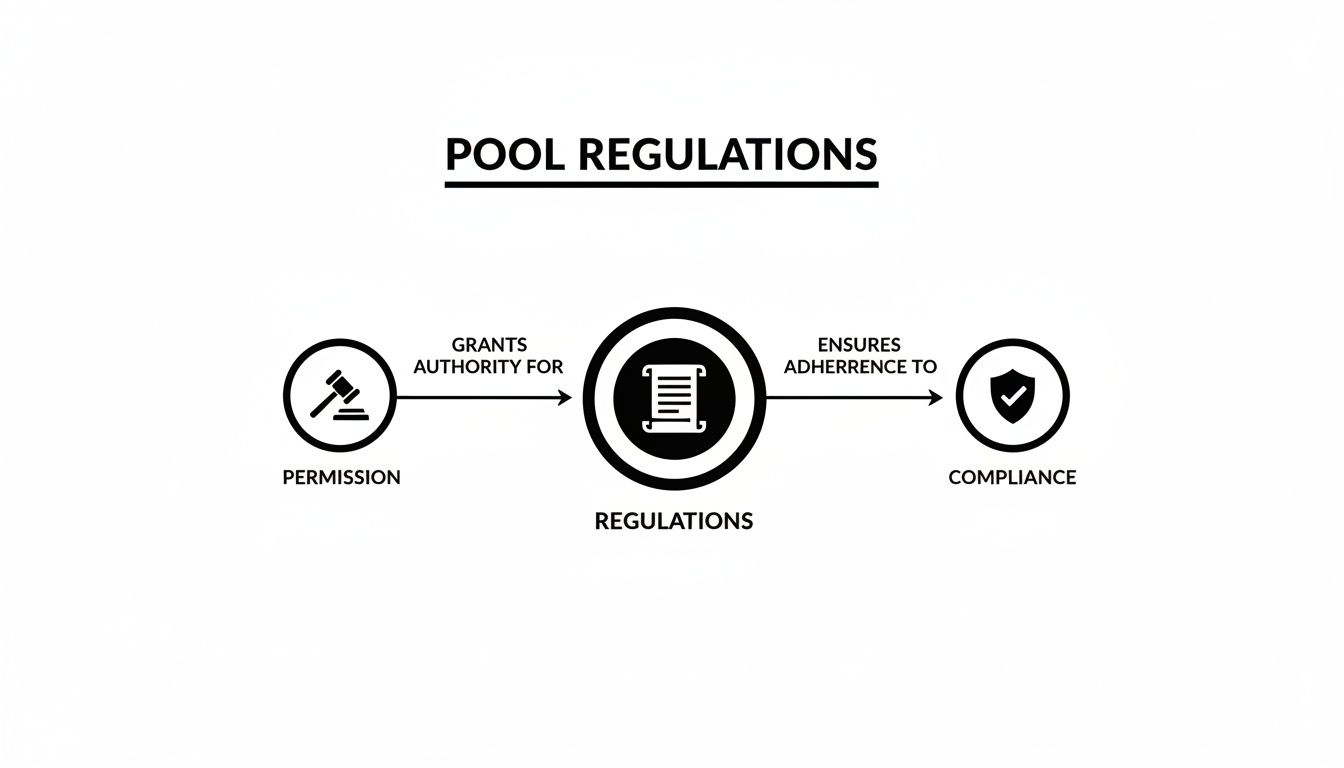
Successfully navigating these stages ensures the project isn't just legally sound but is built to the highest possible technical standards from the ground up.
The Crucial Role of MEP Coordination
Behind the beautiful finishes lies a complex web of services known as Mechanical, Electrical, and Plumbing (MEP). For an indoor pool, getting the MEP coordination right is absolutely paramount for creating a comfortable, safe, and durable environment. This isn’t something to leave to chance or figure out later; it requires expert design right from the start.
The most important part of the MEP strategy is the Heating, Ventilation, and Air Conditioning (HVAC) system. An indoor pool generates a huge amount of water vapour. If this humid air isn't properly managed, it will inevitably lead to condensation, mould growth, and potentially severe structural damage to your property over time.
A common mistake is thinking that just opening a window will provide enough ventilation for an indoor pool. In reality, a purpose-designed mechanical ventilation and dehumidification system is non-negotiable. It’s the only way to protect your home and ensure a pleasant atmosphere in the pool hall.
Mastering Moisture with Dehumidification
The cornerstone of a pool’s HVAC system is its dehumidification technology. A high-quality unit works constantly to pull excess moisture from the air, maintaining a comfortable relative humidity of around 60-65%. Most modern systems now include heat recovery, a clever function that captures warmth from the damp, exhausted air and uses it to heat the incoming fresh air. This simple step can significantly reduce your energy consumption.
Alongside air quality, water treatment is another key technical consideration. While traditional chlorine is still effective, many of our clients are now opting for more advanced systems to improve the swimming experience and reduce chemical usage. Popular choices include:
UV Sterilisation: This uses ultraviolet light to neutralise bacteria and microorganisms, which can slash the amount of chlorine needed by up to 80%. The result is crystal-clear water without the harsh chemical smell often associated with indoor pools.
Ozone Systems: These systems inject ozone gas—a powerful oxidiser—into the water to destroy contaminants, again reducing the reliance on chemical sanitisers.
Seamlessly integrating these technical elements into the architectural design is what separates a standard pool from a truly exceptional one. The ultimate goal is for all this complex machinery to work silently and efficiently in the background, leaving you with nothing but a beautiful, tranquil space to enjoy.
7. Creating a Sustainable Oasis to Manage Running Costs
While the upfront cost of building an indoor pool is a major consideration, it’s the running costs that will make or break your long-term enjoyment. A poorly designed pool hall can be a huge energy drain, leading to eye-watering utility bills month after month. The secret to avoiding this is smart, sustainable architecture, baked in from the very first design conversation.
This all starts with a ‘fabric-first’ philosophy. Before we even look at fancy heating systems or renewables, the goal is to create a super-insulated and airtight building envelope. It’s an approach heavily influenced by Passive House principles, and it’s all about radically minimising heat loss from the get-go, making the entire space inherently efficient.
The structure itself—the walls, floor, and roof of the pool hall—needs exceptional levels of insulation, far beyond what standard Building Regulations require. This creates a powerful thermal barrier, locking warmth inside and easing the load on your heating system. Airtightness is just as important; we have to eliminate draughts to stop warm, humid air from escaping and cold air from sneaking in.
High-Performance Components for Maximum Efficiency
Once the building fabric is doing the heavy lifting, we can turn to technology that works smartly, not just hard. Modern components are engineered to sip energy while delivering brilliant performance.
Here are the key elements for an energy-efficient pool:
Air Source Heat Pumps (ASHPs): These are now the default choice for heating both the pool water and the air. ASHPs are incredibly efficient, typically generating three to four units of heat for every single unit of electricity they use. That makes them significantly cheaper to run than old-school gas boilers or direct electric heaters.
High-Performance Glazing: Big windows are wonderful for creating a light-filled space, but they can be a thermal weak spot. We specify triple-glazed units with low-emissivity coatings and thermally broken frames to keep the heat in without sacrificing those beautiful views.
Automatic Pool Covers: An insulated, high-quality pool cover is probably the single most effective energy-saving gadget you can buy. When the pool isn’t in use, the cover slashes evaporation, which is the main culprit for both heat loss and humidity. Simply keeping the pool covered can cut your water heating costs by up to 70%.
By focusing on the fundamentals of insulation and airtightness first, you create a pool environment that requires far less energy to heat and dehumidify. This 'fabric-first' approach is the most reliable way to future-proof your investment against rising energy prices.
Smart Systems for Heating and Ventilation
Your choice of heating and ventilation system will have a massive impact on your bills. While an Air Source Heat Pump provides the warmth, it’s a sophisticated mechanical ventilation system with heat recovery (MVHR) that manages the air quality efficiently.
These systems are brilliant. They work by extracting the warm, moist air from the pool hall and passing it through a heat exchanger before it’s expelled. This process captures a huge amount of the outgoing heat—often over 90%—and uses it to warm up the fresh, filtered air being drawn in. It means your main heating system barely has to break a sweat to keep the room at the perfect temperature.
When you combine these technologies, you get a powerful, synergistic system that keeps the environment comfortable, protects the building from moisture damage, and keeps your energy bills firmly in check. This holistic approach to sustainability is central to modern construction; for more insights, you can explore our comprehensive UK energy-efficient home design guide. Building a sustainable pool isn’t just about picking the right kit; it’s about designing an integrated system where every component works together to slash energy demand from day one.
Choosing Finishes for Seamless Interior Integration
The final feel of your indoor pool isn’t just about the water; it’s defined by the finishes that bring the space together. This is where we move beyond pure engineering and into the realm of interior architecture. The goal is to make the pool hall feel like a natural extension of your home, not a separate, utilitarian add-on.
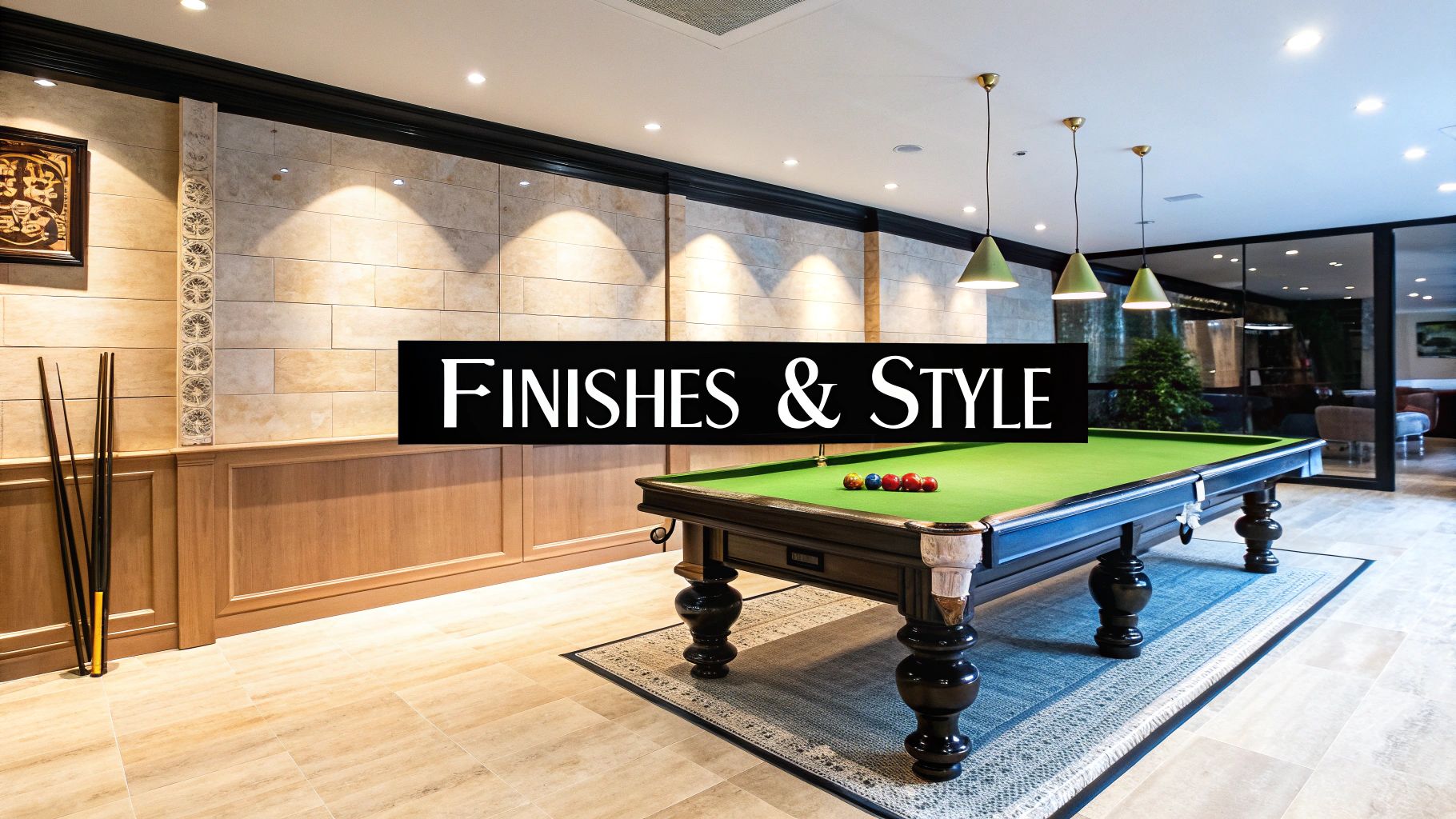
The biggest challenge is finding materials that are both beautiful and tough enough to handle the warm, humid conditions. Every single surface, from the floor you walk on to the ceiling above, has to be specified with moisture resistance and long-term durability at the top of the list.
Selecting Resilient and Stylish Materials
Your choice of materials for the pool surround, walls, and ceiling has the single greatest impact on the room’s character. Thankfully, we’ve moved far beyond the sterile, municipal-style finishes of the past. Today’s options provide a rich palette of textures and tones perfect for a high-end residential setting.
A few key materials to consider include:
Specialist Tiles: Porcelain and ceramic tiles are the classic choice for a reason. They offer huge design flexibility and are naturally water-resistant. We often use large-format tiles to create a clean, contemporary look with fewer grout lines, while intricate mosaics can create a stunning focal point or water line.
Natural Stone: Materials like travertine, limestone, or slate can bring a wonderful sense of organic texture and luxury. The catch is that they must be properly sealed and specified for wet, barefoot areas to prevent staining and ensure they are slip-resistant.
Treated Timbers: For walls and ceilings, specially treated woods like cedar or Accoya can introduce real warmth and a spa-like feel. These timbers are selected for their natural resistance to moisture and decay, but they need careful detailing to allow for proper ventilation behind them.
The real secret is creating a cohesive material palette that speaks to the rest of your home's interior design. A successful pool hall doesn't feel like an afterthought; it feels like it has always been part of the house, sharing a common architectural language.
Choosing the right finishes is a balancing act. Below is a quick comparison of common materials to help guide your thinking.
Material Suitability for Indoor Pool Environments
Material | Durability | Maintenance | Aesthetic Appeal | Typical Cost (£/m²) |
|---|---|---|---|---|
Porcelain Tile | Excellent. Resistant to water, stains, chemicals. | Low. Easy to clean, grout may need periodic sealing. | High. Huge variety of colours, sizes, and textures. | £50 - £150+ |
Natural Stone | Good. Durable, but can be porous and prone to staining if not sealed. | Medium. Requires regular sealing and specialised cleaners. | Very High. Unique, natural beauty and luxurious feel. | £80 - £250+ |
Treated Timber | Good. Resistant to moisture and rot, but requires proper ventilation. | Medium. May require occasional oiling or refinishing. | High. Adds warmth and a natural, spa-like atmosphere. | £100 - £300+ |
Render/Plaster | Moderate. Specialist waterproof renders are effective but can crack. | Low. Generally easy to wipe down. | Medium. Provides a clean, minimalist backdrop. | £40 - £100+ |
Composite Decking | Excellent. Highly resistant to moisture, mould, and slipping. | Very Low. Requires only occasional cleaning. | Medium-High. Good wood-look alternative. | £70 - £200+ |
Ultimately, the best choice combines technical performance with the aesthetic you want to achieve, creating a space that is both beautiful and built to last.
The Critical Role of Lighting Design
Lighting is one of the most powerful tools for shaping the atmosphere of an indoor pool. A well-thought-out lighting scheme does more than just brighten the room; it improves safety, highlights architectural details, and lets you completely change the mood. You can go from a bright, energetic space for a morning swim to a tranquil, relaxing retreat in the evening.
A layered approach always works best, combining different light sources for maximum flexibility. This usually includes:
Ambient overhead lighting
Task lighting for specific areas (like steps)
Accent lighting to showcase features like a textured stone wall or water jets
Dimmable, IP-rated LED systems are the industry standard now, offering fantastic energy efficiency and a long lifespan in a damp environment.
Integrating Bespoke Joinery and Functional Zones
To make the pool area a truly functional part of your home, it’s worth thinking about bespoke joinery for changing areas, storage, or even a small relaxation zone. A beautifully crafted timber bench, concealed cupboards for towels and robes, or a small kitchenette for drinks can elevate the space from a simple swimming pool to a comprehensive wellness suite.
This final layer of integration—blending form and function—is what completes the vision. It ensures your indoor pool is a practical, beautiful, and enduring addition that truly reflects your personal style.
Mapping Your Project Timeline and Budget
When you're planning a bespoke indoor pool, getting a firm grip on the timeline and costs from the outset is non-negotiable. A well-managed project isn't just about beautiful design; it’s about balancing ambition with the practical realities of scheduling and financial commitment. This clarity is what turns a complex build into a smooth, rewarding journey.
Embarking on a project of this scale is a significant undertaking. A realistic timeline, from the first conversation with your architect to the day you take your first swim, often spans 12 to 18 months. That might sound like a long time, but it’s this careful pacing that allows for the meticulous detail required at every stage, helping you avoid rushed decisions and costly mistakes down the line.
Breaking Down the Project Lifecycle
The timeline isn't just one long construction phase. It’s a series of distinct, interconnected stages, each with its own focus. Proper planning ensures these phases flow logically, keeping everything on track.
A typical project unfolds like this:
Design & Planning (3-6 months): This is where the vision takes shape. It involves developing the initial concept, producing detailed technical drawings, and navigating the often lengthy process of securing planning permission and building regulations approval.
Procurement & Tendering (1-2 months): Your architect will guide you in selecting and appointing the right main contractor and specialist subcontractors for the job. This is a critical step in ensuring quality.
Construction (8-12+ months): The longest phase, this covers everything from excavation and structural work to installing the final finishes and specialist plant room equipment.
Budgeting for a High-End Indoor Pool
When it comes to the numbers, transparency is everything. The cost of a high-quality, bespoke indoor pool can vary dramatically based on its size, complexity, and the level of finish you’re after. This is especially true in the South East, which has become a real hotspot for luxury indoor pool builds.
In fact, the UK swimming pool industry is regionally dominated by the South East, which is projected to hold 28% of national establishments and 25% of revenue by 2026. You can explore more about this geographic breakdown on IBISWorld.
With this in mind, having a realistic financial plan from day one is crucial. For a much deeper dive into the specific figures involved, our guide offers a detailed breakdown of UK swimming pool construction costs explained. It covers not just the pool itself, but the surrounding structure, high-performance glazing, and the essential plant machinery that makes it all work.
Remember, your architect’s role goes far beyond design. They are your trusted advocate, responsible for managing the budget, coordinating contractors, and ensuring every pound spent contributes directly to the quality and vision you agreed upon.
This careful management is what ultimately protects your investment. By overseeing the entire process, your architect ensures the final result is a seamless, valuable addition to your home that perfectly aligns with both your aspirations and your budget.
Your Indoor Pool Questions, Answered
Planning a project as significant as an indoor pool naturally brings up a lot of questions. We get it. Here are some clear, straightforward answers to the queries we hear most often from homeowners starting this exciting journey.
How Much Does Building an Indoor Pool Cost in London?
This is the big one, and the honest answer is: it varies hugely. The final figure depends on the size, the complexity of the design, and whether it’s part of a new extension or a trickier basement dig.
For a high-quality residential project here in South West London, you should have a realistic starting budget of around £250,000 to £300,000. That said, for truly bespoke, luxury pools, projects frequently push past £500,000 once the structure, specialist plant equipment, and high-end finishes are all factored in. Always remember to budget for professional fees, VAT, and a healthy contingency fund on top of that.
What Is the Biggest Challenge with a Basement Pool?
Without a doubt, the biggest hurdles are structural engineering, excavation, and waterproofing. Getting these three things right is non-negotiable.
First, you have to ensure the basement structure can safely handle the immense weight of the water and the pool shell itself. This is a job for a specialist structural engineer.
The second critical piece is the waterproofing. We always specify robust 'Type C' waterproofing systems to completely eliminate any risk of leaks, which could be catastrophic for your home's foundations. Then there’s the sheer logistics of digging out tonnes of soil and getting materials in and out of a tight urban site, which requires meticulous planning from day one.
How Can I Minimise the Running Costs?
Long-term running costs are a major concern, but they can be managed effectively with smart upfront design choices. The most impactful strategy is a 'fabric-first' approach.
This means focusing on exceptionally high levels of insulation for both the pool tank and the surrounding building envelope. Pair this with a modern, energy-efficient air source heat pump, and you've tackled the biggest energy user.
To really drive down bills, add a high-quality automatic pool cover to minimise evaporation (where most heat is lost) and a modern dehumidification system with heat recovery. These elements work together to dramatically lower your ongoing energy consumption.
Bringing a vision for an indoor pool to life requires specialist architectural expertise. Harper Latter Architects blends creative design with rigorous technical knowledge to deliver exceptional, future-proof homes across South West London. Explore our process to begin your journey.

Comments