
Listed Building Renovation: A Practical Guide

Updated: Nov 4, 2025
Taking on a listed building renovation is a fascinating journey into architectural stewardship. It’s a chance to blend modern living with genuine historical preservation, but it’s a process that demands careful planning and a real appreciation for the building's unique character. Getting it right means truly understanding the responsibilities that come with owning a piece of history.
Your Listed Building Renovation Journey
Owning a listed building is an absolute privilege, but the thought of renovating one can feel pretty daunting. It’s important to remember the regulations aren’t there to stop you from making changes, but to guide those changes in a sympathetic way. This guide is designed to give you a clear roadmap, turning what seems like a complex challenge into a series of manageable steps.
The journey always starts with understanding what "listed" actually means for your specific property. In England, buildings are graded to signify their national importance, a system that directly shapes the scope of any work you might be planning.
Understanding the Grades of Listing
This grading system is the foundation for everything that follows. A staggering 92% of all listed buildings are Grade II, making it the category most homeowners will be dealing with. This designation means the building is of "special interest," and every effort should be made to preserve it.
Further up the scale, you have Grade II* buildings, which are particularly important structures of "more than special interest." At the very top are the Grade I buildings, a category reserved for properties of "exceptional interest" like cathedrals or magnificent stately homes. Only about 2.5% of listed buildings achieve this elite status. For you as a homeowner, the grade dictates the level of scrutiny your plans will face.
It's a common misconception that listing only protects the front facade. In reality, a listed building’s protection covers its entire structure—inside and out. This includes everything from internal layouts and garden walls to later additions that have become part of its character.
The Principle of Sympathetic Change
The core philosophy behind any work on a listed building is "sympathetic change." What this means is that alterations and modernisations are definitely possible, but only if they respect and preserve the building’s historical and architectural significance. It's all about striking a balance between your contemporary needs and the property's unique story.
For example, replacing original Georgian sash windows with modern uPVC is almost always out of the question. However, a beautifully designed, well-considered kitchen update or a discreet modern extension might be perfectly acceptable.
This approach requires a thoughtful design process and a team that gets the nuances of heritage architecture. If you're working on a property from a specific era, exploring a detailed guide like this one on restoring a Georgian house can offer invaluable, period-specific insights.
Ultimately, a successful renovation breathes new life into the building for generations to come. Think of it as a creative collaboration between the past and the present, ensuring your property continues to be a cherished home while holding onto the very essence of its heritage. In this guide, we'll walk you through each critical stage, from getting consent to the final handover.
Navigating Listed Building Consent and Permissions
Getting the right legal permissions is, without a doubt, the most critical stage of your entire listed building renovation. It’s the gatekeeper to any physical work you want to do and ensures your vision respects the building’s unique history. This isn't just a box-ticking exercise; it's the foundation that protects both you and the property.
Any work that might alter the "special character" of your listed property needs a specific type of approval known as Listed Building Consent (LBC). The scope here is surprisingly broad, covering much more than just major structural changes. It applies to the entire building—inside and out—and often includes things like garden walls, outbuildings, and even certain trees within its grounds.
Many homeowners are surprised by what falls under its remit. Simple actions like repainting an exterior in a different colour, taking down a modern partition wall, or even swapping out a fireplace could require consent. The guiding principle is always whether the change affects the historic fabric or appearance of the property.
Distinguishing LBC from Planning Permission
It’s a common point of confusion, but Listed Building Consent is completely separate from standard planning permission. They are two different systems looking at two different things. LBC is all about preserving the historical and architectural character of the building itself. Planning permission, on the other hand, deals with the use of land and how a development impacts the surrounding area.
This distinction means that for any given project, you might need one, both, or neither.
LBC Only: You’ll likely need this for internal alterations that don't change the building's footprint or external look, such as moving an internal wall or carefully restoring original panelling.
Both LBC and Planning Permission: This is typical for works that affect the building's character and its external form, with a new extension being the classic example.
Planning Permission Only: This is rare for listed buildings but could apply if you were, say, erecting a new, separate structure in the garden that has no physical impact on the main house.
Trying to figure out these dual requirements can feel complex. For a deeper dive into the specifics, our comprehensive UK listed building planning permission guide breaks down more detailed scenarios to help clarify the process.
Your Most Valuable Ally: The Conservation Officer
Before you even think about submitting an application, your first port of call should be your local council’s Conservation Officer. These are specialist advisors tasked with managing the historic environment, and engaging with them early is the single best thing you can do for your project.
Don't think of them as an obstacle, but as a crucial guide. They can offer invaluable pre-application advice, flagging potential issues with your ideas and suggesting more sympathetic alternatives. A collaborative approach can save you a huge amount of time, money, and stress down the line. Building a positive relationship based on open communication can transform the consent process from a daunting hurdle into a constructive dialogue.
A well-prepared pre-application chat with a Conservation Officer can set the tone for the entire project. Go in prepared with initial sketches, photos, and a clear idea of what you want to achieve. It shows you’re serious and respectful of the process.
Building a Strong Application
A successful LBC application is built on detail and solid justification. Vague proposals are a fast track to rejection. Your submission needs to tell a clear story, explaining why the proposed changes are necessary and how you plan to execute them in a sensitive, appropriate way.
Key documents usually include:
Detailed Drawings: Existing and proposed floor plans, elevations, and sections are non-negotiable. They must be precise and clearly show exactly what you intend to change.
Heritage Statement: This is a vital document. It assesses the building's historical significance and explains the impact—or lack thereof—of your proposed works on that significance.
Design and Access Statement: This outlines the design thinking behind your proposal and justifies your approach, explaining how it preserves or even enhances the building's character.
A strong application shows you’ve done your homework and have a deep understanding of the property's history. For example, instead of just writing "replace windows," a successful application would specify the exact materials (e.g., sustainably sourced oak), glazing methods (e.g., slender profile glazing bars), and finishing details that replicate the originals. It’s this level of detail that gives the planning authority confidence in your listed building renovation plans.
Budgeting for Your Historic Home Renovation
Forecasting the costs for a listed building renovation is a completely different ball game compared to budgeting for a standard property. It calls for a much more detailed, cautious approach, acknowledging right from the start that you’re dealing with historic materials and uncovering decades, or even centuries, of a building's past.
The financial realities of these projects are shaped by the need for specialist skills and materials that respect the building’s heritage. The figures involved are, understandably, a major concern for homeowners. This isn't surprising when you look at the wider UK home improvement market, valued at £11.2 billion. With 10% of renovators budgeting between £20,001 and £50,000, and the average annual spend sitting around £17,000, it’s clear that substantial investment is common. Heritage projects, however, often sit at the higher end of this spectrum.
Breaking Down the Unique Costs
Unlike a typical renovation where costs are fairly predictable, a listed building renovation throws variables into the mix that can significantly push up the final bill. Getting your head around these upfront is the key to creating a realistic financial plan.
You'll need to account for several key cost centres:
Professional Fees: This isn't just about standard architectural drawings. You’ll need a conservation-accredited architect or surveyor who truly understands heritage buildings. Their fees are naturally higher, reflecting their specialist knowledge in navigating Listed Building Consent and specifying the right materials.
Specialist Craftspeople: Your project will likely require artisans skilled in traditional techniques, like flint knapping, wattle and daub, or sash window restoration. These skills are rare, and the craftspeople who possess them command a premium.
Authentic Materials: Sourcing reclaimed or historically accurate materials—think handmade bricks, Welsh slate, or traditional lime mortar—is far more expensive and time-consuming than a quick trip to a modern builder's merchant.
This chart gives a simple visual breakdown of the consents you might need, showing how Listed Building Consent and Planning Permission can sometimes overlap.
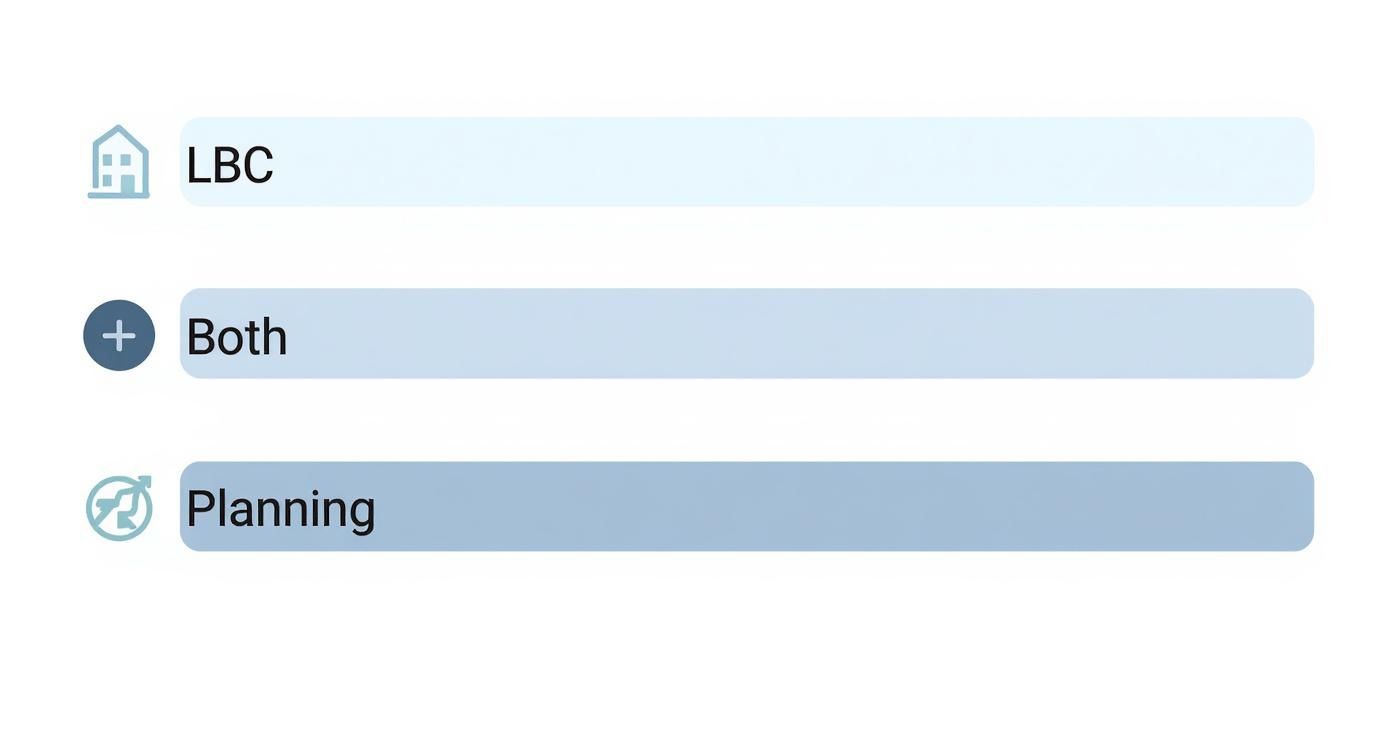
As you can see, while some smaller jobs might only need one type of permission, many projects—especially extensions or significant external changes—will require both, adding another layer to your preliminary costs.
To give you a clearer idea of where the money goes, here’s an illustrative cost breakdown. Remember, these are just estimates and will vary hugely depending on your specific project.
Sample Cost Breakdown for a Listed Building Renovation
Expense Category | Typical Cost Range (£) | Percentage of Total Budget (Approx.) | Notes |
|---|---|---|---|
Professional Fees | £15,000 - £40,000+ | 10-15% | Includes conservation architect, structural engineer, heritage consultant. |
Statutory Consents | £500 - £2,000 | <1% | Fees for LBC, planning permission, and building regulations. |
Specialist Materials | £25,000 - £75,000+ | 20-30% | Reclaimed timber, handmade bricks, lime plaster, traditional paints. |
Specialist Labour | £40,000 - £100,000+ | 30-40% | Stonemasons, specialist joiners, conservation plasterers. |
Structural & Foundational | £15,000 - £50,000 | 10-20% | Underpinning, timber frame repairs, damp proofing (breathable methods). |
Contingency Fund | £22,500 - £60,000+ | 15-20% | Essential for uncovering hidden issues like rot or structural decay. |
Finishes & Fittings | £10,000 - £30,000 | 5-10% | Kitchens, bathrooms, and decoration, often requiring bespoke solutions. |
This table highlights why a detailed, itemised budget is so crucial from day one. The emphasis on specialist skills and materials means you simply can't rely on standard renovation cost calculators.
The Non-Negotiable Contingency Fund
If there’s one golden rule in budgeting for a historic home, it's this: build in a generous contingency fund. As soon as you start opening up old walls and lifting floorboards, you’re almost guaranteed to find surprises. It could be hidden structural issues, a damp problem that needs a specialist solution, or even asbestos.
For a listed building renovation, a contingency fund of 15-20% of the total project cost isn't just advisable; it's absolutely essential. This buffer gives you the financial security to address unforeseen problems correctly, using the right materials and methods, without having to cut corners elsewhere.
Think of this fund as your project's safety net. For a more detailed look at how these costs can add up, you might find our UK whole house renovation costs guide useful.
Uncovering Potential Savings with VAT Relief
While the costs can feel daunting, there are potential savings out there. One of the most significant is VAT relief on approved alterations to listed buildings. Under very specific conditions, certain types of work can be zero-rated for VAT, which translates into a substantial saving of 20% on labour and materials.
This relief generally applies to "approved alterations," not repairs or maintenance. For example, converting a series of small, poky rooms into a larger open-plan kitchen could be zero-rated if it has LBC approval. However, simply repairing the plaster in those same rooms would almost certainly be standard-rated. Getting to grips with the nuances of this scheme with your architect and accountant early on is a crucial part of smart financial planning for your project.
Assembling Your Specialist Renovation Team

A successful listed building renovation isn't a one-person show; it’s the result of a tight-knit, skilled team working together. The quality of your finished home will be a direct reflection of the professionals you bring on board. In fact, assembling the right group of specialists is just as critical as getting your consents sorted.
Your first, and arguably most important, hire is a conservation-accredited architect. These aren't your typical architects. They bring a deep understanding of historic building methods, traditional materials, and the labyrinth of laws surrounding heritage properties. They’ll be your main guide, translating what you want into detailed plans that a Conservation Officer will actually approve and a specialist builder can bring to life.
Right alongside your architect, you'll need a structural engineer who has spent serious time working on old buildings. Historic structures are a different beast entirely. They often lack modern foundations and work on principles of mass and flexibility. An engineer who gets the nuances of traditional timber frames or the behaviour of lime mortar is absolutely vital for assessing the building's health and designing sensitive, appropriate fixes.
Finding and Vetting Your Core Team
With the design and engineering leads sorted, your attention can turn to the craftspeople who’ll be doing the hands-on work. Finding builders and tradespeople with genuine heritage skills is non-negotiable, but it’s also a real challenge. The UK construction industry is facing a major skills gap, needing around 225,000 extra workers by 2027, with a particular shortage in the traditional crafts that restoration projects depend on. You can discover more about the challenges facing the UK's commercial property remodelling sector and see how they ripple into heritage work.
When you start vetting potential builders, you need to go much deeper than a standard reference check.
Ask for a Heritage-Specific Portfolio: Look for projects that are similar to yours in age, style, and scale. A firm that excels at modern glass extensions probably isn't the right fit for a delicate Georgian townhouse.
Talk to Previous Owners of Listed Homes: Get specific with your questions. How did the builder deal with unexpected discoveries? How was their rapport with the Conservation Officer? Did they show genuine respect for the building's historic fabric?
Visit Their Work in Person: This is non-negotiable. Go see a finished project to judge the quality of their detailing, but also ask to visit a live site. A work in progress tells you a lot about their organisation, cleanliness, and day-to-day methods.
A top-tier specialist builder will be eager to show you their past work and will almost certainly have a waiting list. Don't be tempted to rush it. Waiting for the right team is worth it, as their expertise can save you from eye-watering mistakes and headaches down the road.
Choosing the Right Project Management Approach
Once you have a shortlist, you'll need to think about the contractual setup. For a listed building renovation, the two most common routes are a traditional tender process or a design-and-build contract.
A traditional tender is where your architect finalises every drawing and specification, which are then sent out to several builders to provide a fixed-price quote. This route offers a good degree of cost certainty but can take longer. It also keeps the design and construction teams separate, which can sometimes lead to communication gaps.
On the other hand, a design-and-build contract puts both the design and the construction under the responsibility of a single company. This can streamline things and encourage better collaboration right from the start. The catch? It requires a huge amount of trust in that one company, as you lose the independent checks and balances that a separate architect provides.
No matter which path you take, a solid, detailed contract is your best friend. It needs to clearly define the scope of works, payment schedules, and how changes will be handled. This document is your ultimate protection, making sure everyone is on the same page from day one.
Choosing Appropriate Materials and Methods
With permissions secured and your specialist team assembled, it’s time to get practical. This is where the theory of your listed building renovation meets the reality of bricks and mortar, and the choices you make now will define your home’s character and health for decades.
The key is to work with the building, not against it.
Historic buildings were designed to breathe. They manage moisture by absorbing and releasing it naturally—a delicate balance that modern, impermeable materials completely throw off. This single principle should be front of mind for every decision, from the plaster on your walls to the paint on your windows.
Embracing Traditional Materials
One of the most common—and damaging—mistakes I see is the use of modern materials where they simply don't belong. Things like cement mortars and non-breathable paints are standard in new builds, but in an older property, they can trap moisture and cause damp, decay, and irreversible damage to the original fabric.
Take repointing brickwork, for example. Using a hard, impermeable cement mortar forces moisture into the softer, historic bricks, causing them to crumble and spall over time. The traditional choice, lime mortar, is softer and more flexible. It allows the whole wall to breathe and shift naturally with the seasons, protecting the precious brickwork.
The same thinking applies right through the building:
Lime Plaster: Forget modern gypsum plasterboard, which can trap damp behind it. Traditional, vapour-permeable lime plaster is the authentic choice, helping to regulate humidity inside your home.
Breathable Paints: Standard emulsions create a plastic-like film, effectively sealing moisture into the walls. You need to look at traditional distempers, limewash, or even modern, high-quality clay-based paints that allow the structure to breathe.
Reclaimed Materials: When replacing things like floorboards or roof tiles, always try to source genuine reclaimed materials first. A new equivalent rarely comes close to matching the character, texture, and colour of the original.
The rule of thumb is beautifully simple: use materials that are sympathetic to the original construction. If the building was made with lime, repair it with lime. If it has oak timbers, use oak for repairs. This approach doesn't just preserve structural integrity; it keeps the authentic soul of your property alive.
Sympathetic Upgrades for Modern Living
Of course, a listed building renovation is also about making the property work for today's lifestyle. This means carefully weaving in modern services like plumbing and electrical systems without scarring the historic fabric of the building.
There’s an art to running new wiring and pipework. Rather than chasing channels into fragile, centuries-old plaster, a good team will find creative solutions. They might use existing voids, hide services within bespoke joinery, or carefully lift and relay floorboards. It’s a painstaking approach, but it minimises intervention and protects irreplaceable features.
This level of specialist work does come at a price. While a new build in the UK might cost around £2,600 per square metre, renovating a listed building can range anywhere from £1,500 to over £3,500 per square metre. The higher end of this scale reflects the cost of conservation-grade materials, specialist craftspeople, and the meticulous labour required to protect the building's history. For a deeper dive, you can find more on the complex cost factors in UK home renovation on TrustedBuilders.co.uk.
Improving Energy Efficiency Sensitively
Making a listed building warmer is a common goal, but it demands a delicate touch. Standard solutions like cavity wall insulation or uPVC double glazing are almost always forbidden—and for good reason. They can cause serious harm.
Instead, the focus should be on reversible and breathable upgrades. These are some of the most effective strategies:
Draught-Proofing: This is your first and most cost-effective job. Meticulously sealing gaps around windows, doors, skirtings, and floorboards makes a huge difference to comfort levels.
Secondary Glazing: Forget chunky, ugly frames. Modern, discreet secondary glazing offers a massive thermal improvement without altering the original single-glazed windows. Some systems are almost invisible.
Natural Insulation: In areas like lofts and suspended timber floors, breathable insulation materials like sheep's wool or cork are ideal. They help retain heat without trapping moisture, which avoids the risk of rot.
When it comes to tackling damp, a conservation mindset is crucial. Before even thinking about a modern chemical damp-proof course (which can damage old walls), you must find the root cause. It’s almost always something straightforward like a leaky gutter, poor ground drainage, or a cement render that’s stopping the walls from drying out.
Fix the source, and you’ll be working in harmony with the building’s original design.
Your Listed Building Renovation Questions, Answered
Even the most meticulously planned listed building renovation will throw up a few questions. That’s completely normal. Stepping into the world of heritage properties means getting to grips with a unique set of rules that you just don't encounter with standard homes. This section is all about giving you clear, straightforward answers to the queries we hear most often, helping to cut through the jargon and give you the confidence to get started.
Getting these things straight from the beginning can save a huge amount of time and prevent some seriously expensive mistakes down the line. Whether you're planning minor cosmetic updates or major efficiency upgrades, knowing where the boundaries lie is absolutely essential.
What Can I Change in a Grade II Listed Building Without Consent?
This is easily the most common—and most critical—question we get asked. The short answer? Very little. The listing protects the entire building, both inside and out, so pretty much any work that could alter its historic character will require Listed Building Consent (LBC).
Generally, you’re in the clear for direct like-for-like repairs that use identical materials and traditional techniques. For instance, carefully mending a small, rotted section of a timber window frame with the same type of wood is just maintenance. But replacing the whole window, even with a perfect timber replica, is an alteration and definitely needs consent.
Everyday interior redecoration, like repainting a room in a similar shade with a breathable paint, is usually fine. The moment you start thinking bigger, however, you need to stop and ask for advice.
Taking out a historic fireplace or original cornicing
Changing the internal layout by moving or removing walls
Altering or replacing historic joinery like doors and skirting boards
Sandblasting original beams or brickwork to "clean them up"
All of these jobs would absolutely require LBC. Don't be tempted to press on without it—doing so is a criminal offence.
Your local authority's Conservation Officer is the ultimate authority here. Before you so much as lift a paintbrush, have a conversation with them. A quick, informal chat can clarify what they consider a repair versus an alteration, saving you from serious legal trouble.
How Can I Make My Listed Home More Energy Efficient?
Improving the warmth and comfort of a historic home is a huge priority for most owners, but it demands a sensitive touch. Standard solutions like uPVC double glazing, external wall insulation, or modern spray foam are almost always a non-starter. They can cause irreversible harm to the building's fabric and character.
Instead, the goal is to introduce sensitive, reversible, and breathable upgrades. A specialist energy audit from a firm with heritage experience can give you a tailored roadmap, but some of the most effective measures include:
High-Performance Secondary Glazing: Modern systems have come a long way. They're incredibly discreet and can deliver thermal performance on par with double glazing without touching the original historic windows.
Loft and Floor Insulation: Using natural, breathable materials like sheep's wool or cork is a brilliant solution for lofts and suspended floors. These materials insulate effectively while allowing moisture to escape, which is vital for preventing timber decay.
Draught-Proofing: This is the single most cost-effective first step you can take. Meticulously sealing gaps around windows, doors, and floorboards makes an immediate and noticeable difference to comfort levels.
Servicing Heating Systems: Don't underestimate the basics. Making sure your existing boiler and radiators are working at their best, and adding traditional heavy curtains or shutters, will also significantly help retain heat.
What is Historic England's Role in My Renovation?
For the vast majority of listed building renovation projects, your day-to-day contact will be the Conservation Officer at your local council. They are the ones who process your LBC application and provide guidance.
Historic England is the public body that champions and protects the nation's historic environment. Their direct involvement is usually reserved for the most important cases. They have to be consulted on any applications affecting Grade I or Grade II listed buildings. They might also be called upon to offer expert advice on particularly complex or controversial Grade II applications.
While Historic England doesn’t grant consent itself—that power rests with the local planning authority—their opinion carries enormous weight. It is incredibly rare for a local council to approve an application that goes against the formal advice of Historic England.
Embarking on a listed building renovation is a rewarding but significant undertaking. You don’t have to figure it all out alone. With specialist expertise, you can sympathetically enhance your historic home while preserving the character that makes it so special. Harper Latter Architects has extensive experience in conservation and heritage architecture, guiding clients through every step of the process.
Comments