
Average Price for Remodelling a Kitchen in London
So, what does it really cost to remodel a kitchen? It’s the million-pound question, or perhaps the ten-thousand-pound one. Nationally, you’ll see figures between £5,000 and £25,000 thrown around. But for a high-end project in a premium area like South West London, that number is often just the starting line. Luxury refurbishments here can, and frequently do, soar well beyond that range.
Understanding Your Kitchen Remodel Price in London
Embarking on a kitchen remodel is one of the most exciting home improvement projects you can undertake, but it's also one where costs can vary dramatically. The key to a successful budget is getting to grips with what drives the price up, especially in a competitive market like London where your postcode plays a huge role.
In sought-after areas like Wimbledon Village and Richmond, the final cost isn't just about your choice of marble or appliances. It’s heavily influenced by local factors. Higher property values and a fierce demand for top-tier tradespeople mean labour costs are significantly elevated. This "London premium" can add a substantial slice to the final bill compared to the national average.
From Budget Updates to Luxury Transformations
The best way to understand kitchen costs is to think in tiers. While the average price for remodelling a kitchen in the UK typically ranges from £5,000 to £25,000, homeowners in prime South West London often pay 15-20% more. This is down to those higher labour costs and the sheer value of property in the area.
This premium is particularly relevant for affluent neighbourhoods like Wimbledon Village, where firms like ours specialise in luxury refurbishments that blend bespoke design with high-end materials.
For a clearer picture:
Budget kitchens start at £3,000-£7,000. This covers basic units and laminate worktops—ideal for a simple refresh without changing the layout.
Mid-range projects climb to £8,000-£15,000, bringing in quality quartz surfaces and mid-tier appliances.
Luxury refits soar beyond £20,000-£50,000+. Here, you're looking at custom cabinetry, stunning marble or granite worktops (£400-£1,000 per metre), and fully integrated appliances from brands like Miele.
The chart below helps visualise how these price bands stack up.
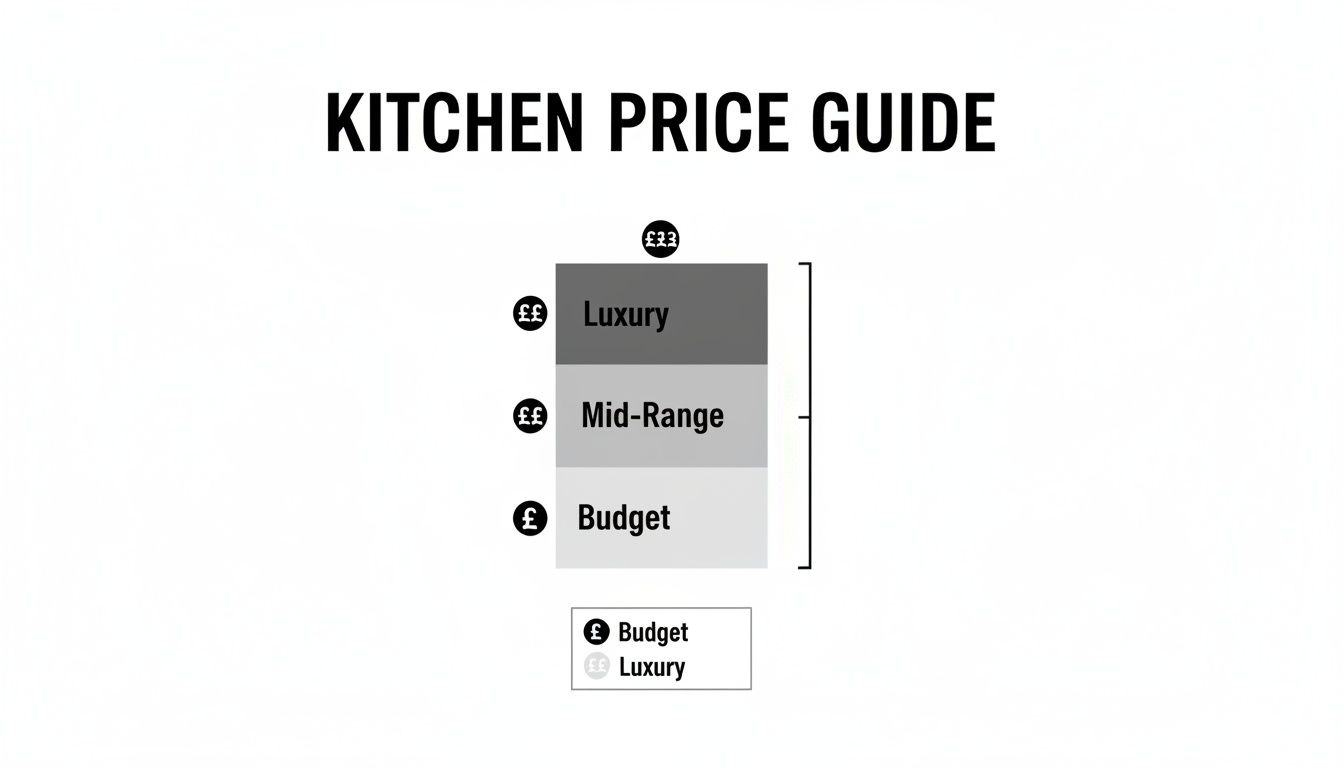
As you can see, the jump from a mid-range to a luxury kitchen is significant. It reflects the move away from off-the-shelf solutions towards truly bespoke craftsmanship and premium finishes.
For those planning a larger project, you can get a broader sense of figures from our guide on estimating home extension costs.
UK Kitchen Remodel Price Bands at a Glance
To put these figures into perspective, this table breaks down the typical costs you can expect, highlighting the difference between a standard UK project and a high-specification refurbishment in South West London.
Project Tier | Typical UK Price Range | Typical South West London Price Range | Key Features |
|---|---|---|---|
Budget | £5,000 – £10,000 | £8,000 – £15,000 | Flat-pack units, laminate worktops, basic appliances, cosmetic updates only. |
Mid-Range | £10,000 – £25,000 | £18,000 – £35,000 | Higher-quality cabinetry, quartz/solid wood worktops, mid-tier appliances. |
High-End | £25,000 – £50,000 | £40,000 – £70,000+ | Bespoke joinery, premium appliances, natural stone surfaces, minor layout changes. |
Luxury | £50,000+ | £70,000 – £150,000+ | Custom-made cabinetry, structural alterations, premium materials, designer lighting. |
This table shows how quickly costs can escalate when you factor in the London premium and a desire for higher quality materials and craftsmanship. It’s a useful starting point for aligning your ambitions with a realistic budget.
Why a Specialist Architect Matters
For homeowners in South West London, achieving a truly exceptional result often means bringing a specialist architectural practice on board. At Harper Latter Architects, we navigate the complexities of high-end refurbishments every day, especially within the unique context of heritage and conservation properties.
A well-designed kitchen is more than a functional space; it's a strategic investment that enhances your daily life and adds significant value to your property.
Our role goes far beyond aesthetics. We provide meticulous cost control, manage complex planning permissions, and oversee skilled contractors to ensure every last detail aligns with your vision and budget. By understanding both the creative potential and the financial realities of a project, we deliver bespoke kitchens that stand the test of time.
Breaking Down High-End Kitchen Remodel Costs
While average figures are a useful benchmark, a high-end kitchen remodel in South West London is a completely different ball game. Here, the conversation shifts from standard fittings to bespoke craftsmanship, premium materials, and sophisticated design that feels truly personal to you and your home. This is where the real investment in quality and customisation comes into play.
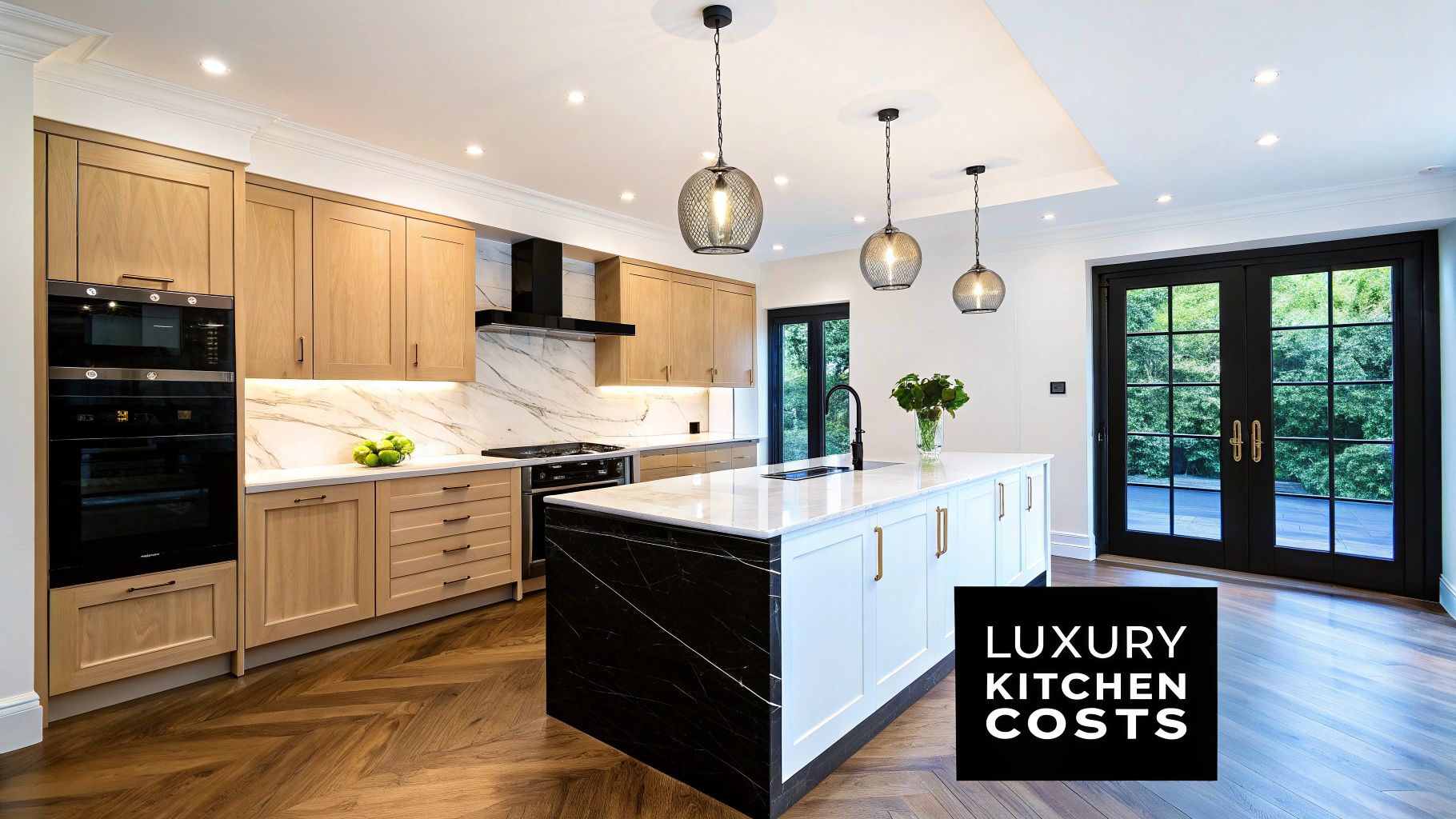
Unlike mid-range projects that often rely on pre-made components, luxury kitchen renovations are built entirely around tailor-made solutions. Every single element is carefully considered, from the grain of the wood in your cabinetry to the specific veining in a slab of Italian marble. It’s this painstaking attention to detail that transforms a functional room into a remarkable living space.
The Anatomy of a Luxury Budget
In a high-end project, the budget becomes an itemised reflection of your unique choices. High-end kitchen remodels in the UK frequently push past the £35,000-£60,000 mark, with bespoke luxury projects in South West London and Surrey often soaring beyond £100,000. These figures account for structural changes, premium joinery, and designer appliances—precisely the kind of work specialists like Harper Latter Architects oversee.
Drilling down into the details, you'll see appliances alone can range from £15,000-£40,000 in ultra-luxury setups. Installation can cost £8,000-£20,000, and the electrics and plumbing can hit £4,000-£8,000, assuming no extension is involved. You can get more insights into specific costs for UK kitchens to better understand these figures.
Let's pull apart the primary components driving that final cost:
Bespoke Joinery and Cabinetry (£20,000 - £50,000+): This is often the largest single expense, and for good reason. Unlike off-the-shelf units, custom cabinetry is designed to fit your space perfectly, crafted from superior materials, and finished to an exacting standard.
Premium Worktops (£5,000 - £15,000+): Think materials like Calacatta marble, high-grade quartz, or sintered stone such as Dekton. They offer incredible durability and create a stunning visual centrepiece. The cost includes professional templating, fabrication, and specialist installation.
High-Performance Appliances (£10,000 - £30,000+): Brands like Gaggenau, Miele, and Sub-Zero aren't just chosen for their names; they're selected for their performance, longevity, and seamless integration. This can include everything from induction hobs with downdraft extractors to wine coolers and steam ovens.
Structural Changes and Professional Services
Beyond the beautiful finishes, a significant portion of the budget is often hidden within the structure and planning of the project itself. Creating the open-plan layouts so popular in modern luxury homes frequently requires substantial architectural and engineering work.
This is especially true in the period properties common to areas like Wimbledon, where a sensitive, careful approach is non-negotiable. Knocking down walls to create a light-filled kitchen-diner involves a lot more than just demolition; it demands meticulous planning and flawless execution.
Key costs in this area include:
Structural Work (£5,000 - £15,000+): This covers the cost of steel beams (RSJs) needed to support the structure, along with the skilled labour required to install them.
Architectural and Engineering Fees (8-15% of construction cost): Absolutely essential for creating detailed plans, navigating the planning permission maze, and ensuring all work is structurally sound and compliant with building regulations.
Specialist Services (£3,000 - £8,000+): This can include surveyors, party wall agreements, and even heritage consultants if you're working on a listed building or in a conservation area.
Real-World Example: A Victorian Terrace Transformation
To see how these costs stack up in reality, let’s look at a recent project we handled in a South West London Victorian terrace. The brief was to transform a small, dated kitchen into a modern, open-plan hub perfect for entertaining.
The total project cost came to £72,000. This figure included installing two steel beams to open up the space, a full rewire and re-plumb of the new area, premium Dekton worktops, and custom-made handleless cabinetry fitted with a full suite of Miele appliances.
This example clearly shows how individual decisions—from structural changes to appliance choices—compound to create a final figure that’s worlds away from a standard mid-range budget. It really underscores the importance of detailed planning and professional oversight to manage the complexities and deliver a truly exceptional result.
Key Factors That Influence Your Final Renovation Price
Trying to understand why the average price for remodelling a kitchen can swing so wildly? It all boils down to a handful of critical variables. No two projects are ever the same, especially when you’re working with the unique and often quirky architecture of South West London properties. The final number on your estimate is a direct reflection of your choices, your home’s existing condition, and the sheer ambition of your design.

Think of your kitchen budget like a complex recipe; changing just one ingredient can alter the entire dish. The big cost drivers aren’t just the shiny new appliances or that stunning marble worktop you’ve been eyeing. Instead, it’s a combination of factors that all work together to define the project's real scope and complexity. A one-size-fits-all price just isn't realistic because every single decision carries a financial weight.
Scale and Structural Alterations
The size of your kitchen is a fundamental starting point, but it's the extent of any structural work that often becomes the biggest budget mover. A simple cosmetic update within the existing footprint will always be gentler on the wallet than a project that involves knocking down walls, rerouting plumbing, or building a new extension.
For instance, creating that beautiful, open-plan kitchen-diner you see in magazines, especially in a Victorian or Edwardian home, demands serious engineering. This often means installing heavy-duty structural support, like steel beams. These alterations can add thousands to the bill but will fundamentally transform how you live in your home.
Material and Finish Quality
Your choice of materials is where your personal style meets the budget head-on. This is one of the most significant areas where costs can leap from mid-range to true luxury. While laminate worktops and standard flat-pack cabinets are certainly budget-friendly, they just don't offer the durability or bespoke feel of high-end alternatives.
Think about these key choices:
Worktops: Laminate is the most affordable entry point. But materials like quartz, granite, and marble offer superior longevity and a premium look, with their costs rising in step.
Cabinetry: Off-the-shelf units are a cost-effective solution. Custom-made joinery, on the other hand, gives you a perfect fit and impeccable quality, representing a major—but often worthwhile—investment.
Flooring: Your options run the gamut from affordable vinyl to engineered wood or natural stone tiles, each with a different price tag for both the materials and the specialist installation they require.
The real difference between a £30,000 kitchen and a £90,000 one often comes down to the quality of the craftsmanship and the calibre of the materials you choose. Investing in quality from the very beginning pays you back in both daily enjoyment and long-term property value.
Appliances and Technology
Appliances can easily eat up a substantial slice of your budget, with a huge price gap between standard models and high-performance, fully integrated units. A basic appliance package might set you back a few thousand pounds. In contrast, a full suite from a premium brand like Miele or Gaggenau, complete with wine fridges and steam ovens, can effortlessly push past £20,000.
Smart home technology is another area seeing more investment. Features like automated lighting, integrated sound systems, and smart taps add a layer of modern convenience, but they also add to the overall project cost.
The table below illustrates how these choices can steer your budget.
Cost Impact of Key Kitchen Remodel Decisions
Decision Area | Standard Option & Typical Cost | Luxury Option & Typical Cost | Impact on Budget |
|---|---|---|---|
Worktops | Laminate (£40-£80 per sq m) | Marble or high-end Quartz (£400-£700+ per sq m) | High. Luxury stone can be 10x the price of laminate, significantly raising the total. |
Cabinetry | Off-the-shelf flat-pack (£3,000-£7,000) | Bespoke, handmade joinery (£15,000-£40,000+) | Very High. Custom joinery is a major investment but offers unparalleled quality and fit. |
Layout Changes | Cosmetic update (no changes) | Removing walls, moving plumbing (£5,000-£15,000+ in structural work) | High. Structural work adds significant engineering, labour, and material costs. |
Appliances | Freestanding, mid-range brands (£2,000-£5,000) | Integrated, premium brands (Miele, Gaggenau) (£10,000-£25,000+) | Very High. Top-tier appliances are a major budget item, often defining a luxury kitchen. |
As you can see, the path from a standard refresh to a high-end transformation is paved with decisions that have a direct and substantial financial impact.
The London Labour Premium and Contingency
It's a simple fact: building in a high-demand area like South West London costs more. The skilled labour required for complex installations, beautiful bespoke joinery, and careful work on period properties comes at a premium. This is a key reason why project costs here are noticeably higher than the national average.
Finally, no budget is truly complete without a contingency fund. For any renovation, but especially in older properties, we strongly recommend setting aside 10-15% of the total construction cost. This fund is your safety net for the unexpected—discovering damp, finding outdated wiring, or uncovering hidden structural problems once the walls are opened up. It’s what ensures the project stays on track without you having to compromise on quality.
At Harper Latter, our meticulous 8-step process is designed to manage these variables from the outset, giving you clear cost control from start to finish.
The Value of an Architect in Managing Your Budget
When budgeting for a kitchen remodel, it’s easy to focus on the tangible costs like joinery and appliances. But one of the most crucial line items – professional fees – is often misunderstood. Bringing an architect on board isn't just another expense; it’s a strategic move that brings clarity, creativity, and control to your project from day one. Think of them as your expert guide, navigating the entire journey from a simple idea to a beautifully finished space.
For many homeowners, the thought of architectural fees can feel a little intimidating. However, this upfront investment is designed to prevent far more expensive mistakes down the line, ensuring every pound you spend is put to the best possible use. A good architect will help you shape a realistic budget around your vision, avoiding that all-too-common nightmare of costs spiralling out of control once the build starts.
In the high-stakes property market of South West London, where precision and quality are everything, that kind of professional oversight is invaluable.
Understanding Architect Fee Structures
So, how are the fees worked out? Typically, an architect’s fees are calculated as a percentage of the total construction cost. For a high-end residential project like a kitchen renovation, this usually lands somewhere between 8% and 15%. This approach makes sure the fee is directly aligned with the scale and complexity of your project.
It’s important not to see this as just a surcharge. It’s the cost of securing a bespoke design, meticulous technical drawings, and expert project management. An accredited practice like Harper Latter Architects offers a comprehensive service that covers every single stage.
This includes:
Bespoke Design: Crafting a kitchen layout and aesthetic that is perfectly suited to your lifestyle and your home’s character.
Navigating Permissions: Managing all the necessary planning permissions and building regulations approvals – an absolute must for listed buildings or homes in conservation areas.
Technical Drawings: Producing incredibly detailed plans that builders can use to give you accurate, competitive quotes, which cuts out the guesswork and nasty surprises.
Contractor Management: Overseeing the construction phase to ensure the work is completed to the highest standard, on schedule, and within the agreed budget.
If you’re keen to get a clearer picture of the costs involved, our detailed guide on how much an architect charges for a project breaks it down further.
How an Architect Maximises Your Investment
At its heart, hiring an architect is about managing risk and maximising value. A well-designed kitchen, meticulously planned and beautifully executed, won’t just improve your daily life – it will also add significant value to your property. That initial investment in professional fees is often recouped, and then some, when it’s time to sell.
An architect’s true value lies in their ability to foresee challenges, unlock a property’s hidden potential, and protect the homeowner's interests throughout the entire process. They are your advocate, your creative partner, and your quality controller all rolled into one.
For instance, an architect can spot opportunities to flood a space with natural light, design a more functional layout, or specify materials that strike the perfect balance between beauty and durability. By managing the tender process, they can also help you get a more competitive price from trusted builders – a saving that can often offset a good portion of their own fees.
Ultimately, the goal is to turn your vision into a high-quality reality, without the financial stress and costly errors that can plague poorly planned projects. This structured, professional approach ensures that whatever you spend on your kitchen remodel becomes an exceptional and lasting investment.
Seeing the Costs Come to Life with Project Examples
Abstract figures and percentages can only tell you so much. To really get a feel for where the money goes in a kitchen remodel, it helps to walk through a couple of realistic scenarios. Seeing how a budget is actually spent on a real-world project makes the numbers tangible and helps you visualise what’s possible at different investment levels.
Let's explore two detailed case studies that reflect the kind of bespoke projects we manage here in South West London. Each example shows how different client goals, property types, and design ambitions shape the final cost.
Case Study 1: The Wimbledon Village Heritage Kitchen
Our first example takes us to a Grade II listed Victorian property in the heart of Wimbledon Village. The homeowners wanted a modern, functional kitchen that respected the home's historic character while still meeting the demands of a busy family.
The main challenges were navigating the strict conservation guidelines and integrating modern appliances without disrupting the period aesthetic. The original layout was cramped and dark, felt disconnected from the garden, and simply wasn’t suitable for contemporary life.
Project Goal: To design and execute a sympathetic renovation that marries classic elegance with modern performance, preserving heritage features while creating a light-filled, family-centric space.
The project demanded a sensitive architectural touch. Our team focused on bespoke joinery that echoed the home’s original craftsmanship, specifying shaker-style cabinets hand-painted in a historically appropriate colour. For the worktops, a durable quartzite was chosen for its classic marble-like appearance but superior resilience.
Here’s how the budget broke down for this high-end conservation project:
Architectural Fees & Planning Consent: £18,000 * This included detailed surveys, heritage statements, listed building consent applications, and full project management.
Structural Work & Preliminaries: £12,000 * Minor structural tweaks to improve the flow and all the prep work for new services.
Bespoke Joinery (Handmade Cabinetry): £35,000 * Custom-built, hand-painted tulipwood cabinets, including a beautiful pantry and island unit.
Worktops (Quartzite) & Splashback: £11,000 * Premium natural stone, covering the templating, fabrication, and specialist installation.
Appliances (Integrated & Range Cooker): £16,500 * A blend of a traditional Aga with integrated Miele appliances for modern convenience.
Plumbing & Electrics: £8,500 * A full rewire of the space, new plumbing for the island sink, and the installation of designer lighting.
Flooring, Decorating & Finishing: £9,000 * Reclaimed oak flooring to match the rest of the property, plus specialist decorating services.
Contingency Fund (10%): £10,200
Total Project Cost: £120,200
This project is a perfect illustration of how a focus on conservation, bespoke craftsmanship, and premium materials results in a six-figure budget. The outcome? A timeless kitchen that genuinely enhances a valuable heritage property.
Case Study 2: The Modern Richmond Open-Plan Extension
Our second scenario involves the complete transformation of a 1930s semi-detached home in Richmond. The clients were keen entertainers who dreamed of a large, open-plan kitchen and dining area that opened up into the garden. Their vision was minimalist, with clean lines, floods of natural light, and state-of-the-art tech.
This project required significant structural work, including building a rear extension with large-format glazed doors to create that seamless indoor-outdoor connection. A project like this is a fantastic way to add serious value and floor space. To get a better feel for what’s involved, you can explore our guide on designing a kitchen extension.
The material palette was distinctly contemporary, featuring handleless cabinetry, polished concrete floors, and a striking Dekton worktop. The whole emphasis was on creating a highly functional, sociable space perfect for hosting friends and family.
Here is a typical budget breakdown for this type of luxury extension and remodel:
Architectural Fees & Planning Approval: £22,000 * Covering all design stages, planning applications, structural engineering, and contract administration.
Extension Build & Structural Steel: £75,000 * Groundworks, insulated structure, roofing, and the installation of large steel beams to open up the space.
Glazing (Crittall-Style Doors & Skylights): £25,000 * High-performance, thermally broken aluminium doors and large roof lights to maximise daylight.
Bespoke Cabinetry & Island: £28,000 * Sleek, handleless units with specialist internal storage solutions.
Worktops (Dekton) & Appliances: £23,500 * Durable sintered stone worktops and a full suite of integrated smart appliances from Siemens.
Underfloor Heating, Electrics & Plumbing: £15,000 * Installation of a wet underfloor heating system and a full rewire for smart lighting and audio.
Flooring & Finishing: £12,000 * Polished concrete flooring and professional decoration throughout.
Contingency Fund (10%): £20,050
Total Project Cost: £220,550
This example clearly demonstrates how the average price for remodelling a kitchen escalates dramatically when it includes a significant structural extension. The investment reflects not just a new kitchen, but a fundamental transformation of the property’s layout, functionality, and connection to the outdoors.
Maximising Your Return on Investment
A kitchen remodel is a major financial decision, but it's important to see it as more than just an expense. We believe a high-quality, architect-designed renovation is a powerful investment in both your day-to-day life and the long-term value of your property. This principle sits at the heart of everything we do at Harper Latter Architects.
In a competitive property market like South West London, a stunning, well-planned kitchen can make your home stand out. It’s a genuine differentiator. Research consistently shows that a high-end kitchen renovation can recoup a huge portion of its cost when you sell, with some projects returning 60% or more of the initial outlay. It simply makes your home far more appealing to discerning buyers.
Funding Your Vision
Financing a major renovation takes careful thought. While we aren’t financial advisers, we know that homeowners typically explore a few common routes to fund their projects. These often include remortgaging their property to release equity or taking out a dedicated home improvement loan. The right path is always a personal one, depending entirely on your financial circumstances.
The goal is to fund your project in a way that feels comfortable and sustainable, turning your renovation plans into a tangible reality without undue financial pressure.
An Investment in Quality of Life
Beyond the balance sheet, the most immediate return you'll feel is the improvement in your daily life. An architect-designed kitchen is built around you—your routines, your family, and how you truly want to live. It stops being a purely functional room and becomes the beating heart of your home, a space for connection, creativity, and simple enjoyment.
This uplift in your lifestyle is a value that can't always be measured in pounds and pence, but it’s often the most rewarding part of the entire project. It's about creating a home that not only looks exceptional but feels perfectly in tune with your vision for the future.
Common Questions About Kitchen Remodel Costs
When you’re planning a high-end renovation, it’s completely natural to have questions about the practical side of things. Understanding timelines, regulations, and who does what is just as vital as finalising your design.
Here, we answer some of the most common queries we hear from homeowners in South West London, giving you the clarity you need to move forward with confidence.
How Long Does a High-End Kitchen Remodel Take?
A high-end kitchen remodel is a detailed process, and the timeline really depends on the ambition of the project. If the work is focused on bespoke joinery and cosmetic upgrades within the existing space, you should set aside around 8-12 weeks from the moment construction begins.
However, if your plans involve structural changes—like removing walls or building a new extension—the timeline will extend significantly. The design and planning phase alone can take 2-4 months, especially when factoring in the time to secure planning permissions or listed building consent. From there, the construction itself could easily take another 4-6 months.
At Harper Latter Architects, our structured 8-step process sets out clear timelines from the very beginning. We manage every stage, from initial concept to final handover, to keep delays to an absolute minimum.
Do I Need Planning Permission for a Kitchen Remodel?
This all comes down to the scope of your work. For purely internal changes, such as replacing units, worktops, and appliances within the kitchen’s current footprint, you typically won’t need planning permission.
Permission is almost always required if you’re extending the property, altering the look of exterior doors or windows, or making any changes to a listed building. In conservation areas like Wimbledon Village, even small external tweaks might need consent. As ARB-accredited architects with deep experience in conservation and heritage projects, we handle all the necessary applications to ensure your project is fully compliant.
Should I Use a Design-Build Firm or an Architect?
Both approaches have their merits. A design-build firm offers a single point of contact for the whole project, which can feel simpler. However, hiring an independent architect like Harper Latter means you have an expert advocate whose primary loyalty is to you and your vision, not the builder.
An architect creates a truly bespoke design, produces detailed drawings that allow several builders to submit competitive tenders (often securing you better value), and provides impartial oversight during construction. This separation between design and build often leads to a higher quality outcome and far greater cost control.
How Much Should I Set Aside for a Contingency Fund?
A contingency fund isn't just a 'nice to have'; it's an essential part of any major renovation budget, there to cover unexpected costs. For a high-end kitchen remodel, particularly in the older or heritage properties common across South West London, we always recommend a contingency of 10-15% of the total construction cost.
This buffer is there to handle issues that only reveal themselves once the work starts, such as hidden structural problems, outdated wiring, or complex plumbing that needs an overhaul. Having this fund in place means the project can continue smoothly without forcing you to compromise on quality or causing financial stress.
Ready to turn your vision into a meticulously planned reality? The team at Harper Latter Architects is here to guide you through every step of your renovation journey. Contact us today to arrange your initial consultation.