
Designing a Kitchen Extension A Practical Homeowner's Guide

Designing a kitchen extension is a genuinely transformative project. It’s about more than just adding square metres; it’s about fundamentally reshaping how you live in and experience your home. The key is finding that perfect balance between your creative vision, everyday practical functionality, and, of course, the budget. A successful project always starts with a clear, well-thought-out process, right from defining what you want to selecting the final tapware.
From Vision to Reality: Your Kitchen Extension Blueprint
Embarking on a kitchen extension is easily one of the most rewarding home improvements you can make. Especially here in London, where every bit of space is precious, a well-planned extension doesn't just add footage—it completely reimagines the heart of your home to perfectly suit your family's lifestyle. It’s a chance to create a bright, functional, and beautiful space that makes daily life just that little bit better.
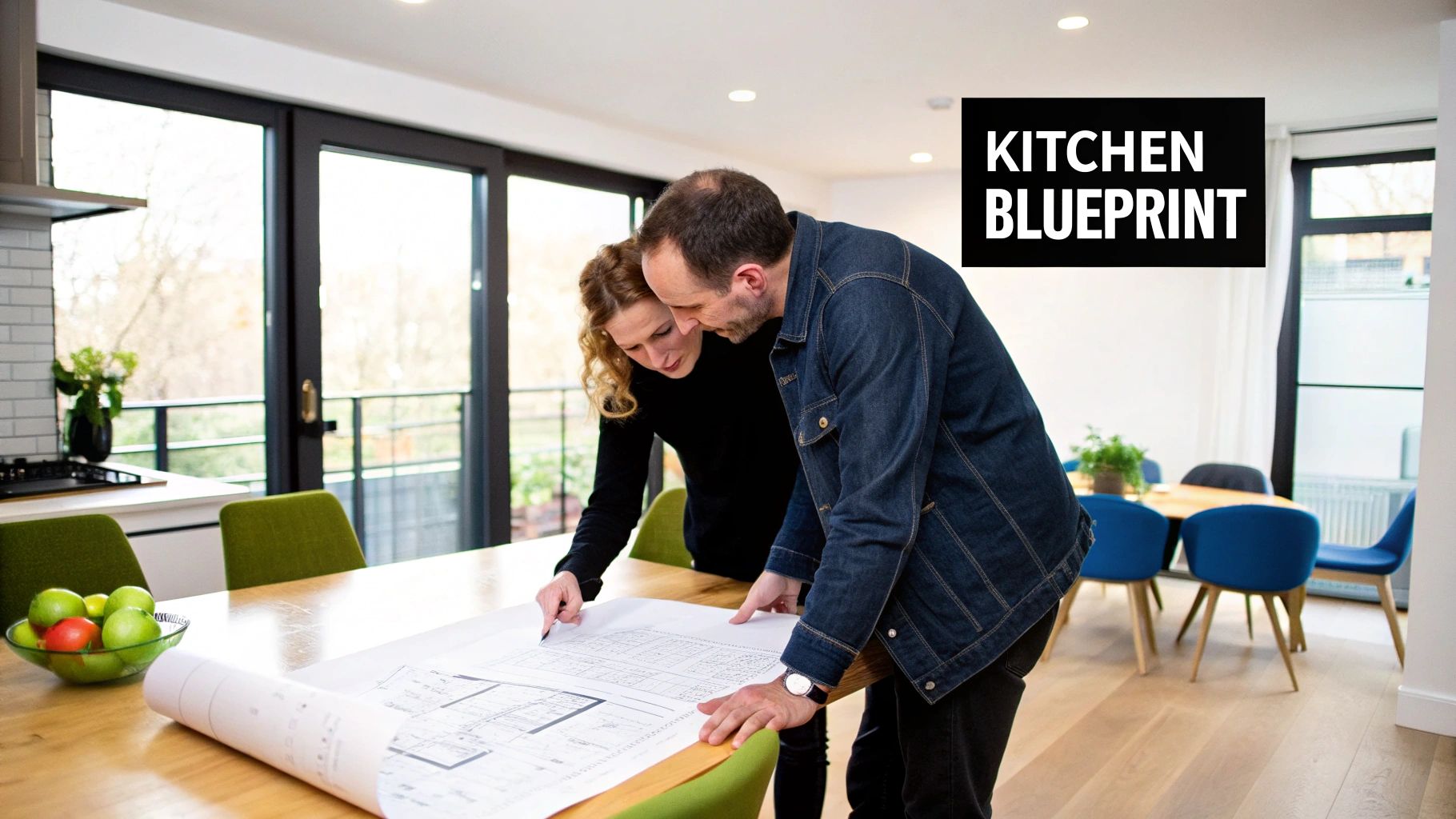
Think of this guide as your roadmap. We'll walk you through the critical stages, from that first spark of an idea to the satisfying finishing touches. We’ll look at how to blend creative ambition with budget realities, navigate the maze of local planning regulations, and make smart decisions that add real value to your property, both financially and personally.
Laying the Groundwork for Success
Before a single line is drawn or a builder is called, the most crucial work takes place. This initial stage is all about deep thinking and an honest assessment of what you truly need. It's where you translate those daydreams of a perfect kitchen into a concrete, practical brief that an architect can bring to life.
Here are a few things to get clear on from the very beginning:
Your Lifestyle: How do you actually use your kitchen now, and what’s missing? Do you need a family hub for homework and weeknight meals, a sophisticated space for entertaining guests, or a calm, quiet room that connects seamlessly with the garden? Be honest about your daily routines.
Your Property's Potential: What are the physical constraints and, more importantly, the opportunities of your home? Consider the garden size, the orientation for the best natural light, and how an extension will relate to your neighbours.
Budget Clarity: This one is non-negotiable. Establishing a realistic budget from the outset gives you a financial framework that will guide every single decision, from the scale of the build to the specification of the worktops.
A great kitchen extension is more than just an architectural addition; it's a bespoke solution designed around the rhythm of your life. Getting this initial brief right is the single most important step to ensuring the final space not only looks stunning but functions flawlessly for you and your family.
Ultimately, the goal is to create a new space that feels like it was always meant to be part of your home, not just tacked on. By focusing on these foundational elements first, you give your project the best possible start, turning your vision into a stunning, functional reality you'll enjoy for years to come.
Defining Your Brief and Assessing Your Property's Potential
Before an architect sketches a single line, every successful extension begins with two things: a solid brief and a realistic look at your property. This first phase is all about defining not just what you want, but why you want it. Think of it as translating your daydreams into a tangible document that will steer every decision, from the structural layout right down to the choice of taps.
This brief becomes the project's North Star. It's a detailed wish list that captures your true vision for the space. How do you actually see yourself using it? Is it going to be a bustling family hub for homework and weeknight meals? A sophisticated backdrop for entertaining friends? Or maybe a tranquil link to your garden where you can enjoy a quiet morning coffee?
Thinking deeply about these questions now is crucial. Your answers will directly shape the design. A kitchen for a keen chef who loves hosting will have a completely different layout and specification from one created for a busy family that needs durable, easy-to-clean surfaces above all else.
From Ambition to Action: Your Design Brief
Creating your brief is really a practical exercise in self-reflection. It’s about being honest about your lifestyle, your daily routines, and what genuinely isn't working in your home right now. The more detail you can give us, the better we can tailor the design to your specific needs.
To get started, consider these key areas:
Functionality First: List all the activities the new space needs to accommodate. This might be cooking, dining, socialising, kids' play, working from home, or simply relaxing. And what about storage? Do you need a proper walk-in pantry, sleek integrated appliance cupboards, or a dedicated utility area?
Aesthetic and Atmosphere: How do you want the space to feel? Start gathering inspiration from magazines, Pinterest, and even local cafes or restaurants you love. Are you drawn to bright and airy designs with lots of glass, or something more cosy and traditional? Your preferences for materials, colours, and lighting all form part of this picture.
Connecting Indoors and Out: One of the biggest wins of a kitchen extension is the chance to properly connect your home to the garden. Think about how you’ll get outside. Do you envision large bi-folding or sliding doors that create a seamless flow for summer gatherings?
Evaluating Your Property’s Potential
With a clearer vision in mind, the next step is to realistically assess your property. Every home in London has its own unique opportunities and constraints that will shape what’s possible. This is where an architect’s eye becomes invaluable, but you can certainly begin the evaluation yourself.
Take a look at the orientation of your garden. A south-facing extension will be flooded with natural light all day, which might mean we need to think carefully about glazing choices to prevent overheating in summer. On the flip side, a north-facing garden may require larger windows or skylights to maximise brightness. You also need to consider the impact on your neighbours—how will your extension affect their light and privacy?
A well-considered assessment isn't about finding problems; it's about uncovering potential. Understanding your site's unique characteristics early on allows for a smarter, more responsive design that works in harmony with your home and its surroundings.
For those of us living in one of London's many conservation areas, heritage is paramount. Any extension must be sensitive to the character of your home and the wider street scene. This doesn't mean you can't have a modern design, but it absolutely must be thoughtfully integrated. This is where professional guidance is essential to navigate the specific planning policies that will apply to your project.
Finally, a realistic budget is a critical part of this early assessment. While UK house extensions average around £40,000, kitchen projects command a significant premium because of the complex plumbing, electrics, and high-spec fittings involved. Here in South West London, a typical 30m² kitchen extension can easily range from £66,000 to £99,000 plus VAT. In prime spots like Wimbledon, it's not uncommon for costs to exceed £2,200 per square metre. You can find more insights on what to expect at MyJobQuote.co.uk. Having this financial clarity from the outset ensures your brief lines up with what’s genuinely achievable.
Creating a Flawless Floor Plan for Modern Living
The layout is the very soul of your kitchen extension. Get it right, and the space just works. It dictates how the room flows, how it functions day-to-day, and how it feels from the moment you step inside. A truly successful floor plan isn't about ticking boxes from a generic template; it’s about creating a design that feels instinctively right for you and your family.

You’ve probably heard of the classic "kitchen work triangle"—the efficient path between the sink, hob, and fridge. It’s still a great starting point, but modern life demands so much more from our kitchens. We’re now designing multi-functional hubs with islands for homework, breakfast bars for a quick coffee, and clearly defined zones for cooking, dining, and relaxing.
Exploring Extension Layouts
For most London homes, the type of extension you choose will largely define the floor plan's potential. Each option offers distinct advantages, especially for the Victorian or Edwardian terraced houses common across Wimbledon, Richmond, and the surrounding areas.
Side-Return Extension: This is a hugely popular choice, and for good reason. It fills in that often-neglected alleyway alongside the rear of the house. It's the perfect way to create a much wider, more impressive open-plan space without eating too far into your garden.
Rear Extension: A more straightforward approach that simply pushes the back wall of your home further out. This can create a wonderfully long, light-filled room that’s ideal for a kitchen-diner with massive glass doors opening onto the garden.
Wraparound Extension: The most ambitious of the three, this combines a side-return and a rear extension into a distinctive L-shape. It offers the maximum amount of new space, giving you enough room to create truly distinct zones within one cohesive open-plan area.
Choosing the right type is the first critical step in your spatial planning. It sets the canvas for everything that follows, from where the sofa goes to how natural light will fill the room.
Mastering Circulation and Flow
Circulation is the invisible architecture of your home—it’s simply the way people move through a space. In a busy kitchen extension, getting this right is non-negotiable. The aim is to create intuitive pathways that feel completely natural, even when the room is full of family and friends on a Sunday afternoon.
A common mistake we see is underestimating the clearance needed around key features. For example, you should aim for at least 1.2 metres of clear space between a kitchen island and your main run of units. This allows two people to pass by each other comfortably and means you can open oven or dishwasher doors without creating a frustrating bottleneck.
A well-designed floor plan doesn't just fit everything in; it choreographs movement. It ensures the journey from the hob to the dining table is effortless and that guests can chat by the island without getting in the cook's way. This is the hallmark of professional spatial planning.
We carefully consider these "desire lines"—the natural paths people take—to ensure your new kitchen is as delightful to move through as it is to look at.
The Power of Clever Zoning
Zoning is the subtle art of creating distinct functional areas within a single open-plan space, all without putting up solid walls. It gives the room a sense of organisation and purpose, making it feel both expansive and intimate at the same time. This is where the finer points of interior architecture truly shine.
Think of it as creating "rooms within a room." We can achieve this through a few clever techniques:
Changes in Flooring: A subtle shift from durable kitchen tiles to a warm timber floor can visually separate the cooking area from the dining or living space.
Strategic Lighting: A cluster of pendant lights hanging low over a dining table or island instantly creates a focused, intimate zone. Meanwhile, recessed spotlights provide brighter, functional light where you need it most—in the cooking area.
Furniture Placement: A large rug under a sofa and coffee table clearly defines a relaxation zone. The kitchen island itself can act as a natural boundary between the "working" part of the kitchen and the more social, informal space.
By blending these elements, we design a floor plan that supports every aspect of modern family life. If you're looking for more inspiration on how bespoke features can define a space, you can learn more about our approach to interior architecture. The result is a kitchen extension that is efficient, beautiful, and a perfect reflection of you.
Navigating Planning Permission and Structural Challenges
So, you’ve got a brilliant floor plan. The next big step is turning that drawing into a physical reality. This is where architectural creativity bumps up against the hard realities of planning regulations and structural engineering. For many homeowners, this part of the process can feel a bit daunting, but it’s absolutely critical for ensuring your kitchen extension is not only beautiful but also compliant, safe, and built to last.

First up is getting to grips with the regulatory landscape. The path you take depends entirely on the scale of your project and the specific planning controls in your corner of London. For most projects in South West London, there are two main routes: building under Permitted Development rights or submitting a full Planning Application.
Permitted Development vs Planning Application
Permitted Development (PD) rights are essentially a national grant of planning permission that lets you carry out certain types of work without needing to apply for full consent. For a kitchen extension, this can be a much faster and more straightforward route.
But there are strict criteria you have to meet:
Size Limitations: For a detached house, a single-storey rear extension can't extend beyond the original rear wall by more than eight metres. For all other houses, like terraces or semi-detached properties, this limit is six metres.
Height Restrictions: Your extension can't be higher than the highest part of the existing roof. Crucially, the eaves height can't exceed three metres if it’s within two metres of a boundary.
Materials: The materials you use must be similar in appearance to the existing house.
If your design falls outside these parameters, or if your property is a flat or maisonette, you will almost certainly need to submit a full Planning Application to your local council. This is a far more detailed process where the council will assess your proposal against their specific local planning policies.
Special Considerations in London
Living in historically rich areas like Wimbledon or Richmond often means navigating an extra layer of planning control. If your home is a listed building, any alteration that affects its character will require Listed Building Consent—a separate and much more rigorous process.
Properties within a Conservation Area are also subject to tighter controls. Permitted Development rights are significantly restricted in these areas, and even seemingly minor changes might require planning permission to ensure they preserve or enhance the area's special character.
This is where an experienced local architect becomes your greatest asset. We understand the specific nuances of each borough's planning policies and can advise from day one on the most likely route for your project. We design schemes with the highest chance of success, helping you avoid costly delays down the line.
The Architect and Structural Engineer Partnership
While we, as architects, shape the vision and navigate the planning maze, the structural engineer is the one who ensures it can be built safely and efficiently. This collaboration is fundamental to the success of any kitchen extension. We always bring in a trusted structural engineer early in the process to work alongside us.
Their role is to calculate all the loads and stresses on the new structure, designing key elements like:
Foundations: They’ll determine the required depth and type of foundations based on your local soil conditions and the weight of the new extension.
Steel Beams (RSJs): To create those beautiful, wide-open spaces, we often need to remove sections of the existing rear wall. The engineer calculates the precise size and specification of the steel beams needed to support the house above.
Roof Structure: They design the framework for the roof, whether it’s a modern flat roof with a large skylight or a more traditional pitched design, ensuring it's strong and completely weather-resistant.
This early collaboration prevents so many issues later on. By integrating the structural requirements into the initial design, we make sure the architectural vision is practical and buildable from the very beginning. It creates a seamless link between creative design and sound engineering.
Choosing Materials, Finishes, and Sustainable Solutions
This is where the personality of your kitchen extension truly comes to life. While the floor plan gives you the bones of the space, it’s the materials and finishes you choose that define the atmosphere, the look, and how it feels to the touch. It’s all about building a cohesive palette that feels both personal and timeless, from the flooring underfoot to the worktops and cabinetry.
Your choices here are fundamental. They dictate how light moves around the room, how the space feels when you use it, and how it stands up to the rigours of daily life. We'll guide you through the pros and cons of popular options, helping you make selections that aren't just beautiful but are practical and aligned with your values.
Building a Cohesive Material Palette
Creating a sense of harmony starts with selecting a core group of materials that just work together. A great approach is to choose one or two "hero" materials to make a statement—perhaps a beautifully veined marble for the island or a rich timber for the cabinetry—and then build a supporting palette of more neutral tones and textures around them.
Consider materials like:
Natural Stone: Materials like marble, granite, and slate offer unique, one-of-a-kind beauty. Marble is undeniably luxurious but needs careful maintenance, while granite is incredibly durable, making it a brilliant choice for busy family kitchens.
Engineered Quartz: A hugely popular and hard-wearing alternative to natural stone, quartz is non-porous, stain-resistant, and available in a vast array of colours and patterns. It offers consistent and reliable performance day in, day out.
Timber: From flooring to cabinetry, wood brings warmth and natural texture into a space. It’s incredibly versatile and can be adapted to suit any style, from rustic reclaimed oak to a sleek, contemporary walnut veneer.
Polished Concrete: For a more industrial or minimalist aesthetic, a polished concrete floor or worktop creates a seamless and incredibly durable surface. It works particularly well when contrasted with warmer materials like wood or brass.
The most successful kitchen designs often feature a thoughtful mix of textures. Combining a smooth, cool stone worktop with the warmth of timber cabinetry and the gleam of metallic hardware creates a layered, visually interesting space that is a delight to be in.
The popularity of kitchen extensions as a home improvement project is undeniable. Recent data shows that 23% of UK homeowners are planning one, driven by a desire for more functional living space. Of course, this investment comes at a cost; in London, a standard single-storey extension can range from £50,000 to £75,000 for a 20m² space, and that's often before accounting for high-end bespoke fittings.
Integrating Sustainable and Eco-Friendly Solutions
A growing priority for many homeowners is designing a space that is not only beautiful but also environmentally responsible. Fortunately, sustainable choices no longer mean compromising on a luxurious, high-end feel. Integrating eco-friendly solutions is now a hallmark of quality, future-proof design.
This involves looking beyond just the finishes and considering the very fabric of the building. By focusing on energy efficiency from the outset, you can create a kitchen that is comfortable all year round and has lower running costs.
Key areas to focus on include:
High-Performance Glazing: Modern double or triple-glazed units with low-emissivity coatings significantly reduce heat loss, keeping your kitchen warmer in winter and cooler in summer.
Superior Insulation: Using high-performance insulation in the floors, walls, and roof of your new extension is one of the most effective ways to boost energy efficiency. It's a no-brainer.
Responsibly Sourced Materials: Look for timber with FSC (Forest Stewardship Council) certification, which guarantees it comes from sustainably managed forests. Many worktop and flooring suppliers also now offer fantastic products made from recycled materials.
Energy-Efficient Appliances: Choosing appliances with high energy-efficiency ratings (A-rated is the standard to aim for) will noticeably reduce your electricity consumption over time.
By making these conscious choices, you create a space that is better for both your family and the planet. For those interested in a deeper dive, we have more information about our philosophy on creating sustainable architecture.
Selecting the Perfect Kitchen Worktop
The worktop is arguably the hardest-working surface in your kitchen, so your choice needs to strike a perfect balance between aesthetics and pure practicality.
To help you decide, we've put together a quick comparison of some of the most popular materials. Think about your lifestyle and design vision as you weigh up their characteristics.
Kitchen Worktop Material Comparison
Material | Durability & Heat Resistance | Maintenance Level | Typical Cost per Metre | Best For |
|---|---|---|---|---|
Engineered Quartz | Excellent; highly scratch and stain-resistant. Good heat resistance. | Low | £300 - £600+ | Busy families seeking a durable, consistent, and low-maintenance surface. |
Granite | Excellent; very hard-wearing and highly resistant to heat and scratches. | Low to Medium | £250 - £500+ | High-traffic kitchens that need a robust surface with natural stone appeal. |
Marble | Medium; can be prone to scratching and staining. Heat resistant. | High | £400 - £800+ | Homeowners who love its unique beauty and are prepared for regular upkeep. |
Solid Timber | Medium; can scratch and dent. Requires regular oiling to protect it. | High | £150 - £400+ | Creating a warm, traditional, or rustic feel. Best for lower-impact areas. |
Polished Concrete | Excellent; extremely durable but can chip. Good heat resistance. | Medium | £350 - £600+ | Achieving a modern, industrial aesthetic with a seamless, bespoke finish. |
Ultimately, the best worktop is the one that fits how you live. Whether you prioritise bulletproof durability for a bustling family kitchen or the unmatched elegance of natural stone, there's a material that's right for your project.
Budgeting for Your Extension and Working with an Architect
A truly successful project isn't just one that looks incredible—it's one that’s delivered on time and, crucially, on budget. Designing a kitchen extension is a significant financial commitment, but with transparent planning and expert guidance, you can manage costs effectively without having to compromise on quality. This is where the partnership with your architect becomes invaluable.
An architect does far more than just draw up plans; they act as your professional guide through the entire process, including the financials. Right from our initial consultation, we help establish a realistic budget, ensuring your vision aligns with what’s achievable. We provide detailed cost estimates and help you allocate funds intelligently across the different project stages.
Understanding the Costs in South West London
Setting a realistic budget from the very beginning is non-negotiable. For a single-storey kitchen extension in a high-demand area like South West London, you should typically plan for between £2,200 and £3,300 per square metre before VAT. This often pushes total project costs into the £50,000 to £120,000 range, depending on the specification.
To give you a clearer idea, here's a sample budget breakdown for a mid-to-high specification 30m² kitchen extension. This table illustrates how funds are typically allocated across the major components of the build in our local area.
Project Component | Estimated Cost (£) | Percentage of Total Budget |
|---|---|---|
Foundations, Structure & Shell | £46,500 | 50% |
Glazing (Doors, Windows, Skylights) | £14,000 | 15% |
Kitchen & Appliances | £14,000 | 15% |
Finishes (Flooring, Tiling, Decorating) | £4,650 | 5% |
Professional Fees (Architect, Engineer) | £9,300 | 10% |
Contingency Fund | £4,650 | 5% |
Total Estimated Budget | £93,100 | 100% |
As you can see, the core structure and glazing make up a significant portion of the cost, but it's the professional fees and contingency that ensure the project runs smoothly. A contingency fund of at least 10% is essential—it’s the buffer that covers any unexpected issues that might crop up during construction.
Below, the chart shows just how popular different high-end worktop materials are, which is a key decision within your fixtures and fittings budget.
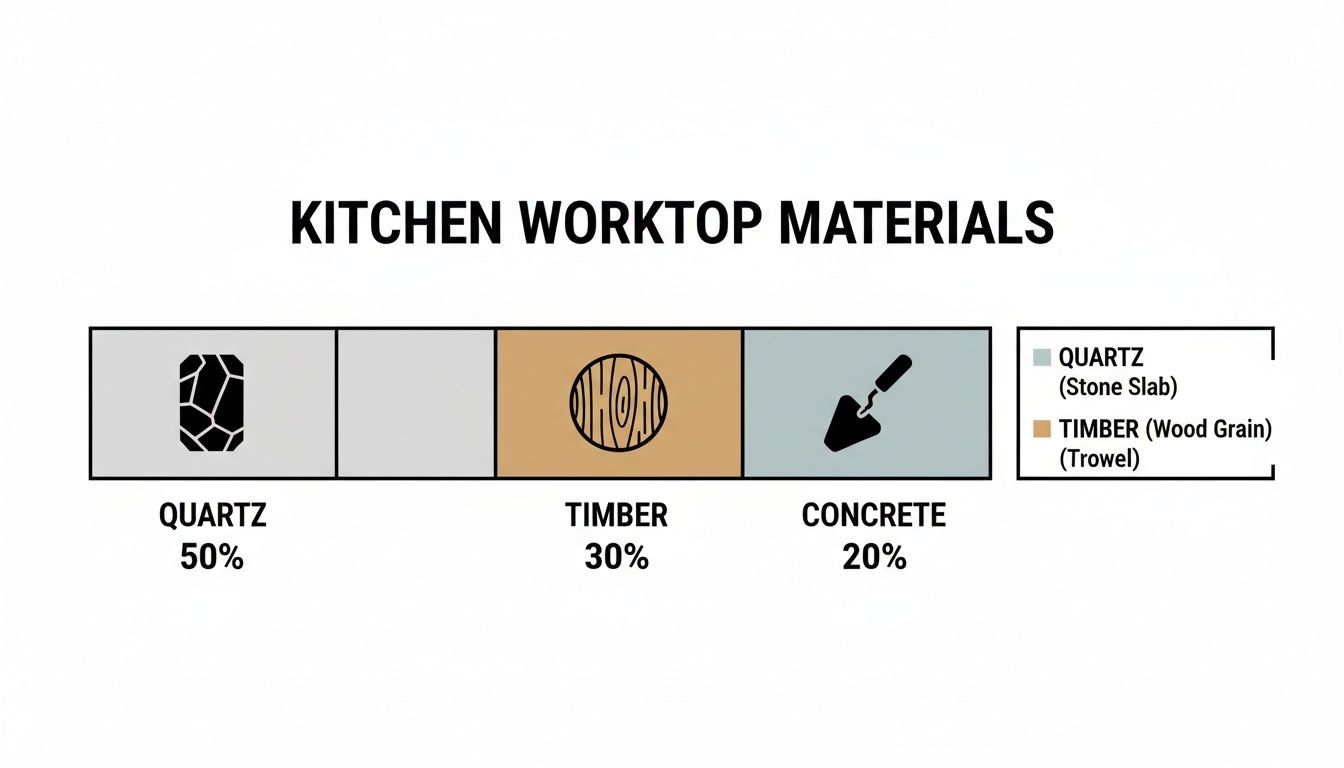
It’s clear that Quartz is the dominant choice for homeowners today, valued for its durability and huge range of aesthetic styles.
The Architect’s Role in Financial Control
Think of your architect as your advocate for ensuring the project delivers maximum value while staying on track financially. We manage the tender process, which involves getting competitive quotes from trusted, vetted contractors to ensure you receive fair pricing for high-quality work.
Throughout the build, we administer the contract, review progress on-site, and authorise payments to the builder. This meticulous oversight protects your investment at every single stage.
An architect’s true value lies in their ability to foresee challenges and manage complexities, turning a potentially stressful process into a controlled and rewarding journey. We ensure your budget is spent wisely to realise your vision to the highest possible standard.
This careful management helps prevent "budget creep" and ensures the final result perfectly matches the agreed-upon design and specification. Our comprehensive approach is central to our work on high-end refurbishments and extensions across Wimbledon and South West London. By blending creative vision with rigorous project management, we make sure your new kitchen extension is a seamless success, from the first sketch to the final handover.
Your Kitchen Extension Questions Answered
When you’re thinking about a project as significant as extending your home, it’s only natural to have a few questions swirling around. We get asked a lot of the same things by homeowners across South West London, so we've answered the most common ones right here to give you some clarity from the get-go.
How Long Does a Kitchen Extension Take?
It’s the big question on everyone’s mind. From those first sketches on paper to the final coat of paint, you should realistically set aside between six and twelve months.
The initial design and planning phase alone often takes three to four months. This is especially true if your project needs a full planning application, which involves a bit more back-and-forth with the local council.
Once the builders are on-site, the construction for a fairly standard extension typically lasts about 12 to 16 weeks. Of course, if your design involves complex structural gymnastics, bespoke joinery, or sourcing very specific materials, this timeline can stretch out a bit.
Will I Need Planning Permission?
Not necessarily. Many straightforward, single-storey rear extensions can be built under what’s known as Permitted Development (PD) rights. This is a great way to streamline the whole process.
However, the rules get much tighter if your property is in a Conservation Area or is a listed building. Don’t assume anything.
It's absolutely crucial to check the specific rules for your property and borough. Even if your project falls under Permitted Development, we always advise obtaining a Certificate of Lawfulness. It gives you official confirmation and complete peace of mind that everything is above board.
How Much Value Does an Extension Add?
A well-designed, beautifully finished kitchen extension can do wonders for a London property’s value, often adding somewhere in the region of 10-20%. The final return on your investment really depends on the quality of the design, the standard of the finish, and what the property market is doing in your particular neighbourhood.
But it's not just about the money. The lifestyle value is immense. You’re creating a modern, functional living space that’s a genuine joy to be in every day. That kind of appeal is also incredibly attractive to future buyers, making it a sound and deeply rewarding investment all around.
Ready to turn your vision into a stunning, functional reality? The team at Harper Latter Architects specialises in creating bespoke, high-end kitchen extensions across South West London. Explore our process and contact us for an initial consultation.

Comments