
A Guide to Loft Conversions in South London

For homeowners in sought-after pockets of South London like Wimbledon, Richmond, and Clapham, a loft conversion is one of the smartest investments you can make. It’s a move that not only improves your lifestyle but adds serious value to your property in a fiercely competitive market. This isn’t just about getting an extra room; it’s about finally unlocking your home’s true potential.
Unlocking Your Home's Potential in South London
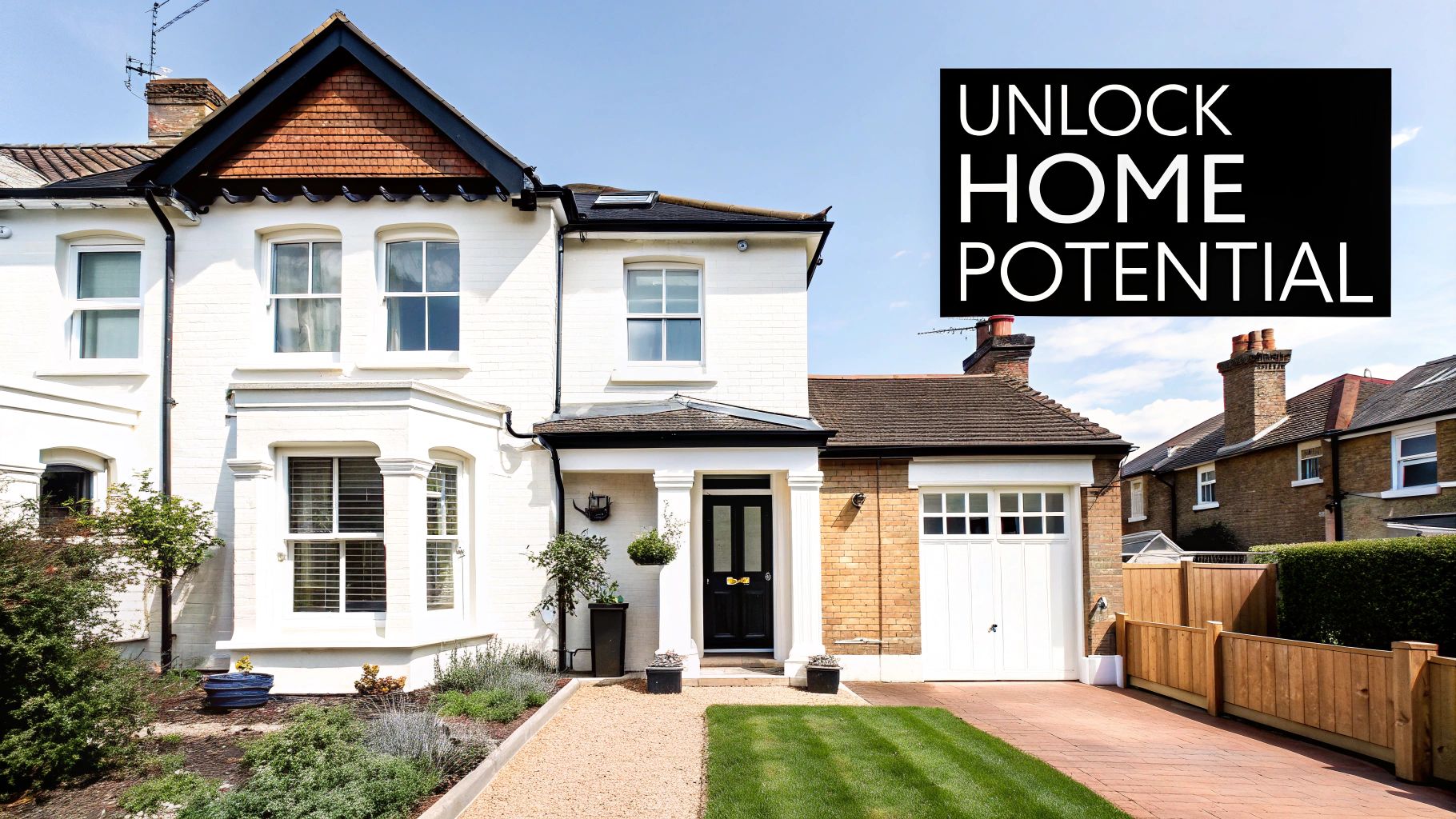
So many families and professionals in South London are choosing to improve rather than move. And it’s easy to see why. The sheer disruption, stamp duty costs, and emotional drain of finding a new home often cancel out the benefits—especially when you already love your neighbourhood.
A loft conversion offers a practical, financially savvy alternative. It’s your chance to create that much-needed space—be it a master suite, a quiet home office, or a playroom for the kids—without sacrificing your garden or going through the upheaval of relocating. You’re simply unlocking the dormant value hidden right above your head.
The Value of Staying and Improving
The logic behind this "improve, don't move" trend is backed by hard numbers. Between 2013 and 2023, London saw a huge shift towards extending upwards, with South London postcodes like SW19, SW18, and SE22 becoming real hotspots for loft conversions. This boom was fuelled by property prices per square foot climbing faster than the UK average.
According to Nationwide data, a well-designed loft conversion can add up to 20% to a property’s value, a figure that reflects the intense demand for more living space. You can explore more data on loft conversion costs and value to get the full picture.
This makes loft conversions in South London not just a home improvement project, but a solid investment. That extra square footage is highly prized in a dense urban environment, delivering a return that often far outweighs the initial cost.
A loft conversion is more than a construction project; it's a bespoke solution tailored to your home and lifestyle. It respects the character of your property while adapting it for modern living, turning unused attic space into your home’s most valuable asset.
Why South London Is a Prime Location
The unique architecture of South London, particularly its wealth of Victorian and Edwardian terraced houses, makes it perfectly suited for loft conversions. These properties often have steeply pitched roofs and rear outriggers that are ideal for creating spacious, light-filled rooms with character.
By choosing to convert, you’re not just adding a room—you’re customising your home to your exact needs while boosting its long-term market appeal. At Harper Latter Architects, we guide you through every stage, from the first sketch to the flawless final details. We ensure your project doesn't just meet your expectations but exceeds them, turning your vision into a beautiful, functional reality.
Choosing the Right Loft Conversion for Your Home
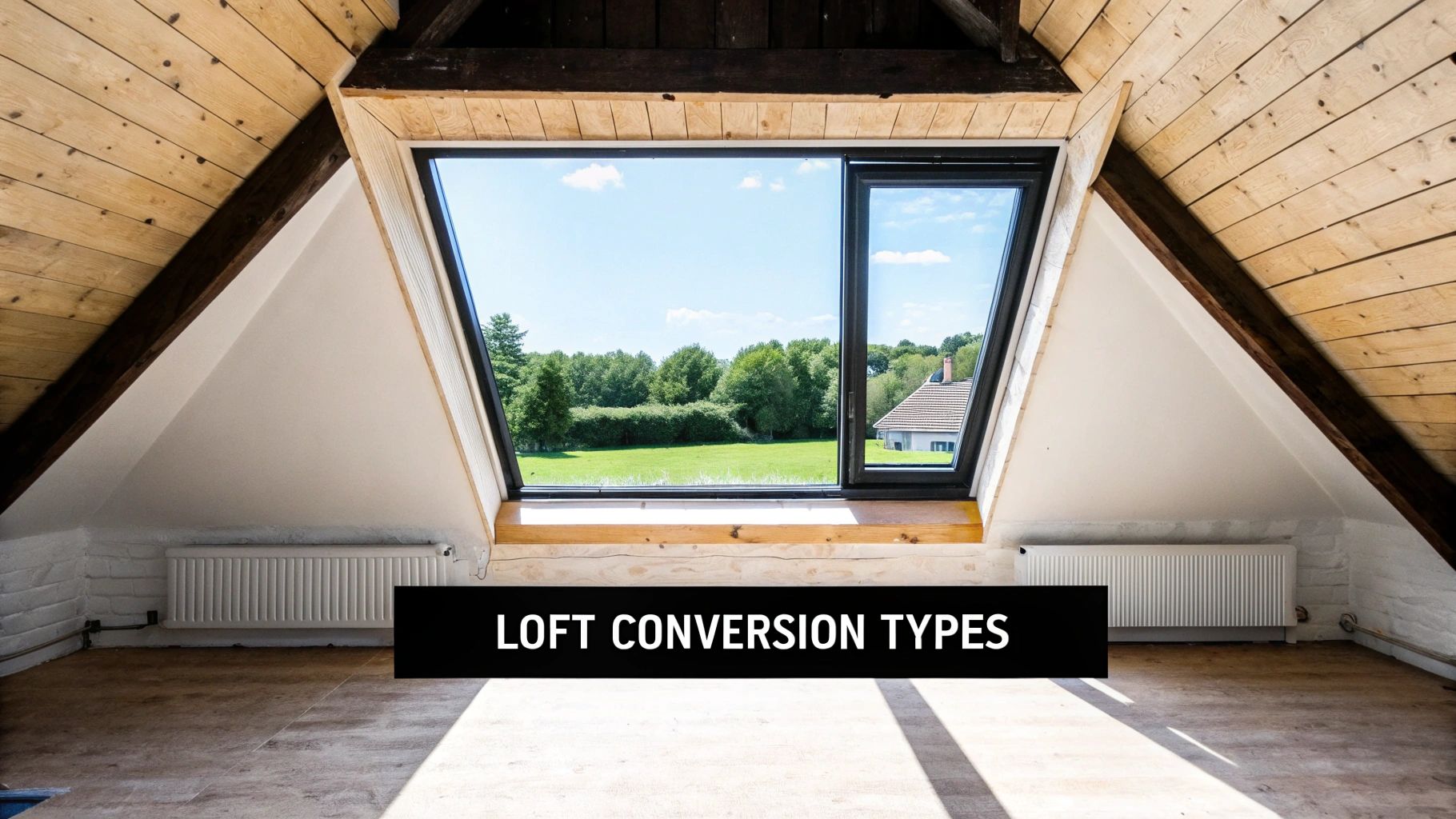
Trying to get your head around the different types of loft conversions can feel a bit overwhelming, but understanding the main options is the best first step you can take. For South London's classic Victorian and Edwardian homes, some designs just work better than others, each offering a different balance of space, cost, and visual impact.
The real art is in matching the right conversion to your home’s existing structure, your budget, and what you actually want to achieve with the new space. This is exactly where an architect’s eye becomes so important, making sure the final design not only works beautifully but sails smoothly through local planning rules in boroughs from Wandsworth to Richmond.
The Simplest Solution: Rooflight Conversions
Think of a Rooflight conversion (often called a Velux conversion) as the purest and most straightforward approach. All you’re really doing is adding skylight windows into the existing roof slope without fundamentally changing its shape. It’s easily the least disruptive and most budget-friendly way to bring daylight and life into a forgotten attic.
Because the roof's structure stays pretty much as it is, this option often falls under Permitted Development rights, which means you can sidestep a full planning application. It's the perfect choice for homes that already have decent headroom, creating a bright, airy room ideal for a home office or a quiet reading nook.
The Most Popular Choice: Dormer Conversions
The Dormer conversion is, without a doubt, the most popular choice for loft conversions in South London, especially for the thousands of terraced houses that define the area. This involves building a box-like structure that projects out from the sloping roof, creating a much larger area with proper, full-height standing room.
It’s like adding a whole new, self-contained room onto your roof. The extension massively increases the usable floor space and lets you have normal vertical windows, which completely floods the new area with natural light.
Flat-Roof Dormer: This is the one you’ll see most often. It’s practical, simple, and gives you the maximum amount of extra internal space.
Gable-Front Dormer: A more traditional option with a pitched roof, this dormer can add a lovely bit of architectural character.
L-Shaped Dormer: Perfectly designed for Victorian and Edwardian properties with that classic rear 'outrigger' kitchen extension. The design wraps around the back of the house, creating an exceptionally large and flexible space—often big enough for a master bedroom, ensuite, and even a walk-in wardrobe.
Maximising Space in Semi-Detached Homes: Hip-to-Gable
If you live in a semi-detached or detached house with a hipped roof (where the roof slopes down on three or four sides), a Hip-to-Gable conversion is a game-changer. The process involves replacing the sloping "hip" end of the roof with a vertical brick wall, known as a gable, which instantly squares off the internal space.
This structural shift creates a huge amount of extra headroom and usable floor area. It’s often paired with a rear dormer to create a truly expansive master suite or even two good-sized bedrooms and a bathroom. While it’s a bigger structural job, the payoff in terms of space is enormous.
Choosing the right loft conversion isn't just about structure; it’s about vision. It’s about seeing the potential for a light-filled master bedroom in a dormer, or a quiet study under a simple rooflight, and aligning that vision with the architectural character of your South London home.
The Ultimate Transformation: Mansard Conversions
Finally, we have the Mansard conversion. This is the most significant transformation you can make, and it delivers the biggest space gain. It involves changing the roof structure on one or both sides to create an almost-vertical wall (at a 72-degree angle), which is then topped with a flat roof.
You often see Mansards on entire terraces in areas like Clapham or Balham. It fundamentally alters the profile of the house, creating what feels like an entirely new top floor. Because the changes are so substantial, a Mansard conversion will almost certainly need full planning permission, but the reward is the maximum possible living area.
Comparing South London Loft Conversion Types
To help you weigh up the options, here’s a quick-reference table comparing the main types of loft conversions we see across South London.
Conversion Type | Typical Cost Bracket | Space Gained | Planning Permission | Best Suited For |
|---|---|---|---|---|
Rooflight / Velux | £25,000 - £40,000 | Minimal | Often not required (PD) | Homes with existing high roof pitch and headroom; studies, playrooms. |
Dormer (Flat Roof) | £45,000 - £70,000 | Significant | Sometimes not required (PD) | Most property types, especially Victorian terraces, for a master suite. |
Hip-to-Gable | £55,000 - £80,000 | Major | Often required | End-of-terrace, semi-detached, and detached homes with hipped roofs. |
L-Shaped Dormer | £60,000 - £90,000 | Exceptional | Sometimes not required (PD) | Victorian/Edwardian properties with a rear outrigger. |
Mansard | £65,000 - £100,000+ | Maximum | Almost always required | Terraced houses, conservation areas (with approval), entire top floors. |
This table provides a snapshot, but every project is unique. The best choice always comes down to a detailed assessment of your property, your budget, and your long-term ambitions for your home.
Navigating Planning and Building Regulations
Let’s be honest, the legal side of a loft conversion is often the most intimidating part. The moment you hear phrases like “planning permission” or “building regulations,” it’s easy to feel overwhelmed. But with the right guidance, the process is far more straightforward than you might think.
Think of it like this: you have two separate gates to get through. The first is Planning Permission, which is all about how your home looks from the outside and how it affects your neighbours and the street. The second is Building Regulations, which is purely concerned with the technical stuff—safety, structural integrity, and energy efficiency.
An experienced architect is your guide through both, making sure your project ticks every box without causing you unnecessary stress or delays.
Permitted Development vs Full Planning Permission
The good news is that many loft conversions in South London can be done under Permitted Development (PD) rights. These are essentially pre-approved rights granted by the government that let you carry out certain works without needing to go through the full planning application process.
For example, a standard rear dormer often falls under PD, as long as it stays within specific limits. These include not exceeding a certain volume (40 cubic metres for a terraced house, 50 cubic metres for a semi-detached or detached home) and not being on the front of your house facing the road. This route is typically faster and gives you more certainty.
Of course, some projects will always need a full planning application. This is usually the case for bigger, more complex designs like Mansard conversions, or if your property has had its Permitted Development rights removed. This process involves submitting detailed plans to your local council for their approval against their specific planning policies.
Special Considerations in South London
South London is home to some beautiful, historic architecture, and this adds another layer to the planning process. Many boroughs, including Richmond, Merton, and Wandsworth, have designated Conservation Areas to protect their unique character.
If you live in a Conservation Area, your Permitted Development rights are often restricted. This means almost any external change, including a loft conversion, will likely need a full planning application to ensure the design is sensitive to the area’s heritage. It's a similar story for a Listed Building, where you’ll need to apply for special Listed Building Consent for any alterations at all, inside or out.
Navigating the rules of a Conservation Area or Listed Building is a specialist skill. It demands a delicate design approach that respects the property's history while still giving you the modern space you need—a balance that an experienced conservation architect is trained to strike.
The Importance of Party Wall Agreements
If you live in a terraced or semi-detached house in South London, the Party Wall etc. Act 1996 is something you absolutely need to know about. This law is there to prevent disputes between neighbours when you’re doing building work that might affect a shared wall.
Your loft conversion will almost certainly involve structural work on a party wall, like inserting steel beams for support. When it does, you are legally required to give your neighbours formal notice. They can then either agree to the work or appoint a surveyor to protect their interests (usually at your expense).
What it covers: Any structural work on the party wall, such as inserting steel support beams.
Your responsibility: You must serve a written notice at least two months before you plan to start work.
The outcome: A Party Wall Agreement (sometimes called an Award) is drawn up, which details exactly what work is approved and how any potential damage will be handled.
This isn’t about asking for permission; it’s a formal process to ensure the work is done properly and fairly for everyone. A good architect can manage this for you, ensuring a smooth and professional conversation with your neighbours right from the start. For a deeper dive, you can learn more by reading our complete guide to building regulations compliance.
Understanding the Costs and Return on Investment
Starting a loft conversion is a big financial step, but it’s best seen as a smart investment rather than just another household expense. Getting a firm grip on the costs and potential returns is essential for planning with confidence, especially in the lively South London property market.
A good budget isn’t just a single number for the build. It’s a complete roadmap covering everything from architectural design fees and structural engineering calculations to planning applications and party wall agreements. Only then do you get to the main construction cost itself.
Breaking Down the Costs of a South London Loft Conversion
In South London, the cost of a loft conversion has settled into a fairly predictable range, reflecting both the capital’s building prices and the value of homes in the area. A simple rooflight conversion will typically start from around £35,000–£40,000. However, for more ambitious projects like a mansard or a hip-to-gable conversion, you can expect the final figure to climb past £65,000–£70,000 once all the structural work and high-quality finishes are factored in.
To build a realistic budget, you’ll need to account for a few key areas:
Professional Fees: This is for your architect, structural engineer, and any party wall surveyors. These experts are the bedrock of a well-designed, legally sound, and safe project.
Main Construction Costs: The lion's share of your budget. This covers all the labour and materials for the new structure, including the roofing, windows, and insulation.
Interior Finishes: This is the exciting part where the space comes to life. It includes plumbing for a new bathroom, all the electrical work, plastering, flooring, decorating, and any bespoke joinery like built-in wardrobes.
Contingency Fund: It's always wise to set aside an extra 10-15% of your total budget for unexpected surprises. This isn’t a sign of poor planning; it's a vital safety net that gives you peace of mind.
The Financial Return of a Loft Conversion
While the initial costs are significant, the return on investment is where a loft conversion really proves its worth. In South London, adding well-designed, usable space can boost your home’s market value by an amount that often dwarfs the project cost. A great loft doesn't just add a room; it can lift your entire property into a new price bracket.
A loft conversion is a robust financial strategy. In a high-value property market like South London's, it is one of the most reliable ways to add significant capital value to your home, transforming dormant attic space into a prime asset.
The value comes from simple supply and demand. An extra bedroom and bathroom suddenly make your home attractive to a much wider pool of potential buyers, from growing families needing more space to professionals looking for a dedicated home office. Research shows time and again that adding a master suite in the loft can increase a property's value by up to 20%. This makes it one of the most financially rewarding home improvements you can undertake.
For a broader perspective on renovation costs, our complete homeowner's guide to average extension costs in the UK provides some useful context. Ultimately, a loft conversion isn’t just about improving your lifestyle—it's a savvy financial move that builds long-term equity in your home.
Our 8-Step Process for a Seamless Project
Embarking on a loft conversion is an exciting journey, but we know it can feel like a huge undertaking. We believe the process should be as beautifully crafted and stress-free as the final space itself. That’s why we’ve spent years refining a transparent, eight-step process that gives you a clear and predictable roadmap from our first chat to the moment you step into your new room.
This isn’t just about project management; it's about building trust. Our structured approach means you always know what’s happening, what decisions are coming up, and how our team is proactively handling every detail. We’re here to guide you, not just to oversee the build.
Phase One: Concept and Viability
The first phase is all about exploration and discovery. This is where we lay the foundations for a successful project, digging into your vision and figuring out the unique potential of your home.
1. Initial Consultation & FeasibilityIt all starts with a complimentary meeting at your South London home. We’ll sit down and listen to your ideas, discuss what you want to achieve, and carry out an initial assessment to confirm a loft conversion is a viable option for your property.
2. Concept DesignWith your brief in hand, the creative work begins. We’ll produce initial design concepts, including sketches and floor plans, to help you visualise what’s possible. This is a truly collaborative stage where we refine the layout and overall aesthetic to perfectly match your lifestyle.
Phase Two: Design and Approvals
Next, we translate the concept you love into a detailed, technical design ready for all the necessary approvals. This is where precision and expertise are absolutely critical.
3. Developed & Technical DesignWe flesh out the concept into a comprehensive set of architectural drawings and specifications. This covers everything from the structural scheme and insulation details to the exact placement of windows and electrical sockets, making sure every technical aspect is buttoned down.
4. Planning & PermissionsArmed with the technical designs, we manage and submit all the required applications on your behalf. Whether it’s for a Lawful Development Certificate under Permitted Development or a full Planning Application, we handle it all, including the Building Regulations submissions to ensure full compliance.
This diagram helps simplify the investment journey, showing the clear progression from initial cost planning through the build phase to the final value uplift for your property.
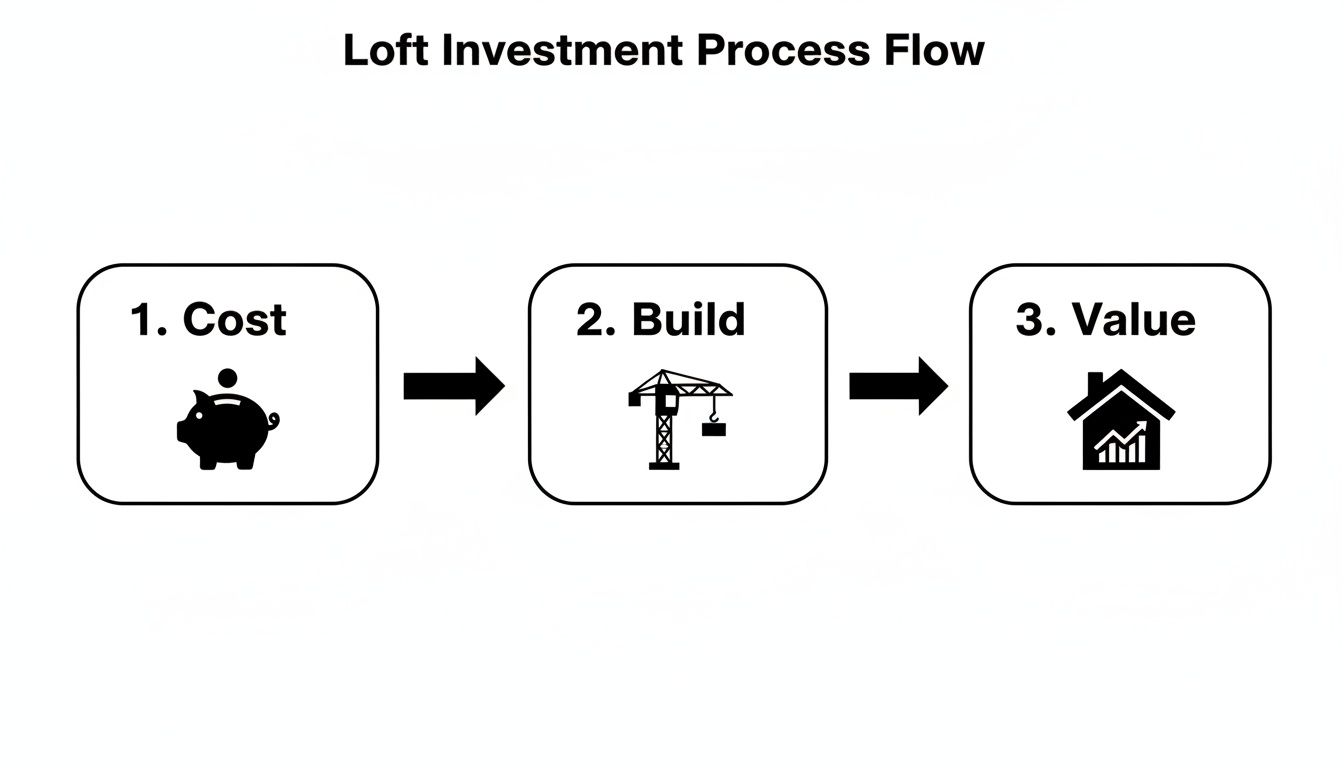
The flow from ‘Cost’ to ‘Value’ really highlights how a structured architectural process is key to realising a strong return on your investment.
Phase Three: Construction and Completion
The final phase is where we bring the vision to life. We move from paper to construction, managing the entire build process to ensure the highest standards of quality are met.
5. Tender & Contractor SelectionWe prepare a detailed tender package and manage the process of getting competitive quotes from trusted, vetted builders. We’ll then help you analyse the tenders and select the right contractor for your project.
6. Construction ManagementOnce work begins on site, we act as your expert representative. We administer the building contract, conduct regular site visits, answer builder queries, and make sure the project is being built exactly to the design specifications. No corners cut.
7. Handover & SnaggingAs construction winds down, we carry out a meticulous inspection to identify any minor defects or “snags” that need putting right. We ensure everything is finished to perfection before you officially take possession of your new space.
8. Completion & AftercareThe project is complete, but our relationship isn’t. We make sure you have all the necessary completion certificates and documentation, and we remain on hand to offer support and advice as you start enjoying your beautiful new loft.
Designing a Beautiful and Functional New Space
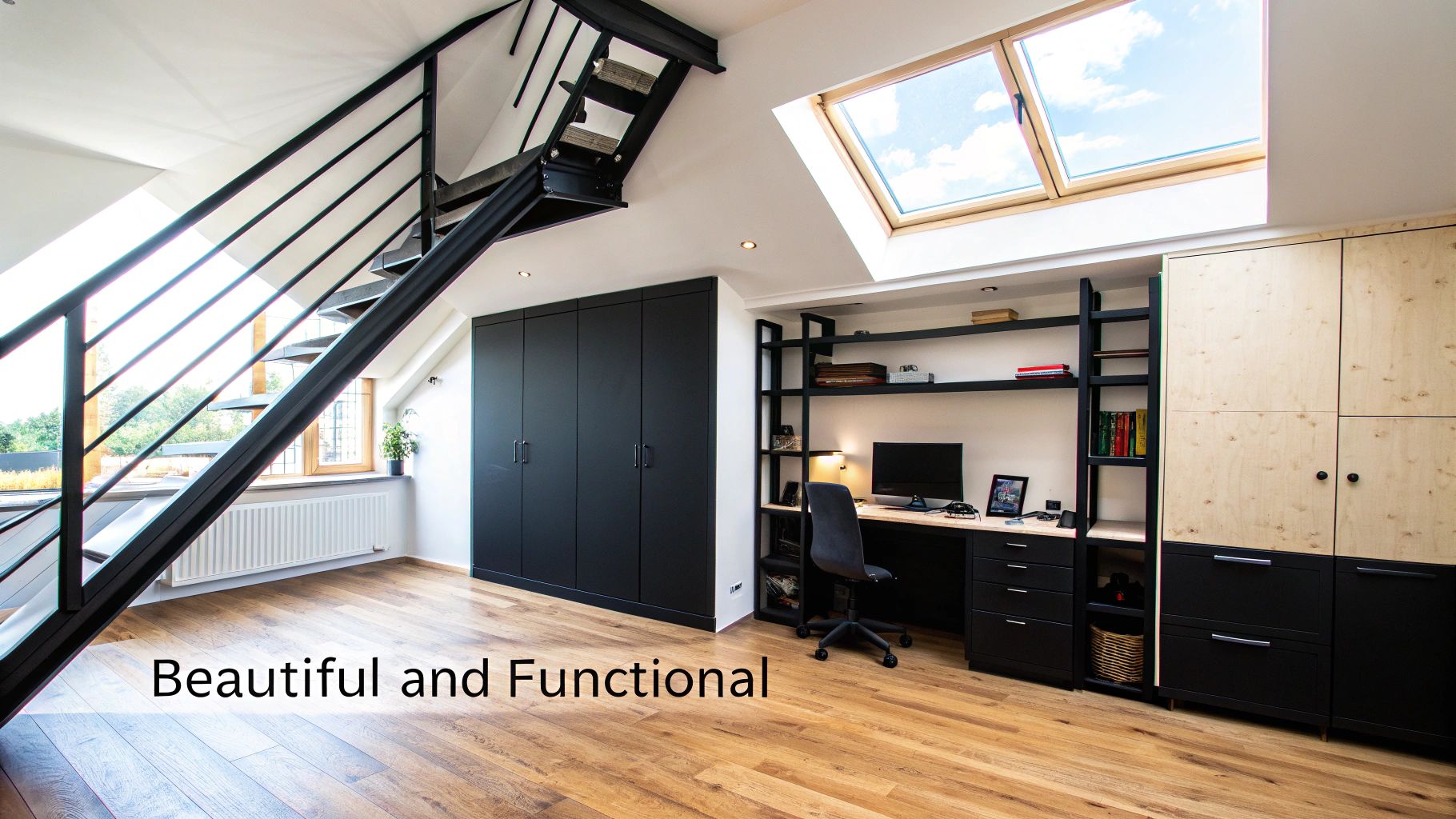
Once the structural scaffolding comes down and the heavy lifting is done, the really fun part begins. This is the stage where a dusty attic is transformed into a living space that feels like it’s always been part of your home. It’s all down to thoughtful interior architecture—the details that make a loft not just look good, but genuinely work for you.
This is where we go beyond creating a simple "room in the roof." We start to craft a space tailored to your vision, whether it’s a calm master suite, a quiet home office, or a playroom for the kids. It’s a chance to perfectly blend practical needs with your personal style.
Integrating the Staircase Seamlessly
A staircase is so much more than a way to get from one floor to the next. It’s the physical and visual link that connects your new loft to the rest of the house. Get it wrong, and it feels like a clumsy add-on, stealing valuable space and disrupting the flow of your landing.
A well-designed staircase, on the other hand, feels like it was always meant to be there. This means carefully considering everything from materials and placement to the style of the balustrade, ensuring it complements your home's character. Whether it’s a classic timber staircase for a Victorian terrace or a minimalist design with glass and steel, the aim is to make the journey upstairs feel completely natural.
Maximising Space with Clever Storage
In London, every square inch counts. The sloped ceilings and quirky angles of a loft conversion aren’t a problem; they’re an opportunity for brilliant, built-in storage solutions that you just can’t get in a standard, box-shaped room.
Bespoke joinery is the key to an uncluttered and highly practical loft. By designing storage that fits the unique contours of the roof, you can turn awkward nooks and low-eaved corners into genuinely useful spaces.
Forget off-the-shelf units. We can design and build storage that truly works for you:
Integrated wardrobes that follow the pitch of the roof, giving you far more hanging space.
Low-level drawers or bookcases tucked neatly into the eaves – perfect for shoes, books, or toys.
A custom-built desk and shelving for a streamlined home office.
Window seats with hidden drawers or concealed cupboards for linens.
This approach means your new loft feels open, airy, and spacious because every bit of storage is working hard behind the scenes. For more inspiration, have a look at our top loft conversion design ideas for South West London homes.
Future-Proofing with Sustainable Choices
A modern loft conversion should be built for comfort and efficiency, not just for today but for years to come. Thinking about sustainability isn't just an eco-friendly nicety; it’s a smart decision that lowers your energy bills and makes the space more comfortable all year round.
Excellent insulation is non-negotiable. Tucking high-performance insulation between the roof rafters is vital for keeping the room warm in winter and, crucially for a top-floor space, cool in summer. Likewise, fitting high-quality double or triple-glazed windows will make a huge difference to heat loss and will help block out external noise.
Lighting also plays a huge role. The best spaces combine abundant natural light from well-placed windows and rooflights with a layered artificial lighting scheme. Think about a mix of ambient downlights, focused task lighting for a desk or reading corner, and maybe some softer feature lighting to create a relaxed atmosphere. Using energy-efficient LEDs gives you total control over the mood while keeping running costs down.
Frequently Asked Questions
When it comes to loft conversions, homeowners always have questions. It’s a big decision, and it’s only natural to want clear answers before you commit. We’ve put together a few of the most common queries we hear from clients across South London to give you a head start.
How Long Does a Loft Conversion Typically Take?
Once the builders are on-site, a typical South London loft conversion takes between 8 to 12 weeks to reach practical completion. This is a realistic timeframe for the construction phase itself.
Of course, the complexity makes a difference. A straightforward rooflight conversion will be on the quicker end of that scale, while a larger L-shaped dormer or a mansard conversion will naturally take a bit longer.
It’s also important to remember this doesn't cover the pre-construction work. The design process, sorting out planning permission, and handling party wall agreements can take several months, so be sure to factor that into your overall schedule from the get-go.
Will I Need to Move Out During the Work?
In the vast majority of cases, no, you won't need to move out. Experienced, reputable builders are masters at minimising the mess and disruption to your daily life.
They'll usually set up scaffolding and bring all their materials up from the outside, keeping the heavy-duty work contained within the loft space for as long as possible. The main disruption really comes when it’s time to install the new staircase, as this involves cutting through the ceiling of the floor below. Even then, this phase is usually quite short—often just a few days.
How Much Value Does a Loft Conversion Add?
Financially speaking, a loft conversion is one of the smartest home improvements you can make in the UK, especially in South London. Multiple analyses show that while the average cost might be around £35,000–£65,000, the value added can easily reach £50,000–£100,000 or more. This means you could see a return on your investment of 50–100%, depending on your specific area and the quality of the finish.
As a general rule across London, a well-designed loft conversion can add up to 20% to your property’s value. You can read more about how loft conversions add value and see how this plays out across different parts of the capital.
A well-executed loft conversion isn't just an expense; it's a direct investment in your property's equity. The value it adds often significantly outweighs the initial cost, making it one of the most financially astute home improvements you can undertake in South London.
What is the Minimum Head Height for a Loft Conversion?
For a loft to feel like a proper, comfortable living space, you need a minimum head height of 2.2 metres (that's about 7 feet 2 inches) at the highest point of the roof. This measurement is taken from the top of the existing ceiling joists up to the underside of the main ridge board.
Any architect can quickly confirm this for you during an initial site visit. If your loft space is just shy of this, don't lose hope just yet. There are sometimes creative solutions, like lowering the ceilings of the rooms on the floor below, though this does add extra complexity and cost to the project.
Ready to unlock the potential in your South London home? The expert team at Harper Latter Architects is here to guide you through every step of your loft conversion journey, from initial concept to flawless completion.

Comments