
Top Loft Conversion Design Ideas for South West London Homes

Updated: Sep 1, 2025
Unlocking the potential of your home's uppermost level can be one of the most rewarding architectural projects. A well-executed loft conversion not only adds significant floor space but also enhances your property's value and character, especially in the sought-after neighbourhoods of South West London. The unique roof lines and structural quirks of period properties in areas like Wimbledon, Richmond, and Chiswick offer a canvas for truly bespoke design. This isn't merely about adding another room; it's about crafting a purpose-built space that integrates seamlessly with your home and elevates your lifestyle.
At Harper Latter Architects, we see a loft not as an attic, but as an opportunity to create a light-filled sanctuary tailored to your exact needs. Whether you envision a serene master suite secluded from the rest of the house, a highly productive home office, or a stylish guest retreat, the possibilities are vast. This guide moves beyond generic advice to explore eight distinct loft conversion design ideas, offering practical insights and expert advice for each. We will delve into specific concepts, from minimalist Scandinavian aesthetics to luxurious master suites, providing actionable steps to help you navigate the journey from initial concept to a beautifully realised living space. Our goal is to equip you with the knowledge needed to transform your underutilised roof space into one of the most cherished parts of your home, perfectly suited to the architectural elegance of South West London properties.
1. The Open-Plan Studio Loft: Maximising Space and Light
An open-plan studio loft is one of the most effective loft conversion design ideas for maximising both perceived and actual space. This concept removes internal walls to create a single, multifunctional area that seamlessly integrates living, sleeping, and even working zones. Inspired by the expansive artist studios of 1960s SoHo and the industrial chic of converted Manchester cotton mills, this design is particularly suited to the characterful Victorian and Edwardian properties found across South West London. By eliminating partitions, natural light from rooflights and windows can flood the entire floor, creating an airy, bright, and uncluttered environment that feels far larger than its footprint suggests.

The key to a successful open-plan loft lies in clever zoning. Instead of walls, you use more subtle cues to delineate different functional areas. This approach maintains the expansive feel while ensuring each zone has a clear purpose, preventing the space from feeling chaotic or undefined.
Implementing a Zoned Open-Plan Design
Creating distinct zones without physical barriers requires a strategic approach to interior design. Here are some actionable tips to achieve a cohesive yet organised open-plan studio:
Define with Flooring: Use a large, high-quality area rug to anchor the living or sleeping area. A subtle change in flooring material, such as transitioning from warm wood in the living space to sleek microcement in a kitchenette area, can also create a powerful visual divide.
Strategic Lighting: Install a zoned lighting system. This allows you to control the ambience in different areas independently. For example, you can have bright, focused task lighting over a desk while keeping the sleeping area softly lit with warm, dimmable wall sconces.
Bespoke Joinery: Commission custom-built joinery that serves multiple functions. A low-level bookshelf can act as a subtle divider between a sleeping zone and a home office, while providing essential storage. Similarly, a floor-to-ceiling shelving unit can frame a living area without fully enclosing it.
Flexible Partitions: For moments when privacy is needed, consider semi-permanent solutions. Ceiling-mounted curtains in a heavyweight linen or a set of elegant sliding screens can be drawn to temporarily section off the bedroom area.
Cohesive Colour Palette: Stick to a light and neutral colour scheme throughout the space to enhance the sense of openness. Introduce depth and define zones through varied textures, such as exposed brick, plush velvet upholstery, and smooth wooden surfaces.
2. The Dormer Window Extension Design: Adding Space and Character
A dormer window extension is one of the most transformative loft conversion design ideas, projecting vertically from the slope of a roof to create usable floor space and valuable headroom. This structural addition is the key to converting a cramped, triangular attic into a bright, functional living area. It fundamentally alters the internal architecture of the loft, creating vertical walls and a higher ceiling, making the space suitable for bedrooms, bathrooms, or home offices where furniture placement and comfort are paramount. This design is prevalent in Victorian terraced houses across South West London, where it maximises living space without altering the property's street-facing facade.
A dormer doesn't just add space; it adds character. Whether you opt for a modern, flat-roof dormer clad in zinc or a traditional gable-front dormer that matches the existing brickwork, the design can enhance your home's architectural narrative. By introducing large windows, it also dramatically increases the amount of natural light entering the top floor, creating a welcoming and airy atmosphere. The key benefits of a dormer extension are often quantifiable, impacting floor area, ceiling height, and overall property value.
The infographic below summarises the typical gains you can expect from a well-executed dormer extension.
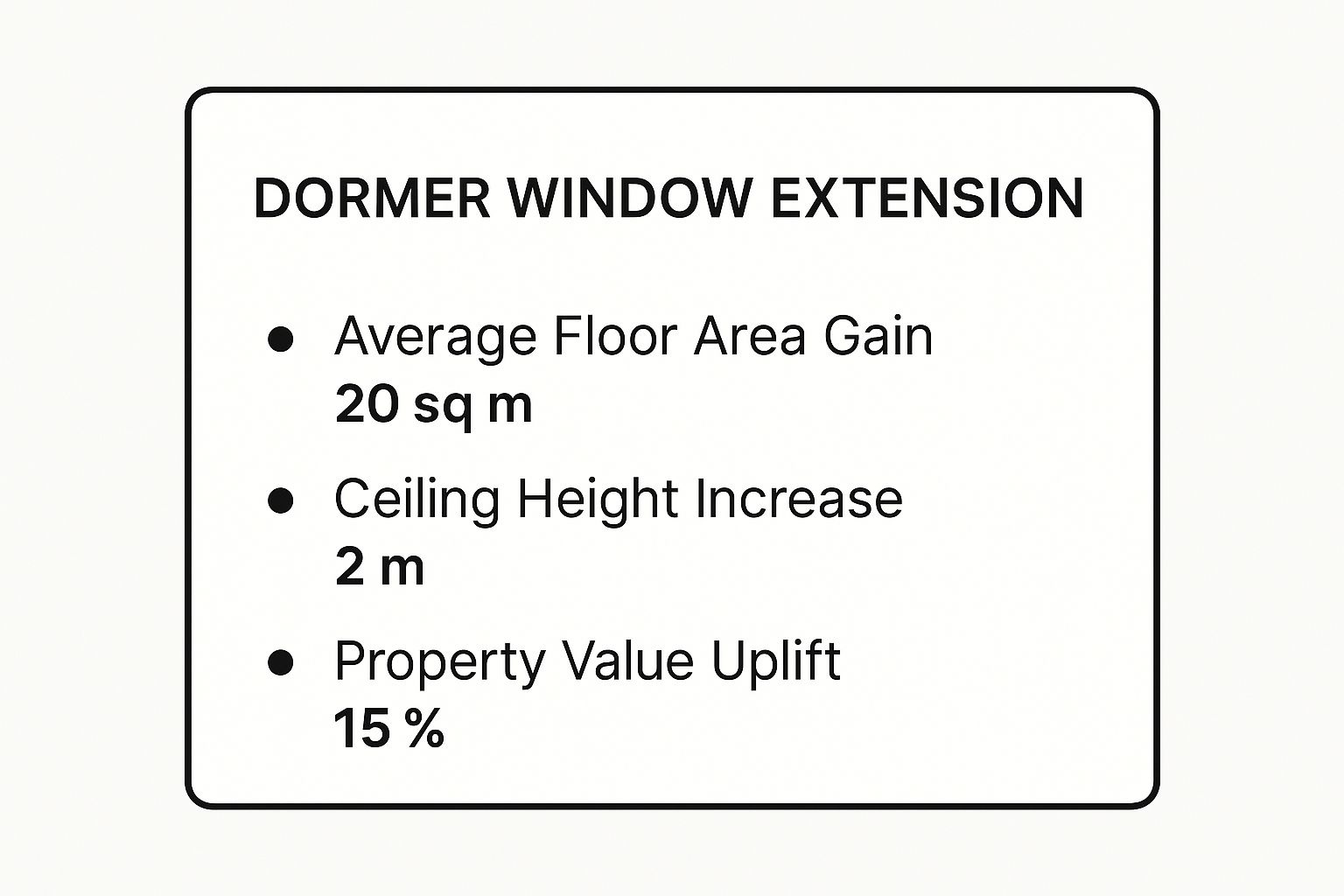
As the data highlights, a dormer extension delivers a significant return on investment, not just in terms of lifestyle but also in tangible property equity.
Implementing a Dormer Extension
Achieving a seamless and effective dormer extension requires careful planning, from architectural integrity to the finer details of interior finishing. Here are some critical tips for a successful project:
Match Materials Carefully: Ensure the exterior materials of the dormer, such as tiles, slate, or brickwork, harmonise with the existing roof and walls of your home. This creates a cohesive look that appears original to the property.
Prioritise Proportions: The scale of the dormer should be proportionate to the main roof. An oversized dormer can overwhelm the house's architecture, while one that is too small may not provide adequate functional space.
Incorporate High-Performance Glazing: Use energy-efficient double or triple glazing for dormer windows. This will improve thermal insulation, reduce energy bills, and minimise external noise, which is crucial in urban areas.
Plan Utilities Early: Consider the routes for plumbing and electrical wiring during the initial design phase. Integrating these services thoughtfully avoids awkward bulkheads or exposed pipework later on.
Ensure Correct Flashing: Proper lead or zinc flashing around the dormer structure is essential to prevent water ingress and ensure the long-term weatherproofing and integrity of the roof.
To see how these principles are applied in high-end projects, explore how dormer window extensions integrate into larger projects by reviewing our portfolio of refurbishments and extensions.
3. The Scandinavian Minimalist Loft: A Study in Simplicity
The Scandinavian minimalist loft is one of the most enduring and sophisticated loft conversion design ideas, focusing on clean lines, natural materials, and functional simplicity. This Nordic aesthetic, often associated with concepts like Danish hygge (cosiness) and Swedish lagom (just the right amount), transforms an attic into a serene, uncluttered sanctuary. It champions a light and bright colour palette, typically using shades of white and soft grey, punctuated by the warmth of natural wood. This approach is perfectly suited to London properties, where maximising natural light is paramount, creating a calm, organised, and highly functional living space that promotes well-being through thoughtful design.
The essence of a successful Scandinavian loft is its commitment to the principle that less is more. Every element has a purpose, from the multi-functional furniture to the carefully curated decor. It avoids ornamentation in favour of showcasing the inherent beauty of quality craftsmanship and honest materials, resulting in a space that feels both timeless and modern.
Implementing a Scandinavian-Inspired Design
Achieving this look requires a disciplined approach to both design and organisation. The goal is to create a space that is as functional as it is beautiful, with an emphasis on calm and clarity.
Embrace a Light Palette: Use a base of white or very light grey for walls and ceilings to reflect light and enhance the sense of space. Layer different white tones to add depth and prevent the room from feeling clinical. Consider using pale, wide-plank wood flooring, such as ash or light oak, to complete the look.
Invest in Quality Storage: Clutter is the enemy of minimalism. Commission bespoke, concealed storage solutions that blend seamlessly into the walls. Handleless joinery with a push-to-open mechanism maintains clean lines and keeps possessions neatly out of sight.
Layer Natural Textures: Introduce warmth and comfort through textiles. Use materials like natural wool, soft linen, and sheepskin for throws, cushions, and rugs. These tactile elements add cosiness without disrupting the minimalist aesthetic.
Choose Multi-Functional Furniture: Select pieces that are both beautiful and practical. A sleek daybed can serve as both a sofa and a guest bed, while a nesting coffee table can be adapted to your needs. Look for designs with simple silhouettes and natural wood finishes.
Incorporate Biophilic Elements: Add life and a touch of organic colour with indoor plants. Simple, sculptural plants like a fiddle-leaf fig or a snake plant in minimalist ceramic pots will enhance the connection to nature that is central to Scandinavian design.
4. Industrial Chic Design
Industrial chic is a powerful loft conversion design idea that celebrates the raw, unfinished aesthetic of converted warehouses and factories. This style embraces a building's heritage by deliberately exposing structural elements like brick walls, steel beams, and ductwork, transforming them into striking design features. Drawing inspiration from the iconic artist lofts of 1970s SoHo and the warehouse apartments of Shoreditch, this approach is ideal for Victorian and Edwardian properties in South West London, where original architectural details can be showcased to create an authentic, characterful space. It masterfully balances raw, utilitarian materials with contemporary comfort and sophisticated finishes.

The success of an industrial chic loft lies in its ability to feel both authentic and liveable. The design intentionally preserves the building's "bones," creating a narrative of its history while integrating modern amenities. This contrast between old and new, hard and soft, is what gives the style its unique and enduring appeal.
Achieving an Authentic Industrial Aesthetic
To create a space that feels both edgy and inviting, you must carefully balance raw materials with refined comforts. Here are some actionable tips for implementing an industrial chic design:
Balance Hard and Soft Textures: Juxtapose exposed brick walls and polished concrete floors with soft, luxurious textiles. Think plush velvet sofas, oversized woollen rugs, and linen curtains to add warmth and prevent the space from feeling cold or stark.
Embrace Warm, Layered Lighting: Industrial spaces can feel harsh. Mitigate this with a layered lighting scheme. Use vintage-style filament bulbs in pendant fixtures, install track lighting to highlight architectural features, and add floor lamps with warm-toned shades to create an inviting ambience.
Incorporate Biophilic Elements: Introduce large, leafy plants like fiddle-leaf figs or monsteras. The vibrant green foliage provides a natural, organic counterpoint to the hard lines of metal and brick, breathing life and colour into the space.
Utilise Industrial-Inspired Furniture: Select furniture that complements the aesthetic. Look for pieces crafted from reclaimed wood, cast iron, and leather. A solid oak dining table with a steel base or a Chesterfield sofa in distressed leather would be perfectly at home.
Preserve Original Details: Where possible, retain and restore original features. Sandblasted brickwork, exposed ceiling joists, or original factory windows are irreplaceable assets that lend authenticity to the design. This approach aligns perfectly with a thoughtful interior architecture strategy. You can discover more about harmonising structure and style by exploring our approach to [Industrial Chic Design](https://www.harperlatterarchitects.co.uk/interior-architecture).
5. Multi-Level Mezzanine Design
A multi-level mezzanine is one of the most architecturally dynamic loft conversion design ideas, perfect for capitalising on the generous ceiling height often found in period properties. This design introduces an intermediate floor or platform within a double-height space, effectively creating two distinct levels from a single volume. Popularised by Japanese micro-housing pioneers and European small-apartment specialists, this approach adds functional floor space for a bedroom, home office, or quiet reading nook while maintaining an impressive sense of openness and visual connection between the levels. It transforms a standard loft into a sophisticated, gallery-style living environment.

The success of a mezzanine lies in its balance between creating useful extra space and preserving the airy, expansive feel of the original loft. By keeping the mezzanine open to the main living area below, it avoids enclosing the space and allows natural light to permeate both levels, creating a complex and engaging interior landscape that feels both intimate and grand.
Implementing a Mezzanine Level
A mezzanine requires careful structural planning and a considered design approach to maximise its potential. Here are key tips for integrating one into your loft conversion:
Ensure Adequate Headroom: A critical building regulation requirement is maintaining sufficient clearance. Aim for a minimum of 2.1 to 2.3 metres of headroom both below and on the mezzanine itself to ensure both levels feel comfortable and usable, not cramped.
Prioritise Structural Integrity: The new level adds significant weight. It is essential to engage a structural engineer to specify appropriate beams and supports to carry the load safely without compromising the building's existing structure.
Choose Open Balustrades: To maintain visual connection and light flow, opt for transparent or lightweight railings. Frameless glass balustrades, tensioned steel cables, or slender vertical metal spindles create a secure barrier without visually obstructing the space.
Plan Integrated Electrics and Ventilation: Consider the function of the upper level from the outset. Plan for adequate power sockets, task lighting, and proper ventilation, as upper levels can become warm.
Maximise Under-Stair Space: The area beneath the mezzanine staircase offers a prime opportunity for bespoke storage. Consider integrating bookshelves, a compact desk, or custom-built drawers. Explore our guide for more insights into bespoke staircase designs that save space.
6. Luxury Master Suite Conversion
A luxury master suite conversion elevates the top floor of a property from a simple extra bedroom into a sophisticated, self-contained retreat. This is one of the most aspirational loft conversion design ideas, transforming underutilised attic space into a sanctuary that rivals a boutique hotel. Influenced by high-end interior designers like Kelly Hoppen and the exclusive feel of members' clubs such as Soho House, this approach integrates a spacious bedroom, a high-spec en-suite bathroom, and often a walk-in wardrobe or dressing area. The unique architectural features of a loft, such as sloping ceilings and exposed beams, are leveraged to create a distinctive, characterful space that feels both private and opulent, making it a perfect addition to prestigious properties in areas like Chelsea or Richmond.
The essence of a luxury master suite lies in its seamless blend of comfort, privacy, and premium amenities. It’s about creating an exclusive escape within your own home, where every detail is considered, from the quality of the finishes to the functionality of the layout, ensuring a five-star living experience every day.
Implementing a Luxury Master Suite Design
Creating a truly high-end master suite requires meticulous planning and a focus on premium features that enhance comfort and convenience. Here are some actionable tips to achieve a hotel-worthy finish:
Prioritise Comfort and Insulation: Invest in superior acoustic and thermal insulation. This ensures the suite is a peaceful, temperature-controlled haven, shielded from the rest of the house and external noise. Underfloor heating in both the bedroom and en-suite adds an undeniable touch of luxury.
Plan the En-Suite Meticulously: Ensure the plumbing can deliver adequate water pressure for features like a rainfall shower or a freestanding bath. High-quality fixtures, elegant tiling, and sophisticated lighting are essential for creating a spa-like atmosphere.
Integrate Bespoke Storage: A walk-in wardrobe or custom-built, floor-to-ceiling joinery is a hallmark of a luxury suite. A well-designed storage solution eliminates clutter and enhances the sense of serene organisation, tailored perfectly to the eaves and slopes of the loft.
Control Light and Ambience: A layered lighting scheme with dimmable circuits allows for complete control over the mood. For ultimate rest, integrate blackout solutions, such as remote-controlled blinds for rooflights or thick, lined curtains for dormer windows.
Select Premium Finishes: The feeling of luxury is conveyed through tactile, high-quality materials. Think natural stone in the bathroom, solid wood flooring, plush wool carpets, and bespoke upholstered headboards. These elements combine to create a cohesive and deeply comfortable environment.
7. The Home Office and Creative Studio: Designing for Productivity
The shift towards remote working has solidified the home office as a cornerstone of modern living, making a dedicated workspace one of the most practical and valuable loft conversion design ideas. This concept transforms an underused attic into a purpose-built environment for productivity, whether for a corporate role, an artistic pursuit, or a growing business. Drawing inspiration from the focused functionality of writer's retreats and the dynamic energy of East London's warehouse studios, this design prioritises natural light, ergonomic comfort, and crucial separation from domestic life. By situating the office at the top of the house, it creates a distinct psychological and physical boundary, allowing for quiet concentration away from the main household activity.
A successful loft office is more than just a desk under the eaves; it is a meticulously planned space that enhances focus and creativity. The key is to integrate professional-grade functionality into a comfortable, inspiring setting. This involves thoughtful spatial planning, acoustic considerations, and a robust technical infrastructure to support the demands of modern work.
Implementing a Professional Loft Workspace
Creating an effective home office or studio requires a blend of ergonomic design, practical technology, and bespoke storage solutions. Here are some actionable tips for creating the perfect professional sanctuary:
Plan the Electrical Layout: Ensure the space is future-proofed by installing multiple double sockets with integrated USB-A and USB-C ports near the primary desk area and other key locations. This prevents a tangle of extension leads and keeps devices charged and ready.
Layer Your Lighting: Combine natural light from large rooflights with a multi-layered artificial lighting scheme. Use a central pendant for ambient light, adjustable task lighting directly over the desk, and softer, indirect lighting like uplighters for a less clinical feel during the evenings.
Integrate Bespoke Storage: Commission custom-built joinery that maximises the awkward angles of a loft. Consider floor-to-ceiling shelving for books and files, deep drawers for equipment, and concealed cupboards to hide printers and other hardware, maintaining a clean and organised aesthetic.
Prioritise Acoustic Comfort: To ensure privacy for video calls and focused work, incorporate acoustic treatments. This can include sound-absorbing panels, high-performance acoustic plasterboard in the walls, and a thick, high-quality rug and underlay to dampen sound transfer.
Establish a Refreshment Station: Include a small, self-contained refreshment area with a high-quality coffee machine, a mini-fridge, and discreet storage for cups and snacks. This small luxury minimises trips downstairs, helping to maintain focus and workflow throughout the day.
8. Kid's Playroom and Teen Retreat
A family-focused loft conversion is one of the most practical and enriching loft conversion design ideas for growing families in South West London. This approach transforms an underutilised attic into a dedicated sanctuary for children or teenagers, providing a space for play, study, and socialising away from the main living areas. Inspired by the need for adaptable family homes and popularised by children's design specialists, this concept creates a zone that can evolve with a child's changing needs, from a colourful playroom for toddlers to a sophisticated retreat for teenagers. By moving these activities upstairs, you reclaim valuable space on lower floors while giving younger family members a sense of independence and ownership.
The success of a children's loft conversion lies in its perfect balance of fun and function. It must be a creative and inspiring environment while also being safe, durable, and organised. This means integrating smart storage solutions, robust materials, and a flexible layout that can be easily updated as children grow from needing space for Lego to needing a quiet desk for exam revision.
Implementing a Future-Proofed Family Loft
Designing a space that caters to both a five-year-old and a fifteen-year-old requires foresight and clever planning. Here are some actionable tips to create a versatile playroom or teen retreat:
Prioritise Safety and Durability: Install robust, child-safe stair railings and consider a soft-surface flooring like cork or high-quality carpet tiles for younger children. Use washable, low-VOC paints on walls and choose hard-wearing fabrics for any upholstery to ensure the space is easy to maintain.
Integrate Abundant Storage: Commission bespoke built-in storage that makes use of awkward eaves. A combination of deep drawers for toys, open shelving for books, and cupboards for arts and crafts supplies will keep clutter organised and out of sight.
Plan for Evolving Technology: Ensure the loft is well-equipped with plenty of electrical sockets and integrated USB ports. This future-proofs the space for gaming consoles, homework laptops, and charging stations, which will become essential as children enter their teenage years.
Create Flexible Zones: Design a layout that can be easily reconfigured. Use modular furniture, beanbags, and movable partitions to create distinct zones for different activities such as reading, crafting, or screen time. This adaptability ensures the room remains functional as interests change.
Control Light and Sound: Maximise natural light with large rooflights fitted with blackout blinds for daytime naps or film marathons. Consider installing sound insulation in the floor to minimise noise transfer to the rooms below, a crucial feature for a vibrant playroom or a teen's music practice area.
Loft Conversion Design Ideas Comparison
Design Type | Implementation Complexity 🔄 | Resource Requirements ⚡ | Expected Outcomes 📊 | Ideal Use Cases 💡 | Key Advantages ⭐ |
|---|---|---|---|---|---|
Open Plan Studio Design | Low to moderate - minimal walls removed | Moderate - furniture & lighting focused | Maximises space, natural light; flexible, airy | Small lofts, single occupants, budget-conscious | Cost-effective; easy maintenance; flexible layout |
Dormer Window Extension | High - structural changes & permits | High - construction, roofing, engineering | Adds floor space, headroom; increases property value | Homes needing extra space, improved ceiling height | Significant space gain; better ventilation & light |
Scandinavian Minimalist Loft | Moderate - simple finishes and furnishings | Moderate - quality materials and furniture | Calm, spacious feel; timeless aesthetic; promotes well-being | Minimalist enthusiasts; small spaces needing brightness | Timeless design; peaceful atmosphere; easy upkeep |
Industrial Chic Design | Moderate - preserving existing structure | Moderate - emphasis on raw materials | Unique character; durable; celebrates building heritage | Warehouse conversions; urban lofts | Authentic, cost-effective; low maintenance |
Multi-Level Mezzanine Design | High - structural modifications & safety | High - engineering, permits, materials | Greatly increased usable space; distinct yet open zones | Tall lofts needing separate zones | Dramatic space increase; architectural interest |
Luxury Master Suite Conversion | Very high - extensive plumbing & finishes | Very high - premium fixtures & finishes | Comfortable, private luxurious spaces; high property value increase | High-end residential upgrades | Luxury amenities; private retreat; premium feel |
Home Office and Creative Studio | Moderate - ergonomic layout & tech setup | Moderate - electrical & furniture needs | Dedicated productive workspace; supports remote/creative work | Remote workers, artists, freelancers | Functional, quiet; customisable; adds value |
Kid's Playroom and Teen Retreat | Moderate - child-safe features & storage | Moderate - durable materials & safety | Safe, flexible play/study area for children; family-friendly | Families with children; homeschooling | Contained activities; adaptable; family value |
Partnering with an Architect to Realise Your Vision
Throughout this article, we have explored a spectrum of inspiring loft conversion design ideas, each offering a unique way to transform the uppermost level of your South West London home. From the expansive, light-filled Open Plan Studio to the sophisticated serenity of a Luxury Master Suite, the potential locked within your roof space is immense. We have seen how strategic design can create a functional Home Office, a playful Kid's Retreat, or a striking Industrial Chic living area.
The journey from a conceptual idea to a beautifully executed, functional space is complex, particularly within the distinct architectural landscape of areas like Wandsworth, Richmond, or Merton. The success of any ambitious conversion hinges on navigating planning permissions, respecting conservation area constraints, and mastering the technical intricacies of structural engineering and building regulations. This is where creative vision must meet architectural expertise.
Unlocking Your Home's Full Potential
The most impactful loft conversions are born from a deep understanding of both the property's character and the homeowner's lifestyle. The design ideas presented, such as the Scandinavian Minimalist Loft or the innovative Multi-Level Mezzanine, are not just aesthetic choices; they are solutions tailored to specific needs for space, light, and functionality.
Key takeaways to consider as you plan your project include:
Bespoke is Better: Off-the-shelf solutions rarely maximise the unique geometry of a loft. Custom joinery, integrated storage, and tailored lighting schemes are essential for a high-end finish that feels both personal and practical.
Light is Paramount: Whether achieved through expansive dormer windows, strategically placed rooflights, or glass balustrades, maximising natural light is the single most transformative element in any loft design. It makes spaces feel larger, more inviting, and more connected to the outdoors.
Function Defines Form: Before settling on a style, define the primary purpose of the space. A tranquil master suite has vastly different requirements for acoustics, layout, and storage than a vibrant, multi-functional family room or a dedicated creative studio.
From Inspiration to Implementation
Transforming these loft conversion design ideas from a digital mood board into a tangible, high-quality reality requires a professional partnership. An experienced architect acts as your creative collaborator and expert guide, translating your vision into detailed plans that are both buildable and compliant. They are instrumental in appointing trusted contractors, managing project timelines, and ensuring every detail, from the structural steel to the final finish, is executed to the highest standard.
Ultimately, a loft conversion is more than just adding a room; it is a significant investment in your home and your quality of life. By embracing thoughtful design and collaborating with seasoned professionals, you can create a truly exceptional space that not only adds significant value to your property but also enriches your daily living for years to come.
Ready to explore the unique potential of your loft space? At Harper Latter Architects, we specialise in creating bespoke, luxury residential designs across South West London and Surrey, turning ambitious concepts into exquisitely crafted realities. Visit our website at Harper Latter Architects to view our portfolio and schedule an initial consultation to begin your home’s transformation.
Comments