
A Guide to Light Wells Basement Design in London Homes

Imagine a basement that doesn't feel like a cellar at all, but rather a sunlit, seamless part of your home. This is the transformation that expertly designed light wells for a basement can achieve. They are a critical architectural feature, channelling natural daylight and fresh air into spaces below ground, turning them from functional areas into vibrant, desirable living quarters.
Bringing Light Below Ground With Basement Light Wells
A basement light well is far more than just a hole in the ground; it's a carefully engineered void that serves as a vertical window to the sky. By excavating an area right next to a basement wall and installing a window or glass doors, you create a direct pathway for sunlight to flood into what would otherwise be a dark, subterranean room. This simple design principle is the key to unlocking the true potential of your home's lower level.
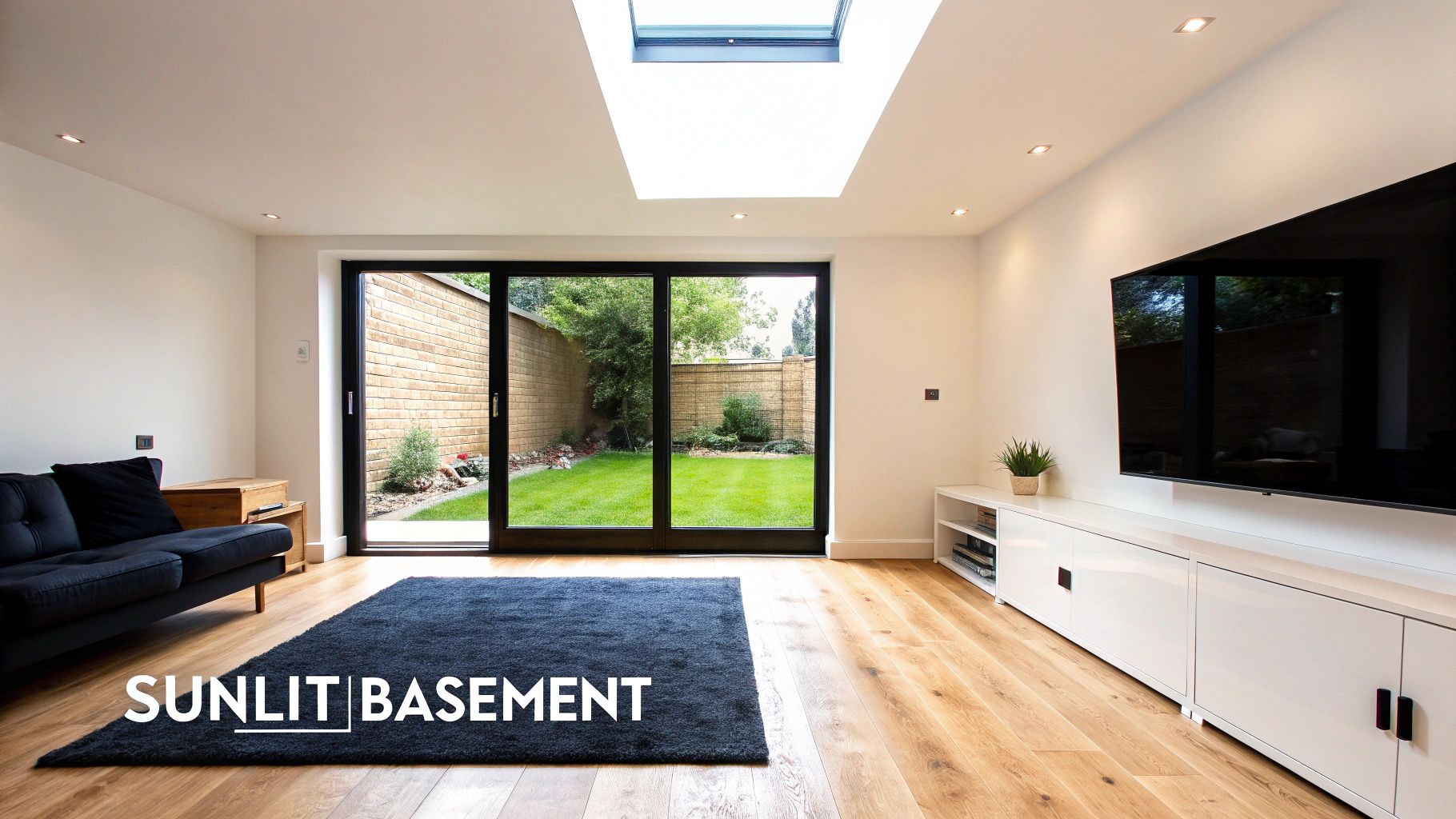
In densely built-up areas like South West London, where every square metre is precious, a light wells basement offers a remarkable solution. It allows you to expand your living area downwards without having to sacrifice the bright, airy atmosphere you enjoy on the upper floors.
The Value of Natural Light in Basement Conversions
The impact of natural light on our wellbeing is well-documented, and introducing it to a basement has a profound effect on the feel and usability of the space. Instead of depending entirely on artificial lighting, which can often feel harsh or unwelcoming, light wells create a dynamic environment that shifts with the time of day and the changing seasons. It’s this connection to the outdoors that makes any room more inviting.
A professionally designed light well helps bring ambitious basement conversion ideas to life, including:
Bespoke Home Cinemas: Enjoy a true cinematic experience in a room that still feels connected to the world outside.
Private Gyms and Wellness Suites: Create an energising space for your morning workout, filled with natural light.
Expansive Family Rooms: Design a bright, welcoming hub for family life that feels anything but subterranean.
By integrating light wells, architects can craft bespoke subterranean spaces that feel seamlessly connected to the rest of the home. This not only enhances your lifestyle but also adds significant, measurable value to your property.
Ultimately, the goal is to completely erase the old distinction between 'basement' and 'living space'. With thoughtful architectural design, your lower ground floor can become one of the most cherished parts of your home—proving that a basement doesn't have to be dark, damp, or disconnected from the world above.
How a Light Well Transforms Your Basement
So, how exactly does digging a hole next to your house bring a subterranean space to life? Think of a light well as a vertical window carved directly into the earth. It’s a simple concept, but it solves the two biggest challenges of basement living: the persistent gloom and the stagnant, damp air. Its core job is to act as a funnel, bringing the outside in.
The structure works by capturing daylight from above and channelling it horizontally through a new window or glass door into your basement rooms. The effect is immediate and genuinely profound. It can single-handedly change the atmosphere from something oppressive and enclosed to a space that feels bright, airy, and welcoming. This connection to the daily rhythm of natural light is vital for our wellbeing and drastically cuts down the need for artificial lighting.
More Than Just Light: The Daylighting Benefits
The impact of introducing natural light into a light wells basement goes far beyond simple illumination. Daylight helps regulate our internal body clocks, which can improve everything from mood to productivity. It's a well-known principle in architecture that spaces filled with natural light feel larger and more comfortable—an essential quality when you’re turning a basement into a premium living area like a family room or home office.
A well-designed light well doesn't just illuminate; it animates a space. As the sun moves across the sky, the quality and angle of the light shift, creating dynamic shadows and highlights that bring the room to life. That’s something static electric lighting can never replicate.
The Critical Role of Natural Ventilation
Beyond the light, a light well is absolutely fundamental for creating a healthy environment below ground. Basements, by their very nature, are prone to dampness and poor air quality. Without proper airflow, moisture gets trapped, leading to musty smells and, eventually, the potential for mould growth.
An opening window or door within the light well provides an essential escape route for stale, humid air and a clear entry point for fresh, clean air from outside. This natural cross-ventilation is the key to preventing damp and maintaining a comfortable, healthy atmosphere year-round.
By providing both daylight and a source of fresh air, a light well fundamentally changes the character of a basement. It stops being a mere cellar and starts functioning as a genuine, habitable part of the home, fully integrated with the levels above.
This dual function is precisely what makes light wells basement design so effective. The constant circulation of air not only makes the space more pleasant to be in but also protects the building’s structure and your furnishings from the damaging effects of excess moisture. To see how these principles are applied in high-end projects, you can learn more about how we approach bespoke basement conversions and their architectural considerations. A correctly implemented light well ensures your new living area is not only beautiful but also healthy and built to last.
Choosing the Right Type of Light Well
Picking the right kind of light well is one of the biggest decisions you'll make in a basement conversion. It doesn't just dictate how much light and air you'll get; it shapes the entire character and feel of your new subterranean space. Not all light wells are created equal, with options ranging from simple, practical designs to grand architectural statements.
The best choice really hinges on what you’re trying to achieve. Are you just looking to brighten up a small utility room or bathroom? Or are you dreaming of a seamless indoor-outdoor connection for a large family room or home gym? Getting to grips with the different designs is the first step towards creating the perfect light wells basement for your London property.
This concept map breaks down how a light well fundamentally solves the core challenges of any basement environment.
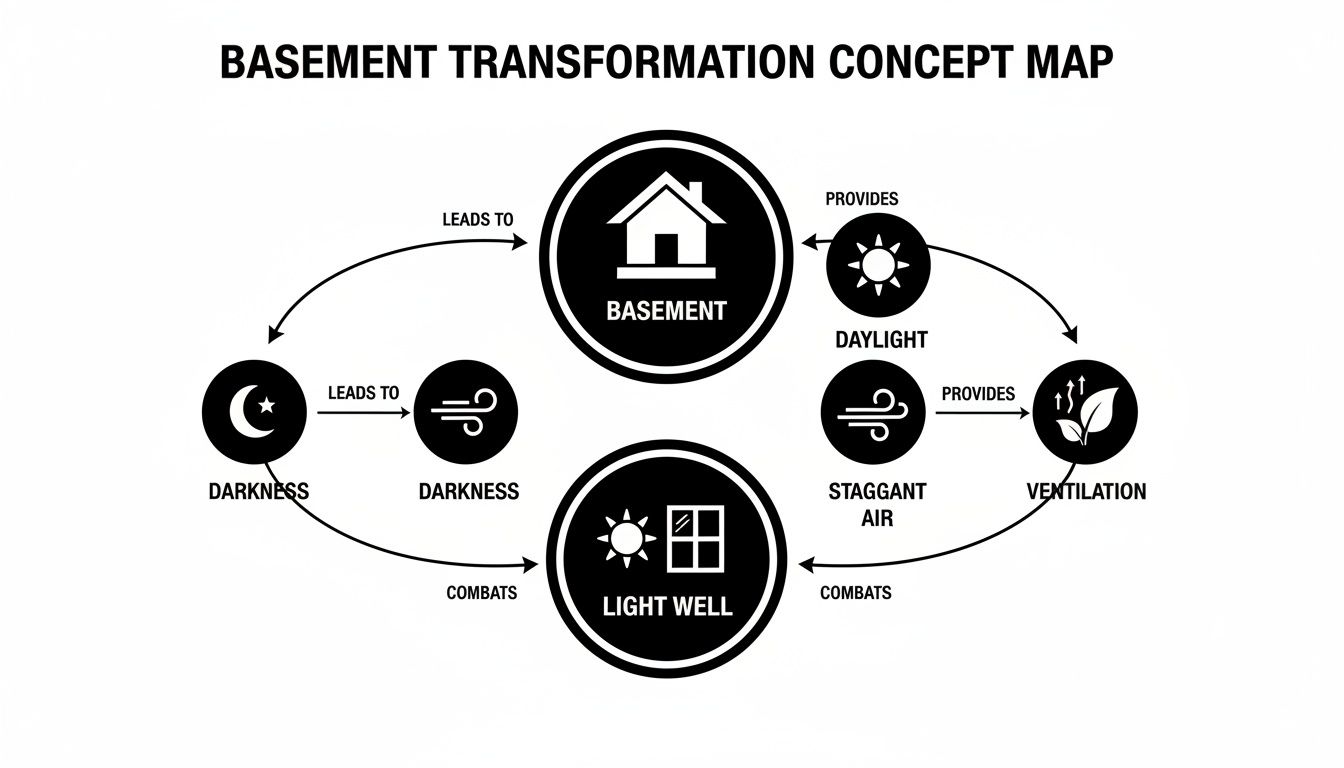
As you can see, the light well is a direct fix, turning a dark, stuffy space into somewhere bright and fresh by introducing natural daylight and proper ventilation.
Window Wells: The Simple and Effective Solution
The most straightforward approach is the window well. This is a small excavation, usually semi-circular or rectangular, built right up against a basement wall to make space for a window. Its job is purely functional: let daylight into a specific room and provide a way to get some fresh air in.
Window wells are the perfect choice for smaller rooms or where you don't have much garden space to spare. They work brilliantly for illuminating areas like:
Basement bathrooms and guest WCs
Utility or laundry rooms
Compact home offices or studies
Bedrooms that need an official fire escape window
Don't underestimate them just because they're simple. Even a modest window well can completely change how a room feels, stopping it from ever feeling like a cellar. For period properties in places like Wimbledon or Richmond, a discreetly placed window well can bring a basement to life without altering the building’s historic character.
Patio Light Wells: Creating an Intimate Sunken Terrace
If you’re looking for more than just a window, a patio light well is a major step up in both size and ambition. This design is much larger and deeper, creating a small, sunken terrace or patio that you can walk out onto from the basement, usually through French doors or large sliding glass panels.
This completely changes the relationship between the basement and the garden. It's no longer just a view; it's a real, physical connection. That makes patio light wells ideal for living areas where you want to blur the lines between inside and out. Think of a home gym with doors that open onto a private sunken terrace for yoga, or a family room that flows into a sheltered spot for a morning coffee.
A patio light well creates a destination. It’s an intimate, self-contained outdoor room that adds a unique layer of luxury and usability to a basement conversion, making the space feel more like a lower ground floor.
Sunken Courtyards: The Ultimate Architectural Statement
At the most ambitious end of the scale are sunken courtyards. These are large-scale excavations that can act as a central garden feature for the entire basement level. A sunken courtyard is a dramatic architectural move, often connecting multiple basement rooms to one expansive outdoor area.
Imagine a home cinema, a wine room, and a guest suite all opening onto a beautifully landscaped, multi-level courtyard with built-in seating and planting. This approach completely redefines the idea of a light wells basement, creating a breathtaking focal point that floods the whole lower level with natural light.
This design is especially suited to large properties or new builds in areas like Cobham, where there's enough room to create something truly spectacular. It turns the basement into the heart of the home, offering unparalleled light, access, and a unique architectural experience that adds serious value and 'wow' factor.
To help you decide, here's a quick comparison of how these different light well designs stack up for typical basement extension projects.
Comparing Light Well Designs for Basement Extensions
Light Well Type | Primary Benefit | Typical Size | Best Suited For | Integration Potential |
|---|---|---|---|---|
Window Well | Functional daylight and ventilation for a single room. | Small (e.g., 1m x 0.6m) | Bathrooms, utility rooms, studies, or small bedrooms. | Limited. Primarily for a single window and potential fire egress. |
Patio Light Well | Creates a small, usable outdoor space and physical access. | Medium (e.g., 3m x 2m) | Living areas, home gyms, kitchens, or main bedrooms. | High. Connects via French doors or sliders to create an indoor-outdoor feel. |
Sunken Courtyard | Transforms the entire basement level with a large, central garden. | Large (e.g., 5m x 5m+) | Large basements with multiple rooms, luxury amenities. | Very high. Becomes the architectural focus, linking several spaces. |
Each type offers a different level of light, access, and architectural impact. Your choice will depend on your property's constraints, your budget, and ultimately, how you envision using your new basement space.
Navigating Planning Permission and Building Regulations
Getting a light well basement right involves far more than just a brilliant design; it means carefully navigating a complex web of local regulations. In South West London, any significant structural work—especially excavation—falls under the watchful eye of the local councils. Understanding this legal framework isn’t just a formality. It’s the foundation of a successful and lawful project.
Before a single shovel hits the ground, your project has to satisfy two completely different sets of rules: Planning Permission and Building Regulations. People often confuse them, but they serve very different purposes.
Planning Permission is all about the principle of the development. It looks at the impact of your proposed light well on the local area, your neighbours, and the aesthetic character of the street, which is especially important in conservation areas.
Building Regulations focus on the technical side of the construction. They make sure the work is structurally sound, safe, energy-efficient, and properly waterproofed, protecting the health and safety of everyone living in the property.
For a basement extension with a light well, you will almost certainly need to get both. This dual-track process ensures that your project isn't just a desirable addition to your home, but a safe and robust one, too.
Understanding Local Council Guidance
Each London borough has its own specific policies, particularly when it comes to subterranean development. Councils in areas like Richmond, Wimbledon, and Wandsworth have developed stringent guidance to manage the impact of basement projects. These rules are there to protect local character, prevent flooding, and ensure structural stability in densely packed neighbourhoods.
A perfect example is the London Borough of Camden, where developments incorporating light wells are a key focus. According to Camden Planning Guidance (CPG4) on Basements and Lightwells, any application in streets identified as 'primary' or 'secondary' flood risk areas must include a full Flood Risk Assessment. This is vital due to Camden's clay geology and high water table, which create serious risks of ground instability and flooding from excavations.
The guidance also specifies that light wells must be secured with either a 1100mm high railing or a protective grille to meet safety standards, preventing falls while still letting light pour into the new living space. You can read the full guidance on Camden's approach to their basements and lightwells planning policy.
This really highlights why generic advice just doesn't cut it; a deep understanding of local policy is essential.
Key Regulatory Hurdles to Clear
When planning for a light well basement, several specific requirements frequently come up, especially within South West London's sensitive architectural landscape.
Safety and Fall Prevention Safety is absolutely non-negotiable. Any light well deep enough to pose a fall risk must be protected. As stipulated in many local guidelines, this typically means installing a barrier, such as a railing or balustrade, that is at least 1100mm high. Alternatively, a structural walk-on glass cover or a secure metal grille can be used. The design of this safety feature should be treated as part of the overall aesthetic, not just an afterthought.
Conservation Areas and Listed Buildings If your property is in a conservation area or is a listed building, the rules become significantly stricter. Front-facing light wells are often a non-starter to preserve the historic streetscape. Any external alterations must be done with materials and a design that are sympathetic to the building's original character. This is a critical point for many of the beautiful period properties found across the region. Expert guidance is crucial for these types of challenging but rewarding refurbishments and extensions.
Flood Risk and Ground Stability Given London's geology, particularly the prevalence of London Clay, water management is a primary concern for councils. An application for a light well will almost always require:
A Flood Risk Assessment (FRA) to show the project won't increase flood risk elsewhere.
A Hydrogeological Report to assess groundwater levels and soil conditions.
A Construction Method Statement detailing how the excavation will be managed safely without affecting neighbouring properties.
Navigating this regulatory landscape can seem daunting, but it's a standard part of the process for experienced architects. A well-prepared application, backed by thorough technical surveys, is the key to demonstrating compliance and achieving a smooth approval process for your light wells basement.
Key Design Considerations for a Flawless Finish
The difference between a functional light well and a truly stunning architectural feature is all in the details. Moving beyond the basic structure, a thoughtfully designed light wells basement weaves together materials, waterproofing, glazing, and safety into a single, cohesive design. Get this right, and your light well becomes a beautiful, lasting addition to your home.
Success really does hinge on getting these critical elements right from the very beginning. Every decision, from the texture of the retaining walls to the type of glass in the doors, contributes to the final look, feel, and performance of your new space.
Choosing Materials that Complement Your Home
The materials you choose for the retaining walls of the light well have a huge impact on its character. The goal is to create a seamless link between your home’s existing architecture and the new subterranean space, making it feel like it was always meant to be there.
A few popular approaches we often use include:
Matching Brickwork: For period properties, using bricks that match the main house is almost always the best route. This creates a visually consistent and timeless finish that feels completely original.
Modern Rendered Finishes: A crisp, smooth render, often painted in a light, reflective colour like off-white, lends a contemporary feel. It’s perfect for modern homes or for creating a clean, minimalist backdrop that lets planting or furniture stand out.
Natural Stone or Cladding: High-quality stone or slate cladding can introduce texture and a real sense of luxury, turning a simple retaining wall into a sophisticated feature in its own right.
Don't forget the floor. Materials like natural stone paving, high-quality porcelain tiles, or even composite decking can create an inviting surface, transforming the area from a simple light source into a genuine sunken terrace.
The Non-Negotiables: Drainage and Waterproofing
Without a doubt, the most critical technical part of any light well design is managing water. A failure here can lead to damp, leaks, and eye-wateringly expensive structural damage down the line. A professional design will always incorporate a multi-layered defence system against water.
The core principle is simple: never let water build up. A great design works on the assumption that water will get into the light well and provides a robust, guaranteed way for it to get out.
This is achieved with two key components working in tandem:
Waterproofing: The retaining walls absolutely must be treated with a durable waterproofing membrane, like a cavity drain system or a modern liquid-applied coating. This creates an impermeable barrier that physically stops groundwater from seeping through the structure.
Drainage: A dedicated drainage outlet has to be installed at the lowest point of the light well floor. This is typically connected to a sump and pump system that actively moves any collected water away from the property and into the main drainage system.
Proper drainage is the only way to guarantee a dry, usable basement for years to come. It's simply not an area to cut corners.
High-Performance Glazing for Light and Efficiency
The choice of windows and doors is pivotal. After all, the primary goal of a light wells basement is to flood the space with natural light. Large panes of high-performance glass are key, whether you opt for huge fixed windows or bi-folding and sliding doors that create that seamless indoor-outdoor connection.
But modern glazing offers so much more than just a view. Key things to consider are:
Thermal Performance: Double or even triple-glazed units with a low U-value are essential to prevent heat loss in winter, keeping your basement comfortable and your energy bills down.
Acoustic Insulation: In busy urban areas, acoustic glazing makes a world of difference, significantly reducing outside noise to create a peaceful, tranquil space.
Solar Control: For south-facing light wells, a special coating can be applied to reduce solar gain, preventing the basement from overheating on hot summer days.
Integrating Safety with Elegant Design
Safety isn't just a priority; it's a legal requirement. UK Building Regulations are very clear on this, especially for residential basement conversions in London. Approved Document B states that habitable basements must have a means of emergency escape, and any deep light well has to be guarded to prevent falls—usually with a railing at least 1100mm high or a sturdy grille. This is particularly crucial for terraced and semi-detached properties in places like Richmond and Chiswick, where light wells are essential but must be designed with absolute safety in mind. You can find more detail on the building control standards for basement conversions.
The good news is that these safety features don’t have to look clumsy or purely functional. A frameless glass balustrade provides the necessary protection without obstructing light or views, maintaining a clean, modern aesthetic. Alternatively, a bespoke metal railing can be designed as an elegant architectural feature. For a completely flush finish, structural walk-on glass covers are a superb solution, allowing light to pour through while creating usable floor space above.
Real-World Examples of Light Well Projects
Theory is one thing, but seeing how a light wells basement comes to life in a real-world home is what really shows off its potential. To give you a better idea of what's possible, let's walk through a couple of case studies inspired by projects in sought-after areas like Wimbledon, Richmond, and Cobham, where great architecture meets client ambition.
These stories show how a bespoke design can be tailored to any type of property, from a period terrace to a contemporary new build.
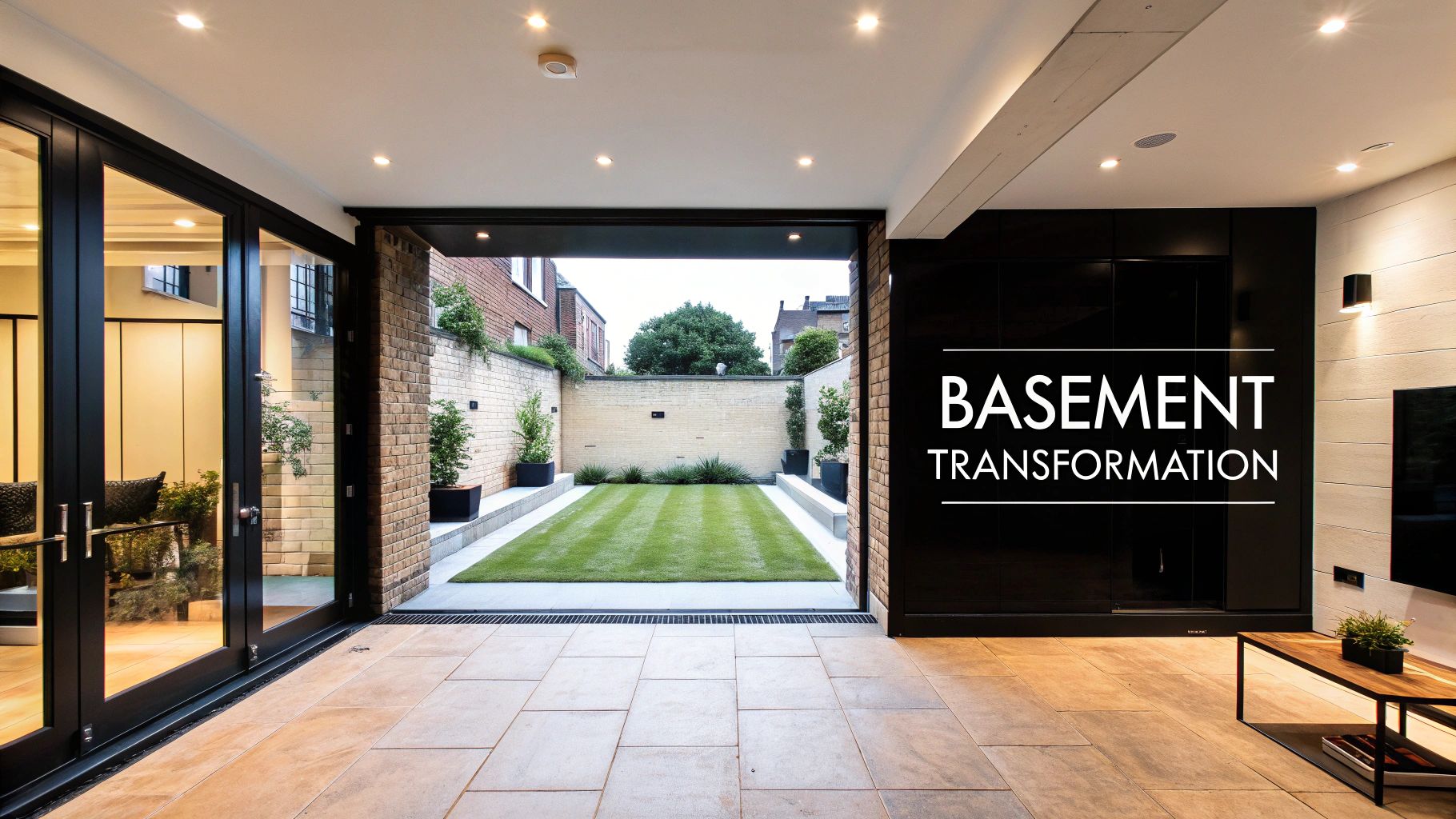
What these examples really highlight is a core principle of our work: blending luxury amenities with sensitive, intelligent architectural design. The approach is always customised to the home.
Case Study One A Discreet Addition to a Period Property
Picture a classic Victorian terraced house in Wimbledon. The owners wanted to add a state-of-the-art home gym and wellness suite in a new basement, but were rightly concerned about preserving the property's historic character and their much-loved garden. The challenge was clear: how do you bring in lots of natural light without creating an obvious modern scar on the building?
The solution was a strategically placed, discreet light well at the rear of the house. By excavating a slender but deep channel, we could install a full-height glazed door leading out from the new basement level. This simple move flooded the new gym with daylight while remaining almost completely hidden from view from the main garden.
This approach is a masterclass in subtlety. The light well becomes a private, sunken space that serves the basement perfectly without compromising the historic fabric of the home above, proving that modern amenities and heritage can coexist beautifully.
Case Study Two A Dramatic Sunken Courtyard for a New Build
Now for a completely different brief. For a contemporary new-build project in Cobham, the vision was much bolder. The client wanted a spectacular basement entertainment level—complete with a cinema, bar, and games area—that felt completely connected to the outdoors. The goal wasn't just function; it was to create a 'wow' factor that would define the entire property.
Here, a dramatic sunken courtyard became the architectural centrepiece. We excavated a large, multi-level area and linked it to the basement with expansive sliding glass walls, creating a stunning focal point. Lined with pale stone and filled with architectural planting, it became an outdoor room in its own right, flooding the whole lower level with light and fresh air.
Light wells have truly transformed basement extensions into incredible living spaces, particularly across South West London. However, their placement is governed by strict rules designed to protect heritage and neighbourly amenity. Planning guidance, for example, often mandates that light wells be located at the side or rear, avoiding front elevations in conservation areas to preserve historic streetscapes. To explore how our architects handle such challenges, you can view some of our exceptional contemporary architectural projects. This careful planning is essential, as some councils also limit how close a light well can be to a boundary to protect a neighbour's privacy and light.
Your Light Wells Basement Questions Answered
As you start thinking seriously about a basement extension, it’s only natural that practical questions come to mind. Getting to grips with the specifics of a light wells basement is the key to moving forward with confidence. Here, we’ll answer some of the most common queries we hear from homeowners.
How Much Does a Basement Light Well Cost in the UK?
The final cost of a light well can vary dramatically, depending on its size, the complexity of the design, and the materials you choose. A small, simple window well might only add a few thousand pounds to the project’s overall budget.
At the other end of the scale, a large, structural sunken courtyard with bespoke glazing, high-end landscaping, and complex drainage could add £50,000 or more to the total build cost. We always provide detailed, transparent costings as part of our architectural process, so you know exactly where you stand with your project in South West London.
Do I Always Need Planning Permission for a Light Well?
Almost certainly, yes. When a light well is part of a basement extension, it’s a significant engineering task that very rarely falls under permitted development rights. This is especially true within London's many conservation areas or for listed buildings, where the rules are much stricter.
Successfully navigating local planning policy is a fundamental part of our service. We ensure your design is fully compliant from the outset, which is crucial for a smooth and predictable project timeline.
How Do You Stop a Light Well From Flooding?
Professional water management is non-negotiable for any successful light wells basement project. A properly designed light well should have multiple layers of defence to prevent any water from getting in.
This includes:
Robust Waterproofing: We apply a high-performance waterproof membrane to the retaining walls, creating a completely impermeable barrier against moisture.
Dedicated Drainage: A drainage outlet is installed at the base of the light well. This is usually connected to a sump and pump system that actively removes any water that collects.
If we suspect a high water table on your site, a thorough hydrological survey is an essential first step before any design work begins.
Can You Add a Light Well to an Existing Basement?
Yes, it is possible to retrofit a light well, but it’s a complex structural job. The work involves careful excavation, cutting a new opening into the existing basement wall, and then installing new structural supports, waterproofing, and drainage.
While it’s definitely achievable, it's generally far more cost-effective and less disruptive to include light wells from the start, during the construction of a new basement. This allows for a much more seamless integration.
At Harper Latter Architects, we transform your vision into a beautifully realised living space. If you're ready to explore the potential of a light wells basement for your London home, we invite you to start a conversation with our team.

Comments