
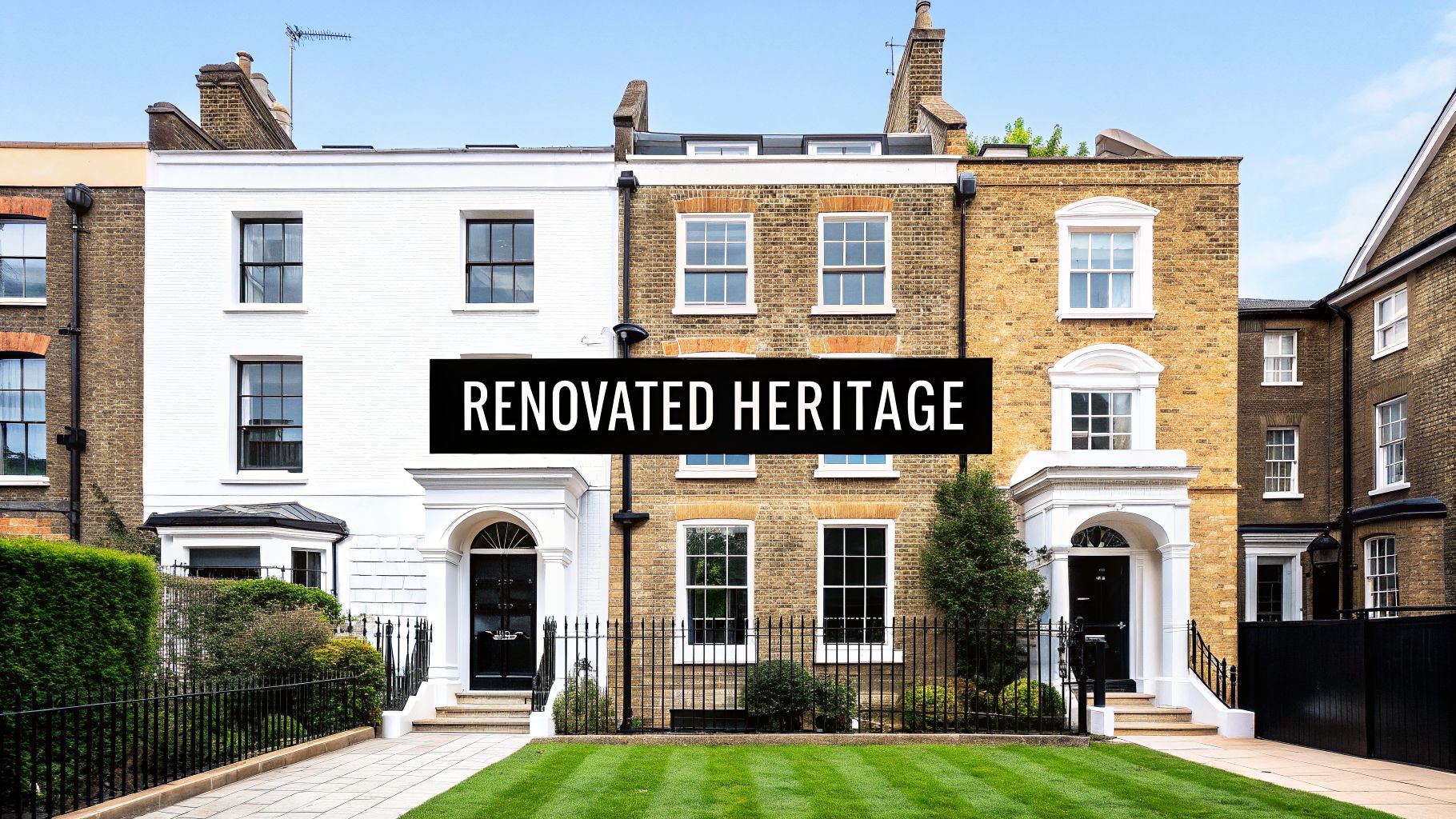
8 Inspiring Old Homes Renovated in South West London
Old homes possess a character and charm that new builds simply cannot replicate. From the elegant proportions of a Georgian townhouse to the solid craftsmanship of a Victorian terrace, these properties are a cherished part of our architectural heritage. However, living in them often requires a delicate balance between preserving history and embracing modern comforts. This is the central challenge and ultimate reward of renovating older properties.
In this detailed showcase, we will explore eight distinct examples of old homes renovated across South West London and Surrey. We will delve into the specific challenges, creative solutions, and strategic insights behind each transformation, offering a look behind the curtain at the architectural process. You will see firsthand how a historic structure can be adapted for contemporary life without sacrificing its soul.
Whether it involves integrating a luxury basement cinema into a Victorian terrace, sensitively updating a Grade II listed country house, or transforming a suburban semi into an open-plan family hub, these projects reveal what is possible when expert architectural vision meets period character. Join us as we uncover the 'behind-the-scenes' details, providing actionable takeaways for your own potential renovation project. These case studies demonstrate how Harper Latter Architects approaches unique architectural opportunities, blending conservation with modern aspiration to create truly exceptional living spaces.
1. Victorian Terraced House Conversion with Basement Cinema & Wine Room
One of the most ambitious and rewarding ways to update a period property involves excavating downwards. Many Victorian terraced houses, particularly in areas like Wimbledon Village and Richmond, possess untapped potential beneath their floorboards. Converting or creating a basement allows for the seamless integration of modern leisure facilities, such as a home cinema, wine room, or gym, without altering the historic fabric of the main living areas. This approach to renovating old homes respects the original architecture while dramatically increasing functional living space and property value.
The challenge lies in marrying 19th-century construction with 21st-century engineering. It requires meticulous structural planning, including underpinning existing foundations, alongside sophisticated waterproofing and ventilation systems to create a dry, comfortable environment. The outcome is a discreet yet impactful addition that feels like a natural extension of the home.
Strategic Analysis: Balancing Heritage and Modernity
A successful basement conversion hinges on a dual focus: preserving the character of the original house above while engineering a high-performance, contemporary space below. This is not simply digging a hole; it's a complex architectural and structural project.
Structural Integrity: Underpinning is essential to support the existing structure. This process is phased meticulously to maintain the home’s stability throughout construction.
Environmental Control: Effective damp proofing, drainage (often requiring sump pumps), and ventilation are critical. These systems prevent moisture issues and ensure the air quality is high, which is vital for wine cellars and general comfort.
Acoustic Separation: For a home cinema or gym, soundproofing is paramount. This involves creating a 'box-in-box' construction with acoustic membranes and insulation to prevent noise from travelling to the period living spaces above.
Actionable Takeaways
For homeowners in South West London considering this type of project, careful planning is the key to success.
Key Insight: Early engagement with specialists is non-negotiable. A conservation officer’s input for a listed building, or a structural engineer’s survey for any period property, should be the first step before any design work begins.
Follow these practical steps:
Commission Specialist Surveys: Before anything else, obtain a detailed structural survey and a geological report to understand ground conditions.
Prioritise Waterproofing Design: Treat the waterproofing system as the most critical element. A reputable specialist, such as a CSSW (Certified Surveyor in Structural Waterproofing) qualified designer, should be involved from the outset.
Plan Service Routes Carefully: Co-ordinate Mechanical, Electrical, and Plumbing (MEP) routes to avoid cutting through historic features like original cornicing or floor joists in the rooms above.
Invest in Professional Acoustic Design: To achieve a true cinema experience, standard soundproofing is not enough. A dedicated acoustic consultant will model sound behaviour and specify the correct materials and construction methods.
By adding a basement, you are not just extending your home; you are future-proofing a historic property. If you're considering a similar transformation for your period home, our team specialises in these complex renovations. Contact Harper Latter Architects to discuss how we can unlock the hidden potential of your property.
2. Grade II Listed Country House Sensitive Refurbishment with Modern Kitchen & Bathrooms
Renovating a Grade II listed property presents a unique challenge: introducing modern amenities without compromising the historic character that makes the building significant. A sensitive refurbishment focuses on upgrading key functional areas like kitchens and bathrooms, transforming them into high-performance spaces that respect the property's heritage. This process is common in the country houses of Surrey and the home counties, where owners want contemporary comfort within a protected architectural shell.
The work involves a delicate balance of conservation and intervention. It often requires bespoke joinery that echoes period details, careful structural modifications approved by conservation officers, and the seamless integration of modern services. Success in these old homes renovated for modern life hinges on extensive dialogue with heritage bodies and the use of specialist craftspeople who understand traditional materials and techniques.
Strategic Analysis: Balancing Heritage and Modernity
A successful listed building refurbishment is a masterclass in subtlety. The goal is to make modern additions feel as though they belong, either by blending in seamlessly or by creating a clear, respectful distinction between old and new. This requires deep respect for the original fabric of the building.
Conservation-Led Design: All proposed changes must be justified and proven to cause minimal harm to the historic fabric. This often means designing new elements, like a kitchen island, as ‘furniture’ that can be removed in the future.
Material Authenticity: Specifying correct materials is crucial. This may involve using reclaimed bricks, lime mortar for repointing, or sourcing period-appropriate ironmongery. For new additions, materials must be high-quality and complementary.
Concealed Services: A key part of the design is hiding modern systems. Underfloor heating can be installed beneath historic flagstones, and modern plumbing and electrics can be routed through non-historic voids to preserve original plasterwork and joinery.
Actionable Takeaways
For owners of listed properties in areas like Cobham or Richmond, meticulous preparation and expert guidance are essential to navigate the complex planning and construction process.
Key Insight: The project's success is determined before a single tool is lifted. A comprehensive heritage assessment and a collaborative relationship with the local conservation officer are the foundations of a smooth and compliant renovation.
Follow these practical steps:
Engage a Conservation Architect Early: A specialist architect (RIBA/ARB accredited with conservation experience) should be your first hire. They will lead negotiations with planning authorities and ensure designs are appropriate.
Commission Detailed Surveys: Before design work, a full condition survey and heritage impact assessment are needed to identify which elements are original and must be preserved.
Plan for Contingencies: Budget for a 20-30% contingency fund. Unexpected discoveries, such as hidden structural issues or protected features, are common when working on old homes.
Prioritise Reversible Interventions: Design new elements so they can be removed in the future without damaging the historic fabric. This principle of reversibility is highly valued by conservation bodies. For more information, our practical guide to renovating a listed building offers further detail.
By approaching the project with respect and expertise, you can create a home that celebrates its history while offering every modern convenience. If you are considering a refurbishment of your listed property, contact Harper Latter Architects to discuss our specialist conservation services.
3. 1930s Semi-Detached Property with Open-Plan Living & Garden Room Extension
Transforming the conventional, compartmentalised layout of a 1930s semi-detached house into a fluid, open-plan family space is a popular and effective way to modernise these classic homes. This type of renovation often involves removing internal walls and adding a rear extension to create a large, multifunctional area that connects directly to the garden. Properties across Wimbledon, Richmond, and Chiswick are prime candidates for this approach, which balances the retention of charming period features, like original windows or Art Deco details, with the demands of contemporary family life.
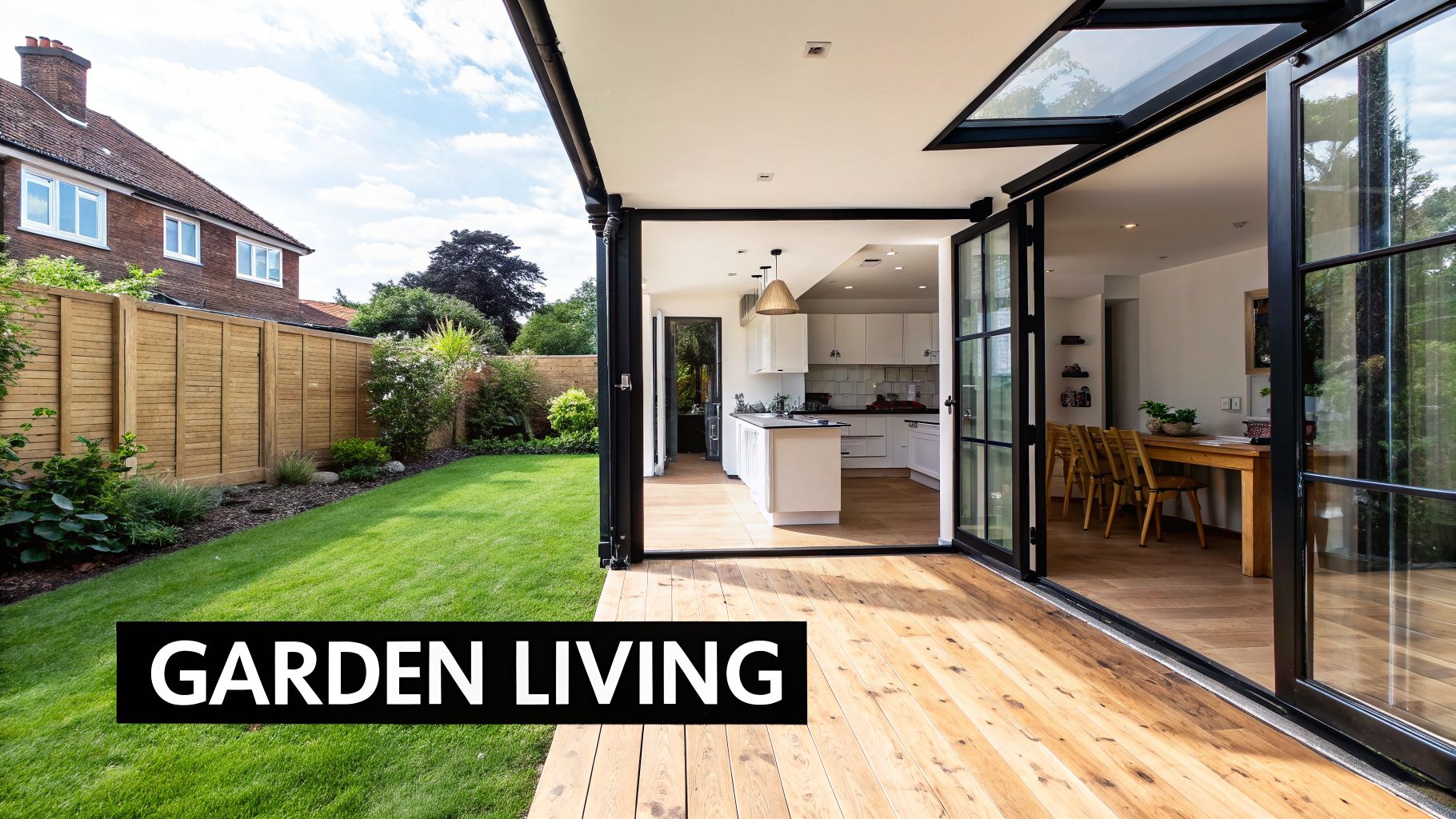
This method of renovating old homes celebrates the connection between indoors and outdoors, using extensive glazing like bifold or sliding doors to flood the new space with natural light. The result is not just an extension but a complete reimagining of the ground floor, creating a social hub for cooking, dining, and relaxing that seamlessly flows into a beautifully landscaped exterior living area. It's a design strategy that dramatically improves functionality and lifestyle.
Strategic Analysis: Blending Period Charm with Modern Flow
The success of this renovation lies in a careful balancing act: creating a vast, open area without losing the distinct character of the original 1930s property. This requires precise structural work and a thoughtful interior design strategy that respects the home's heritage.
Structural Alteration: Identifying and removing load-bearing walls is a critical first step, requiring steel beams (RSJs) to be installed to support the upper floors. This engineering underpins the entire open-plan concept.
Material Continuity: The choice of materials for the extension is crucial. Using brickwork that matches the original house or a contrasting but complementary material, such as zinc or timber cladding, ensures the new addition feels considered and cohesive.
Zoning and Flow: In a large open-plan space, subtle 'zoning' is essential. This can be achieved through different flooring materials, lighting schemes, or strategically placed furniture to define the kitchen, dining, and living areas without walls.
Actionable Takeaways
For homeowners planning a similar project, early architectural and structural input is vital to fuse the old and new elements successfully.
Key Insight: The kitchen should be designed as the focal point. It anchors the open-plan space and dictates the flow, making it the central hub for family activity and social gatherings.
Follow these practical steps:
Obtain a Structural Survey: Before finalising any design, commission a structural engineer to assess which walls are load-bearing and determine the most effective way to open up the space.
Integrate Landscape Design Early: The connection to the garden is a key feature. Involve a landscape architect at the design stage to ensure the patio, planting, and outdoor lighting complement the interior layout and views.
Specify High-Performance Glazing: Large glass doors are fantastic for light and views but can be a source of heat loss. Invest in high-performance double or triple glazing with good thermal and acoustic properties.
Plan a Zoned Lighting Scheme: A single lighting solution won't work for a multi-use space. Design a layered scheme with task lighting for the kitchen, ambient lighting for seating areas, and feature lighting to highlight architectural details.
By creating an open-plan ground floor with a garden extension, you are not just adding space; you are fundamentally changing how you live in your period home. If this vision for open, connected living resonates with you, contact Harper Latter Architects to explore the possibilities for your property.
4. Georgian Townhouse Complete Refurbishment with Bespoke Staircase & Joinery
A complete refurbishment of a Georgian townhouse represents a masterclass in blending historical reverence with modern luxury. This process goes beyond simple decoration, delving into the very structure and soul of the building. In properties across Richmond and Wimbledon Village, the focus is on restoring period features like cornicing and sash windows while introducing high-quality, bespoke elements such as custom joinery and statement staircases. This approach to renovating old homes treats the interior architecture as a crucial component of the building's character, ensuring new additions feel both authentic and exceptional.
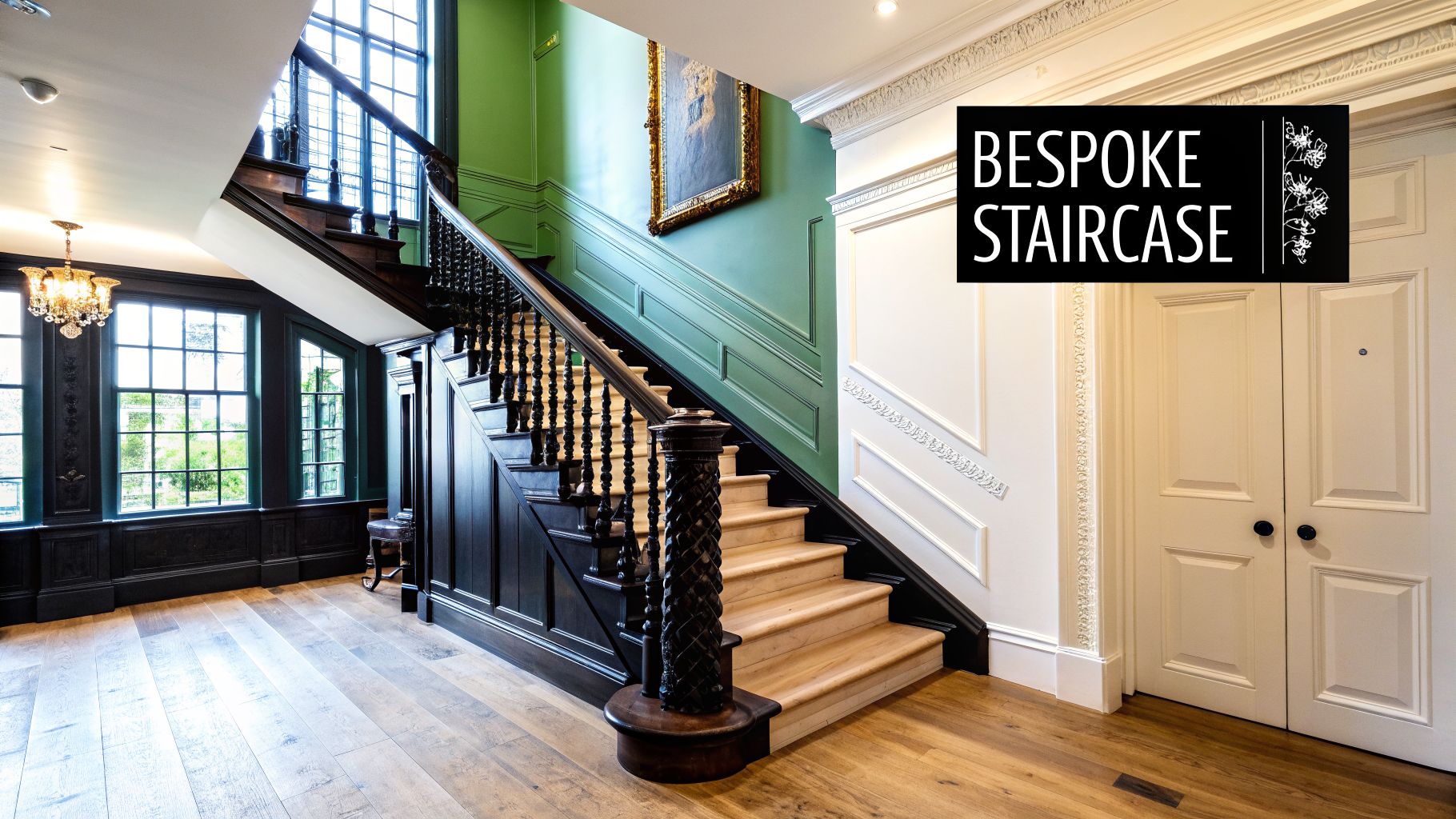
The centrepiece of such a project is often a new, sculptural staircase. Rather than a purely functional element, it is designed as a piece of art that guides the eye and defines the home's aesthetic. This is complemented by custom-built wardrobes, cabinetry, and shelving, all meticulously crafted to align with Georgian proportions. Successfully executing such a vision requires strict adherence to conservation principles, particularly within listed buildings, making it a delicate balance of craft, design, and heritage compliance.
Strategic Analysis: Integrating Craftsmanship and Conservation
The success of a Georgian refurbishment lies in treating bespoke joinery not as an afterthought but as an integral part of the architectural vision from day one. This ensures that every new element respects and enhances the original fabric of the home.
Architectural Centrepiece: A bespoke staircase should be conceived early in the design process. Its form, materials, and placement directly influence the flow and feel of the main living spaces.
Period Proportions: Custom joinery must be designed with an understanding of Georgian symmetry and scale. This means avoiding bulky, modern forms and instead creating elegant, built-in storage that appears original to the house.
Material Authenticity: Specifying high-quality timbers that match or complement the original materials is vital. Using conservation-grade fixings and traditional joinery techniques ensures longevity and historical accuracy.
Actionable Takeaways
For homeowners embarking on the refurbishment of a Georgian property, precision and expertise are paramount.
Key Insight: Engage master joiners and conservation specialists at the initial design stage. Their knowledge of period techniques and materials is essential for creating additions that are both beautiful and historically appropriate, avoiding costly mistakes later on.
Follow these practical steps:
Document Existing Features: Before any work begins, commission a specialist survey to photographically and technically document all original period features you wish to retain or restore.
Engage Heritage Craftsmen: Seek out joiners with a proven portfolio of work in Georgian or other period properties. Check their credentials and understanding of listed building constraints.
Plan for Long Lead Times: Bespoke joinery is not an off-the-shelf product. Factor in a lead time of 12-16 weeks for the design, fabrication, and finishing of key pieces like a staircase or custom wardrobes.
Specify Authentic Finishes: Research and use historical paint colours and finishes. This small detail has a significant impact on the overall authenticity of the project. For a deeper dive into this subject, explore our complete guide on restoring a Georgian house.
By investing in high-quality interior architecture and craftsmanship, you honour the building’s legacy while creating a home perfectly suited for modern life. If this level of detail and care resonates with your vision, contact Harper Latter Architects to discuss your project.
5. Edwardian Villa Sustainable Refurbishment with Energy-Efficient Systems & Garden Living
Renovating an Edwardian villa to meet modern sustainability standards presents a unique opportunity to blend classic architectural grace with forward-thinking environmental responsibility. This approach involves a 'fabric-first' strategy, prioritising the building's thermal envelope before introducing advanced technology. By sympathetically retrofitting high-performance insulation and integrating renewable systems like air-source heat pumps and solar panels, these historic properties can drastically reduce their carbon footprint. The result is one of the most rewarding types of old homes renovated, transforming a beautiful but often inefficient house into a comfortable, low-energy home for the future.
The key is to implement these upgrades without compromising the property's inherent character. This means selecting technologies and materials that respect the original aesthetic, from discreetly placed solar thermal systems to high-performance glazing that replicates period window designs. This deep refurbishment extends to the garden, creating seamless indoor-outdoor living spaces that improve wellbeing and connect the home to its natural surroundings, often incorporating features like rainwater harvesting for irrigation.
Strategic Analysis: Balancing Heritage and Sustainability
A successful sustainable refurbishment of a period property is an exercise in careful integration. It requires a deep understanding of traditional building materials and how they interact with modern, high-performance systems to avoid issues like trapped moisture or thermal bridging.
Fabric-First Principle: The primary focus is improving the building's core performance. This involves insulating walls, floors, and roofs, and upgrading windows to reduce heat loss. This step is critical before specifying heating systems, as it lowers the overall energy demand.
Sensitive Technology Integration: Renewable technologies must be incorporated without detracting from the architectural merit. Air-source heat pumps can be sited discreetly, and solar panels can be designed to be minimally visible from key elevations, respecting the home's historic appearance.
Holistic System Design: All elements must work in concert. A Mechanical Ventilation with Heat Recovery (MVHR) system ensures excellent air quality while retaining heat, which is vital in a newly airtight home. It must be planned to fit within period room proportions without intrusive ductwork.
Actionable Takeaways
For homeowners in Wimbledon or Richmond looking to improve their Edwardian property’s environmental credentials, a methodical approach is essential.
Key Insight: A detailed energy audit and thermal imaging survey should be your first investment. This provides a clear roadmap, identifying the most significant areas of heat loss and allowing you to prioritise upgrades for the greatest impact.
Follow these practical steps:
Engage a Specialist Architect: Work with a practice experienced in sustainable heritage retrofitting who can navigate the technical and aesthetic challenges.
Prioritise the Building Envelope: Focus your budget on insulation and high-performance, period-appropriate windows first. This 'fabric-first' approach yields the most significant long-term energy savings.
Model Energy Performance: Use tools like SBEM to model the expected energy performance of different upgrades, ensuring your investment is directed effectively. Learn more about designing an energy-efficient home by reading our UK Energy Efficient Home Design Guide.
Budget for the 'Green Premium': Expect a 15-25% cost premium for high-performance sustainable specifications over standard refurbishment methods, but factor in the long-term savings on energy bills.
By retrofitting a period property for sustainability, you are preserving its history while ensuring its relevance and viability for generations. If you’re considering this for your home, contact Harper Latter Architects to explore how we can combine heritage conservation with modern eco-friendly design.
6. Victorian Warehouse Conversion to Contemporary Luxury Loft Living
Transforming a utilitarian industrial building into a luxury residence is a powerful example of adaptive reuse. Victorian warehouses, often found in former industrial hubs like parts of East London, offer a unique architectural canvas defined by exposed brickwork, robust timber beams, and soaring ceiling heights. Converting these structures into contemporary lofts involves celebrating this raw, industrial aesthetic while meticulously integrating modern comforts and sophisticated design. This approach to renovating old homes preserves a piece of urban history while creating dramatic, light-filled living spaces that are highly sought after.

The challenge is to soften the industrial scale for comfortable domestic living without losing the building's inherent character. This means balancing vast open-plan areas with more intimate zones, often using mezzanine levels for bedrooms or studies. The conversion must also address modern performance standards, from thermal efficiency to acoustic control, within a building fabric that was never designed for residential use. The result is a home with a distinct identity, blending historic grit with contemporary refinement.
Strategic Analysis: Balancing Industrial Heritage and Domestic Comfort
A successful warehouse conversion respects the building's past while making it a functional, high-performance home. It is an exercise in restraint and careful intervention, ensuring new additions complement the original structure rather than overwhelm it.
Architectural Honesty: Key features like cast-iron columns, original timbers, and brickwork should be exposed and celebrated. New services like ductwork or wiring can be left visible but organised with industrial-style conduit to become part of the aesthetic.
Spatial Zoning: In large open-plan spaces, creating distinct 'zones' for living, dining, and cooking is essential. This can be achieved through furniture arrangement, changes in floor level, or the insertion of structures like mezzanines, which add floor space while maintaining the sense of volume.
Material Palette: New materials should complement the industrial character. Polished concrete floors, raw steel balustrades, and minimalist joinery work in harmony with the historic brick and timber, creating a cohesive design language.
Actionable Takeaways
For property owners undertaking an industrial conversion, a focus on the building's unique constraints and opportunities is vital.
Key Insight: Treat the original structure as the main event. Every new element, from the kitchen island to the staircase, should be designed as a piece of sculptural insertion that respects the scale and texture of the original warehouse shell.
Follow these practical steps:
Engage a Structural Engineer Early: Industrial buildings have different structural behaviours to traditional houses. An engineer with experience in heritage conversions is crucial for assessing load-bearing capacities for new floors or mezzanines.
Commission Environmental Surveys: Warehouses can contain hazardous materials like asbestos or lead paint. A thorough survey is a non-negotiable first step to ensure safe remediation.
Prioritise Acoustic Design: The hard surfaces and large volumes of industrial spaces create acoustic challenges. Integrating sound-absorbing materials into ceilings, walls, or even soft furnishings is critical for a comfortable living environment.
Use Lighting to Enhance Volume: A strategic lighting plan is essential. Use a mix of ambient, task, and accent lighting to highlight architectural features like brickwork or roof trusses and create intimacy within the vast space.
By converting an industrial building, you are not just creating a home; you are curating a piece of architectural history. If you are inspired by the potential of these unique old homes renovated for modern life, contact Harper Latter Architects to explore how we can bring your vision to life.
7. Tudor & Elizabethan Period Property Structural Restoration with Modern Living Spaces
Tackling a Tudor or early Elizabethan property is one of the most demanding yet historically significant undertakings in residential architecture. These projects go far beyond cosmetic updates, involving major structural restoration to stabilise buildings that are often 400-500 years old. Found in the Surrey countryside and surrounding counties, these homes require a deep understanding of historic building techniques to repair everything from failing foundations to decaying timber frames, all while sensitively introducing modern living standards.
The primary goal when renovating these old homes is to preserve their irreplaceable character, defined by features like herringbone brickwork, exposed oak frames, and original fenestration. This involves a delicate process of stabilising the structure, repairing ancient timbers using traditional methods, and weaving in contemporary systems like underfloor heating and modern plumbing without compromising the building's historic integrity. The result is a residence that honours its past while offering the comfort and functionality expected of a modern luxury home.
Strategic Analysis: Balancing Conservation and Liveability
A successful Tudor property restoration is a masterclass in architectural archaeology and modern engineering. It demands a conservation-led approach where every decision is weighed against its impact on the historic fabric. This is not a standard renovation; it is the careful curation of a piece of national heritage.
Structural Forensics: The first step involves a deep investigation into the building's condition. This includes dendrochronology (tree-ring dating) for timbers and detailed surveys by RICS-accredited conservation surveyors to understand centuries of movement and decay.
Material Authenticity: Repairs must be made with authentic, like-for-like materials. Sourcing reclaimed Tudor bricks or green oak for timber frame repairs from specialist suppliers is essential to maintain the building’s visual and structural consistency.
System Integration: Introducing modern services requires ingenuity. Electrical wiring and plumbing are often routed through floor voids or non-historic partitions to avoid disturbing original plasterwork or exposed beams. Underfloor heating becomes a preferred solution as it eliminates the need for radiators on historic walls.
Actionable Takeaways
For homeowners embarking on the restoration of such a significant property, early and expert-led planning is the only path to a successful outcome.
Key Insight: A substantial contingency fund is not just advisable; it's essential. Budgeting for a 30-40% contingency is a realistic starting point to cover the inevitable discoveries that arise when working on buildings of this age.
Follow these practical steps:
Engage a Conservation Architect First: Your first hire should be a RIBA/ARB accredited architect with specific, proven experience in Tudor or Elizabethan restorations. Their expertise will guide the entire project, from initial surveys to heritage body negotiations.
Document Everything: Before any work begins, commission a full photographic and measured survey of all historic features. This record is invaluable for planning and obtaining Listed Building Consent.
Consult Heritage Bodies Early: Engage with organisations like Historic England or the local conservation officer from the outset. A collaborative approach will smooth the approvals process and ensure the work meets conservation standards.
Assemble a Specialist Team: This type of project requires master craftspeople, including joiners specialising in green oak framing and masons skilled in historic brickwork and lime mortar. Your architect can help you source these artisans.
Restoring a Tudor or Elizabethan home is a profound commitment to preserving history. If you own a period property of this significance, our team has the specialist conservation expertise required for such a complex undertaking. Contact Harper Latter Architects to discuss how we can safeguard your home’s heritage for future generations.
8. 1970s Suburban Home Comprehensive Modernisation with Smart Home Integration & Wellness Spaces
Beyond period properties, many 1970s suburban homes in areas like Wimbledon and Surrey offer significant potential for reinvention. Often characterised by dated aesthetics, poor insulation, and inefficient layouts, these properties can be completely reimagined into luxury smart homes. This approach to renovating old homes involves a deep refurbishment, stripping the property back to its structure to integrate modern systems, high-performance materials, and contemporary lifestyle amenities.
The transformation addresses the core weaknesses of the original build. By embedding smart home technology for lighting and climate control, alongside dedicated wellness spaces like a home gym or sauna, the project elevates the property to meet modern expectations of comfort and convenience. The outcome is a high-functioning, energy-efficient home that retains its valuable location while offering the quality and features of a new build.
Strategic Analysis: Balancing Technology and Liveability
A successful 1970s home modernisation is less about restoration and more about a complete rebirth. The strategy focuses on overhauling the building's performance and integrating technology so seamlessly that it becomes an intuitive part of daily life.
Fabric-First Approach: Before any smart systems are considered, the building envelope is upgraded. This involves adding high-performance insulation to walls, floors, and roofs, and installing triple-glazed windows to create a thermally efficient and quiet interior.
Integrated Systems Design: Smart home automation is not an add-on; it must be planned from the outset. This requires early collaboration between architects, M&E consultants, and smart home specialists to ensure all wiring and hardware are concealed within the building fabric for a clean, minimalist finish.
Lifestyle-Led Spaces: The inclusion of wellness amenities like saunas, steam rooms, or meditation spaces responds to a growing desire for health-focused living environments. These are designed as purposeful, tranquil retreats within the home.
Actionable Takeaways
For homeowners looking to undertake a complete modernisation of a post-war property, a structured and expert-led approach is vital.
Key Insight: The success of a smart home integration hinges on designing the system around your lifestyle, not the other way around. Early engagement with a specialist ensures the technology serves your daily routines rather than complicating them.
Follow these practical steps:
Commission a Full M&E Assessment: Before design work begins, understand the state of the existing electrical and plumbing systems. A comprehensive survey will identify the necessary upgrades for supporting modern technology and wellness features.
Plan for Future-Proofing: Technology evolves quickly. Ensure your smart home specialist designs a system with a scalable central hub that allows for future updates and the addition of new devices without major rewiring.
Prioritise the Building Envelope: Invest in insulation and glazing first. A thermally efficient home requires smaller, more efficient heating and cooling systems, reducing both installation and long-term running costs.
Design for Aesthetic Integration: Plan the location of all visible technology, such as control panels, speakers, and sensors, to ensure they align with the interior design scheme. Recessed fittings and customised faceplates can create a seamless look.
By thoroughly renovating an older suburban home, you can create a bespoke environment that perfectly matches a contemporary lifestyle. If you own a property with untapped potential, our team has the expertise to guide its transformation. Contact Harper Latter Architects to explore the possibilities for your home.
8 Renovated Period Homes — Side-by-Side Comparison
Project | Implementation Complexity 🔄 | Resource Requirements ⚡ | Expected Outcomes 📊⭐ | Ideal Use Cases 💡 | Key Advantages ⭐ |
|---|---|---|---|---|---|
Victorian Terraced House Conversion with Basement Cinema & Wine Room | Very high — structural underpinning, acoustic design, heritage co-ordination 🔄🔄🔄 | £150k–£400k+; 12–18 months; specialist structural & MEP teams ⚡⚡ | Luxury leisure amenities; strong value uplift; concealed modern services ⭐📊 | Victorian/Edwardian terraces needing extra leisure space; families ageing in place 💡 | Adds high‑end amenities without external footprint; preserves period character ⭐ |
Grade II Listed Country House Sensitive Refurbishment with Modern Kitchen & Bathrooms | Very high — conservation approvals, specialist finishes and materials 🔄🔄🔄 | £200k–£600k+; 14–24 months; conservation architects & craftspeople ⚡⚡ | Retained authenticity with modern comfort; significant market desirability ⭐📊 | Grade II/I listed country houses; owners prioritising heritage conservation 💡 | Authentic restoration that enhances desirability while protecting heritage ⭐ |
1930s Semi-Detached Property with Open-Plan Living & Garden Room Extension | Moderate — structural wall removal and single‑storey extension works 🔄🔄 | £100k–£300k; 8–14 months; standard contractors and structural engineer ⚡ | Improved family flow, light and garden connection; good return on investment ⭐📊 | 1930s–1960s suburban semis wanting entertaining/garden connectivity 💡 | High usability and value impact for relatively modest footprint increase ⭐ |
Georgian Townhouse Complete Refurbishment with Bespoke Staircase & Joinery | High — bespoke joinery, detailed conservation and finish standards 🔄🔄🔄 | £250k–£700k+; 12–20 months; master joiners, stonework and specialist trades ⚡⚡ | Showpiece interiors; premium market positioning; optimised storage & proportions ⭐📊 | Georgian/period townhouses for clients valuing craftsmanship and luxury interiors 💡 | Statement staircase and bespoke joinery elevate perceived luxury and resale value ⭐ |
Edwardian Villa Sustainable Refurbishment with Energy-Efficient Systems & Garden Living | High — fabric upgrades plus renewable integration within heritage constraints 🔄🔄🔄 | £200k–£500k; 14–20 months; retrofit specialists, MEP and landscape teams ⚡⚡ | Lower operational carbon and bills; improved EPC and market appeal to eco‑buyers ⭐📊 | Environmentally conscious owners of period homes seeking sustainability upgrades 💡 | Future‑proofs property, improves comfort and reduces running costs ⭐ |
Victorian Warehouse Conversion to Contemporary Luxury Loft Living | High — structural conversions, change‑of‑use and industrial reinstatement 🔄🔄🔄 | £150k–£400k+; 12–18 months; structural engineers and conversion specialists ⚡⚡ | Distinctive loft spaces with strong rental/sales appeal; dramatic character ⭐📊 | Industrial buildings for design‑led urban buyers and investors seeking character properties 💡 | Retains industrial heritage while delivering flexible, high‑value living spaces ⭐ |
Tudor & Elizabethan Period Property Structural Restoration with Modern Living Spaces | Very high — major structural stabilisation, specialist timber & masonry work 🔄🔄🔄🔄 | £300k–£1M+; 18–30+ months; specialist conservation teams and large contingencies ⚡⚡ | Exceptional prestige homes with preserved historic fabric; long‑term value protection ⭐📊 | Prestige period country properties; heritage preservation enthusiasts and collectors 💡 | Restores and protects unique historic fabric; creates rare, high‑value assets ⭐ |
1970s Suburban Home Comprehensive Modernisation with Smart Home Integration & Wellness Spaces | Moderate–high — full MEP replacement and smart system co-ordination 🔄🔄 | £200k–£500k; 10–16 months; smart home integrators and MEP specialists ⚡⚡ | Modern comfort, wellness amenities and energy savings; strong appeal to tech‑savvy buyers ⭐📊 | 1970s–1980s homes in good locations for families wanting contemporary luxury without moving 💡 | Delivers turnkey modern living, wellness spaces and smart controls within existing footprint ⭐ |
Begin Your Own Renovation Journey with Expert Guidance
Throughout this detailed exploration of old homes renovated, a clear and inspiring pattern emerges: every period property, regardless of its age or initial condition, holds the potential for extraordinary revival. We have journeyed through the intricate transformation of a Victorian terrace into a modern family home with a luxury basement, witnessed the sensitive restoration of a Grade II listed country house, and seen how a 1930s semi-detached was reimagined for contemporary open-plan living. Each project, from the structural rebirth of a Tudor property to the sustainable retrofit of an Edwardian villa, tells a story of vision, respect, and skilled execution.
These case studies highlight that successfully renovating an older home is not merely a cosmetic exercise. It is a complex process of balancing heritage with modernity, character with functionality, and aesthetic ambition with structural integrity. The key takeaways from these diverse projects underscore a consistent set of principles essential for success.
Core Principles for Renovating Older Properties
Respect the Original Fabric: The most successful renovations honour the building's history. Whether it's restoring original joinery in a Georgian townhouse or exposing brickwork in a Victorian warehouse, celebrating the home's intrinsic character provides an authentic foundation for new interventions.
Embrace Bespoke Solutions: Older homes rarely conform to standard sizes or layouts. Success hinges on custom solutions, from bespoke staircases that act as sculptural focal points to cleverly integrated storage that respects period features. Off-the-shelf answers seldom do justice to the unique challenges these properties present.
Prioritise Light and Space: A common goal across many of these projects was the introduction of natural light and the creation of a better spatial flow. Strategic extensions, internal reconfigurations, and the thoughtful placement of glazing can completely alter the feel of a period property without compromising its soul.
Invest in Future-Proofing: Bringing an old home into the 21st century involves more than aesthetics. Integrating energy-efficient systems, upgrading insulation, and incorporating smart home technology are crucial investments that enhance comfort, reduce running costs, and ensure the home's longevity and relevance for decades to come.
Mastering these approaches is the difference between a simple update and a truly exceptional architectural transformation. It requires a deep understanding of conservation, planning regulations, and advanced construction techniques. The journey of transforming old homes renovated is a rewarding one, resulting in spaces that are not only beautiful and functional but are also imbued with a unique sense of history and place. Each property we've examined stands as a testament to what is possible when thoughtful design meets architectural expertise, creating a home that perfectly blends the story of its past with the aspirations of its future.
At Harper Latter Architects, we specialise in unlocking the hidden potential of period properties across South West London and Surrey. Our RIBA-accredited team guides discerning homeowners through our rigorous 8-step process, turning architectural challenges into beautifully realised living spaces. If these stories of old homes renovated have inspired you, book a complimentary initial consultation on our website to discuss how we can begin your property’s next chapter.