
Your Guide to London Loft Conversion Architects

When you’re standing in your dusty, unused attic, it can be tough to picture a light-filled bedroom or a sleek home office taking its place. This is exactly where specialist loft conversion architects come in. They do far more than just draw up plans; they become your strategic partner, unlocking the hidden potential in your roof space and turning it into a valuable, beautifully designed part of your home.
Why a Specialist Architect Is Your Greatest Asset
A loft conversion is one of the smartest investments a homeowner in South West London can make, adding both significant value and much-needed space. And while it’s tempting to see it as a straightforward construction job, the difference between a standard attic room and a truly exceptional space nearly always comes down to the vision and expertise of an architect.
Think of them as the director of your home renovation. Their role isn't just about producing technical drawings. A specialist architect orchestrates every detail, ensuring the final result is not only structurally sound and legally compliant but also feels like a seamless, natural extension of your home's character.
Maximising Space and Light
Perhaps the greatest skill a loft conversion architect brings is an almost intuitive understanding of how to shape a space. They see possibilities you might not, transforming awkward angles and low ceilings from problems into clever, characterful features.
Bespoke Design: They'll take the time to understand how you live, creating a layout tailored to your family's needs—whether that's a quiet home office in Wimbledon, a guest suite with an en-suite in Richmond, or a bright playroom for the kids.
Creative Solutions: Their designs strategically place windows, skylights, and staircases to flood the new level with natural light, making it feel far larger and more inviting than you thought possible.
Intelligent Layouts: They ensure every single square metre is put to good use, from integrating clever storage solutions into the eaves to creating a natural flow from the new staircase into the rest of your home.
This meticulous approach is what prevents the common pitfalls of DIY or builder-led designs, which can often result in cramped, dark rooms that feel disconnected from the main house.
An architect's value is in their ability to see the bigger picture. They blend creativity with technical precision to design a space that doesn't just add a room, but fundamentally enhances your entire home and lifestyle.
Navigating Complex Regulations
On top of the design work, a seasoned architect is your expert guide through the maze of local planning policies and building regulations. This is absolutely critical in areas like South West London, which is home to numerous conservation areas and listed properties where the rules are much stricter.
They handle the complex paperwork, speak directly with council planners on your behalf, and make sure every detail—from fire safety and insulation to structural integrity—is fully compliant. This protects your investment, helps you avoid costly mistakes, and gives you complete peace of mind, leaving you free to focus on the exciting part: watching your new space come to life.
Decoding the Costs of a London Loft Conversion
Before you get lost in design ideas, let’s talk numbers. Understanding the potential cost of a loft conversion is the first crucial step, especially in a competitive property market like South West London. It’s about moving beyond vague estimates to get a real feel for what shapes the final price tag.
The overall cost is influenced by a few key things. The biggest driver is the type of conversion you choose, followed closely by the materials and level of finish you’re aiming for. Naturally, high-end features like en-suite bathrooms, custom-built wardrobes, or a Juliet balcony will push the budget up, but they also add significant value and make the space a joy to live in.
Key Drivers of Loft Conversion Costs
The price of a loft conversion isn’t one single figure; it’s a sum of many parts. Your decisions in these areas will have the biggest impact on your total investment.
Conversion Type: A simple Velux or rooflight conversion is the most budget-friendly option. A Dormer, Hip-to-gable, or the more complex Mansard conversion will require more structural work and, therefore, come with higher costs.
Structural Work: The condition of your existing roof, the need for new steel beams to support the structure, and how complex the staircase installation is will all play a major role in the budget.
Fixtures and Finishes: This is where you can really make your mark, but it affects the cost. Your choice of bathroom suite, flooring, lighting, windows, and tiles can make the price vary significantly. Opting for premium brands and bespoke finishes will take up a larger slice of the budget.
Professional Fees: This covers the essential experts, including your loft conversion architects, structural engineers, and building control inspectors who sign everything off.
It’s important to see these expenses as investments, not just costs. A good architect, for example, can actually save you money in the long run through clever design and efficient space planning. You can get a clearer picture of what to expect in our guide to architect fees for residential projects in the UK.
Typical Loft Conversion Costs in London
Let's look at some ballpark figures. With rising material and labour costs, it’s good to have a realistic starting point, but remember these projects offer a substantial long-term return.
Data shows that a basic Velux conversion starts from around £25,000-£35,000. The ever-popular Dormer conversions typically land in the £35,000-£55,000 bracket. For more ambitious Hip-to-gable conversions, often seen on semi-detached homes across Wimbledon and Richmond, you’re looking at £45,000-£65,000. The most complex Mansard designs, which maximise every inch of space, can climb from £60,000 to over £85,000.
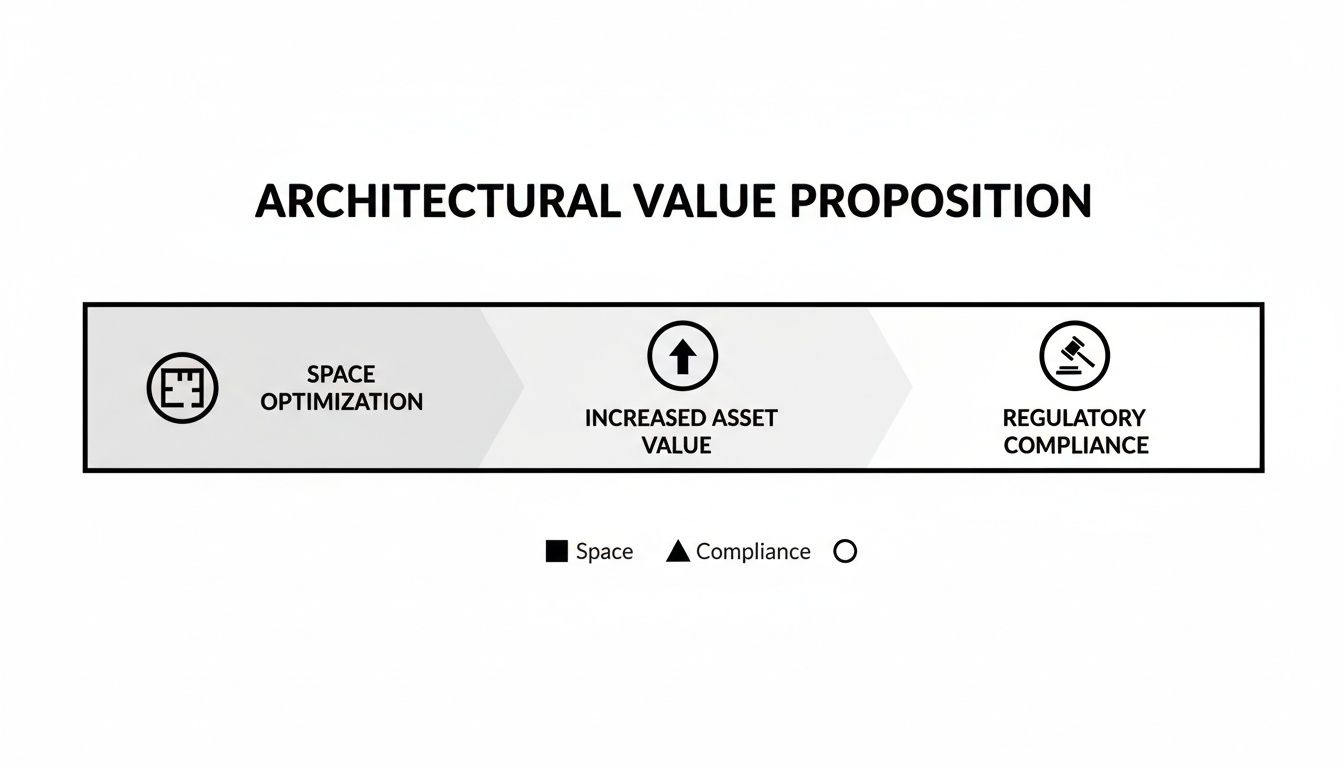
This image helps to visualise the core value an architect brings to the table, focusing on optimising space, boosting your property's value, and navigating all the tricky regulations. It shows how an architect's fee is an investment that pays real dividends.
How an Architect Delivers a Return on Investment
Hiring a skilled architect is one of the smartest ways to manage your budget and get the most out of your loft conversion. Their fee isn’t just another expense; it's an investment that pays for itself through intelligent, efficient, and forward-thinking design.
An architect’s true value isn't just in what they draw, but in the problems they solve before they happen. Their foresight prevents costly mistakes, streamlines construction, and ensures the final space exceeds your expectations, adding more long-term value to your home than the initial fee.
Their expertise translates into direct financial benefits by helping you sidestep common pitfalls. Here’s how they do it:
Efficient Space Planning: An architect will craft a design that makes the most of every square metre, often achieving a more functional and impressive layout than a standard, off-the-shelf plan. This clever use of space can add thousands to your property's value.
Avoiding Planning Mistakes: Their deep knowledge of local council requirements—especially in sensitive conservation areas—helps you avoid the cost and delay of planning application rejections and redesigns.
Smart Material Sourcing: Experienced architects have built relationships with suppliers and can recommend materials that are both cost-effective and high-quality, ensuring they align with your budget and design goals.
Detailed Construction Drawings: Highly detailed plans leave no room for guesswork on-site. This leads to more accurate quotes from builders and minimises the risk of expensive changes or delays once construction is underway.
Navigating Planning Permission and Building Regulations
Just the mention of ‘planning permission’ is enough to make most homeowners a little nervous, but it really doesn’t have to be a source of stress. When you're working with experienced loft conversion architects, this complex stage simply becomes a structured, manageable part of the journey. Their job is to map out the correct legal path for your home, making sure your build is fully authorised right from the start.
In London, a surprising number of loft conversions, especially on typical terraced or semi-detached houses, can be built under Permitted Development (PD) rights. You can think of these rights as a kind of pre-approved allowance for common home improvements, which lets you build without lodging a full planning application.
But there are strings attached. Permitted Development comes with strict rules on size, height, and even appearance. For example, your new loft can’t add more than 40 cubic metres of volume to a terraced house, or 50 cubic metres to a semi-detached or detached home. Your architect’s first task is to design a scheme that fits neatly within these limits, securing a Lawful Development Certificate as proof of compliance.
When Is Full Planning Permission Required?
While Permitted Development is a fantastic route for many, some situations will always demand a full Planning Permission application. A good architect will spot these triggers immediately, saving you from making a costly misstep.
You will almost certainly need to apply for full planning permission if:
Your property is a flat or maisonette.
The house is in a Conservation Area, where design standards are much higher to protect the local character.
Your home is a Listed Building, meaning any changes need specialist consent.
The design you want is bigger than the volume or height limits allowed under Permitted Development.
In these scenarios, your architect becomes your essential advocate. They’ll prepare a full set of detailed drawings and a robust Design and Access Statement, building a strong case for your project. They'll also handle all the back-and-forth with the local planning authority, like Wandsworth or Richmond councils, on your behalf.
Understanding Building Regulations
If planning permission is about whether you can build, Building Regulations are all about how you build it. This is a non-negotiable set of technical standards that ensures your new loft is safe, healthy, and energy-efficient. It’s a completely separate process from planning, and it's mandatory for every single loft conversion.
Building Regulations are the bedrock of a successful project. They are not just red tape; they are the legal standards that protect your family's safety, your home's structural integrity, and its future resale value. An architect ensures every detail meets or exceeds these critical benchmarks.
These regulations cover every technical detail of the construction. Your architect’s drawings will act as a precise blueprint for your builder, specifying exactly how to meet each standard.
Key areas covered include:
Structural Stability: Making sure the existing house can support the new load, with correctly specified steel beams.
Fire Safety: Designing clear escape routes, installing mains-powered smoke alarms, and fitting fire-resistant doors.
Insulation: Hitting thermal efficiency targets to keep the room warm and your energy bills down.
Staircase Design: Ensuring the new stairs are safe to use, with proper headroom and the correct dimensions for each step.
Your architect will work alongside building control inspectors at each key stage of the build to get everything signed off, which ultimately leads to a completion certificate. This final document is vital—it's the official proof your loft was built correctly and you'll absolutely need it when you decide to sell your home. You can explore this topic further in our in-depth guide to Building Regulations compliance.
Realising Your Home’s Untapped Potential
For many London homeowners, the thought of gaining more space immediately brings up the stress of moving house – a disruptive, expensive, and emotionally taxing ordeal. But what if the extra room you need isn't across town, but right above your head? A loft conversion is one of the smartest home improvements you can make, turning dusty, forgotten attic space into a valuable, light-filled part of your home.
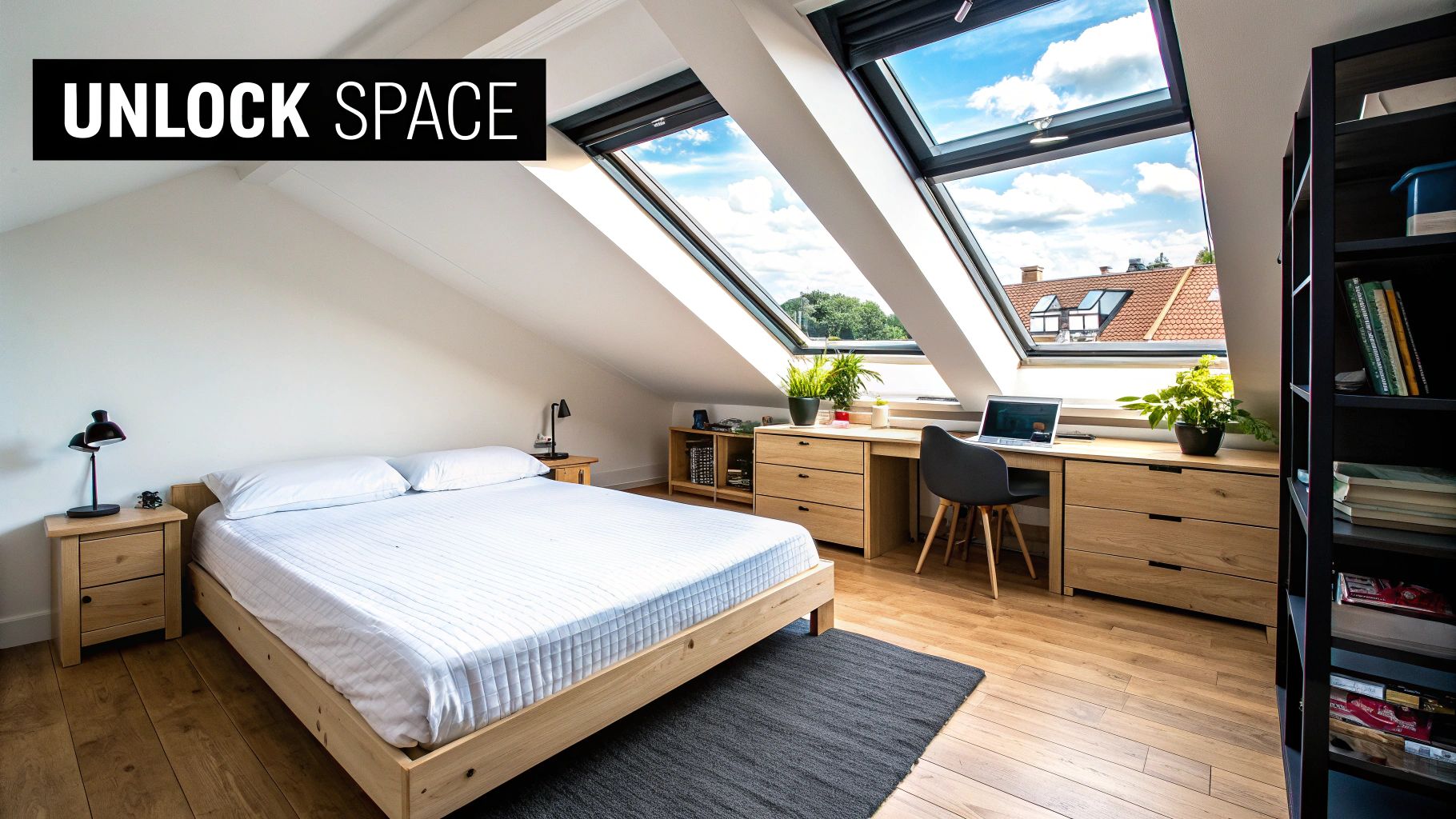
In densely packed areas like South West London, extending outwards simply isn't an option. Gardens are precious, and property lines are tight. This is precisely why building 'up' is often a far more strategic and intelligent move than building 'out'. You can create a significant amount of new living space without sacrificing your garden or getting tangled in complex neighbour agreements.
A Smart Investment in Your Property
Beyond the immediate lifestyle upgrade, a loft conversion delivers a serious financial return. It’s not just another expense; it’s a direct investment in your property's market value. By adding quality square footage in a high-demand area, you’re enhancing one of your most valuable assets.
This is especially true when you add sought-after features like a new double bedroom with an en-suite bathroom. According to detailed research from Nationwide, this exact type of project can boost a three-bedroom home's value by as much as 24%. Their analysis also found that 24% of homeowners undertaking major improvements chose a loft conversion, underlining just how popular and valuable it is.
For families in postcodes like Wimbledon or across Surrey, this presents a powerful alternative to moving. The cost of a beautifully designed loft is often a fraction of the stamp duty, legal fees, and moving costs that come with buying a larger property.
A loft conversion is more than just construction; it's about unlocking potential. It transforms the most neglected part of your house into what could become its most desirable space, adding immense value and function without the upheaval of relocating.
Crafting a Space That Truly Works for You
This is where the expertise of specialist loft conversion architects comes into its own. They don’t just see an empty attic; they see the potential for a bespoke space, perfectly shaped around your family's needs now and in the future. Their job is to translate your ideas into a design that is functional, beautiful, and structurally sound.
A Tranquil Home Office: Imagine a quiet, light-filled workspace tucked away from the daily chaos, offering inspiring views and a calm atmosphere to focus.
A Luxurious Guest Suite: You could create a private, comfortable retreat for visiting family and friends, complete with its own en-suite, giving them a hotel-like experience.
An Adaptable Playroom or Teen Den: Why not design a safe and fun space for the kids that can later evolve into a den for teenagers, giving them their own area to socialise and a sense of independence?
A good architect works with you to understand exactly how you live and what you really need from the new space. They ask the right questions to uncover possibilities you might not have considered, like clever storage solutions built into the eaves or the perfect placement of windows to catch the best light.
This collaborative process ensures the final design isn't just a generic add-on but a seamless, integral part of your home. By realising your attic’s hidden potential, you’re not just adding a room; you're fundamentally enhancing your home's character, day-to-day functionality, and long-term value.
Choosing the Right Architect for Your Project
Finding the right professional is probably the single most important decision you'll make for your loft conversion. This isn't just about hiring a designer; it's about choosing a partner who will steer a significant investment in your home. The right partnership will shape your home’s future, so it’s worth taking the time to find someone whose expertise and vision click with your own.
Your search should start by looking for local architects with the right credentials and, crucially, a portfolio filled with projects like the one you’re planning. You want a loft conversion architect who has been there and done it, especially in your corner of London.
Verifying Credentials and Experience
First things first, you need to make sure any architect you consider is properly qualified. In the UK, a couple of key accreditations act as a guarantee of professionalism, proper training, and high ethical standards.
RIBA Chartered Practice: Seeing that an architect is chartered by the Royal Institute of British Architects (RIBA) is a real hallmark of quality. It means the practice meets strict criteria on everything from business management to professional indemnity insurance.
ARB Registration: The Architects Registration Board (ARB) is the official, statutory body for UK architects. It's actually a legal requirement for anyone calling themselves an 'architect' to be on the ARB register, which ensures they meet the necessary standards.
Beyond the official stamps of approval, you should prioritise architects with a strong, proven track record of completing loft conversions in your area, whether that's Wimbledon, Richmond, or elsewhere in South West London. This local experience is invaluable. They’ll have an intimate understanding of the planning quirks and architectural styles specific to councils like Wandsworth or Merton, which can save a lot of headaches down the line.
Choosing an architect is like casting the lead role in your home’s transformation. Look for a combination of proven technical skill, local knowledge, and a design philosophy that resonates with your own personal style.
Key Questions to Ask During Consultations
Once you’ve put together a shortlist, the consultation is your chance to dig a bit deeper. Think of it as a two-way conversation to see if the fit is right. Don’t be afraid to ask detailed, specific questions about their process, their style, and how they handle the tricky bits.
A little preparation goes a long way. Having a checklist of questions helps you cover all the important ground and compare different practices fairly. It's the best way to make a truly informed decision. For a more detailed breakdown, you can explore our guide on how to choose an architect in the UK.
To get you started, we’ve put together a table of essential questions. These are designed to move beyond the surface-level chat and get to the heart of what it would be like to work with them.
Key Questions to Ask Your Potential Architect
Category | Question | Why It's Important |
|---|---|---|
Design & Vision | What is your design philosophy for loft conversions? | This reveals their creative priorities. Do they focus on maximising light, clever storage, or preserving character? You want an approach that aligns with your goals. |
Local Experience | Can you show me examples of similar projects you’ve completed in South West London? | Seeing is believing. Tangible examples of their work in a similar context give you real proof of their capabilities and style. |
Fees & Finances | How do you structure your fees, and what is included at each stage? | A transparent fee proposal is non-negotiable. You need to know exactly what’s covered, from initial sketches to contract administration and final sign-off. |
Communication | Who will be my main point of contact throughout the project? | Good, consistent communication is vital. Knowing who you'll be dealing with day-to-day helps set clear expectations and avoids frustration. |
Budgeting | How do you approach budget management and handle potential cost overruns? | A good architect will have clear processes for tracking costs and communicating any potential changes well before they become a problem. Ask for specifics. |
Planning Expertise | What is your experience with the local planning department (e.g., Wandsworth, Merton)? | Their familiarity with your specific council’s requirements can be the difference between a smooth approval process and lengthy, frustrating delays. |
Asking these questions will give you a much clearer picture of who you’re dealing with. It’s not just about their portfolio; it’s about their process, their communication style, and their ability to be a reliable guide through what can be a complex project. Choosing the right architect sets the foundation for a successful and less stressful loft conversion.
Designing a Sustainable and Future-Proof Space
A loft conversion isn't just about adding another room; it's a golden opportunity to build for the future. By weaving sustainable and long-lasting design principles into the project from day one, you can create a space that doesn’t just improve your home today, but also shrinks your environmental footprint and cuts down on running costs for years to come.

This forward-thinking approach is simply about making smart choices that pay you back over time. A specialist loft conversion architect is your guide through this process, helping you navigate the options to create a space that’s both beautiful and incredibly efficient.
Building for Energy Efficiency
At its heart, a sustainable loft is an energy-efficient one. Your roof is one of the biggest culprits for heat loss in your home, so getting the insulation right during a conversion is non-negotiable. A skilled architect will specify high-performance materials that go well beyond the bare minimum required by Building Regulations.
This focus on efficiency touches every part of the design:
High-Performance Insulation: Using modern materials like rigid foam boards or spray foam ensures your new space stays warm in winter and cool in summer, all while using minimal energy.
Triple-Glazed Windows: While double-glazing is standard, stepping up to triple-glazed units can dramatically cut heat loss and improve sound insulation, creating a genuinely peaceful retreat.
Renewable Energy: A brand-new roof structure presents the perfect chance to integrate solar panels, generating clean electricity that can make a real dent in your household energy bills.
Sustainability and future-proofing are now central to modern loft conversions, especially as environmental standards get stricter. It’s a growing trend; one study found that 34% of recent UK renovators have incorporated green improvements. This is particularly noticeable across South West London, where solar panels and high-grade insulation are transforming properties, helping more than half of English homes now achieve an EPC rating of C or higher. You can dig deeper into these eco-conscious renovation trends.
Creating Flexible and Adaptable Spaces
Beyond energy performance, future-proofing your loft means designing a space that can evolve with your family. Today’s nursery could easily become tomorrow’s teenage den or, a few years down the line, a productive home office. An architect helps you think ahead.
A truly future-proof design is not static; it's a flexible framework for your life. It anticipates change, ensuring your investment remains valuable and relevant as your family grows and your priorities shift.
This means creating adaptable layouts with strategically placed power sockets, data points, and lighting. By thinking about plumbing routes early on, you can even make it much simpler to add an en-suite bathroom later. The goal is to build a space that works for you not just now, but for the next ten, twenty, or even thirty years, making your loft conversion an enduring and intelligent addition to your home.
Your Loft Conversion Questions Answered
Starting a loft conversion is a big step, and even with a clear idea in mind, it’s natural to have questions. We get asked a lot about the practicalities of the process, so we’ve put together some straightforward answers to the most common queries we hear from homeowners.
How Long Does a Typical Loft Conversion Take?
This is always one of the first questions, and the honest answer is: it depends on the complexity of your project and the planning route we need to take. As a general guide, you should set aside around 3-4 months for the initial design and planning phase. This period covers everything from our first sketches and detailed drawings right through to submitting applications and getting the green light from the local council.
Once we have all the permissions sorted, the actual construction for a standard dormer conversion in South West London typically takes another 8-12 weeks. A good architect will give you a detailed project programme from the outset, helping to manage the schedule and keep things moving as smoothly as possible.
Do I Need an Architect or Can I Just Use a Builder?
While a brilliant builder is absolutely essential for the construction itself, an architect’s role is completely different – and crucial for getting a high-quality, legally sound, and beautifully designed result. Think of it this way: a builder constructs from a set of plans, but an architect creates the vision and solves the tricky problems long before they can happen on site.
Their expertise is what makes the difference when it comes to:
A Truly Bespoke Design: We’re talking about more than just adding a box on your roof. It's about crafting a unique space that maximises light, flow, and how you want to live.
Structural Integrity: Ensuring the new floor is safely and correctly integrated with the rest of your home is non-negotiable.
Navigating the Rules: We handle the complex maze of planning permission and building regulations so you don't have to.
For a premium finish that genuinely enhances your home’s character and value – especially in a conservation area or on a listed building – an architect’s input is fundamental to protecting your investment.
"An architect translates your aspirations into a workable, beautiful design. A builder translates that design into physical reality. For a seamless and successful project, you need the distinct expertise of both."
What Is Permitted Development vs Planning Permission?
This one often causes confusion. Permitted Development (PD) rights are a set of rules that allow homeowners to carry out certain types of work without needing to apply for full planning permission. The catch is that the design must stick to very strict size and design limitations. Luckily, many straightforward loft conversions fall neatly under these rights.
On the other hand, you’ll definitely need to apply for Planning Permission if your home is a flat, sits within a designated area (like a conservation area), or if your design ideas go beyond the volume limits set by PD rights. A specialist architect will know instantly which route your project needs to take and will manage the entire application process for you.
How Are an Architect's Fees Structured?
There are usually three ways an architect’s fees are structured. It might be a percentage of the total construction cost (typically 8-15%), a fixed lump-sum fee that’s agreed upon before any work begins, or an hourly rate for specific, smaller tasks. Any reputable practice will give you a completely transparent proposal that clearly breaks down their fee structure and details exactly what services are included at each stage.
Ready to unlock the potential hiding in your loft? The team at Harper Latter Architects specialises in creating bespoke, high-end loft conversions across South West London and Surrey. Start the conversation about your project today.

Comments