
New Build Architecture: A Guide to Designing Your Dream Home
A bespoke new build is your chance to create a home that is a true reflection of you—your lifestyle, your aspirations, and your values. It’s about taking complete control, from the way rooms flow into one another to the specific materials under your feet and the energy performance humming quietly in the background.
Understanding Bespoke New Build Architecture
Unlike the cookie-cutter homes you might find on a developer-led estate, a bespoke new build begins with a blank canvas. An architect-led approach is all about creating a context-driven design, ensuring the home not only fits its plot but feels like it truly belongs in its neighbourhood. It's a process that is both deeply creative and intensely pragmatic, translating your initial ideas into a design that is both coherent and built to last.
This approach gives you the power to shape every detail:
A Personalised Spatial Flow: The layout is designed around how you actually live. Whether you need a dedicated home gym, a perfectly chilled wine cellar, or a light-filled creative studio, the space adapts to you.
A Tailored Material Palette: You get to select the finishes that create the exact texture, colour, and atmosphere you’ve always imagined, all while hitting important performance targets.
Optimised Energy Performance: We can integrate high levels of insulation, advanced glazing, and renewable systems from the very beginning, significantly reducing your home's running costs.
Future-Proof Flexibility: A well-designed home can evolve with you. Spaces can be designed for reconfiguration as your needs change—a guest bedroom might one day become the perfect home office.
Site-Specific Harmony: The design will take its cues from the local character, the path of the sun, and the surrounding landscape, integrating your new home seamlessly into its setting.
Core Principles Of Bespoke Design
A genuinely bespoke new build goes far beyond surface-level aesthetics. It’s founded on three unshakable pillars: a deep analysis of the site, a clear functional brief from you, and ambitious sustainability targets. For instance, by carefully analysing sun paths and wind patterns, we can intelligently shape window placements and roof overhangs.
The result? A home that feels naturally comfortable all year round and drastically reduces its demand for energy.
"A home should adapt to your life, not the other way around."
Bespoke Architect-Led vs Developer-Led New Builds
When you're starting a new build journey, you essentially have two paths: commissioning an architect for a bespoke home or buying from a volume housebuilder. To make the choice clearer, the table below highlights the fundamental differences between these two approaches.
Feature | Bespoke New Build (Architect-Led) | Developer New Build (Volume Housebuilder) |
|---|---|---|
Design Process | Collaborative, site-specific, and entirely personal. | Standardised, one-size-fits-all templates. |
Customisation Level | High – every single detail is tailored to your brief. | Limited – you're often restricted to fixed packages. |
Energy Performance | Designed to exceed building regulations, often with renewables. | Typically meets only the minimum regulations. |
Material Quality | Premium selections based on the client's brief and vision. | Economical, bulk-purchased materials are the norm. |
Timeline Control | Phased scheduling with continuous client involvement. | Predefined construction schedule with little flexibility. |
The distinction is clear: one is a tailored suit, the other is off-the-rack. A bespoke home is a partnership between you and your architect, designed to fit you perfectly. A developer home is a product, designed to fit a broad market.
Translating Aspirations Into Reality
So, how do we turn your vision into a buildable reality? It starts with a conversation. Architects are trained to interpret your ideas, translating them into sketches, physical models, and immersive digital renders. These explorations form a detailed brief that informs every single decision, from the thickness of the walls to the pitch of the roof.
Using advanced BIM (Building Information Modelling) software, we can walk you through a virtual model of your home. You can see precisely how the spaces will flow and feel, allowing us to adjust features long before a single brick is laid. This process ensures the final home aligns perfectly with your goals and avoids costly changes down the line.
Bringing It All Together
The bespoke process is a true collaboration from day one. Your architect is there to guide you at every stage, from the very first concept sketches to the final selection of materials and navigating the approvals process.
This partnership puts you firmly in control, but with expert support right beside you at every turn.
By the end of the journey, you won't just own a house. You'll have a home that is both beautiful and engineered to perform for decades—a space where every detail, like a sculptural staircase that acts as a centrepiece, tells your personal story.
Truly bespoke.
The Journey From Vision to Reality
Taking an initial idea and shaping it into a breathtaking bespoke home is a structured, reassuring, and genuinely exciting process. Far from being chaotic or unpredictable, high-end new build architecture follows a proven workflow designed to safeguard your vision, budget, and timeline at every turn. Think of it as a collaborative journey where your architect is your expert guide, translating aspirations into tangible reality.
This entire journey can be broken down into a clear, sequential flow. It ensures that from the first spark of vision to the final build, every detail is meticulously planned and executed.
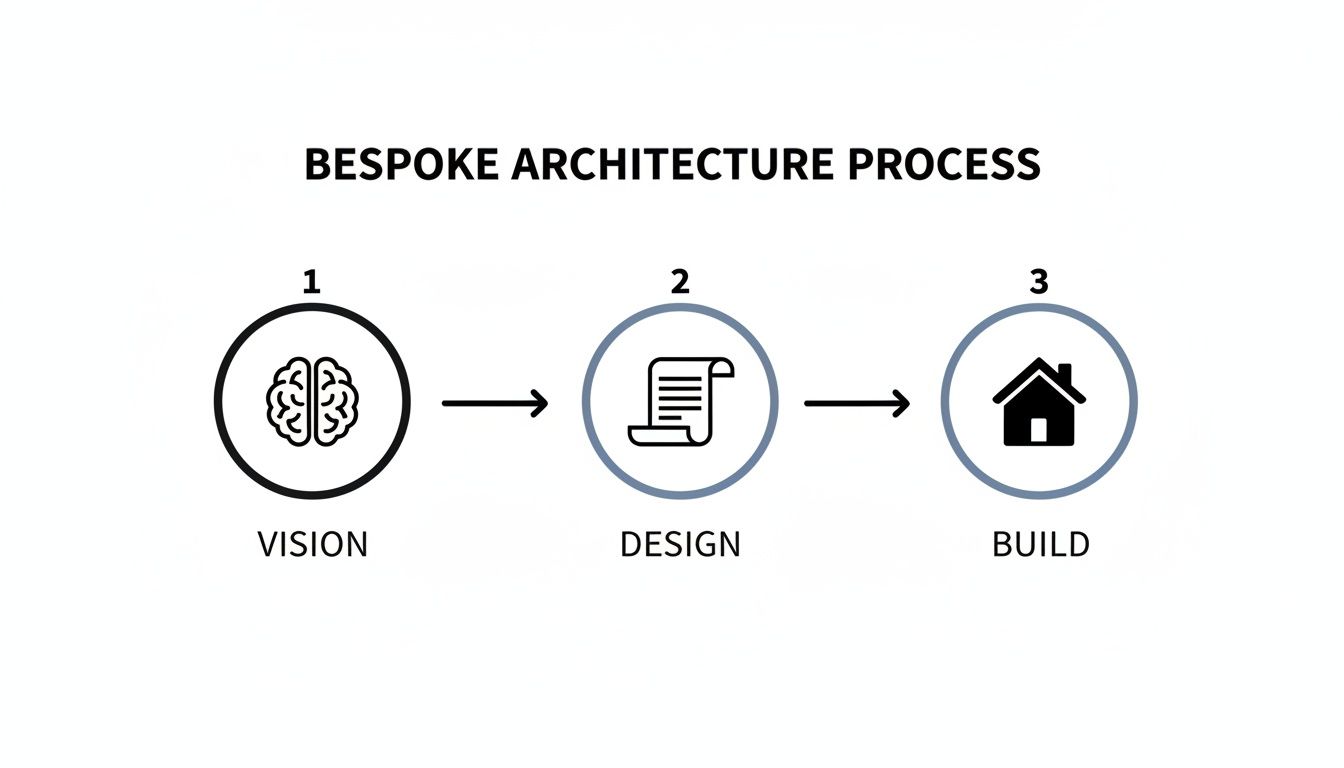
The flowchart above shows how a project moves through three distinct macro-stages, grounding creativity in technical rigour and expert oversight. This methodical approach is what separates a standard house from a truly exceptional piece of architecture.
Establishing the Foundations of Your Project
Every journey starts with a conversation, and in architecture, this is the initial consultation (Step 1). It’s a creative and strategic session where you share your vision, lifestyle needs, and early thoughts on budget. This is our chance to build a strong rapport and ensure we fully understand what you want to achieve with your new home.
From there, we move into brief development (Step 2). This critical stage turns our conversations into a detailed document that becomes the project's guiding star. It captures everything, from the number of bedrooms and desired spatial flow to specific features like a home gym or a custom wine cellar. A well-defined brief prevents any ambiguity and makes sure the design work is perfectly aligned with your goals.
Shaping the Concept and Securing Approval
With a clear brief in hand, the creative work truly begins with conceptual design (Step 3). This is where your vision starts to take physical form through sketches, 3D models, and floor plans. We’ll often explore multiple options to test different layouts and massing strategies, allowing you to see exactly how your home will sit on the plot and interact with its surroundings.
Once a concept is agreed upon, the focus shifts to securing planning permission (Step 4). Your architect prepares a detailed set of drawings and all the supporting documents, including a robust Design and Access Statement, for submission to the local council. They act as your agent, managing all communication with planning officers and presenting a compelling case for the design. This stage requires a deep understanding of local policies, especially in sensitive contexts like London's Conservation Areas.
The architectural journey is a meticulous process of layering detail upon detail. Each stage builds upon the last, transforming a simple concept into a fully resolved design ready for construction, with no stone left unturned.
From Detailed Drawings to Construction
After planning is secured, the project gets technical. We produce the detailed design and technical drawings (Step 5). This is an intensely focused process where every single construction element is specified—from the foundation structure and insulation thickness to the precise window specifications and electrical layouts. These drawings form a comprehensive instruction manual for the builders, and their thoroughness is key to avoiding costly errors on-site.
Next up is tender management (Step 6). Your architect compiles a tender package containing all the technical information and invites a curated list of trusted building contractors to provide a fixed-price quotation. We then analyse the returned tenders, interview the contractors, and help you select the best partner for your project based on quality, experience, and value.
The final two stages are where the project truly comes to life:
Construction Oversight (Step 7): During the build, your architect is on-site regularly to inspect the work, ensure it aligns perfectly with the drawings, and resolve any queries that come up. We administer the building contract on your behalf, managing payments and certifying the quality of construction, acting as your independent expert and advocate.
Handover and Completion (Step 8): Once construction is finished and the home has passed all inspections, the architect carries out a final check for any defects before formally handing the keys over. Our support often continues beyond this point, ensuring any minor issues that emerge are promptly resolved by the contractor.
This 8-step process provides a clear, logical, and secure path from the first spark of an idea to the moment you step into your completed dream home. For those interested in a deeper dive, you can learn more about why choosing dedicated new build architects can make all the difference in our detailed article.
Navigating London's Planning Maze
For many people, securing planning permission feels like the most intimidating part of a new build project. It's often seen as a confusing, uncertain process. But with the right strategy and an experienced guide, it becomes less of a barrier and more of a clear pathway to unlocking your site's true potential.
It helps to think of the planning application not as a bureaucratic hoop to jump through, but as the professional business plan for your future home. It has to be persuasive, meticulously detailed, and show a genuine respect for the local area. This is especially true across the unique and often sensitive boroughs of South West London, where planning policies can be particularly stringent.
Understanding Local Planning Policies
Every London borough has its own rulebook – a distinct set of planning policies, design guides, and local priorities. An architect who works in the area doesn't just know these rules; they understand the nuances, the precedents, and the unwritten expectations that shape a planning officer’s decision. This local insight is priceless when designing a home that's both ambitious and, crucially, approvable.
Key considerations often include:
Respecting the Local Vernacular: The design needs to show it understands the architectural character of the street, but without simply creating a pastiche or a lazy copy.
Protecting Neighbouring Amenity: We always have to carefully manage things like overlooking, overshadowing, and how bulky the new building might feel to its neighbours. These are major factors.
Meeting Sustainability Targets: Many London councils have their own ambitious environmental goals that new builds are expected to meet or even exceed.
The Challenge of Conservation Areas
Things get even more complex if your site is in a Conservation Area. These are zones protected for their special architectural or historic character, and any new build architecture proposed within them is put under a much higher level of scrutiny.
The goal isn't to stop new development entirely, but to ensure that anything new actively enhances the area. This demands a design that is of exceptionally high quality, sensitive to its surroundings, and backed by a powerful, well-argued justification. In these situations, your architect’s ability to articulate the design's merits is absolutely critical. For a deeper dive, have a look at our guide to new build homes in Wimbledon, which explores many of these challenges.
A successful planning application is built on a foundation of mutual respect. It respects the client's vision, the neighbours' right to amenity, and the council's duty to uphold the character of the area. When these elements are balanced, a compelling case for approval emerges.
The Power of a Persuasive Application
The cornerstone of any strong application is the Design and Access Statement. This document is much more than a simple description; it's the story of your project. It explains how the design evolved, justifies the choices made, and clearly demonstrates how it aligns with all the relevant local and national policies. A compelling statement, supported by high-quality drawings and visualisations, can make all the difference.
An experienced architect builds a professional rapport with planning officers, often engaging in pre-application discussions to flag and resolve potential issues early on. This collaborative approach dramatically increases the chances of a smooth and successful outcome, turning the planning process from a maze into a clear, structured path forward.
Designing a Sustainable and Smart Home
A new build offers a golden opportunity to create a home that’s intelligent and sustainable right from its foundations. Instead of trying to retrofit technology or add insulation as an afterthought, starting from scratch allows us to weave efficiency and connectivity into the very fabric of the building. The result is a home that’s healthier, cheaper to run, and perfectly in tune with modern life.
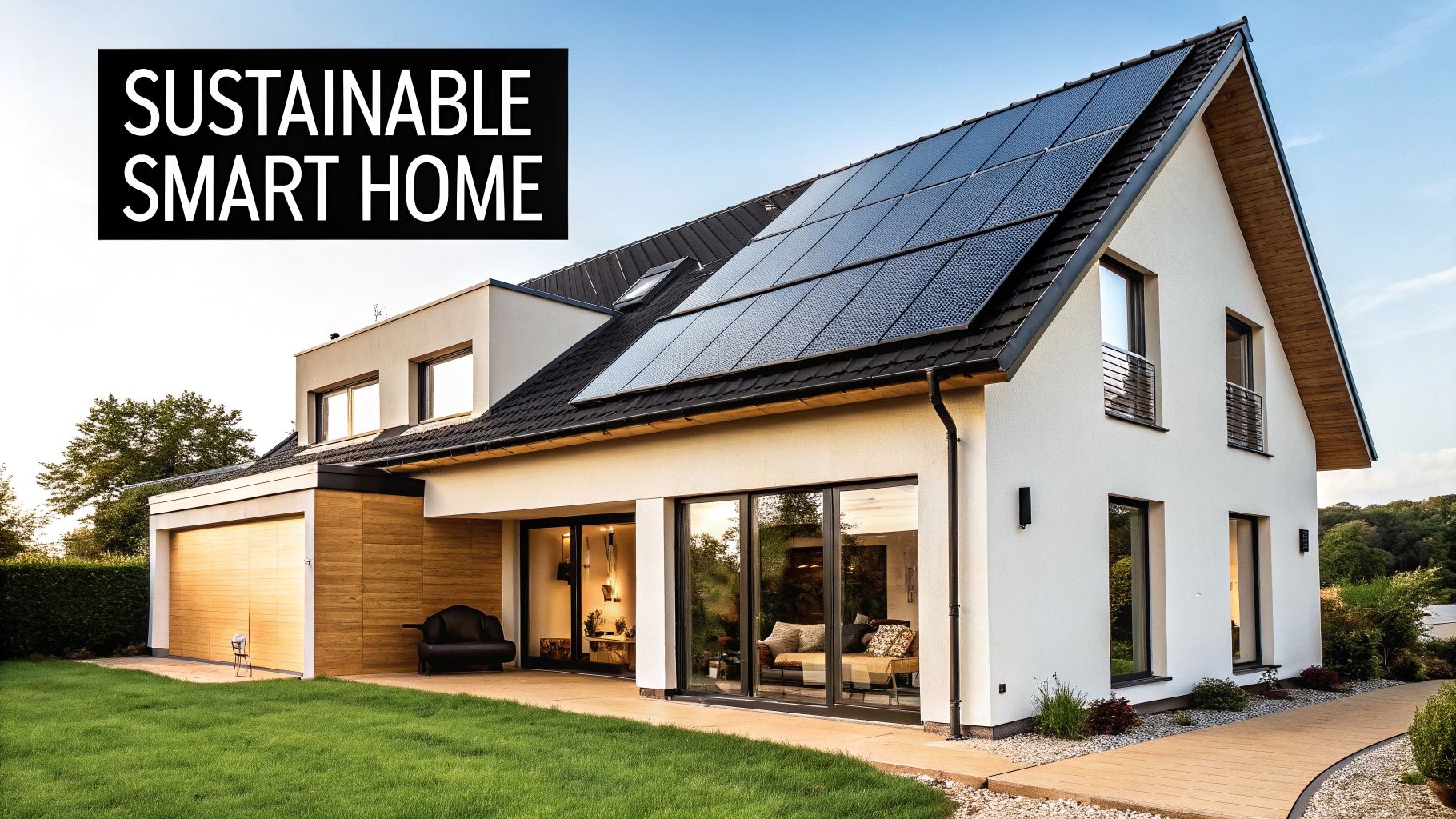
The best strategy always begins with a ‘fabric-first’ approach. This philosophy is all about perfecting the performance of the building’s shell—its roof, walls, floors, and windows—to dramatically cut energy demand before we even think about technology. It’s about getting the fundamentals absolutely right.
The Fabric-First Philosophy
Think of your home like a high-quality insulated flask. A good flask keeps your coffee hot for hours because its structure is designed to minimise heat escaping. The exact same principle applies to a new build home. By focusing on the building envelope first, we create a home that naturally stays at a comfortable temperature all year round.
We achieve this through a few key elements working in harmony:
Exceptional Insulation: We specify high-performance insulation for the walls, roof, and floors that goes far beyond standard building regulations. This creates a powerful thermal barrier, slashing the amount of energy needed for heating in winter and cooling in summer.
Superior Airtightness: You’d be amazed how much heat is lost through tiny, invisible gaps and cracks. We use specialist membranes and tapes to create a continuous airtight seal, stopping uncontrolled draughts and making the home incredibly comfortable and efficient.
High-Performance Glazing: Modern triple-glazed windows are a non-negotiable. They are engineered to let welcome sunlight in while preventing precious heat from getting out, helping to maintain a stable and pleasant indoor climate.
Get this right, and the house will barely need any energy to run. Only then do we layer on the technology to generate and manage that small amount of energy as efficiently as possible.
Integrating Renewable and Smart Technologies
With a super-efficient building fabric in place, the next step is to integrate renewable energy systems. Because the home’s energy demand is already so low, these systems can work at their absolute best, delivering fantastic long-term value.
The key technologies for a modern sustainable home include:
Air Source Heat Pumps: These devices are astonishingly efficient. They essentially work like a fridge in reverse, pulling latent heat from the outside air (even on a cold day) and transferring it inside to heat your home and hot water.
Solar Panels (Photovoltaics): By installing solar panels, you can generate your own clean electricity on-site. Pair them with battery storage, and you can save the excess energy you generate during the day to use at night, making you even less reliant on the grid.
By planning for sustainability from day one, a new build home becomes more than just a place to live; it becomes a high-performance system that actively reduces its environmental footprint while improving the comfort and wellbeing of everyone inside.
Seamless Smart Home Integration
Beyond just energy, a new build is the perfect canvas for seamless smart home integration. By planning the wiring and network infrastructure from the very beginning, we avoid the mess and disruption of trying to add it in later. This creates a home that isn't just 'smart'—it's truly intelligent.
Imagine a system where your lights adjust automatically to the time of day, your blinds lower themselves to stop a room from overheating in summer, and your security system is at your fingertips from anywhere in the world. This level of integrated control brings a new dimension of comfort, convenience, and peace of mind. For those curious about the latest thinking, we’ve explored other sustainable design trends for new build family homes in another article.
This forward-thinking approach is becoming more important than ever. While the wider UK architectural industry is projected to see revenues dip slightly to £9 billion by 2026, the high-end residential market is proving resilient. With construction output set to grow and new projects gaining momentum, discerning clients are increasingly focused on homes that deliver both luxury and genuine, measurable performance.
Unifying Interior and Landscape Design
The true hallmark of exceptional new build architecture isn’t just a beautiful building; it’s the effortless flow between inside and out. This is a world away from simply decorating rooms and then planting a garden as an afterthought. Instead, it’s about designing a single, unified living environment where the boundary between home and landscape dissolves.
From the very first sketch, we treat the home and its garden as one cohesive entity.
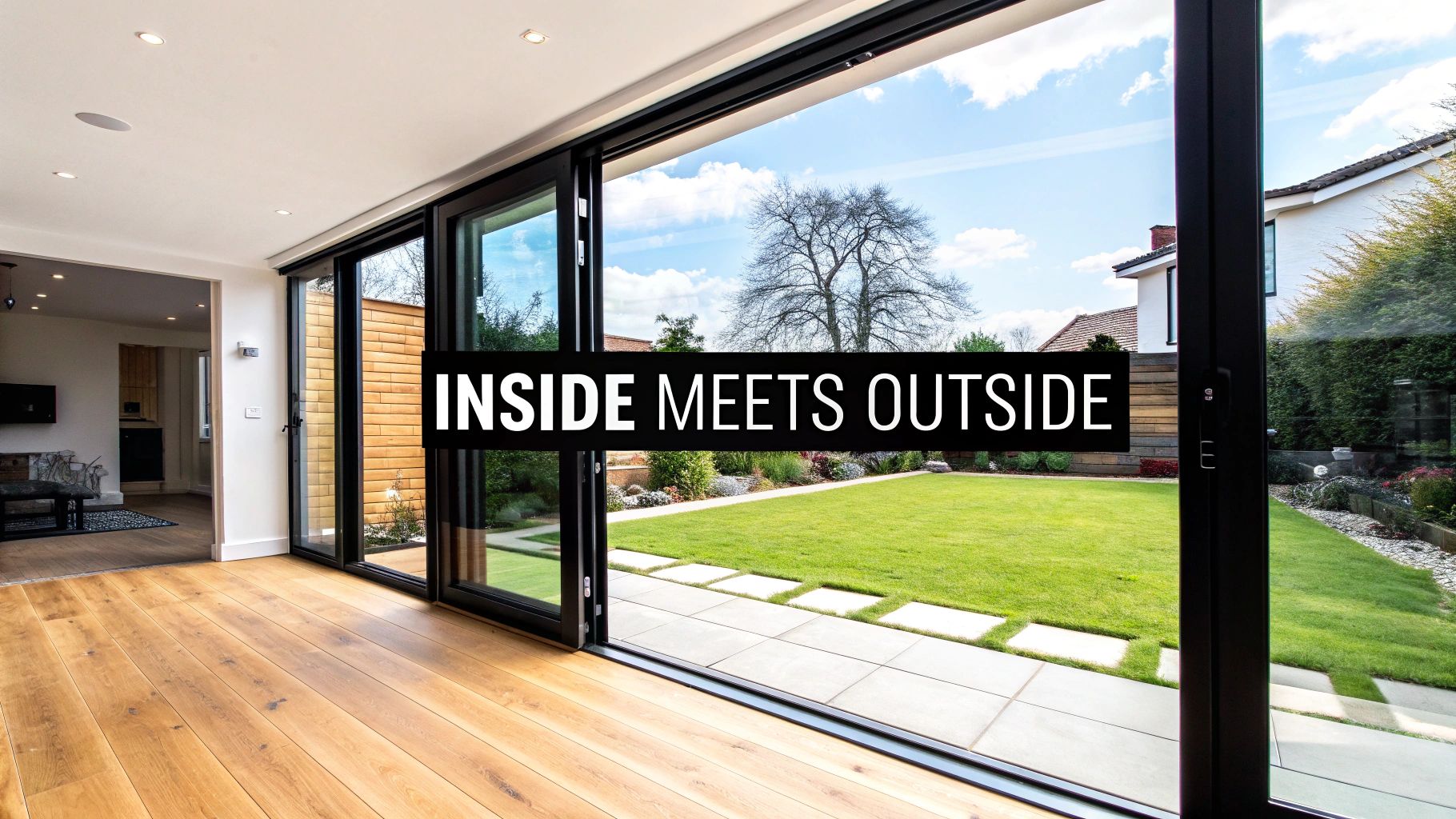
This process starts by weaving key interior features into the home’s architectural DNA. A bespoke sculptural staircase, for instance, is far more than a way to get between floors; it becomes a centrepiece that shapes sightlines and directs movement throughout the home. In the same way, custom joinery is designed to integrate perfectly with the building's proportions, creating storage and display solutions that feel completely natural and intentional.
These interior anchors then inform how we open the home up to its surroundings, creating a seamless transition that extends your living space right into the outdoors.
Extending Living Space Outdoors
Achieving a genuine indoor-outdoor connection is about more than just adding a patio. It requires a thoughtful approach to space, materials, and light, ensuring the garden feels like a natural continuation of the rooms inside. This is where architecture and landscape design truly merge.
We focus on a few key strategies to create this seamless flow:
Framing the View: We use large glazed elements, like sliding or bi-fold doors, not just for access but to act as living picture frames. They are strategically placed to capture the best garden views, making the landscape an ever-present backdrop to daily life.
Creating Outdoor Rooms: An elegant terrace becomes an alfresco dining room. A secluded garden nook acts as a peaceful retreat. A swimming pool becomes the focal point for family leisure. Each of these 'rooms' is designed with the same care and attention to detail as any interior space.
Material Continuity: One of the most powerful techniques is to use a continuous palette of materials that flows from the inside out. Imagine the same natural stone flooring running from your open-plan kitchen directly onto the outdoor terrace, visually erasing the threshold between them.
This thoughtful integration is what creates a cohesive, lifestyle-driven environment.
The most successful new build homes feel deeply connected to their site. They don't just sit on the land; they engage with it, drawing the beauty of the outdoors into every room and pushing the comfort of the indoors out into the garden.
By designing every element in harmony—from a bespoke wardrobe to a sun-drenched patio—the entire property becomes a singular, beautifully realised vision. The result is a home that is not only visually stunning but also deeply functional, enhancing your connection to nature and providing a versatile backdrop for modern family life.
Understanding Budgets and Timelines
Two of the biggest questions on any client's mind are "How much will it cost?" and "How long will it take?" Getting these right is non-negotiable for a successful project. Part of an architect's job is to bring clarity to the numbers, giving you the financial certainty you need to move forward with confidence.
Let's break down what you can realistically expect when commissioning a high-end new build home in South West London or Surrey.
Breaking Down the Costs
Embarking on this journey means creating a realistic financial plan that sees the full picture. It's a common mistake to think the budget is just the builder's quote. In reality, the total investment is made up of several key parts.
Understanding these from day one is the secret to good financial management and avoiding unwelcome surprises down the road.
Here are the primary areas your budget will cover:
Construction Costs: This is the big one, covering all the labour and materials needed to actually build your home. For a high-quality finish in South West London and Surrey, a realistic range is £3,500 to £5,500+ per square metre. This figure is shaped by the design's complexity and the quality of materials you choose.
Professional Fees: This includes your architect’s fees, which are often a percentage of the construction cost. It also covers other essential consultants like structural engineers, quantity surveyors, and party wall surveyors who all play a vital role.
VAT, Planning, and Building Control Fees: These statutory charges are simply part of the process and must be factored into the overall budget from the start.
Contingency Fund: This is your project's safety net. We always advise setting aside a contingency of 10-15% of the construction cost. It's there to cover any unforeseen site conditions or unexpected issues that might crop up during the build. You hope you don't need it, but you'll be glad it's there if you do.
Ultimately, the cost of a new build is driven by three things: the size of the home, the complexity of the design, and the quality of the materials and finishes. An architect’s real skill lies in balancing these three elements to get the absolute most out of your investment.
Mapping Out the Project Timeline
Just as crucial as the budget is a realistic timeline. A bespoke new build is a carefully orchestrated process, not a rush job. Every phase has its own duration, and respecting that is key to achieving the quality you expect.
A typical project unfolds across four main phases:
Design and Briefing (3-4 months): This is the creative beginning. We work together to develop your brief, sketch out initial concepts, and refine them into a detailed proposal you love.
Planning Permission (3-4 months): Once we submit the application, the local authority usually takes 8-13 weeks to make a decision. More ambitious or complex schemes can sometimes take a bit longer.
Technical Design and Tender (3-4 months): Here, we turn the approved designs into a set of highly detailed construction drawings and manage the tender process to select the right building contractor for the job.
Construction (12-24 months): The on-site build is the longest phase. The exact duration depends heavily on the project’s scale, complexity, and any unique challenges your particular site presents.
The UK's housing market provides a steady backdrop for projects like these. To give you an idea of the wider context, in the year ending March 2025, Homes England reported 38,308 new houses starting on site and 36,872 completions nationally. This signals a stable construction sector where high-end bespoke projects in areas like Wimbledon and Richmond can proceed with confidence. You can learn more about the latest UK housing statistics on GOV.UK.
Frequently Asked Questions
Embarking on a bespoke new build journey is a significant step, and naturally, it brings up plenty of questions. Here, we’ve gathered a few of the most common queries we hear from clients who are thinking about creating their dream home from the ground up.
How Long Does It Take to Design and Build a New House in London?
A bespoke new build is a major undertaking, so it’s important to have a realistic sense of the timeline from the outset. Generally, you should plan for 6-9 months just for the initial design, detailed development, and securing planning permission. This upfront work is absolutely essential for a smooth process later on.
Once the designs are signed off and approvals are in place, the construction phase for a high-end property in London or Surrey can take anywhere from 12 to 24 months. The final duration really depends on the project's size, the intricacy of the design, and the unique conditions of your site. Following a structured 8-step process helps keep everything clear and manageable from day one.
What Are the Main Advantages of a New Build Over Renovating?
While renovating an existing property has its merits, a new build offers a level of freedom and performance that’s simply in a different league. The most significant benefit is having complete creative control; you aren’t held back by the limitations and often unforeseen problems of an existing structure.
Crucially, a new build allows you to achieve far superior energy efficiency. By designing in high levels of insulation and airtightness from the very beginning, you can dramatically lower your home's running costs and carbon footprint for decades. It also means you can seamlessly integrate modern technologies and bespoke features—like a home cinema or a gym—right from the start, creating a home that is perfectly moulded to your lifestyle.
How Do I Choose the Right Architect for My Project?
Choosing the right architect is probably the single most important decision you'll make. A good starting point is to look for a RIBA and ARB-accredited practice with a strong portfolio of high-quality new builds in your area that align with your personal style and ambitions.
But a great portfolio is only half the story. Just as critical is their design process and how they communicate. You need to find a team you can trust and connect with on a personal level, as you'll be working closely together for a long time. We always recommend an initial consultation to discuss your vision and make sure the chemistry feels right before you commit to the journey together.
What Are Typical Architect Fees for a New Build Home?
Think of an architect's fees as an investment in the quality, functionality, and ultimate value of your home. In the UK, fees are typically calculated as a percentage of the total construction cost.
For a bespoke new build project, this figure generally ranges from 8% to 15%. The exact percentage will depend on the project's complexity and the level of service you need—from just preparing planning drawings to providing full on-site project management and contract administration. This fee covers the extensive, detailed work required to deliver a high-quality, beautifully executed home that meets both your brief and your budget.
Ready to start the conversation about your new build? The team at Harper Latter Architects is here to guide you through every step of the process. Explore our services and see how we can bring your vision to life.