
High End Residential Architects London: Luxury Home Design Guide

Embarking on a bespoke home project is a huge personal and financial commitment, and your choice of a high-end residential architect in London is easily the most important decision you'll make. This initial choice sets the tone for the entire journey. It influences everything from the final design's quality to whether the project stays on time and within budget.
Get it right, and a complex process can become an exciting, collaborative creation. Get it wrong, and... well, let's just make sure you get it right.
How to Find Your Ideal Architectural Partner in London

Finding the right architect isn't just about scrolling through beautiful photos on Instagram or Pinterest. It takes a bit of due diligence. You need a mix of gut feeling, a good look at their past work, and a clear understanding of what makes them suitable for your specific vision.
Here’s where to start.
Verifying Professional Credentials
Before you even think about portfolios, your very first check should be for professional accreditation. It’s a non-negotiable. In the UK, this means confirming the architect is registered with the Architects Registration Board (ARB) and is ideally a member of the Royal Institute of British Architects (RIBA).
ARB Registration: This is a legal requirement. It's the baseline that proves someone has met the required standards of education and experience to even call themselves an architect.
RIBA Chartered Practice: This status goes a step further. It shows the practice follows a strict professional code, holds the right insurance, and is committed to keeping their skills sharp. For a luxury home, a RIBA Chartered Practice offers an essential layer of assurance.
To make this easier, we've put together a quick checklist to guide your vetting process.
Architect Vetting Checklist
Criteria | What to Look For | Why It Matters |
|---|---|---|
Accreditation | ARB registration (essential) and RIBA Chartered status (highly recommended). | This is your baseline guarantee of professionalism, qualification, and accountability. |
Relevant Portfolio | Projects similar in scale, style, and complexity to your own. Look for variety, not just one signature look. | It shows they have direct experience with what you want to achieve and aren't just experimenting on your project. |
Local Experience | A track record of successful projects in your London borough (e.g., Richmond, Wandsworth, Wimbledon). | They'll know the local planners, understand specific conservation area rules, and navigate the system more efficiently. |
Client Testimonials | Genuine, detailed feedback from past clients. Ask to speak to a recent client if possible. | This tells you what the journey was really like – their communication, problem-solving, and budget management. |
Chemistry | Do you get on with them? Do they listen and understand your vision? | You'll be working closely with them for a long time. A good personal connection is vital for a collaborative process. |
This table serves as a solid starting point. Once you've shortlisted a few practices that tick these boxes, you can dig deeper into their work and approach.
Looking Beyond the Glossy Portfolio
A stunning portfolio is a given, but you have to look deeper. The images show the finished product, but they tell you nothing about the journey. When you’re reviewing a firm’s work, think about the context behind those beautiful photographs.
A truly successful home isn’t just designed for today—it is crafted to endure. Timeless architecture is about proportion, balance, and restraint, creating spaces that feel as natural and intuitive in twenty years as they do now.
Look for consistency in quality, but also for variety. Does the architect show they can adapt to different client tastes and tricky site constraints, or do all their projects look remarkably similar? A truly exceptional architect translates your vision—not just their own—into a home that is both functional and beautiful.
For a more detailed walkthrough, our guide on how to choose an architect in the UK offers some really valuable insights.
Assessing Local Expertise and Experience
London's planning landscape is notoriously complex, especially in boroughs like Merton and Richmond or within designated conservation areas. An architect with proven experience navigating the specific planning departments in South West London is invaluable. They’ll have established relationships and a deep understanding of local policies, which can save a huge amount of time and prevent costly redesigns.
The UK's architectural activities industry is a significant market, expected to reach a size of £9.0 billion in 2025. This robust environment supports specialised practices in areas like South West London, where demand for luxury refurbishments and ambitious extensions is consistently high. This specialisation is critical. An architect who knows the local trends, regulations, and even the planners is simply better equipped to deliver your project smoothly. You can explore the full report on the architectural services market from IBISWorld.
What to Expect from Your First Architect Consultation
Think of your first meeting with a potential architect as more than just a chat. It's a two-way interview, a critical first step to see if you can build a genuine, collaborative partnership. Getting this right from the start ensures your vision remains the focus throughout the entire journey.
This meeting is your chance to get a feel for their personality, how they communicate, and their overall professional approach. Remember, you’re not just buying a set of drawings. You're investing in a long-term professional relationship that will steer a huge financial and emotional undertaking.
Preparing for a Productive Meeting
A little prep work goes a long way in making this first conversation truly productive. Before you meet, spend some time thinking through the details of your project. The more clarity you have, the more specific and genuinely useful their feedback will be.
Pull together any documents and ideas you have. This might include:
A Clear Brief: A simple written summary of what you’re hoping to achieve. Think about the number of rooms, how you’ll use them, and any specific features you’ve been dreaming of.
Inspiration Images: A collection from magazines or a Pinterest board that captures the look, materials, and general feeling you're after.
Property Information: Any existing floor plans, surveys, or title deeds you already have for the property will be incredibly helpful.
Budget Ideas: Be realistic about what you're prepared to invest. This should cover not just construction but also professional fees and a contingency fund for the unexpected.
This groundwork helps the architect instantly grasp your aspirations and constraints, which means you can have a much more focused and valuable discussion.
Key Questions to Ask Your Architect
Of course, you'll talk about fees, but that shouldn't be the main event. The best questions dig deeper into the architect's process, their design philosophy, and their hands-on experience. This is how you find a real partner, not just a service provider.
Try to cover these key areas in your conversation:
Design Philosophy: How would you describe your architectural style? How do you make sure a client’s personal vision comes through in the final design?
Process and Communication: How do you manage your projects and keep clients in the loop? What’s your preferred way to communicate, and how often can we expect updates?
Local Planning Experience: Can you show us some projects you’ve successfully guided through planning in our borough, like Wandsworth or Merton? How do you approach challenges with conservation areas or listed buildings?
Budget and Cost Management: How do you set and control a project budget? What are the common reasons costs might shift, and how do you manage that?
Team and Collaboration: Who will be our main point of contact? Who else will be working on our project, and what are their roles?
The answers will reveal a huge amount about how the practice works. For a closer look at a well-defined design journey, you can explore our process, which lays out every stage from the initial idea right through to completion.
What to Look for Beyond the Answers
Pay attention not just to what they say, but how they say it. A great architect for your project will be someone who listens intently, asks smart questions about your lifestyle, and shows genuine excitement for your ideas.
The right architect makes you feel heard. They should be less focused on selling their own signature style and more interested in understanding how you live, what you value, and how your home can be designed to enhance your daily life.
Look for a real sense of rapport and mutual respect. Do you feel comfortable and confident talking to them? The relationship between a client and a high-end residential architect is intensely collaborative and can often last for years. A strong personal connection isn't a luxury—it's essential for navigating the inevitable challenges of a complex project. This first meeting is your best chance to see if that crucial chemistry is there.
Demystifying the High-End Residential Design Process
Embarking on a high-end residential project in London can feel like a huge undertaking. The journey from a simple idea to a beautifully finished home involves multiple stages, specialists, and what can seem like endless decisions. But understanding the path ahead is the key to a smooth, predictable, and rewarding experience.
Most UK architects, including us, follow a framework based on the RIBA Plan of Work. While the official terms can sound a bit technical, the logic is straightforward: each phase builds methodically on the last, making sure nothing gets missed and that you’re always in control.
The Foundation: Strategic Definition and Preparation
Before a single line is drawn, we need to build a solid foundation for the project. This is all about defining what you want to achieve, why you want it, and how we’ll get there together. It involves deep conversations about your lifestyle, your ambitions for the property, and of course, the initial budget.
This stage is about asking the right questions to get to the heart of the project. We’re not talking about specific room layouts just yet; it’s more about establishing the project’s soul. The result is a robust client brief and a feasibility study that confirms everything is viable, setting clear goalposts for success before you commit significant resources.
This strategic thinking is vital in London’s competitive market. Consider this: RIBA Chartered Practices recently hit a record total revenue of £5 billion. While much of that comes from large commercial projects, it shows the immense value placed on professional, structured architectural services. Smaller firms like ours, particularly in South West London, thrive by delivering this exact level of personalised, strategic planning for new builds and complex refurbishments. You can discover more insights about the UK architecture sector’s growth in recent reports.
From Concept to Planning Approval
With a strong brief in hand, the creative work can finally begin. The Concept Design stage is where your vision starts taking physical form through sketches, 3D models, and different layout options. It’s an exciting, collaborative phase where we explore architectural ideas to find the perfect response to your brief and the site’s unique potential.
Once we've landed on a concept you love, we develop it into a detailed set of drawings for the planning application. Known as Developed Design, this stage refines the scheme and brings in feedback from other consultants, like structural engineers. The goal is simple: submit a comprehensive application to the local authority that clearly demonstrates the design's quality and its compliance with local policies.
A well-managed design process isn't just about creating a beautiful building; it's about navigating the practical realities of planning, budget, and construction with foresight and expertise. Your architect acts as the central coordinator, ensuring all elements align seamlessly.
For any project in London—especially those within conservation areas or involving listed buildings—this stage is absolutely critical. A skilled architect will prepare a robust Design and Access Statement, making a strong case for the proposal and managing all communication with the planning department to give it the best possible chance of success.
The infographic below shows the simple, collaborative flow that underpins every successful client-architect relationship.
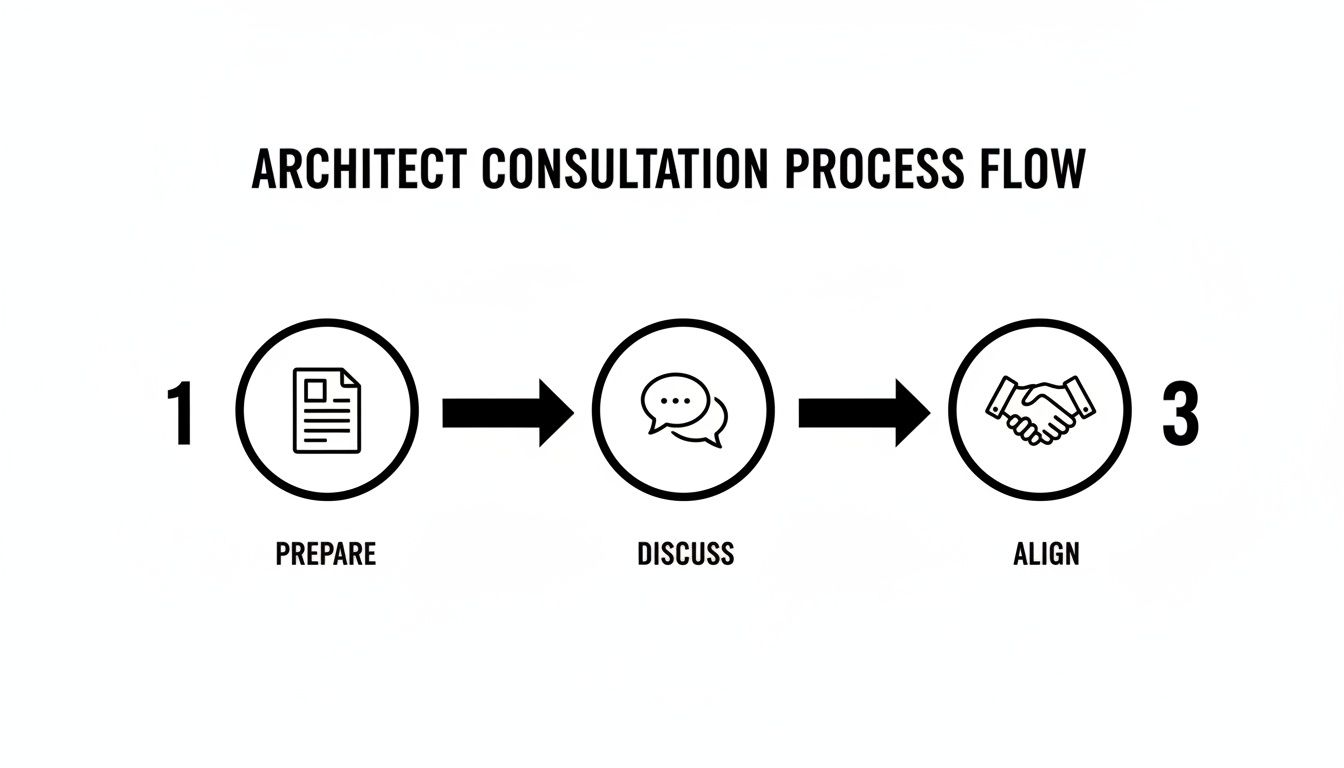
This approach ensures that from the very beginning, your project is built on a foundation of clear communication and a shared understanding of the end goal.
Technical Design and Construction
After celebrating a successful planning permission, the focus shifts to the technical nuts and bolts. The Technical Design stage is where your architect produces the incredibly detailed construction drawings and specifications that a builder will use to price and, ultimately, build your home.
This is a meticulous process. It involves coordinating all the specialist information, from structural engineering calculations to the mechanical and electrical services. The quality of this information pack is paramount. It minimises risks on site, ensures you get accurate and comparable prices from contractors, and forms the legal basis of the building contract.
Here’s what happens during this crucial phase:
Detailed Construction Drawings: We create comprehensive plans, sections, and details for every single aspect of the build.
Building Regulations Submission: The design is checked to ensure it complies with all legal standards for health, safety, and energy efficiency.
Tendering to Contractors: This technical package is sent out to a shortlist of suitable builders to get competitive prices for the work.
Contract Administration: Once a builder is appointed, your architect typically administers the building contract on your behalf. This means monitoring progress on site, certifying payments, and making sure the work is completed to the specified quality.
This final phase is all about bringing the vision to life. Your architect acts as your expert representative on site, protecting your interests and ensuring the home you walk into perfectly matches the design you approved.
Navigating London's Complex Planning and Heritage Rules
Taking on a high-end residential project in London means you’re often dealing with a planning system as historic and complex as the city itself. Many of the most sought-after properties, especially in boroughs like Richmond or Merton, are either tucked away in Conservation Areas or are individually Listed. This adds a serious layer of complexity that can quickly trip up a project if it’s not handled with expert care.
Successfully renovating or extending a property in these sensitive locations isn’t about finding loopholes; it's about crafting a compelling architectural story. The real skill lies in showing how a contemporary design can respect and even enhance the area's unique character. An architect who knows London’s heritage landscape inside and out understands how to balance modern living with sensitive preservation.
The Value of Local Knowledge and Pre-Application Advice
Before you even think about submitting a formal planning application, one of the smartest moves you can make is to seek pre-application advice from the local council. This is a formal process where your architect presents the initial concepts to a planning officer to get their early feedback. It’s a crucial first test.
This dialogue gives you priceless insight, flagging potential issues before you’ve invested significant time and money in detailed drawings. An architect with a strong track record in, say, Wimbledon Village or a Kensington conservation area, will instinctively grasp the subtleties of that council’s policies. They can read between the lines of the feedback and adjust the design, dramatically improving your chances of getting a first-time approval.
A successful planning outcome in a historic London setting is rarely about imposing a vision. It is achieved through a respectful dialogue between the past and the present, where new architecture thoughtfully complements its heritage context.
This proactive approach helps turn what could be an adversarial process into a collaborative one. It shows the council you’re serious about a high-quality, considerate design from day one.
Crafting a Compelling Case for Your Design
Getting planning permission for a high-end project in a sensitive area requires much more than a set of drawings. Your architect needs to build a solid, persuasive argument for the proposal, which is formally presented in a document called a Design and Access Statement.
This statement is a critical part of the application. It unpacks the design thinking, justifies the architectural choices, and shows how the project aligns with both national and local planning policies. For a heritage property, it will meticulously detail how the historic fabric will be handled and preserved.
This is where an experienced high end residential architect in London really shines. They combine visual proof—like 3D models and material samples—with clear, persuasive writing to make the project's case. For a deeper dive into the specific requirements, our comprehensive UK Listed Building planning permission guide breaks down the essentials of navigating this specialist area. This expertise is what turns a planning application from a bureaucratic hurdle into a successful negotiation.
Listed Building Consent: A Specialist Skill
Working with a Listed Building brings its own, even more rigorous approval process called Listed Building Consent. This is completely separate from standard planning permission and focuses purely on preserving the building's special architectural or historic interest.
Any change, extension, or even demolition that affects the building's character needs this consent—and that applies to both the exterior and interior. An architect must have deep technical knowledge here, understanding traditional construction methods and materials.
The process involves detailed historical research, careful surveys, and a design philosophy grounded in conservation principles. The architect's job is to prove that any proposed changes are necessary, sympathetic, and won't harm the building's unique significance. This is a highly specialised skill, and trusting it to a firm without proven experience in conservation is a huge risk.
Integrating Luxury Amenities and Sustainable Design
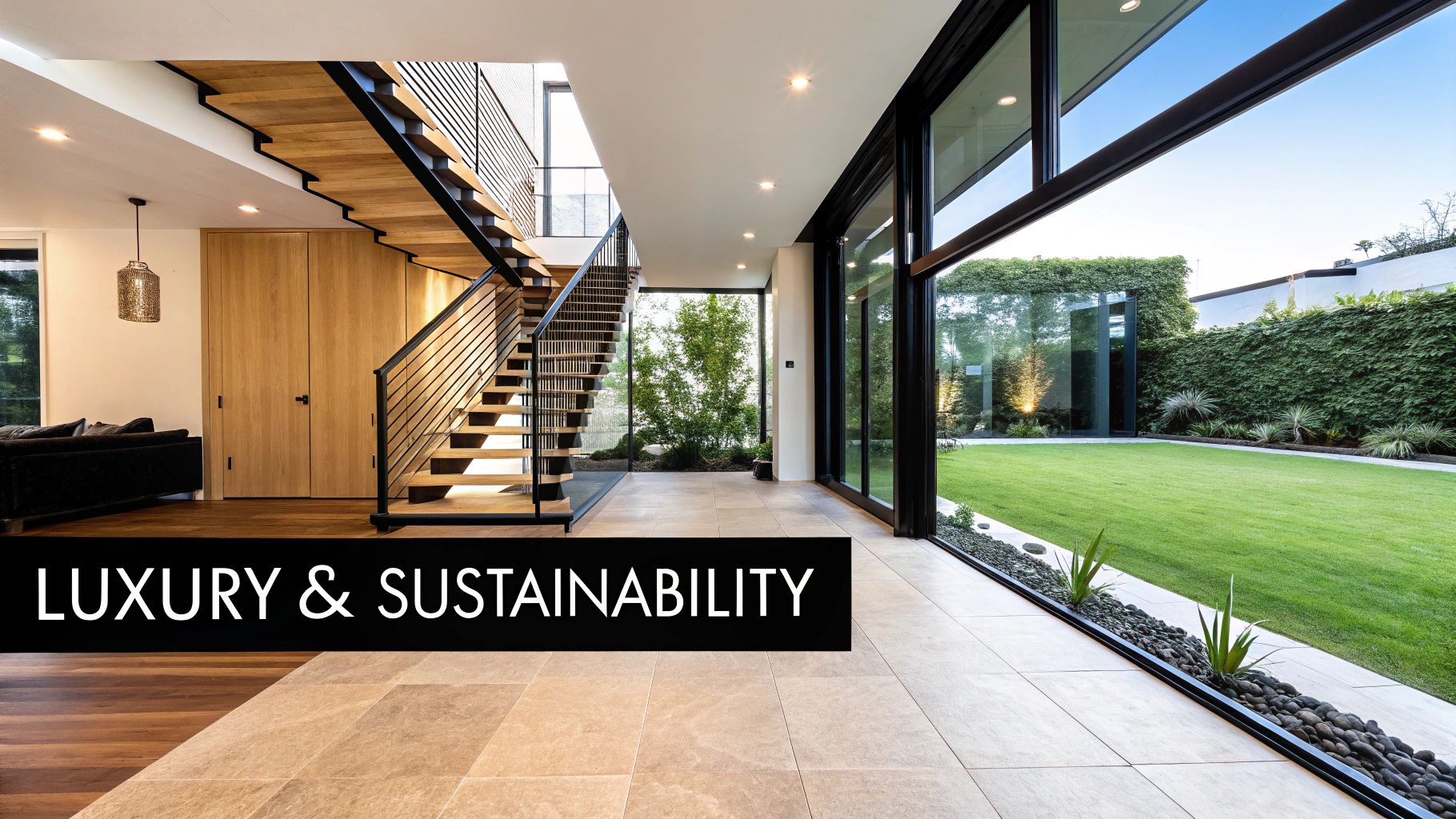
A truly high-end home in London is defined by more than its postcode or aesthetics. It’s a direct reflection of a bespoke lifestyle, crafted with amenities that support personal passions and well-being, all while being designed for long-term value and resilience.
This is where specialist expertise distinguishes a top-tier architect. It’s about a holistic vision that seamlessly integrates sought-after amenities with a deep commitment to sustainable, future-proofed design. The goal is to create an exceptional living environment that is, above all, personal.
Crafting Bespoke Lifestyle Spaces
Modern luxury is deeply personal. It's moved beyond ostentatious displays towards creating spaces that genuinely enhance daily life. Leading high end residential architects in London are adept at translating a client’s lifestyle into beautifully functional architectural features.
This often means designing sophisticated amenities that were once the preserve of exclusive clubs or boutique hotels.
Home Cinemas: A properly designed media room is a world away from a big screen in the living room. It requires specialist knowledge of acoustics, lighting control, and integrated technology to create a truly immersive cinematic experience.
Private Gyms and Wellness Suites: These spaces are about more than just equipment. Think yoga studios, steam rooms, or plunge pools, all designed with optimal air quality and natural light in mind.
Sophisticated Basement Conversions: In a space-conscious city like London, basements offer incredible potential. A skilled architect can transform them into anything from a climate-controlled wine cellar and tasting room to a multi-level leisure complex.
Even a custom-designed staircase can become a sculptural centrepiece, while a seamless connection between indoor and outdoor living spaces can completely redefine how a home is used and enjoyed.
The Growing Importance of Sustainable Architecture
Alongside bespoke amenities, sustainability has become a cornerstone of high-end residential design. An environmentally conscious home isn’t just a responsible choice; it's a healthier, more comfortable, and more cost-effective place to live over the long term.
Architects are now integrating the principles of sustainable design into the very fabric of their projects.
A home's true value is measured not just in its present beauty, but in its future relevance. Sustainable design isn't an add-on; it's a fundamental part of creating architecture that is responsible, resilient, and ready for tomorrow.
This forward-thinking approach is becoming increasingly vital. With UK construction forecasted to grow by 1.9% in 2025 and completions set to rise by 10% in 2026, the demand for innovative, sustainable solutions is only going to increase. This growth environment is perfect for South West London practices specialising in bespoke homes where affluent clients expect innovation without compromising on craftsmanship. You can read more about the UK architecture economic outlook on Milient Software's blog.
Key Elements of Future-Proofed Home Design
Integrating sustainability is a multi-faceted process that goes far beyond simply adding solar panels. A truly holistic approach considers every aspect of the home's performance and its impact on both its inhabitants and the wider environment.
Here are some of the key strategies we consider:
Energy-Efficient Systems: This is about specifying high-performance insulation, triple-glazed windows, and advanced heating systems like ground-source heat pumps to dramatically reduce a home's energy consumption.
Responsibly Sourced Materials: We prioritise materials with a low environmental impact, such as reclaimed timber, locally sourced stone, and products with clear supply-chain transparency.
Biophilic Design: This principle is all about strengthening the connection between people and nature. We achieve this through large windows that frame garden views, internal courtyards, living walls, and the use of natural, organic materials throughout the interior.
Water Conservation: Incorporating rainwater harvesting systems for garden irrigation and specifying water-efficient fixtures are simple yet effective ways to reduce a household's water footprint.
By weaving these elements together, a skilled architect creates a home that is not only luxurious and beautiful but also healthy, efficient, and built to last for generations.
Your Questions Answered: Navigating a High-End London Build
Taking the leap on a bespoke residential project in London always brings up plenty of questions. It's completely natural. From understanding budgets and timelines to knowing who does what, getting clear answers is vital before you commit.
To help you feel more confident about the journey ahead, we’ve put together some straightforward, practical answers to the questions we hear most often from new clients.
How Much Does a High-End Residential Architect in London Cost?
Typically, an architect's fees for a high-end home in London are calculated as a percentage of the total construction cost. You can generally expect this to fall somewhere between 8% to 15%. Where your project lands in that range really depends on its scale, complexity, and exactly what services you need from us.
For example, a technically demanding refurbishment of a period property or delicate conservation work on a Listed Building will naturally sit at the higher end. A more straightforward new build, on the other hand, might be closer to the lower end of that scale. Some architects might also agree to a fixed fee for certain stages, like getting your plans through planning.
The most important thing is to have a crystal-clear, written fee agreement that details exactly what is and isn't included. This kind of transparency from day one prevents any surprises down the line and makes sure everyone is on the same page financially.
At Harper Latter Architects, we always provide a detailed, tailored fee proposal right after our initial consultation, so you have a complete picture of the costs involved from the get-go.
How Long Does a Luxury Residential Project Take?
The timeline for a luxury project in London can vary quite a bit, so it’s important to have realistic expectations. A high-end extension or a major home refurbishment could take anywhere from 12-18 months from our first design chat to the builders handing over the keys.
A completely new, bespoke home is a much bigger undertaking and could easily take 2-3 years or even longer. The timeline is really shaped by a few key things:
Design Complexity: The more intricate and unique the design, the more time is needed for the detailed design and technical phases.
The Planning Process: Just getting planning permission from a London borough can take 3-6 months. If the project is in a sensitive area or faces objections, it can take longer.
Sourcing Materials: High-end projects often rely on specialist or imported materials, which can have significant lead times.
The Construction Phase: The build itself is the longest part of the journey. The duration depends entirely on the scale of the work and how efficiently the contractor operates.
A good architect will give you a realistic project programme early on, highlighting the key milestones so you always know what to expect.
What Is the Difference Between a RIBA Chartered Architect and a Designer?
This is a crucial distinction and something every homeowner should understand. A RIBA Chartered Architect is a fully qualified professional who has gone through at least seven years of intensive training. They are legally registered with the Architects Registration Board (ARB), are bound by a strict code of professional conduct, and must hold professional indemnity insurance.
The term 'architectural designer', however, is unregulated. This means someone using that title might not have the same accredited qualifications, professional oversight, or insurance backing. When you're making a significant investment in your home, working with a RIBA Chartered Practice gives you an essential guarantee of quality, competence, and professionalism.
Will an Architect Manage the Entire Project and Budget?
Yes, absolutely. A key part of our role as a high-end residential architect in London is to be your trusted advisor and representative through the entire process. This goes far beyond just producing drawings. Think of us as your project manager, budget controller, and quality guardian, all rolled into one.
Our management responsibilities typically include:
Budget Management: Setting a realistic budget from the start and keeping a close eye on costs as the project progresses.
Tendering for Builders: Running the process to get competitive, like-for-like quotes from highly qualified contractors.
Contract Administration: Overseeing the building contract once construction starts. We make sure the work is completed to the specified quality, on time, and on budget. This includes sorting out any issues that pop up on-site and certifying payments to the builder on your behalf.
This complete project management protects your interests at every stage, turning what could be a complex and stressful process into a smooth and successful build.
Ready to create a home that truly reflects your vision? The team at Harper Latter Architects is here to guide you through every stage, from the first sketch to the final, exquisite detail.
Comments