
Architect Planning Permission Guide | Easy Approval Tips

Updated: Oct 20, 2025
Getting your head around architect planning permission is the first, and arguably most important, hurdle for any major home renovation or new build in the UK. It’s the process of getting the official nod from your local council, and having an architect in your corner is like having an expert translator and guide for the journey. Try to go it alone, and you could be facing frustrating—and expensive—delays and rejections.
Demystifying Architect Planning Permission

So, what is planning permission? Think of it as the formal green light from your local authority. It’s their way of checking that your proposed work fits in with the neighbourhood, won’t upset the neighbours, and aligns with their vision for the area. In short, it’s how the council manages the local environment for everyone’s benefit.
The process, however, is a minefield of complex rules, hyper-local policies, and technical jargon. This is precisely where an architect proves their worth. Their role isn't just about drawing up pretty plans; they act as your strategic partner, interpreter, and advocate through this entire critical stage.
The Architect's Strategic Role
An architect’s main job here is to take your vision and shape it into a design that planning officers will actually approve. They're masters at balancing what you want with the council's non-negotiable criteria. They create meticulously detailed plans, elevations, and all the supporting paperwork to tell a clear, compelling story about your project, leaving zero room for doubt or misinterpretation.
Beyond the design, they take the entire application process off your plate. This typically includes:
Detailed Drawings: Crafting precise architectural plans that tick every box for both national and local standards.
Application Management: Submitting all the necessary forms and documents through the official Planning Portal.
Council Liaison: Serving as the single, professional point of contact for any questions the planning department might have.
Problem-Solving: Spotting potential red flags and addressing them head-on before they can derail your application.
An architect doesn't just design your home; they design a strategy for approval. Their deep knowledge of planning policy and ability to negotiate with councils is often the deciding factor between a swift approval and a frustrating rejection.
Why Early Engagement is Key
Bringing an architect on board right from the start is the smartest way to de-risk your project. There are around 50,900 working architects in the United Kingdom for a reason—their specialist expertise is in constant demand for navigating these tricky procedures.
When you engage them early, you get a professional who can immediately assess your project's feasibility, flag potential hurdles, and shape a design that’s built for success from day one. You can explore more about UK architecture trends in 2025 to see how the market is evolving.
When Do You Need an Architect for Planning Permission?
Not every home improvement project needs a full-blown planning application. Many smaller works, like a modest single-storey rear extension or a straightforward loft conversion, can often fall under a scheme called Permitted Development Rights. In theory, this lets you make certain changes without needing formal planning permission.
However, navigating the world of Permitted Development is notoriously tricky. The rules are a minefield of specific conditions about height, volume, and how close you can build to your boundaries. It’s incredibly easy to misinterpret the guidance. Get it wrong, and you could face an enforcement notice from the local council, forcing you to tear down your expensive new addition.
Assessing Your Project's Complexity
The moment your plans step outside the strict box of Permitted Development, an architect shifts from being a good idea to an essential part of your team. This is particularly true for projects that are inherently complex or located in sensitive areas.
Your decision to bring an architect on board usually comes down to three key factors, as the diagram below illustrates.
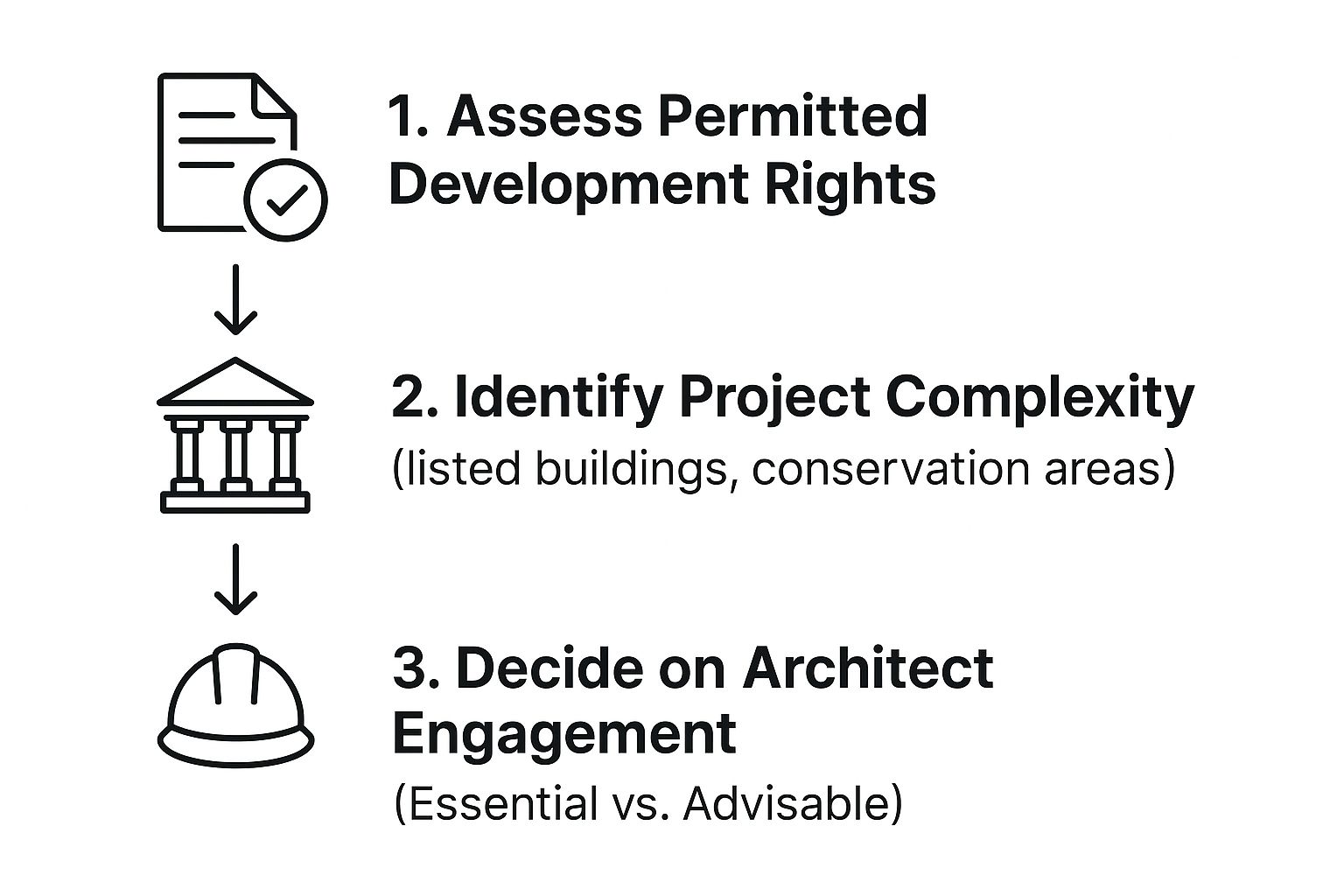
This process shows that the journey from an initial idea to deciding on professional help involves a careful look at what you’re allowed to do and the unique constraints of your home and its location.
For example, any work on a listed building will require Listed Building Consent. This is a highly specialised process where an architect’s expertise is simply non-negotiable. Likewise, properties inside Conservation Areas face much stricter controls on everything from window materials to extension designs. An architect with experience navigating your local council’s conservation policies is vital here.
Essential vs Advisable: When to Hire an Architect
So, when is an architect absolutely necessary, and when are they just highly recommended? Understanding this distinction is key to managing your project’s risk and ensuring you get the result you want.
To make this clearer, let's break down some common home improvement projects and see where they typically fall.
Permitted Development vs Full Planning Application
Project Type | Permitted Development (Usually) | Full Planning Permission (Likely) | Architect's Role |
|---|---|---|---|
Small Rear Extension | A simple, single-storey extension within specific size limits. | A larger multi-storey extension, or one that covers over 50% of the garden. | Advisable for drawings, essential for full planning. |
Loft Conversion | A standard conversion that doesn't alter the main roofline (e.g., Velux windows). | A conversion with large dormers, especially on the front or side elevation. | Advisable for a Lawful Development Certificate, essential for full planning. |
New Outbuilding | A garden room or shed within specific height and location rules. | A large outbuilding, or one intended for sleeping accommodation. | Essential for designing a compliant structure and navigating planning. |
Altering a Listed Building | Virtually no alterations are permitted without consent. | Any change, internal or external, that affects its character. | Essential. Non-negotiable for Listed Building Consent. |
Changes in a Conservation Area | Minor repairs using like-for-like materials. | New extensions, significant changes to windows, or demolishing a wall. | Essential. Their expertise is crucial for getting approval. |
New Build House | Not applicable. | Always requires full planning permission. | Essential. Required for the entire design and planning process. |
As you can see, even for projects that seem straightforward, the lines can blur quickly.
For projects that do fall under Permitted Development, like a standard loft conversion, an architect is still a very smart investment. They can produce the technical drawings needed for a Lawful Development Certificate. This is an official document from the council that proves your project is compliant, protecting you from any legal headaches and proving invaluable when you eventually decide to sell your home.
Investing in an architect at the outset is the most effective way to mitigate the significant financial and legal risks of a planning misstep. Their guidance transforms the process from a gamble into a calculated, professional undertaking.
Ultimately, choosing the right professional is just as important as the decision to hire one in the first place. For more expert tips, have a read of our guide on how to choose an architect in the UK.
The Architect-Led Planning Application Process

Starting a planning application can feel like preparing for a long, complicated journey into the unknown. But when you bring an architect on board, they hand you a clear, structured roadmap. They guide you from that first spark of an idea right through to getting the council's decision in your hands.
This methodical approach isn't just about ticking boxes; it's designed to demystify the whole thing, manage expectations, and seriously boost your project's chances of success. Your architect acts as the project's strategic guide, translating your vision into a language that planning authorities understand and respect. They break down what feels like one massive task into a series of manageable steps, turning a potentially stressful ordeal into a calm, coordinated effort.
And it all starts not with drawings, but with a simple conversation.
Initial Consultation and Feasibility
The very first step is a thorough feasibility study. This is where your architect stress-tests your ideas against the reality of local and national planning policies. They’ll dig into your property's specific constraints and opportunities, like its location in a conservation area, its planning history, and the local council’s development plan.
This stage is all about asking the tough questions early on. Is your vision actually achievable? What are the likely hurdles? What compromises might be needed down the line? This upfront analysis is crucial—it stops you from pouring time and money into a concept that’s destined for refusal from the get-go.
Think of it as a pre-flight check. Your architect makes sure all the conditions are right for a successful journey before you commit to the full design and application process. You get a realistic outlook from day one.
Concept Design and Pre-Application Advice
Once feasibility is confirmed, your architect moves into the concept design phase. This is the exciting part where your ideas start to take shape. They'll produce initial sketches, floor plans, and even 3D models that explore different design options, helping you visualise the space and fine-tune your brief.
With a strong concept developed, the next strategic move is often to seek pre-application advice from the local council. Your architect will package up the designs and formally present them to a planning officer. This gives you invaluable early feedback, highlighting any potential red flags and giving a clear signal of the council’s stance before you submit the full, detailed application.
Securing pre-application advice is one of the smartest risk-reduction strategies in the planning game. It opens a direct line of communication with the council, allowing your architect to address concerns proactively and tailor the final submission for a much smoother path to approval.
Technical Drawings and Submission
With the council's feedback folded into the design, your architect will then develop the concept into a full set of highly detailed technical drawings. This package is far more than just floor plans. It includes elevations, site plans, cross-sections, and a whole host of supporting documents that form the backbone of your official submission.
These drawings are the primary evidence the council uses to assess your project. They have to be precise, comprehensive, and perfectly aligned with all submission requirements.
Your architect then manages the entire submission process through the government's online Planning Portal. They act as your official agent, handling all correspondence, responding professionally to any queries from the planning officer, and keeping you in the loop at every stage. This dedicated management ensures the application stays on track, giving you complete peace of mind. For a deeper dive into the specific steps involved, you can explore our simple guide to the UK planning application stages.
How Architects Steer You Clear of Common Planning Pitfalls
That official eight-week target for deciding most planning applications? It can be a bit misleading. In reality, delays and rejections are all too common, often down to simple, avoidable mistakes like incomplete paperwork, a design that clashes with local rules, or failing to properly consider the neighbours.
These hurdles can stall a project indefinitely, piling on the stress and unexpected costs. This is where an architect’s foresight becomes your greatest asset. They don’t just draw pretty pictures; they anticipate problems, map out solutions, and get your application perfectly in order before it ever lands on a planning officer’s desk.
A seasoned architect knows that a successful application is built on meticulous preparation. It’s about getting every single detail right from the very beginning.
Proactive Problem-Solving from Day One
One of the biggest reasons applications get stuck is a poor understanding of the site itself. An architect always starts with a thorough site analysis. They’re looking for red flags like protected trees, drainage issues, or rights of way that could completely derail a proposal down the line. By spotting these constraints early, they can design solutions that work with the site, not against it.
Ambiguity is another project killer. Planning officers need absolute clarity. If you submit low-quality or incomplete drawings, you’re creating doubt and inviting questions, and that means delays. Architects produce precise, professional plans that leave no room for misinterpretation, presenting your vision in its best possible light.
An architect’s most valuable skill is anticipation. They know how a planning officer thinks and can foresee how a design will be interpreted. This allows them to proactively address concerns, justify design choices, and build a rock-solid case for approval before the application is even submitted.
Mastering Local Policy and Dodging Delays
Every council has its own Local Plan—a dense, detailed document outlining its specific rules for development. A design that ignores these local nuances is almost guaranteed to be rejected. Architects are experts at decoding these policies, ensuring your proposal for architect planning permission aligns perfectly with the council's vision for the area.
This deep local knowledge is crucial for keeping your project moving. While government statistics might suggest a quick turnaround, the real picture is often more complex. Many applications get held up by requests for more information or minor tweaks, which resets the clock.
This happens because the official target is often listed as eight weeks ‘or the agreed time’. If you agree to an extension so you can provide more details, the application is still technically considered ‘on time’ even if it takes months. You can find out more about how planning application delays are measured. The architect’s goal is to sidestep all of this by submitting a flawless, comprehensive application right from the start.
Think of them as your strategic defender, ensuring your project is compliant, compelling, and resilient enough to sail through a system that trips up so many homeowners.
Navigating South West London Planning Rules
Every London borough has its own unique character, and South West London is certainly no exception. A generic, one-size-fits-all approach to planning permission is almost guaranteed to fail here. Each council has its own distinct priorities and, in many cases, very stringent local policies.
Areas like Richmond, Wandsworth, and Merton are well-known for their exacting standards. This is particularly true within their many Conservation Areas, where the rules are designed to protect the unique architectural heritage that makes these neighbourhoods so special. Not understanding these local nuances is one of the most common reasons planning applications get refused.
This is where an architect with deep experience in South West London becomes so much more than a designer—they’re your local guide. They bring invaluable knowledge of the unwritten rules and the specific design details that planning committees in these boroughs tend to favour.
Understanding Local Council Priorities
When you're putting together an architect planning permission submission, you have to speak the council’s language. An architect with local experience can anticipate the planners' potential objections before they're even raised, crafting a proposal that addresses them from day one.
In South West London, a few key considerations come up time and time again:
Material Palettes: You’ll often find strict limits on the types of bricks, roofing materials, and even render colours you can use, all to maintain the neighbourhood's character.
Window and Door Styles: It’s not uncommon to face precise rules on fenestration. Planners might insist on specific designs, like timber sliding sashes, to ensure new work is in keeping with the period style of the area.
Extension Massing: Councils have clear guidelines on the scale and form of extensions. The goal is to prevent them from overpowering the original house or negatively impacting the neighbours.
Basement and Loft Guidelines: There are often very specific policies that govern things like the design of light wells for basements or the shape of dormer windows for lofts.
If you’re thinking about adding space upstairs, getting these local rules right is absolutely critical. You can see some fantastic examples of what's possible in our guide to the top loft conversion design ideas for South West London homes.
A locally experienced architect acts as your diplomat, skilfully balancing your personal ambitions with the council's duty to protect the local heritage. This strategic alignment is what turns a good design into an approved one.
Ultimately, navigating these specific rules is what makes a local architect so vital. They can create a design that is both ambitious for you and respectful of the area's character, dramatically improving its chances of a smooth and successful approval. Their insight into what works—and what doesn't—in your specific postcode can make all the difference.
Future-Proofing Your Home with an Architect

The world of UK planning never stands still. Getting architect planning permission today is one thing, but a truly great design has one eye on the regulations of tomorrow. Working with an architect isn’t just about getting a project signed off; it’s a strategic move to protect your home’s long-term value and resilience.
National policies are shifting, with a much heavier focus on sustainability, energy efficiency, and environmental impact. A good architect is already ahead of these curves, designing homes that not only meet today’s standards but are flexible enough for future requirements. This forward-thinking approach keeps your property compliant, desirable, and valuable for years to come.
Adapting to Emerging Planning Trends
Think of an architect as your guide through the ever-changing planning landscape. They help you weave emerging standards—many of which are quickly becoming mandatory—into your project from the ground up, making it genuinely future-proof.
Here are a few key areas where an architect's foresight is indispensable:
Biodiversity Net Gain (BNG): This policy now requires new developments to leave the natural environment in a measurably better state than it was before. An architect can cleverly integrate features like green roofs, wildflower meadows, or subtle wildlife habitats into your design to meet these new obligations.
Energy Efficiency Standards: Building regulations are only getting stricter. An architect can specify advanced insulation, triple-glazing, and renewable energy systems that go beyond today’s rules. This saves you a small fortune on expensive retrofitting down the line.
Digital Planning Systems: Councils are rapidly moving towards digital-first application processes. Architects are already fluent in this language, preparing and submitting plans using the latest 3D modelling and data formats these new systems demand.
The construction sector is notoriously cyclical. For example, planning applications in England recently saw an 11% year-on-year drop in one quarter, only for new home applications to jump by 33% the following year. An architect helps you create a resilient, high-quality design that holds its value no matter what the market is doing. You can find more insights on UK planning application trends on TerraQuest.co.uk.
By embedding future standards into your project today, an architect transforms your home from a simple building into a lasting, adaptable asset. This foresight is the difference between meeting the rules and making a smart, long-term investment.
Common Questions Answered
Stepping into the world of home renovation can feel like learning a new language, especially when terms like ‘planning permission’ and ‘building regulations’ start flying around. To give you some clarity, here are the answers to the questions we hear most often from homeowners.
How Much Does an Architect Cost for a Planning Application?
This is a classic "how long is a piece of string?" question, as architect fees really do depend on your project’s size, complexity, and location. There’s no one-size-fits-all price tag.
For the planning stage of a typical home extension, an architect might charge a fixed fee or a percentage of the final construction cost. To get the necessary drawings produced and the application submitted, you could be looking at anything from £2,000 to £7,000+. The most important thing is to ask for a detailed quote that breaks down exactly what’s included, so there are no nasty surprises down the line.
What Is the Difference Between Planning Permission and Building Regulations?
This is a crucial one to get your head around, as they’re two completely separate hurdles you’ll need to clear. Confusing them is a common and costly mistake.
Planning Permission: This is all about the principle of what you want to build. It considers the bigger picture: how your extension will look, its size, and how it might affect your neighbours and the street scene. Essentially, the council is asking, "Should this be allowed to be built here?"
Building Regulations: This focuses purely on the technical details of the construction. It’s there to ensure your project is built safely, is structurally sound, and meets modern standards for things like energy efficiency and fire safety. The question here is, "Will this be built correctly and to a safe standard?"
You will almost always need Building Regulations approval, even for smaller projects that fall under Permitted Development and don’t need a full planning application. Your architect is your guide through both of these processes.
How Long Does a Planning Application Take with an Architect?
While the official target for local councils to decide on minor applications is eight weeks, it’s wise to treat that as a best-case scenario. The real value of an architect here is getting it right the first time, submitting a high-quality, comprehensive application that avoids the common pitfalls that cause delays.
From the day you hire an architect to the day you get a decision from the council, it’s more realistic to budget for 4-6 months. This timeline covers the initial design work, creating the detailed drawings, potentially seeking pre-application advice, and the council’s own processing time. If your project is more complex or involves a listed building, be prepared for it to take longer.
A refusal isn't the end of the road; it's a prompt for a strategic response. An experienced architect can interpret the council's feedback and devise the most effective way forward, whether that's amending the design or appealing the decision.
What Happens If My Planning Application Is Refused?
Getting a refusal is disappointing, but it’s rarely a dead end. This is where an experienced architect really proves their worth. They will carefully analyse the planners’ reasons for refusal and talk you through the best way to move forward.
You generally have two main options:
Amend and Resubmit: This is the most common path. You tweak the design to address the specific concerns the planners raised and then re-submit the application. If you do this within 12 months, it’s usually free of charge.
Appeal the Decision: If you and your architect feel the council’s decision was unreasonable or incorrect, you can appeal to the national Planning Inspectorate, who will review the case independently.
Your architect’s expertise is vital for building a strong, well-argued case for either route, giving you the best possible chance of turning that initial 'no' into a 'yes'.
At Harper Latter Architects, we specialise in guiding homeowners through the complexities of planning permission in South West London. Our expertise in bespoke new builds, luxury refurbishments, and heritage conservation ensures your vision is realised with skill and precision.
Ready to start your project? Contact us today for a consultation and let's create your future-proof home together.
Comments