
A Guide to Restoring an Edwardian House

Taking on the restoration of an Edwardian house is more than just a project; it's a commitment to preserving a beautiful piece of architectural history. These homes are loved for their light-filled rooms, elegant proportions, and the sheer quality of their original craftsmanship – a character that modern builds often struggle to match. But bringing one back to life means balancing this romance with a healthy dose of reality.
The Realities of Restoring an Edwardian House
Restoring a home from this period is a world away from a standard renovation. It’s an act of careful, considered conservation. The truth is, you’re often dealing with over a century of wear and tear, navigating clumsy modern alterations, and addressing the unique structural quirks that come with age. From the grand terraced houses of Wimbledon to detached villas in Surrey, every property has its own story, and our job is to honour it.
This guide is a practical roadmap, drawn from years of experience in managing the complexities of heritage projects. It’s here to help you sidestep the common pitfalls and make informed decisions, ensuring the final result is a home that's not only beautiful but perfectly suited to contemporary life.
A few key things to get your head around from the start:
Understanding the True Condition: What you see on the surface is rarely the full picture. Edwardian homes can hide issues like damp, timber decay, or dangerously outdated wiring.
Navigating the Rules: Any work in a conservation area or on a listed building demands a thorough understanding of planning consents and the principles of conservation. It's non-negotiable.
Balancing Authenticity and Modern Life: The real skill lies in restoring original features while sensitively integrating the upgrades we all need for comfort and energy efficiency.
A successful restoration is a delicate dance. It's about respecting the building's soul while allowing it to breathe and function for the future. You're honouring the past to create a home that works beautifully for today.
This simple flowchart breaks down the core stages, showing how we move from initial assessment to the final, hands-on work.
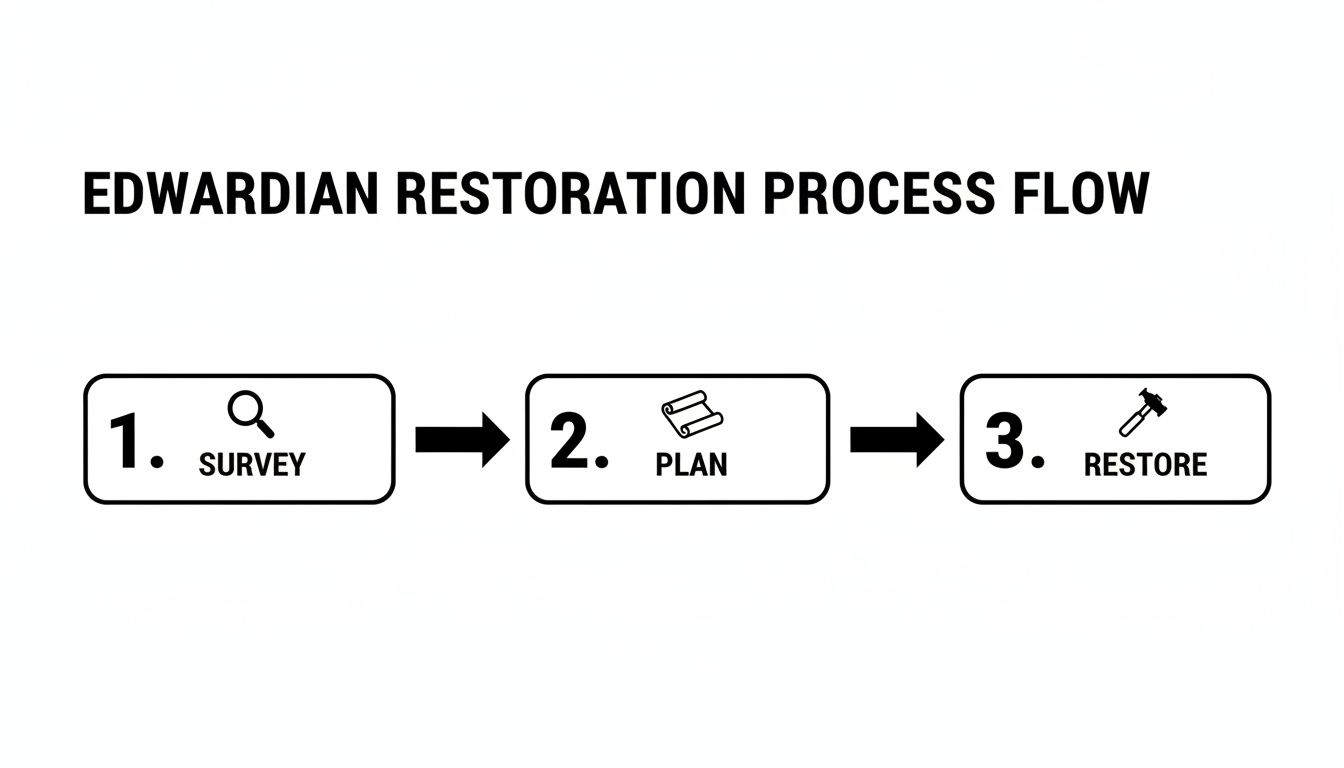
As you can see, meticulous planning and deep investigation always come first. Rushing into the physical work without this foundation is the surest way to run into trouble.
Uncovering Your Home’s True Condition
Before you even think about paint colours or kitchen layouts, the real work of an Edwardian restoration begins. It's a forensic investigation, a deep dive into the building's history and health. A standard mortgage valuation? It barely scratches the surface. These homes are masters of disguise, often hiding significant problems behind decades of quick fixes and well-intentioned but misguided repairs.
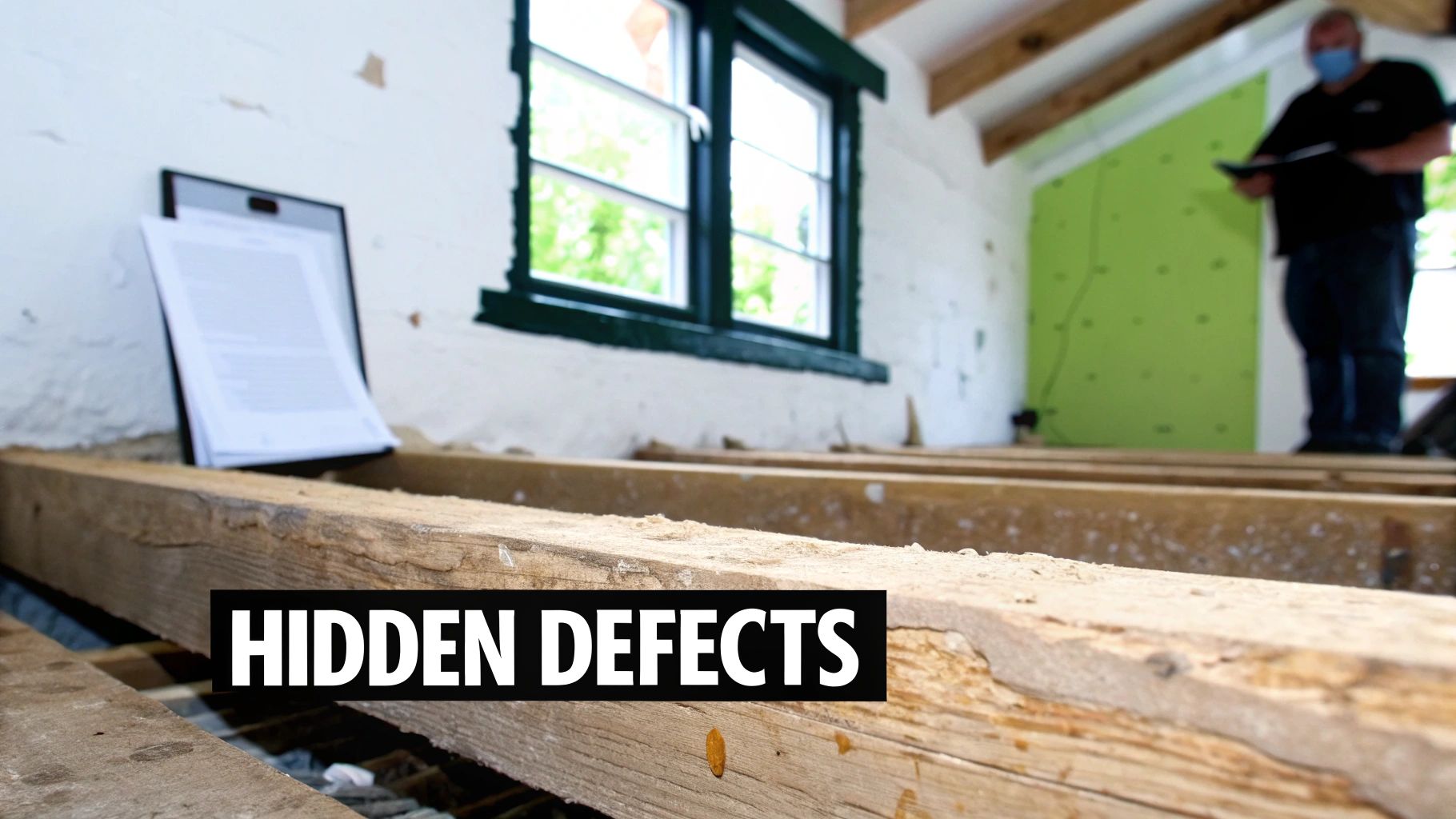
What looks like a minor crack could be a sign of structural movement. That freshly painted wall might be concealing penetrating damp from a leaking gutter or failed pointing. These aren’t just minor snags; they're the kinds of fundamental issues that can completely derail a project and send budgets spiralling if you don't catch them early. The goal is simple: strip back the layers and understand what you’re really working with.
Beyond the Surface: Why a Specialist Survey is Non-Negotiable
This is precisely why a full building survey from a RICS-accredited surveyor who lives and breathes period properties is an absolute must. Their trained eye spots the subtle clues others miss, identifying problems inherent to Edwardian construction. We often come across situations where heavy, modern concrete roof tiles have replaced the original Welsh slates, placing immense strain on the original timber roof structure—a critical issue a general survey might easily overlook.
Another common discovery is an unlined or deteriorating chimney flue. That beautiful, original fireplace might look perfectly charming, but a faulty flue is a serious fire hazard. It's something that needs immediate, expert attention before you can even think about lighting a fire.
Getting to Grips with Common Edwardian Defects
Victorian and Edwardian buildings make up a huge part of our housing stock—around four million pre-1919 traditional homes. Experts often point out that these properties account for a disproportionately high number of 'essential repairs' flagged in surveys, frequently because the original builders cut corners on materials. You can find more insights on common issues in period homes over on PropertyWire.
To get a head start, it pays to know the typical weak points before your surveyor even arrives:
Damp Penetration: Keep an eye out for failed brick pointing, especially on weather-beaten walls. Modern cement mortar is a common culprit, as it traps moisture instead of letting the brickwork breathe.
Timber Decay: Check for rot and woodworm in suspended timber floors, sash window frames, and roof joists. Poor ventilation is usually the root cause.
Structural Issues: Look for tell-tale signs of subsidence or historical movement, which often appear as stepped cracks in the brickwork around window and door openings.
Outdated Services: It's safest to assume the wiring and plumbing will need a complete overhaul to meet modern safety standards and support the way we live today.
Uncovering these issues isn't about finding problems; it’s about gaining clarity. A thorough survey gives you a detailed roadmap for repair, forming the bedrock of a realistic budget and a successful restoration.
By investing properly in this initial diagnostic stage, you arm yourself against costly surprises down the line. It turns a list of unknowns into a clear, actionable plan, allowing your architect to design solutions that work with the building, not against it. This foundational knowledge is, without a doubt, the single most important investment you'll make.
Navigating Planning and Conservation Rules
Successfully restoring an Edwardian house is as much about careful negotiation with planning authorities as it is about craftsmanship. If your property is a listed building or sits within one of London's many conservation areas, you aren't just a homeowner—you're a custodian of its heritage. This simple fact means most external, and often many internal, alterations will require formal consent.
The planning system can feel like a labyrinth, but it’s there to protect the very character that drew you to the house in the first place. Getting your head around the different types of consent is the first step to a much smoother journey.
Permitted Development vs Formal Consent
Not every job needs a full-blown planning application. Some minor alterations might fall under Permitted Development Rights, but don't count on it—these rights are often heavily restricted in conservation areas. For significant changes like extensions, or for any work on a listed building, you will absolutely need specific approvals.
Planning Permission: This is your route for most new construction, major alterations, or changes of use that aren't covered by permitted development.
Listed Building Consent: This is mandatory for any work that could affect the character of a listed building, both inside and out. It’s a criminal offence to carry out works without it, so this isn't something to take lightly.
The philosophy guiding every council decision is one of minimal intervention. The goal is always to preserve the historic fabric, ensuring any new work is both subservient and sympathetic to the original house.
This core principle informs every conversation, from the choice of materials to the design of a glass-box extension.
The Importance of Conservation Principles
When you’re dealing with heritage properties, local authorities will expect your project to follow established conservation principles. This is where having a professional in your corner becomes non-negotiable. The central belief is simple: repair, don't replace.
This means meticulously restoring an original timber sash window is always the preferred path over installing a modern replica, no matter how convincing. It also means using the right materials. Edwardian brickwork was built with soft, breathable lime mortar, which allows moisture to evaporate naturally. Using modern cement for repointing, a common mistake, traps damp inside the wall and can cause the brick faces to literally crumble away over time.
Working with a RIBA-accredited architect who specialises in this field ensures these crucial details are right from day one. They can build a compelling case for your plans, demonstrating a deep respect for the building's integrity. To understand this specialism better, you can learn more about our approach to conservation and heritage architecture. This expertise is vital for navigating council requirements and achieving a result that sensitively blends history with modern life.
Restoring Original Windows, Fireplaces, and Floors
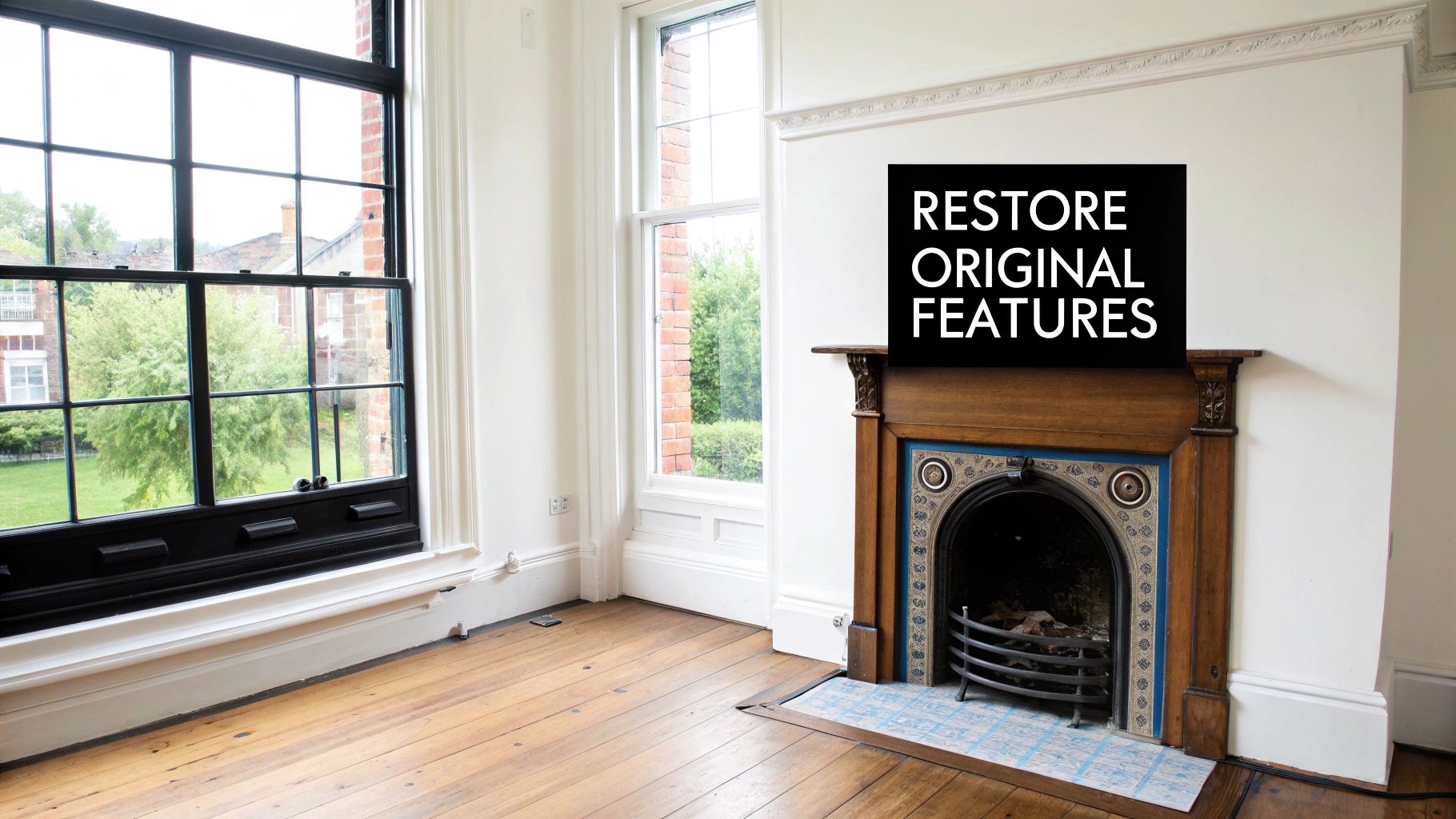
The true character of an Edwardian house isn't just in its generous proportions; it's held within the original features that have survived for over a century. Restoring these elements is one of the most rewarding parts of the journey, breathing life back into the timber, cast iron, and plasterwork that define its soul.
This isn’t about creating a museum piece. It’s about careful, skilled intervention that celebrates the original craftsmanship while making these features functional for modern life. It's a meticulous process that preserves the very essence of the property.
Preserving the Charm of Timber Sash Windows
Original timber sash windows are the eyes of an Edwardian home. Their slender profiles and delicate horns are almost impossible to replicate with modern uPVC, which is why the guiding principle is always to repair rather than replace.
Even windows that appear beyond saving can often be rescued by a skilled joiner. The process is a work of patience:
Rotten sections of the sill or frame are carefully cut away.
New, seasoned timber is spliced in, perfectly matched to the original.
Old, cracked putty is replaced, and the sashes are re-weighted to ensure they glide smoothly.
Beyond simple repairs, sensitive upgrades can dramatically improve comfort. Discreet draught-proofing can be installed within the frame to eliminate rattles and reduce heat loss. For a more significant thermal upgrade, slimline double-glazing units can be fitted into the original sashes, preserving the authentic look while boosting energy efficiency. Our guide to bespoke joinery further explores how skilled craftsmanship can revive these critical features.
Reviving the Hearth of the Home
The fireplace is the natural focal point of any Edwardian reception room or bedroom. All too often, these have been boarded up or replaced with unsympathetic modern alternatives. Reinstating them instantly restores the room’s original grandeur and sense of balance.
If the original surround is missing, reclamation yards and specialist dealers are treasure troves for finding period-appropriate cast iron inserts and timber or marble mantels. The key is to select a fireplace that matches the scale of the room and the status of the house—a grand drawing room demands something far more ornate than a modest bedroom.
Before you even think about lighting a fire, safety is paramount. The chimney flue must be inspected and, in almost all cases, lined with a modern flue liner to ensure it is safe and functions correctly. This is a non-negotiable step overseen by a qualified professional.
Bringing Original Floors Back to Life
Beneath tired carpets often lie stunning original floorboards or intricate parquet floors just waiting to be rediscovered. Restoring these surfaces can completely transform a space, adding a warmth and texture that new flooring struggles to match.
For standard pine floorboards, the process involves sanding them back to remove old finishes and stains, then sealing them with a durable lacquer or hardwax oil. For more elaborate parquet, particularly in hallways, the work is far more specialist. Loose blocks may need to be re-fixed, and any missing ones sourced or custom-made to match the existing pattern.
Typical Restoration Costs for Edwardian Features
Restoring original features is a specialist job, and the costs reflect the level of craftsmanship required. To help you plan your budget, here's a rough guide to what you might expect to invest in these key elements.
Feature | Typical Restoration Task | Estimated Cost (GBP) |
|---|---|---|
Timber Sash Window | Rot repair, sill replacement, re-puttying, and repainting | £700 - £1,200 per window |
Draught-Proofing | Installing discreet seals into original sash window frames | £300 - £400 per window |
Pine Floorboards | Sanding and refinishing with hardwax oil or lacquer | £40 - £60 per m² |
Parquet Flooring | Repairing, sanding, and refinishing intricate patterns | £50 - £100+ per m² |
Fireplace Flue | Sweeping, inspection, and installation of a new flue liner | £900 - £1,800 per chimney |
Fireplace Sourcing | Reclaimed period-appropriate marble or timber mantelpiece | £500 - £3,000+ |
These figures are, of course, estimates and will vary based on the condition of the original feature, your location in the UK, and the specialist you choose. However, they provide a solid starting point for understanding where your budget will go when bringing an Edwardian home back to its former glory.
Weaving in Modern Comfort and Sustainable Upgrades
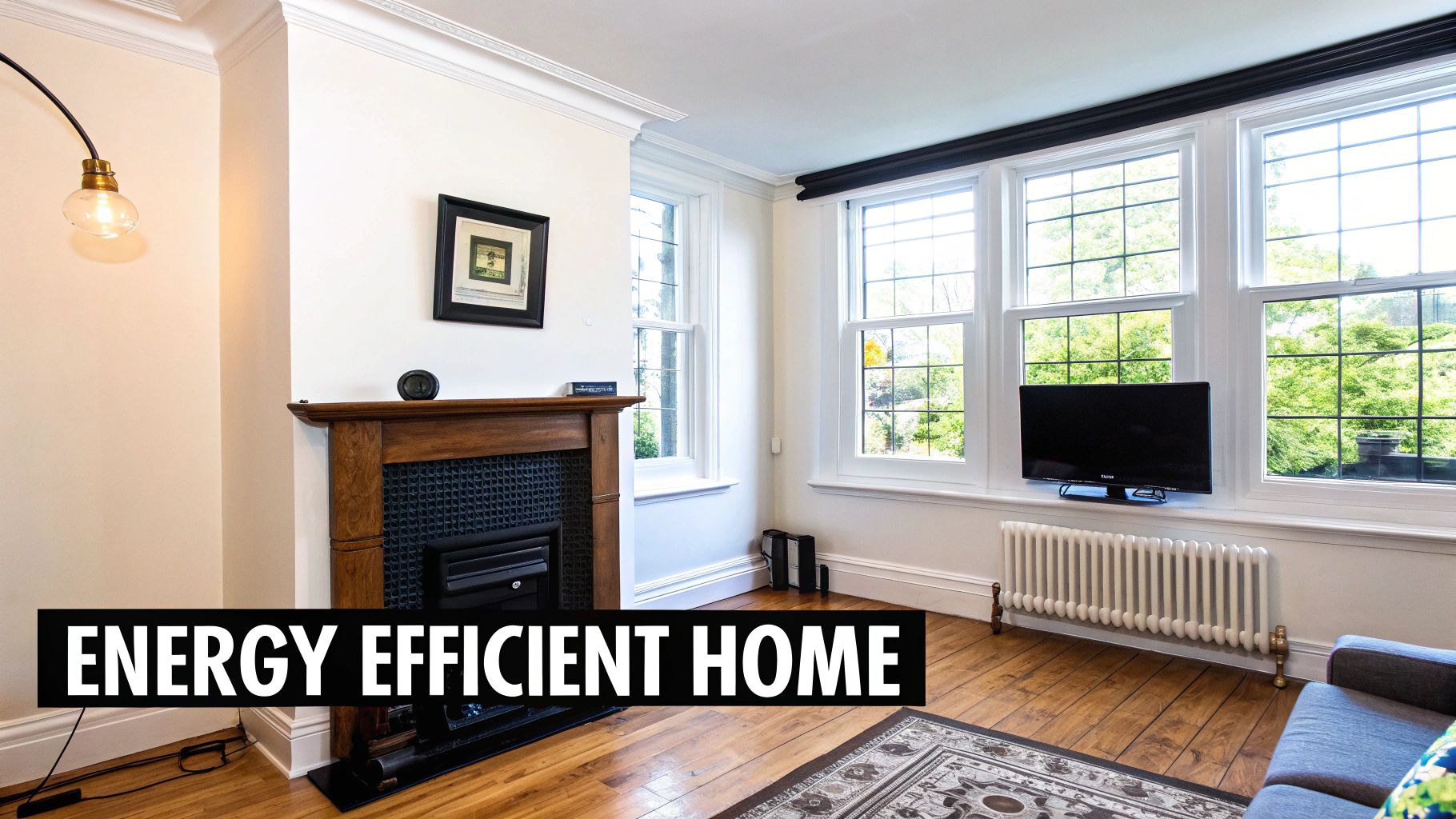
A truly successful Edwardian restoration looks beyond just preservation. It’s about sensitively weaving 21st-century comfort and efficiency into the historical fabric, creating a home that performs as beautifully as it looks.
This is a delicate balancing act. The last thing you want is for modern systems to compromise the very architectural integrity you’ve worked so hard to revive. The key is to plan the integration of services like wiring and plumbing right from the outset.
The goal is to avoid chasing out walls and damaging original plasterwork, cornices, and friezes. By carefully routing new pipework and cabling through floor voids, behind new bespoke joinery, or within existing service risers, we can keep disruption to an absolute minimum.
A Fabric-First Approach to Energy Efficiency
Before you even think about fancy technology, the focus has to be on improving the building's thermal envelope. This ‘fabric-first’ strategy is the single most effective way to reduce energy consumption and is perfectly suited to Edwardian properties.
It’s all about improving the building's inherent insulation and airtightness first. The big wins are usually found in these areas:
Loft Insulation: This is often the most straightforward and impactful upgrade you can make. Bringing insulation levels up to modern standards can slash heat loss.
Suspended Timber Floors: Insulating the void beneath ground-floor rooms is a game-changer. It stops cold draughts and makes a huge difference to comfort underfoot.
Solid Wall Insulation: While more complex, internal wall insulation can be strategically applied to key rooms, boosting thermal performance without touching the external brickwork.
Embracing a fabric-first approach doesn't just lower your energy bills; it fundamentally makes the home more comfortable to live in. It creates a stable internal environment, reducing draughts and cold spots while respecting the building’s original construction.
Integrating Smart, Sustainable Technology
Once the building fabric is performing as it should, you can then look at introducing modern, energy-efficient technologies. Systems like air source heat pumps, far from being incompatible with heritage homes, can be integrated seamlessly with careful planning.
These systems work best at lower temperatures, making them a perfect partner for a well-insulated home with underfloor heating or correctly sized radiators. The potential here is enormous. A deep retrofit of an Edwardian terrace in Oxford, for instance, slashed its primary energy use by a staggering 82% through these kinds of intelligent upgrades.
That project tackled classic Edwardian weak spots like uninsulated solid walls and single-glazed windows, proving that period homes can genuinely become models of modern efficiency.
Ultimately, the goal is to create a home that honours its past while being fully equipped for the future. By combining thoughtful fabric improvements with modern systems, you ensure your restored Edwardian house is not just a beautiful relic but a high-performing, comfortable, and truly sustainable home. Exploring the principles of sustainable architecture can provide even more inspiration for this journey.
Designing Interiors Suited to Edwardian Proportions
Once the structural work and fabric repairs are signed off, the project shifts focus. This is where we move from pure restoration to thoughtful reinvention, breathing new life into the home. It’s the moment your vision for modern family living truly takes shape, creating interiors that feel both authentic and deeply personal.
Edwardian design was a breath of fresh air after Victorian clutter, championing a lighter, brighter aesthetic. Those generous proportions, high ceilings, and sprawling bay windows are a gift, flooding rooms with natural light. The secret is to lean into these inherent qualities, not fight them.
Choosing a Sympathetic Colour Palette
The Edwardians often drew their inspiration from nature, favouring soft pastels, gentle creams, and fresh floral hues. You don't need to create a museum piece, but choosing colours that work with the building's natural light is fundamental.
Take some time to watch how light moves through the house at different times of the day. A north-facing snug might need warmer, richer tones to stop it from feeling cold, whereas a sunny, south-facing reception room can easily carry cooler, more delicate shades. A great tip is to paint skirting boards, architraves, and cornices in a complementary off-white—or even the same colour as the walls—to create a cohesive feel and make the space feel even larger.
The most successful interiors feel like a natural evolution of the house. They respect the Edwardian sense of space and light while layering in contemporary comfort and personality. It’s about balance, not imitation.
Integrating Bespoke Joinery and Lighting
Bespoke joinery is one of the most effective tools for restoring an Edwardian house for modern life. It solves the perennial problem of storage while looking as though it has always been part of the architecture.
A few ideas we often integrate:
Custom Wardrobes: In a master bedroom, floor-to-ceiling fitted wardrobes with panelled doors that mimic the originals elsewhere in the house feel seamless.
Library Shelving: For a study or living room, building bespoke shelving into the alcoves flanking a fireplace is a timeless touch that adds character and function.
Lighting is just as crucial. A grand central pendant or a carefully chosen chandelier can become a stunning focal point that celebrates the room’s height. Then, you can layer in more subtle wall lights and lamps to create a warm, inviting atmosphere for the evenings.
Creating a Connection to the Outdoors
The Edwardians loved their gardens. Designing terraces, patios, and planting schemes that feel like a direct extension of your indoor living spaces is a wonderful way to honour that spirit and create a seamless flow between the house and its grounds.
Think about how you can frame views of the garden from key windows. Using similar materials or echoing colour palettes indoors and out helps to blur the lines and strengthen that connection. This holistic approach ensures your home isn't just restored, but truly reborn for a modern lifestyle.
Your Edwardian Restoration Questions Answered
Taking on an Edwardian restoration is a thrilling prospect, but it naturally comes with a lot of questions. From the practicalities of budgeting to the technical challenges, it’s wise to get some clarity before you dive in. Here, we tackle some of the most common queries we hear from homeowners.
How Much Does it Cost to Restore an Edwardian House?
This is the big question, and the honest answer is: it depends entirely on the house, your ambitions, and where you are in the country. A light-touch cosmetic refresh could be in the tens of thousands, while a full back-to-brick restoration with a high-end extension will comfortably run into the hundreds of thousands, or more.
The final figure is really a story told by a few key factors:
The extent of structural work: If you’re dealing with subsidence, a failing roof, or significant damp, these foundational repairs will form a major part of your initial budget.
Your desired level of finish: The quality of materials makes a huge difference. Think bespoke joinery, heritage-brand fittings, and specialist finishes versus off-the-shelf solutions.
Heritage constraints: If the property is listed, you’ll need specialist craftspeople and authentic, conservation-grade materials, which always carry a premium.
This is why getting detailed surveys right at the start is non-negotiable. Working with an architect, we can build a realistic cost plan from those findings. We always advise clients to build in a contingency fund of 15-20% – older homes always have a few surprises waiting for you.
Can I Really Make an Edwardian House Energy Efficient?
Yes, absolutely. People are often surprised by the potential of Edwardian homes for thermal upgrades. They weren't designed with efficiency in mind, of course, but their solid construction is a great starting point. The key is a ‘fabric-first’ approach.
This philosophy is all about improving the building’s core structure before you even think about bolting on new tech. We focus on insulating the loft and suspended timber floors, and adding internal insulation to the solid walls to preserve that beautiful external brickwork. Upgrading the original single-glazed sash windows is another game-changer. You can opt for either discreet slimline double glazing or high-quality secondary glazing – both make a massive difference to heat retention and overall comfort.
Once you focus on the fabric, you create a home that is naturally warmer, less draughty, and cheaper to run. Only then does it make sense to look at efficient boilers or renewable technologies like air source heat pumps.
What are the Most Common Problems to Look Out For?
Most issues we find in these properties are a direct result of their age and original construction. Damp, in its various forms, is a frequent culprit. It can be caused by anything from a few slipped roof tiles or failing brick pointing to raised garden beds that have bridged the original slate damp-proof course.
Timber decay is another one we see a lot, especially in poorly ventilated areas like window frames, the ends of floor joists, and roof timbers. We also look for signs of historic structural movement, often caused by old subsidence or, more commonly, poorly executed alterations from previous decades. Ironically, many of these problems are made worse by well-intentioned but inappropriate modern 'fixes', like using cement mortar for repointing. It traps moisture in the old bricks and actually speeds up their decay. A thorough, specialist building survey is the only way to uncover these hidden issues before they become your problem.
Do I Genuinely Need an Architect for My Restoration?
For any project that involves more than decoration – especially one with structural changes, a new extension, or alterations to a listed building – working with a RIBA-accredited architect who specialises in conservation is crucial. Their role goes so much further than just drawing up plans.
A good conservation architect brings the design vision needed to sensitively weave the old and new together. They navigate the labyrinth of planning and listed building consent, know exactly which traditional materials to specify, and can oversee the entire build to ensure a high-quality, authentic result. Ultimately, their expertise helps you sidestep expensive mistakes and creates a home that honours its past while perfectly serving the way you want to live today.
At Harper Latter Architects, we guide homeowners through the unique challenges and incredible rewards of bringing period properties back to life. If you are planning a project in South West London or Surrey, we would be delighted to hear from you.
Discover our approach to creating beautiful, bespoke homes at https://harperlatterarchitects.co.uk.

Comments