
Unlocking Your Home's Value with a Side Return Extension

If you’re budgeting for a side return extension in London, you can expect the cost to land somewhere between £80,000 and £110,000. Of course, that’s just a ballpark figure—the final number really depends on your specific plans and the level of finish you’re aiming for. This estimate reflects the higher costs of labour and materials in the capital, which makes smart, detailed budgeting absolutely essential.
Understanding the Real Cost of a Side Return Extension
A side return extension is, without a doubt, one of London's most popular home improvements, and for good reason. It’s a clever way to transform that dark, often-forgotten alleyway alongside your terraced house into a bright, spacious, and genuinely useful living area. This isn't just about bolting on extra square footage; it's about completely reimagining how your home’s ground floor feels and functions.
By building into that narrow, unused space, you can unlock the potential for a stunning open-plan kitchen-diner, create a light-flooded family room, or forge a seamless connection to your garden. The result is a home that doesn’t just feel bigger—it works better for modern life.
The London Premium Explained
Building in London, especially in sought-after pockets of South West London and Surrey, simply costs more. The price of a side return extension is pushed up by a few local realities:
Higher Labour Rates: Skilled tradespeople are in high demand here, and their day rates reflect that.
Logistical Challenges: Getting materials delivered and navigating tight residential streets with construction traffic can add complexity and cost.
Stringent Regulations: London councils have rigorous building standards that demand expertise and precision to meet.
It's important to grasp that construction in London costs roughly 9% more than the UK average. For a typical 30m² single-storey extension, homeowners should be prepared to invest between £83,250 and £103,830, and that’s before VAT and professional fees. This figure is pretty typical for projects in areas like Wimbledon, where high-end finishes and bespoke features are the norm. For a wider view on budgeting, you can explore our complete homeowner's guide to the average extension costs in the UK.
To give you a clearer idea, here’s a quick breakdown of what you might expect to pay per square metre for different levels of build quality in South West London.
At-a-Glance Side Return Extension Cost Estimates for South West London
This table provides a quick summary of typical cost ranges per square metre for side return extensions in London, helping homeowners budget effectively.
Build Quality | Estimated Cost per Square Metre (Excl. VAT) | Typical 15m² Side Return Total Cost (Excl. VAT & Fees) |
|---|---|---|
Standard Quality | £2,750 – £3,250 | £41,250 – £48,750 |
Good Quality | £3,250 – £4,000 | £48,750 – £60,000 |
High-End/Bespoke | £4,000+ | £60,000+ |
Remember, these are just starting points. The final cost will always come down to the specifics of your design, the materials you choose, and the complexity of the build.
Budgeting for the Complete Project
Beyond the builder’s quote, your total investment needs to cover essential professional services. Fees for your architect, structural engineer, and party wall surveyors will typically add another 10-15% to your overall budget. Working with a RIBA-accredited architectural practice ensures all these moving parts are managed seamlessly, delivering a project that is not only beautifully designed but also structurally sound and fully compliant.
A successful extension budget accounts for every detail, from the initial architectural drawings to the final coat of paint. Thinking holistically from the start prevents unexpected expenses and ensures your vision is realised without compromise.
This guide will walk you through a comprehensive breakdown of every cost involved, giving you the knowledge to create a realistic budget and make confident decisions for your home.
Deconstructing the Build Cost: Where Your Money Goes
To get a real handle on the total cost of a side return extension, you need to look beyond the final number and see where every pound is actually going. It’s a bit like buying a car; you’re not just paying for a metal box on wheels, but for the engine, the chassis, the electronics, and the seats. In the same way, your extension budget is split into two main pots: the structural ‘shell’ and the interior ‘fit-out’.
These two parts cover the fundamental structure and all the finishing touches that make the space liveable and lovely. Getting your head around how the budget divides between them is the secret to making smart decisions and keeping the overall cost under control.
The Shell: The Bones of Your Extension
First up is the shell. This is the essential framework of your new space—everything needed to create a weatherproof, structurally sound box. Think of it as the robust skeleton of your extension before any of the internal work can even begin.
This is where all the heavy-duty construction happens, involving groundwork, concrete, and steel. The main costs you’ll see here are for:
Foundations: Digging out and pouring the concrete base that the entire structure will sit on. The depth and complexity will depend on your local ground conditions—London’s clay soil, for instance, often requires deeper foundations.
Structural Steelwork: This involves installing the steel beams (often called RSJs) needed to support the upper floors of your house once the original side wall comes down. It’s a critical—and often pricey—part of the job.
Brickwork and Blockwork: Building the new external walls. Getting these to match your existing property is a crucial detail, especially if you live in a conservation area.
Roofing: Constructing the new roof, whether it's a pitched design with tiles or a more modern flat roof. Making sure it’s perfectly waterproofed is non-negotiable.
Glazing: Fitting the external windows and doors. A simple uPVC window will cost a fraction of what large, bespoke aluminium bi-fold doors or a frameless glass roof will set you back.
The cost of the shell has to be spent on quality materials and labour, but your design choices can really influence the price. A design calling for a complex steel frame to create a huge, uninterrupted opening will naturally be more expensive than one using more standard-sized beams.
The chart below shows just how much extension costs can vary across the UK, with building in London carrying a noticeable premium.
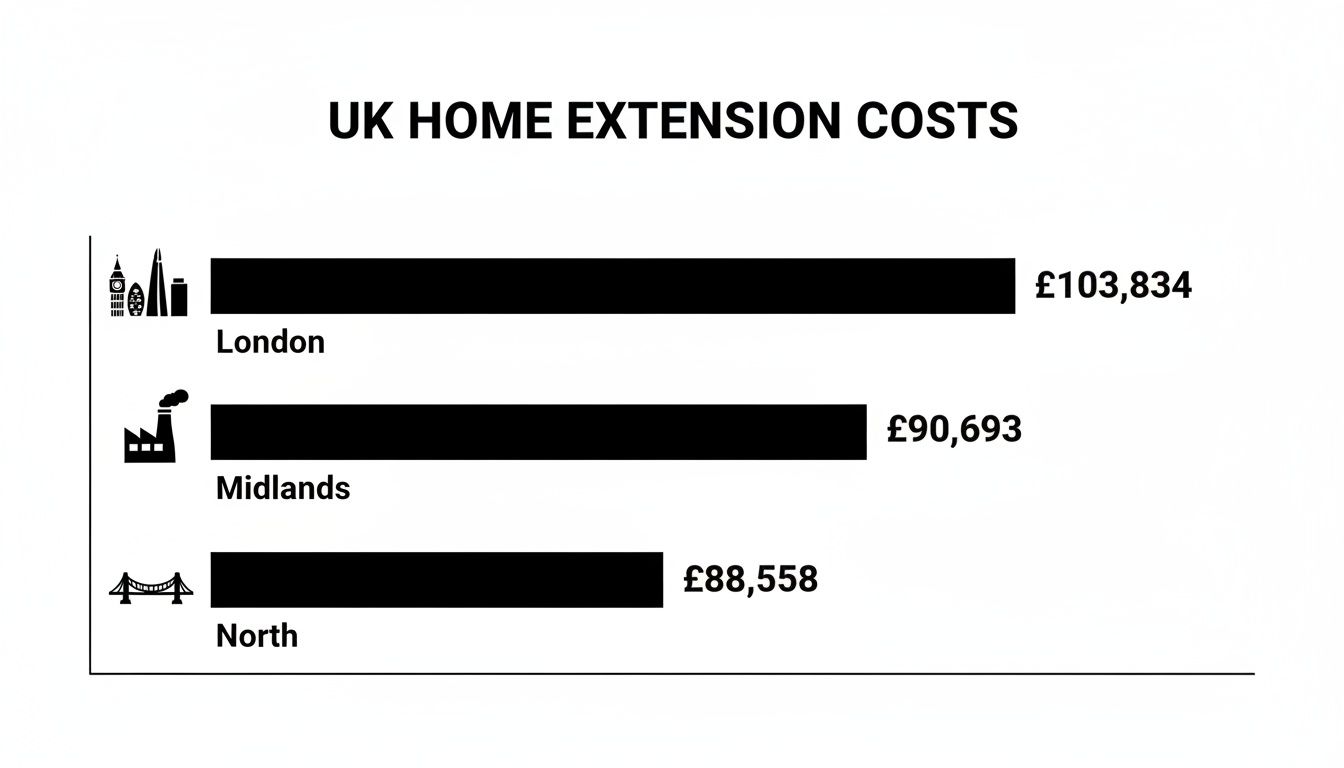
As you can see, the cost of a project in London is significantly higher than elsewhere. This is largely down to higher labour costs and trickier logistics.
The Fit-Out: Bringing the Space to Life
Once the weatherproof shell is complete, the focus shifts to the fit-out. This is the exciting part, where the empty space is transformed into a functional, inviting part of your home. It covers all the internal finishes and services you’ll see and interact with every day.
The fit-out is where your personal taste really begins to shape the budget. Standard, off-the-shelf components will keep costs down, while bespoke joinery, high-end appliances, and luxury materials can send the final invoice—and the final result—soaring.
Key elements of your fit-out budget will include:
Plumbing and Electrics: Running new pipework for sinks, dishwashers, and maybe underfloor heating, as well as installing all the wiring for lighting, sockets, and appliances.
Plastering: Skimming the internal walls and ceilings to create that perfectly smooth surface ready for you to decorate.
Flooring: Laying your chosen floor finish, whether that’s engineered wood, sleek porcelain tiles, or contemporary polished concrete.
Joinery: This covers fitting skirting boards, architraves, and internal doors, but the biggest ticket item here is usually the new kitchen. A basic kitchen might start from £10,000, whereas a high-end, custom-designed one can easily top £40,000.
Most estimates suggest a fully finished extension will cost between £1,800 and £3,000 per square metre, with the internal fit-out often making up around 30% of the total budget. A mid-range kitchen alone can command about £22,000, so your choices here will have a massive impact.
In areas like Wimbledon or Cobham, clients often opt for luxury interiors, pushing costs towards the upper end of the scale but potentially delivering a property value uplift of 10-20%. It’s also vital to understand the professional fees involved; our guide to decoding extension architect costs offers more clarity on that front.
Navigating Fees Beyond the Build Budget
A successful side return extension involves a lot more than just bricks and mortar. To create a budget that’s realistic and won't give you any nasty shocks, you have to account for the professional and statutory fees that underpin the entire project. These costs aren't optional extras; they're essential investments that ensure your extension is legally compliant, structurally sound, and beautifully realised.
Thinking about these fees early on is one of the best things you can do. It gives you a true picture of the total investment right from the start, making for smoother financial planning and a far less stressful process.
Architect and Structural Engineer Fees
Your architect is the creative and technical lead on the project. When you engage a RIBA-accredited practice, you’re not just paying for drawings. You’re investing in expert design, detailed project management, and invaluable guidance through the maze of planning and construction. Typically, an architect's fees will range from 10-15% of the total construction cost.
Working alongside your architect is the structural engineer. Their job is vital – they calculate the loads and specify the correct steel beams (RSJs) and foundation details to ensure your home remains safe and stable once walls start coming down. Their involvement is non-negotiable for getting Building Regulations approval.
Engaging professionals is about mitigating risk and maximising value. An experienced architect can often save you money in the long run through clever design, efficient use of space, and preventing costly mistakes on site.
Planning and Regulatory Costs
Before a single shovel hits the ground, you need to secure the right permissions. This means paying several distinct statutory fees to your local council and other official bodies.
Planning Application: If your project doesn’t fall under Permitted Development rights, a full planning application is required. In England, the fee for a householder application is a set cost.
Lawful Development Certificate (LDC): Even if you are using Permitted Development rights, we strongly recommend applying for an LDC. It provides official proof that your build is legal, which is absolutely crucial when you come to sell your property.
Building Regulations Approval: This is completely separate from planning permission and ensures the work meets strict safety and quality standards. You'll pay a fee to either the local council's building control department or an approved private inspector, who will then check the work at key stages.
Getting your head around the difference between these permissions is key. For a much deeper dive, our comprehensive UK house extension planning permission guide breaks it all down.
Party Wall Agreements
For anyone living in a terraced or semi-detached London property, a Party Wall Agreement is almost a dead cert. The Party Wall etc. Act 1996 legally requires you to formally notify any neighbours whose property adjoins the planned works.
If your neighbour dissents—which doesn’t stop the work, by the way—you must appoint a surveyor to draw up a 'Party Wall Award'. This is a legal document outlining how the work will be carried out to protect everyone involved. Crucially, you will often need to cover the cost of your neighbour's surveyor as well as your own. This can easily add £1,500 to £3,000 per neighbour to your budget. Don't be tempted to skip this step; a friendly chat over the fence is not a substitute for legal compliance.
To help you keep track, here is a clear checklist of the non-build costs you should be anticipating.
Checklist of Professional and Statutory Fees
Fee Type | Typical Cost Range (£) | Description & Key Considerations |
|---|---|---|
Architect's Fees | 10-15% of build cost | This covers the complete design process, technical drawings, project management, and securing all necessary approvals. |
Structural Engineer | £1,500 – £3,000+ | Provides the essential calculations for structural integrity and is a must-have for Building Regulations compliance. |
Planning Application | ~£250 – £600 | The standard fee paid to your local council when submitting a planning application or applying for a Lawful Development Certificate (LDC). |
Building Control | £800 – £1,500 | These are the fees for mandatory site inspections to ensure your extension meets all Building Regulations. |
Party Wall Surveyors | £1,500 – £3,000 per neighbour | A likely cost if building on or near a boundary. Remember, you often have to pay for your surveyor and your neighbour's. |
Factoring these professional services into your budget from day one is the hallmark of a well-planned project. It ensures there are no surprises and that every aspect of your extension is handled with the proper expertise.
Key Factors That Influence Your Final Cost
Ever wondered why one side return extension in London can cost twice as much as another, even if they look similar? The final number on your invoice isn't pulled out of thin air; it’s a direct result of a whole collection of interconnected choices you'll make along the way.
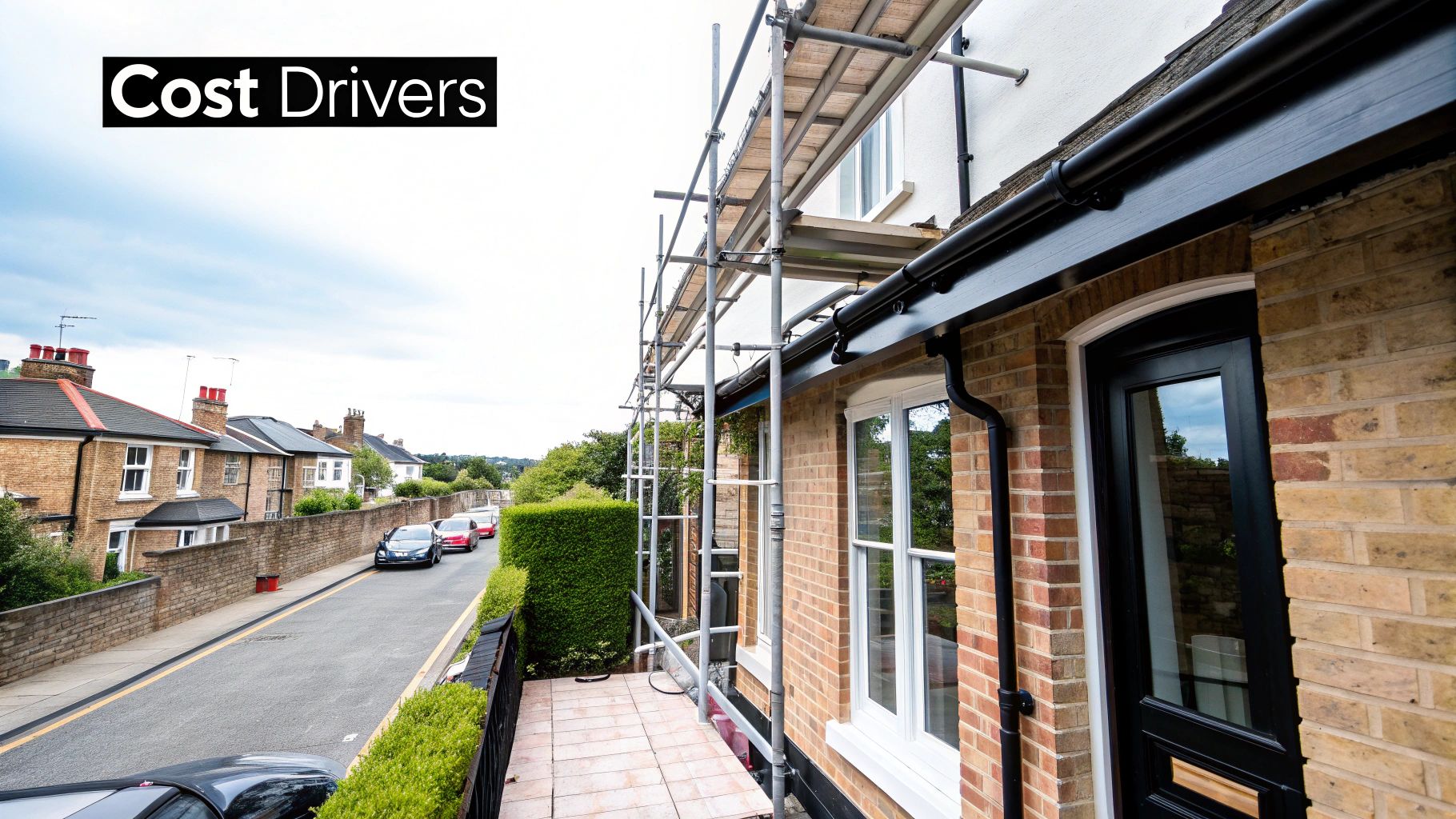
Getting your head around these cost drivers is the first step to aligning your architectural vision with a budget that actually works. Think of it less as a single price tag and more as the sum of many parts. From the complexity of the foundations right down to the brand of kitchen tap you choose, every decision has a knock-on effect. Let's break down the big ones you're likely to face with a London project.
Structural Complexity and Ground Conditions
Some of the biggest costs are for work you’ll never even see. London's geology, particularly its notorious clay soil, often demands deeper and more robust foundations than elsewhere. That means more digging, more concrete, and higher labour costs before a single brick is laid.
The amount of structural steelwork needed is another major factor. If you're dreaming of a huge, open-plan space with no columns in sight, you'll need larger, more complex steel beams (RSJs) to support the weight of the house above. Likewise, a site with a web of existing drainage that needs rerouting will add significant costs compared to a straightforward plot.
The ambition of your design directly correlates with its structural demands. A desire for wide-open spaces and seamless transitions requires sophisticated engineering, which is a significant but worthwhile investment in achieving an exceptional architectural result.
Glazing: The Quality and Scale of Glass
Glass is often the star of the show in a modern side return extension, letting natural light flood in. But it’s also a major budget item where costs can swing wildly. Your choices here have a massive impact on both the look and the final bill.
Just look at the difference between these common options:
Standard Velux Windows: A cost-effective way to get light from above, but they don't deliver the same visual punch as larger glazing.
Large Fixed Rooflights: These create that dramatic "sheet of glass" effect, bathing the room in daylight, but the price tag is considerably higher.
Crittall-Style Doors: Iconic and hugely popular, these steel-framed doors give an industrial-chic look but are very much a premium product.
Minimalist Frameless Glass: For that ultimate, seamless connection to the garden, frameless sliding doors or structural glass walls are stunning but sit at the top end of the market.
Don't forget the thermal performance of the glass (double vs. triple glazing) and the frame material (uPVC vs. aluminium) – these are critical details that also shape the price.
Specification Level and Interior Finishes
The "spec" is where your personal taste really starts to drive the cost. This covers every internal finish, fixture, and fitting that turns the structural shell into your home. A high-spec finish is where a budget can escalate—fast.
Consider the chasm in cost between a standard kitchen from a high-street supplier and a bespoke, handcrafted one from a luxury brand. The latter could easily add £40,000 to £60,000 to your project. This same principle applies to everything else:
Flooring: Think standard porcelain tiles versus a poured polished concrete floor.
Joinery: Off-the-shelf doors versus custom-built, floor-to-ceiling pocket doors and bespoke cabinetry.
Electrics & Plumbing: Basic light fittings versus a sophisticated smart lighting system, or a standard radiator versus underfloor heating.
Site Access and Location Logistics
Finally, never underestimate the practicalities of your property’s location, especially in a tightly packed London borough. A terraced house on a narrow street with no parking is a logistical headache for any builder.
Difficult access might mean materials have to be carried through the house, which adds labour time. It could require smaller delivery lorries, more frequent trips, or even permits from the council to close the road. These seemingly small details stack up, contributing to a higher overall cost than for a project on a site with easy, open access.
Maximising the Return on Your Investment
It's easy to see the cost of a side return extension as just another expense, but that’s missing the bigger picture. A far better way to look at it is as a major investment – both in your property’s market value and, just as crucially, in your own quality of life. In a competitive market like South West London, a well-designed extension doesn't just add space; it adds a tangible premium that often delivers a fantastic return.
The secret to unlocking this value is creating the kind of space modern buyers are desperate for. A thoughtfully planned side return extension can completely transform the cramped, dark rear of a period property into the vibrant new heart of the home.
Financial Returns in a Competitive Market
Talk to any estate agent, and they'll tell you the same thing: a beautifully executed kitchen-diner can add as much as 20% to the value of a London terrace. This isn't just about the extra square footage; it’s about the quality and desirability of that new space.
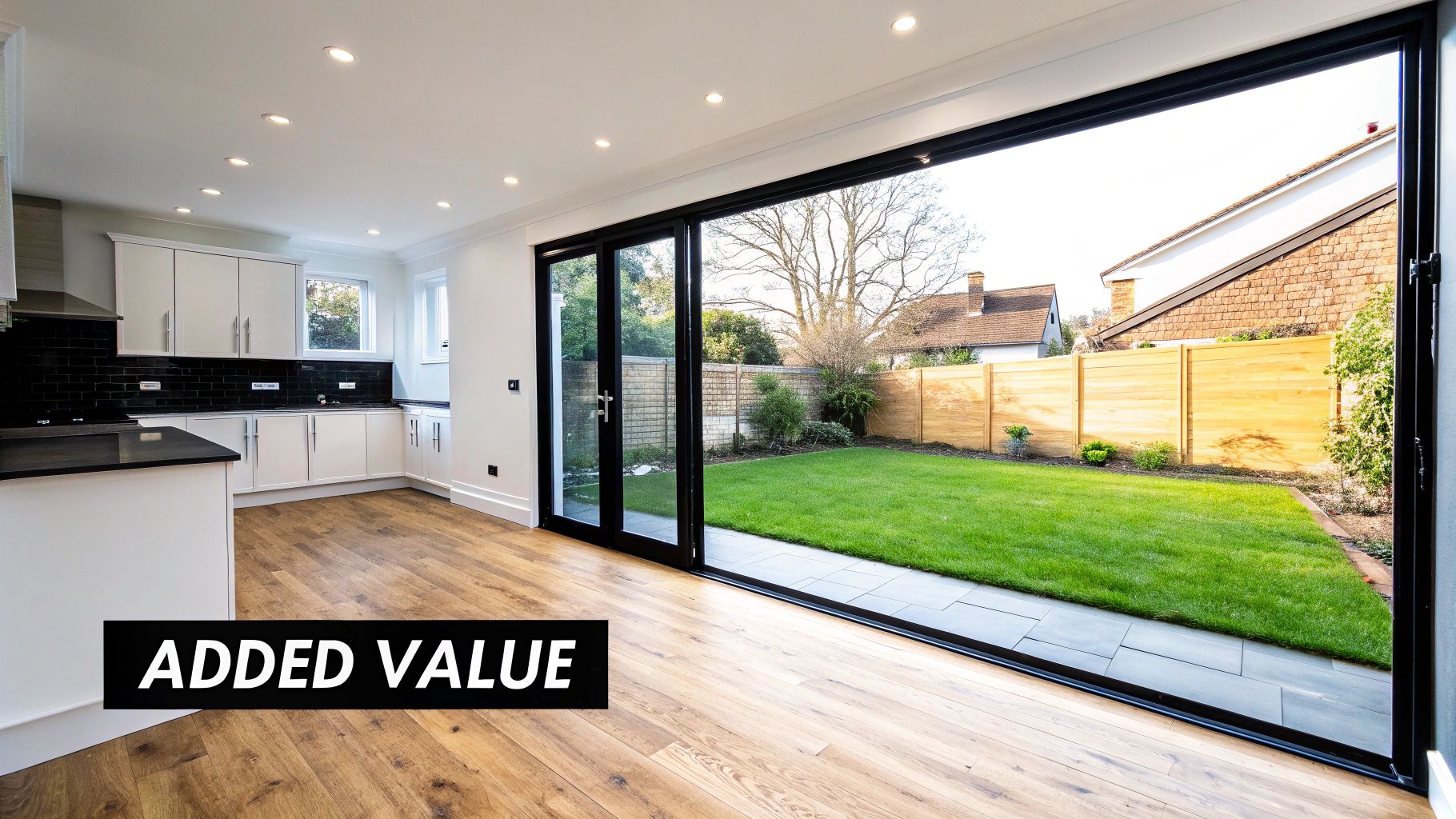
The extensions that add the most value are always the ones that create a seamless flow between inside and out. By bringing in features like large rooflights and stunning bi-fold or sliding doors, you create a bright, open-plan area that feels truly connected to the garden. This is the gold standard for family living in places like Wimbledon and Richmond, and it's what commands the highest prices.
So, while the initial cost of a side return extension might feel significant, the potential uplift in your property's value often makes it one of the smartest home improvements you can make.
A great side return extension pays you back twice. First, with an enhanced property valuation that reflects the desirability of open-plan living. Second, and more immediately, with a home that is a joy to live in every single day.
Beyond the Balance Sheet: The Lifestyle Value
But the real return on investment isn’t just measured in pounds and pence. The "lifestyle value" a side return extension brings is arguably its greatest reward. Think of it as the daily dividend you get from having a home that perfectly supports the way you actually want to live.
Just consider the practical improvements to day-to-day family life:
A Natural Social Hub: Suddenly, you have a natural gathering spot for family meals, homework sessions, or catching up with friends over a coffee, all in one light-filled, welcoming space.
More Natural Light: Flooding the core of your home with daylight has a proven positive effect on wellbeing, making the whole property feel brighter and more energetic.
Connection to the Garden: A smooth transition to the garden encourages an indoor-outdoor lifestyle, making your patio or lawn feel like a genuine extension of your living area.
This is where thoughtful architecture really proves its worth. It’s about more than just bolting on a room; it's about crafting an environment that reduces daily friction and helps your family connect. A well-designed space makes mornings less chaotic, evenings more social, and weekends more relaxing. This profound improvement to your daily routine is a return that keeps paying off long after the builders have gone, leaving you with a home you’ll love for years to come.
Frequently Asked Questions About Extension Costs
When you’re thinking about a project like this, it’s completely natural to have questions about the costs and what’s involved. To give you some clarity, we’ve put together answers to the most common queries we hear from homeowners in South West London, based on our day-to-day experience.
How Long Does a Side Return Extension Project Take?
A typical project breaks down into two main phases, and each has its own timeline. First comes the design and planning stage, where we create the architectural drawings and get all the necessary permissions from the council. This usually takes between three and six months.
Once we have the green light, the construction phase can kick off. This part of the process generally takes another four to six months. Of course, this can shift depending on how complex your design is and what we find on-site. We always map out a clear, detailed timeline from the very start to keep everything on track and make sure you know exactly what to expect.
Do I Always Need Planning Permission for This Extension?
Not always. Many side return extensions can be built under what are known as ‘Permitted Development’ (PD) rights, which lets you bypass a full planning application. However, these rights come with some very strict rules attached.
Crucially, they don't apply to flats, maisonettes, or any property in a conservation area or that is a listed building. Even when a project falls under PD rights, we always advise clients to get a Lawful Development Certificate (LDC) from the council. This certificate is official proof that your build is compliant, giving you total peace of mind, especially when it comes time to sell your home.
An architect’s job is to navigate these complex regulations for you. We check your property against local council policies to work out the simplest, most effective way to secure permission, saving you headaches and potential legal issues down the line.
What Is the Difference Between an Architect and a Builder?
Think of an architect as your creative and technical partner. Our role is to design a space that brings your vision to life, produce the highly detailed drawings the builders need, handle all the permissions, and often oversee the build to ensure the quality is second to none.
A builder, on the other hand, is the contractor who physically builds the extension, following the architect's precise plans. We act as the vital link between you and the builder, working with trusted construction teams to ensure our design is brought to life flawlessly, from the first shovel in the ground to the final handover.
How Much Should I Set Aside for a Contingency Fund?
A contingency fund is non-negotiable for any major home renovation. It’s your financial safety net for the unexpected—things like discovering unforeseen structural issues once a wall is opened up, or dealing with a sudden spike in material prices.
We strongly recommend setting aside a contingency of 10-15% of the total construction cost. It’s a simple step that protects the financial health of your project, meaning that if a challenge does pop up, it won’t derail the build or force you to compromise on quality. Honestly, it’s the key to a much less stressful experience.
Ready to transform your home with a beautifully designed extension? The team at Harper Latter Architects specialises in creating bespoke living spaces across South West London and Surrey. Contact us today to arrange your initial consultation.

Comments