
Indoor Swimming Pool Design Guide

Updated: Oct 10
Thinking about adding an indoor pool to your home? It’s an exciting prospect, but it’s also a serious architectural undertaking. An indoor pool isn’t just a swimming pool with a roof over it; it's a complex blend of structural engineering, climate science, and aesthetic design that needs to integrate perfectly with the rest of your home.
Get it right, and you’ll have a stunning, year-round retreat that adds immense value and enjoyment to your property. Get it wrong, and you could be facing costly structural or damp issues down the line.
Your Indoor Swimming Pool Journey Begins Here
This guide is designed to walk you through the entire process, from the first rough sketch to that first satisfying swim. We'll break down the technical challenges and design decisions you’ll face, ensuring your vision for a beautiful indoor pool becomes a perfectly executed asset for your UK home.
An indoor pool is a true extension of your living space. It demands careful thought about how it connects with your existing home and garden. Every decision, from the foundations up, contributes to creating a space that works for your lifestyle while enhancing your property's overall appeal.
A successful indoor pool is a testament to meticulous planning. It’s where the technical demands of humidity control and structural support meet the personal desire for a serene, beautiful, and inviting space.
What This Guide Covers
We’ve created this guide to demystify the process and help you sidestep common, expensive pitfalls. Think of it as your roadmap, covering the critical stages you can't afford to overlook:
Initial Planning and Structural Needs: We’ll look at site selection, foundations, and navigating the crucial planning permission process.
Climate Control Essentials: This is non-negotiable. We'll explain why a specialised HVAC (heating, ventilation, and air conditioning) system is vital to protect your home from moisture damage.
Aesthetic and Material Choices: Exploring the finishes, lighting, and special features that give your pool its unique character while prioritising safety and durability.
Sustainable and Efficient Operation: Discover how modern technology can lower your running costs and create a more eco-friendly pool.
Project and Budget Management: A realistic look at timelines in the UK, how to assemble the right team of professionals, and what to expect when budgeting for the entire project.
By the end of this guide, you’ll have a clear, practical understanding of what it really takes to build an indoor pool that’s beautiful, functional, and built to last.
Laying the Groundwork for Your Pool Project
Before a single spade breaks ground, the success of your indoor pool hinges on getting the foundations right. This early-stage planning isn't just a box-ticking exercise; it's where you prevent costly headaches and set the entire project up for a smooth, predictable build. Think of it as creating the blueprint before you even think about the tiles.
The very first decision is where to put it. The location of the pool enclosure impacts everything from its structural integrity to how you’ll use it day-to-day. You need to consider how the new structure will connect to your home, creating a seamless flow from your living space to your new aquatic retreat. And don’t forget the practicalities – can construction vehicles even get to the site? It’s a simple question, but one that’s often overlooked.
Navigating Structural and Legal Essentials
Once you have a spot in mind, the focus shifts from above ground to below. A professional site survey and soil investigation are absolutely essential. This isn't just procedural; it’s about understanding what your land can actually support. The immense weight of a pool filled with thousands of litres of water demands an incredibly robust foundation, engineered specifically for your property’s ground conditions.
This leads us straight into the structural design, which has two interconnected parts: the pool shell itself and the building that encloses it. They aren't separate projects but a single, integrated system that must be designed by qualified professionals working together.
A well-engineered foundation is the unsung hero of any successful indoor pool project. It ensures the long-term stability and safety of both the pool and the surrounding building, preventing structural shifts that could lead to cracks and costly repairs.
This is why bringing an architect and a structural engineer on board from day one is non-negotiable. They are the ones who translate your vision into technically sound plans that meet strict UK building regulations. These rules govern everything from insulation and energy efficiency to ventilation and safety, making sure your pool isn’t just beautiful, but compliant and safe for years to come.
Planning Permission and Building Regulations
Let’s be clear: in the UK, building a new structure for a pool almost always requires planning permission. Even if your pool is part of a larger extension or a basement conversion, the sheer scale of the work means Building Regulations approval will be mandatory. Trying to navigate this labyrinth of paperwork without professional guidance can lead to frustrating delays and spiralling costs.
Understanding these legal hurdles at the outset allows you to set a realistic timeline and budget. A basement pool, for instance, throws in extra complexity, demanding specialised engineering and waterproofing to protect the structure from damp. For a detailed overview of what that involves, you can learn more about how to waterproof a basement in our easy UK guide.
By tackling these technical and legal stages head-on, you ensure your project starts on solid footing, paving the way for a successful build.
Mastering Your Pool's Invisible Atmosphere
An indoor swimming pool creates its own unique microclimate—a pocket of warm, humid air that, if left unmanaged, can become a silent saboteur. Think of uncontrolled humidity as an invisible threat, constantly working away in the background to cause mould, rust, and even structural decay within your home.
This is precisely why a specialised environmental control system isn't a luxury, but a fundamental necessity for any successful indoor pool design.
This system is far more than just a standard household air conditioner. It's a sophisticated piece of equipment designed specifically to tackle the high moisture load produced by an evaporating pool. A purpose-built Heating, Ventilation, and Air Conditioning (HVAC) unit is the guardian of your investment, protecting both the building's integrity and the health of everyone who uses it.
Without one, condensation will inevitably form on cooler surfaces like windows and walls, creating the perfect breeding ground for mould and damp.
The Role of Dehumidification and Ventilation
The primary soldier in this battle against moisture is the dehumidifier. Its job is to constantly draw excess water vapour out of the air, maintaining a stable relative humidity—typically between 50% and 60%. This precise control prevents the destructive cycle of condensation from ever beginning, preserving everything from the window frames to the structural steelwork.
Just as important is ventilation. A good system continuously introduces fresh, conditioned air while expelling the stale, moisture-laden air. This process serves a dual purpose: it helps control humidity and it removes that unpleasant chemical "pool smell."
This odour is caused by chloramines, chemical by-products created when chlorine reacts with sweat and other organic compounds from swimmers. Proper ventilation ensures they are exhausted outside, creating a fresh, pleasant, and healthy atmosphere inside.
Unmanaged humidity is the single greatest threat to an indoor pool's longevity. A correctly specified climate control system is an investment in the long-term health of your property, preventing thousands of pounds in potential damage from damp and decay.
This diagram shows a typical layout for a residential pool, highlighting the need for adequate clearance around the water for both access and effective air circulation.
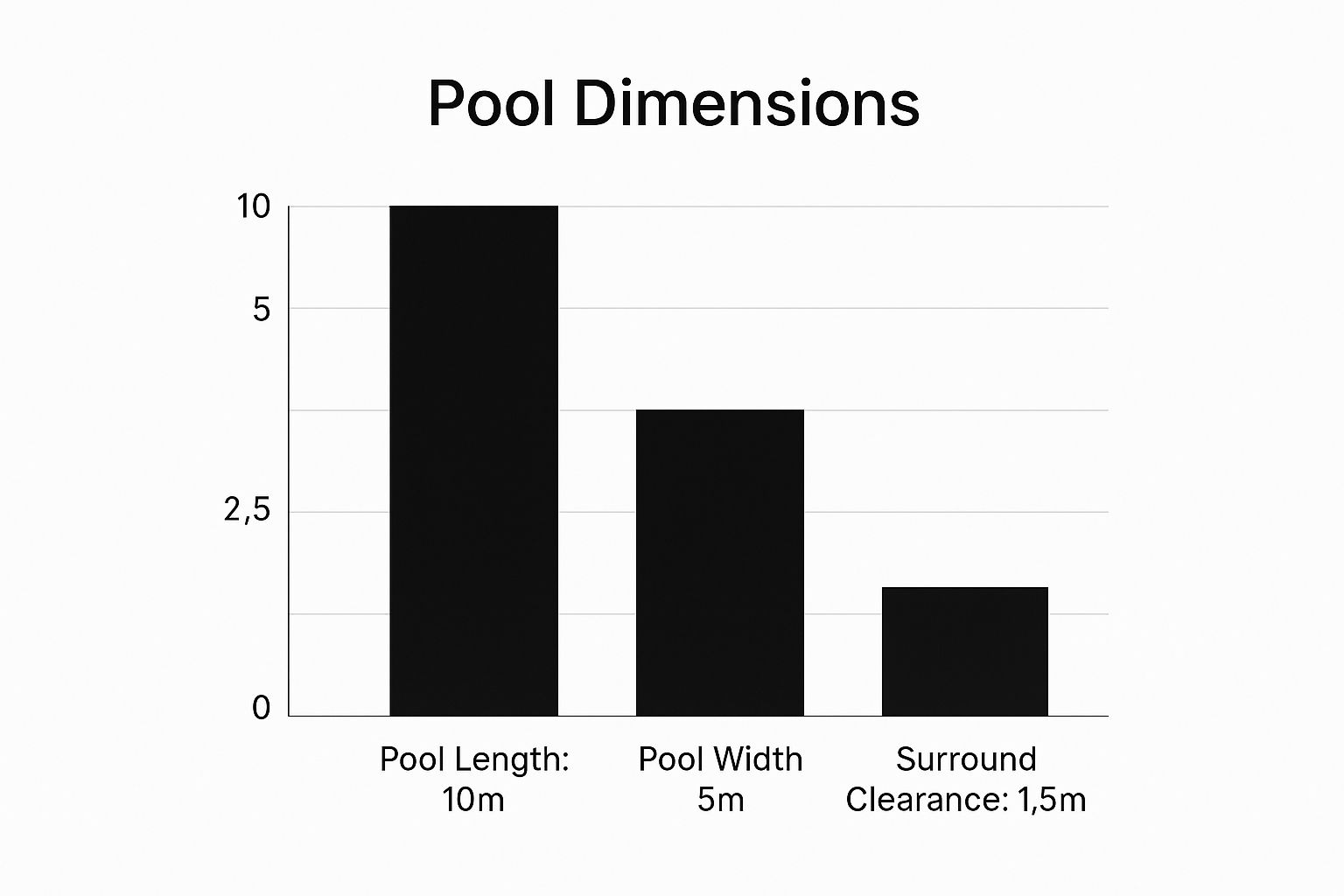
The image illustrates standard dimensions for a home pool, where the surrounding walkway is crucial not just for safety, but for allowing the HVAC system to manage the air efficiently across the entire room. In essence, mastering your pool's invisible atmosphere is about achieving a perfect, continuous balance between temperature, humidity, and air quality for a safe and durable indoor oasis.
Comparing Climate Control Systems for Indoor Pools
Choosing the right climate control system is one of the most critical technical decisions you'll make. Each type has its own strengths, and the best choice often depends on your pool's size, usage, and your long-term energy goals. Here’s a look at the most common options we specify for UK homes.
System Type | Key Feature | Best For | Considerations |
|---|---|---|---|
All-in-One Dehumidifiers | Combines dehumidification, air heating, and pool water heating in a single unit. | Smaller residential pools where simplicity and a smaller plant room footprint are key. | Less customisable than modular systems. May not be sufficient for very large or heavily used pools. |
Mechanical Ventilation with Heat Recovery (MVHR) | Exhausts stale, moist air while recovering its heat to warm incoming fresh air. | Energy-conscious homeowners looking to minimise running costs and ensure excellent air quality. | Higher initial investment. The dehumidification component still needs to be correctly sized. |
Ducted Systems | Air is distributed and returned via discreet ductwork, often hidden in ceilings or bulkheads. | Larger pools or projects where aesthetics are paramount and an even air distribution is essential. | Requires careful architectural integration and space for duct runs. More complex to design and install. |
Air Source Heat Pumps (ASHP) for Pools | Uses ambient air to heat the pool water and can often provide air cooling. | Homes with an existing focus on renewable energy and those looking for highly efficient water heating. | Performance can be affected by very low outdoor temperatures. Needs to be paired with a separate dehumidifier. |
Ultimately, the goal is to create a system that runs so efficiently you forget it's even there—maintaining a perfect, comfortable environment day in and day out. We work closely with specialist engineers to model the exact requirements of your space, ensuring the system specified is perfectly matched to the demands of your pool.
Bringing Your Pool Design Vision to Life

This is the point where technical drawings begin to feel real. The blueprint evolves into a beautiful, tangible space, and the creative choices you make here will define your pool’s character for years to come, blending aesthetics with crucial functionality. It all starts with the pool shell—the very heart of your design.
For bespoke UK pools, the two main choices are concrete and fibreglass. A concrete shell offers almost limitless customisation. If you can imagine a shape, size, or depth, it can likely be built. This flexibility is perfect for creating a truly unique design that fits seamlessly into a complex or unusual architectural space.
On the other hand, a one-piece fibreglass shell brings a modern, streamlined finish. While less customisable in shape, these pre-fabricated pools can be installed much faster. They also feature a smooth, non-porous gel coat that naturally resists algae growth, which simplifies long-term maintenance. The decision often comes down to a balance between bespoke design freedom and installation efficiency.
Selecting Finishes for Safety and Style
Once the structure is in place, the focus shifts to the materials you will see and touch every day. These surfaces do much more than just look good; they are critical for ensuring safety and durability in a high-moisture environment.
Tiles: From classic ceramic mosaics to luxurious natural stone, tiles are the ultimate expression of personal style. Modern porcelain tiles are an incredibly popular choice, offering a vast range of finishes while being durable and remarkably easy to clean.
Coping: This is the edging around the pool, and it needs to be comfortable to sit on while providing a safe, non-slip grip. Natural stone like limestone or slate is often used for a sophisticated look that connects the pool to its surroundings.
Flooring: The flooring around the pool must have an excellent slip-resistance rating. There's no room for compromise here. Materials like textured porcelain or specially treated stone are essential to prevent accidents in a space that is almost always wet.
Lighting is the final, transformative layer of your pool’s design. A well-considered lighting scheme can turn a functional daytime amenity into a breathtaking evening centrepiece, dramatically altering the mood of the entire space.
A strategic mix of underwater LED lights and ambient room lighting creates real depth and atmosphere. Dimmable wall sconces or concealed ceiling lights can produce a soft, relaxing glow, while focused underwater lights highlight architectural features or create a mesmerising shimmer on the water’s surface.
For those looking to create a complete leisure environment, integrating features like a spa, jets, or a subtle waterfall adds another layer of sensory experience. This is where a pool becomes more than just a place to swim—it becomes a true retreat.
To see how these elements come together in finished projects, you can explore examples of our architects' work on stunning bespoke swimming pools.
Building an Eco-Friendly and Efficient Pool
A modern indoor swimming pool should be more than just a beautiful feature; it needs to perform efficiently, respecting both your wallet and the planet. Smart, sustainable design isn’t a luxury add-on anymore—it’s a fundamental part of a project that dramatically lowers running costs and shrinks your carbon footprint.
The path to an efficient pool starts by looking at the whole picture: the building fabric, the pool shell, and the systems that make it all work. Think of it like dressing your pool for winter; you wouldn’t go outside without a coat, and your pool shouldn’t be without proper insulation. Insulating the pool shell is vital to stop warmth from seeping into the ground, just as insulating the surrounding building keeps the warm, humid air right where you want it.
Smart Technology for Lower Running Costs
The biggest energy drains for any indoor pool are heating the water and the air. This is where today’s technology really shines. Air source heat pumps (ASHPs) are a game-changer, working a bit like a refrigerator in reverse. They cleverly extract latent heat from the outside air—even on a cool day—and use it to warm your pool. The result? They often deliver three to four units of heat for every one unit of electricity they consume.
Another non-negotiable piece of kit is a high-quality pool cover.
Using a good pool cover is the single most effective action you can take to reduce your pool's running costs. It can cut heat loss and water evaporation by up to 90%, dramatically reducing the workload on your heating and dehumidification systems.
This simple addition acts as a powerful barrier, saving a huge amount on your energy bills over the year.
The Passivhaus Standard: A New Benchmark
We’re seeing a significant shift in UK indoor pool design towards ultimate efficiency, with some projects even adopting the incredibly demanding Passivhaus standard. Landmark examples, like St Sidwell’s Point in Exeter, have become the UK’s first leisure centres to hit this global benchmark. Incredibly, St Sidwell’s Point has slashed its energy consumption by around 70% and halved maintenance costs compared to older pools, proving that this level of performance is truly achievable. You can find out more about these pioneering Passivhaus projects and their results.
These same principles—superb insulation, airtight construction, and clever heat recovery—are perfectly suited for home projects too. By taking a 'fabric first' approach, where you maximise the building's performance before relying on technology, you create a space that is inherently efficient. These are the very same strategies central to creating any sustainable home, a topic we explore further in our guide to building your eco-house in the UK.
Ultimately, building an eco-friendly pool isn’t about making compromises. It’s about smart, forward-thinking design that ensures your luxurious retreat is also a responsible and cost-effective investment for years to come.
Managing Your Pool Project From Start to Finish
Embarking on an indoor swimming pool project is a serious undertaking. It demands meticulous organisation, a clear grasp of the process, and a realistic financial plan. Ultimately, a successful outcome hinges on assembling the right team of professionals to guide you from day one.
Building an indoor pool isn't a simple, linear job; it's a series of overlapping phases that require careful coordination. The journey begins with initial design concepts and securing planning permissions, a stage that can often take several months. Once you have the green light, the project moves into the more tangible construction phases—starting with excavation and structural work before moving on to finishes, systems installation, and final commissioning.
Assembling Your Professional Team
You can't build an indoor pool alone. In fact, assembling a coordinated team of specialists right from the very beginning is the single most important step you can take to ensure your project's success and sidestep costly errors down the line.
Architect: Your architect is the visionary and the project lead. They are responsible for creating a design that isn't just beautiful but integrates seamlessly with your home and sails through all the necessary regulatory requirements.
Structural Engineer: This is the professional who ensures the long-term stability of both the pool shell and the building that encloses it. They design the foundations and structure to handle immense weight and environmental pressures without breaking a sweat.
Specialist Pool Contractor: Their expertise is all about the pool itself—the shell, plumbing, filtration, and finishes. They work hand-in-glove with the architect and engineer to bring the technical aspects to life.
HVAC Engineer: A specialist in climate control is absolutely non-negotiable. They will design the crucial dehumidification and ventilation system that protects your building from the constant threat of moisture damage.
Budgeting for Your UK Indoor Pool
Understanding the potential costs is vital if you want to plan realistically. While a more basic project might start around £120,000, a high-specification indoor pool with a bespoke building, advanced systems, and luxury finishes can easily land somewhere between £250,000 and £500,000, and sometimes even more.
A common mistake is focusing solely on the cost of the pool itself. In reality, the building enclosure and the specialised HVAC system often account for more than half of the total project budget.
A transparent, detailed budget prepared by your architect is your financial roadmap. It will break down every single element, from initial design fees to the final touches on the landscaping. This clarity helps you manage costs effectively throughout the project and ensures there are no unwelcome surprises waiting for you at the end.
Common Indoor Pool Design Questions

Embarking on an indoor pool project naturally brings up a lot of questions. To help you get started, we’ve put together some clear, straightforward answers to the queries we hear most often from UK homeowners thinking about a bespoke indoor swimming pool.
These points cover everything from the initial investment and legal hurdles to the biggest technical challenges you’re likely to face. Our goal is to give you a realistic understanding of what the journey involves.
How Much Does a Bespoke Indoor Swimming Pool Cost in the UK?
There’s no one-size-fits-all answer here, as the cost hinges entirely on the project's scale and specification. For a more straightforward design, you might see a starting figure of around £120,000.
However, for a high-specification pool with a custom-built enclosure, a sophisticated climate control system, and luxury finishes, the budget can easily climb from £250,000 to over £500,000. It’s a crucial point to remember that the building structure and the specialist HVAC system often account for more than half of the total cost.
Will I Need Planning Permission for an Indoor Pool?
Yes, in almost all scenarios. If you’re constructing a new, separate building for your swimming pool, you will absolutely require planning permission from your local authority.
Even if the pool is part of an extension or built within an existing outbuilding, the scale of the work means you'll also need Building Regulations approval. We always advise bringing a planning professional into the conversation right at the very start. It saves so much time and potential heartache later on.
What Is the Single Biggest Challenge in an Indoor Pool Project?
Without a doubt, the most critical challenge is managing humidity effectively. If you don't get the dehumidification and ventilation system right, moisture will wreak havoc on your building’s structure over time.
Uncontrolled humidity leads to destructive issues like rot, rust, and mould. Investing in a purpose-built climate control system is the most important decision you will make to ensure the longevity of the pool hall and a comfortable swimming environment.
How Long Does the Entire Indoor Pool Building Process Take?
From the first design sketches to the moment you can finally take a swim, a typical project timeline is anywhere between 9 to 18 months.
This includes the vital design and planning phase, which on its own can take three to six months to get absolutely right. The overall schedule can stretch depending on the complexity of your indoor pool design, how accessible the site is, and how smoothly the planning approval process goes.
Ready to turn your vision for the perfect indoor pool into a beautifully realised space? The team at Harper Latter Architects specialises in creating bespoke homes and leisure facilities that blend timeless design with flawless functionality. Start your journey by contacting us today.

Comments