

Hire the Best Architect in Wimbledon | 2026 Expert Guide
You may be looking at a Wimbledon house that already has most of what buyers chase. A good address, generous proportions, a mature garden, and the kind of character that's hard to recreate. Yet daily life still doesn't quite fit. The kitchen is cramped, the upper floor wastes valuable volume, or the house feels tired behind a handsome façade.
That's usually the point where people start searching for an architect in Wimbledon. Not because they want drawings, but because they need a clear route through a high-stakes decision. In this part of London, design ambition is only one part of the job. Planning strategy, conservation sensitivity, technical judgement, neighbourly impact, and build-stage discipline matter just as much.
Embarking on Your Wimbledon Home Transformation
A typical starting point is simple enough. A family has outgrown the way their home works, but they don't want to leave Wimbledon. They want better flow, more daylight, stronger links to the garden, and rooms that support how they live now rather than how the house was arranged decades ago.
That sounds straightforward until constraints appear. The street has a settled character. The roofline matters. Materials matter. If the house has heritage value, every visible change carries more scrutiny. In Wimbledon, context is not a side note. It shapes the project from day one.
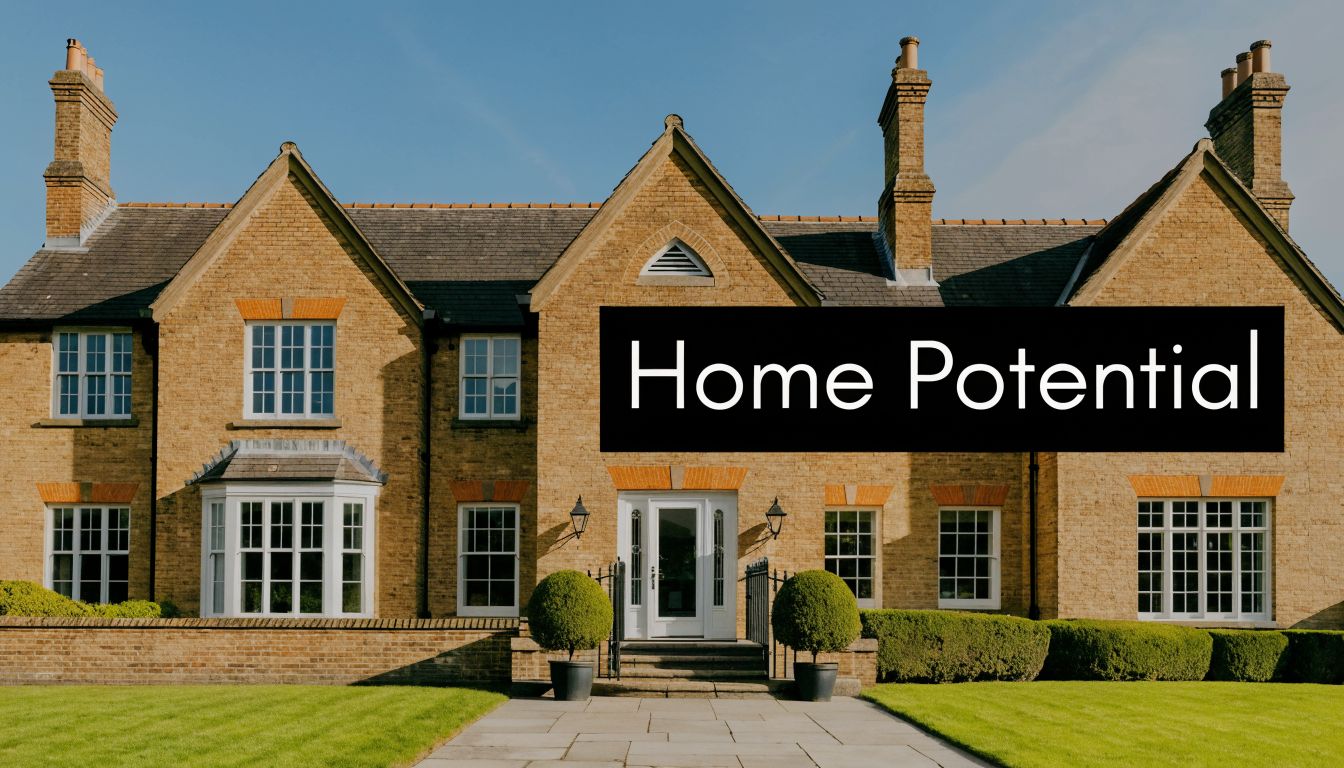
Wimbledon's identity is bound up with the district's long-established prestige. It is historically significant as the home of the world's oldest tennis tournament, first held in 1877, a heritage that has helped shape demand for bespoke architecture and high design standards in local residential work, as noted by Gregory Phillips on Wimbledon architects.
Why the first decision matters most
The early choice is not whether to extend, refurbish, excavate, or rebuild. The early choice is who will help you judge which of those options is viable. A capable architect tests possibility before anyone wastes money on the wrong direction.
That means looking beyond appearance. The right adviser studies how you use the house, what planning officers are likely to support, where construction risk sits, and which improvements will genuinely change daily life.
Practical rule: The most expensive mistake is usually not poor taste. It's committing to a scheme that was never properly tested against planning, structure, budget, and buildability.
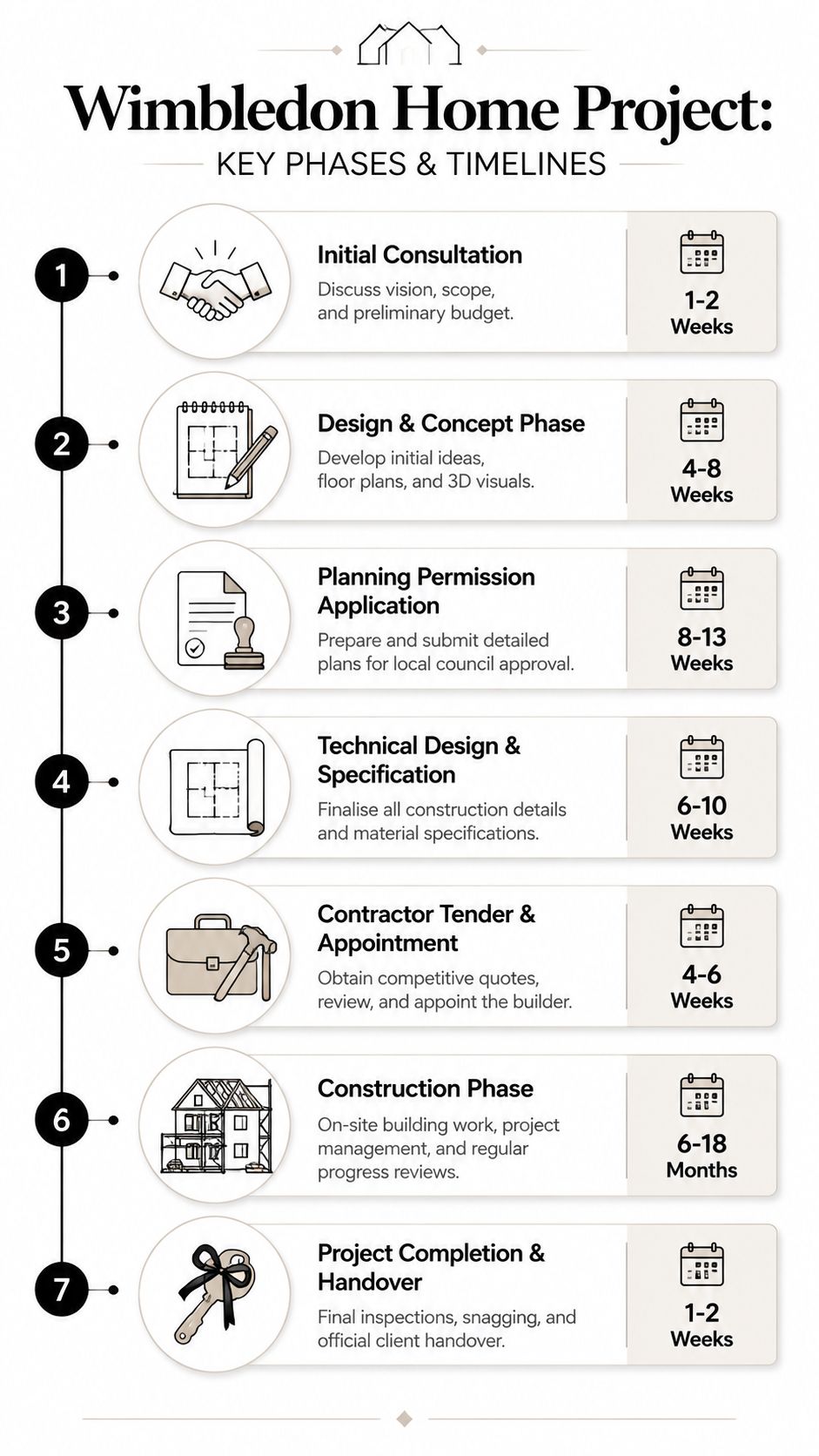
In Wimbledon, clients often arrive with a clear wishlist and an unclear order of decisions. That's normal. A strong architectural process turns that uncertainty into a sequence. Feasibility first. Then the planning strategy. Then detailed design. Then construction.
What partnership looks like in practice
A residential architect should act as a guide, editor, and technical advocate. At concept stage, that means challenging assumptions. During planning, it means shaping a proposal that fits the borough and the street. During technical design and construction, it means protecting quality when pressure appears on programme, cost, or detail.
For homeowners who want to see how that appears in a real Wimbledon setting, Southside House in Wimbledon offers a useful example of how local context and bespoke design can work together.
Defining Your Vision and Finding Potential Architects
Before you compare practices, define the project in plain language. Most weak appointments start with a vague brief. “We want more space” is not a brief. “We need a family kitchen with direct garden access, a calmer principal suite, a proper utility arrangement, and room for hybrid working without losing reception space” is far more useful.
Start with how you live
Write down what the house fails to do now. Be specific. Which room causes friction each day? Where does storage fall apart? Do you need privacy, better circulation, more natural light, or greater flexibility between family life and entertaining?
A useful client brief usually covers:
How the household functions. School mornings, working from home, guests staying over, teenagers needing independence, or ageing-in-place considerations.
What type of project you're considering. Refurbishment, rear extension, loft conversion, basement, full reconfiguration, or a new build.
What you want the house to feel like. Calm, formal, contemporary, traditional, lighter, warmer, more connected to the garden.
What must stay. Existing period features, mature landscaping, key views, room proportions, or a particular façade character.
What success looks like. Better everyday use, improved long-term value, lower maintenance, stronger environmental performance, or all of these together.
This first exercise matters more in Wimbledon than in many other locations because the architect is rarely designing in a vacuum. Wimbledon sits within the London Borough of Merton, where the 2021 Census recorded a population of 206,310, and that density reinforces the importance of local planning requirements and established neighbourhood character, as explained by MATA Architects' overview of architects in Wimbledon.
Where to look for the right practice
Once your brief is taking shape, build a shortlist from reputable channels rather than search rankings alone. Start with professional registers and then test local relevance.
A sensible shortlist often comes from a mix of:
RIBA's Find an Architect service for chartered practices.
The ARB register to confirm the architect is properly registered.
Local recommendations from neighbours, planning consultants, or builders who work on higher-end residential schemes.
Project journals and practice websites where you can see whether the work reflects the level of detail and restraint you want.
A practical hiring guide such as this guide to finding an architect, which helps frame what to ask before appointing anyone.
What credentials do and do not tell you
RIBA and ARB matter. They tell you the person or practice meets professional standards and is accountable. That's the baseline.
They do not, on their own, tell you whether the architect understands Wimbledon's planning sensitivities, can detail a complex heritage intervention properly, or can manage the messy middle of construction when decisions become expensive. Credentials open the door. Relevant experience decides whether someone should walk through it.
A polished website can show taste. It cannot, by itself, show judgement under planning pressure or control over technical detail.
How to Evaluate Portfolios and Local Expertise
A strong portfolio answers a deeper question than “Do I like this style?” It shows whether the practice can solve problems like yours without losing architectural quality. In Wimbledon, that often means reading between the photographs.

Look for relevance, not just beauty
Many portfolios are full of bright kitchens and elegant façades. Useful, but incomplete. You want evidence that the architect can handle projects with similar constraints to yours.
If your house sits in a sensitive setting, ask whether the portfolio includes conservation area work. If you own a period property, look for signs that original fabric has been handled with discipline rather than stripped away for effect. If you are considering excavation, ask for basement experience, not just extension work.
A portfolio worth serious attention should show:
Consistency across projects. Not one standout house and several ordinary ones.
Technical resolution. Junctions, stair design, joinery, rooflights, thresholds, and material transitions that look deliberate rather than improvised.
Spatial judgement. Good proportions, sensible circulation, and a clear hierarchy of rooms.
Evidence of restraint. The best residential work often improves a house without shouting about itself.
Projects that match your brief. Heritage retrofit is different from a clean-sheet new build. A basement leisure suite is different from a loft room.
For readers comparing design approaches in South West London, this overview of modern design architects can be a useful reference point when thinking about what contemporary residential quality looks like.
Test local planning fluency
In Wimbledon, local expertise is not a marketing extra. It often determines whether a good design can survive the planning process and then be built properly.
Ask whether the architect can speak clearly about Merton's planning environment without slipping into generalities. They should be able to discuss roof form, scale, materiality, neighbour impact, and the character of specific streets in practical terms. If every answer sounds transferable to any London postcode, that's a warning sign.
Basement projects deserve harder scrutiny
Basements are where many clients underestimate complexity. The visible ambition might be a cinema, gym, wine room, or family room. The true challenge lies below that surface, in planning, structure, drainage, party wall matters, and construction sequencing.
The hidden complexities of basement extensions in Wimbledon include Merton planning policies, soil composition issues, and flood risk assessments. Armstrong Simmonds Architects' Wimbledon page highlights that 23% of complaints about basement projects stem from inadequate planning advice at the consultation stage.
That figure matters because it points to a recurring pattern. Problems often start before the design is developed. They start when early advice is too casual, too optimistic, or not local enough.
If you're considering a basement, judge the architect on risk management as much as design flair.
This short video is useful if you want to think about how design decisions are assessed in real visual terms rather than only on a plan.
What a serious portfolio review sounds like
When you meet a practice, the strongest candidates won't just present polished images. They'll explain why one scheme gained support, why another required compromise, how a listed element was preserved, or why a detail was altered for buildability.
That's the conversation you want. A capable architect in Wimbledon doesn't merely show outcomes. They explain the decisions that produced them.
Key Questions for Your Architect Consultation
The first consultation should feel like a working conversation, not a sales pitch. You are testing whether the architect can think clearly about your house, your priorities, and the route from first sketch to finished building.
Questions that reveal process
One of the best ways to assess competence is to ask the architect to describe their process in order. A vague answer usually means a vague service. A clear answer usually means the practice has done this many times and knows where risks sit.
Dyer Grimes' Wimbledon guidance notes that a structured route from feasibility and concept through technical design and construction oversight reduces the risk of expensive changes during the build phase. That is exactly why process should be discussed early.
Ask questions like these:
Category | Question |
|---|---|
Brief | How do you turn an initial wishlist into a workable project brief? |
Feasibility | What would you test first on this property before recommending a direction? |
Planning | How do you approach planning strategy in Wimbledon and Merton for houses like this? |
Design | How do you balance contemporary interventions with existing character? |
Budget | How do you help clients keep design decisions aligned with budget as the scheme develops? |
Technical detail | At what stage do you prepare detailed information for pricing and construction? |
Builders | Do you help with contractor selection and tender review? |
Construction | What is your role once work starts on site? |
Communication | How often do you update clients, and in what format? |
Risks | Where do projects like mine typically go wrong, and how do you reduce that risk? |
Questions that reveal compatibility
Technical skill is essential, but so is working style. Residential projects are personal. You need an architect who listens carefully, challenges usefully, and communicates without fog.
Ask them how they handle disagreement. Ask what happens when planning pushes back. Ask how they record design changes and approvals. Ask who will run the job day to day, rather than assuming the person in the meeting will stay heavily involved.
A good consultation leaves you with sharper questions and a clearer brief. A poor one leaves you with mood boards and very little certainty.
What to listen for in the answers
Strong answers tend to be concrete. You should hear a sequence, not a slogan. You should hear when they engage planning, when they produce technical packages, how they coordinate consultants, and what level of site involvement they offer.
One practice option in Wimbledon is Harper Latter Architects, which sets out an eight-step residential process from initial consultation through completion. Whether you appoint that practice or another, look for this level of clarity. The structure matters because confusion in early stages usually reappears later as cost, delay, or compromised quality.
Avoid answers that lean too heavily on taste. Taste matters, but it won't resolve a planning objection, a specification gap, or a poorly coordinated set of construction drawings.
Understanding Costs Timelines and Contracts in Wimbledon
Clients usually ask about cost first, but the better question is what drives cost. In Wimbledon, the answer is rarely just size. Complexity, specification, planning sensitivity, and the condition of the existing building all have a major effect on the final figure.
What benchmark costs can and cannot tell you
For one common project type, there is a useful local benchmark. High-end loft conversions in Wimbledon are typically quoted at around £1,700 to £2,300 per square metre, rising to around £3,200 per square metre for premium finishes, according to Harper Latter's guide to high-end loft conversions in Wimbledon.
That range is helpful, but only when used properly. It is not a promise, and it does not automatically transfer to every project type. It tells you that specification choices matter. Structural reinforcement, bespoke joinery, upgraded insulation, and premium finishes push costs upward quickly.
Why programmes stretch in heritage work
The same source notes that retrofitting listed buildings for energy efficiency can face 34% longer planning timelines than standard builds. If your Wimbledon property has heritage sensitivity, treat time as a design consideration in its own right.
Longer programmes don't only affect patience. They affect financing, temporary living arrangements, tender timing, consultant input, and when materials need to be selected. A realistic architect will talk about those implications early rather than presenting a neat but fragile timetable.
Fee structures and what they mean
Architects usually charge in one of three ways. Each can work well if the scope is defined properly.
Percentage fee. Often suitable where the service runs through several stages and construction cost is expected to evolve. It keeps the fee tied to project scale, though clients should understand exactly what is and is not included.
Fixed fee. Useful for clearly defined early stages or tightly scoped pieces of work. It offers certainty, but only if the brief and deliverables are fully settled.
Time charge. Appropriate where the scope is uncertain, advisory work is needed, or the client wants flexibility before committing to a larger appointment.
No fee structure is automatically better. The key is alignment between scope, responsibility, and decision-making.
Contracts are there to remove ambiguity
A proper architectural appointment should spell out the service stages, exclusions, payment terms, and responsibilities. It protects both sides. Beyond that, it creates a reference point when the project changes, and most residential projects do change.
Review contracts with the same care you apply to drawings. Check who appoints other consultants, who submits planning applications, who coordinates technical information, and what level of site inspection is included.
The best contract is not the shortest one. It is the one that makes fewer assumptions.
If you're comparing proposals from different architects in Wimbledon, don't judge on fee alone. Compare the depth of service. A lower fee tied to lighter technical involvement can become far more expensive once gaps appear during tender or construction.
Your Next Step Towards a Bespoke Wimbledon Home
A successful residential project in Wimbledon depends on more than strong design instincts. It depends on choosing someone who can read the house properly, shape the brief, judge planning risk, and carry that thinking through technical design and construction.
That is why the search for an architect in Wimbledon should be handled with care. Define what you need before you shortlist. Look for relevant local experience, not just attractive imagery. Use the consultation to test process, judgement, and communication. Then make sure costs, timelines, and responsibilities are understood before work begins.
In this market, the architect is not a decorative extra. The architect is often the person who prevents an over-ambitious scheme from failing, a heritage alteration from becoming clumsy, or a promising build from being undermined by weak detail.
If you're planning a major refurbishment, extension, basement, listed-building upgrade, or new home in Wimbledon, take the first conversation seriously. Bring the rough brief, the frustrations with the house, the fixed requirements, and the aspirations you're not yet sure are possible. A worthwhile initial meeting should leave you with sharper priorities and a more reliable route forward.
If you're ready to discuss a bespoke residential project in Wimbledon, Harper Latter Architects offers a complimentary initial consultation. It's a practical way to test your brief, understand likely constraints, and decide on the right next step for your home.